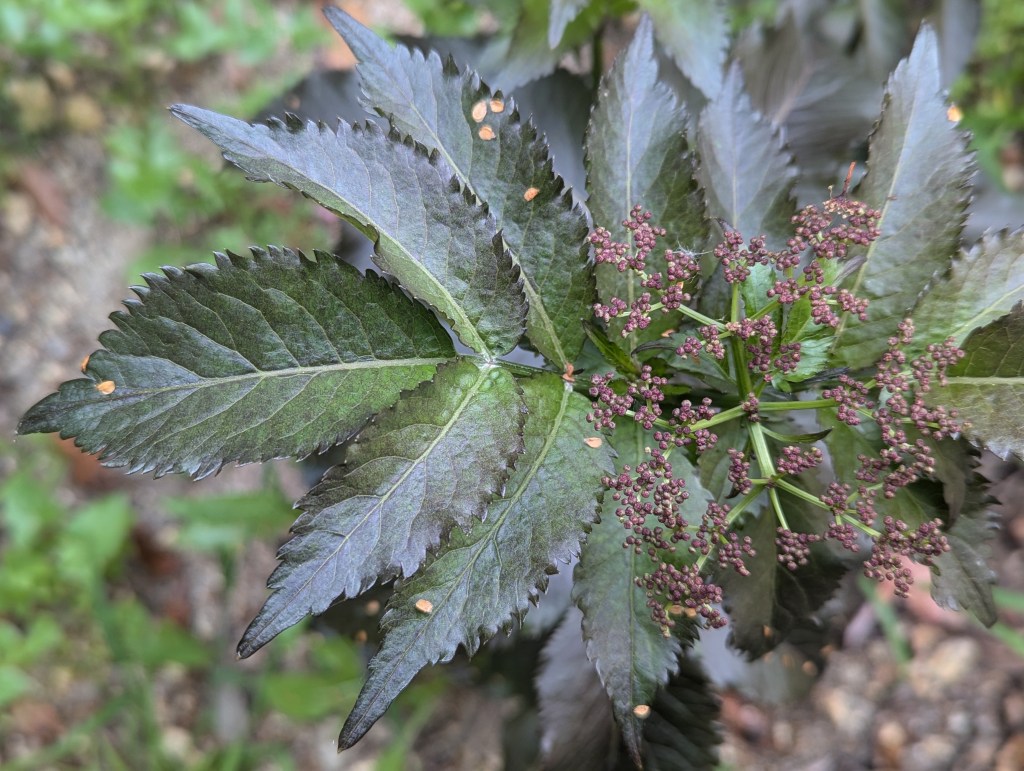
Perhaps my explanation of the elderberry glut here was a bit brief last Saturday. Allow me to explain.
Sambucus caerulea, blue elderberry is native and grows wild here, so was innately the first on the scene.
Sambucus nigra ‘Black Lace’ European black elderberry arrived next. I do not know who procured it or why, but it was left here in a can before my time. I put it into a landscape just to get it out of the storage nursery. In other words, I was none too keen on it, so I just wanted to make it go away. Instead, because it was so popular with those who saw it in the landscape, I learned to appreciate it. Then, I figured that it would be even more appealing if it produces berries for birds, so I sought a mate for it.
Sambucus nigra ‘Madonna’ European black elderberry was almost the perfect mate. I would have preferred ‘Albomarginata’, but did not want to pay for it. ‘Madonna’ in a #1 can was available for only a few dollars because it looked so shabby two winters ago.
Sambucus racemosa, red elderberry was a gift from Tangly Cottage Gardening shortly afterward. They were a group of four seedlings, so needed no mate for pollination. Although they are supposedly native here, I had never seen them before, but want to grow them.
Sambucus nigra ‘Albomarginata’, ‘Atropurpurea’ and ‘Black Tower’ European black elderberry, and Sambucus racemosa ‘Lemony Lace’ red elderberry unexpectedly became available for a few dollars each just last winter because, like ‘Madonna’ European black elderberry two years prior, they were shabby while dormant. Without a plan, I procured all of them. ‘Lemony Lace’ red elderberry, the only red elderberry of the four, could be pollinated by the red elderberries that already came from Tangly Cottage Gardening. As I mentioned, ‘Albomarginata’ was the cultivar that I would have preferred to ‘Madonna’ that I procured earlier.
Sambucus canadensis ‘Nova’ and ‘York’ American black elderberry were the last acquisitions at the end of bare root season last winter. They are for fruit production in my home garden.
I would have been pleased with only ‘Black Lace’ and one other pollinator cultivar for it within the landscapes at work. For my home garden, I wanted only blue elderberry, red elderberry and American black elderberry. I would have preferred wild American black elderberry, but can not complain about the cultivars that I got. Collectively, we got much more than we bargained for.
 Tony Tomeo
Is Madonna getting into a groove?
LikeLiked by 1 person
No, . . . not quite. It never was my favorite anyway, since, to me, it looks more chlorotic than ‘golden’. I got it only because the nursery that gave it to us wanted to get rid of it. It is the wimpiest of the few cultivars of European black elderberry here. Those that were added just recently are performing better. However, because it is here, and others like it, we will continue to grow it. I know it will be prettier as it grows.
LikeLike