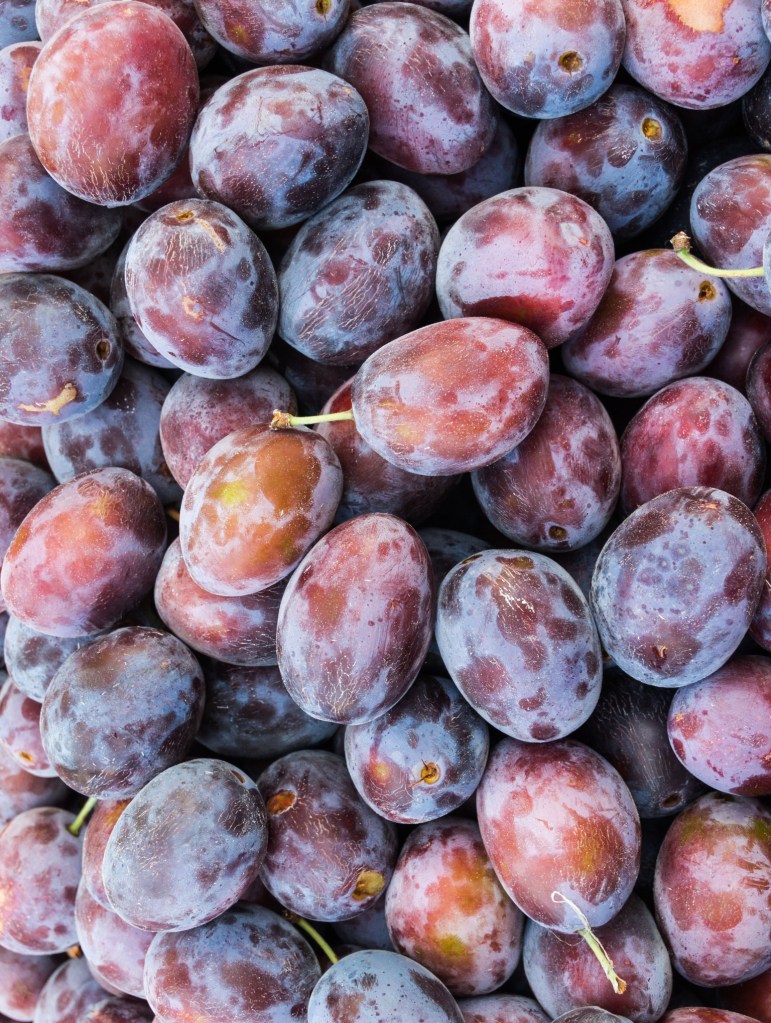
A prune is not merely a dried plum. Plums and prunes are really two distinct types of fruit. Plums are Japanese cling fruits, with their ripe flesh firmly adhered to their pits. They are rounder, softer, juicier, more colorful and best for fresh eating. Prunes, Prunus domestica, are European freestone fruits. They are slightly oblong, firmer, sweeter and dark purple.
Because of their higher sugar content, prunes are more popular dried than fresh. Plums are likely to mold during the drying process because they contain less sugar. Prunes are also better for canning and juicing than plums. However, for marketing purposes, modern prunes now qualify as plums. Plum juice is apparently more appealing than prune juice.
Regardless of their differences, plums and prunes are of the same genus. They grow on similar trees that require the same dormant pruning through winter. Dwarf trees are about ten feet tall. Semi-dwarf trees, which are the most popular, can get almost fifteen feet tall. Efficient pruning keeps them shorter so that more of their fruit grows within reach.

