Some plants age well. English hawthorn, Crataegus laevigata, ages prematurely. Within only several years, it develops handsomely furrowed and weathered bark. Even middle aged trees are as distinguished as much older trees. Yet, they grow no taller than about twenty feet. Most grow on single and straight trunks. Some grow on a few gnarly trunks.
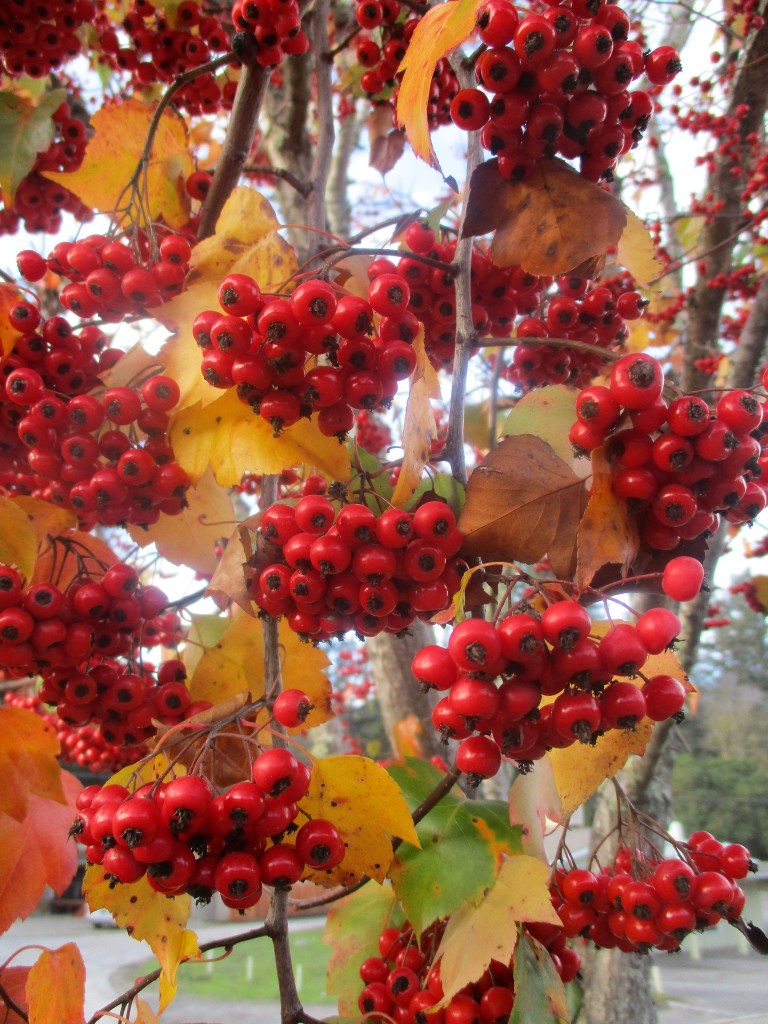
The deciduous foliage can turn rusty orange and brownish yellow for autumn. Individual leaves are about an inch or two long and wide. They are deeply lobed with a handsome and almost oaken texture. Plentiful bright red berries become even more apparent with defoliation. Birds eventually devour them. Nasty thorns complicate any needed pruning.
English hawthorn blooms in spring with trusses of small white flowers. Bloom resembles that of pear, including its potentially objectionable fragrance. Modern cultivars with pink, double pink or double red flowers are less fragrant. Cultivars with orange or yellow fruit are rare. Realistically, even the most common English hawthorn is not common locally.

