Horticulturists are by nature, nonconforming. I happen to find it difficult to conform to what makes us nonconforming. Trends are fleeting. Old technology that has worked for decades or centuries is still best. Although I am not totally against chemicals, I find that almost all are unnecessary for responsible home gardening. Pruning is underappreciated, and fixes many problems.
The fact that peonies do not perform well in such mild climates does not dissuade some of us from growing them. After all, they can sometimes be found in local nurseries and even farmers’ markets as if they belong here. Tubers of more of the countless varieties can be purchased online or from mail order catalogs while dormant in autumn. Unfortunately, without much winter chill, few peonies perform as they should.
Peonies can be white or various shades of pink or red, with considerable variation of flower structure. Tree peonies that bloom yellow are the most likely to be wimpy without winter chill. All peonies are good cut flowers. After spring bloom, the distinctively coarse and rich green foliage stays until autumn dormancy. The more popular herbaceous peonies should not get more than three feet tall and broad. Tree peonies do not actually grow into trees, but develop woody stems that can hold flowers nearly six feet high. Larger flowers may need support.
Because plants get established so slowly, they should not be moved or disturbed. Small new plants can be divided from larger plants while dormant, but take a few years to actually bloom. Peonies like rich soil and regular watering, where they do not get crowded or shaded by other plants.
Even in May, damage from the frosts of last winter is still evident among some of the more sensitive plants. Lemon trees and bougainvilleas that have not yet been pruned may still display bare stems protruding above fresher new growth. Some bougainvilleas did not survive. Those that are recovering will bloom later because replacement of foliage is their priority for now.
However, peonies, although rare, are blooming better than they have since 1991, right after one of the worst frosts in recorded history. Earlier, some lilacs, forsythias and wisterias likewise bloomed unusually well. While so many plants were succumbing to cold weather, many others were enjoying it.
The reason that peonies typically do not seem as happy locally as they are in severe climates is that they really prefer more cold weather while they are dormant through winter. Without it, they may not go completely dormant, or may not stay dormant long enough to get the rest that they need; and then wake up tired in spring. Cold winter weather promotes more adequate dormancy, which stimulates healthier growth and bloom this time of year. It all makes sense considering that peonies are naturally endemic to colder climates.
A preference for cooler winter weather is also why so many varieties of apples and pears that are grown in other regions do not perform well here. The good news is that as the fruit of local apple and pear trees matures through spring and summer, it may be of better quality that it has been for many years. Trees that typically produce sparsely may produce more abundantly this year. The weather that damaged tropical and subtropical plants was an advantage to others.
Nothing can restore cherries, apricots, peaches and any other early blooming fruit that was dislodged by late rain, but any fruit that survived may be just as unusually good as apples and pears. Not only is the best place for gardening, but minor weather problems can have certain advantages.
Yup; this recycled article, unlike others of the past few weeks, actually does conform to the ‘horriduclture’ meme for Wednesday, even if just accidentally. Since this article posted three years ago, the subject palm has grown almost above the adjacent sign. The trunk, although obtrusive, remains.
Speaking of which, this is not the right location!
This unhappy Mexican fan palm may have grown here from seed, as they often do. They are notorious for growing under utility cables because that is where birds drop so many of their seed. Perhaps the seed for this one was dropped by a bird perched on the sign many years ago.
Ironic, isn’t it. Birds tend to perch on utility cables and signs and in trees and everywhere that palms should not be planted. How often do they drop seeds out in the open, where whey will not encroach into something as they grow up? Why can’t they drop palm seeds in places where palm trees would actually be an asset? It happens sometimes, but not as often as palms appear where they are not wanted.
The picture below shows three larger Mexican fan palms that were intentionally planted in…
Dwarf periwinkle, which is a vigorous but manageable ground-cover here, is an invasive weed in other regions. Locally, common periwinkle, Vinca major, is the more aggressive sort. It naturalizes in riparian situations and damp parts of unrefined landscapes. Stolons can be difficult to pull completely from the soil. Seed disperses secretively but efficiently.
Periwinkle is almost never available in nurseries nowadays. It tends to infest gardens by sneaking in. Then, the foliage and bloom can be too appealing to eradicate. More plants are easy to divide from established colonies. Growth is tidier if mown at the end of winter. As it regenerates, it gets more relaxed, and finally gets floppy. It looks shabby if trampled.
Periwinkle blooms with sporadic but delightfully clear blue bloom. Individual flowers are about an inch and a half wide. The evergreen leaves are an inch or two long. Wiry stems get a foot or two deep. Cultivars with white or purplish blue bloom were available before
periwinkle naturalized. Periwinkle with foliar variegation still inhabits some old gardens. It is slightly more complaisant.
Wildflowers have been quite a fad. Relative to most fads, they are not so impractical. For some situations, they are a good excuse to waste less effort and resources on unrefined parts of the garden. Of course, they all require some degree of effort and resources. Most are neither as wild nor as natural as their marketing suggests them to be. Few are native.
Wildflowers that lived here centuries ago, prior to the introduction of exotic species, were relatively unimpressive. Although some bloomed spectacularly, they did so within a brief season. Winter is too cool for pollinators that wildflowers intend to attract. Summer is too dry for bloom to last long. Most bloom was limited to the transition from winter into spring.
The same native wildflowers bloom even less now than they did centuries ago because of competition with exotic species. Most exotic species that compete with wildflowers are feral forage crops that lack colorful bloom. They grow so vigorously that they obscure the natives. Mitigation of such undesirable vegetation ruins wildflowers that mature within it.
Most of the best wildflowers here now are as exotic as feral forage crops. Those that are native might be more reliant on unnatural cultivation. California poppy, evening primrose, and native annual lupines might prolong bloom with a bit of extra water through summer, but need weeding. With the same watering, (non-native) cosmos stands up to the weeds.
Unfortunately, vegetation management is more important than wildflowers outside of the refined garden. Overgrown weeds are combustible and can be dangerous to pets. Weed whacking too often involves wildflowers before they get their chance to bloom, as well as foliage of spring bulbs after bloom. (It sometimes damages bark of trees and shrubs too.)
Some low and dense perennial wildflowers are more reliable than annual sorts because they exclude annual weeds. Saint John’s wort and periwinkle are invasive exotic plants, but work well as ground covers. Mowing or shearing them late in winter slows their competing weeds, and also enhances their foliar density before competing weeds regenerate.
Color in the garden is nice as long as we can see it. There is not so much to see after the sun goes down. That is why some gardens that get used at night are illuminated.
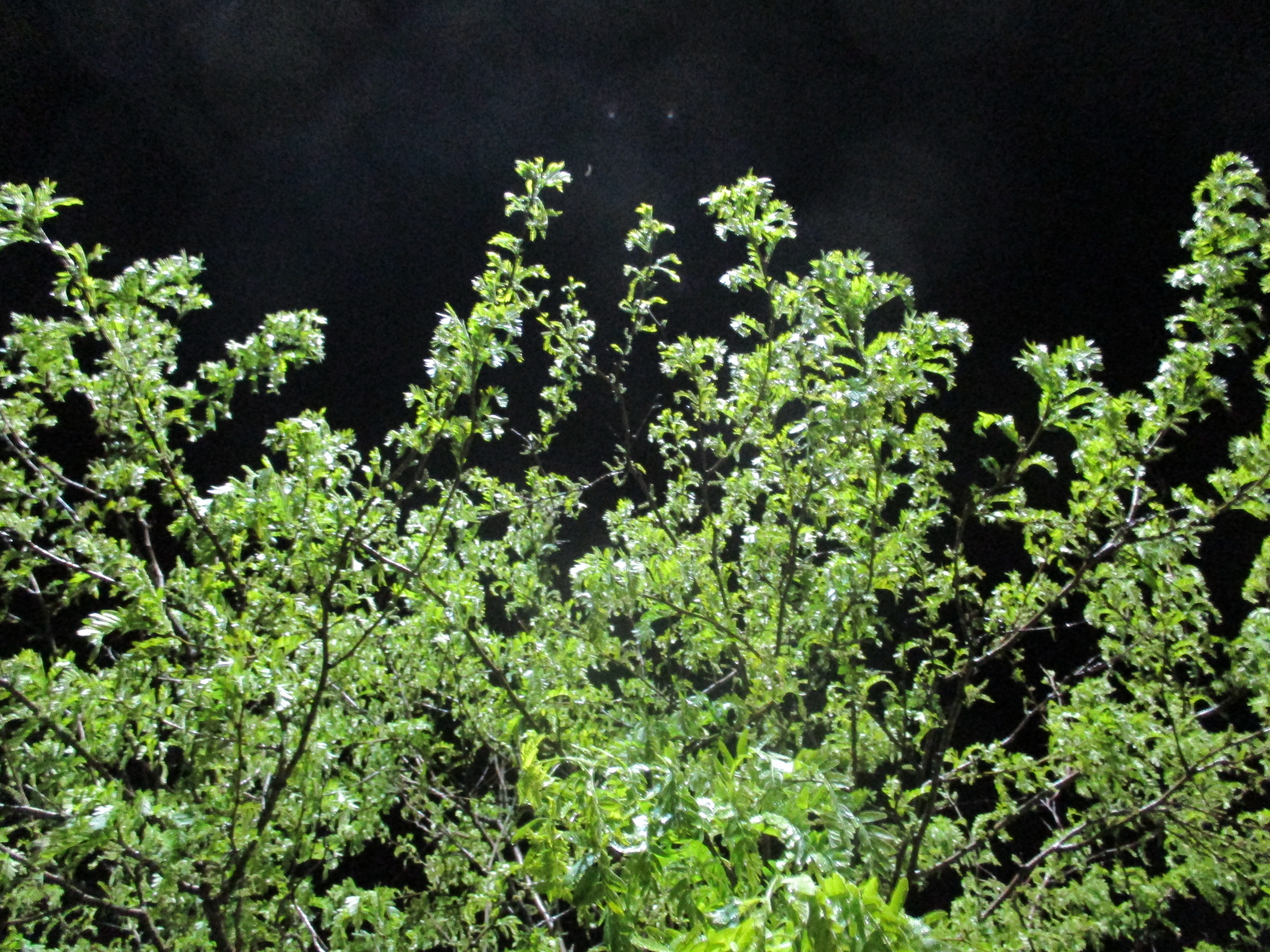
Sometimes it is important to illuminate walkways, driveways and stairways for safety, even if exhibiting the landscape is not important. For such applications, the quality of the light is not as important. Sodium vapor light that works so well for street lamps can make plants look rather sickly. Mercury vapor lamps can make them seem rather pale and bland. Modern LED lamps just look creepy.
So, what happens when foliage that already looks sickly get illuminated by light that enhances the sickly appearance? Well, like many styles of contemporary art, it is a matter of taste . . . or perception . . . or some other big word that a horticulturist neither…
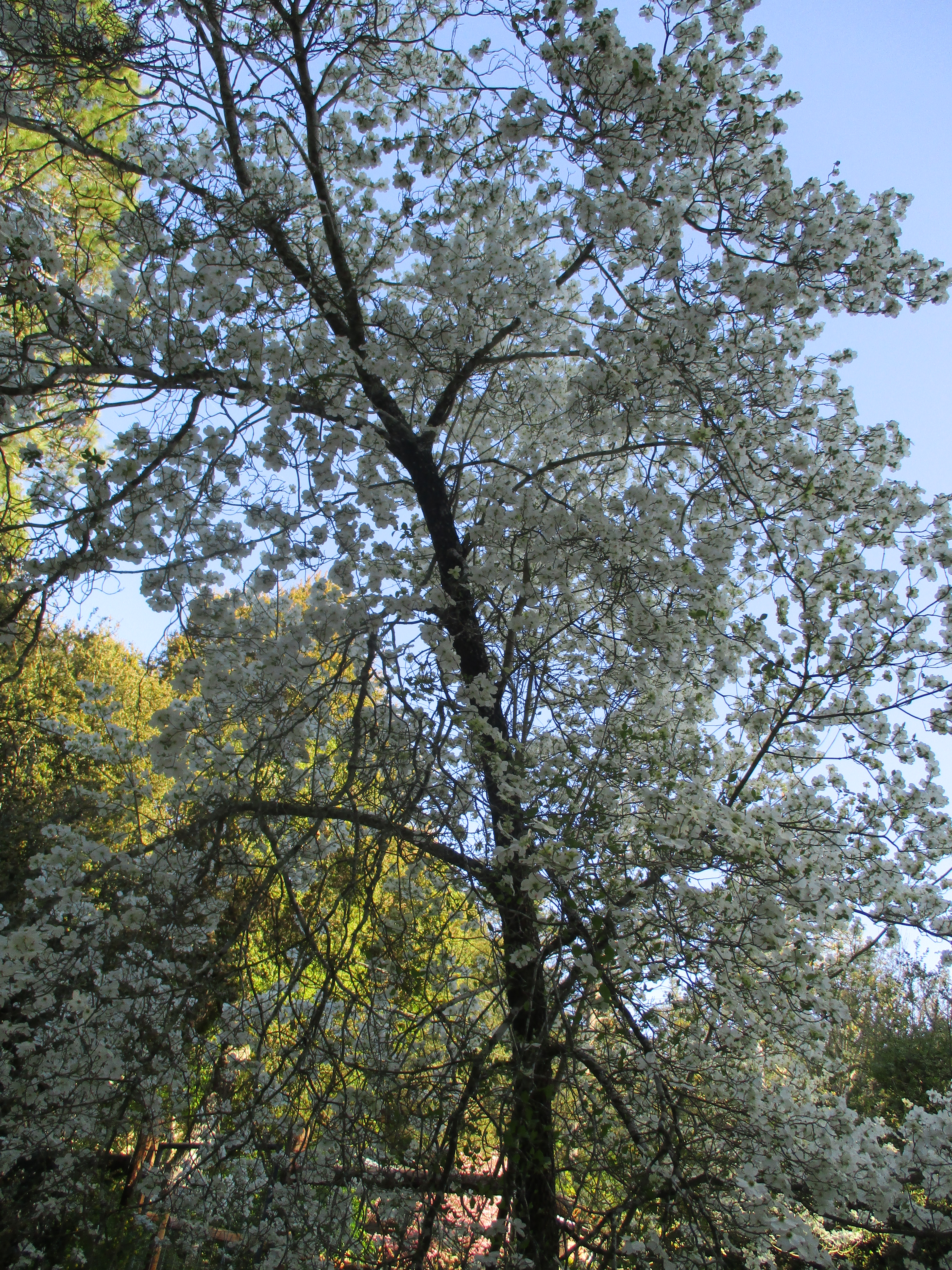
As I reblog this old article at the beginning of April (for later in April), the dogwoods have not yet bloomed. After so much grooming during the last three years, they are even more prolific than before.
My weekly gardening column does not have much space for everything that should be said about the various topics and featured specie. I just try to fit the most basic of information into the space available, but usually would like to fit more in.
Sometimes, I would like to fit more pictures in too. It can be difficult to select just one camellia, or just one rhododendron. I typically select those that have the best contrast for black and white pictures, just in case some newspapers must deprive them of their color. That often means that I get to select my favorite white flowers rather than their more colorful counterparts. Regardless, there are so many good pictures that do not get seen. Then, there are also many qualities of the subjects that are difficult or impossible to show in pictures.
The dogwood picture that will get posted on Tuesday is…
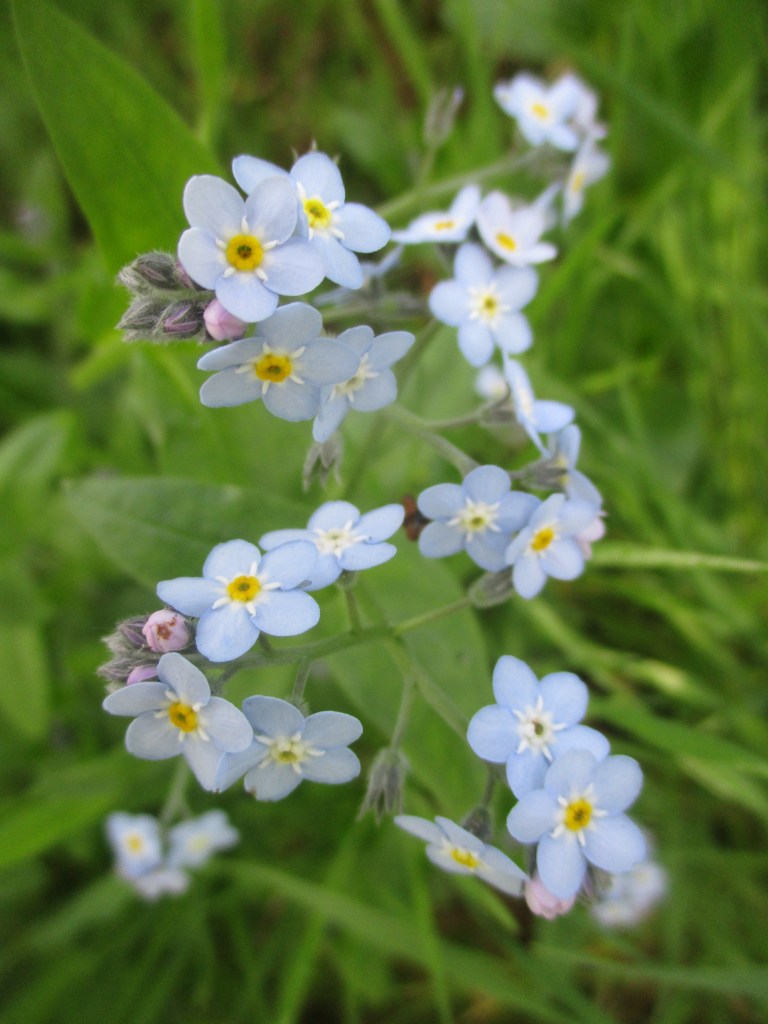
As I mentioned last week, these pictures were obtained a week and a day ago. The flowers were fresher then. I suspect that they are all finished or nearly so by now, although money plant is still colorful in some sheltered situations. The flower that might be California bluebell did not last long at all. I should have looked for seed, but could not find it again. This is an odd batch. I know more about what I work with here than almost anyone else, but some unfamiliar items are baffling.
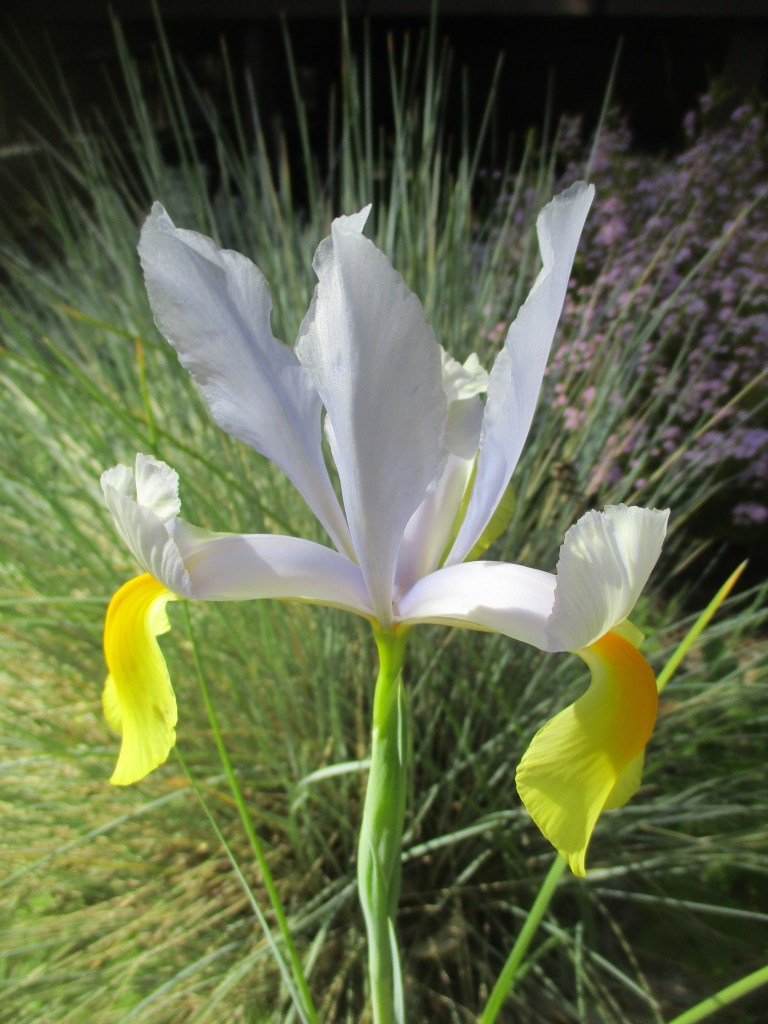
1. Is this Dutch iris? It was planted years or perhaps decades ago, but only started blooming, along with freesia and ixia, after overgrowth above it was cleared. I have never grown Dutch iris.
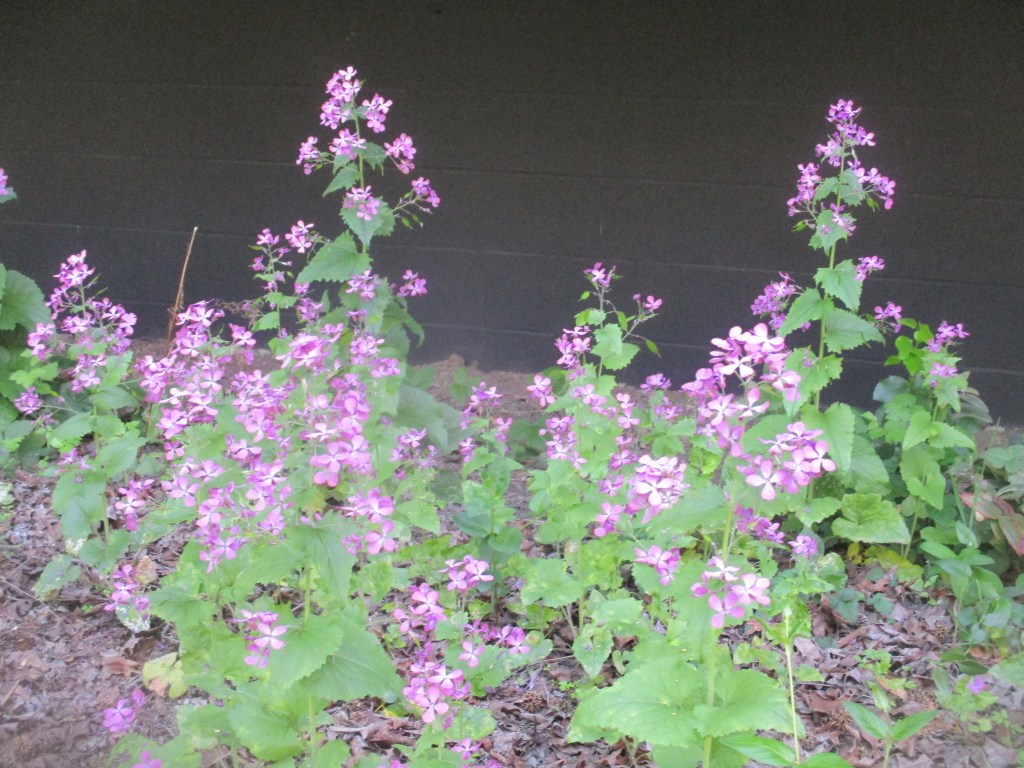
2. Is this money plant or honesty? I honestly believe that it is money plant. Others might bet money that it is honesty. I know they are the same. I would nonetheless prefer the proper name.
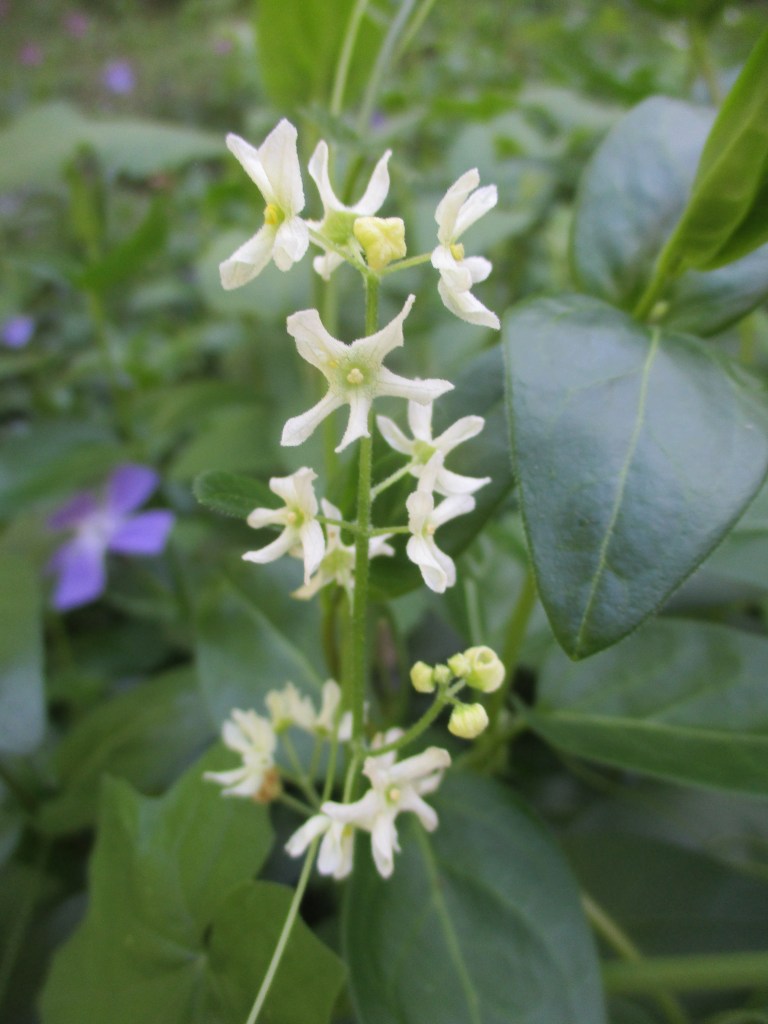
3. This one I can identify as wild cucumber. It is also known as manroot. The annoyingly weedy vines are surprisingly easy to pull out. However, the massive and resilient tubers make more.
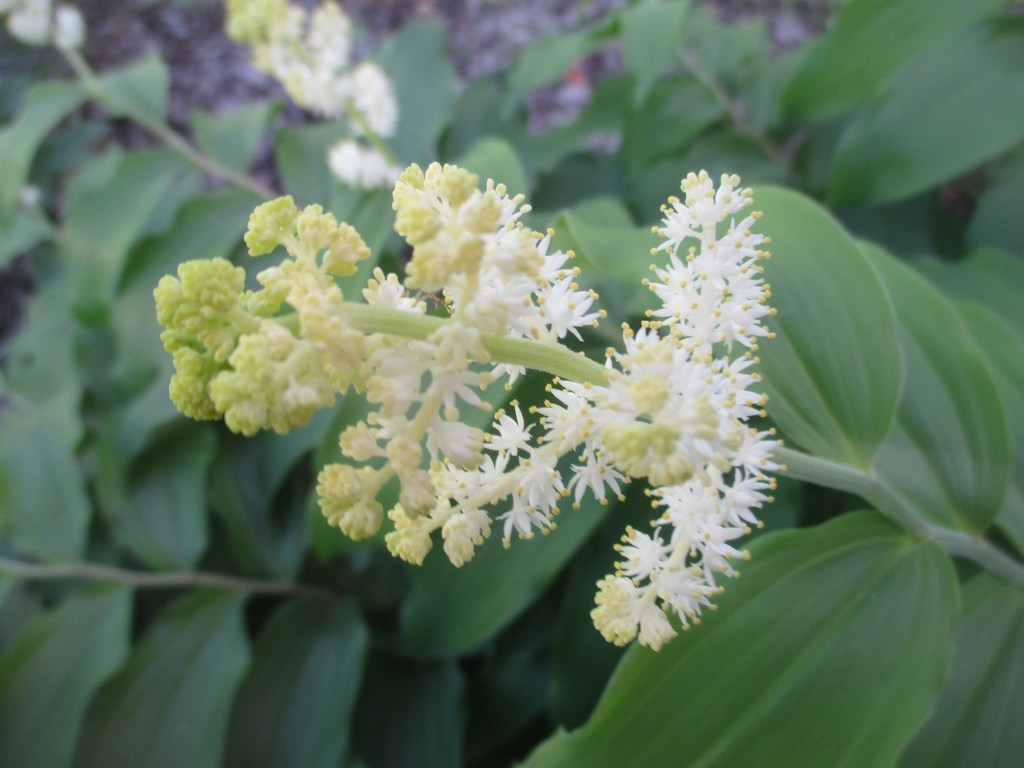
4. This is supposed to be false Solomon’s seal, but is real enough for us, since it is the only one we know. It is native, so lives in the surrounding forest and sometimes moves into landscapes.
5. What is this?! Seriously, I have no idea! It appeared on a dry roadside after the taller grassy vegetation got cut down. The foliage seems to be that of California bluebells. It is likely related.
6. I know what this is, but doubt that you do. It is from one of only two species of its genus that is native regionally. The other species is endemic to every state except for Alaska and Hawaii.
This is the link for Six on Saturday, for anyone else who would like to participate:
The few rudimentary rockroses that were available years ago have been bred into too many cultivars to keep up with. Some of the traditional types can get a few feet tall, with delightfully irregular growth, and flowers that are almost three inches wide. Most of the modern types are relatively dense, low and mounding, like a deep ground cover, with smaller but more profuse flowers. Most bloom pink. Some bloom white. After the initial spring bloom phase, a few flowers continue to bloom sporadically through summer. The grayish and aromatic foliage is not as impressive as the bloom. Rockroses want well drained soil and good warm exposure.
Tall Victorian houses make long shadows. Lower ranch houses make shade with broad eaves. Awkwardly big modern homes shade more of their disproportionately small gardens than the others, especially since they have such tall fences to compensate for their minimal proximity to other homes. Even the sunniest of home gardens have some sort of shade.
Like various architecture, various shade trees make different flavors of shade. Silk tree, honeylocust and silver maple make broad shadows of relatively light shade. Because they are deciduous, they allow most sunlight through while bare in winter. Southern magnolia, Canary Island pine and Canary Island date palm make darker shade throughout the year.
Spots that are shaded only by the west side of a fence get warmer afternoon sun exposure than spots that get eastern exposure in the morning. Plants that are only shaded in the morning therefore need to tolerate both warm afternoon exposure and partial shade. Eastern exposures are easier to work with, since most plants that tolerate a bit of shade also like to be sheltered from harsh afternoon exposure.
Because fences lack eaves, southern exposures lack shade, and may enhance exposure by reflecting glare and heat. Southern exposure against houses and garages is determined by the height and width of the eaves. Light colors reflect more than darker colors. Northern exposures are of course the shadiest.
Whether for shade of sunny exposure, plants need to be selected accordingly. Bougainvillea, ceanothus and other plants that like good warm exposure with plenty of sunlight will not do much if shaded. Kaffir lily, hosta, rhododendron and various ferns that prefer partial shade can get roasted if too exposed when the weather gets warm and dry (with minimal humidity).
Eastern redbud, sweet bay, Oregon grape, Heavenly bamboo (nandina), various hollies, various podocarpus and both English and Algerian ivies are some of the few plants that are not too discriminating about their exposure, and will be just as happy with partial shade as with full exposure. Hydrangea, camellia, fuchsia and aucuba are nearly as agreeable, but will get roasted by harsh exposure enhanced by reflected glare from walls or pavement. All palms tolerate shade while young, but adapt to full exposure as they grow above what shades them.
Shade can change as the environment changes. Sun exposure increases if a tree or building gets removed. Remodels or newer and higher fences can increase shade. Even without such obvious modifications, large shrubbery and trees make more shade as they grow.


 Speaking of which, this is not the right location!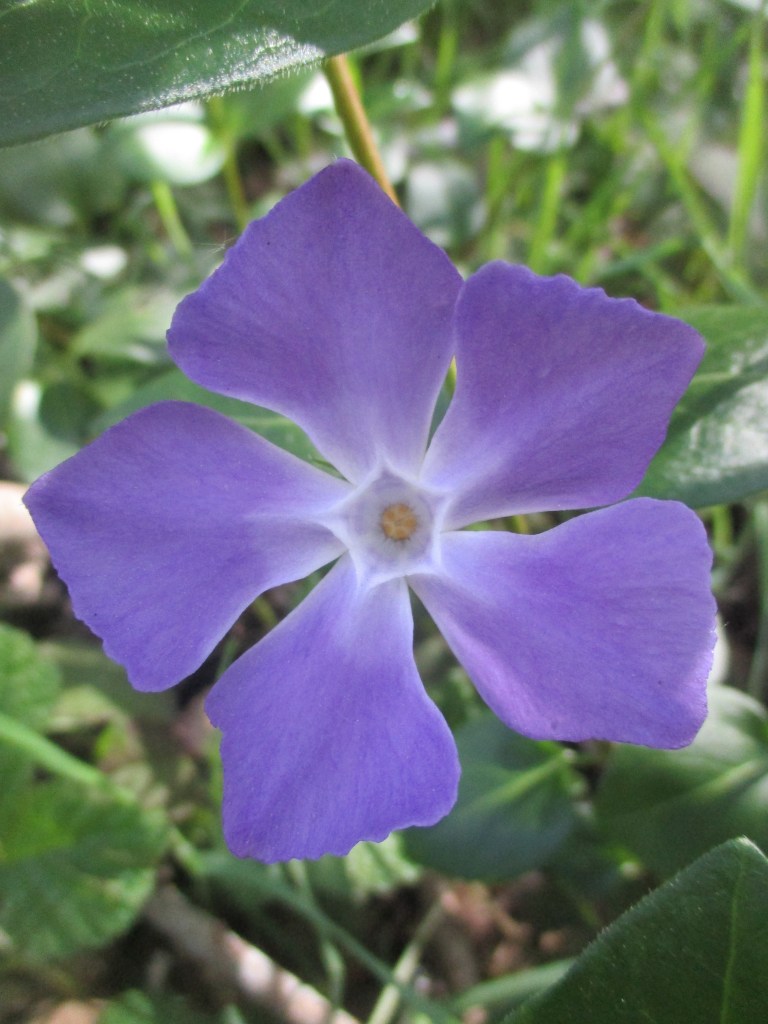
 Color in the garden is nice as long as we can see it. There is not so much to see after the sun goes down. That is why some gardens that get used at night are illuminated.
 My weekly gardening column does not have much space for everything that should be said about the various topics and featured specie. I just try to fit the most basic of information into the space available, but usually would like to fit more in.