 We do not get much frost here. This picture of the view through the windshield of one of the work vehicles was taken more than a week ago, while the humidity and the temperatures were still quite low. The sparse and angular pattern of the frost on the windshield is a result of the minimal humidity. There will be more frost later in winter, although there will not be nearly as much as most other climates get.
After a cool Monday morning last week, the weather got a bit warmer, or really just less cool. Rain started about midnight between Tuesday and Wednesday, and continued through the day and into the night. More rain is predicted to start after noon next Tuesday, and continue through Thursday. There will be no frost during this weather pattern. Frost happens here only between rainy weather. One might think that since we do not get much rain, there would be plenty of time in between for frost. Really though, much of our winter weather is simply quite pleasant, neither rainy nor frosty.
As appealing as this might be to those in harsher climates, it has certain disadvantages.
So far, there was just enough chill to start defoliation of the black locusts and box elders in the background of the picture, and just enough rain to almost finish it. Trees that need more of a chill to start this process are not so impressed with the weather. Many of the crape myrtles have not even started to color yet. Cottonwoods are starting to defoliate, but are doing so while still only dingy greenish yellow because they did not get enough chill for better color.
Spring bulbs that got planted earlier or are being planted about now will bloom next spring because they were so optimal and primed to do so before they were planted. However, many will not get enough chill in their second winter to bloom again. Consequently, many of the bulbs that would be perennial in other climates are grown as expensive annuals here. Likewise, seed of certain specie that self sow may not get enough chill through winter to germinate next spring.
So again, what is comfortable for us is not so ideal for everything in the garden.
Time Travel
 One never knows what strange artifacts might be found out in public landscapes. It is amusing enough to find items discarded or simply misplaced long ago by former occupants of a home out in a private home garden. Public landscapes are even more interesting, since they collect debris and artifacts from many more people. Some landscapes have been doing so for a long time.
Besides litter, the most commonly found artifacts are sporting equipment. Frisbees, baseballs, tennis balls, soccer balls, volleyballs and such are commonly lost in dense vegetation. Golf clubs, baseball bats and tennis rackets sort of make one wonder. Chew toys are sometimes left by dogs who go after them, but then return with something they perceive to be more interesting.
Landscapes that are near roadways often feature car parts that might have fallen out of cars as they drove by, as well as a few that cars could not have driven by without. Obviously stolen items, such as purses and wallets, often surrounded by a few credit cards that they likely contained sometimes appear. Stolen mail might fit into that category.
I have yet to find anything as interesting as tickets to a San Jose Sharks game, a big bag of money, Elvis, a purple dinosaur from another plant or a flying saucer that brought it here. However, I have found evidence of time travel!
A retaining wall that holds back an embankment above a parking lot at work was apparently constructed by Mike Menard in 1982, who left his name and the date inscribed into the concrete on top of the wall. That by itself is nothing too remarkable. What IS remarkable is that an adjacent retaining wall was constructed four hundred years later, and three hundred and sixty-four years from now, in 2382!
Six on Saturday: More Unknown Succulents
This is not as simple as it looks. It is something of a guessing game for me. I am rather certain that #1 and #2 are identified correctly. I am not so certain about #3 and #5. The name of #4 is merely a guess. #6 is the only one that I know the name of for certain, although the name that I know it as is now outdated.
The lack of a species name for the two species of Sedum #1 and #2 seems like a cop out to me. I might have discussed it in one of my Wednesday rants, or will do so soon enough. All species should be described as a ‘species’, not merely as a genus with a cultivar name tossed in as if it adequately designates the identity. I sometimes write about how the nomenclature of plants is like that of cars. Both plants and cars are distinguished by genus AND species, with some specie divided into separate cultivars and varieties. (Cultivars are merely ‘cultivated varieties’.) Depriving a plant of a species name is like describing a car as a Buick ‘Convertible’, or a Chrysler ‘Sedan’. There is a big difference between a convertible Electra and a convertible Skylark, although both are Buicks. There is also a big difference between an Imperial sedan and a LeBaron sedan, although both are Chryslers. I may not have identified the two Sedum with their correct names, but even their correct names are not very correct anyway.
Echeveria glauca #3 seems too simple. Shouldn’t it have a cultivar name too? I really do not know. I really do not even know what species it is.
The same goes for Graptopetalum paraguayense #4. Really, I do not even know what genus it is. This is merely a guess. How embarrassing.
Aloe brevifolia #5 has a different issue with its name. It seems that all aloes are known simply as Aloe vera, even though not many of us would recognize Aloe vera if we actually saw it. This makes it easier to identify unknown aloes, but complicates the identification of familiar aloes.
Then there is the easily identifiable Bulbine caulescens #6. Seriously, I recognize it, but somehow, the name got changed. The first name is how I know it. The second name is the newer correct name.
1. Sedum ‘Angelina’
2. Sedum ‘Blue Spruce’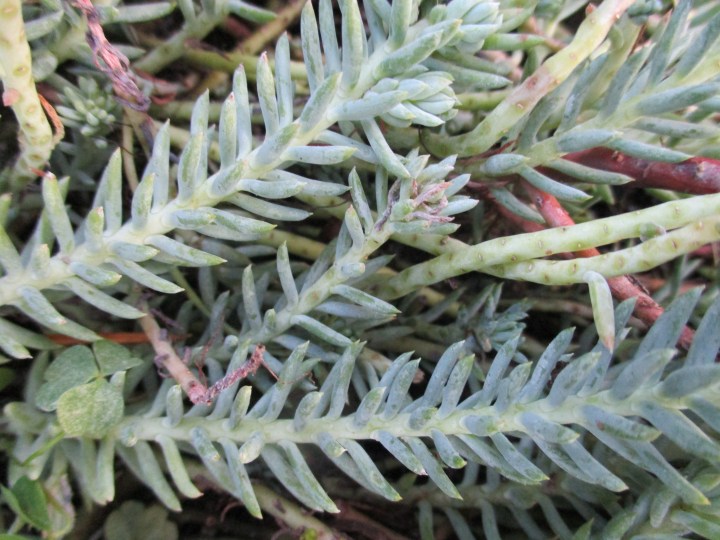
3. Echeveria glauca
4. Graptopetalum paraguayense
5. Aloe brevifolia
6. Bulbine caulescens or Bulbine frutescens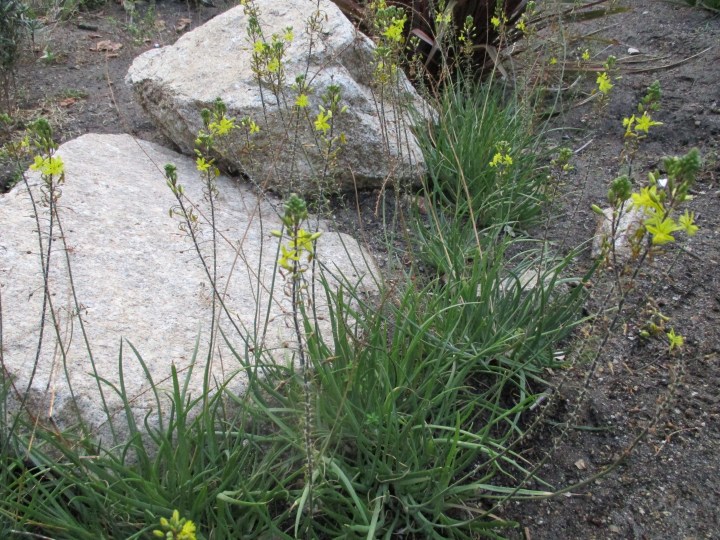
This is the link for Six on Saturday, for anyone else who would like to participate:
https://thepropagatorblog.wordpress.com/2017/09/18/six-on-saturday-a-participant-guide/
FINALLY! We have RAIN!
 For those who do not remember what ‘rain’ is, it is, it is those odd drops of water that fall so mysteriously from the sky in other regions. We get it here too, just very rarely, and almost exclusively within a limited season centered around winter. Rain tends to be affiliated with storms. The last storm moved through here last spring.
Rain may not be much to look at, and is nearly impossible to get a picture of, but it adds up to become a very important commodity known as ‘water’. Some believe that California does not have enough water. We natives know that there is actually plenty of water, but merely too many people in need of it, and a few of those many who capitalize on that need. Anyway, I did not even try to get a picture of the rain that is falling so nicely now, but recycled this old picture of a small volume of water in what is known as a puddle, which is merely an accumulation of water within a low spot on a flat surface.
As unpleasant as rain is to work in, we are very pleased to get it. The sky is rinsed of smoke, and despite the unpleasant news that rain will interfere with searching for remains of those killed by the Camp Fire, there is also the excellent news that the rain is falling over a large area, and making forests significantly less combustible. The formerly crispy forest is again lush and damp and sloppy. What had been a Dust Bowl down where we dump greenwaste is now an epic mud pit! Everyone here is delaying other work to clear drains on roads and roofs. The first storm of the season is always something to celebrate.
Horridculture – Just When You Thought It Couldn’t Get Any Sillier . . .
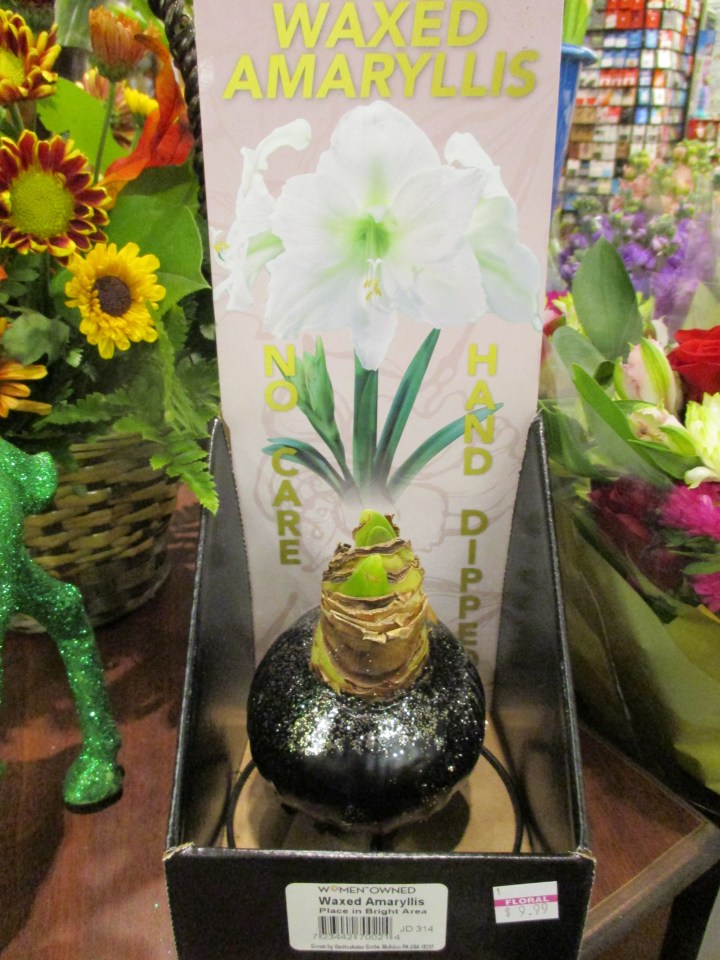 Two others have already written about this far more proficiently than I would have:
https://sweetgumandpines.wordpress.com/2018/11/18/abomination/
Amaryllis, Queen of the Forced Bulbs
These two articles say it all. I would not have bothered to write about it too if I had not already taken the picture above. I did not read the label to learn what one of these articles said about why these bulbs were waxed. It seals in moisture, so that the bulbs do not desiccate while they bloom without water or moist media. They at least get water when forced by the conventional manner.
I suppose to many who force amaryllis bulbs, there is no problem with waxing them like this, since they are typically discarded as their forced bloom deteriorates. There is no expectation for the bulbs to survive the process to regenerate and bloom the following year.
We can at least pretend that we intend to nurture amaryllis bulbs that bloom in a ‘forcing kit’ that includes a small volume of potting media that sort of sustains the fleshy roots through the process. After all, they can survive the process and get potted into larger volumes of media to recover and bloom again. Some of us have actually sustained such bulbs for a few years Bulbs that are purchased bare and then potted directly into more reasonable volumes of media are of course more sustainable from the beginning.
Poinsettias and living Christmas trees are no better than forced amaryllis. Nor are the Easter lilies in spring.
Like amaryllis bulbs, Easter lilies can be purchased bare and grown directly out in the garden. Those that are forced in pots can be planted out in the garden afterward to possibly recover. Otherwise, they too get discarded after bloom.
Poinsettias can technically be grown as houseplants, but rarely survive that long. Those that do not get tossed after they shed their colorful bracts are likely to get tossed as they languish in recovery from the process of forcing them to bloom in a very contrived greenhouse environment.
Living Christmas trees are actually more of a problem if the ‘do’ survive. They so often get planted into small gardens, and often next to foundations of homes, with the belief that they will always stay small and innocent. The problem is that most are seedlings of the Italian stone pine, which grows very big and very fast, and soon becomes a problem that is very expensive to remove. If not planted in a garden and allowed to destroy all within reach, they die from neglect and confinement within their own pots, often within their first year.
Bad Root Pruning
 Root pruning is nothing new. It is done more commonly than we think about for many aggressive perennials like lily-of-the-Nile, that like to disperse their roots into areas where we want to grow more docile annual bedding plants or vegetables. We might do it halfway, or more, around a shrubby plant during spring or summer if we plant on digging and moving it the following autumn. For most small and low profile plants, root pruning is sort of tolerable. The plants that we do it to may not like it, but it is sometimes necessary, and better than not doing so.
Trees are not like most small and low profile plants. Most are very sensitive to root pruning when mature. They are not so proficient at replacing the portions of their root systems that they are deprived of. Large roots that get severed are very susceptible to decay, which slowly migrates inward to the rest of the root system. Obviously, depriving trees of roots compromises stability to some extent. Because roots are below grade, it is impossible to know the extent of the damage caused by root pruning while it is being performed. This is a classic example.
The exposed freshly cut surface to the left in the picture above is not the stump of a small tree that was just cut down. Although it is, in this picture, a horizontally oriented cut surface of what seems to have been something that was standing vertically, it was actually cut vertically through a horizontally oriented root. Yes, that is it in the yellow oval to the right. It was cut because it was displacing the adjacent asphalt pavement, as demonstrated by the picture below. Rather that trouble us with this concern, the resident of the adjacent home cut the root of this mature photinia tree to protect his driveway from more damage.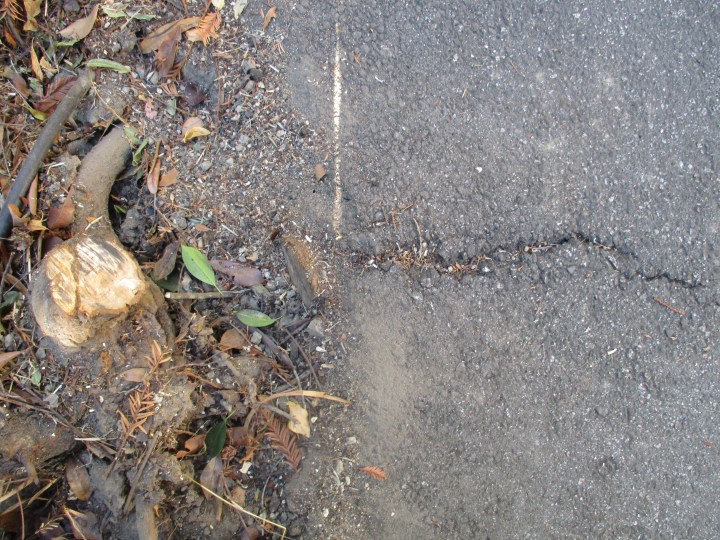
The problem was that the major root that was severed was all that was supporting the tree. (The cut surface of the severed root is in the middle of the picture below.) The roots to the left and right of it may seem to be substantial in the picture below, but were mostly decayed stubs left from earlier root pruning. I was able to wrestle the stump out to dispose of it, without cutting more roots. The lack of other substantial roots is probably why the primary root was so big and expanding actively enough to displace the pavement.
The funny thing about all this is that I would have done the same thing. I would have determined that, although the tree would be very distressed by the loss of such a major root, it should not have been too terribly destabilized, and should have been likely to eventually recover. Even if it eventually succumbed to the distress, the loss of this mature but small tree would have been a better option relative to continued damage to the paved driveway. I certainly would not have expected it to simply fall over as it so comically did. The picture below shows what had been vertical trunks of the photinia tree that were quite horizontal after it fell over. The fractured asphalt pavement is visible at the far right edge. The top of the tree reached the center line in the adjacent roadway. I am sorry that I did not get a more amusing picture of it blocking the lane. I was in too much of a rush to clear the roadway at the time. This was something that I really was not expecting to encounter at work.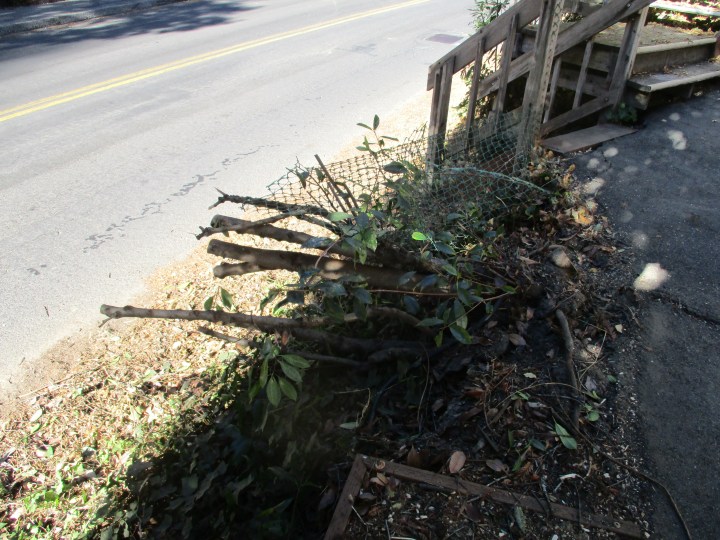
Sweetgum Color
 We may not get much foliar color in autumn here, but we get enough. Sweetgums do not need much cool weather to color well. They would probably have colored better and held their foliage a bit better if the weather got cooler faster, but we can not complain about what we got. Most of the crape myrtles are still completely green. Cottonwoods are defoliating, but without much color. Maples are rare here. The three best trees for color in autumn here are sweetgum, pistache and flowering pear. Of these, we happen to have several sweetgums here.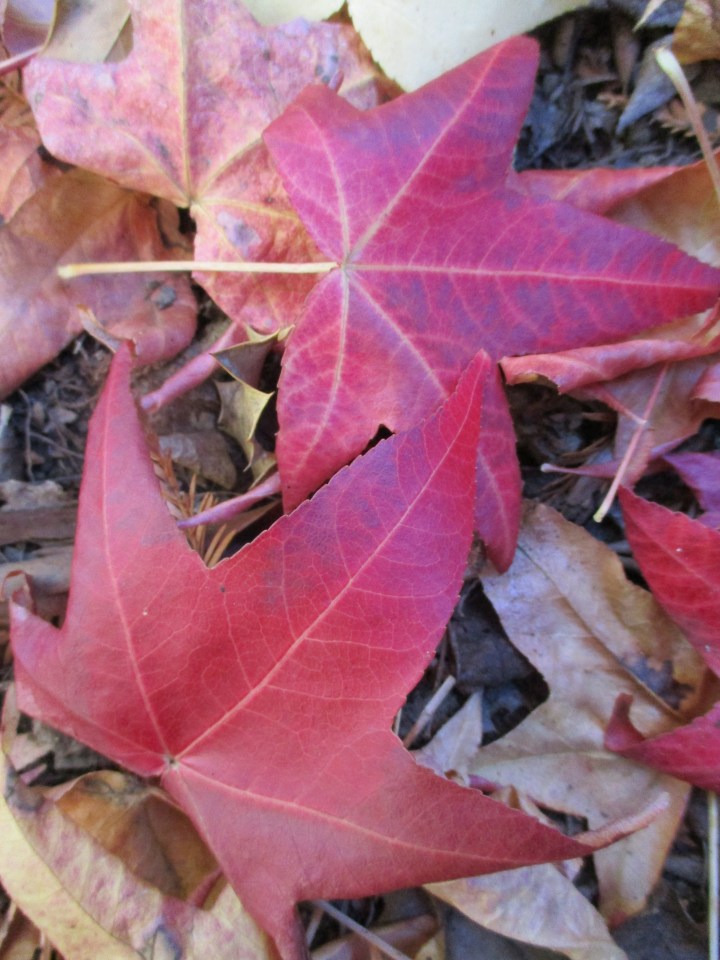
Sweetgum is not the sort of tree that I would recommend for home gardens. They are innately very likely to develop structural deficiency. By the time such problems are identified, they are difficult to correct without disfigurement. Aggressive roots are likely to displace pavement, and sometimes invade septic systems. Then there are all those nasty maces; those hard and prickly round seed pods that stick into lawns and make pavement dangerous to walk on. They are too abundant and heavy to rake away as easily as fallen leaves. There are not enough squirrels in the entire forest to take them all!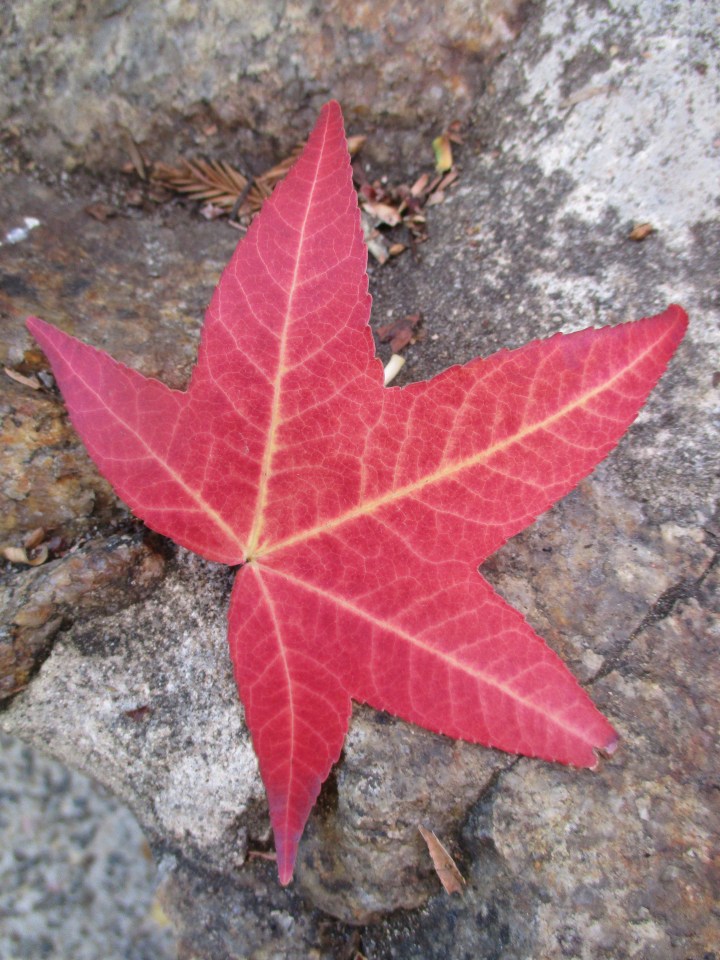
In some of our unrefined forested landscapes, where maces and falling limbs can fall into the forest without damaging anything, and roots can not reach concrete pavement, sweetgums can be allowed to go wild. (Unfortunately, most of ours happen to be near concrete within refined landscapes. That is another story.) Their tall and somewhat conical form happens to work very well with the native redwoods and Douglas firs, which provide the perfect rich green backdrop for their exquisite autumn color. Those of us who do not know better might mistake them for a native species. They look right at home here.
Six on Saturday: Fire Season
California really does have the same four seasons that the rest of America has. They just happen to be somewhat subdued in some of the milder climates. The rumor that California has only two seasons, summer and a few days of not-summer, is completely inaccurate. In fact, besides the traditional four season, we have a fifth season that overlaps at least summer and autumn. It reality, this season never ends. It is always ‘fire season’.
Like any other season, fire season affects how we garden here. We prefer to grow plants that are less combustible, which is often contrary to the preference for native specie. In suburban and rural areas, we must manage native vegetation and keep it away from our homes and other buildings. When the weather gets smoky from forest fires, some of us postpone gardening chores for healthier weather.
The Rincon Fire near Paradise Park (not to be confused with Paradise) burned for a few days a week and a half ago, and filled the Valley with thick smoke. By the time that smoke cleared out, smoke moved in from the Camp Fire that burned Paradise more than two hundred miles to the north. Smoke from the Woolsey Fire and the Hill Fire that both started on the same day in Los Angeles and Ventura Counties stayed to the south. The Bear Fire, which was the second relatively small forest fire in our region, started and was contained just yesterday, just a few miles outside of Boulder Creek. Most of us were not aware of it until after it was contained.
Incidentally, a 50% chance of rain is predicted for next Wednesday.
1. Clear blue sky finally appeared on Thursday morning.
2. The orange moon demonstrates how smoky the sky was on the previous evening. It is not easy to zoom in and get a good picture of the moon.
3. Ponderosa pine forests are the more combustible parts of our region. The darker understory is a mix of coast live oak, canyon live oak, madrone and other chaparral flora. The dead ponderosa pine that I got a picture of for ‘Six on Saturday: Dia de los Muertos’ is to the right in this picture. Sunsets were spectacularly colorful before the smoke blew away. I can not explain why the color was so bland when this picture was taken.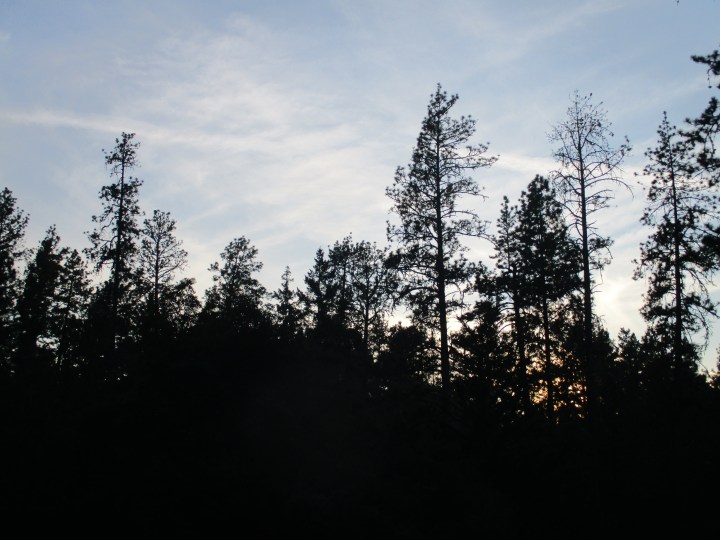
4. Our debris pile continues to accumulate more biomass from the landscapes and surrounding forests. It is not yet big in this picture. It will get significantly bigger before it gets taken away. Once gone, we start the process all over again. It never ends. There is so much forest out there, and we are constantly trying to keep it away from the buildings.
5. These numbers on the side of my work vehicle allowed the volunteer firefighter who used to drive it to go into areas that had been evacuated ahead of forest fires. Several of our vehicles are outfitted with these decals.
6. This is the picture that you probably did not want to see. It is what remains of the home of one of my colleague’s clients in Malibu after the Woolsey Fire moved through. The front garden was exquisite. The home was even better.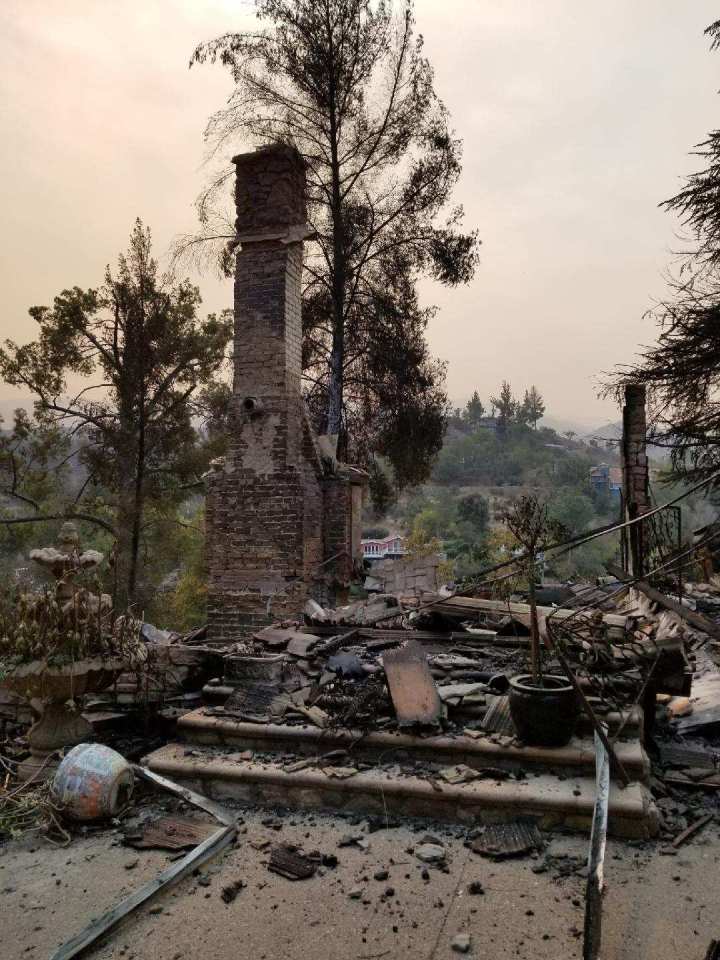
This is the link for Six on Saturday, for anyone else who would like to participate:
https://thepropagatorblog.wordpress.com/2017/09/18/six-on-saturday-a-participant-guide/
Horridculture – Bad Name
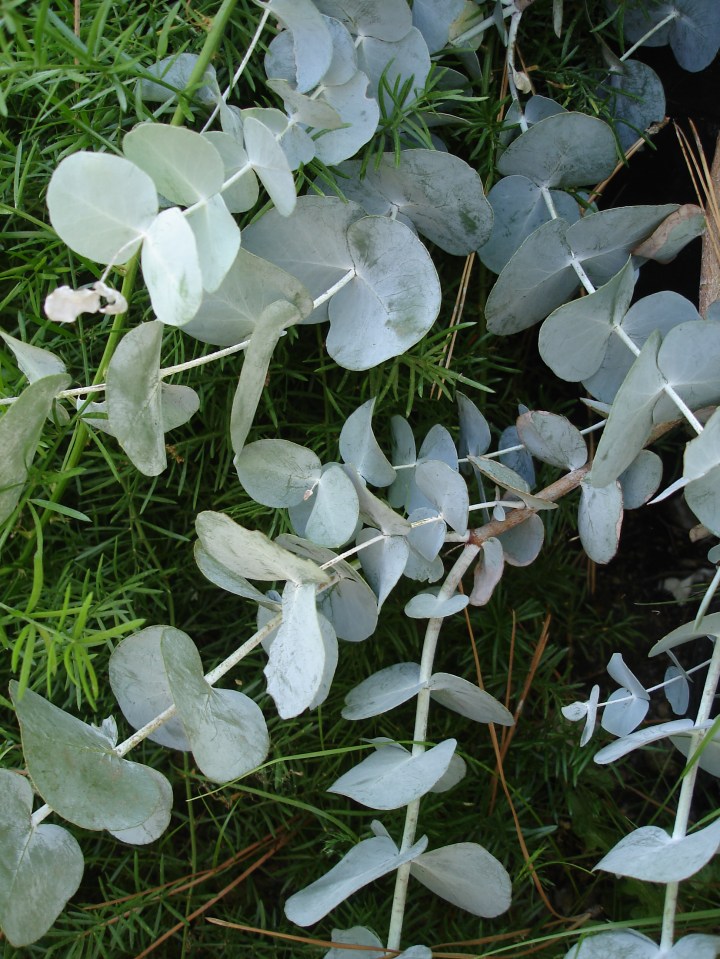 Junipers have a bad name. So do eucalypti. Too many of the wrong types were planted back at a time when they were too trendy. Those that were planted into inappropriate situations grew up to cause problems. The names of all junipers and eucalypti are now synonymous with those problems, even though there are many types of both genera that are quite practical for landscape purposes.
Get over it.
There are many junipers and eucalypti that are very good options for some landscape purposes. They need only minimal watering once established, and many will survive with none at all when mature. Some types of juniper grow as very low and very dense ground cover. With proper pruning, others can develop as exquisitely sculptural shrubbery or even small trees. (Just do NOT shear them!) Because of their very complaisant roots, some of the smaller eucalypti work very well as street trees.
I am certainly not promoting either junipers or eucalypti. They will not work for every application. I am merely saying that they should not be automatically dismissed because of their names. They were once overly popular for a variety of reasons, and those reasons are still valid.
However, I will say that there are a few species and varieties of each that are worth avoiding. They are likely what originally justified the bad reputations that are now shared by all of their relatives. For example, blue gum eucalyptus that was planted as a timber crop so long ago really is MUCH too big and messy for home gardens. Even where space is sufficient, there are probably better options.
Some of the current fads are also worth avoiding, or at least questioning. Some are very likely to earn a ‘bad name’ in the future, either because there will be too many of them, or because their faults will become evident as they mature. Because so many get planted within such a short time, many that mature at the about the same rate will develop their faults at about the same time.
For example, crape myrtle is such a useful and complaisant tree that it has been planted too commonly for just about every situation in which a tree is desired. It is resilient. It is complaisant with concrete. It blooms spectacularly. It colors splendidly in autumn. It really is an excellent small scale or medium tree for small garden spaces or near utility easements. It works very well in narrow park strips where larger trees would displace concrete. Yet, despite all the attributes, it is not good for everything, and does not get big enough to become a substantial shade tree, as it so commonly gets planted for. In the future, there will be so many crape myrtles in so many of the wrong situations that they will be considered to be too common.
Queen palm is another example. It used to be somewhat uncommon and respected. Through the 1990s, big box stores were selling them like junipers and eucalypti decades earlier. They happen to be very appealing palms that are more practical than the formerly more common Mexican fan pale, but have become so common that they were very often planted into situations that they are not appropriate for. Those that are under utility easements will need to be removed when their canopies start to encroach into utility cables. Because they are palms, they can not be pruned around the cables. Those that are able to mature will outgrow the reach of those who maintain their own gardens, or typical gardeners, necessitating attention from more expensive tree services. Like crape myrtles, they will also lose their appeal in the future.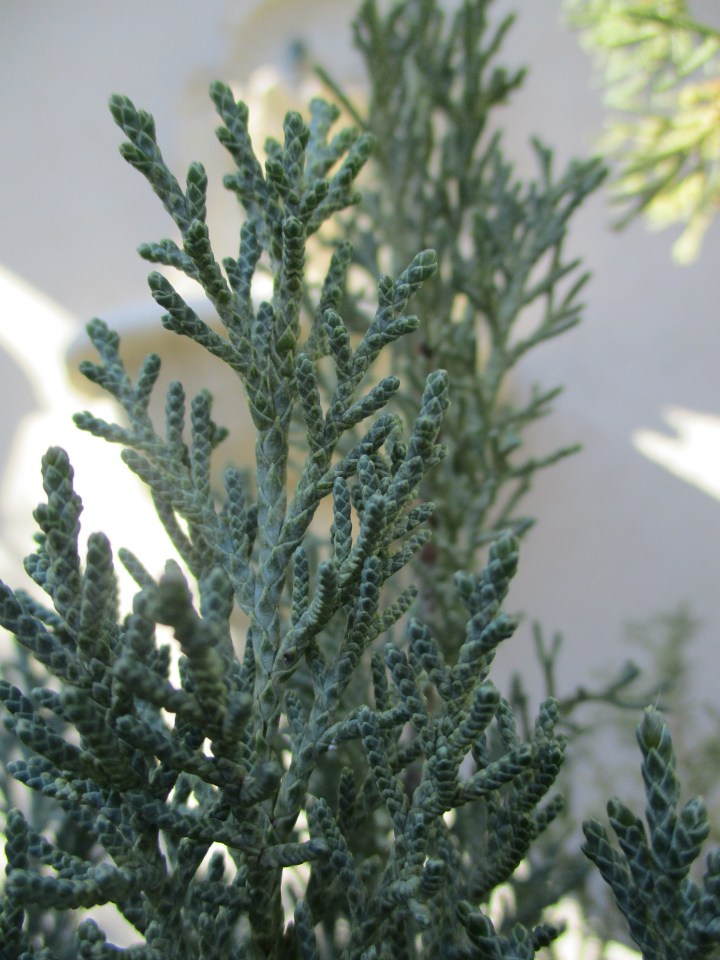
Big Trees Are Bad Houseplants
 By ‘big trees’, I don’t mean the various ficus trees that can grow up to the ceiling, and be quite happy inside. I am referring to the shade trees that live out in the yard, or forest trees that live beyond that. They are outside for a reason . . . or actually, several reasons. They are too big to bring inside. They probably would not like the climate inside. No one wants to rake fallen autumn leaves inside. Well, you get the point.
Unfortunately, on rare occasion, big trees that are outside end up partly inside by falling or dropping limbs onto the homes that they provide shade for. Just like trees seem to fall onto certain types of cars more than others ( tonytomeo.com/2018/11/04/trees-hate-cars ), trees seem to fall onto certain types of homes more than others. The difference between the homes that trees seem to dislike and the cars that they seem to dislike, is that there are actually reasons why some types of architecture is more susceptible to falling limbs or trees.
First of all, just as some trees seem to avoid falling on cars, some seem to avoid falling on houses.
Coastal redwoods in landscape situations are remarkably stable. In my entire career, I have inspected only three that have fallen. One had a massive pair of trunks that split apart and fell away from each other. Although they were on the fence line between two closely set urban homes, and there was almost no place for them to fall without destroying one home or another, they did the seemingly impossible. They literally fell onto the property line. One trunk fell out into the street. The other fell back into the backyards of the homes behind. The fence was pressed into the ground. The landscapes were seriously damaged. Gutters were stripped from both adjacent homes. Otherwise, there was NO structural damage to any of the homes. I am still amazed at how minimal the damage was!
The massive coast live oak two doors down from my former home in town was just as talented. It sprawled out over its associated home and the front yards of the two adjacent homes. It was so broad that I would not have believed that it could have fallen down without destroying one of the homes. Yet, it did exactly that . . . as I watched from my dining room. During a windy storm, it fell right toward me, and landed squarely in the front yard next door. It broke a few rafters on the edges of the eaves, and tore the gutters off, but that was the worst of the damage. It somehow found the best spot to fall where it would cause the least amount of damage.
Not all homes are so fortunate.
Victorian homes though, do not seem to be targeted by trees as much as others are. Most are closer to downtown, away from tall or very broad forest trees. Many are on somewhat narrow parcels that can not accommodate disproportionately large trees like the coast live oak in the picture above. Broadly sprawling trees tend to be too low to extend their limbs over the roofs of taller two story Victorian homes. Although taller than most other types of homes, two story Victorian homes do not occupy as much area as other homes, so are not such big targets.
Low profile homes of ranch architecture, or similar types of architecture, are more likely to be damaged by falling limbs or trees. Many happen to be located in suburban or rural areas, closer to bigger and broader forest trees. Their wider parcels can accommodate larger trees. Their roofs are low enough for trees to extend limbs over. Because they tend to be on a single level, they occupy more area, so are larger targets.

