The planter box downtown has been neglected for too long. ( https://tonytomeo.com/2017/11/04/my-tiny-downtown-garden/ ) I really must make some time to clean out the debris and a little bit of trash. There is nothing as interesting as when the concrete slurry was dumped into it by whomever was installing the tile in the bathroom of the adjacent building, but there are some odds and ends. One of the six trailing rosemary plants that was trailing so nicely over the southern edge is missing . . . as in someone cut it back to a stump. Someone dumped out an old dead houseplant right into the middle of the planter box, leaving an upside down pot shaped wad of potting soil, as if no one would mind. Right next to that, someone left a potted kangaroo paw, as if I might want to plant it into the planter box. It is all dried up and mostly dead . . . and I really do not like kangaroo paw enough to want to grow it there. Well, perhaps it is better to show you the drama than to write too much about it.
1. This is the potted kangaroo paw that someone left in the planter box. Anyone who does not notice how sloppy all the dried foliar debris on the ground around it is will be sure to notice how unsightly this dried kangaroo paw is. The pile of discarded potting soil was already bashed up and spread out before this picture was taken. I will probably plant the kangaroo paw somewhere else, just in case it survives. I do not want it here. The pot is nice.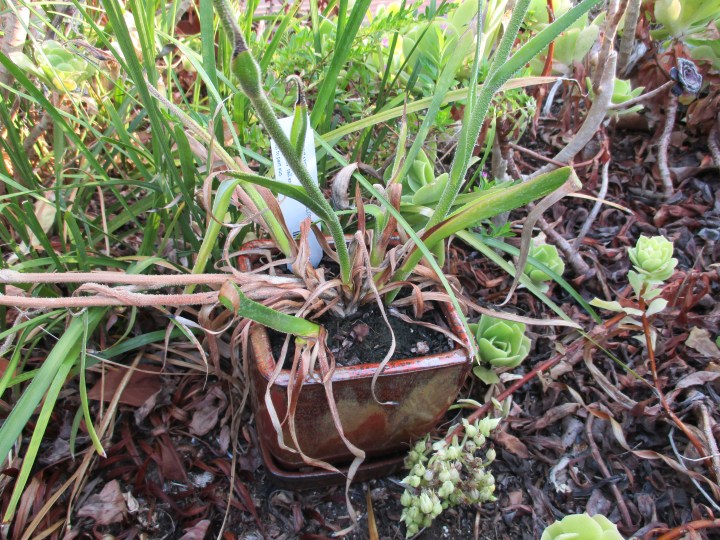
2. It has a name; Anigozanthos ‘Kanga Yellow’. Doesn’t anyone use species names anymore?
3. Right next to my planter box is a tree well with a London plane that has not grown more than a few inches in the past few years. When my nasturtiums really get to blooming and seeding, I sweep some of the seed into the tree well, where they bloom just as prolifically as they do in the planter box, but a bit later. I make it look like an accident. There is also a busted up houseleek in there. It grew from a piece of mine, and will regenerate when the rain resumes in autumn. It sort of looks like an accident too.
4. Just to the west of the slow London plane is one of a few old Southern magnolias that will be removed. They are disfigured and somewhat unhealthy, so are not worth salvaging as the pavement of the surrounding roadway, sidewalk and curb get replaced. Even if we wanted to salvage them, they would not likely survive the process. It is sad to see them go, but they were good street trees for a very long time, and certainly lasted longer than they should have been expected to. Southern magnolias commonly displace pavement. I really would not mind if the ailing London plane were to be removed as well, just because it it too pathetic to work around, but the tree huggers are intent on preserving it. When the magnolias get replaced with new redbuds or tupelos, the London plane will look odd, and will eventually get too big and break the new pavement. Oh well. My planter box and this tree are actually on Nicholson Avenue, not on Tait Avenue or Bayview Avenue.
5. ‘X’ marks the magnolias who are condemned to death. I know they need to go, but it is saddening anyway. They were fun neighbors.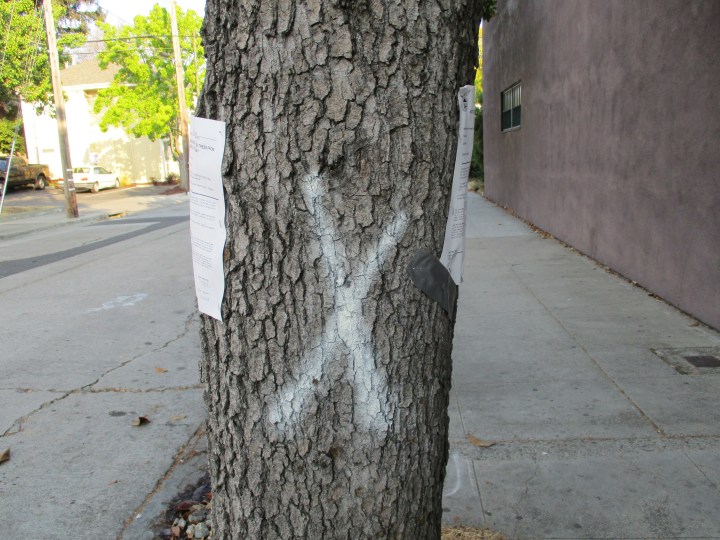
6. Since there were no colorful flowers within my planter box, it was necessary to get this picture elsewhere. Brent might say this looks like the Academy Awards, with a bee on the red carpet rose. Well, I can not expect you to know how Brent thinks. You can omit ‘rose’, and think of ‘bee’ as ‘B’, and think of ‘B’ as a euphemism.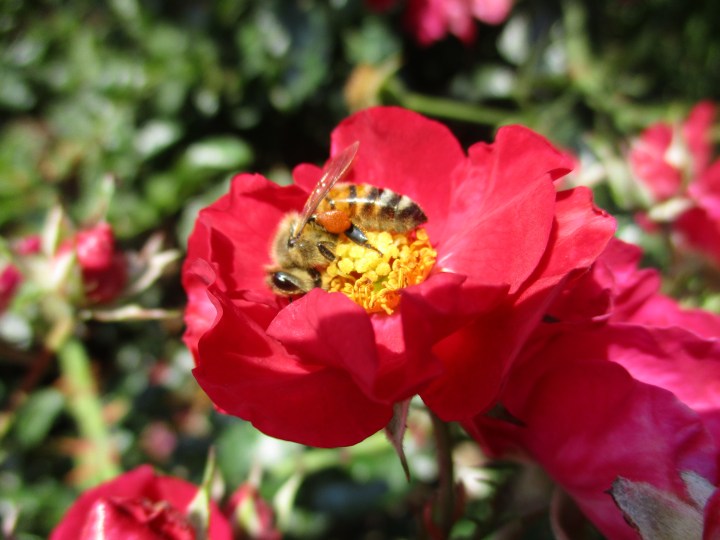
This is the link for Six on Saturday, for anyone else who would like to participate:
https://thepropagatorblog.wordpress.com/2017/09/18/six-on-saturday-a-participant-guide/
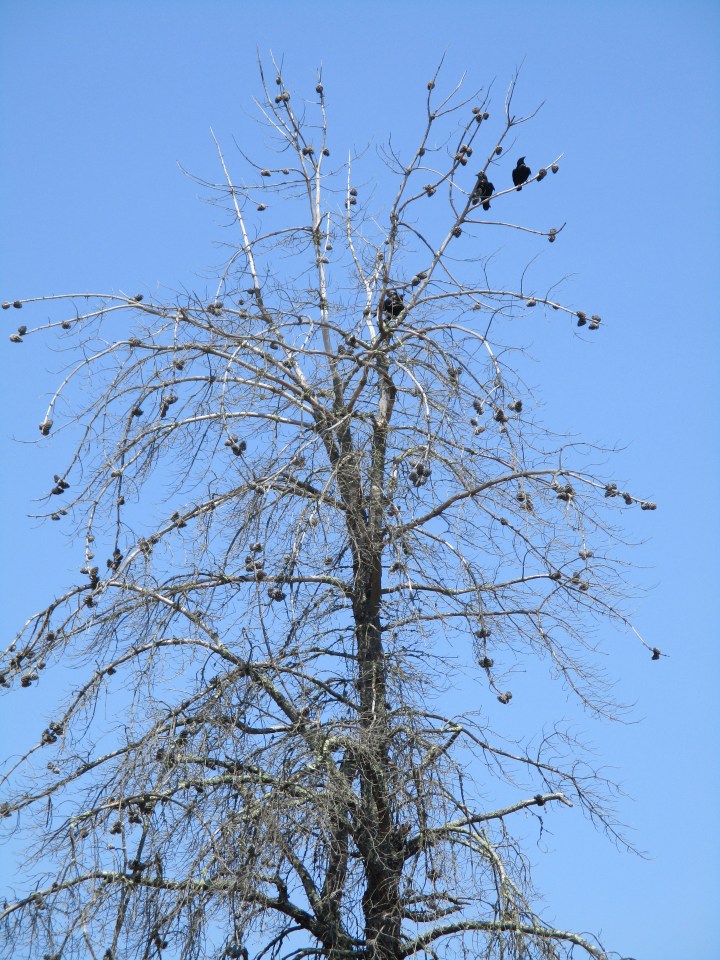 It is quite natural. Death, I mean. Every living thing does it at one time or another. Even the oldest bristlecone pines that live for thousands of years eventually do it. The Monterey pine in this picture did it quite efficiently. The three crows perched on top make it look extra dead. You know, not merely dead, but very dead. If this tree were in my own garden, I would be totally saddened by its death, but there is nothing that I could do about it.



 How can anyone eat them? No only do people eat them, but many people enjoy them, and some even consider them to be their favorite vegetable!
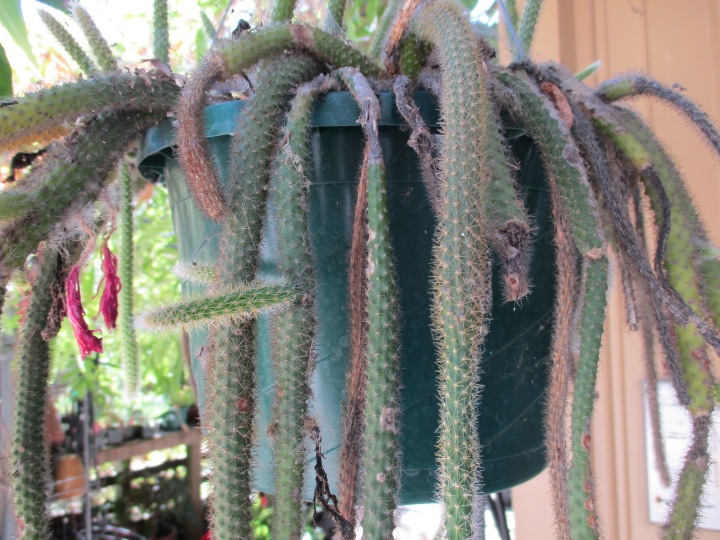
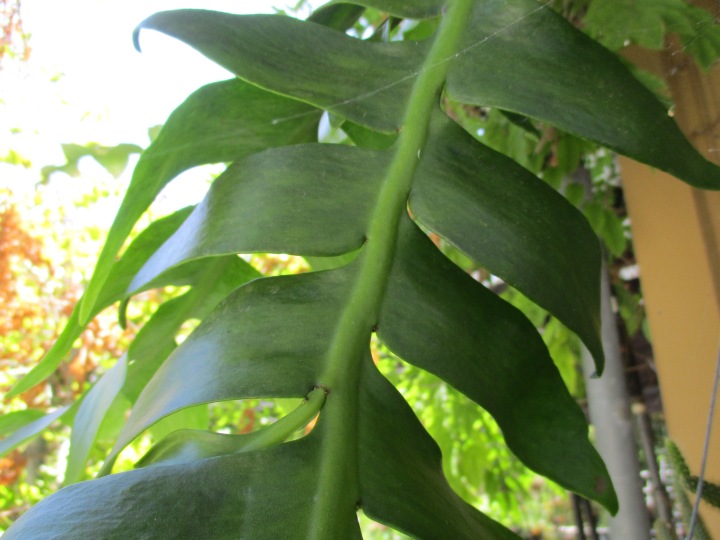
 This rant may not go in the direction you expect it to. The pictures suggest that this would be about the bad vegetation management crews who severely disfigure trees that get too close to utility cables. It is not.
 This brief article from a few days ago discusses a few more details about easements.
 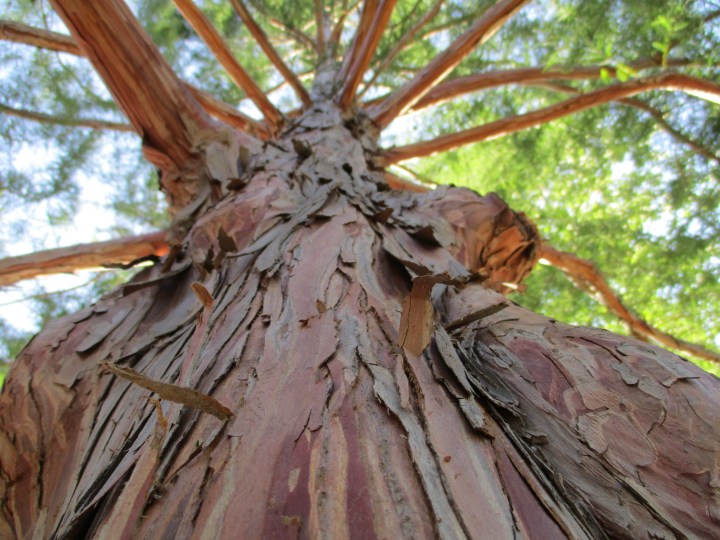 When a plant that should be compact or shrubby gets too lanky with exposed lower stems, it is described as ‘leggy’. We do not hear much about plants that develop ‘knees’. Perhaps that is because there is only one species that does so. That one species happens to be very rare here. If there are other specie that develop knees, I do not know what they are.
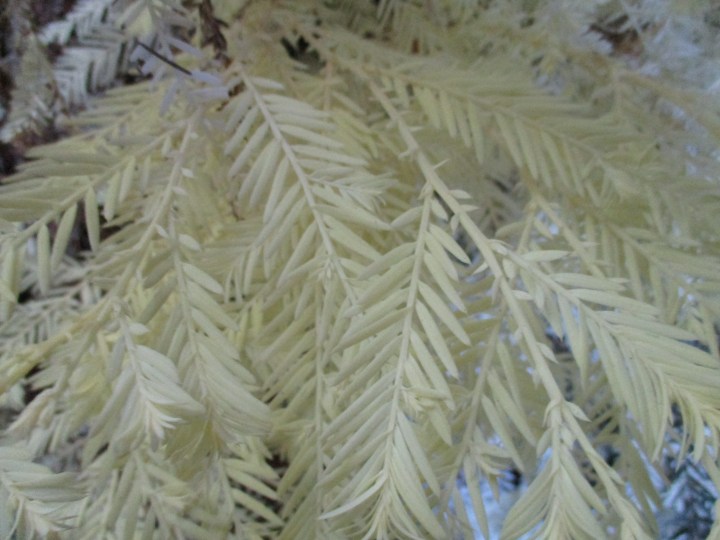 How Italian! Red, white and green! A coastal redwood with a white albino sport (mutant growth) amongst otherwise deep green foliage. Actually, it is very Californian. Coastal redwood is endemic to California with only a a few north of the border on the extreme southern coast of Oregon.



 Tony Tomeo