The camellias are getting meager, but a few are STILL blooming, even a week after the camellias that were blooming so late last week! These pictures were taken at the same time as those for last Saturday. There were just too many to fit into six pictures. Last week, we had two light pink and four white camellias. These are the dark pink or red camellias. There are no pictures of sasanqua camellias, and we have no reticulata camellias.
1. This is probably the biggest of our camellias. I do not know the name of it or any of the camellias here, but I believe that this is one of the old classics that had been around for centuries, and was popular in the 1960s.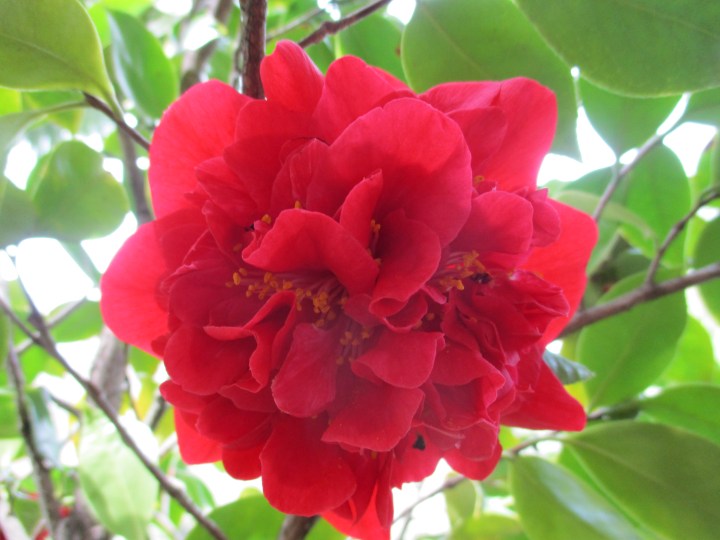
2. If this big ruffled dark pink camellia looks like the last one, it just might be. It does not seem to be as deep red, but that might be a result of the exposure.
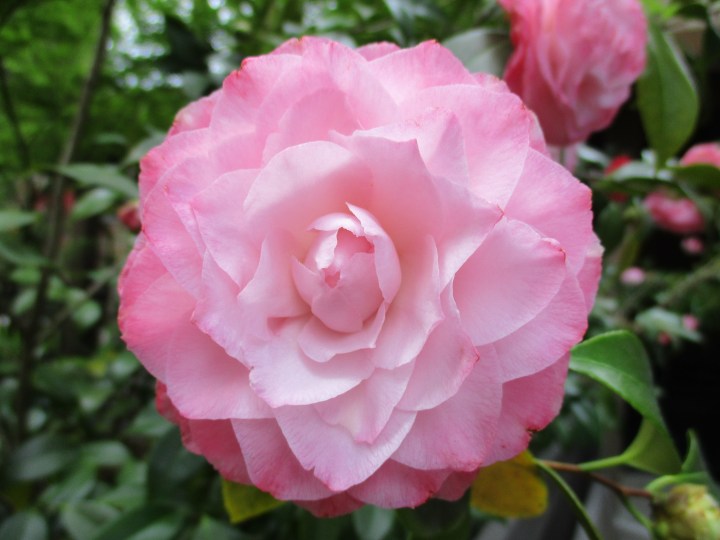
3. You know, I do not typically like this simple pink; and I do not typically like this floral form; but for some reason, I really like this simple pink camellia. It just looks so much like a camellia should look.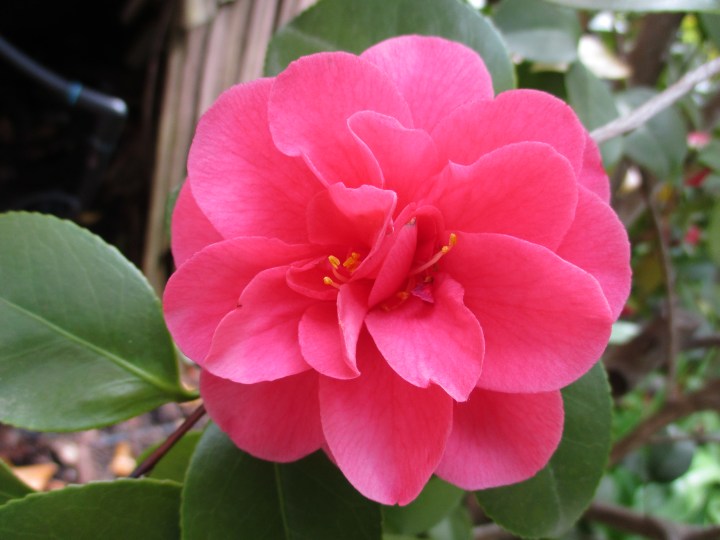
4. This floral form is more refined, but looks almost too perfect, as if the flower were assembled by robots on an assembly line.
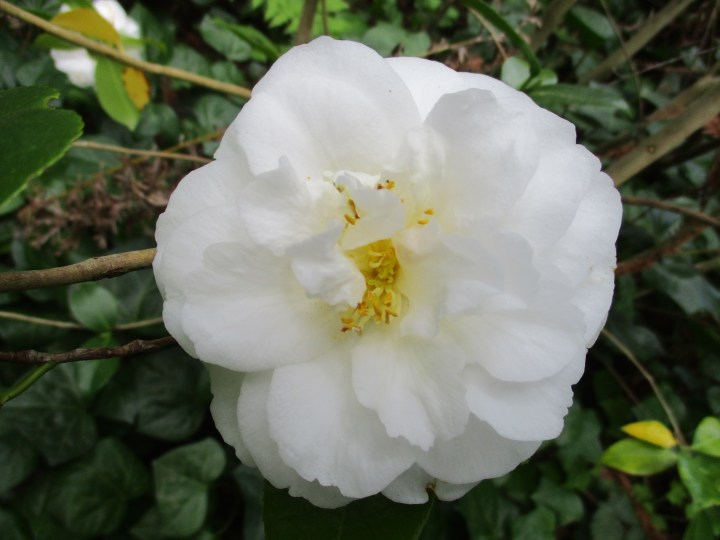
5. This one also seems to have been assembled, but is a bit friendlier. I happen to like such formality.
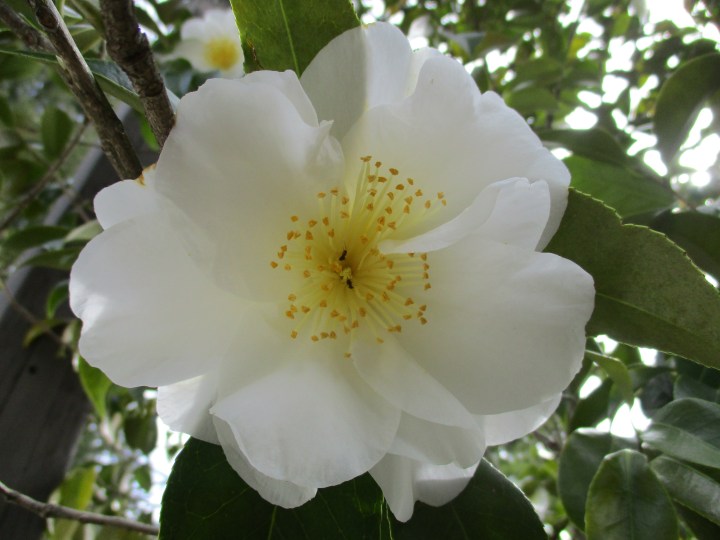
6. Like #3, this one has an unavoidable appeal. It really looks like a camellia should look, although it also looks like it could use some Grecian Formula.
This is the link for Six on Saturday, for anyone else who would like to participate:
https://thepropagatorblog.wordpress.com/2017/09/18/six-on-saturday-a-participant-guide/
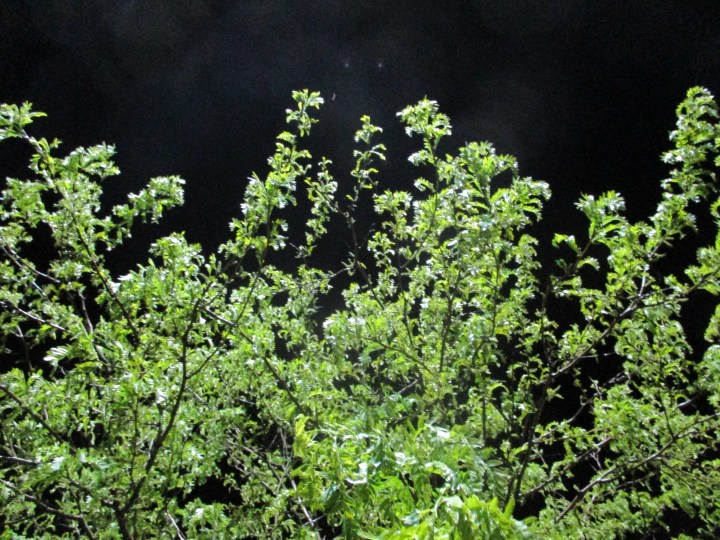 Color in the garden is nice as long as we can see it. There is not so much to see after the sun goes down. That is why some gardens that get used at night are illuminated.

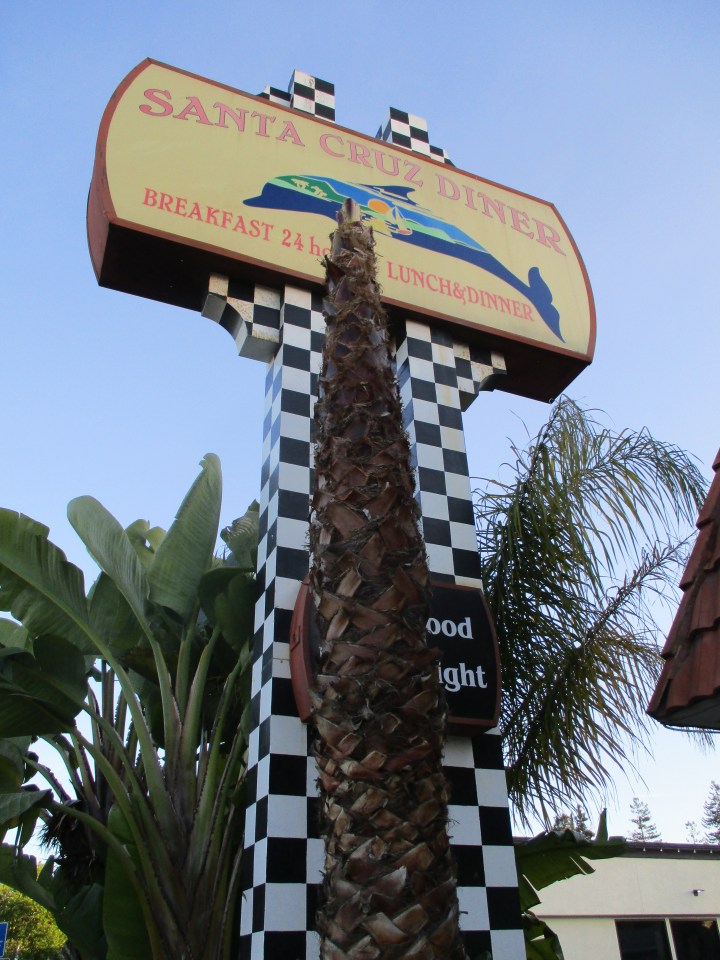 Speaking of which, this is not the right location!
 Halston, with the help of several friends, could make a nice pill box hat. That is the origin of the name; from pill box hate fame. This might help clarify,


 My weekly gardening column does not have much space for everything that should be said about the various topics and featured specie. I just try to fit the most basic of information into the space available, but usually would like to fit more in.


 We can keep this more brief than that long title.
 Staghorn ferns are epiphytes. They cling to tree trunks, rocks or whatever they happen to grab onto. They can root into decayed wood if it is porous enough, but they are satisfied to just cling to the exterior. They do not need soil. They sort of make their own soil by collecting debris that falls from the canopies of trees above. In the jungles where they live, they get all the water they need from rain. They often live in the crotches of branches because that is where they happen to land. (The epiphyte I wrote about earlier was just a palm that landed in the wrong place, but is not really an epiphyte.
  Foliar tapestries are impressive in the right situation.

 Tony Tomeo