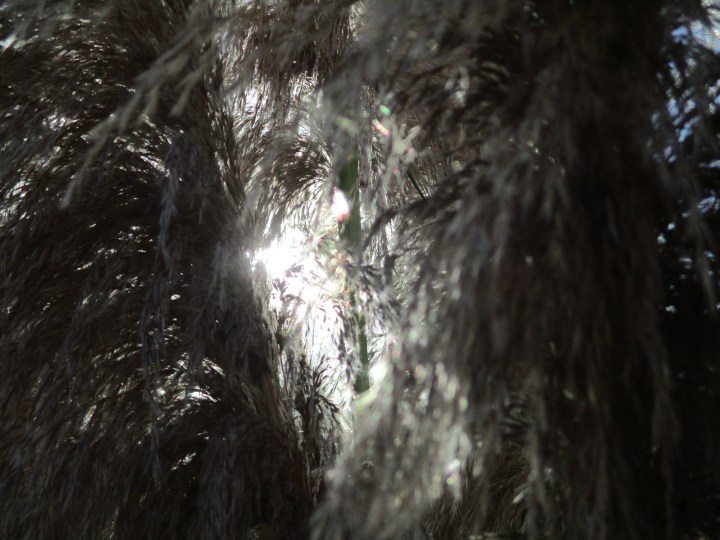
Do we really know the differences between watersprouts and suckers? It seems simple enough. The definitions of each should be rather distinct.
When I grew citrus, I knew what sort of sucker that I had to contend with. Suckers were any unwanted stem and foliar growth from the understock below the graft union. In the picture of the trunk of the young plum tree above, the graft union is clearly visible between the scion to the upper left and the understock to the lower right. Suckers would be below such a graft union.
This sort of sucker is known as such because it sucks resources that should be directed to the more desirable but often weaker scion. A sucker that is more vigorous than its associated scion is likely to overwhelm and replace it if not removed. Scions are expected on freshly grafted plants, but should become less prevalent as they mature, and the scion dominates the understock.
Suckers might develop either on the short section of understock trunk between the graft union and the ground, or on the roots below the ground. They only need to be below the graft union.
Okay; that definition is simple enough. Here is another.
Watersprouts, as far as I am (still) concerned, are unusually vigorous and typically adventitious stem growth that can resemble suckers, but develops above a graft union. They should likely be removed, but might just be pruned back a bit if they happen to be where a new branch is desired. After all, they are genetically identical to the desired plant, whether it is grafted or not.
Because watersprouts grow above a graft union, they occur only among the branches and main trunks above the ground. They do not grow from the roots of understock below the ground.
The picture above shows watersprouts on (VERY badly) pollarded bay trees.
Okay; that is another simple definition.
What about vigorous stems that grow from the roots of ungrafted trees? Can they be suckers if they are not sucking resources from a scion above a graft union? Can they be watersprouts if they are not growing from stems or trunks? It seems that the simple distinction between watersprout and sucker was the location relative to a graft union. What if there is no graft union?!
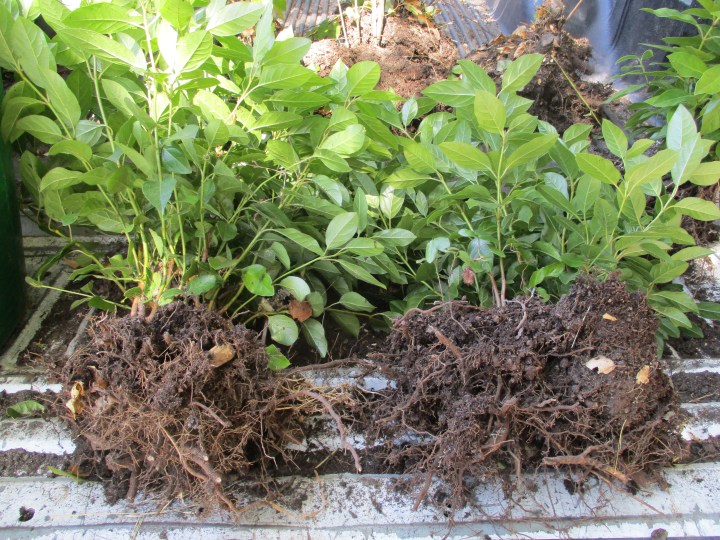
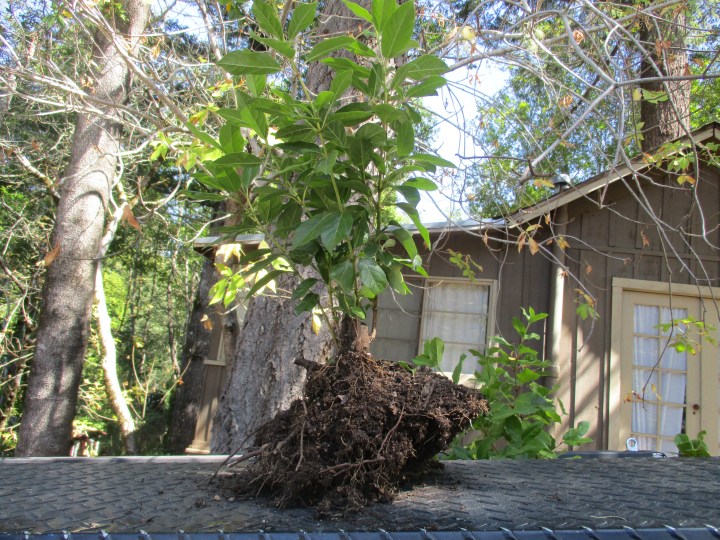
The vigorous black locust stems in the picture below are growing from the roots of ungrafted black locust trees (which, incidentally, were cut down last winter). Some might say that they are root suckers, which is a third and accurately descriptive designation for such vigorous stem growth. Otherwise, they could be either (or both) suckers or (and) watersprouts. Both work.
I know that many arborists refer to such root suckers from ungrafted trees as watersprouts, which is not at all inaccurate. I am also aware that many arborists refer to watersprouts like those on the bay trees above as suckers, . . . which is sort of inaccurate. I will not argue. I know what they mean.
 If gopher burrows had windows, this burrow would have hillside views. If gophers had better eyesight, the one who lives here could enjoy the views from such windows. Of course, views are not a concern for any gopher. They just want to burrow through the soil to eat the many roots they encounter. They do not often emerge from their homes for more than the ejection of soil.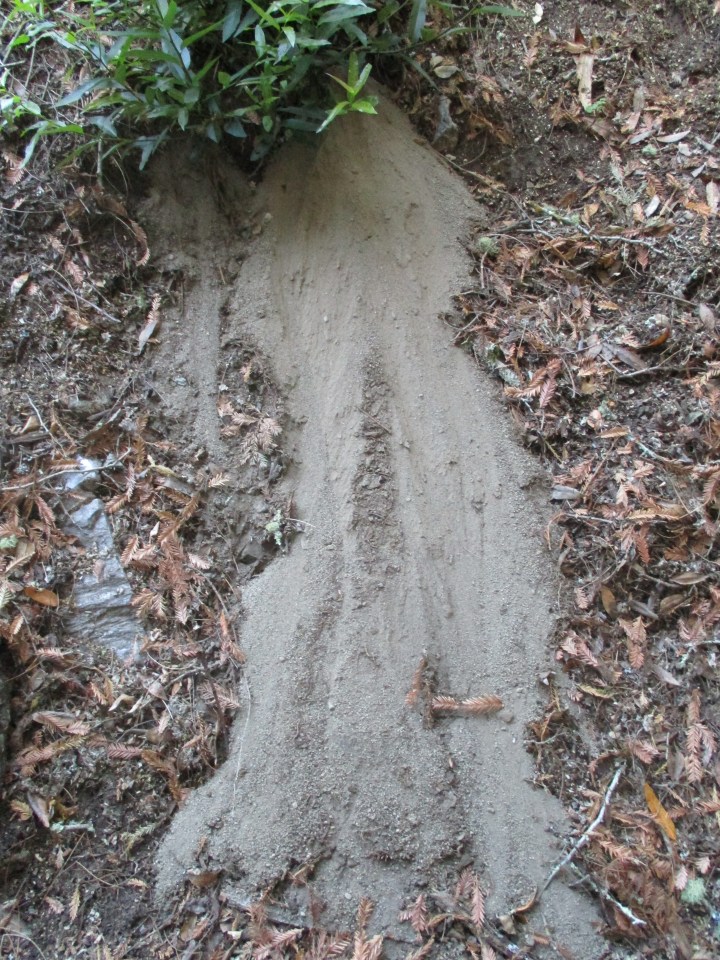



 Where I lived in town, the backyard was surrounded on three sides by fences, with the house on the only unfenced fourth side. These were the sort of fences that were common in suburban neighborhoods. They kept children and dogs in or out of adjacent gardens, and probably provided some sense of privacy, although I never understood why we all needed such privacy there.
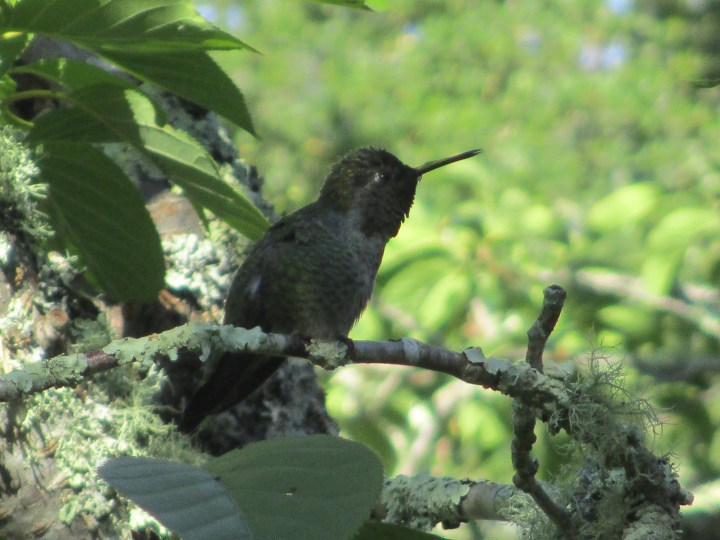 Wildlife is a topic that is notably lacking from my articles. I mention only that which must be ‘escorted’ out of the landscapes, like


 This is no way to get the dirt on someone. There is no dirt involved. If there were, it would be referred to as ‘soil’. ‘Dirt’ is a term used by those who do not know any better.
 It is known by a few different common names, including ‘Andean pampas grass’, ‘purple pampas grass’, and simply ‘pampas grass’. ‘Andean pampas grass’ sounds almost like an oxymoron, since the Andes Mountains are in a separate region to the west of the pampas region of Uruguay and eastern Argentina. ‘Purple pampas grass’ is even sillier, since it is devoid of any purple.