Prune

00115
Prune trees get planted bare root.

Does anyone remember when champagne produced in California was formally classified as ‘sparkling wine’? ‘Champagne’ is a technical classification for that which originates from the region of France for which it is named. That makes sense. The technical classifications of prune and plum formerly made sense also, even if not universally understood. Reclassification in 2001 ruined that.

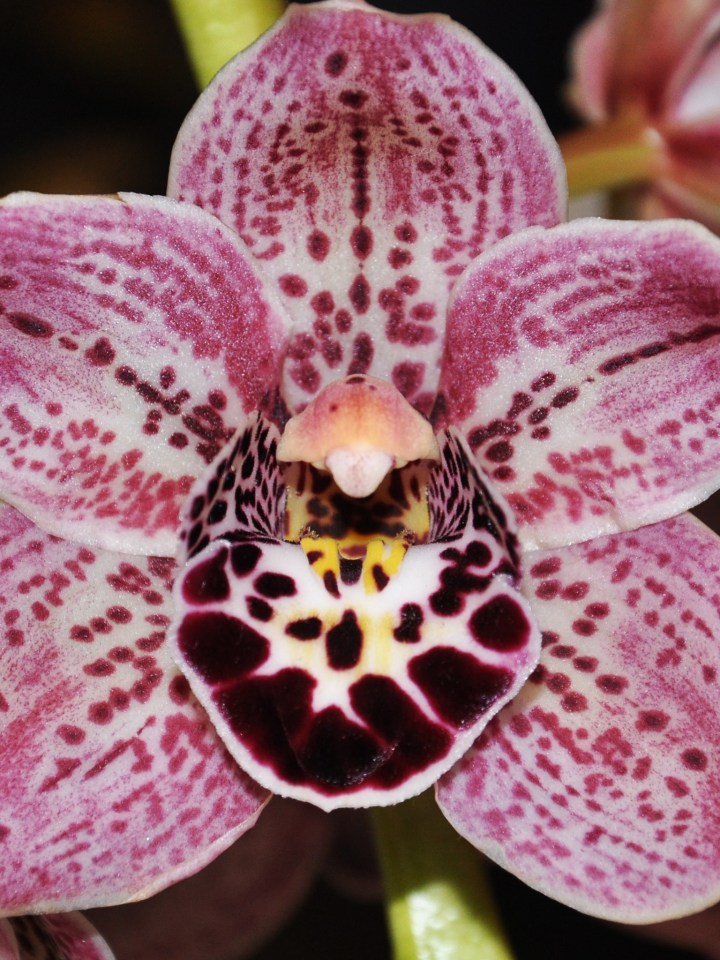
Prune, Prunus domestica, is primarily a European freestone fruit. (The pits of freestone fruits separate from the ripening flesh.) They have firmer flesh than plum, so are more practical for canning and drying. They also have higher sugar content, so might be dried without sulfuring (which prevents molding). Darkly purple and rather oblong fresh prunes are less popular than dried prunes are.

Plum is primarily a Japanese cling fruit. (The pits of cling fruits remain firmly adhered to ripening flesh.) They are softer and juicier than prune, and contain less sugar, so are not as efficiently pitted and dried without sulfuring, or canned. Larger, rounder, more colorful and more richly flavored plums are instead best fresh. They might be bluish purple, purple, red, ruddy orange, yellow or green.

Nowadays, all prunes and plums are known collectively as plums. Dried prunes are just dried plums.

Knife-Leaf Wattle

41231++
This wattle sports texture with color.

Even without the bright yellow staminate flowers (fuzzy with prominent stamens) that bloom in late summer or autumn, the grayish foliage of knife-leaf wattle, Acacia cultriformis, is still striking. It contrasts nicely with dark green foliage of pines, redwood and ivy. What seems to be small triangular leaves are actually ‘phyllodes’, which are modified petioles (leaf stalks) of vestigial leaves. They are about half an inch to an inch long, and neatly arranged on stiff stems.

Mature trees do not get much more than ten feet tall, and grow slowly enough to be kept even shorter. They can tolerate a bit of shade from larger trees. However, they bloom more profusely with better exposure. If the pollen is not a problem, the flowers are nice for cutting. So is the foliage, which is complimentary to many other cut flowers. Like almost all acacias, knife-leaf acacia does not require much water once established.

Forsythia

00108This may seem to be three months early, or an entire season out of season; but this is when bare root forsythia, Forsythia X intermedia, gets planted. Even so, the smaller of new bare root plants will bloom with only a few flowers early in their first spring, so will not produce their famously profuse and garishly bright yellow bloom for another year and three months. They will be worth the wait.

Flowers are small but very abundant. They bloom as winter turns to spring, before there is any new foliage to interfere with their splendor. Foliage develops as bloom finishes, and if the weather is right, it might get somewhat colorful in autumn. The simple paired leaves are about two or perhaps three inches long. Big plants should stay less than ten feet tall, but can get taller if lightly shaded.

Pruning should be done after bloom rather than before, and from the inside out rather than from the outside in. Dormant pruning, although more horticulturally correct, eliminates some of the canes that would otherwise bloom in spring. After bloom, older overgrown canes that are beginning to deteriorate should be pruned to the ground to promote development of new canes to replace them.

Fairy Primrose

41224The simple pink and white of ‘good & plenty’ candy is what fairy primrose, Primula malacoides, is known for. Pastel purple is also popular. Rosy reddish pink and deeper pinkish purple are somewhat rare. The small flowers are arranged in circular trusses that stand as tall as one foot, just above the softly mounding light green foliage. The rounded leaves are slightly fuzzy. All parts of fairy primrose are toxic, and to those who happen to be allergic to it, can be as severely irritating to the skin as poison oak!

Because they take quite a while to mature and bloom if grown from seed, fairy primrose are typically purchased as cool season bedding plants that are already blooming. Bloom continues through winter and into early spring. If not replaced by warm season annuals, some of the healthier plants can survive through summer to bloom again the following winter as short term perennials. When they do not get enough water from rain, they want to be watered regularly. Fairy primrose can tolerate significant shade.

California Pepper Tree

00101It has been naturalized in Southern California long enough to seem to be native. California pepper, Schinus molle, is actually endemic to Peru and adjacent arid regions of South America as far south as Central Argentina. Furthermore, although its small pink fruits with hard black seeds are sometimes used for culinary purposes, it is actually not related to black pepper, and is mildly toxic.

California pepper is as at home here as the name implies. Established and naturalized trees can survive on annual rainfall. They are better foliated if watered a few times through summer, and do not mind average landscape irrigation if their soil does not stay too damp. When they are not dropping a few leaves, they are dropping floral frass or dried berries, so their mess is considerable.

Old trees can eventually get forty feet wide, and almost as tall. Young trees grow rather aggressively. Growth slows with maturity. The distended and irregularly structured trunks and main limbs are picturesquely gnarly, with handsomely flaky tan bark. Foliage and outer stems are delightfully pendulous. The pinnately compound leaves are finely textured, and about three to six inches in length.

Larch

41217Climate is why the European larch, Larix decidua, is so rare here. It prefers cooler weather in both winter and summer, and more humidity. Foliage can roast if too exposed through summer. Small trees that are partly sheltered or partly shaded by larger trees have the best color and foliar density. Larch are innately reliant on somewhat regular watering, so are not drought tolerant. The mildly cool weather of autumn is enough to brown the formerly bluish foliage, which falls shortly afterward.

In the wild, larch trees can get as tall as other big coniferous trees. However, the many different garden varieties stay much smaller. Some are very pendulous. A few have contorted stems. Of the few that can sometimes be seen locally, most are compact dwarfs that grow more like low and dense shrubbery than trees. Some get only two or three feet tall and broad, and grow very slowly. These can stay in containers or planters for many years.

Blue Spruce

91225For a tree that is native to the upper elevations of the Rocky Mountains, blue spruce, Picea pungens, does surprisingly well here. It only wants to be watered a bit through summer to compensate for the lack of rain and humidity in chaparral climates. It does not seem to miss a more pronounced chill through winter. Disease and insect infestation are uncommonly noticeable or damaging.

Garden varieties are impressively variable. Some are like big shrubbery that stays below downstairs eaves. The biggest do not get much taller than thirty feet, and take many years to get so tall. Most but not all are stoutly conical. Color is variable as well, ranging from grayish green to silvery bluish green. The evergreen foliage is very dense. Individual needles are only about an inch long.

Blue spruce demands patience, planning and room to grow. Pruning for containment compromises their naturally appealing conical form. Therefore, even compact cultivars that do not need much space will need enough to mature completely. However, because they grow somewhat slowly, blue spruce may take a few years to actually occupy much of their space, and function as intended.

Pecan

41210One might surmise that a tree that is resilient enough to be the state tree of Texas is not too discriminating. If it can take the heat and humidity of the Lone Star State, it can make it anywhere! However, pecan, Carya illinoinensis, actually prefers heat and humidity, and is bored with the mild local climate. The nuts and the mess that comes with them are actually less abundant than they would be in the Gulf Coast States. The deciduous foliage is not quite so colorful in autumn.

A mature pecan tree may stay a low as fifty feet, or get twice as tall. The height is usually nearly double the width. Generous watering can cause roots to buttress and displace nearby pavement. Most local pecan trees that are intentionally planted are garden varieties that were bred for bigger pecan nuts. Seed grown trees tend to produce nuts that are nearly comparable to the nuts they were grown from. The pinnately compound leaves have nine or more leaflets that are about two or three inches long.

Florists’ Cyclamen

91218It is unfortunate that most florists’ cyclamen, Cyclamen persicum, are enjoyed as cool season annuals only through winter, and then discarded as they are replaced by spring annuals. They can actually survive as perennials for several years, with white, red, pink or magenta flowers hovering above their marbled rubbery foliage each winter. Foliage typically stay less than six inches deep.

Florists’ cyclamen are probably typically discarded seasonally because, after blooming through winter, they take some time to redirect their resources to adapt to their landscape situations as the weather warms through spring. During that time, they can look rather tired. Shortly after they recover, they defoliate for dormancy through the warmth of summer. Some do not survive the process.

When they regenerate through the following autumn, they are not as uniform as they were when first installed. This is probably not a problem where a few florists’ cyclamen are planted with mixed annuals or perennials that compensate for their irregularities as well as their dormancy through summer. However, it does not work well for the uniform flower beds that they are often installed into.

Italian Stone Pine

P90102Even though it can get about fifty feet tall and wide, Italian stone pine, Pinus pinea, often gets planted as a small living Christmas tree into confined urban gardens. It gets so big so fast that it can get to be a serious problem, as well as expensive to remove, before anyone notices. It is really only proportionate to large public spaces such as parks or medians for big boulevards. The bulky trunks typically lean one way or another. The long limbs spread laterally to form an unusually broad and flat-topped canopy.

The paired needles are about four to six inches long. However, small living Christmas trees are still outfitted with juvenile foliage that looks nothing like adult foliage. Juvenile needles are single, very glaucous (bluish) and only about an inch or an inch and a half long. Adult foliage may not develop for a few years. The four or five inch long cones mature slowly for three years. Squirrels and birds like the big seeds, which would otherwise be known as pine-nuts if people could get them first.

(Apologies for this inadequate illustration of Italian stone pines damaged by traffic. It was the only picture of Italian stone pine I could find.)