 The dark bronze and variegated varieties of tree houseleek, Aeonium arboreum, are so much more popular than the simple species, that the simple species with plain green foliage is now rather rare. The succulent stems do not stand much more than three feet tall. They get about as broad, and can get even broader as lower stems develop roots and grow into new plants. The succulent rosettes of foliage of well watered plants can be fragile to handle. Mature plants can bloom in spring with unusual conical trusses of yellowish or chartreuse flowers.
Daffodil
 Even with all the unusual breeds of daffodil and related narcissus that are available nowadays, the traditional big yellow types that resemble the classic ‘King Alfred’ daffodil are probably still the most popular, even if real ‘King Alfred’ are unavailable. Although all narcissus are daffodils, the term ‘daffodil’ typically refers to those with fewer but bigger and bolder flowers that lack fragrance.
Their dormant bulbs got planted last autumn to wait out winter and then bloom along with the earliest of spring blooming bulbs. They can be planted in later phases to prolong bloom, but once they naturalize, will bloom annually and early on a rather reliable schedule. Most types are pleased to naturalize if conditions are right for them, although some of the fancier varieties are less reliable.
Besides the familiar bright yellow, daffodils can be pale yellow, cream, white, orange or pink, although orange and pink are mostly in conjunction with other colors. Some varieties bloom with double flowers, or other varied forms. Taller types can stand a foot and a half tall, with the flowers suspended just above the narrow, mostly vertical and somewhat rubbery bluish green leaves.
Gladiolus
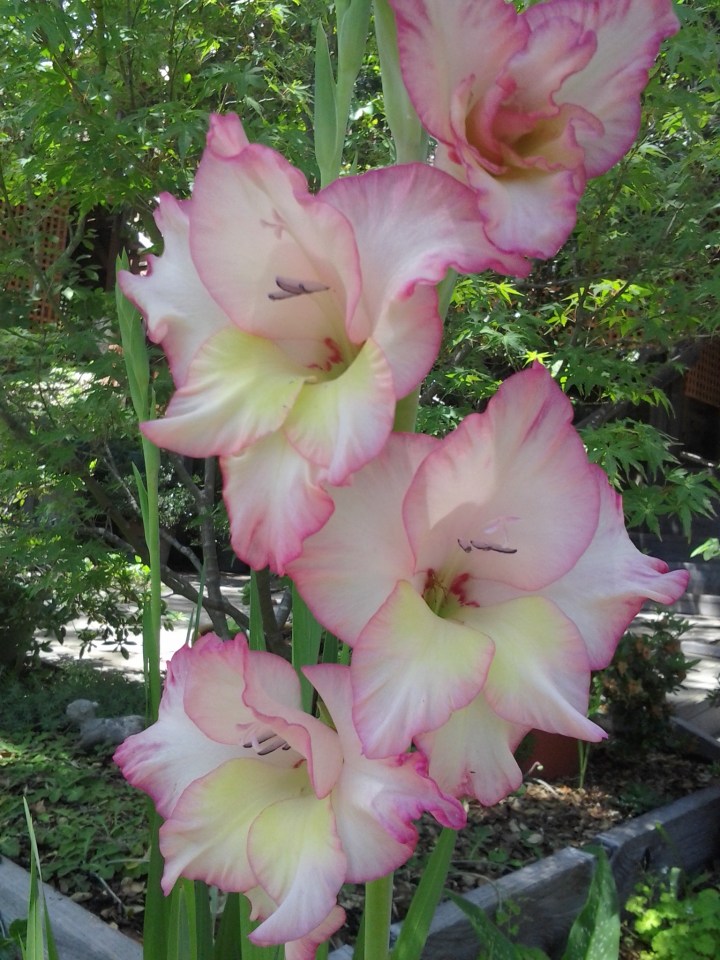 The sword of a gladiator was known as a gladio, and it probably resembled the leaves or floral spikes of gladiolus. These narrow and pointed leaves stand nearly vertical, angling only slightly to the left and right of a single flower stalk that can get as tall as six feet. The floral spike supports several very colorful florets that are arranged to the left and right, but tend to lean toward the front.
The summer bloom can be red, pink, orange, yellow, greenish yellow or white, in bright or pastel hues, and often with multiple colors. Florets bloom upward from the bottom, so lower florets fade before upper florets open. Gladiolus is an excellent cut flower anyway. Taller blooms might need to be staked.
New bulbs should be planted about now, at least four inches deep, and about four or five inches away from each other. Gladiolus want well drained soil and full sun exposure.
Almond
 It is no more in season now than the other stone fruits like apricot, cherry, plum and such, but this is the time of year that almond, Prunus dulcis, needs work. Established trees get pruned while bare and dormant. New trees, preferably bare root, get planted. The most popular modern cultivars available are self pollinating, and labeled as such. Old traditional cultivars require pollinators.
Almond is the ‘other’ stone fruit. Because it is a nut, it does not resemble the rest of the juicy and fleshy stone fruits like nectarine and peach. However, the resemblance to the stones of the stone fruits is obvious. It is, after all, a big seed. The fruity parts form tough hulls that spit open to reveal the dry nuts within. Almonds do not get picked, but instead get shaken or knocked from the trees.
Because the nuts are lightweight, almond trees do not need to be pruned as aggressively as other stone fruit trees. Because the nuts are not hand picked, the trees can be pruned upward as deciduous shade trees with spectacularly white spring bloom. Some cultivars can get more than twenty feet tall. Squirrels and crows take most of the nuts, but do not bother to clean up the hulls.
Oriental Spruce
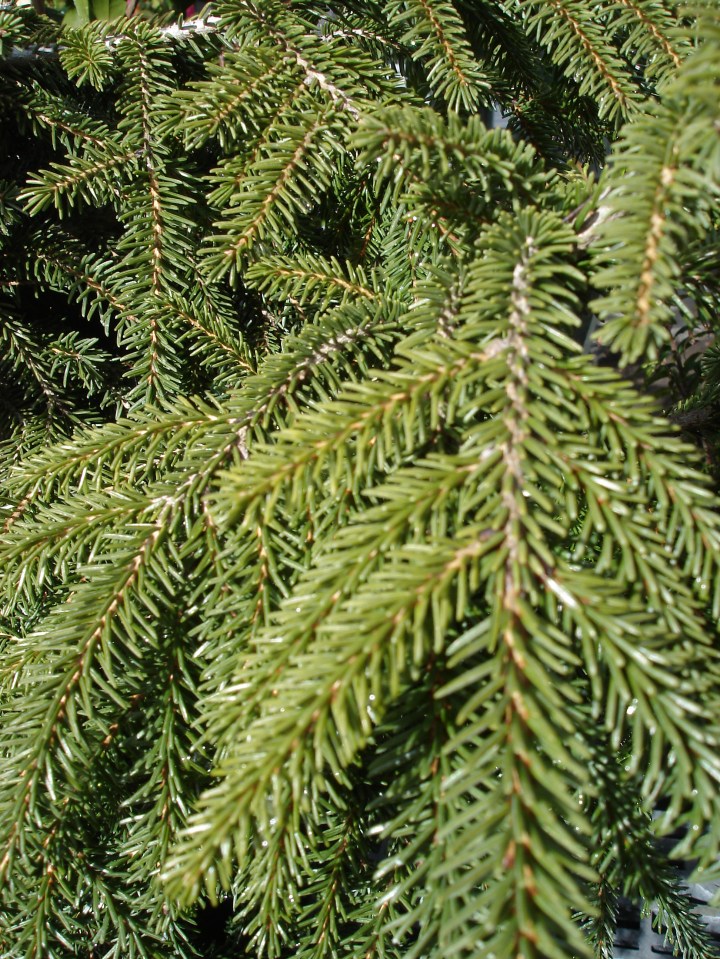 If it got as big as it does in the wild, Oriental spruce, Picea orientalis, would not fit into many home gardens. It can get more than a hundred feet tall! Fortunately, it does not often get much more than twenty five feet tall locally. Trees that compete with taller trees in forested landscapes might get to forty feet tall. Their symmetrically conical canopies get about fifteen or twenty feet broad.
The tiny needles of Oriental spruce are less than half an inch long, so are smaller than those of any other spruce. Relative to the finely textured deep green foliage, the densely arranged and neatly angular stems are notably stout. Like other spruces, Oriental spruce is best where it has sufficient space to retain lower stems down to the ground. It can look rather silly with a bare lower trunk.
Garden varieties are more common and stay smaller than the straight species. ‘Skylands’ has yellow foliage, although it fades in warm situations. ‘Aurea’ has paler pastel yellow new foliage that matures to green. ‘Gowdy’ has a narrow columnar form, and grows very slowly. ‘Nana’ develops as a plump low mound that stays less than three feet tall. All like to be watered somewhat regularly.
Apple
 Some of us who enjoy gardening may not like to admit how useful the internet can be. There is a lot of bad information out there. There is also some degree of good information. It is impossible to fit much information about apples into just a few brief paragraphs. Therefore, the internet is likely the best source of information about the countless cultivars and specie within the genus of Malus.
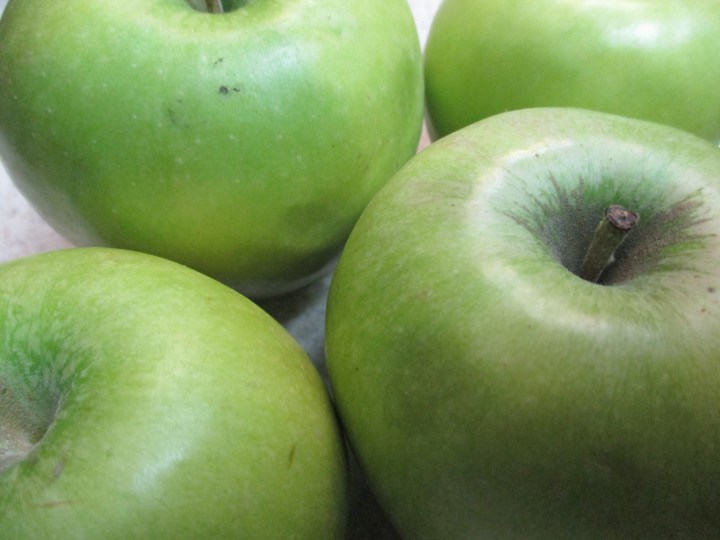
The most popular apple trees produce the familiar crisp and sweet fruit that ripens anytime between late summer and late autumn, depending on cultivar. The fruit is quite variable. Some cultivars are best for eating fresh. Others are best for cooking or juicing. Some are very sweet, while other are quite tart. Each fruit is about the size of a baseball, but can be much bigger or much smaller. Crabapples are very small. Flowering crabapples make only tiny fruits that are eaten by birds.
The trees are quite variable too. Semi-dwarf trees can be pruned to stay low enough so that all of the fruit is within reach from the ground. Standard trees that grow in orchards can get as big as shade trees. All fruiting apple trees need specialized pruning each winter so that they do not become overgrown and disfigured, and to control disease. All apples bloom sometime in early spring.
European White Birch
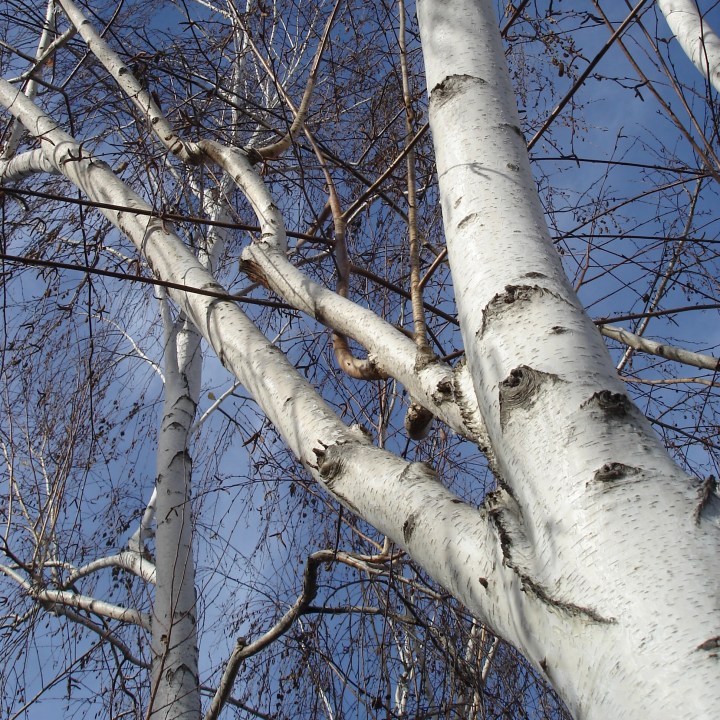 It may not be the biggest or best deciduous shade tree, but European white birch, Betula pendula, is famous for tall and elegant white trunks with wispy pendulous stems. It is a very informal tree that typically leans in one way or another, but is somehow right at home in refined landscapes. It is rarely alone, since it is usually planted with two or more friends, and sometimes in groves.
Not many of the biggest European white birch trees are more than fifty feet tall locally. (They can get bigger in cooler climates.) The slender trunks do not get much more than a foot and a half wide. As trees mature, the smooth white bark develops rough black furrows. The small triangular leaves turn soft yellow in autumn. The somewhat sparse foliage makes only moderate shade.
‘Laciniata’ has lacy lobed leaves, and stands straighter and narrower. ‘Youngii’ is so pendulous that it can barely stand up without staking.
Toyon
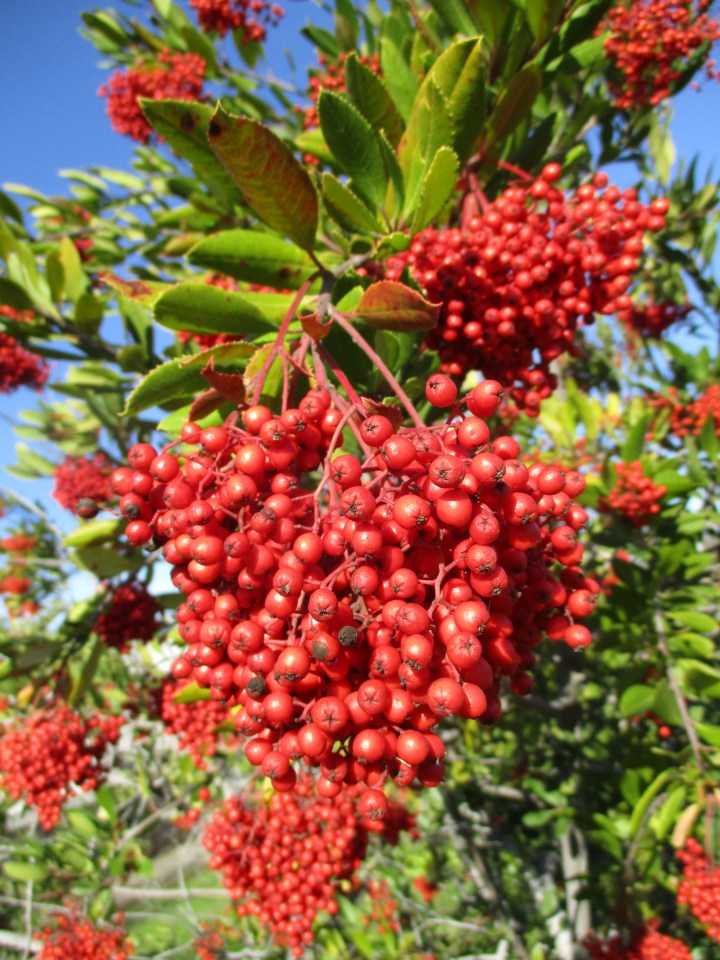 Botanists took a while to contrive an identity for toyon, which is also known as Christmas berry and California holly. It was classified as a species of Crataegus, two different specie of Photinia and two other specie of Heteromeles before it was finally identified as Heteromeles arbutifolia. Meanwhile, the town named after it changed its name only once from Hollywoodland to Hollywood.
Toyon is native to the coastal chaparral regions of California and Baja California, as well as British Columbia, so it can be quite happy with minimal watering or none at all in home gardens. Too much water is likely to rot roots. Fire blight unfortunately seems to be more of a problem in refined landscapes than it is in the wild. Toyon can be pruned up as a small tree, but must not be shorn.
Where it competes with other trees, toyon can get more than twenty feet tall. Those that are well exposed are typically less than twelve feet tall, with nicely well rounded canopies. The evergreen leaves are somewhat serrate and narrow. Fluffy trusses of small white flowers bloom early in summer. Big hanging clusters of bright berries ripen in autumn and linger until birds eat them in winter.
Long leafed Yellowwood
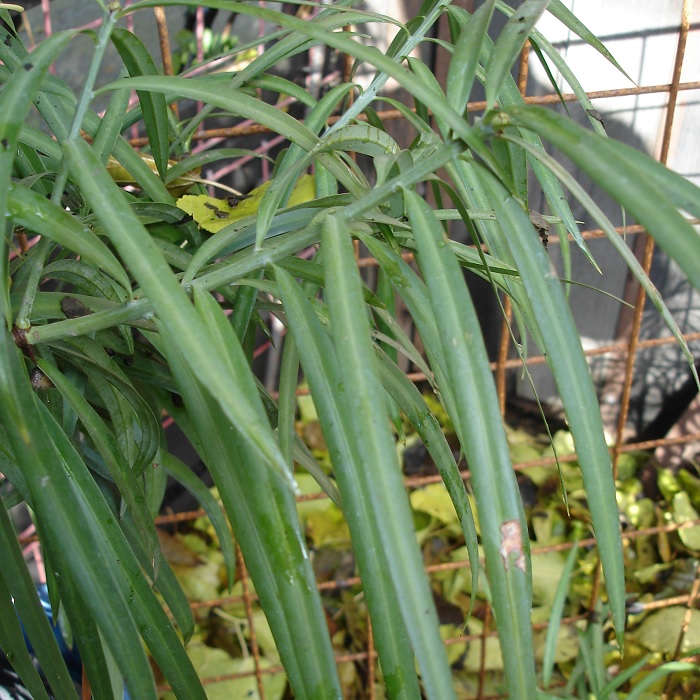 Of the various specie of podocarpus, and as the name implies, the long leafed yellowwood, Podocarpus henkelii, has the longest leaves. They can get about six inches long, and hang elegantly from upwardly curving branches. This glossy evergreen foliage can be quite dense. It is dark green in full sun, and can be a slightly bluish in partial shade, particularly as new growth develops.
Mature trees have the potentially to get a bit taller than second story eaves, and nearly as broad, but are typically kept shorter. Most grow as big fluffy shrubbery or as informal hedges. Long leafed yellowwood can be pruned (but not shorn) into a handsome formal hedge, or even espaliered against a fence. It prefers somewhat regular watering and well drained soil. It might be unhappy in dense soil. Fertilizer can improve color and density if foliage gets distressed.
Peach
 Just like roses and camellias, the innocent peach, Prunus persica, has been developed into too many distinct cultivars to write about in just a few brief paragraphs. It had been in cultivation for thousands of years before arriving in North America. Peach is a classic summer fruit, but trees should be planted while dormant, preferably as bare root stock, about now, in the middle of winter.
Peaches certainly do not grow everywhere in North America. They need just enough chill to be reminded that it is winter; but too much chill too late in the season will ruin bloom. Too much late rain will rot developing fruit. Peaches are therefore right at home in chaparral climates of California, where freestone cultivars are grown for fresh fruit, and clingstone cultivars are grown for canning.
Healthy peach trees can get up to second story eaves, but if properly pruned, should be only half as tall. They should not get too wide either, since the weight of fruit can break limbs. Aggressive winter pruning keeps trees vigorous and resistant to disease. Orchard trees last less than twenty years, although home garden trees are often kept longer. Nectarines are just fuzzless peaches.

