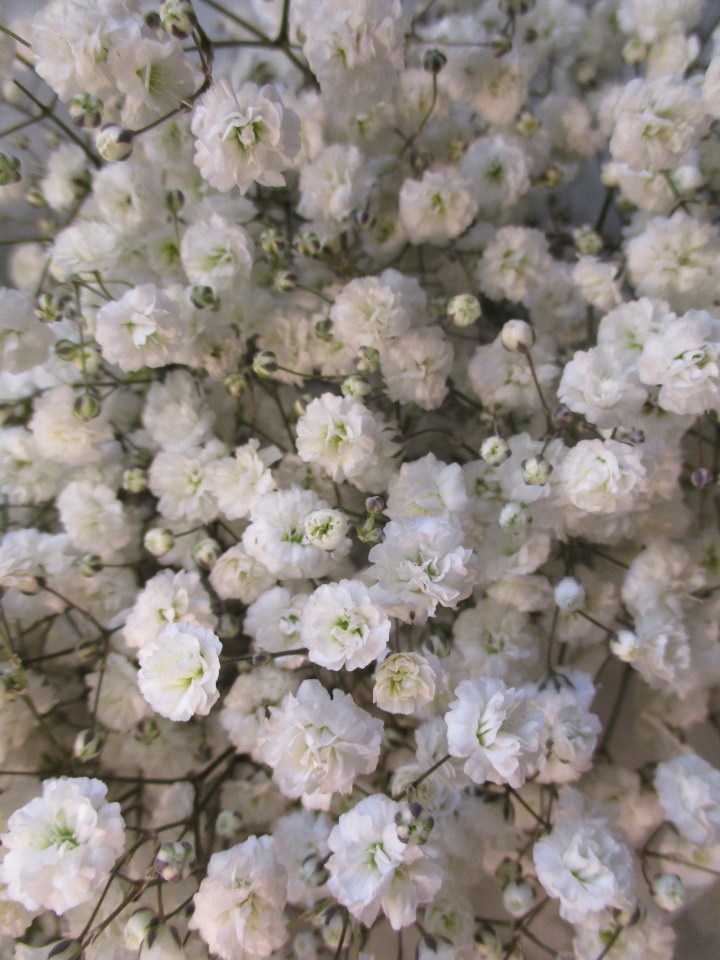
 You might think that such a popular flower would be easy to get a picture of. Baby’s breath, Gypsophila paniculata, is everywhere, and almost a standard component of the mixed bouquets found in supermarkets. However, the flowers are so small and so sparsely arranged on thin stems, that they do not look like much in pictures. This picture is a closeup of a tightly bound bundle of bloom.
As common is it is with other cut flowers, baby’s breath is quite uncommon in home gardens. It is not often available in nurseries. Seed should have been sown by about now. Baby’s breath grows something like a tumbleweed about three or even four feet high and wide. The stems look too delicate to stand so tall. The minute flowers are usually white but can be pale pink and slightly fluffier.
While blooming in summer, baby’s breath is so handsome that no one wants to cut the flowers. It is difficult to take just a few good stems to add to other cut flowers without ruining the symmetry of a well rounded plant. Some people who grow it prefer to put it out of the way, or grow it amongst other flowers to hide the disfigurement of harvest. Baby’s breath blooms better if crowded anyway.
 Before its new lime green foliage emerges, the otherwise modest star magnolia, Magnolia stellata, dazzles with a surprising profusion of crisp white, blushed or pale pink bloom. The three inch wide flowers have between a dozen and two dozen floppy petals (which are actually tepals). If the weather is right, the flowers might be slightly fragrant. If only bloom could last longer than it does!
 It looks like sweet alyssum, but is not even close. The tiny white flowers and finely textured foliage work almost as well for similar uses in the landscape. In fact, the plants are most often grown as short term warm season annuals. However, candytuft, Iberis sempervirens, is really a perennial that can be cut back in autumn, regenerate through winter, and bloom for spring and early summer.
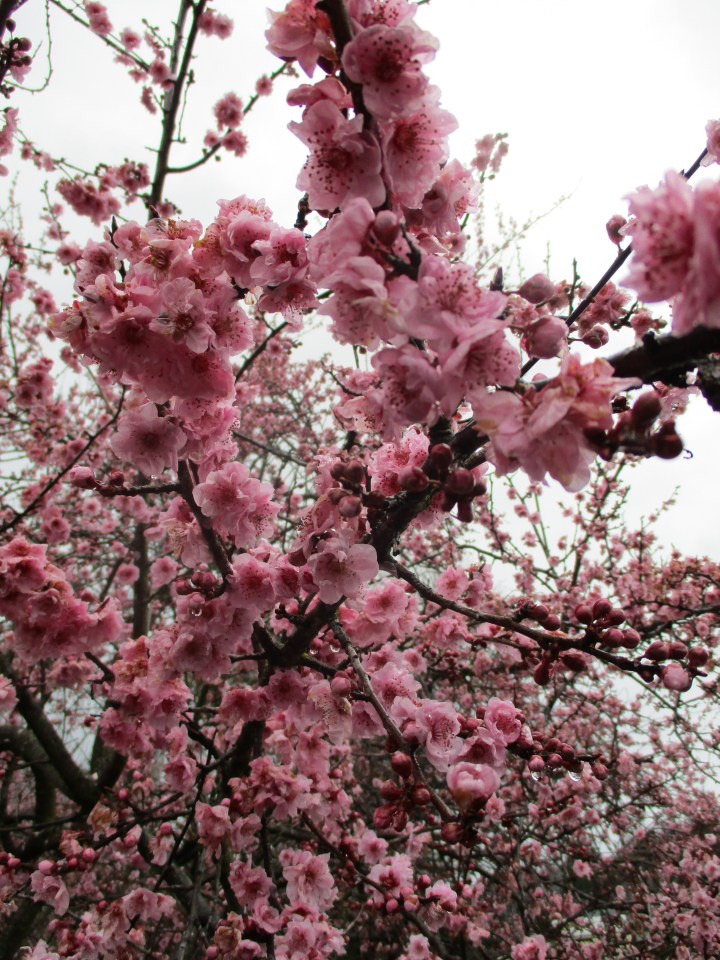 Of all the fruitless fruit trees, the purple leaf plum is the most popular here, but probably not for the obvious allure of its rich purplish or bronze foliage that maintains color until it falls in autumn. Purple leaf plum is simply so easy to grow. It does not need to be pruned as regularly as flowering peaches or flowering crabapples do. It is not as sensitive to sunscald as flowering cherries are.
 This is an extreme bloomer! Cineraria, Pericallis X hybrida, blooms with composite flowers, which means that each small daisy flower is really a whole bunch of minute flowers clustered together to look like a single flower. As if this were not impressive enough, a whole bunch of these composite flowers are clustered together on top of each big wide floral truss. They are not easy to ignore.
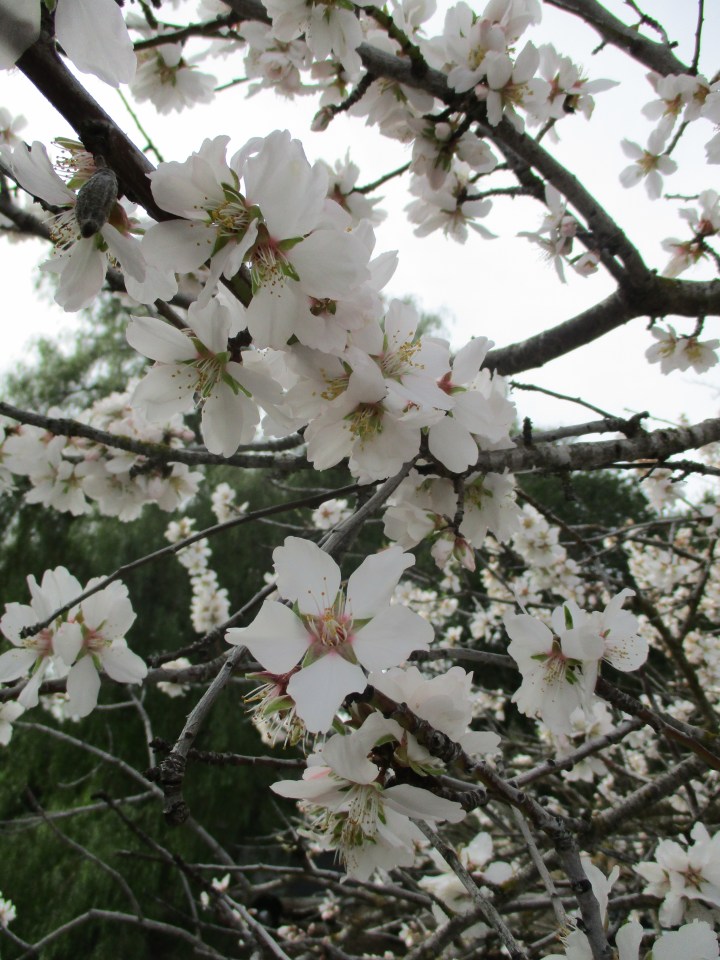 It is known more as a small to mid-sized shade tree that produces edible nuts, but almond, Prunus dulcis, also blooms magnificently as soon as the weather allows. Actually, it often blooms a bit earlier than it should. Nut production can be ruined if rain dislodges blossoms or developing nuts. The profuse white flowers are small but slightly larger than those of other related stone fruit trees.
 There is some controversy about the identity of the flowers that Micky Mouse picks at the porch to present to Minnie Mouse when she answers the door. Some insist that they are Transvaal daisy, Gerbera hybrida. When they are not in black and white, the substantial daisy flowers are cartoon hues of yellow, orange, red, pink and white, sometimes with chocolatey brown or black centers.
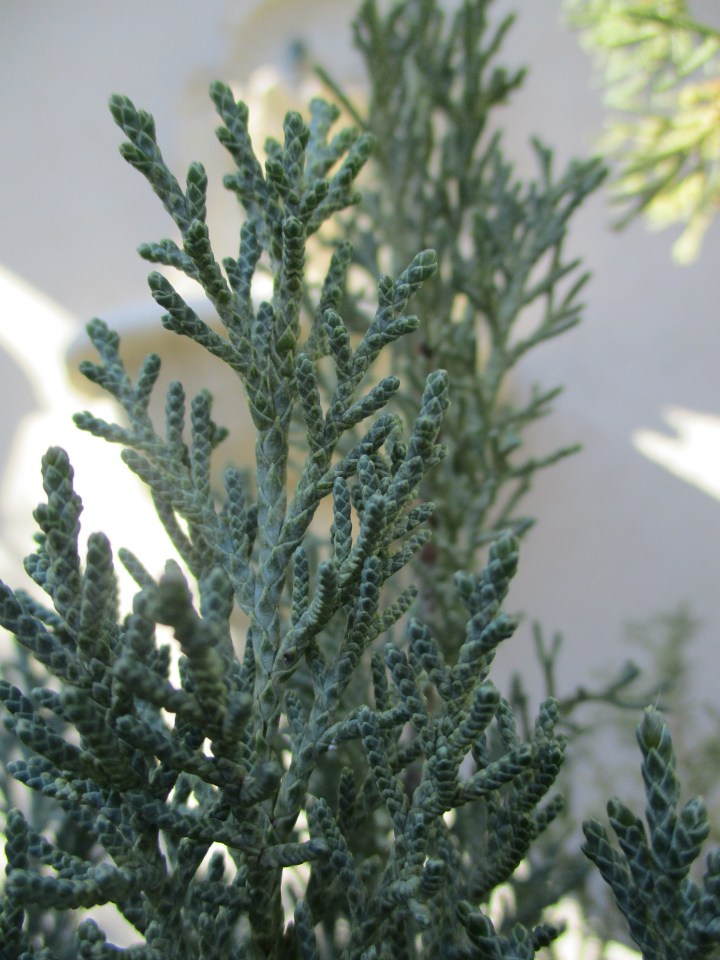 It is no coincidence that many plants with gray foliage are from mountains or deserts. Gray foliage is ‘glaucous’, which, like glaucoma, diffuses light. This helps to protect it from desiccation and scald when sunny weather is also hot, windy or arid. The glaucous foliage of Rocky Mountain juniper, Juniperus scopulorum, is what distinguishes it most from related North American junipers.
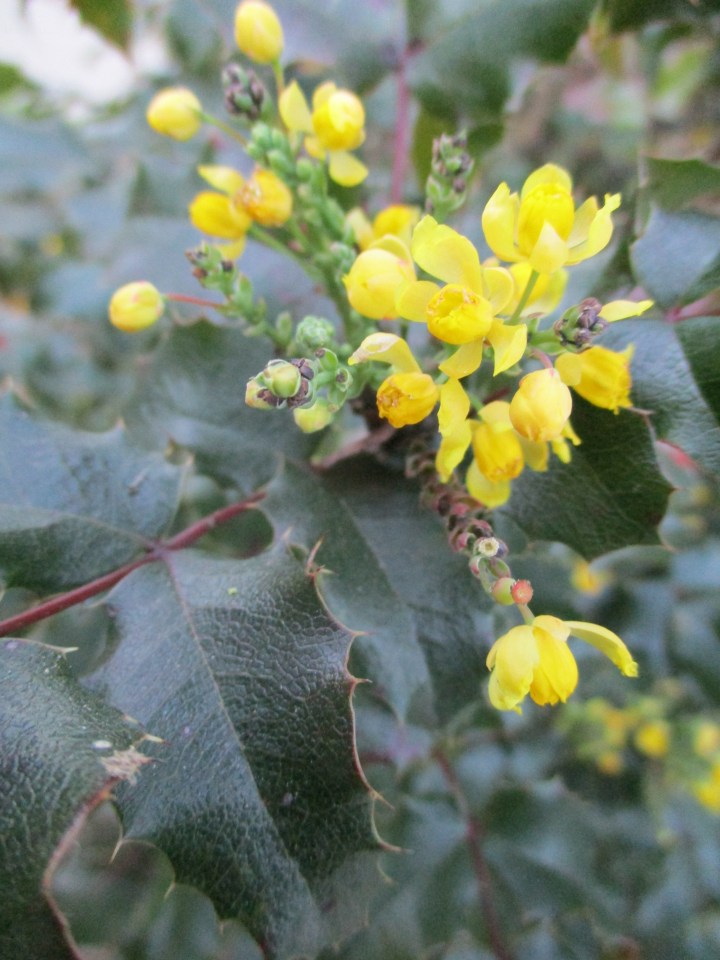 Oregon has good taste. Douglas fir, one of the most useful of timber trees in America, was selected as the state tree. Oregon grape, Mahonia aquifolium, was designated as the state flower. Although the tight clusters of tiny bright yellow flowers that bloom about now may not be as flashy as other state flowers, they contrast handsomely against the glossy and deep dark green foliage.
 When the weather warms up a bit between frosty weather and winter storms, the rich fragrance of winter blooming daphne, Daphne odora, is at its best. The domed trusses of tiny pale pink flowers are not much wider than a quarter, so are easy to overlook while investigating the source of the fragrance. ‘Aureomarginata’, the standard cultivar, has glossy evergreen leaves with narrow pale yellow margins. Mature plants are only one or two feet high. All parts of the plant are incidentally toxic.
 Tony Tomeo