This old article reminds me that our work here is never done.

 Big trees get big problems. Part of our job is to tend to these problems before they become dangerous. Many of these problems are somewhat easy to identify. A deteriorating ponderosa pine with browning foliage it difficult to ignore if it is tall enough to be seen above the rest of the forest more than a mile away.
There are a few problems that are not so easy to identify. Some are caused by the weather, without prior warning. Others are hidden in the forests. One might think that those in the forests would not concern us. However, our landscape and facilities are so intricately mixed with the forests.
The shiner in the picture above was where a big broken limb needed to be cut from a big fir tree. It may not look big in the picture, but the limb was probably more than nine inches wide, and long…
View original post 150 more words

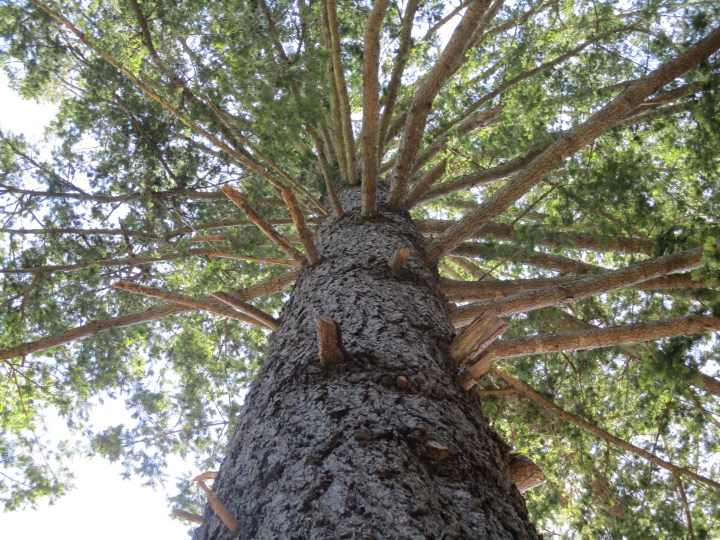 Among pines, firs, redwoods and most excurrent trees (with central leader trunks), stubs or stumps of limbs that were shed are common and more apparent than they are among decurrent trees (which branch into many main limbs). The older lower stubs slowly but eventually decay and fall away as the trunks compartmentalize (heal over) where they were formerly attached.
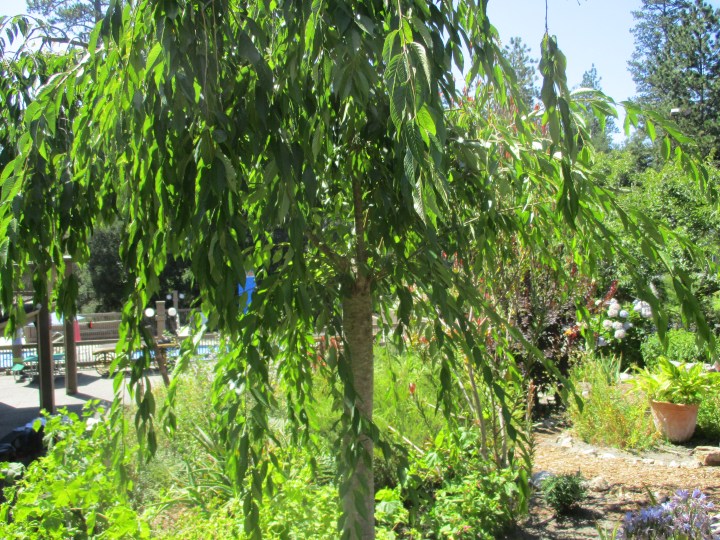 Weeping flowering cherry is another type of tree that almost never gets appreciated like it should. Like so many Japanese maples, they get planted into situation where so-called ‘gardeners’ shear them into nondescript globs of worthless foliage that only get in the way. Some get shorn so regularly that they are deprived of bloom. Their form and bloom are their two main assets.
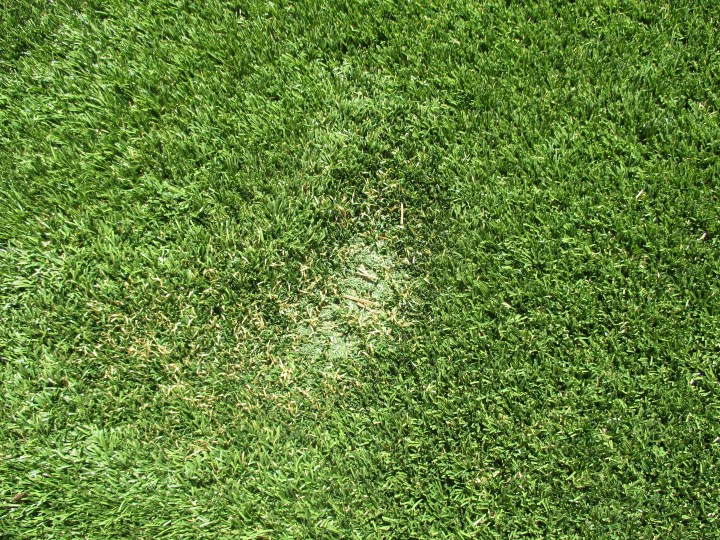 The lawn around the three small but gnarly oaks that were featured this morning in ‘
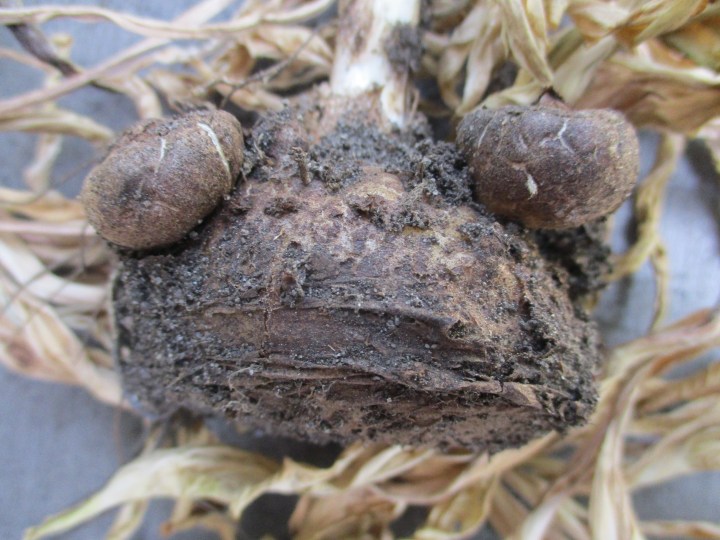 Wednesday is my day to rant. However, I neglected to get out to find a picture or even a topic to rant about. Instead, I found this ugly little . . . what I believe to be a dormant rhizome. It looks more like a tuber or a tuberous root, and very well could be. Someone at work brought it from his home garden, where countless more naturalized and became aggressively invasive.
 This grand sycamore has likely been here since the third day of Genesis. A few of the top branches got broken off when Noah’s Ark floated over. When I was a little kid, it was on the edge of a vacant field where road debris was dumped, and older kids rode their dirt bikes. Now it is on the western edge of the parking lot of Felton Covered Bridge Park. I write about it sometimes.
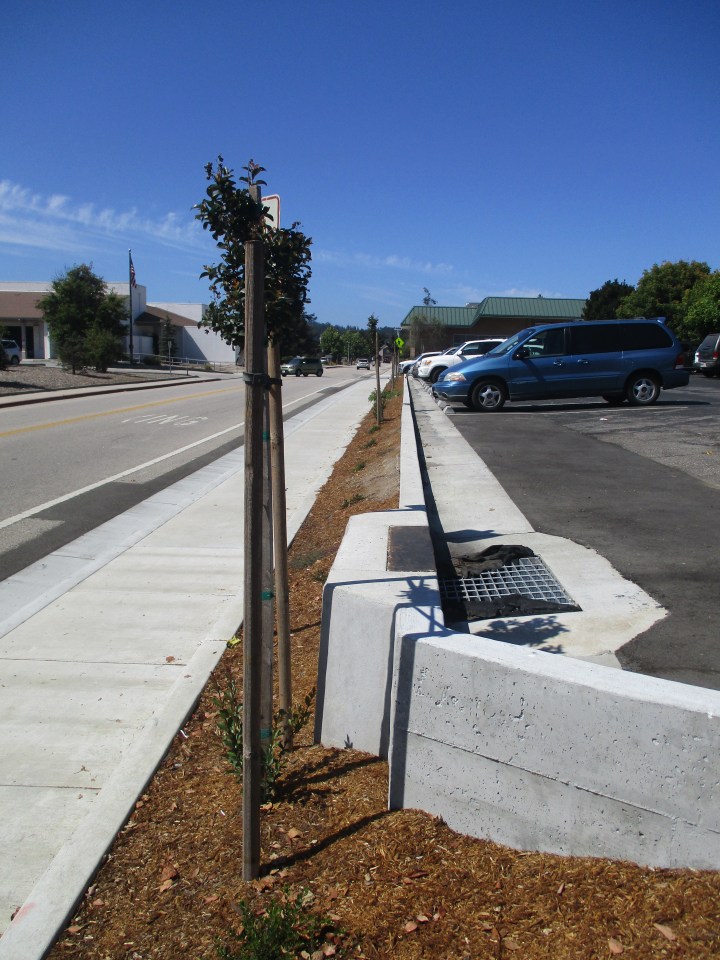 We arborists happen to like trees. That is why we are arborists. Most of us also understand that trees are not appropriate for every situation, or where they are not appreciated. There is no point in planting a tree where it will just get cut down by someone else who does not like it. We want trees to be happy. We also want those who live with them to be happy with their trees.
 Without prior notice, I was informed on Friday morning of a workday on Saturday morning at Felton Presbyterian Church. That was yesterday. Since there was no time to get other chores done in advance, I was an hour late. Considering that we only work for four hours between eight and noon, one hour is rather significant. I felt compelled to attend regardless. A few friends who are parishioners of Felton Presbyterian Church appreciate it.
 Tony Tomeo