This makes about as much sense as so-called environmentalists protecting aggressively invasive exotic species that displace native species.

 Building and environmental codes are so ridiculous. So much of what I would want in my home is now illegal. So much modern technology that I do not want is now required. Fireplaces and wood stoves are not allowed. Overly elaborate electrical systems to serve every room are necessary. I would prefer a technologically simple home comparable to those built more than a century ago, but am prohibited by law from ever constructing one.
The area outside of a home is no easier to work with. Dead trees inhabited by the wrong sorts of woodpeckers can not be cut down. Excavation can be prohibited if a particular beetle happens to be in the way. Even some of the increasingly combustible trees and overgrown vegetation have more rights on my land than I do. Now, I am a horticulturist; so I know more about vegetation management than the treehuggers formulating these…
View original post 336 more words
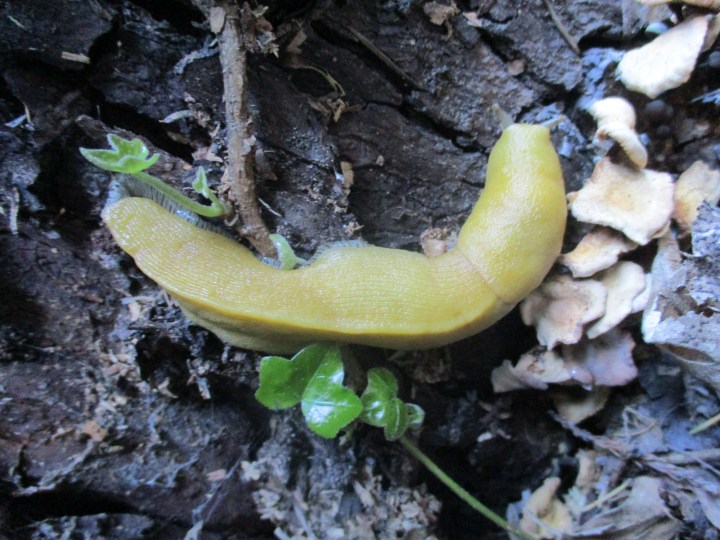 They are not as dangerous as they look. Really. If they were, just one could do more damage than an entire herd of average slugs. The fortunate truth is that banana slugs consume only decaying plant parts and fungus. Yes, they literally cruise about the garden eating bits of decomposing debris that we may not want there anyway, and converting it into a very nutritious and nitrogen rich ‘fertilizer’. They are actually beneficial to home gardening.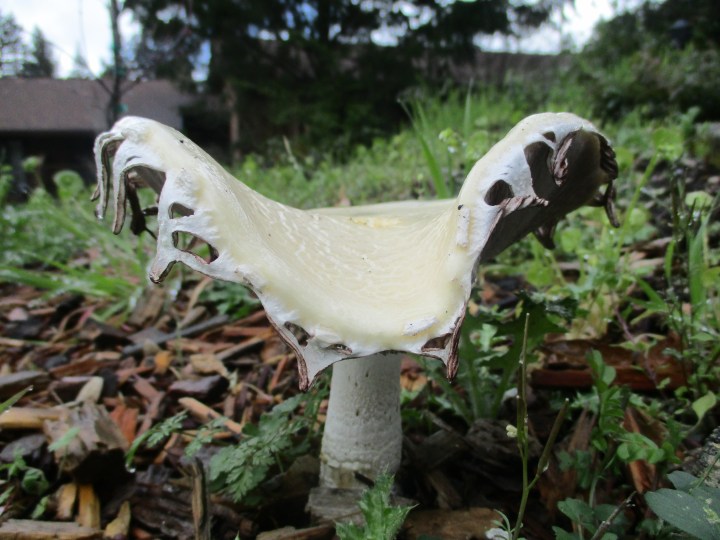
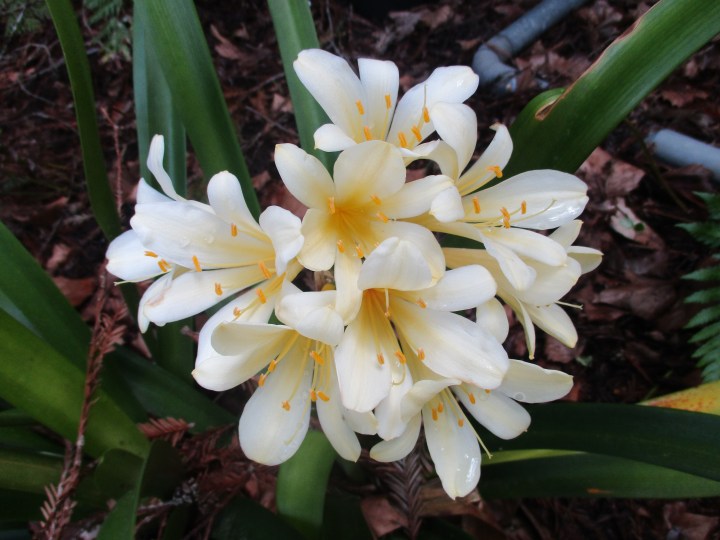 Back in the good old days, Kaffir lily, Clivia miniata, which is probably most popularly known simply as ‘clivia’, bloomed with big round trusses of exclusively bright reddish orange flowers. It was such an excellent color that no one thought to change it. Flowers of feral plants that sometimes grew from seed were potentially more orange and less red, but were flashy nonetheless. There was no need, and minimal potential, for ‘improvement’.
 This really is something that I did not expect to see. It may not look like much. It is just a raspy anemone with bites taken out of it, blooming later than it should. What is so impressive about it is that it was not planted here last year. It was planted during the previous year, then bloomed on time last year, and then died back like anemones normally do. I did not plant it, of course. It is in a planter where volunteers contribute whatever they like.
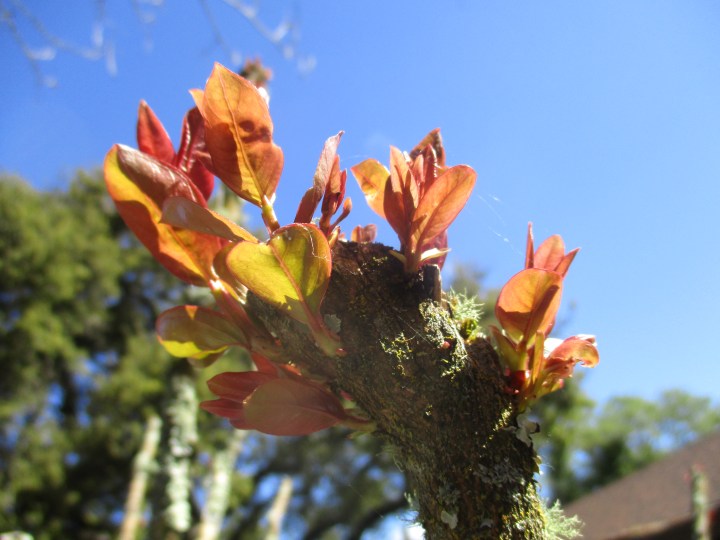 This is the beginning of one of several new knuckles on a pollarded crape myrtle tree that was pollareded for the first time just this past winter. It was quite a mess of thicket growth that was too congested to bloom well. It is also located in a confined situation where it could not just be groomed, pruned up for clearance, and then just left to develop a larger canopy higher up. Pollarding will both contain it, as well as invigorate healthier growth.
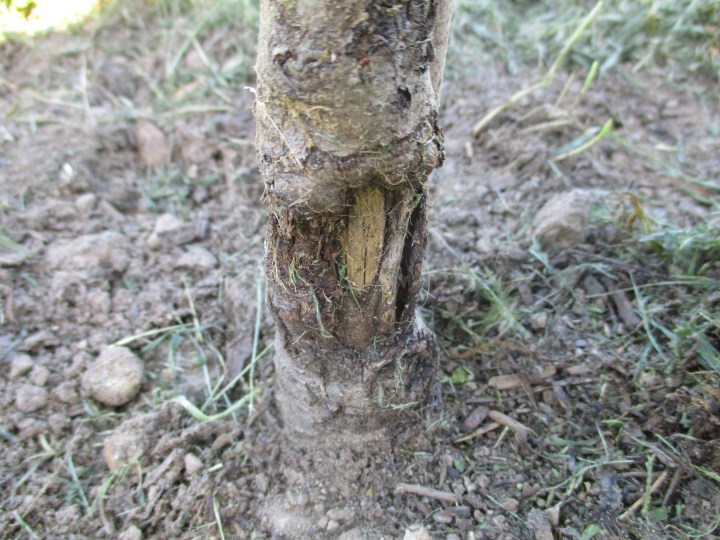 The most destructive tools that so-called ‘gardeners’ have access to are hedge shears. They use them on just about anything within their reach. If a tree is not beyond their reach, they are likely to shear it into a nondescript glob of a shrub, complete with lodgepole stakes and straps that never get removed. Yet, in all their enthusiasm, they will not properly shear hedges that are actually intended to be shorn. Well, I have ranted on that enough.
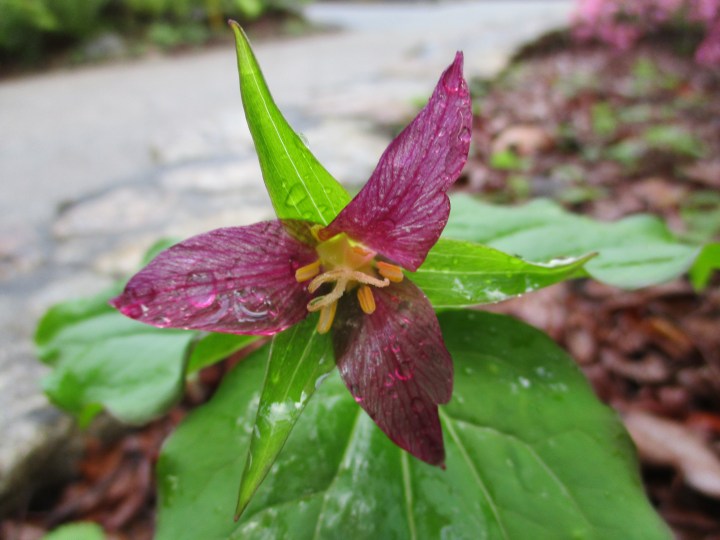 Other species must be more interesting than what is native here. There are supposedly as many species of Trillium as there are of Yucca; forty-nine. All but ten are native to North America. The others are in eastern Asia. They are desirable and respected perennials to those who are familiar with them. White trillium is the official wildflower of Ohio, as well as the official floral emblem of Ontario. Ours would not likely qualify for such status.
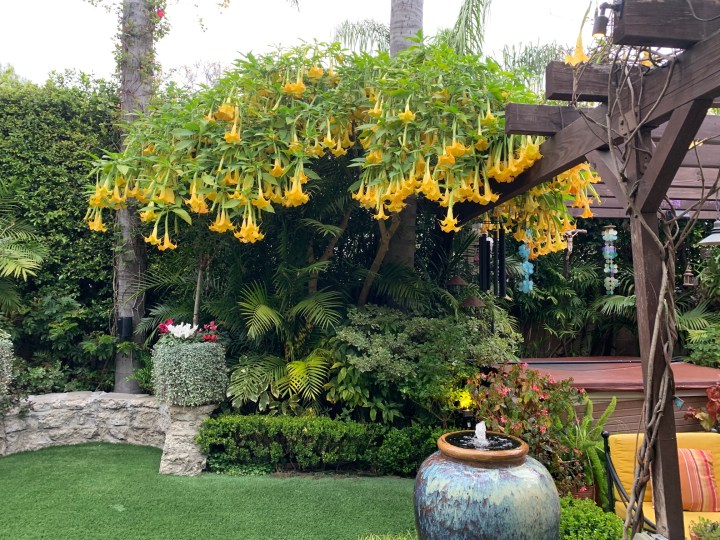 When spelled like that, the whole thing looks like someone’s long name. ‘Charles Grimaldi’ really is someone’s name, and the particular cultivar of brugmansia happens to be named after him. Because no one knows who the parents of this hybrid cultivar are, the species name is omitted. It is therefore described by just the genus name followed by the cultivar name, as Brugmansia ‘Charles Grimaldi’; or simply ‘Charles Grimaldi brugmansia’.
 In this situation, the point is that all those pointed tips of the leaves of this awkwardly floppy century plant, Agave americana, are extremely sharp, extremely rigid and EXTREMELY dangerous. Those shorter teeth on the margins of the leaves are just as sharp and rigid, and are curved inward to maximize injury to anyone trying to get away from an initial jab. With tips that impale, and marginal teeth that slash, this is one very hateful perennial!
 Tony Tomeo