Robert Tomeo, my younger brother, is 53 years old today, and happens to be a Gemini (if that means anything). For the next month (less one day) we will be the same age. Not only am I a Cancer (if that means any more than being a Gemini), but I also have the distinction of being born during the Summer of Love in 1967! Anyway, this is one of the more mundane of my recycled articles that should have posted at noon on Saturday, but seemed to be more appropriate for June 13.

 Astrology is an interesting concept. It is amazing how accurate the various zodiacs are. In fact, they are so accurate, that all twelve of the zodiacs can apply to just about anyone, regardless of their respective birthday.
For example, Gemini people are gentle, affectionate, curious and adaptable. Well, who isn’t? If I told you that these traits applied to Leo, Aquarius or Sagittarius, would you believe me? The weaknesses of Gemini are nervousness, inconsistency and indecisiveness. We all of us experience these weaknesses at one time or another. Gemini people like music, books, magazines and strolling about town. What about Aries, Capricorn and Taurus? Don’t they? Are Gemini people unique in their dislike for loneliness, confinement or repetition? Probably not.
June 20 will be the end of Gemini. It will then be time for Cancer, with its set of distinctive traits, strengths and weaknesses.
Gardening according to astrology might seem…
View original post 149 more words
 Stereotypes can be such a bother. For the past almost twenty years that I have been writing my gardening column, many of those who read the column have been making assumptions about who I am and how I behave. I actually find much of the behavior that I should conform to be rather objectionable. Even the lingo would be awkward for me. I am a horticulturist, and if you must know, an arborist as well. It is my profession. I did not take an interest in horticulture because I retired or got bored with my primary career. Nor did I flunk out at everything else. I am not a garden guru, flower floozy or hortisexual. I do not crowd my garden with garden fairies, repurposed junk or rare and unusual plants. There is nothing eclectic or quaint. There is no whimsy or magic, and most certainly NO riot of color!…
 Apparently, the warnings were effective.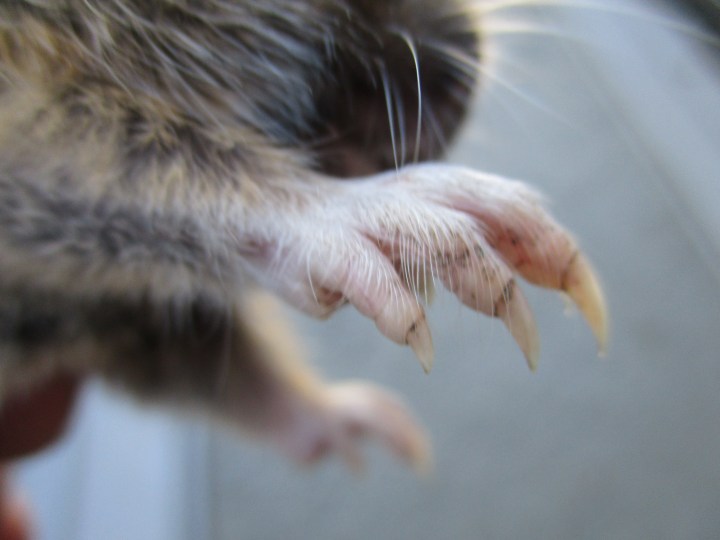
 Nurseries are full of plants for sale. That is their business. They sell plants, and whatever plants need. With a bit of money, it is easy to purchase plants to compose an exquisite landscape. That is important to landscape professionals who make a business of composing landscapes to beautify the environments in which they work.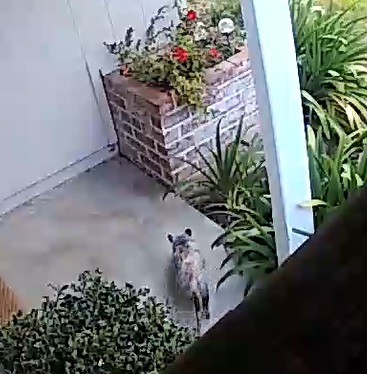
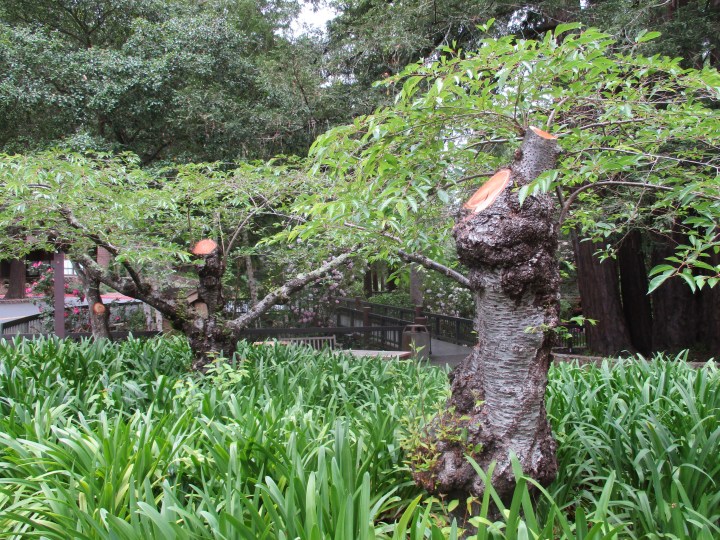 The ‘politically correct’ designation for them now is ‘flowering cherry’. We all know what it means, but it is not quite as accurate. After all, they all flower. Fruiting cherries can not make fruit without flowering first. The old fashioned designation as ‘fruitless cherry’ is more accurate, but not so appealing. Besides, after half a century, the work of these two deteriorating old fruitless cherry trees has not been in vain.
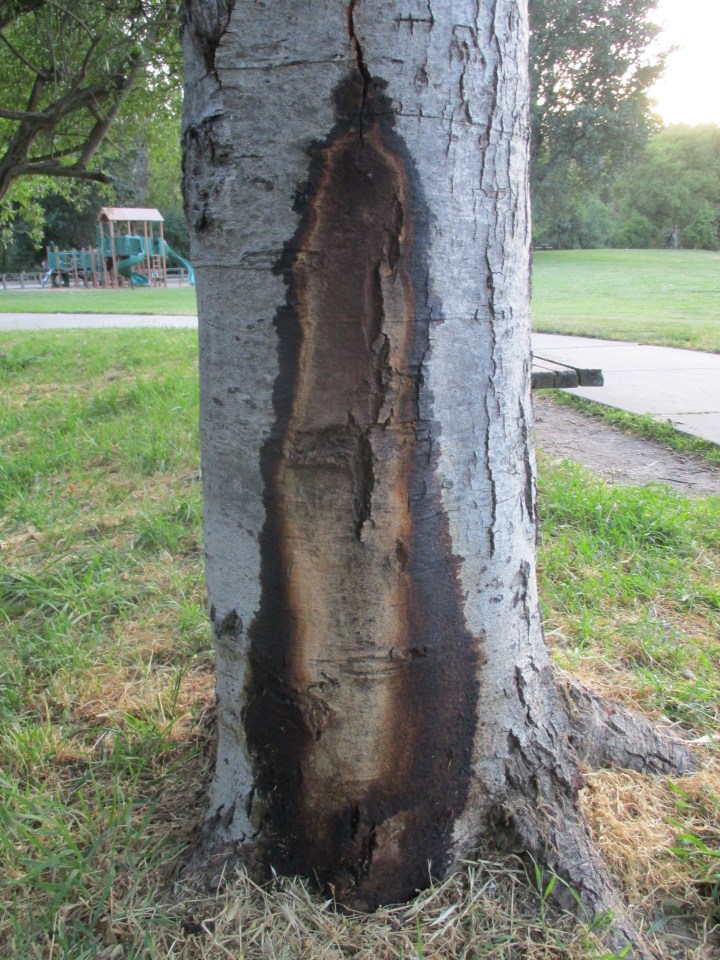 This unhappy native white alder, Alnus rhombifolia, had been deteriorating for quite a while. White alders do not last long even in the wild. A few nearby have already been removed. This one is next. They were nice and shady when the landscape was new. Nicely maturing sycamores and a bigleaf maple can take over for this one now.
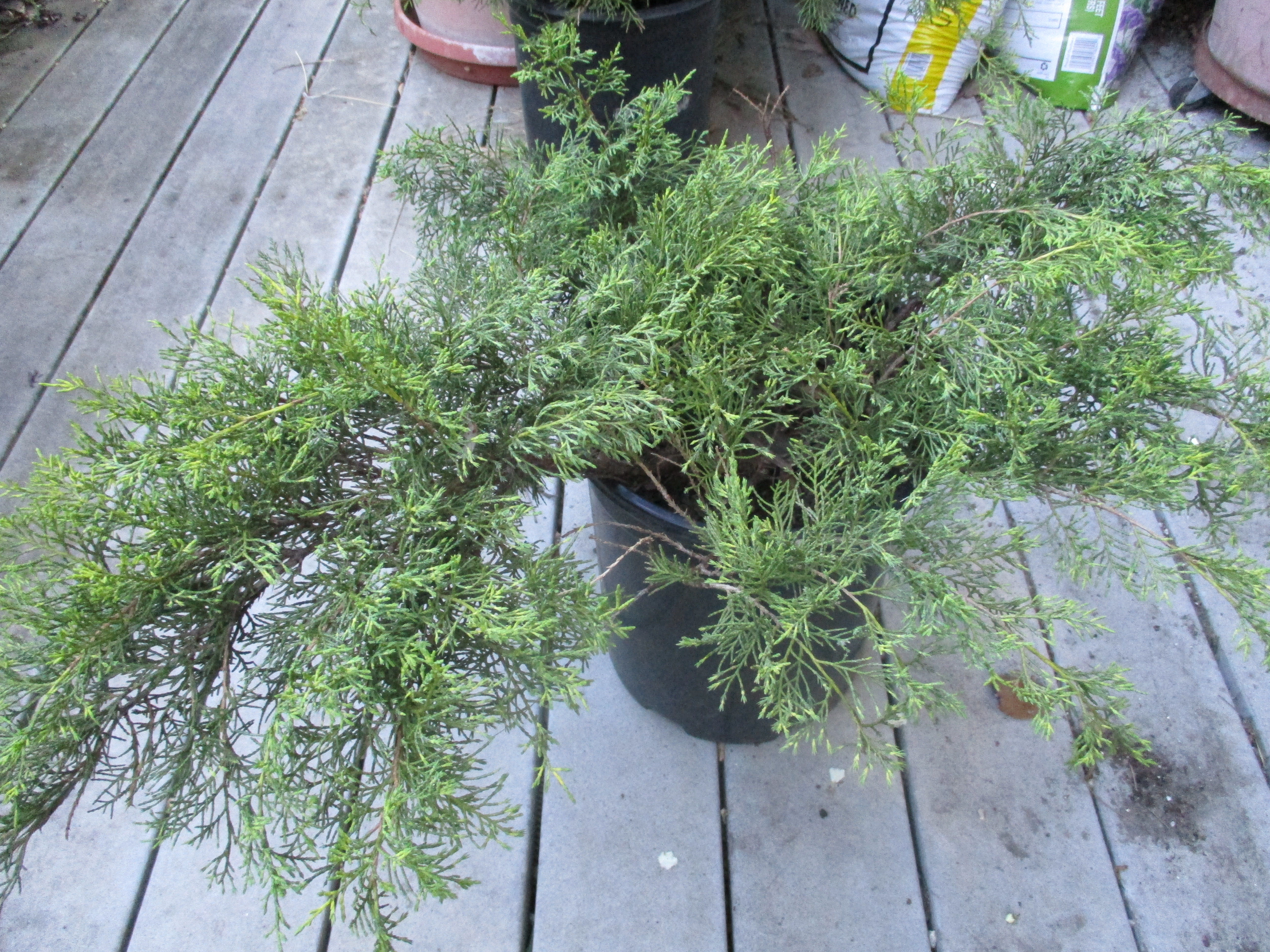 Oh, the stigma of juniper never gets old! No matter how many cool new cultivars get introduced, and how many specie get rediscovered, they are still though of as those nastily prickly ‘tams’ that were too common in the 1950s. Even some of us who really like junipers dislike tams, not only because they share their stigma with all other members of the genus, but also because they really are nasty and prickly, and not as useful as their overuse would suggest. Are they deep ground cover or shallow shrubbery? They might work for a few years, or maybe many years, but they eventually crash into each other or other plants and pile up into a dense thicket that can not be pruned without being deprived of all dignity.
 Tony Tomeo