Sunburn

For the same reason that the lily of the Nile that were described yesterday are blooming so late this year, both sun scald and scorch are less of a problem this summer.

tonytomeo's avatarTony Tomeo

P00705-1 Out with the old, . . .

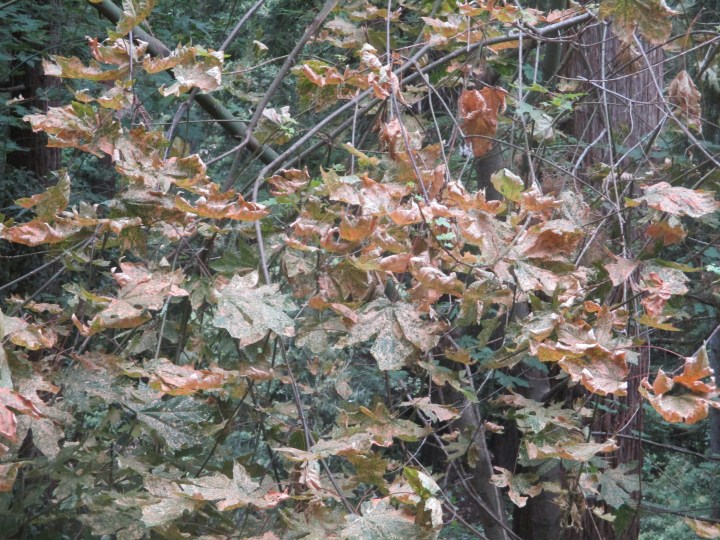
There are two types of horticultural sunburn. Sun scald is what happens to formerly shaded bark if it suddenly becomes too exposed. (As I mentioned in my gardening column for this week, which posted last Monday here, sun scald that occurs during winter in colder climates is caused more by frost than by sunlight.) Scorch is what happens to overly exposed sensitive foliage.

The picture above is an example of scorch on a significant scale. The bigleaf maple was formerly shaded by a big Douglas fir that fell last May, leaving the maple both severely disfigured and very exposed. Such exposure would not have been a problem it the foliage had always been so exposed. The problem was that it developed in shade, so could not adapt to the new exposure.

The exposed foliage survived for a while, but eventually succumbed to warmth…

View original post 165 more words
Fourth of July

Well, not only is this recycled article four days late, but even if it were on time, the lily of the Nile are blooming quite late this year because of the cool spring and summer weather.

tonytomeo's avatarTony Tomeo

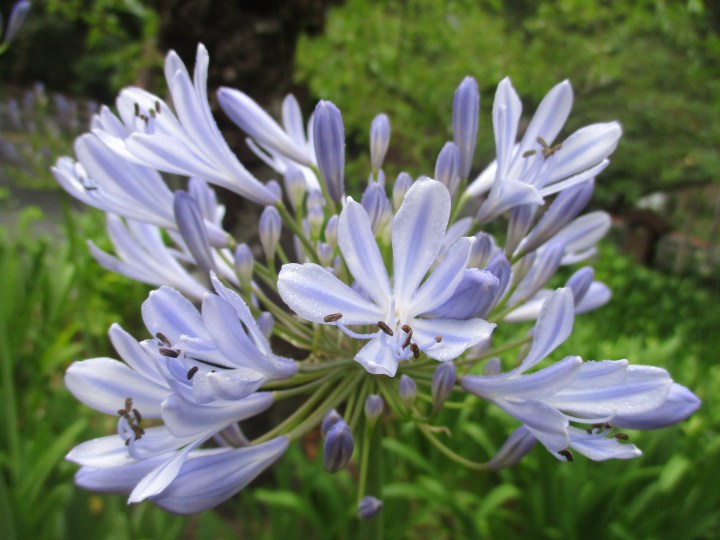
P00704K Lily of the Nile are floral Fourth of July fireworks.

Fireworks, Fourth of July parades, and the associated crowds are of course canceled for this year.

Lily of the Nile does not mind. It blooms in time for the Fourth of July regardless of what the rest of us are doing, or not doing. That is one of the two reasons why some of us know it as the ‘Fourth of July flower’. The other reason is that the nearly spherical floral trusses resemble exploding skyrocket fireworks. They are mostly blue, with some white. All that is missing is red.

The bloom in this picture is not exactly exemplary. It would have been larger, rounder, and likely more advanced in bloom if it had developed in a sunnier location. There are enough of them that we do not notice that most are somewhat diminutive. In autumn, many of the overgrown…

View original post 162 more words

Horridculture – Vandalism

This recycled Horridculture post is actually not as bad as it seems to be. Three years later, this little Memorial Tree, which was not expected to survive, is not only surviving, but thriving. It recovered remarkably vigorously, and has been growing better than it had been prior to this incident. The concern and support expressed by the Community was amazing! Some were ready to replace the original Memorial Tree with a more substantial boxed specimen. I am actually more pleased that the original survived. A neighbor still maintains a wildlife camera to monitor it from a nearby tree. I really should post an update soon. This is an update from last winter. https://feltonleague.com/2022/12/25/merry-christmas-tree-christmas-2022-memorial-tree-update/

tonytomeo's avatarTony Tomeo

This would have been an ideal time for a seasonal update on the little Memorial Tree in Felton Covered Bridge Park. Until recently, it had been healthier and growing more vigorously than it had since it was installed a few years ago. It had survived major accidental damage, and was just beginning to thrive. Sadly […]

https://feltonleague.com/2020/06/28/vandalism/

via Vandalism — Felton League

View original post

A Strong Foundation

Well, it was a good try, but these are regenerating quite slowly three years later.

tonytomeo's avatarTony Tomeo

P00628-1 Before: Camellias left the foundation exposed a long time ago, but instead obscured the view from the windows above.
‘Foundation planting’, which most of us think of as vegetation intended to merely obscure a foundation behind lower and prettier plants, has a simple utilitarian origin. Before homes were so commonly outfitted with rain gutters like they are now, densely shrubby foundation plantings diffused water that fell from eaves, and limited splattering of mud onto foundations and walls.

Nowadays, foundation planting only needs to look good, and maybe obscure crawlspace vents or exposed undersides of decks. They might be allowed to get as high as window sills, or higher.

These camellias got more than a bit too high. They had not obscured the cinder block foundation in a very long time, and did not contribute much to the shingled wall above. What was worse was that all of their best foliage…

View original post 194 more words

Edelweiss – Fail

Hey, I should send a message to the other horticulturist who brought the edelweiss seed from Austria to bring some more, since he happens to be there right now!

tonytomeo's avatarTony Tomeo

P00627K ‘Small and white, clean and bright’? They only got as far as ‘small’ and ‘clean’, but did not get to ‘white’ and ‘bright’.

Edelweiss, edelweiss, every morning you greet me. Small and white, clean and bright, you look happy to meet me. Blossom of snow, may you bloom and grow, bloom and grow forever. Edelweiss, edelweiss, bless my homeland forever.”

Why are there no corny songs like this about California poppy?

Although I never met edelweiss before, I always thought that it must be quite excellent. Those who are familiar with it where it grows wild in European mountains seem to believe so. It does not look like much in pictures, so must be much more impressive if experienced directly.

A colleague here who met it directly in Austria decided to grow some, and easily procured seed online. The seed was chilled in a freezer to simulate winter in…

View original post 173 more words

Horridculture – eBay

Oh my! This old article reminds me that, just prior to reblogging it, I purchased a few Musa acuminata pups on EBay!

tonytomeo's avatarTony Tomeo

P00624 I certainly got good deals on these recent acquisitions. However, I have no idea what I will do with them.
It is such a bad habit! Even if I spend no money, I spend too much time perusing what I could spend a little bit of spare cash on. On rare occasion, I actually do spend a little bit on something that I can get a good deal on, not because I actually have any use for it, but merely because I got a good deal on it, . . . or because I believe that I may not be able to find it for sale again later.

Now, I have more than two hundred seed for Pygmy date palm, Phoenix roebelenii. They certainly were inexpensive, costing less than a few dollars. Most of the expense was for postage. It really was a good deal. However, I have no…

View original post 172 more words

Sole Survivor

A few more seedlings of Washingtonia filifera appeared after these pictures were taken, so this little palm is no longer alone.

tonytomeo's avatarTony Tomeo

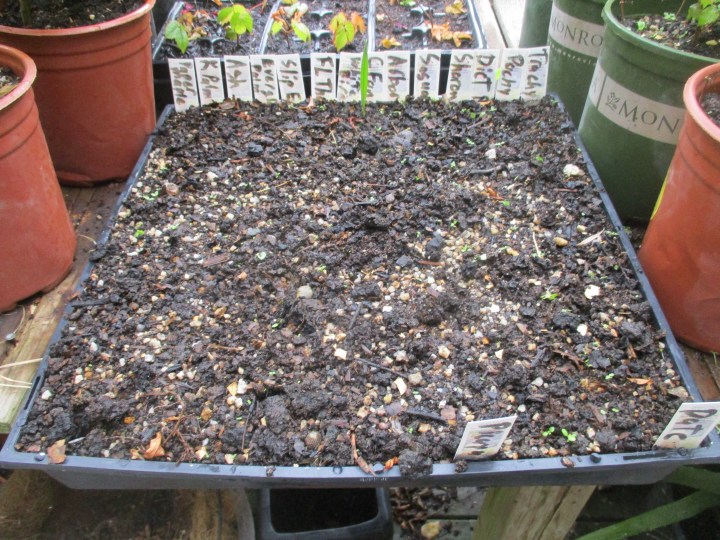
P00621-1 One is the loneliest number. (It is in the middle of the far edge of the flat.)
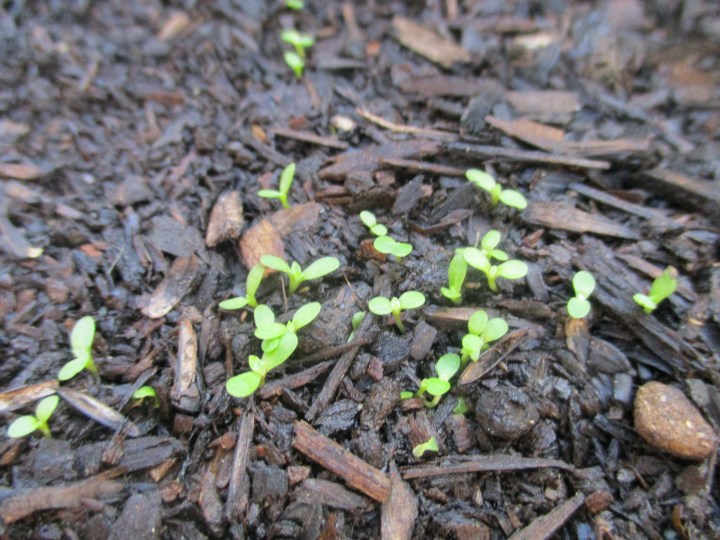
By now, I can safely assume that any of the various old seed that were sown late last February that have not yet germinated are not likely to do so. They were all so old that I knew at the time that their viability was questionable. Nonetheless, I could not discard them without confirming that they were no longer viable. Four months later, this empty flat just about confirms it.

So far, the sole survivor is a seedling of a California fan palm, Washingtonia filifera. It looks silly all alone in the otherwise empty flat. Yet, even if no other seedlings germinate, the effort will have been worth this dinky palm seedling. California fan palm happens to be my favorite palm; but I would have been just as pleased with something that…

View original post 179 more words

Ghost of Weddings Past

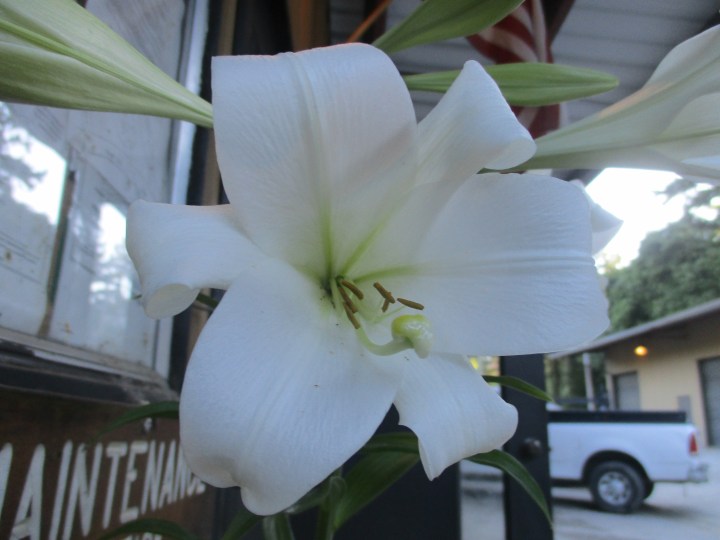
Although this particular lily is not performing well in the landscapes, others have actually proliferated more than expected. A few are blooming so abundantly within their now crowded colony that I am considering splitting them this winter.

tonytomeo's avatarTony Tomeo

P00620K Easter lilies are still my favorite of the lilies!

Weddings are normally common at the small historic chapel at work. This is normally the busiest season there. Since the chapel is presently unused, and it will likely remain unused for quite a while, we have not replaced the white pansies, that were out front through winter, with new white blooming warm season annuals for summer. The minimal landscape seems a bit emptier.

A colony of white hydrangeas to the left of the chapel happen to be blooming late this year, as if they know there is no rush. The smaller hydrangeas in the foreground of this colony were not original to the landscape, but were added as they were left behind after weddings. (Florist hydrangeas are innately more compact.) Blue and pink hydrangeas went to blue and pink colonies.

Our chrysanthemums were left behind after weddings too. They were originally…

View original post 159 more words

Proper Pruning Without Sealing Wounds

As improper as this extreme pruning is, the would will heal more efficiently without sealant.

Sealing pruning wounds with grafting compound or any other gunk, like paint, wax, tar or roofing compound, literally adds insult to injury. Grafting compound should only be used to temporarily limit desiccation while graft unions knit. It eventually flakes off as the affected parts (understock and scion) grow. Because the cut surfaces of pruning wounds do not grow, grafting compound does not flake off right away, so can remain mostly intact for years, retaining moisture and actually promoting rot. Some thick emulsions may even inhibit callus growth over wounds (healing).

Because so many people expect pruning wounds in trees to be treated with some sort of dressing, some tree services apply black spray paint. Most who do so fortunately know that it is best to apply the paint lightly enough to be porous instead of actually sealing the surface. Some use temporary marking paint, which is designed to deteriorate in the weather. (The cut surfaces hopefully darken simultaneously so that no one notices.)

The best way to promote healthy recovery from pruning is to prune properly, leaving no stubs to interfere with compartmentalization (healing). The sort of rapid growth that most efficiently compartmentalizes pruning wounds naturally occurs at branch unions, even after the associated branches get pruned away. This is because the remaining foliage beyond the unions (the parts that do not get pruned away) remain vascularly active and able to sustain such growth. Similar growth at the end of a stub is much slower because there is no foliage beyond.

More often, a stub dies, leaving an obtrusive peg lodged where callus growth should be closing a wound. By the time the stub rots enough to not interfere, rot will have also extended into the union with the supporting stem.

Horridculture – Bucket of Bolts

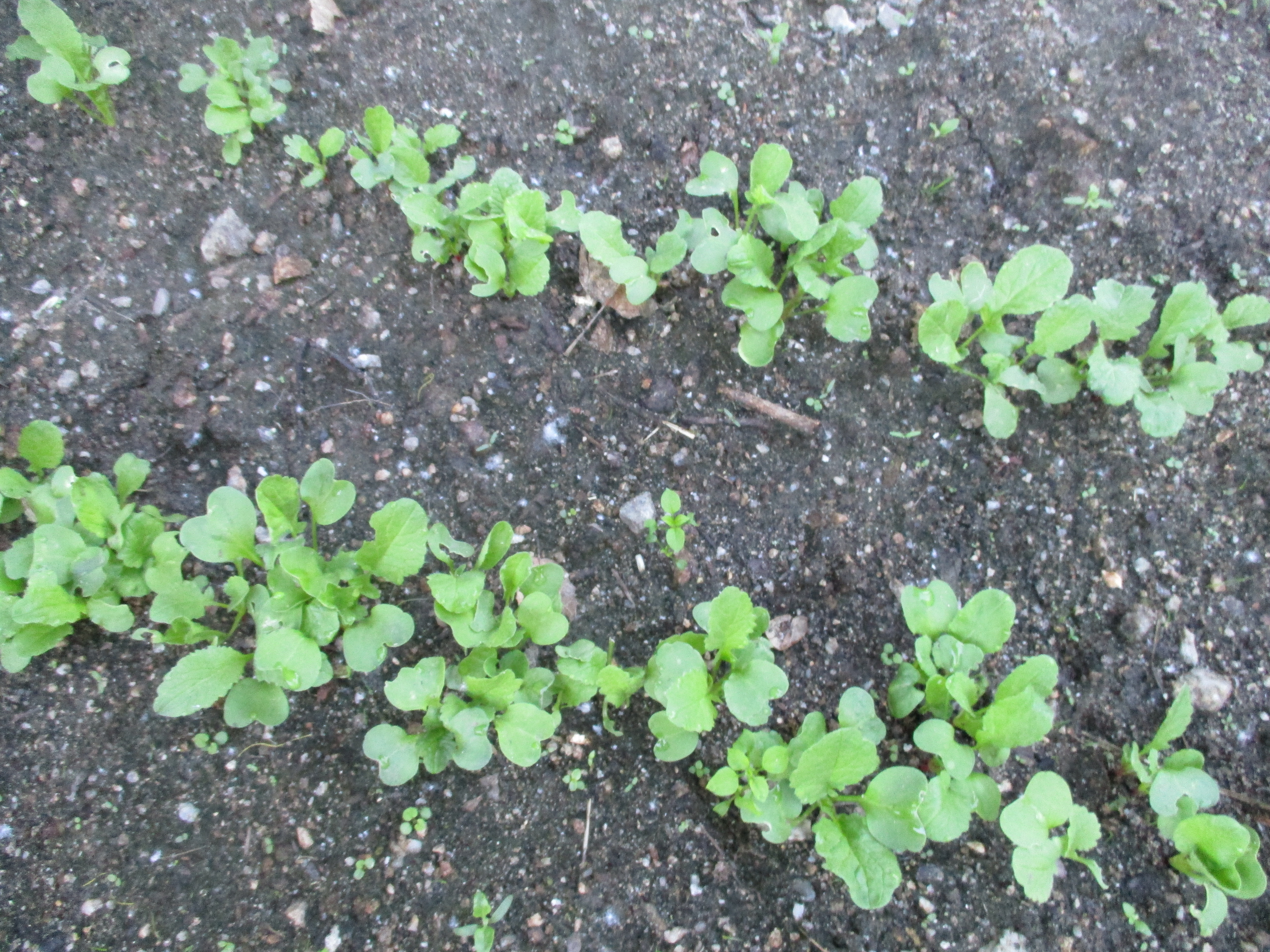
Actually, this was not a total ‘FAIL’. The bolted greens were not so bad, and I actually preferred their flavor to milder and ‘better’ greens.

tonytomeo's avatarTony Tomeo

P00425-6 They started out nicely.

Radishes seemed like a good idea back when I sowed the seed in the garden. I had not grown any in many years. I thought that the particular location would be cool enough to inhibit bolting, even though it was starting to get close to the end of their season here. They are definitely a cool season vegetable here, with brief seasons in spring and autumn. Some linger through winter.

The seed germinated efficiently. The seedlings started out well. Radishes are small roots that mature in only about three weeks. Technically, they were right on schedule. I happened to get a few tiny radishes from the batch. However, after the seed were sown, but before the radish roots developed, the formerly cool spring weather warmed suddenly enough to stimulate bolting.

The elongation of floral stalks was visible within the foliar rosettes of most of the individual…

View original post 159 more words