The Nile River Valley is a region of extremes. It floods at times, but is hot and dry at other times. Lily of the Nile, Agapanthus orientalis, naturally survives it all. It can easily survive here. However, it survives arid heat by shedding a bit of foliage. Therefore, it is generally healthier here with at least occasional watering through the warmest weather of summer.
The almost spherical floral umbels of lily of the Nile explode into bloom like blue or white fireworks, just in time for Independence Day. They are about six to eight inches wide, on elegantly bare and slightly leaning stalks that stand about four feet tall. Individual flowers are only about an inch or two long. Flowers bloom only once annually, but last for weeks.
With or without bloom, the dense and evergreen foliage of lily of Nile is always lush. The soft and strap shaped leaves are about a foot and a half long, and flare outward from low basal rosettes. New foliage obscures deteriorated old foliage. Fleshy roots firmly secure plump rhizomes. Division relieves crowded rhizomes, and contains their slow migration.
Many popular annual bedding plants have potential to be perennial if they get a chance. Cyclamen commonly perform as a cool season annual, only until replacement with warm season annuals. However, after summer dormancy, their tubers can generate foliage and bloom again for several following winters. Replacement is just easier than maintenance.
Real annuals complete their entire life cycles, from germination to dispersal of seed and finally death, within a single year. Biennials generate vegetative growth through their first year, and then disperse seed and die during their second year. Perennials perform for at least two years, whether or not they get any opportunities to do so within home gardens.
Home garden culture complicates this classification though. Those who enjoy gardening expect perennial plants to reliably perform for many years or indefinitely. Many perennial plants do so with only minimal intervention. Some are self-sustaining, and might seem to naturalize. That may be why so many smaller or less vigorous types classify as annuals.
Another qualification of perennial plants is that they lack woody stems and roots. In other words, they are herbaceous. Palms and species of Yucca that develop trunks classify as perennial plants also, but for simplicity, the larger types are herbaceous trees. Generally, perennials are terrestrial. A few are epiphytic (live in trees) or lithophytic (live on stones).
Although several perennial plants can survive indefinitely here without intervention, most perform better with some degree of attention. Most ferns are neater if groomed to remove deteriorated fronds. Many grasses benefit from severe shearing during winter. African iris blooms better in response to regular deadheading to remove developing seed capsules.
Perennial plants are very diverse. It is impossible to generalize about their maintenance. One commonality among many is that they multiply. Lily of the Nile can produce so many individual shoots that it can eventually become too congested to bloom. Division of such shoots every several years or so promotes bloom, as well as propagates more plants for elsewhere in the landscape.
This article posted three years ago. The compost pile has been relocated since then. Not so much produce grows in it. However, I was informed this past week that tomatillos are growing in it right now. I have no idea how they got there.
We don’t put much effort into our compost piles. In the first pile, we dump horse manure, green waste from two cafeteria type kitchens, and a bit of the finer textured green waste from the landscapes. It eventually gets turned over into the second pile. By the time the second pile gets turned over into the third pile, it is almost ready for use. The third pile really does not last long. Neighbors take it as fast as we can.
We turn the piles when it is convenient for us and the tractor. There is no schedule. We incorporate the material as it becomes available. There is no recipe. Somehow, we get remarkably good compost from the process. Besides the usual weeds that grow around the compost piles, there are all sort of vegetable plants that grow in the compost, from vegetable scraps and seed that were in the green…
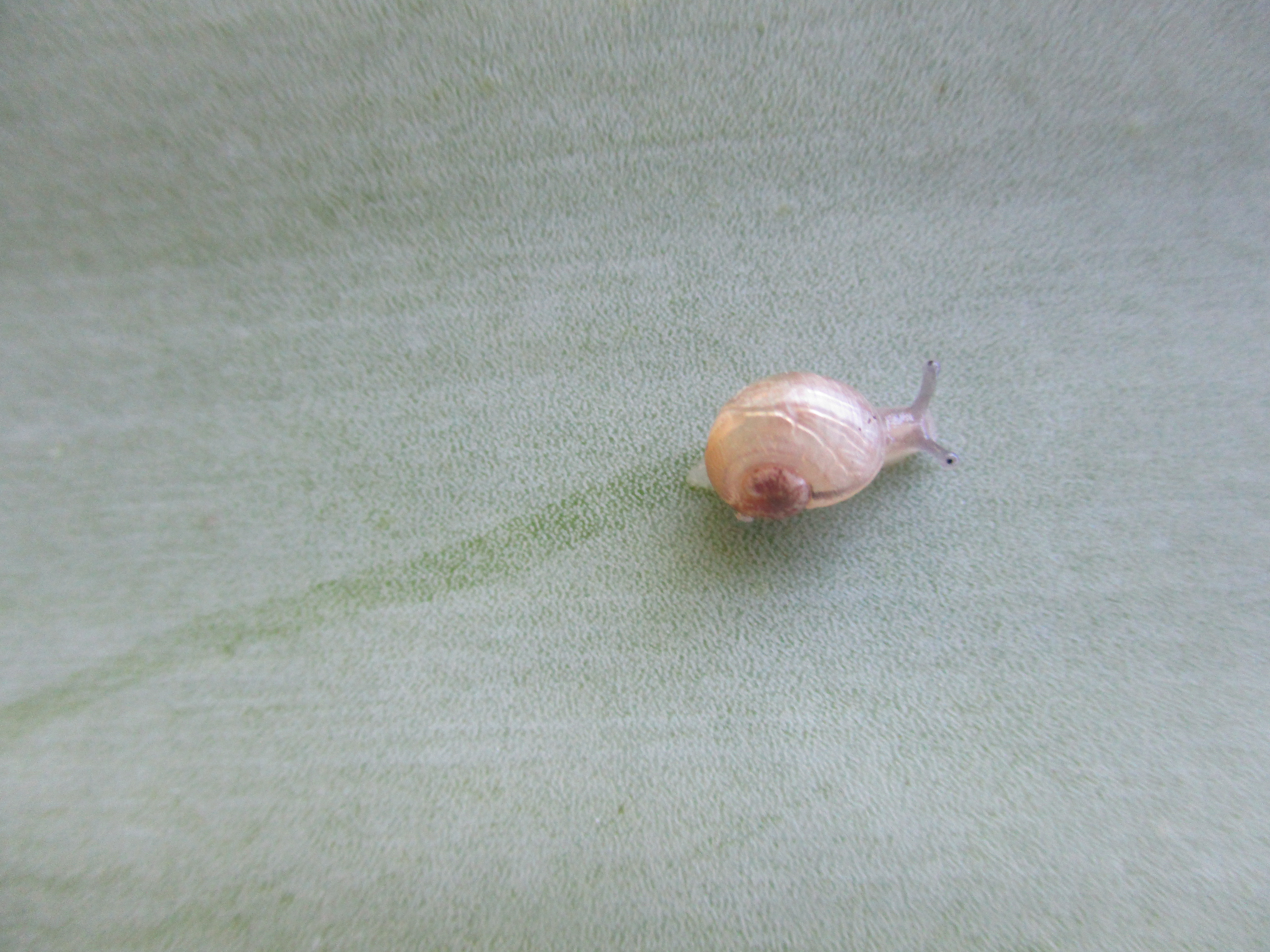
These are two pictures that did not make the grade for my ‘Six on Saturday‘ post this morning. That post featured bronze and gold foliage. Actually, of the six, only two were bronze, and only one was truly gold. One that I passed off as bronze was more purplish. Two that I thought were gold were just variegated with yellowish green and white.
I am none too keen on bronze or gold foliage anyway. The only exception that I can think of is the old fashioned bronzed ‘Schwedleri’ Norway maple. It was planted as a street trees on a few streets in the Santa Clara Valley in the 1950s.
Bronzed cultivars are less vigorous than their greener counterpart.
Gold cultivars are even less vigorous, and susceptible to scorch.
The best quality about bronze and gold is that they make silver look so good.
Seasons here are rather mild. People from more interesting climates may not realize that there are any seasons here. Some may believe that it is almost always summer, with only a few days of some other season that is not summer. In reality, climates here experience the same four seasons that occur throughout the rest of North America. The seasons are merely less distinct here. That confuses some plants. Many plants that do not mind mild climates set their own schedules. Some simply have extensive bloom seasons. Of course, many flowers, such as petunias, are totally aware of winter, but know how to thoroughly exploit summer.
1. Chrysanthemum does not seem to be aware that it should bloom for autumn. Actually, it blooms whenever it wants to, and after this bloom phase, may also bloom for autumn.
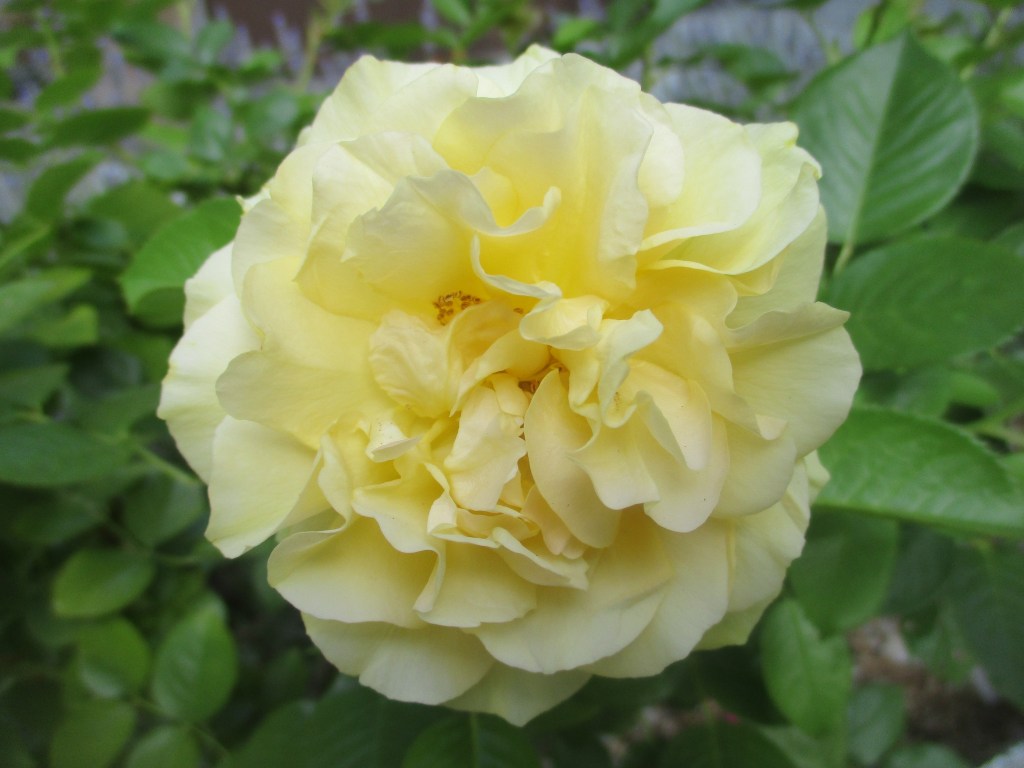
2. Roses should bloom from spring until autumn, but because of partial shade, generally finish with the best bloom by now. This year, their bloom continues as if it is still spring.
3. Lilies that grow from bulbs bloom only for spring, although many were still blooming recently. This one is a daylily. Like the chrysanthemum, it blooms whenever it wants to.
4. Petunia is a classic warm season annual for summer. This one is dressed up as Santa Claus for Christmas time though. Maybe it is actually dressed up like the flag of Austria.
5. This color is rad, even if I can not describe it. Is it purple? Is it burgundy? Perhaps it is irrelevant. I would not have selected it anyway. Such tasks require specialized expertise.
6. Ah, this is more my style. Even I can see that this is plain white. It is my favorite color, and is one of the two simplest. Only black is as simple; but it is very rare among flowers.
The minute bright pink flowers of Mexican heather, Cuphea hyssopifolia, are less than a quarter inch long, but are enough to get the attention of the hummingbirds who really dig them. Flowers can rarely be more purplish or even more rarely white. The limber stems are well foliated with finely textured and narrow leaves that are not much more than half an inch long. Mature plants are typically lower but a bit wider than two feet. Overgrown plants can be pruned severely at the end of winter to regenerate over summer.
What ever happened to those poinsettias and cyclamen from last Christmas?
Chrysanthemums, hydrangeas, azaleas, callas, kalanchoes and miniature roses can not really be as happy as they seem to be while in full bloom at the florist counter. Then there are all the seasonal blooming plants like Easter lilies and poinsettias. Wrapped in undraining mylar, often with ribbons and bows, they are actually quite humiliated.
All are forced to bloom in artificial greenhouse environments that are nothing like the home environments that they ultimately go to. As they finish bloom, most get retired directly to the garden where many are unable to adapt quickly and efficiently enough to survive for long. Many do not make it that far, but get sent to the compost or the trash by those who prefer to not prolong their agony.
These potted plants (which are actually known as ‘pot plants’ in the horticultural industries) are not like houseplants, since they are not actually expected to survive for long in the home. They are only expected to perform for a limited time while in bloom.
Adapting to the home environment is not the difficult part. Most potted plants can manage that for a while, but eventually want more sunlight. Hydrangeas, roses, Easter lilies and other deciduous plants also eventually want a cool winter for their dormancy. The problem is adapting to exposure to the sunlight and weather that these plants crave. Foliage can get scorched, frozen or desiccated.
As unsightly as plants can be during transition, most can eventually replace their greenhouse foliage with foliage that is adapted to their new environment in the garden if transitioned slowly and carefully. Large ‘forced’ flowers will eventually be shed or can be pruned off as they deteriorate. The more sensitive types of plants should be moved to a sheltered spot on a porch or in partial shade for a few months before being moved to more exposed spots. Once in the garden, they will want regular watering until their roots disperse.
Deciduous plants and bulbs can stay in the sheltered spot until they defoliate for winter. If put into their permanent location while dormant and bare, their new foliage that emerges in spring will be adapted to the new exposure.
Aloes, Christmas cactus and various other succulents are considerably more resilient and adaptable than the more common potted plants. Both rosemary and small olive trees that have become trendy during the past many years can likewise be adaptable if not kept in the home too long. Olive trees can stay potted indefinitely if pruned regularly, or can go into the garden where there is room to grow. Christmas trees are just as adaptable, but do not want to stay potted for long. Sadly though, most get much too big for home gardens.
What a waste of space! What a waste of water! What a waste of time for the mow-blow-and-go ‘gardener’ who charges money to mow and edge it, but are too inept to suggest planting something that might actually be pretty, or shade the parking lot. There are a few of these between parking spaces marked for ‘compact’ cars, because it is cool to discriminate against full size cars that can not pull far enough forward to get out of the way.
Even between a Buick and a Chrysler, it is nothing to look at. It looks like something went seriously wrong with a grave site that was supposed to get a slab ‘over’ it (not ‘around’ it). It could be a Chia Pet litter box. There are much better spots to picnic at the park down the road. Whatever it is, it is not much better than the swales that…
The warm nights between the dog days of summer are ideal for night blooming jasmine, Cestrum nocturnum. That is when it disperses its famously sweet fragrance to attract bat and moth pollinators. A bit of humidity, although unnecessary and locally rare, enhances the permeating nature of the fragrance. Some might find such fragrance to be excessive.
Otherwise, night blooming jasmine is quite modest. Those who experience the powerful fragrance at night may be unable to identify its source while visible during the day. Small floral trusses hold several small and narrowly tubular flowers that are about an inch long. Bloom is greenish white or pallid yellow. Simple evergreen leaves are a few inches long.
Therefore, night blooming jasmine works best in the background of more colorful bloom. It will not mind if other flowers get the credit for its fragrance. With regular watering, night blooming jasmine is happy in unseen areas between buildings, and under high windows that lack views. Aggressive pruning only in early spring promotes blooming new growth. Most plants stay shorter than ten feet. Rare white berries are toxic.
Summer began more than a week ago. Subsequently, the dog days of summer continue from the third of July to the eleventh of August. These forty dog days are the twenty days prior to and after the twenty-third of July. That is when the Sun aligns with Sirius, the Dog Star of the constellation of Canis Major, or ‘the Great Dog’. Dogs are actually uninvolved.
Nonetheless, dog days actually are a time for dogs to languish through much of the most unpleasantly warm weather of summer. Although local climates are generally mild, warm weather is not rare. It merely seems to be less oppressive than in other climates because of less humidity, and perhaps more of a breeze. Coastal influence is a major advantage.
Dogs drink more water during the dog days of summer because they lose moisture, with warmth, while panting. Vegetation also needs more than typical quantities of moisture to compensate for increasing evaporation from foliar surfaces. Aridity and any wind, both of which render warmth more comfortable for dogs and people, increase such evaporation.
Also, for most exotic (nonnative) vegetation, regular watering helps to sustain growth that warmth stimulates. Lily of the Nile can likely get enough moisture through the local rainy season to survive through the dry season. However, it is healthier and more appealing if occasionally watered to sustain its most vigorous growth during the dog days of summer.
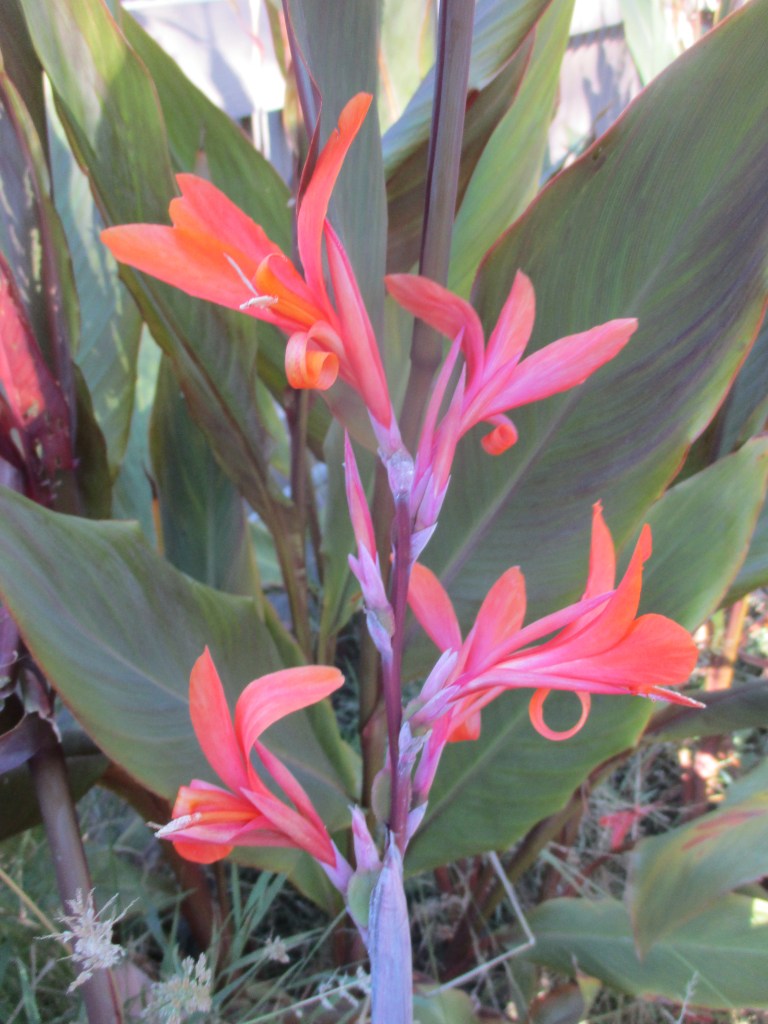
Many plants are native to climates that supply rain in conjunction with warmth. They rely on moisture for normal growth. Various bananas, canna, angel’s trumpet and giant bird of Paradise grow very vigorously with sufficient moisture. Unfortunately though, insufficient moisture is very distressing to them. Drought tolerant species have a distinct advantage.
Turf, bedding plants and vegetable gardens need abundant water during the dog days of summer. Although some can survive with less than others, none are exempt. Most potted plants, especially those in hanging pots, are likewise dependent on systematic watering. Even if the weather is too warm to enjoy other gardening, watering can not be neglected.


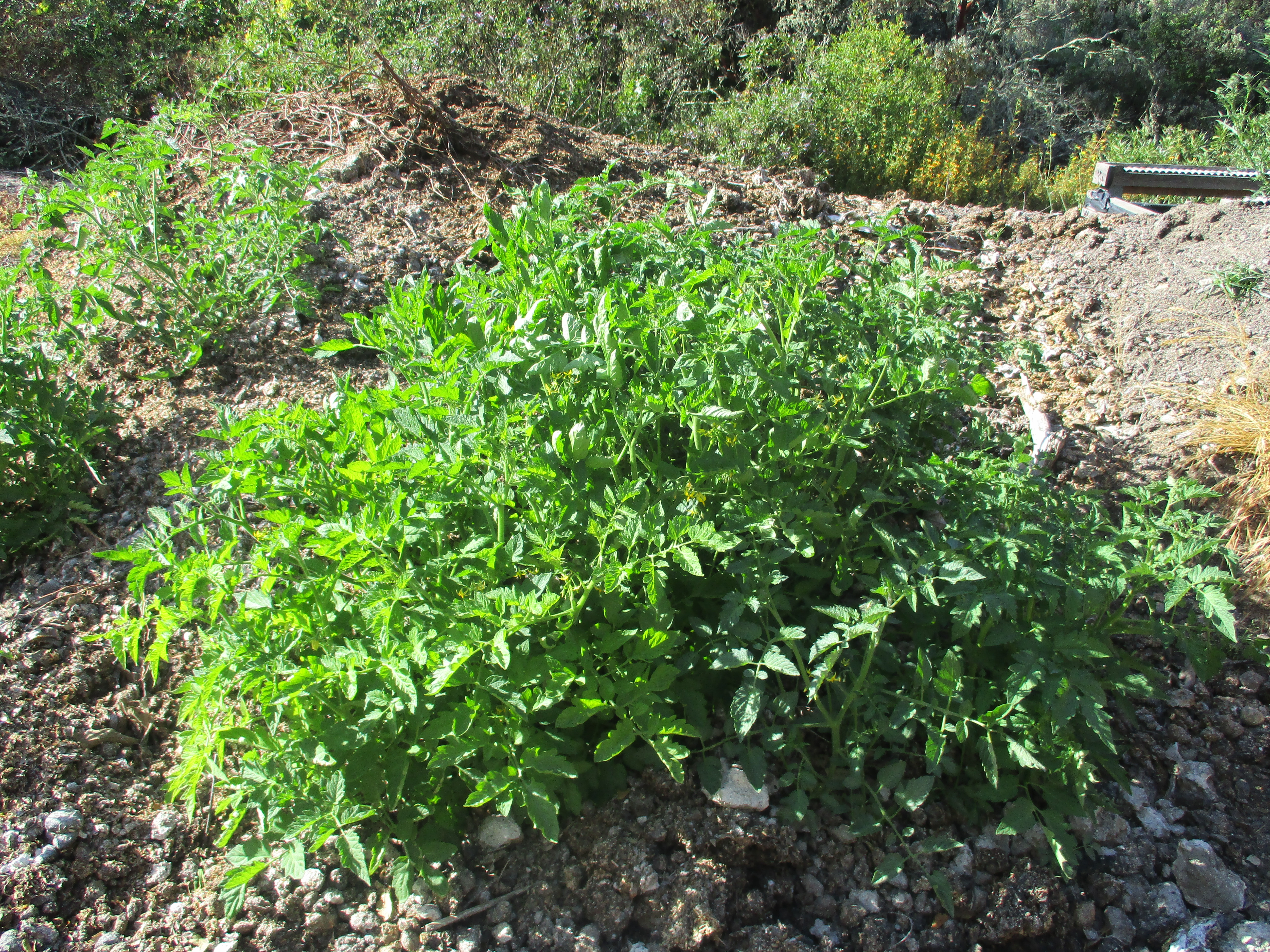 We don’t put much effort into our compost piles. In the first pile, we dump horse manure, green waste from two cafeteria type kitchens, and a bit of the finer textured green waste from the landscapes. It eventually gets turned over into the second pile. By the time the second pile gets turned over into the third pile, it is almost ready for use. The third pile really does not last long. Neighbors take it as fast as we can.
 These are two pictures that did not make the grade for my ‘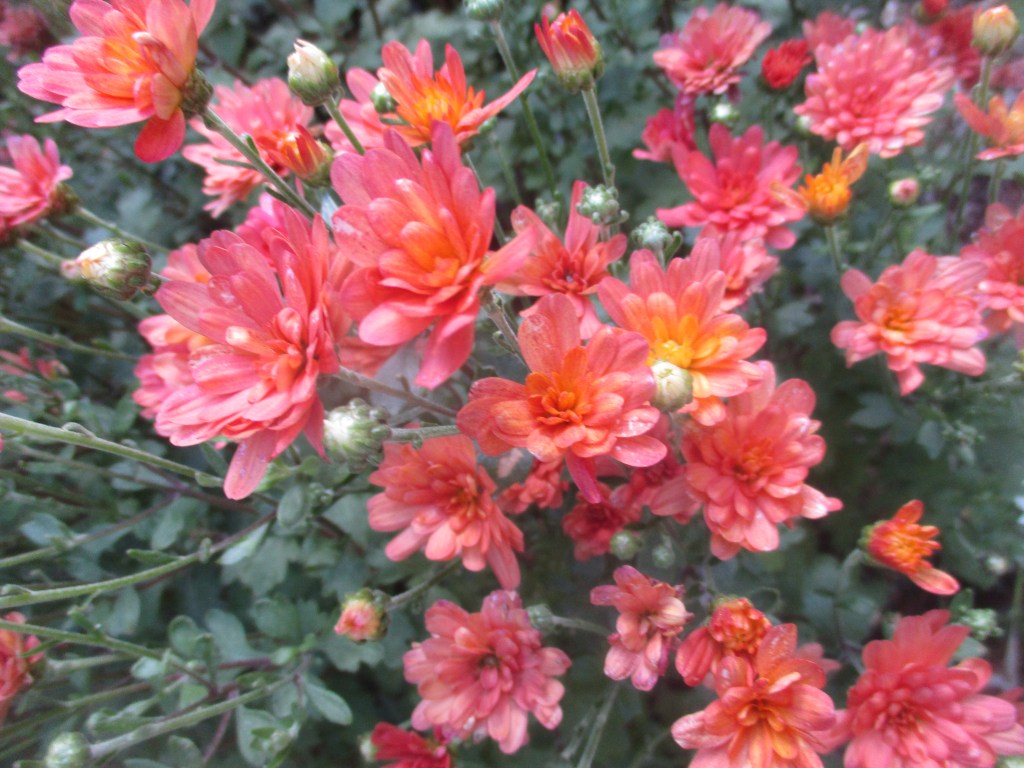


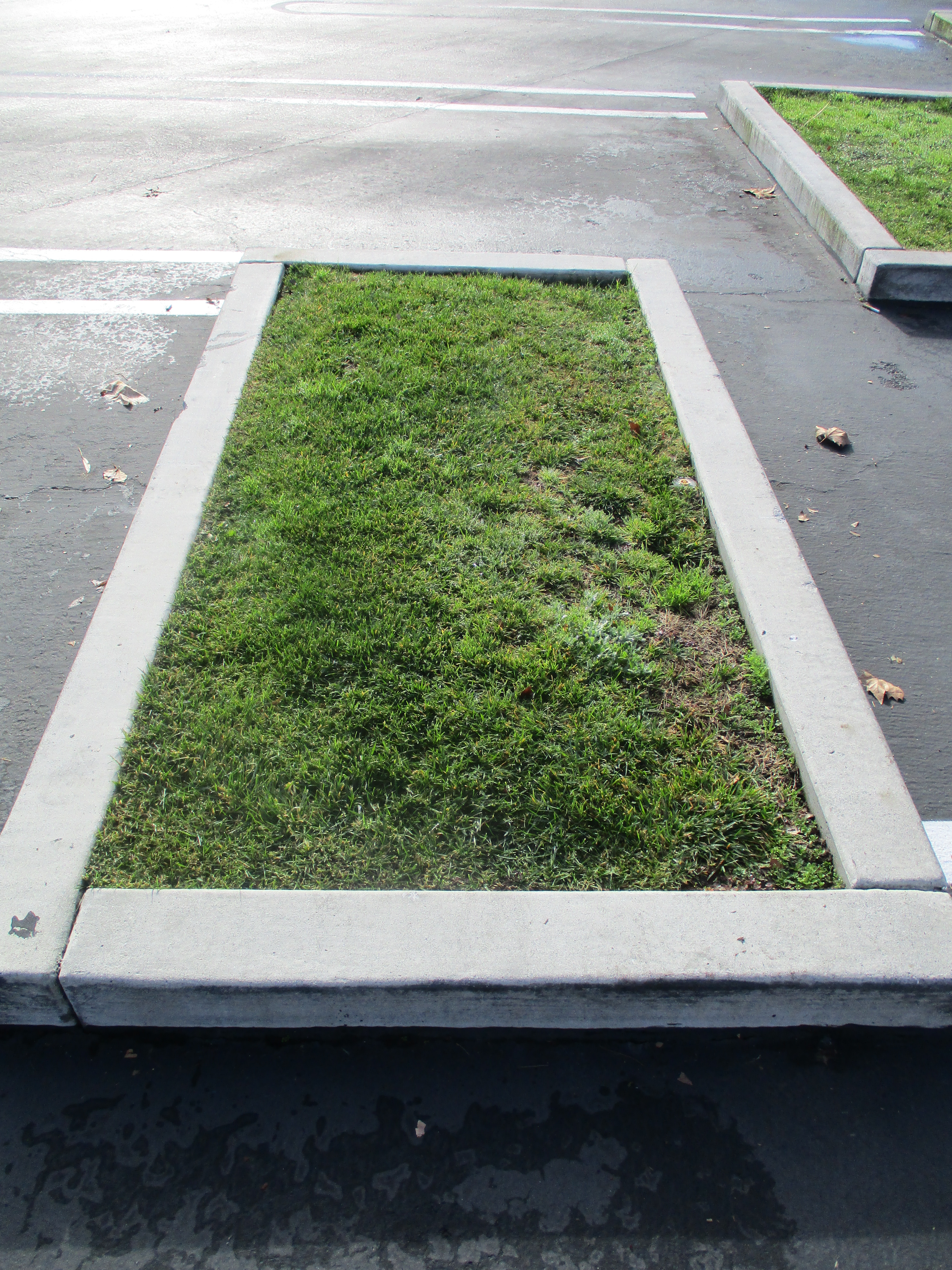 What a waste of space! What a waste of water! What a waste of time for the mow-blow-and-go ‘gardener’ who charges money to mow and edge it, but are too inept to suggest planting something that might actually be pretty, or shade the parking lot. There are a few of these between parking spaces marked for ‘compact’ cars, because it is cool to discriminate against full size cars that can not pull far enough forward to get out of the way.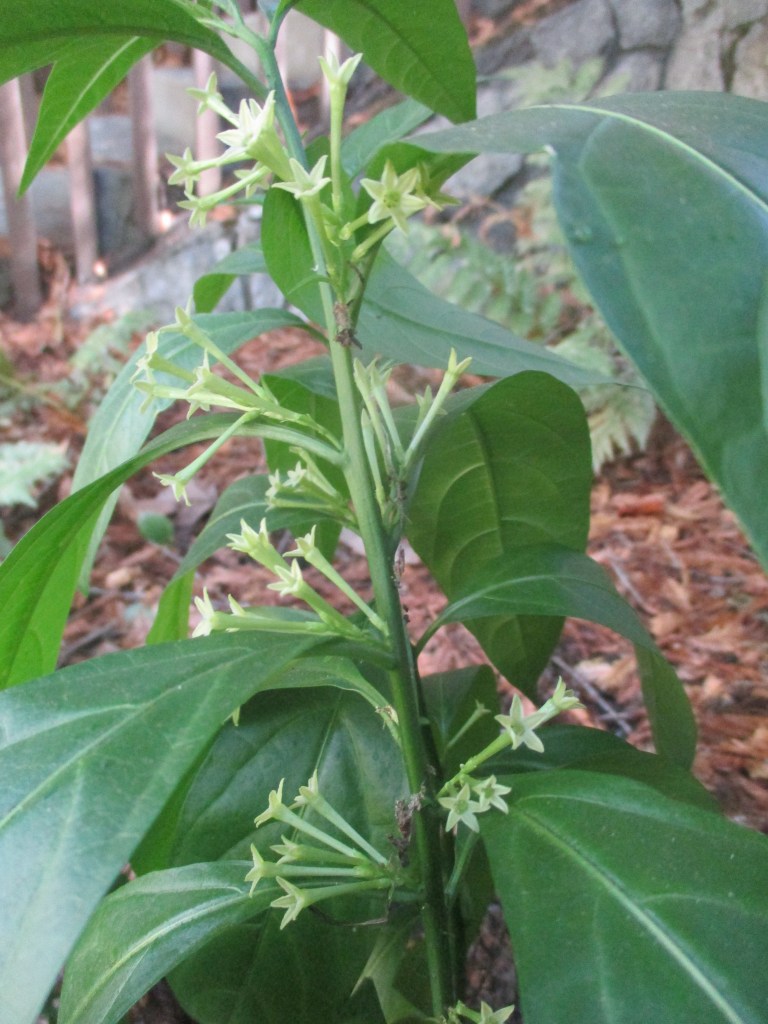

 Tony Tomeo