Gardens might be colorful throughout the year here. There is not much time between the latest of the autumn flowers and the earliest of the spring flowers. Winter flowers are glad to compensate for the lapse. Of course, there are plenty of flowers in spring and summer. Nonetheless, dried flowers are more popular now that there are fewer flowers for cutting.
The quantity of flowers blooming within a particular season might not be proportionate to the quantity of flowers available for cutting. Flowers that bloom through winter, even if as abundant as spring or summer flowers, do not develop as fast. Harvesting too many bird of Paradise flowers depletes the limited supply before something else can replace them.
Deciduous foliage that provides spectacular color through autumn is no substitute for cut flowers. Nor is the majority of colorful bark that becomes more prominent through winter. Some colorful berries can function like cut flowers, but only if there are plenty to spare in the garden. Conventional dried flowers that grew last summer may be useful about now.
For the venturesome and resourceful, unconventional dried flowers and other dried plant parts can also be fun. Such items, unlike statice, straw flower, lavender and other familiar dried flowers, might be byproducts of gardening. They might be derived from detritus that should otherwise go to compost or greenwaste. Some might even be products of weeds!
Pampas grass, both garden varieties and the invasively naturalized type, produces bold blooms that dry quite well. Because the leaves can cause such nasty paper cuts, flowers might be easier to harvest from a distance, with a pole pruner. Hair spray can contain the fuzz, so that it does not disperse indoors. Cat tails, if still intact, are compatible with them.
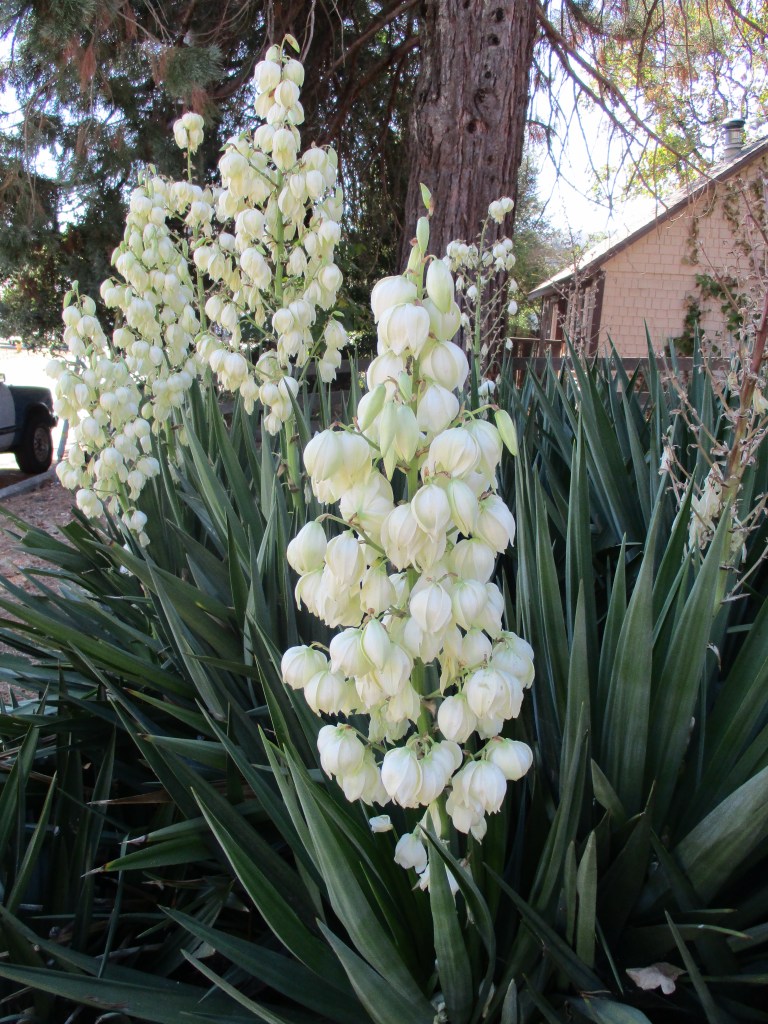
Floral stems of lily of the Nile, New Zealand flax, and some species of Yucca are striking even after bloom. After deadheading, they can become flowerless dried flowers. Fruiting structures are no problem to remove. If within reach, some palms may provide distinctive bloom trusses. Floral design can be as imaginative as gardening and landscape design.

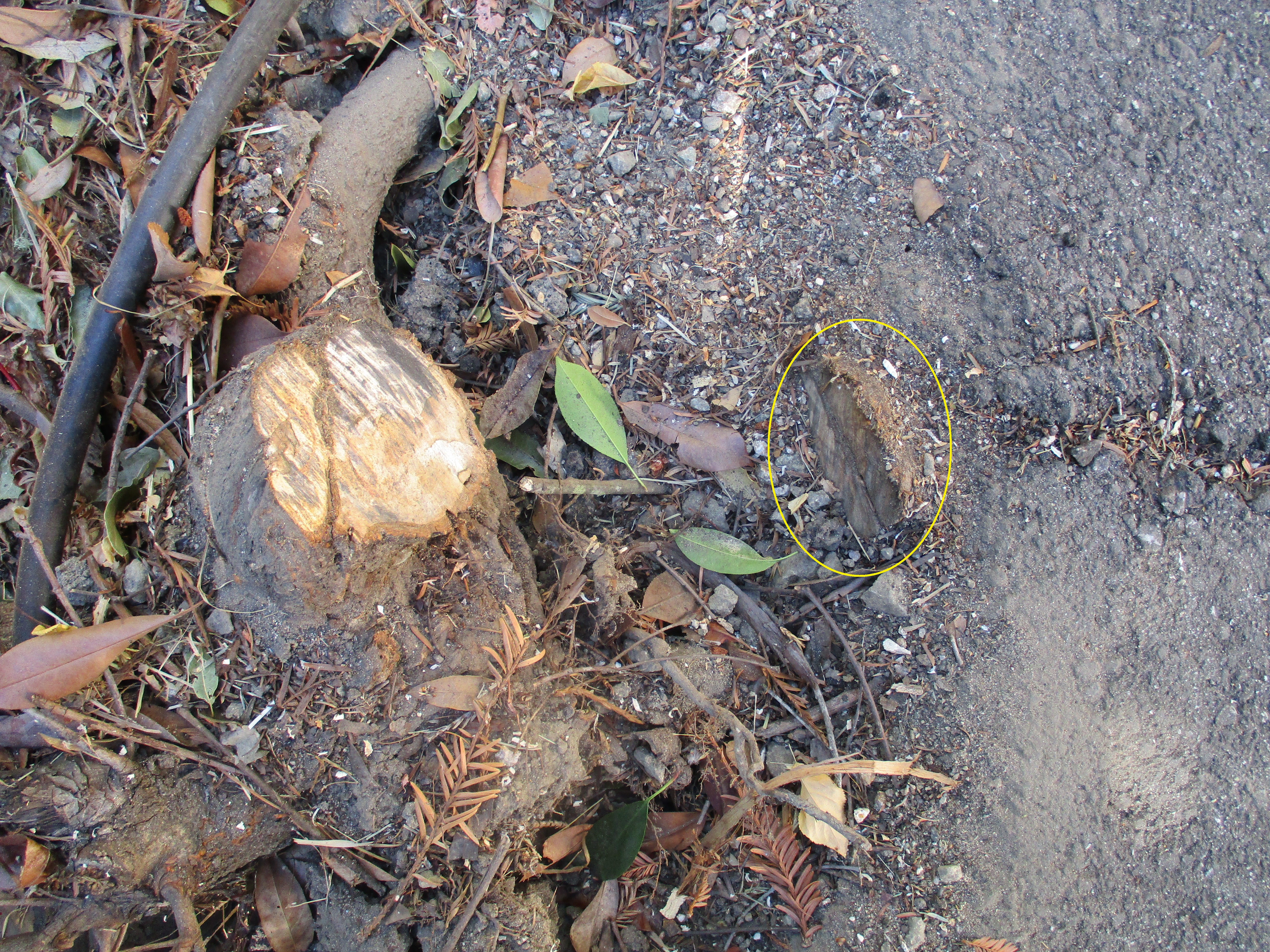 Root pruning is nothing new. It is done more commonly than we think about for many aggressive perennials like lily-of-the-Nile, that like to disperse their roots into areas where we want to grow more docile annual bedding plants or vegetables. We might do it halfway, or more, around a shrubby plant during spring or summer if we plant on digging and moving it the following autumn. For most small and low profile plants, root pruning is sort of tolerable. The plants that we do it to may not like it, but it is sometimes necessary, and better than not doing so.
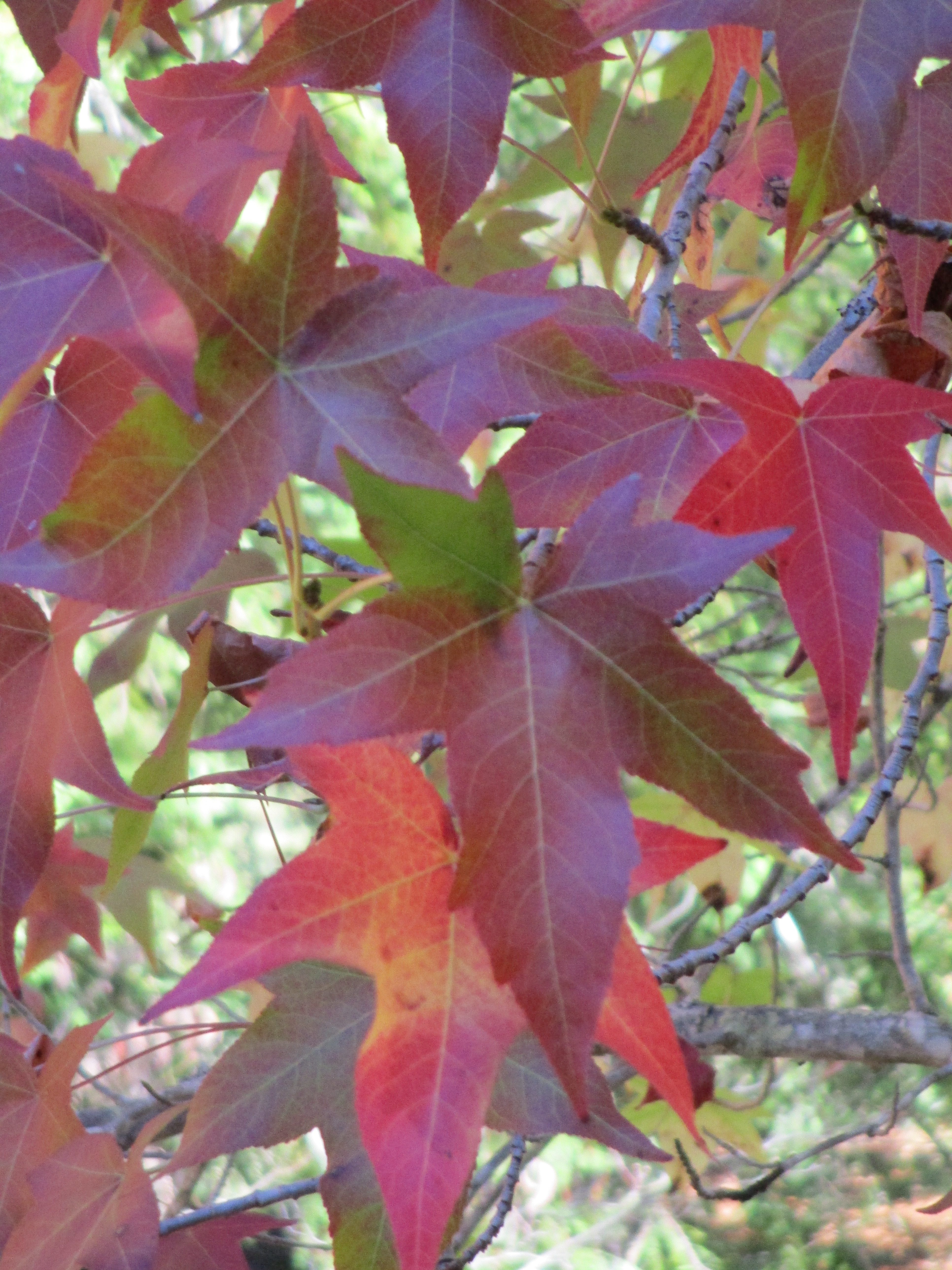 We may not get much foliar color in autumn here, but we get enough. Sweetgums do not need much cool weather to color well. They would probably have colored better and held their foliage a bit better if the weather got cooler faster, but we can not complain about what we got. Most of the crape myrtles are still completely green. Cottonwoods are defoliating, but without much color. Maples are rare here. The three best trees for color in autumn here are sweetgum, pistache and flowering pear. Of these, we happen to have several sweetgums here.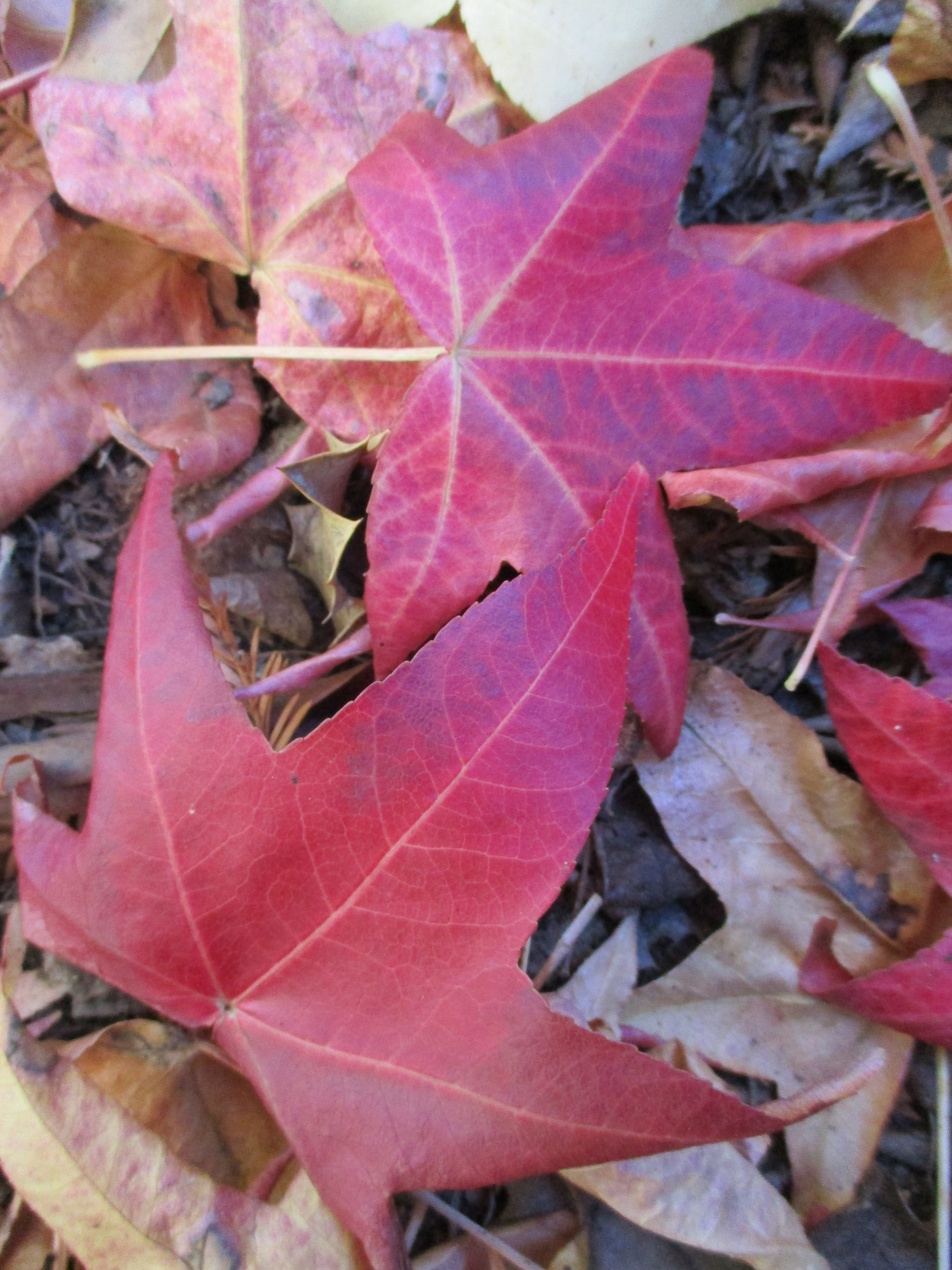





 There are many different types of horticulturists. We are all unique, both individually as well as collectively within our respective professional group classifications. For some of us, individuality interferes with conformity to the collective generalizations that are so commonly associated with our collective groups. For some of us, the stereotypes are a perfect fit.
 By ‘big trees’, I don’t mean the various ficus trees that can grow up to the ceiling, and be quite happy inside. I am referring to the shade trees that live out in the yard, or forest trees that live beyond that. They are outside for a reason . . . or actually, several reasons. They are too big to bring inside. They probably would not like the climate inside. No one wants to rake fallen autumn leaves inside. Well, you get the point.
 Tony Tomeo