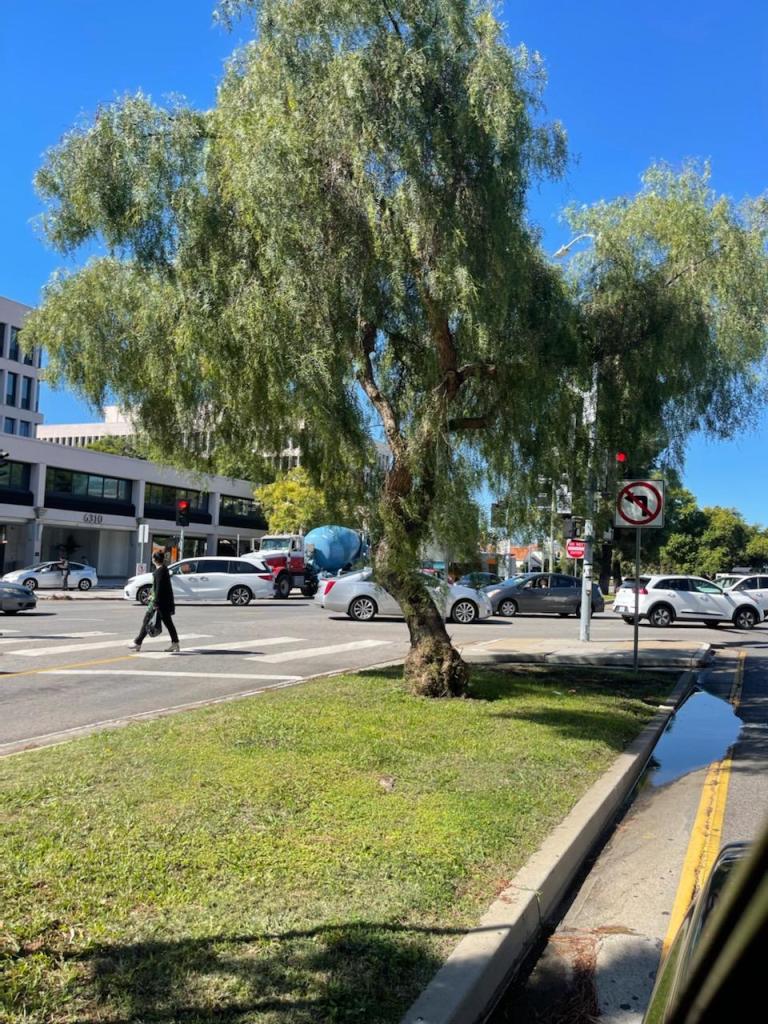
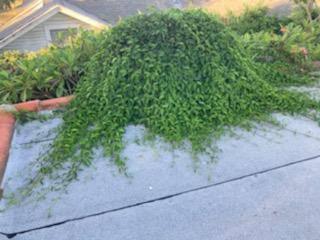
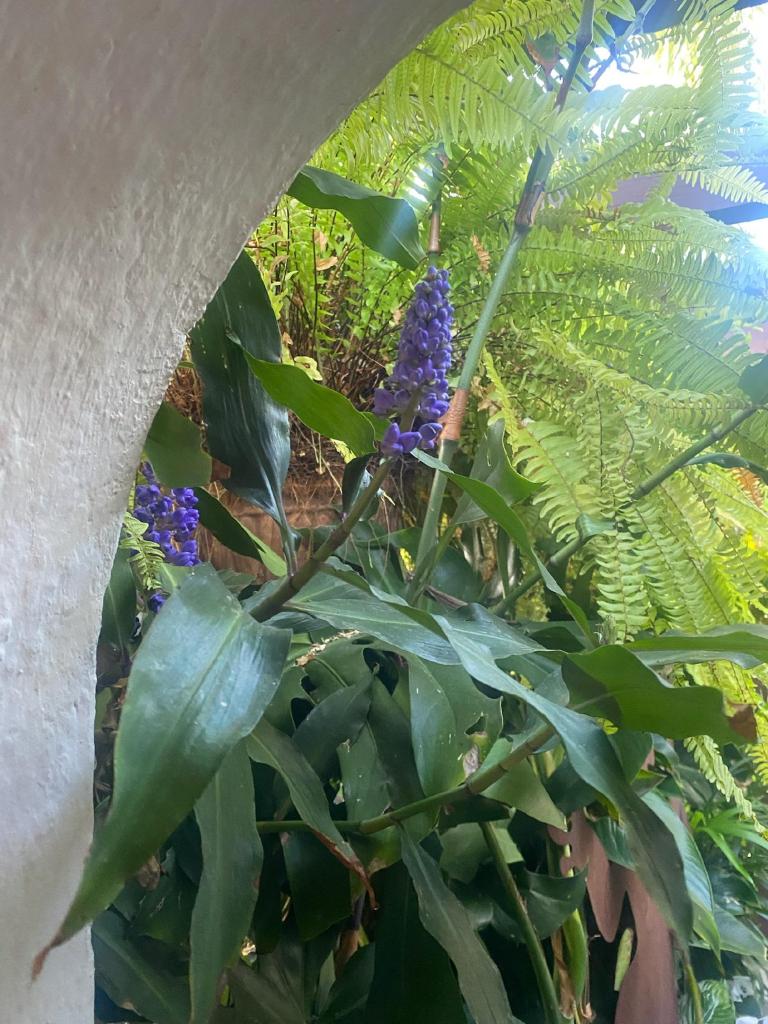
Esperanza and poinciana (pride of Barbados) from Crazy Green Thumbs will be delayed again. I still have not sown the seed, and when I do, I will likely delay posting pictures of them until I have exhausted all of these pointless pictures that Brent sends to me. There may be six more for next week after these six. Fortunately, the few that arrived since this purging began are not very interesting, so need not be shared. These six pictures arrived at various times through the past few months; and I did not document dates for them. It would be difficult to identify their chronology without inquiring with Brent, and without familiarity with potentially observable seasonal indicators of the particular climate. I am less than three hundred fifty miles away, but in an entirely different climate and region.
1. Baby queen palm, Chamaedorea plumosa, which is not princess palm, Dictyosperma album, is related to popular bamboo palm, Chamaedorea seifrizii. Brent got this for me.
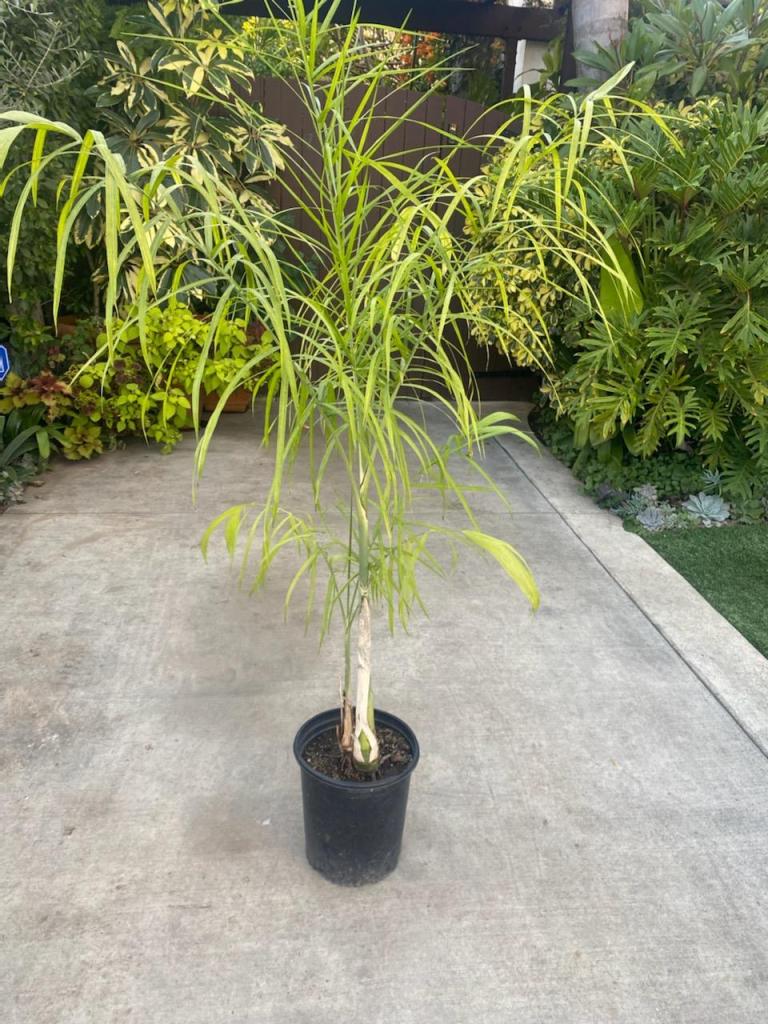
2. Of all of Brent’s landscapes, this might be my favorite. The formality is rad. However, these illuminated Canary Island date palms, Phoenix canariensis, must be embarrassed.

3. Mexican fan palm, Washingtonia robusta, is a most common palm of the Los Angeles region. Although palms are popularly informal, some might be formal and symmetrical.
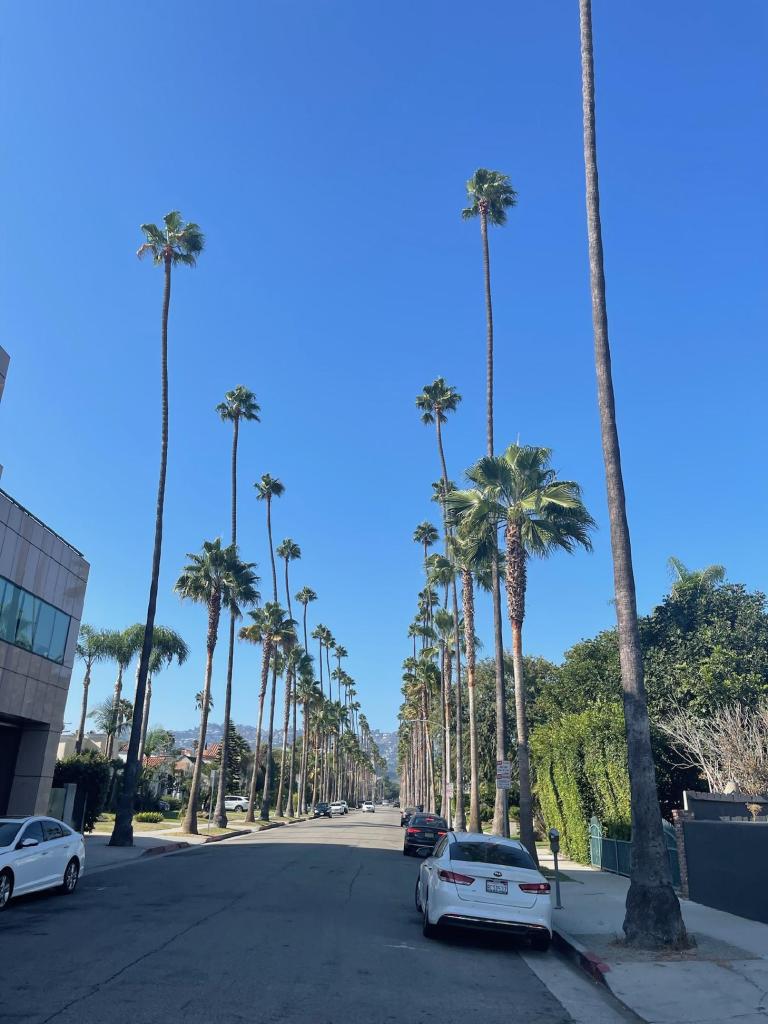
4. Mexican fan palm dominate the view. Kentia palm, Howea forsteriana, California fan palm, Washingtonia filifera, and queen palm, Arecastrum romanzoffianum, got in too.
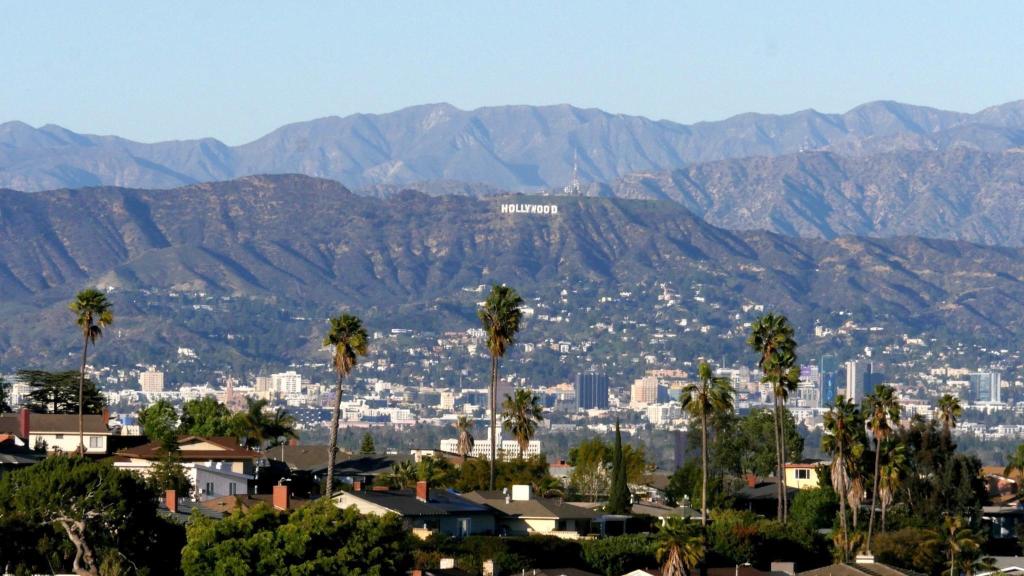
5. Brent likes to show off his palms. They are more visible from next door than from the garden they inhabit. The Mexican fan palm is a Memorial Tree for Brent’s brother Brian.
6. Coons! The arborist who pruned this Mexican fan palm returned to finish shaving the trunk, but found that a pair of coons who inhabited the beard were not ready to relocate.
This is the link for Six on Saturday, for anyone else who would like to participate: https://thepropagatorblog.wordpress.com/2017/09/18/six-on-saturday-a-participant-guide/


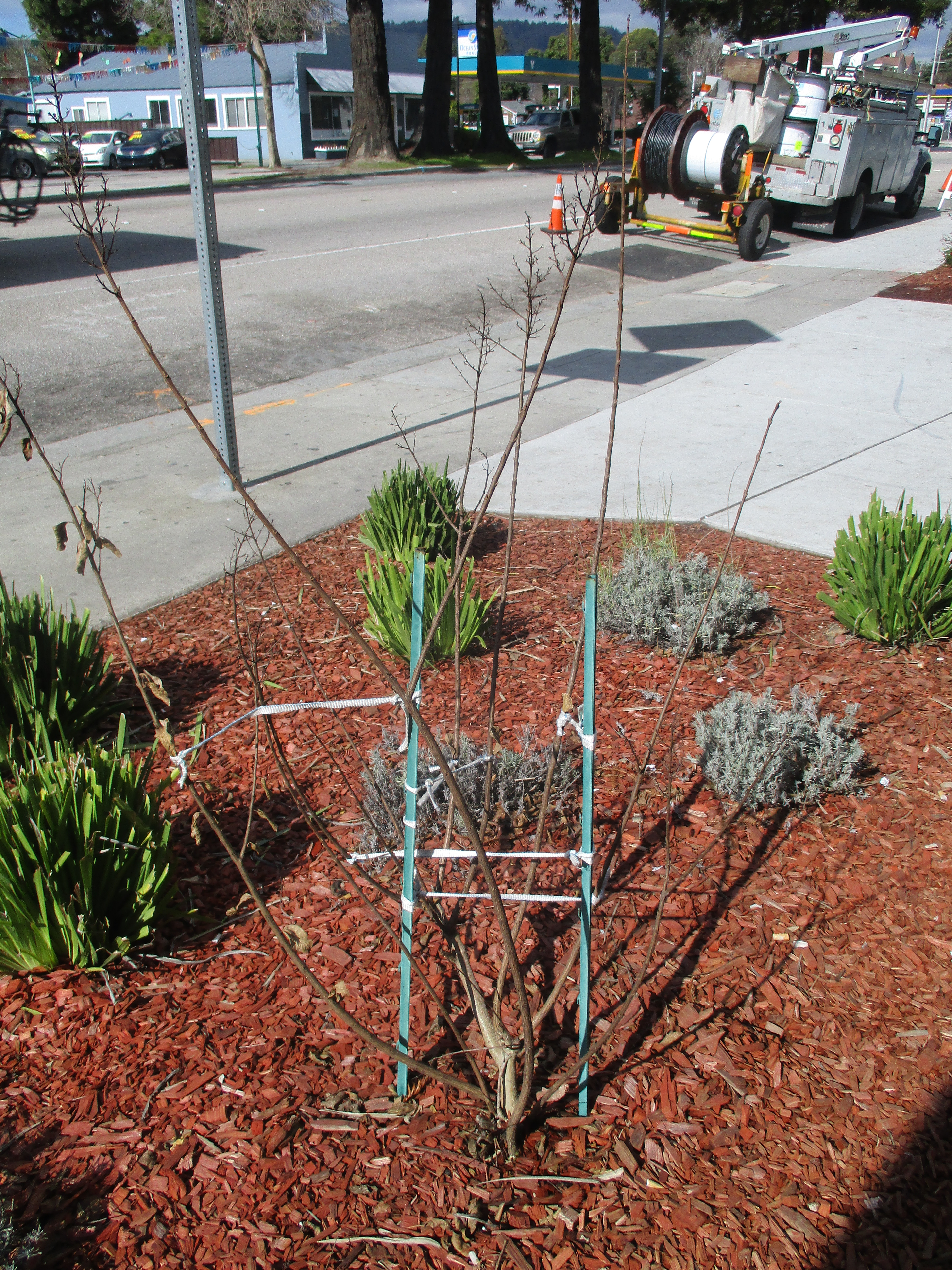 This landscape is nothing fancy. It is out in front of a fast food establishment on Ocean Street in Santa Cruz. It is low maintenance, and starkly simple. It would be nice if the so-called ‘gardeners’ would cut back the African iris and English lavender a bit better, but they may have left them like this so that they are less likely to get trampled. The colored chips get replenished regularly, and the trash gets harvested quite efficiently. As I said, it is nothing fancy. The only remarkable feature had been this exemplary crape myrtle in the middle.
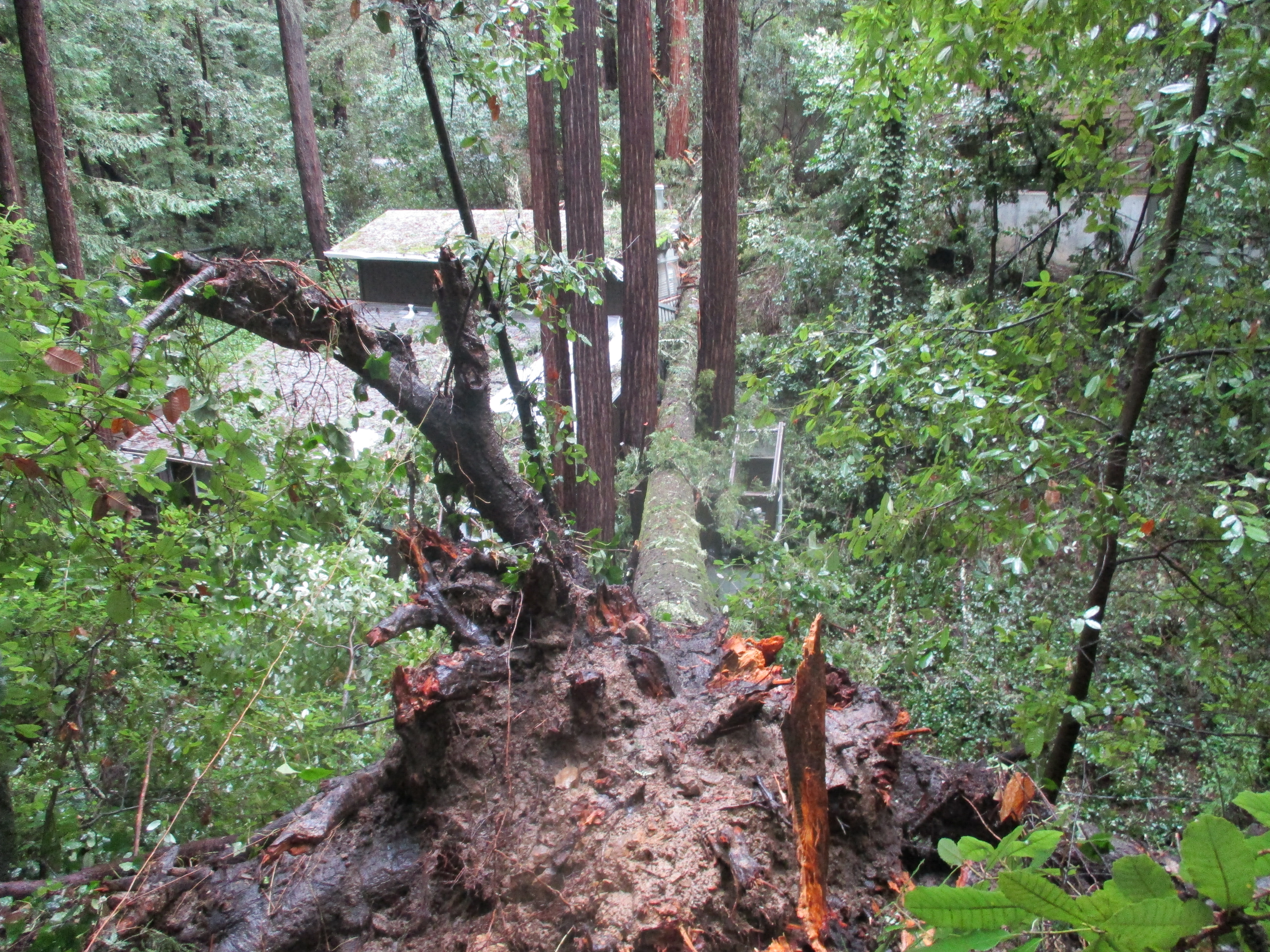 If there were lawns and fences in this neighborhood, the grass would likely seem to be greener on the other side of the fence. In this situation, the greenhouse probably seemed to be more comfortable than being left out in the storm. This tall Douglas fir tree dropped in to find out. It did not go well. What remains can be seen in the middle of the picture above, just to the right of the fallen fir, and in the close up of the picture below.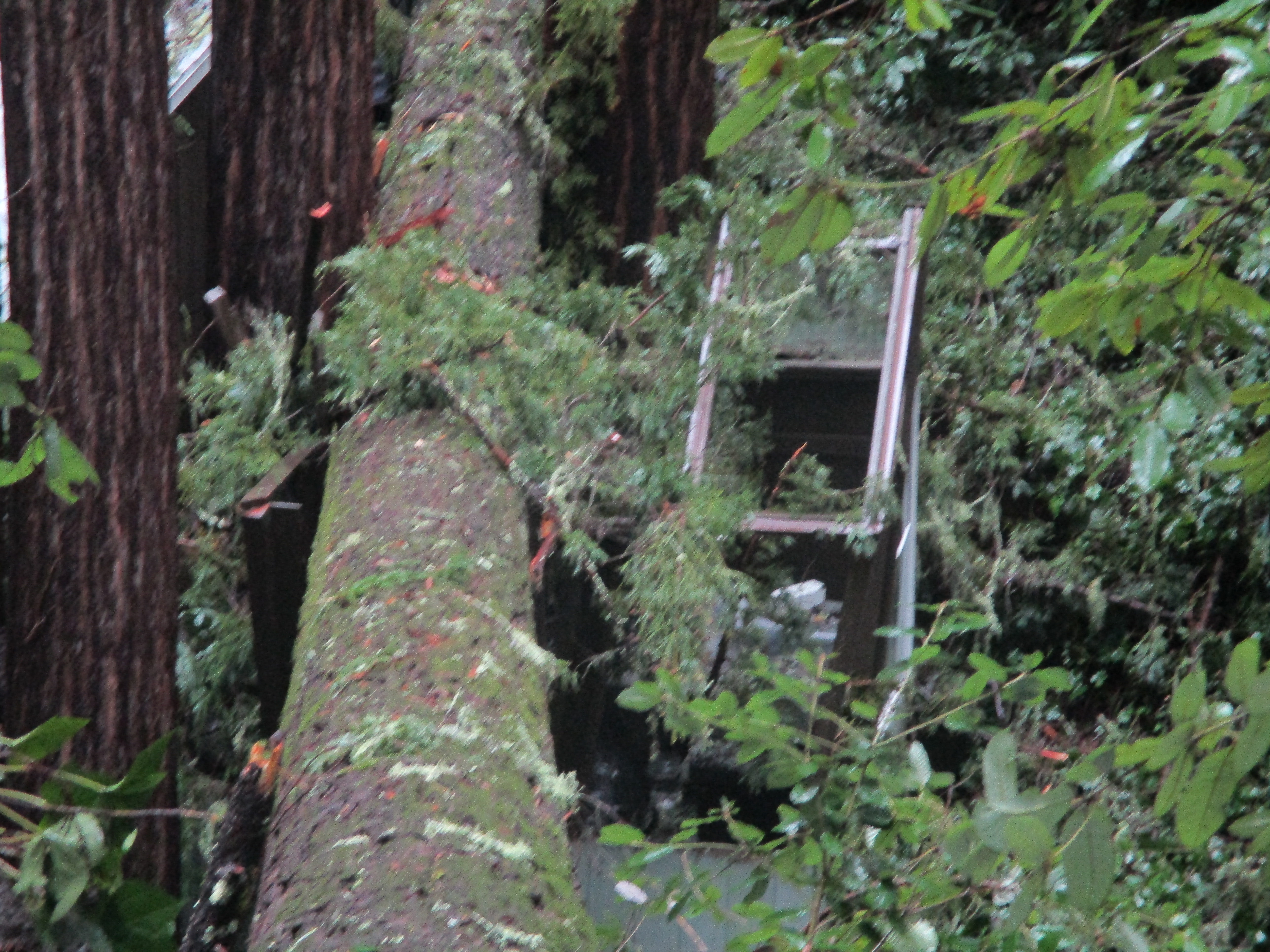
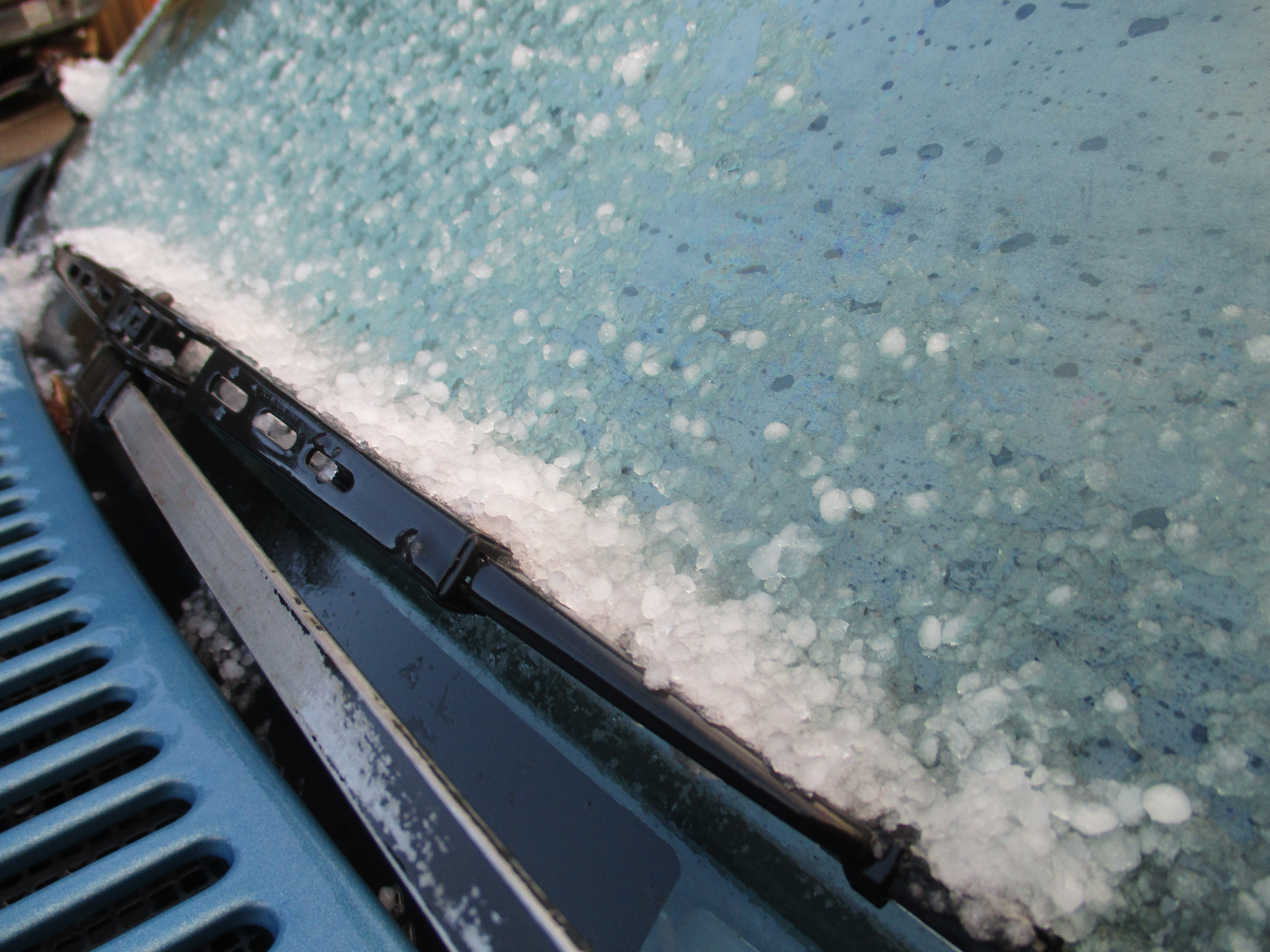 What is this? It looks more like hail now. It was softer and squishier when it fell out of the sky only an hour or so before this picture was taken. There was a slight bit of snow up on Summit above Los Gatos. It will probably melt as quickly as the clouds clear to let the sunlight through. Snow sometimes appears on the higher peaks around the region, but is rare in lower elevations. Forty three years ago from today, on February 5 in 1976, snow fell in the Santa Clara Valley. It was about half an inch deep in some areas, an inch and a half in others, and was the last snow to fall there.
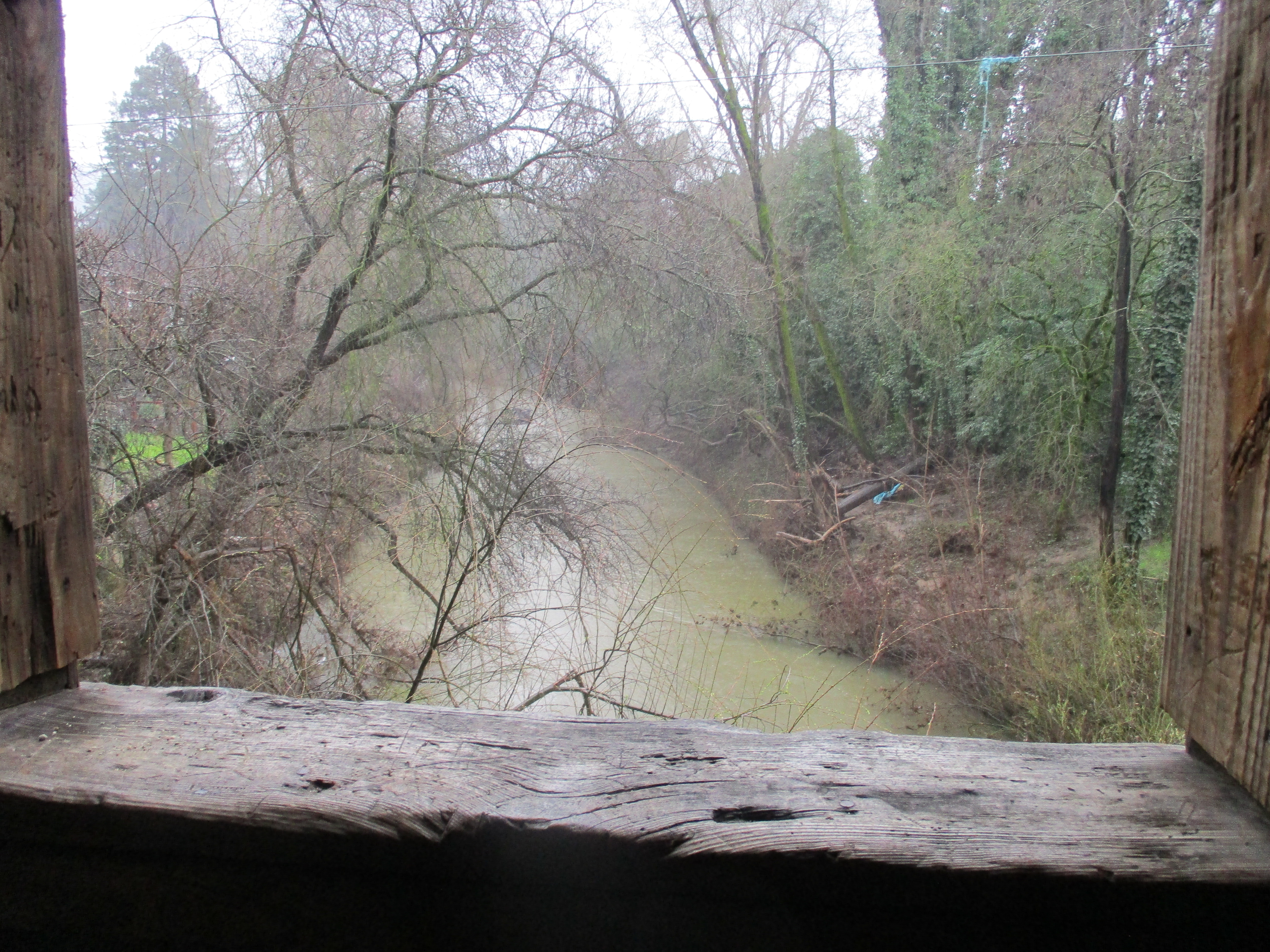 It may not look like much, but before all the rain started, the San Lorenzo river was shallow enough here to walk across. The water was clear and barely flowing. It is impossible to guess how deep it is now. It looks like cafe au lait, and is certainly flowing better than it had been. The watershed is less than a hundred and fifty square miles, so all this water is not coming from very far away.