No Rain

The first rain of the season is quite an event here. It happened on the sixth day of October when this article originally posted three years ago. It is now the third day of October, and although there has been neither rain nor rain in the weather forecast, it could happen at any time.


tonytomeo's avatarTony Tomeo

P81006KFor the first time since last winter, a few raindrops were heard on the roof early last Monday morning. It was over by the time I realized that the odd and unfamiliar noise really was that of raindrops. By the time the sun came up, everything was dry. I do not even know if these few raindrops could be considered to be the first rain of the season. There were a few similar raindrops on my windshield a while back, but they were dismissed as such; merely a few random raindrops rather than a confirmed rain shower.
That is how our climate works here. The Santa Clara Valley is in a chaparral climate. Much of Southern California is in a desert climate. We do not get much rain, and it is almost exclusive to a limited rainy season that is centered around winter.
Dust and crud that accumulates on foliage…

View original post 148 more words

Gilley’s

Goodness, after three years, I still miss Gilley’s

tonytomeo's avatarTony Tomeo

P80930Immediately after the Loma Prieta Earthquake, nothing was open for business downtown on North Santa Cruz Avenue south of Bean Avenue. As buildings were inspected for safety and cleaned up, sections of cyclone fence that had kept everyone out were slowly and systematically moved out so that businesses on the east side could open for business. The same slow process was repeated on the west side, moving south from the corner at Bean Avenue, but did not get very far. The old Los Gatos Cinema, as well as the several other building between it and the seemingly destroyed old La Canada Building on the southern corner of the block, were too badly damaged for the fence to be removed.

Right there next door to the Cinema where the fence stopped moving, Gilley’s Coffee Shoppe happened to be one of the fortunate businesses that was able to open for business again…

View original post 359 more words

Six on Saturday: Williamsburg!

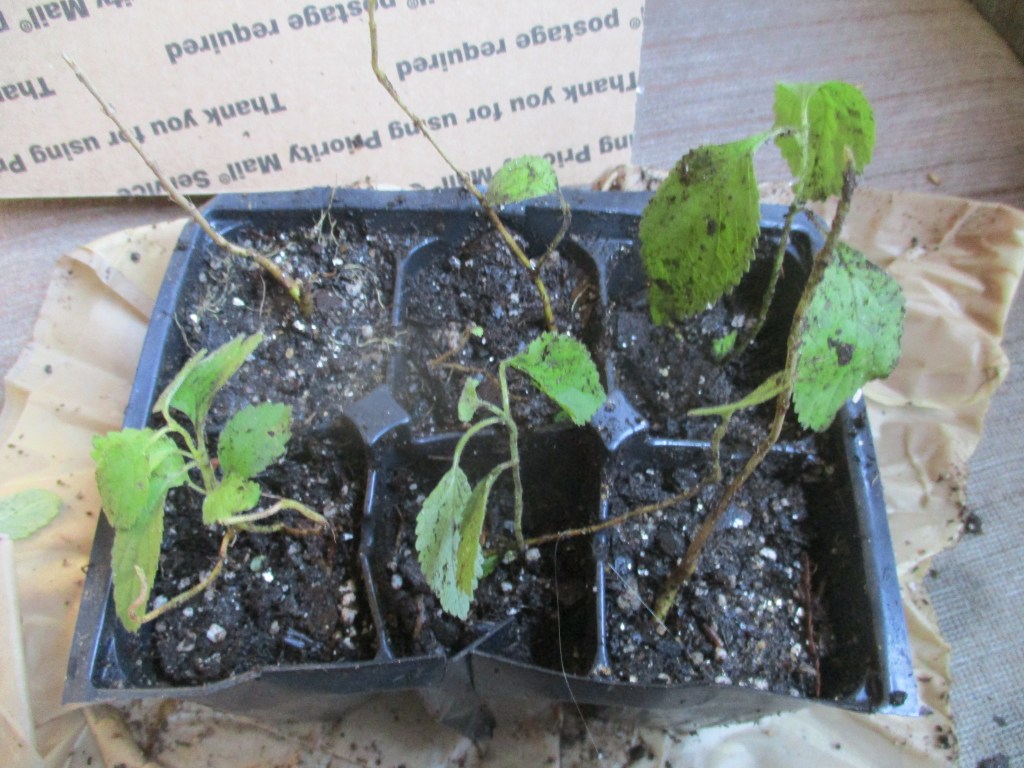
Williamsburg in Virginia is one of those magical places that I heard about when I was a tyke, but have never been to. My parents went there as newlyweds, as they were considering relocating to Vienna, which is also in Virginia, near Washington. Well, Woodland Gnome of Our Forest Garden happens to be there, and sent me some seedlings of the native American beautyberry that I have been wanting to grow for a very long time! They arrived on Thursday. I retrieved them yesterday. As I prefer, they are what grows wild there, rather than cultivars.

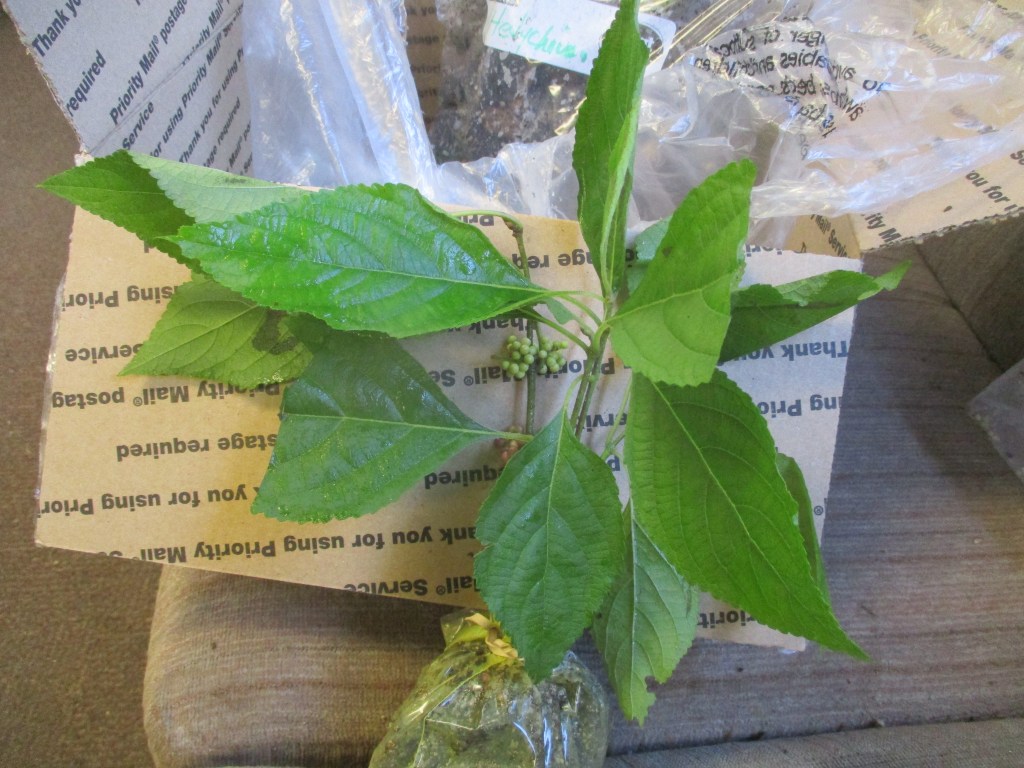
1. Packages in the mail are so much fun! This package came all the way across North America, from Williamsburg in Virginia! That is farther than Ilwaco! Heck, that is farther than Oklahoma!

2. Hand written notes attached to such packages demonstrate impeccable cultural refinement. Oh my, I do not write such notes because it seems to me that no one appreciates them anymore.

3. Beautyberry seedlings in a six pack are the first of the species that I ever met! They looked neater after I set the six pack within another for added integrity, and rinsed the potting media off.

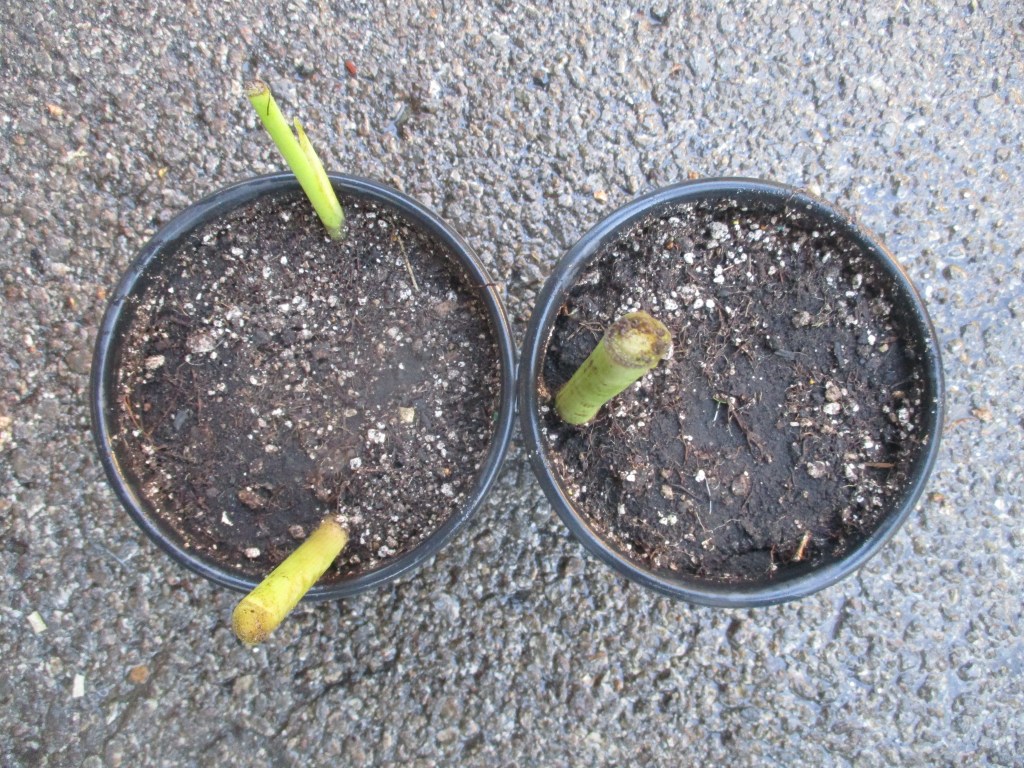
4. There are cuttings also! I have not processed these yet, but should do so in the morning. The foliage remains firmly attached, so will stay with these cuttings until they defoliate for autumn.

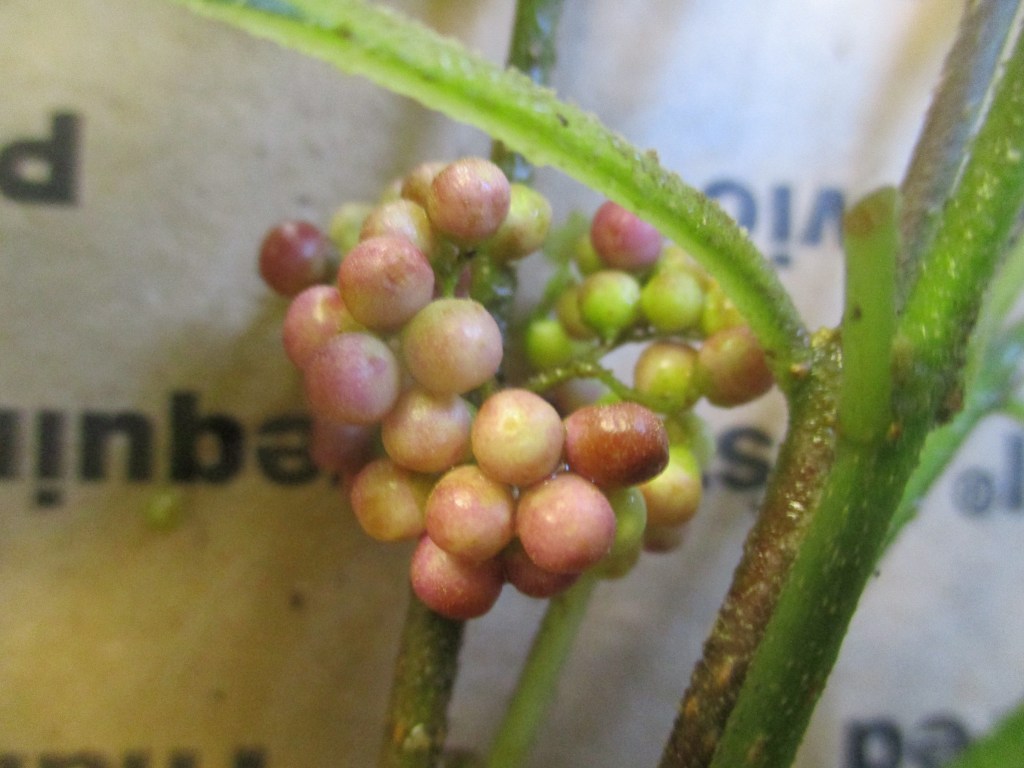
5. Berries that are attached to the cuttings might contain viable seed. They will likely be sown in the same cans that the cuttings get plugged into. If there are many, they will get separate cans.

6. Butterfly ginger is a major bonus in the package. It is another species that I had been wanting, but had not yet procured. If its bloom is white enough, some of it may go live at the Cathedral.

This is the link for Six on Saturday, for anyone else who would like to participate:

String Of Pearls

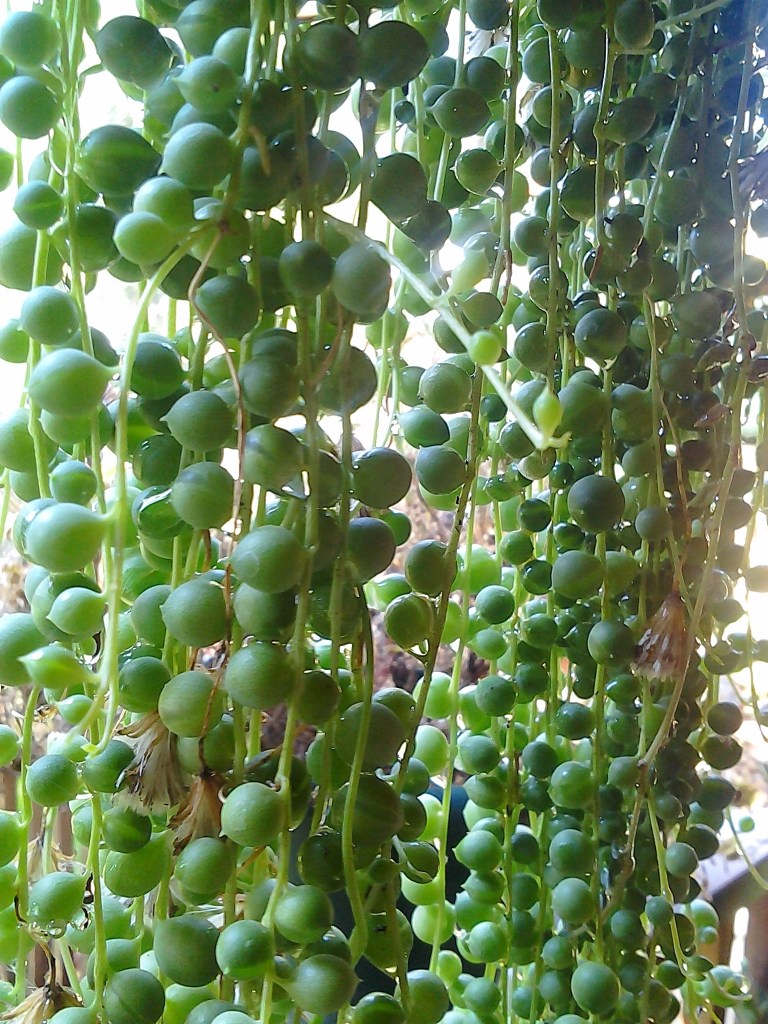
Weird but elegantly pendulous string of pearls likes to hang around. It cascades nicely from hanging pots or tall urns.

It is difficult to see how string of pearls, Senecio rowleyanus, is related to much more colorful daisies and asters. The small, fuzzy and sickly white flowers are not much to look at, and only clutter the elegantly pendulous and oddly succulent foliage. The round leaves are light bluish green, so actually resemble peas more than they resemble pearls. The stems are so very thin and limber that they can only stand a few inches high, but can cascade to three feet!

Although evergreen, stems of outdoor plants can be cut back while dormant through winter to promote fresher growth in spring. The pruning scraps are very easy to propagate as cuttings. Roots are undemanding and sensitive to rot, so should be allowed to get nearly dry between watering. Bright ambient light without too much direct sun exposure is best. Incidentally, all parts of Senecio rowleyanus are toxic.

Not All Plants Like Fads.

Ornate pots and planters can be as decorative as the plants within them, and provide extra accommodation for more plants.

Like so many fads too often are, container gardening is overrated, and is actually contrary to the currently most faddish of fads; sustainability. Plants in containers need more regular watering than those that can disperse their roots more extensively into the ground. Those that are so indulged also want fertilizer to be applied more regularly, but are more likely to be damaged if fertilized too generously. Because confinement is stressful, plants in containers are innately more susceptible to disease and pests. Some plants need more pruning for confinement.

Then there are the problems with the containers. If exposed to sunlight, thin plastic containers get warm enough to cook roots within. Pots that do not drain adequately or that sit in their own drainage basins can stay saturated enough to kill roots. Water in drainage basins allows mosquitoes to proliferate. Seepage from large pots can rot decks and stain pavement. Self watering containers work nicely for houseplants (if used properly!), but lack drainage, so can not be used out where they are exposed to rain.

The advantages to container gardening are actually quite limited. Containers are obviously needed for houseplants, and where exposed soil is not available, like on balconies. They are also convenient for plants that want better soil than they can get in the garden, especially if the rest of the garden is responsibly landscaped with sustainably undemanding plants that do not require soil amendment or regular watering. Frost sensitive plants can be moved easily to sheltered locations if contained. Flashy plants like orchids and tuberous begonias that get displayed prominently while blooming can be concealed while not so impressive.

Of course there are many pendulous plants like Boston fern, spider plant, string or pearls and burro’s tail that really are at their best in hanging pots. It is also hard to deny that there are all sorts of artsy containers, like colorfully glazed pots and sculptural concrete urns, which are appealing enough to justify growing plants in them, even if just to show off the fun containers. Bonsai requires containers, but that is another big topic!

Horridculture – Ignoring Arboriculture

This landscape had formerly been rather distinctive. All the appealing features are now gone. It is easy to be offended by what people charge money for.

tonytomeo's avatarTony Tomeo

P81003There are too many different types of horticultural professionals to count. There are nurserymen who grow horticultural commodities. There are landscape architects and landscape designers who design the landscapes into which some of these horticultural commodities will go. There are landscapers who install such landscapes. Of course, there are gardeners who maintain the landscapes after they are installed. These are just a few of the more familiar horticultural professionals.
I will refrain from my typical ranting about the extreme lack of professionalism among almost all horticultural professionals who are not nurserymen or arborists (okay, and one landscape designer), but must point out something in the picture above. Do you see it?
It is not the fact that this once very well designed landscape was dismantled and mostly replaced with a cheap slapped together assemblage of cliché plants by someone who just needed work.
Nor is it the pointlessly disfigured shrubbery…

View original post 146 more words

Pansy

Violas are smaller versions of pansies.

This is one of the more familiar of winter annuals. Yet, pansy, Viola X wittrockiana, is not just one species. It is a diverse group of hybrids of a few species, and includes viola and Johnny-jump-up. Generally, viola and Johnny-jump-up have smaller and simpler flowers. Pansy generates relatively larger and more colorful flowers, with more intricate patterns.

The most recognizable feature of popular pansy is the distinctive floral patterns that look like floral faces. Individual flowers may display a few distinct colors within such patterns. Alternatively, flowers may be a single color. The color range includes white, blue, purple, yellow, orange, rusty red and black. Big flowers can be as wide as two and a half inches. 

Locally, pansy is a winter annual. The best bloom begins about now. If the coolest winter weather inhibits bloom, it is only temporary. Bloom is likely to resume before a lapse gets obvious. Although pansy is a summer annuals in other climates, it does not perform well in the locally arid climate during warm weather. Plants might get six inches tall and wide.

Winter Annuals Are Moving In

Chrysanthemums bloom between summer and winter.

It is inevitable. It begins at about the same time that cool season vegetable plants start to replace warm season vegetable plants. Cool season vegetables are now in season, and will grow during autumn and winter. They replace warm season vegetables of spring and summer. Winter annuals, or cool season annuals, now do the same for summer annuals. 

Some summer annuals, or warm season annuals, are already shabby by the end of their season. Their replacement is not so unpleasant. Those that continue to perform well into the end of summer or autumn are a bit more difficult to evict. No one likes to pull them up while they still bloom colorfully. Besides, new winter annuals may take a while to bloom.

Winter annuals, as well as summer annuals, require replacement because they live only for a single year. Some complete their respective life cycle within only a few months of a year. That is what their designation as ‘annual’ means. Several annuals have potential to survive as perennials, but are too unappealing to salvage through their dormant season.

Marigold and chrysanthemum are popular for autumn, but do not perform as well through winter. Cyclamen, which prefers a late start, is pleased to replace them by then. Although chrysanthemum and cyclamen are both perennials, few get the opportunity to perform as such. It is easier to simply remove and replace them with the next best seasonal annual.

Pansy, viola, Iceland poppy, sweet William, stock and various primrose are all in season now and through winter. Calendula and snapdragon are seasonable for autumn, and will be again for early spring. They survive and can even bloom through the middle of winter locally. Alyssum is technically a summer annual, but might bloom all through winter also. 

Winter annuals are not as easy to grow from seed as summer annuals are. Because they grow during cooler weather, they grow slower. They therefore need to start growing early to be ready for planting now. It is perhaps more practical to plant most types as seedlings from cell packs. Cyclamen and ornamental cabbage commonly grow from four inch pots. These are innately more expensive than other winter annuals.

Guilt Trip

This house looks just as good as it did half a century ago, and really has not changed much.

tonytomeo's avatarTony Tomeo

P80923It was so long ago that I barely remember it. I was just a little tyke. My older sister tripped on the driveway and broke one of the Japanese boxwood shrubs in the hedge on the edge of the driveway and front walkway. The hedge was still young then, and not completely filled in. My Pa replaced the missing shrub shortly afterward, but not before my younger brother and I learned that the gap was a shortcut through the hedge. The puny new shrub was not enough to compel us to go around like we had done before. Of course, it did not survive for long. It too got broken off.
We did feel sort of guilty, but only for a while. The second shrub was replaced with a third, which seemed like it should be sufficient to patch the gap in the otherwise formally shorn hedge. We were careful…

View original post 314 more words

Not Enough Blue

This is the second year that I will not compete in the Jam & Jelly Competition of the Santa Cruz Mountains Harvest Festival. The Festival was canceled last years because of the ‘situation’. I simply do not have enough time for it this year.

tonytomeo's avatarTony Tomeo

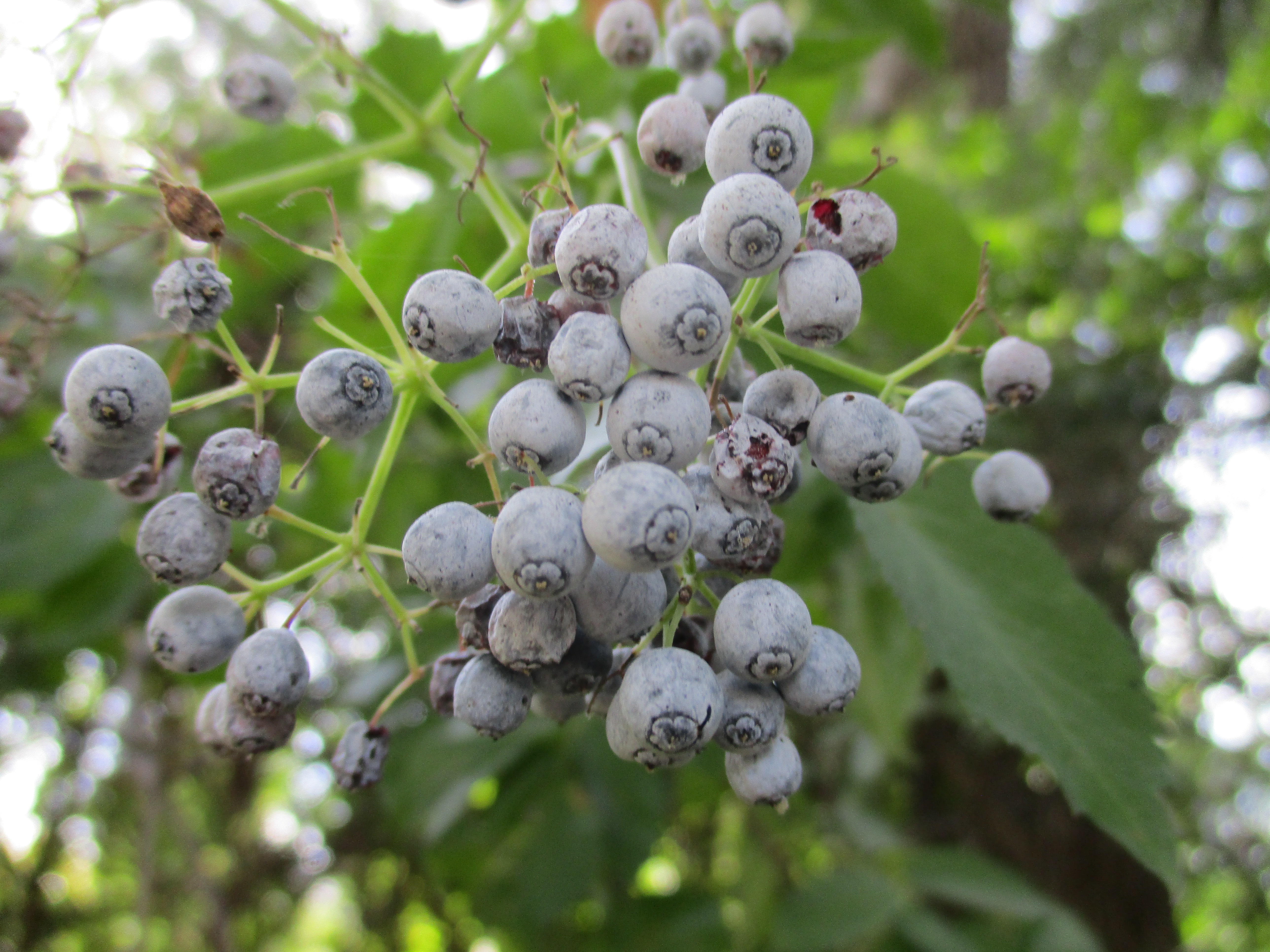
P80929KThere were barely enough blue elderberries left this late in the season for the blue elderberry jelly that should have won the blue ribbon at the Harvest Festival. It’s a long story.
After the main supplier of blue elderberries was removed to widen the driveway that it was next to many years ago, I started collecting blue elderberries from other wild shrubs on roadsides about town. At the time, the berries were very abundant. No one else was collecting them, and the doves did not come down to eat them until later in the season.
A friend eventually asked me why I was collecting the berries. I informed him that they could be used just like the black elderberries that grow wild in Eastern North American and Europe. He decided to make wine and booze with them, and payed others for whatever they could harvest. The berries were much more…

View original post 270 more words