All flowers that need help with getting pollinated do what they can to attract pollinators. The tiny flowers of lantana, Lantana camara, actually put forth a bit of extra effort to improve the efficiency of their pollinators, by becoming less attractive once pollinated. Within each tightly set flower cluster, pollinated flowers fade to an alternate color to inform pollinators that their services are no longer needed. This prioritizes flowers than still await pollination. Consequently, each small cluster exhibits flowers of two different colors. The choices are red, orange, yellow, pink, purplish pink or white.
The small and aromatic leaves are arranged in alternating pairs on thin stems that do not get much higher or wider than three feet. Established plants can survive with very minimal watering, but bloom better with somewhat regular watering. The summer bloom is very attractive to butterflies.
Trailing lantana, Lantana montevidensis, has limber stems that sprawl a few feet over the ground without getting a foot deep. It cascades nicely over retaining walls or from large planters. Flowers are shades of lavender, or sometimes white.
It always seems that by the time the garden gets as productive as it can, it is already time to get ready for the next season. Pretty soon, cool season annuals will be arriving in nurseries to replace warm season annuals that had been so colorful all summer. If seeds are to be collected from summer flowers for next year, this would be a good time to do it.
Seed for certain cool season vegetables like broccoli, cauliflower, cabbage and kale, can be sown in flats or cell packs now to have seedlings ready to put out into the garden as warm season vegetables finish in autumn. If there is space available in the garden, turnips, turnip greens and beets can be sown directly. Carrots should probably wait a few weeks or so to get sown directly.
Although corn of a single variety sown in a single phase tends to ripen at the same time, different varieties planted in different phases can extend the season significantly. Those that continue to produce until autumn are greedy for nutrients and water. Squash and tomatoes likewise appreciate a bit of fertilizer and regular watering, even as the weather starts to fluctuate this late in summer. However, fertilizer does not need to be applied in the last month of expected production.
Zucchini should be harvested when they get about six inches long, not only because they are best when immature, but also because the plants are more productive if regularly deprived of their fruit. If plants have the choice, they prefer to concentrate resources into fewer large fruit instead of more small fruit. The problem is that the larger fruit is tough and lacks flavor.
Hubbard, butternut, acorn and other winter squash get the opposite treatment. Each vine should produce only a few fruits. Those that produce smaller fruits can sustain more than those that produce larger fruits. Yet, excessive fruit exhausts resources, which compromises fruit quality. The fruit that will continue to grow and ripen through autumn should already be somewhat developed. The smallest of excessive fruit, or underdeveloped fruit should be removed.
I earned it. For several years, back when newspapers were composed of a rather ingenious combination of both news and paper, I was a respected garden columnist, as well as a respected horticulturist and arborist. Of course, I was an a horticulturist and arborist first. I later started writing my garden column because I wanted to do better than what the professional columnists who lacked practical experience with horticulture were doing. For someone who would have preferred to simply grow horticultural commodities back on the farm, the notoriety was an odd fit. I was often asked to be a guest speaker for all sorts of garden clubs, and to write about their events. For a few years, I was a guest of honor and staffed a gardening question booth at Spring In Guadalupe Gardens in San Jose. It was awkward to walk from where I parked to the booth, past…
Without bloom, the richly vibrant foliar colors of coleus, Coleus scutellarioides, rival floral color of other warm season annuals. Striking foliar patterns are as exquisite as any floral display. Growth is efficient through the warmth of spring. Foliage might last until autumn. Late in its season, spikes of tiny blue flowers can be trimmed off to promote more foliage.
With bright ambient sunlight, coleus is more perennial as a houseplant. However, it may get persistent with pesky bloom as it matures. Some who grow it prefer to let bloom, and then prune it back afterward. Recovery from such pruning can be slow. Vegetative stems, without bloom, root easily as cuttings even in water. New cuttings can replace old plants.
Coleus foliage is intricately variegated with countless combinations of green, chartreuse, yellow, orange, red, burgundy, pink, white and brown. Variegation can be symmetrical or random. Leaf margins may be deeply lobed or just serrate. Modern cultivars might be no better than old fashioned sorts. Mature plants can get as tall and broad as about two feet. Some stay lower.
Houseplant culture is a unique type of horticulture. It involves almost no gardening. Most houseplants live exclusively indoors. Many inhabit homes and offices that lack gardens. Only a few fortunate sorts get to occasionally enjoy mild weather in home gardens. Such indulgences are generally brief and sheltered. Most houseplants are innately vulnerable.
Of course, no houseplant is native to domestic situations. Every houseplant lives outside somewhere. Most are from lush tropical rain forests, where they must compete with other foliage for sunlight. Many are understory plants that naturally live within the partial shade of bigger tropical vegetation. That is why they adapt so efficiently to partial shade inside.
That is also why most houseplants actually want to live inside here. They do not like the chill of winter, even if mild. Many or most succumb to minor frost if too exposed. They are simply unaccustomed to it. Since they adapt to shelter and partial shade inside, they are also sensitive to direct sunlight exposure. Foliage that becomes too exposed can scorch.
Tolerance of weather is as regional for houseplants as it is for garden plants. That is one commonality of gardening and houseplant culture. The various species of Ficus that are common trees in landscapes of Los Angeles are strictly houseplants in San Jose. They tolerate the minor winter chill of Los Angeles, but not the slightly cooler frost of San Jose.
Some ferns are popular houseplants because, like tropical plants, they generally tolerate partial shade. However, many are less tolerant of the minimal humidity of home interiors. Regular watering can compensate. Irregular watering might be distressful for some ferns. Fortunately, most ferns can recover from brief desiccation, even if their foliage dies back.
Succulents are completely different. The are intolerant of partial shade, and crave sunny and warm situations. They are nonetheless popular for houseplant culture because they generally tolerate minimal humidity. Cacti prefer aridity, and are very susceptible to rot in damp conditions. Succulents wilt to warn before they succumb to deficiency of moisture.
The biggest, tallest and oldest trees in the World are all native to California. The biggest trees are the giant redwood, Sequoiadendron giganteum. The tallest trees are the coastal redwood, Sequoia sempervirens. The oldest trees are the bristlecone pines, Pinus longaeva. The biggest and the tallest are two of only three specie of redwood in the World, and except for a few coastal redwood that live barely north of the Oregon border, both are endemic only to California. Most of us know that the coastal redwood is the state tree of California. However, some believe that California is the only state with two state trees, which are the two native specie of redwood.
This gives arborists from California serious bragging rights.
Most of the arborists whom I work with are very familiar with the coastal redwood. Not only is it the most prominent tree in the Santa…
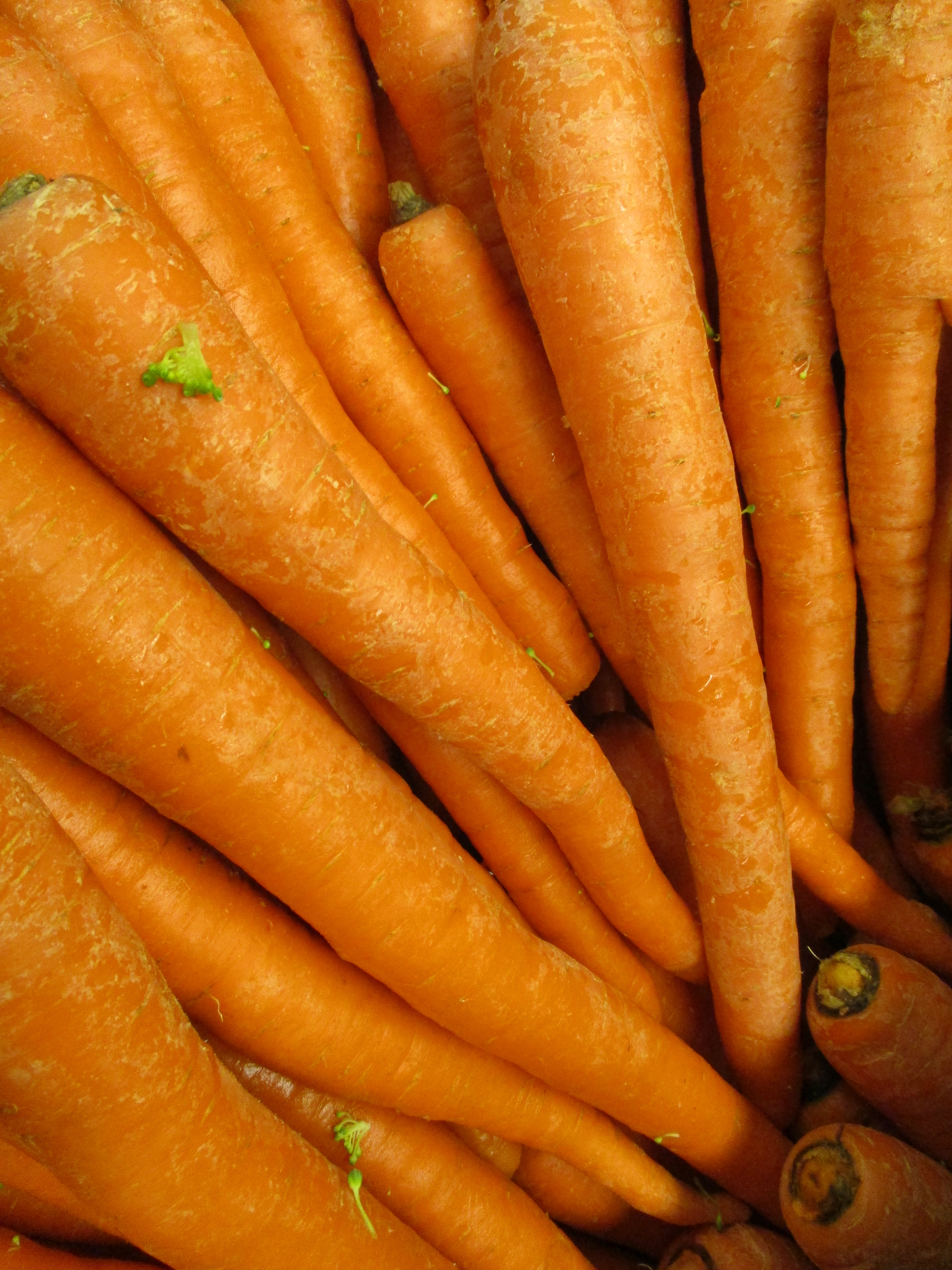
How can anyone eat them? No only do people eat them, but many people enjoy them, and some even consider them to be their favorite vegetable!
Carrots are ridiculously bright orange. They try to make themselves appealingly colorful like summery flowers or oranges. Something that grows underground has no business being that bright orange! About the time that typically bright orange California poppies became available in sickly purple, pale white, orangish red and a few other colors, carrots with the same colors also became available! Coincidence? I think not. Carrots have that distinctively weird texture. Radishes have that perfect crunch. Beets are firm but cook up so nicely. All of the various root vegetables have the perfect texture that works for them; except for carrots. They try to mimic radishes, but are not as succulent and crisp. They are a bit more firm like turnips, but they can not get…
Well, I can not argue that ‘everything is as it should be’. Turkeys serve more of a purpose than food, although I can not figure out what their other purpose is. Coleus are so delightfully colorful that those with more discerning taste than mine enjoy new and ‘improved’ cultivars. Many of those same people with discerning taste also enjoy Japanese maple too much to consider options. Both my blue and white lily of the Nile are still the best! Yes, but . . .
1. Turkey belongs in an oven, or perhaps in a freezer. She should not be doing this at the shops as I write. At least she is not somewhere else shredding flowers or pulling up irrigation emitters.
2. Coleus reminds me why I dislike most modern cultivars. I would find this to be more appealing if I did not know what this is, or if I did not know the potential of good old fashioned coleus.
3. Coleus should look like this, which is more similar to how it looked when it was popular as a houseplant decades ago. My kindergarten teacher grew one like this in our classroom back then.
4. Vine maple should be more popular than Japanese maple is. I realize that Japanese maple is much more interesting and diverse. However, now that it is very popular, it is almost mundane.
5. Lily of the Nile should also bloom red, for a red white and blue bloom on Independence Day. There are plenty that bloom blue here. The first that will bloom white were added a month ago.
6. Rhody should cooperate when I need his help with an illustration. I needed a picture of mulch. I had visions of a stylish model in a Halston dress, leaning on a fender of a new 1972 Electra.
This is the link for Six on Saturday, for anyone else who would like to participate:
Creeping thyme is pleasantly aromatic, but not quite as flavorful as culinary thyme.
Trendy landscape designers like to set flagstone walkways slightly out of step to compel visitors to the garden to stroll through a bit slower. Between the stones, it is in style to grow creeping thyme, Thymus spp., as a very shallow groundcover that relinquishes its delightfully herbal aroma with any misstep. It stays too low to trip on, tolerates a bit of trampling, and needs only minor trimming where it creeps a bit too far onto stones or pavement. Creeping thyme can also be plugged into retaining walls of broken concrete or stone. The grayish green foliage is very finely textured. While the weather is warm, minute lavender flowers bloom in subdued phases that come and go slowly. Some varieties have more pinkish flowers, lighter green foliage or exhibit different aromas.
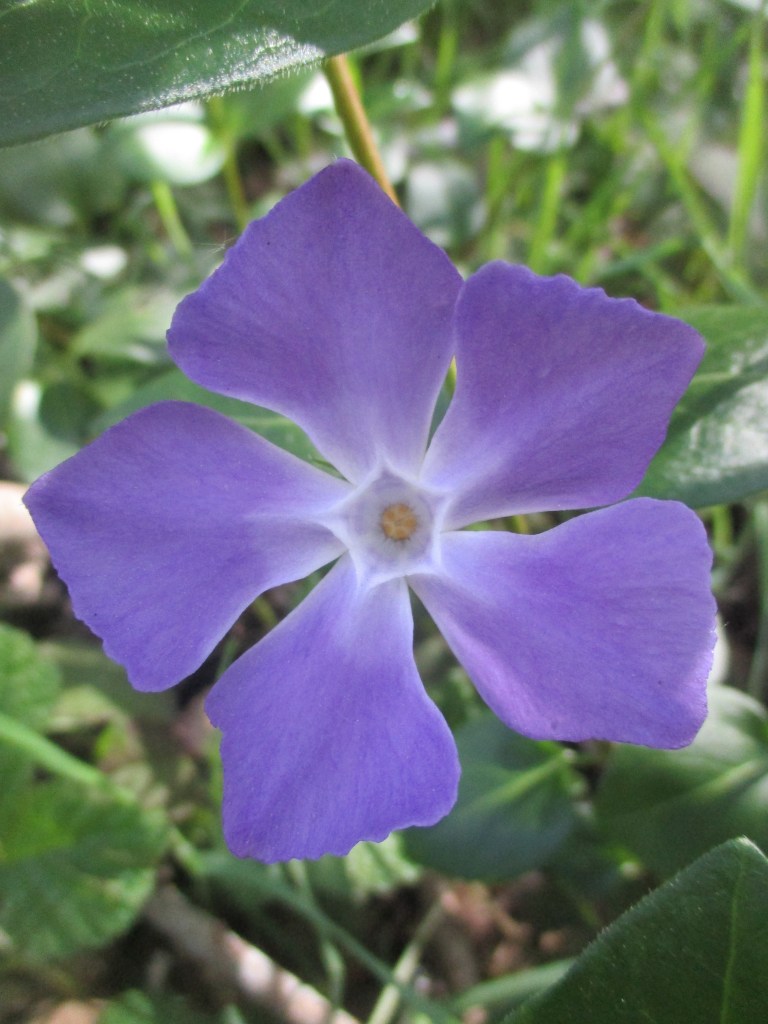
Blue must be unpopular with the more common of pollinators. After all, colorful flowers are designed to attract some sort of vector to exchange pollen. It seems that most pollinators like yellow. Red and pink (which is actually a tint of red) seem to be more appealing to hummingbirds. Butterflies seem to really like pink and orange. Many flowers that seem to be white actually use infrared to attract bees, or ultraviolet to attract nocturnal moths. Other white flowers rely on wind, which is not discriminating about color.
Of the primary (red, yellow and blue) and secondary (orange, green and purple) colors, the only color that is more uncommon than true blue is green. That is probably only because green flowers do not contrast much against green foliage, so would be harder to find. Many blue flowers, like thyme, lavender, blue potato bush and jacaranda, are closer to purple. Some blue and purple color is probably only incidental, and in conjunction with invisible (to humans) ultraviolet coloration or patterns.
Except for purplish blue jacaranda, there are no substantial trees to bloom blue. Empress tree is flashy, but is even more purplish. However, most ceanothus, including a few that can grow as small trees, are famous for their clear blue bloom. Plumbago, blue hibiscus, echium and rosemary are blue blooming shrubbery. Creeping rosemary is a nice groundcover. Hydrangea has the potential to bloom blue, but often turns purplish or pink because of soil alkalinity. Lilac and wisteria vine can be lavender, pink or white, as well as ice blue.
There are several perennial and annual salvias and lupines that bloom blue. Russian sage, catmint, carpet bugle, campanula, perennial statice and lily-of-the-Nile are some of the other familiar perennials for blue flowers. Delphinium should probably be more familiar. Grape hyacinth and various iris bloom briefly but spectacularly with some of the richest shades of blue. Even though there are not many blue flowers to choose from, there is quite a bit of variety.
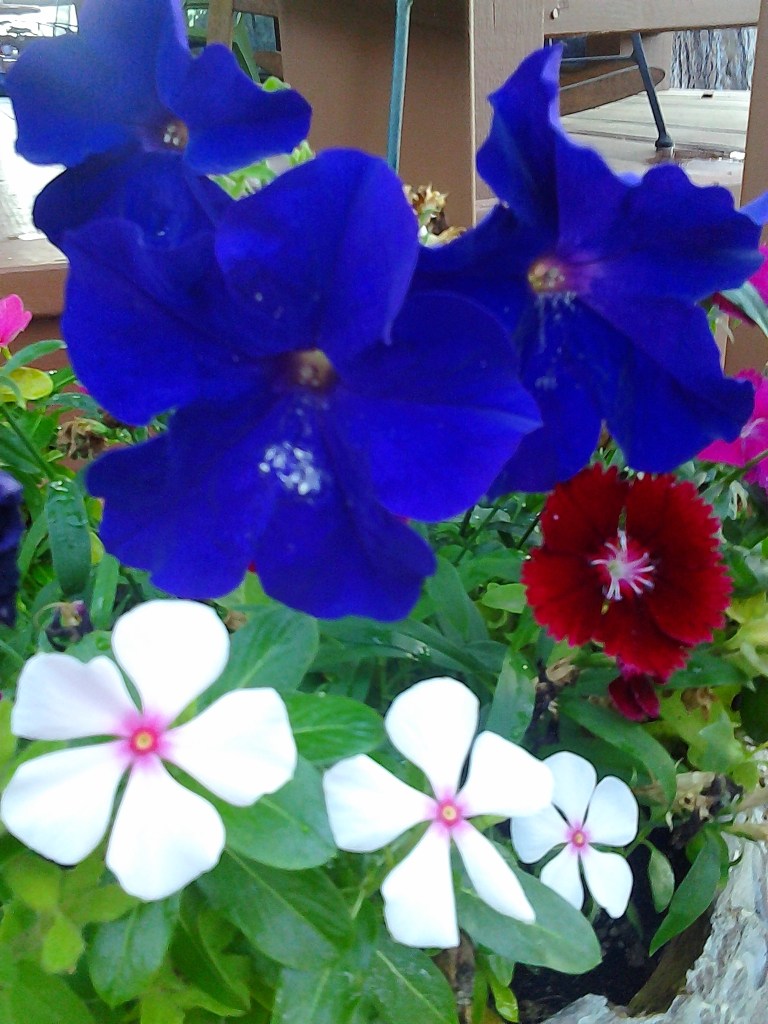
Annual statice, aster, zinnia, bachelor button, nierembergia, nigella, pincushion flower, forget-me-not and cineraria are uncommon annuals that are enjoyed by those who crave blue. Petunia happens to be one of the most popular of warm season annuals that also happens to produce some excellent blues. Later, brightly colored pansy and primrose can be just as flashy as popular cool season annuals.





 How can anyone eat them? No only do people eat them, but many people enjoy them, and some even consider them to be their favorite vegetable!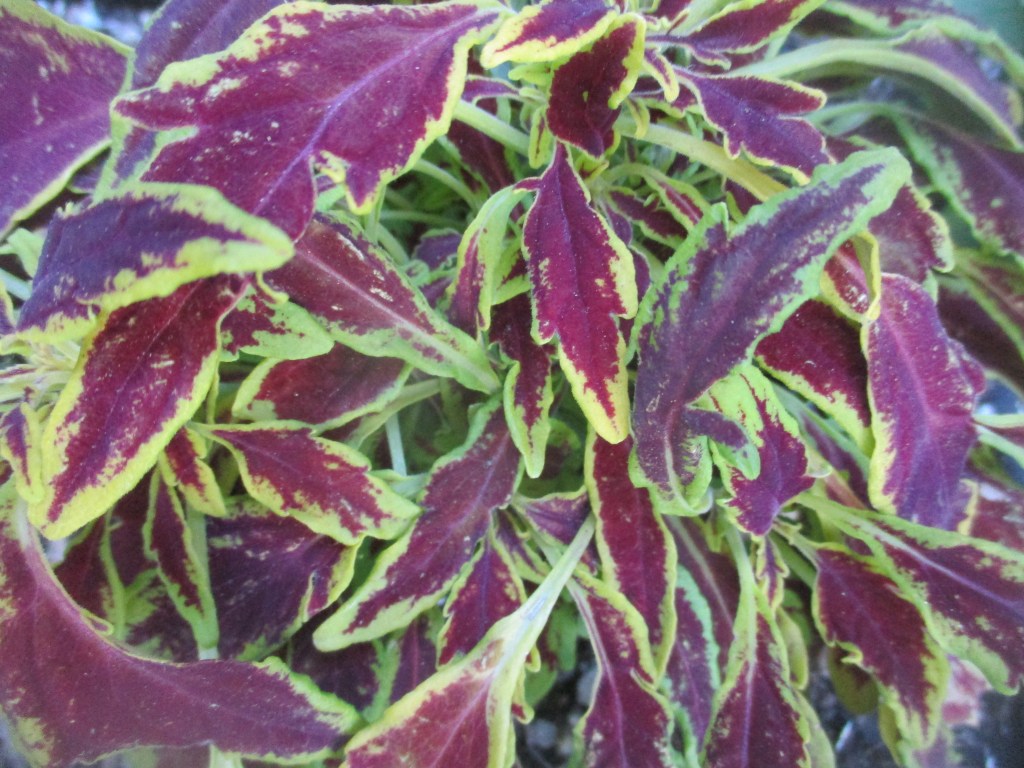




 Tony Tomeo