 This is not about North and South. It is about a utility pole and a pole that remained from a redwood tree that was too close to it. One is there to support a variety of cables and a streetlamp. The other just wanted to grow into a redwood tree to join the rest of the forest. One has been deceased for many years or decades. The other was alive just recently, but is now only a stump.
The picture above shows how many cables the utility pole supports, as well as the streetlamp. When I did my internship in 1988, the arborists whom I worked with knew what each of the various cables were for; high voltage, lower voltage, cable television, telephone and whatever else was up there. Fiber optic cables have since simplified the telephone and television cables.
The picture above also shows how the unfortunate redwood tree needed to be cut back for clearance from the electrical cables. I was mortified to see this so prominently visible on the edge of a main road, because I should have noticed the problem earlier and just cut the tree down. Not too long ago I was pruning many other redwood trees for clearance from other streetlamps.
Those who pruned it instead, along with any other trees that were encroaching into the electrical cables, were very efficient with establishing clearance, but not so proficient with aesthetics. Obviously, I could not leave this tree like this on the side of the road. Even if I did not care what it looked like, I did not want it to regenerate and immediately encroach back into the cables.
The picture below shows my corrective pruning. The stump is certainly not dead, and will try to regenerate, but will be easier to keep down. If kept down long enough, it may eventually die.
The second picture below shows the stripped trunk in two sections that are nearly eight feet long, and a short bottom section that is a bit more than two feet long. The two long sections are straight enough for gate posts (although there is another plan for them). It is a sad demise for the formerly healthy and sound redwood tree, but became necessary to keep the electricity on.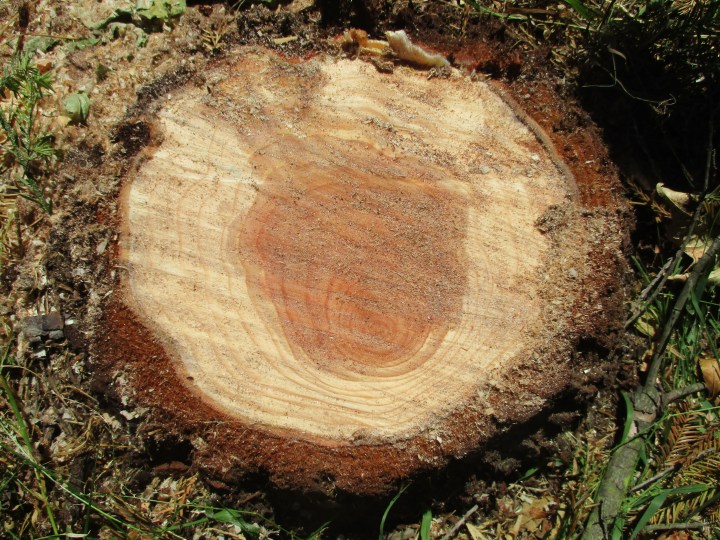

 Within its natural range on the West Coast between the southern extremity of Alaska and the southern extremity of California, Western sword fern, Polystichum munitum, is the most common of the native ferns. A few disjunctive wild colonies live as far inland as the Black Hills of South Dakota. Yet, with few exceptions, Western sword fern is difficult to cultivate outside of the natural range.
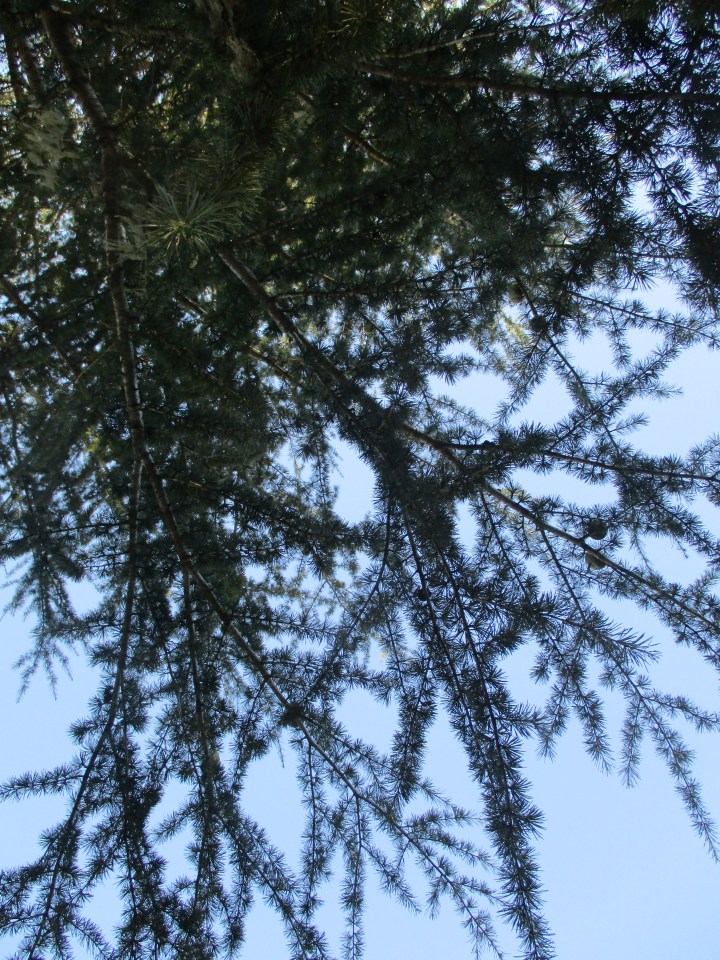 Just about every home garden has some sort of shade. Even if there are no substantial trees or shrubbery, there are northern walls of homes and garages, and they likely have eaves that extend their shadows a bit farther. Fences to the south create shade to the north. Gardens of modern homes are smaller, and surrounded by higher homes and fences, so are shadier than older gardens.
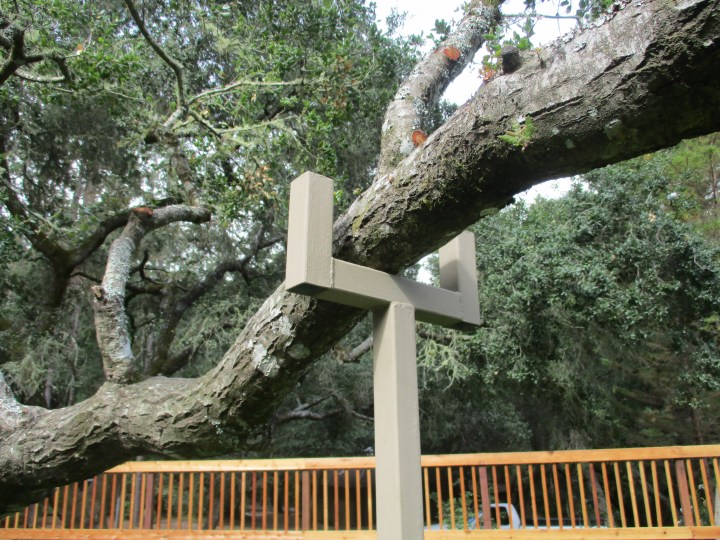 It has been almost a month since one of three small but sculptural and very prominent coast live oaks at work was destabilized by . . . well, children. They were climbing on it, as most good children should do. There were a few of them; and the tree is old and deteriorating. All three of the trees actually grew from the same rotten stump of a tree that was cut down decades ago.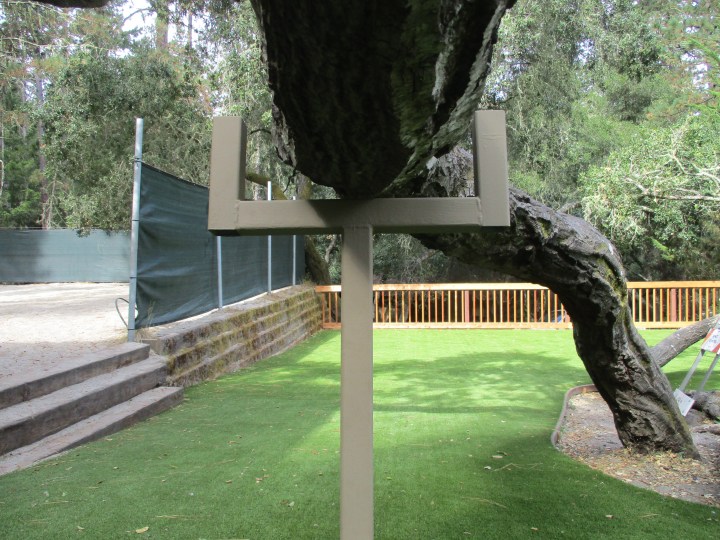
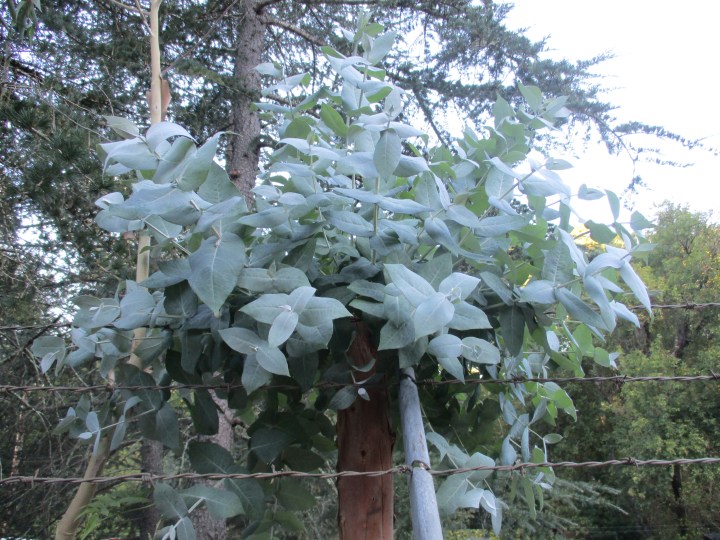 Just about any other arborist will insist that any pollard is a bad pollard. I am not any other arborist. I have no issue with pollarding certain trees properly.
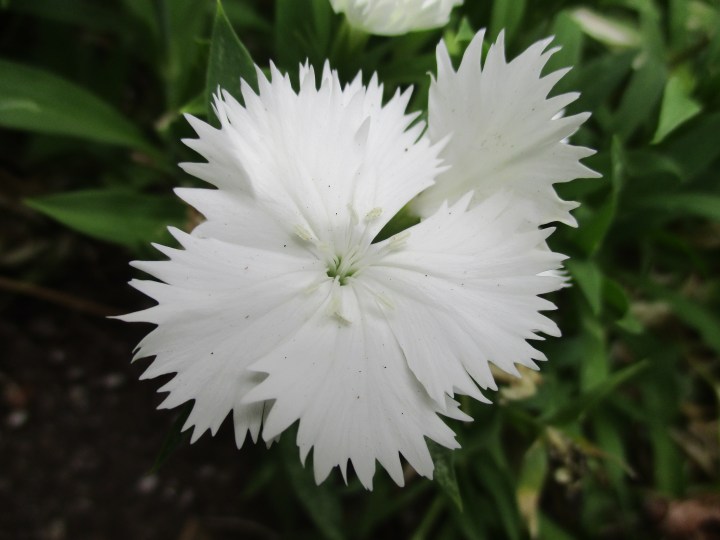
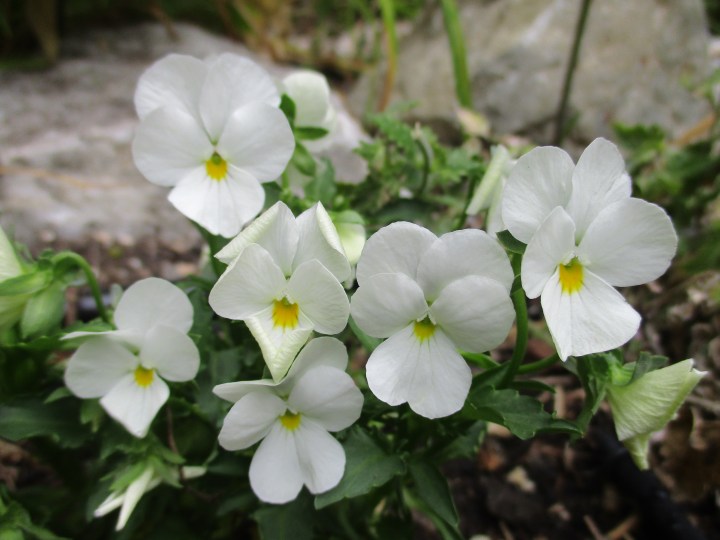


 If you’re going to San Francisco, be sure to wear some flowers in your hair. In the 1960s and 1970s, such accessorizing with Paris daisy, Argyranthemum frutescens (which was at the time, Chrysanthemum frutescens), was a fad. The white flowers with yellow centers were about two or three inches wide. Modern cultivars have smaller flowers that might be light pink or pastel yellow.
 Pesticides are a topic that I do not talk much about. There really is not much to say about them. Only a few are used at the farm, and only while certain destructive insects or perhaps mites are active. Even less pesticides are used in the landscape. It is not that I have serious issue with them. They are just not as useful for controlling pests as proper horticultural techniques are.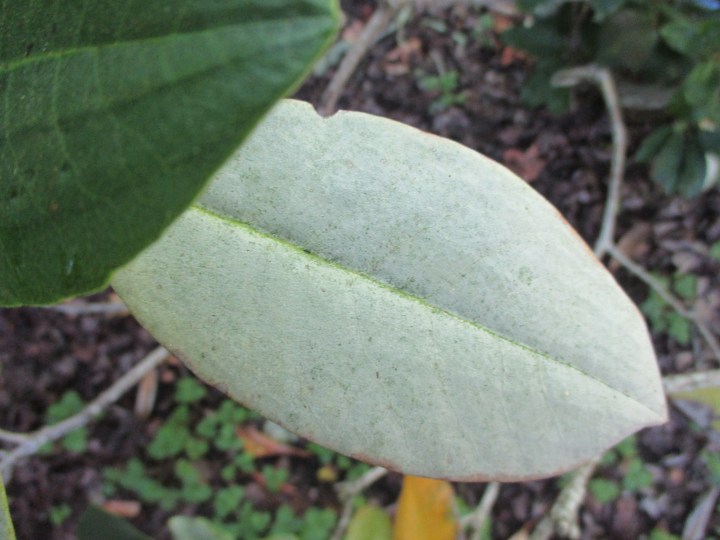

 The original Dodge Dart, with the slant-six engine, was not much to look at, but was built to last. While cars were expected to last ten years or a hundred thousand miles, Darts easily lasted twice as long or twice as far. A few are still going now! Such resiliency really made a reputation for Dodge. The problem was that those who bought Darts had no need to buy another car for a long time.
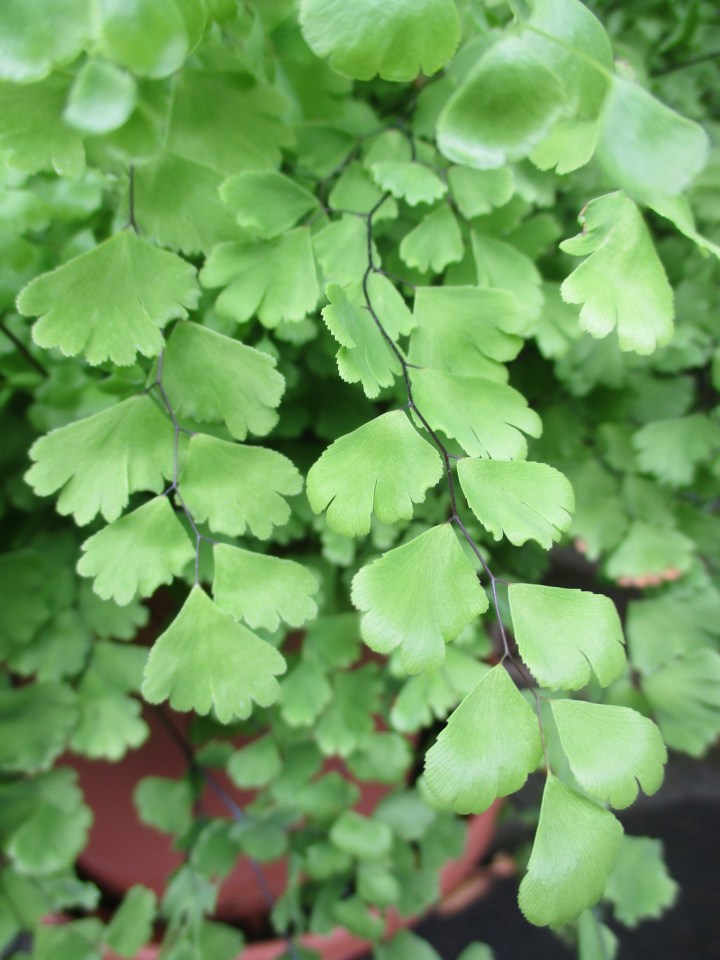 Some of us might remember Delta maidenhair fern, Adiantum raddianum, as a houseplant that was popular for terrariums in the 1970s and into the 1980s. Although quite happy in terrariums, it eventually gets big enough to crowd other plants in such tight spaces. It prefers to be potted on a porch, or in a regularly watered and sheltered spot in the garden. It tolerates quite a bit of shade.
