Invasive Exotics – Acacia dealbata

P80211Every invasive exotic (non-native) species has a story of how it got here.

Blue gum and red gum were imported to produce the timber needed for railroad ties. Many annual specie were forage crops for grazing cattle. Some got here by stowing away as seed on or inside cattle or other animals. Supposedly, mustard seed was broadcast by those traveling on the El Camino Real so that other travelers could find the route later. Then there are all sorts of invasive exotics that were imported simply because people liked to grow them in their gardens.

It is difficult to imagine why anyone would import any of the weedy specie of broom (Genista specie) or the sloppy species of pampas grass (Cortaderia jubata). It might have made sense at the time, before more appealing specie were introduced, or before less invasive modern cultivars were developed. Black locust has always been, and continues to be a pretty tree, long after more colorful and less invasive cultivars were developed. They were brought to California by prospectors from the East at a time when no one knew or cared how invasive they would be.

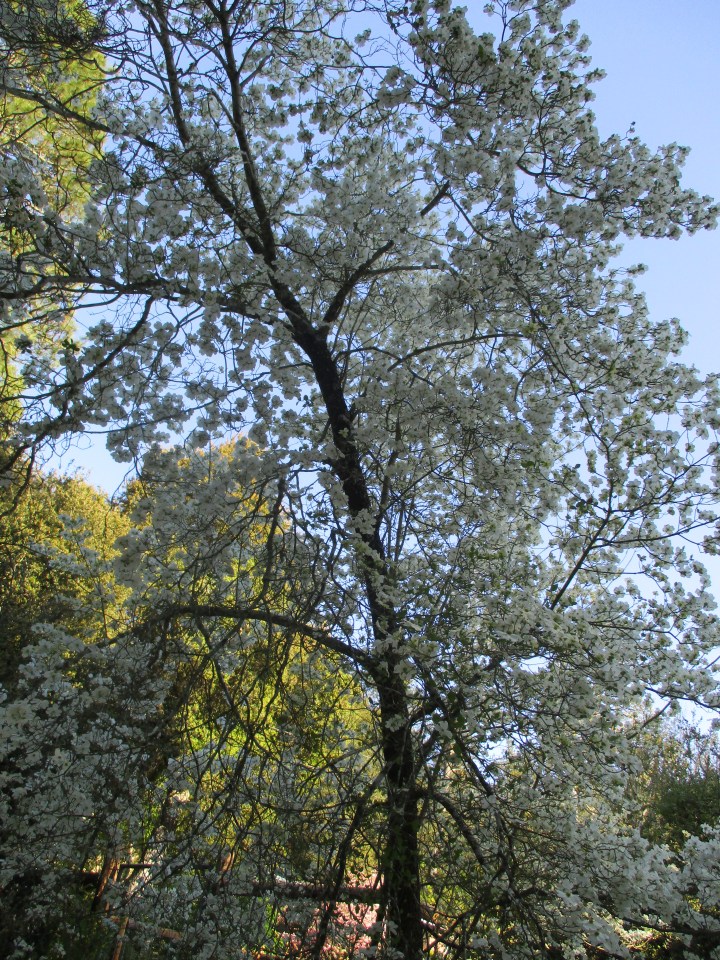
Acacia dealbata was likewise imported simply because it is a pretty tree, before anyone knew how it could naturalize and displace native vegetation and wildlife. Now it grows very rampantly in utility easements where other vegetation has been eradicated. Not only does it interfere with the efficiency of utility cables, but it is also combustible if ignited by sparks from electrical cables. Yet, it is so colorful and pretty in the middle of winter that it is not easy to dislike. Unfortunately, environmentalism is not what it used to be, and some so called environmentalists want it to be protected simply because it is ‘alive’.P80211+

Weather To Die For

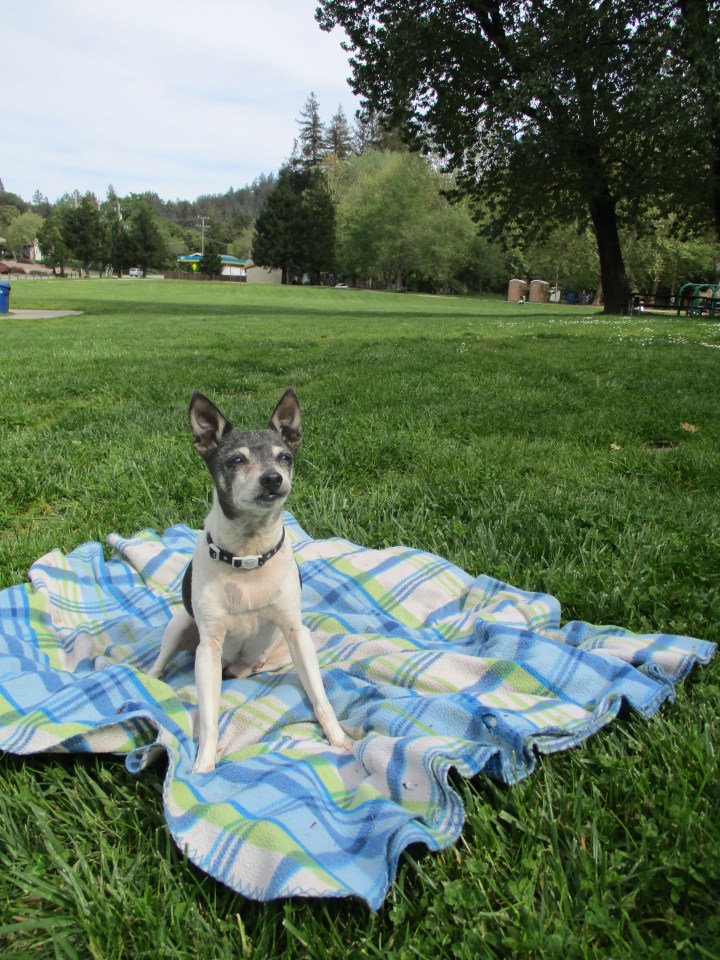
B80210KDon’t worry. He is not really deceased. He is just making good use of the lawn. The well foliated trees in the distance are a clue that this pictures was not taken recently, although it illustrates the current weather conditions accurately. We all want to be out in it, whether getting lazy in a local park, walking on the beach, or just staying home and working in the garden.

It seems that almost everyone else is contending with less pleasant weather. The summer in much of Australia had been historically hot. Much of Europe got some nasty storms. Parts of the Southeastern United States of America that get snow only on rare occasion got more than they have in recent memory.

We are certainly used to our share of pleasant weather through winter. We can only see snow in the distance on top of Mount Hamilton. Frost only happens a few times through winter. We often get a few consecutive days at of spring weather. What we are not accustomed to is this sort of duration of pleasant weather.

Many years ago, such a long duration of pleasant weather would have been bad for the orchards of the Santa Clara Valley. It would have prompted them to bloom prematurely, only to get the blossoms and developing fruit knocked off by subsequent rain. Although the orchards are gone, many of us still grow similar fruit trees in our home gardens. Apricots, cherries, nectarines, peaches, plums, prunes and almonds are all susceptible to premature bloom.

We really could use some wintry weather about now. Rain here with snow in the watersheds of the Sierra Nevada would be the best. Otherwise, cool weather to delay bloom of fruit trees until after the rain would be the second best option.

Six on Saturday: Weeds of Felton Covered Bridge Park


Although it is not my own garden, I have obtained some of my plants here, and have planted a few here too. I write about or mention Felton Covered Bridge Park too often to bother posting links to other posts about it. #1 and #2 are not exactly weeds, but were not planted here either. They were likely taken by the San Lorenzo River from gardens upstream, and deposited here.

1. Snowdrop! It seems that everyone else has been posting pictures of theirs, and I had nothing to brag about. I did not know they were here. However, these are Leucojum aestivum rather than a species of Galanthus.

P80210
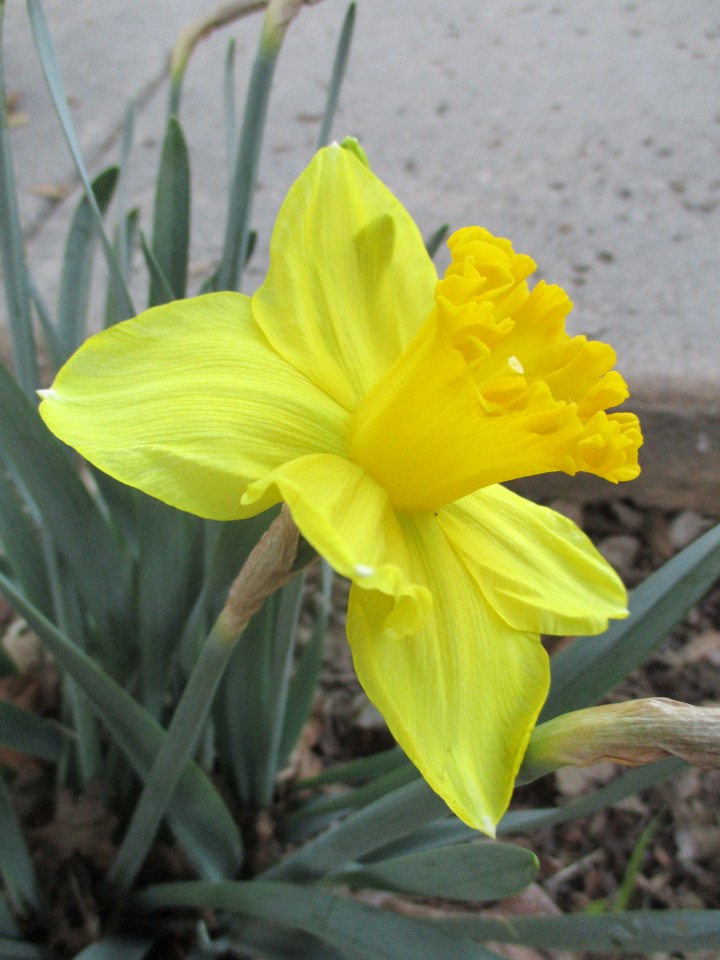
2. Daffodil foliage emerges annually, but gets cut down by the ‘gardeners’ with their weed whackers. This is only the second time they have bloomed.P80210+
3. Periwinkle is a prolific weed throughout the Santa Cruz Mountains.P80210++
4. English daisy is a prolific weed in lawns in mild climates. Most if not all of the lawns in Golden Gate Park in San Francisco are infested with it; but it is too pretty to dislike.P80210+++
5. Dandelion is another prolific lawn weed that is easier to dislike.P80210++++
6. Dandelion seed is very abundant and very easily blown about.P80210+++++
This is the link for Six on Saturday, for anyone else who would like to participate:

https://thepropagatorblog.wordpress.com/2017/09/18/six-on-saturday-a-participant-guide/

Agonis

70208Fans of the Brady Bunch might recognized agonis, Agonis flexuosa, from the front yard of the Brady Residence. That particular tree was rather dark olive green, and might have grown two or three feet annually to reach the upstairs eaves. Most of the popular modern cultivars are darker bronze or burgundy, and probably stay a bit shorter, but attain the same elegant and slender form.

The narrow evergreen leaves hang softly from limber stems, like the foliage of weeping willow. Anyone who has pruned agonis has likely noticed that the foliage is aromatic if disturbed. The tiny pinkish white flowers that bloom in spring or summer are not much to look at, but can be fragrant if there are enough of them. The fibrous and furrowed bark is quite distinguished for a small tree.

Agonis is not too demanding as long as it gets enough sunlight. It will lean away from shade. It prefers to be watered somewhat regularly through summer, although established plants can be quite happy if watered only a few times. Too much water rots their roots. If pruned to promote branching while young, and pruned for confinement as it matures, agonis can be a striking unshorn hedge.

Roses Get Pruned In Winter

30508thumb++Winter is no excuse to be less diligent in the garden. It would seem that gardening would be less demanding because there is less going on, and so many plants are dormant. However, dormancy is precisely why there is so much to do through winter. Bare root plants and bulbs are planted because they are dormant. Fruit trees get pruned because they are dormant. Now it is time for roses.

Just like fruit trees, modern roses were intensively bred for enhanced production. Their flowers are too big and abundant for overgrown plants to sustain. Consequently, aggressive specialized pruning is necessary to concentrate resources and promote vigorous growth. Rather than producing an abundance of inferior blooms, well pruned canes produce fewer blooms of superior quality.

Also like deciduous fruit trees, roses should be pruned while dormant, preferably after defoliated, and before new buds swell. This sounds easier than it really is. Some roses might still be trying to bloom on canes from last year. Others might be trying to generate new foliage for this year. Fortunately, they are tougher than they look. Besides, early or late pruning is better than no pruning.

Hybrid tea, floribunda and grandiflora roses need the same sort of pruning. They all should be pruned back to only a few canes that grew last year. Older canes should be pruned out completely, unless there are not enough new canes that grew last year. Hybrid tea and floribunda roses need only three to six canes, only about two feet tall. Floribunda roses might have a few more canes. Tree roses should be pruned just like shrub roses, as if the upper graft union is at ground level. The canes can be pruned shorter.

Suckers from below the swollen graft union (from where canes emerge) should be removed completely. If possible, they should be pulled or peeled off instead of cut. This seems harsh, but leaves less of a stub from which more suckers might develop later. Because fungal spores and bacterial diseases overwinter in decomposing foliage, fallen leaves should be raked from around roses.IMG_20140331_112633

Ecclesiastes 3: 1

P80207There is a time for everything, and a season for every activity under the Heavens:

Verses 2 through 8 continue to list a few examples of more specific activities that happen at specific times. If there were more examples, autumn foliar color would probably be cited as well. After all, autumn foliar color happens in . . . well, . . . autumn.

Perhaps it was omitted for brevity. Of course, there is the possibility that it was omitted to avoid confusion. If it had been cited, it might have been described simply as ‘foliar color’ rather than ‘autumn foliar color’. Some foliage colors earlier if distressed. Some foliage does not color until frosted. Some might even delay color until it is in the process of getting replaced by new foliage. Then there are the many sorts of evergreen foliage that do not color at all, or at least in a manner that is visible or notable from outside. Shedding browned or blackened dead foliage, particularly that which is obscured by new foliage, does not count.

This English ivy foliage is the sort that should not color at all. Old leaves should whither and deteriorate once obscured by new foliage. Perhaps the vine is concentrating resources elsewhere while abandoning this section. Perhaps the entire vine is deteriorating. From this picture, it is impossible to determine why this colorful foliage is exposed.

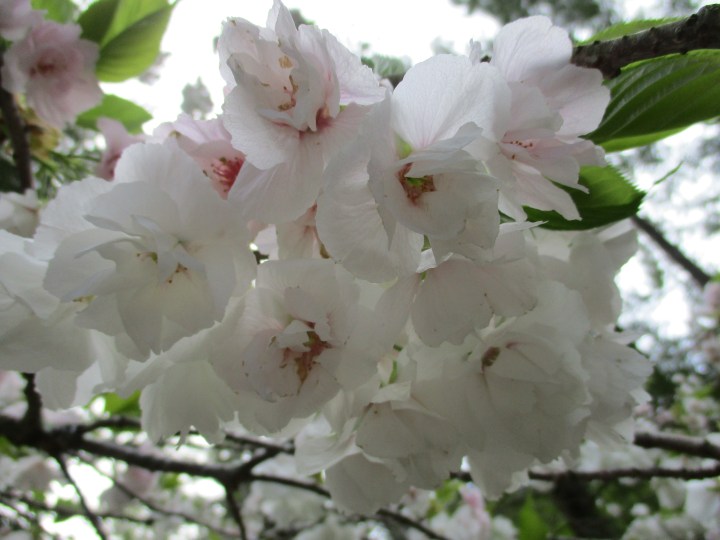
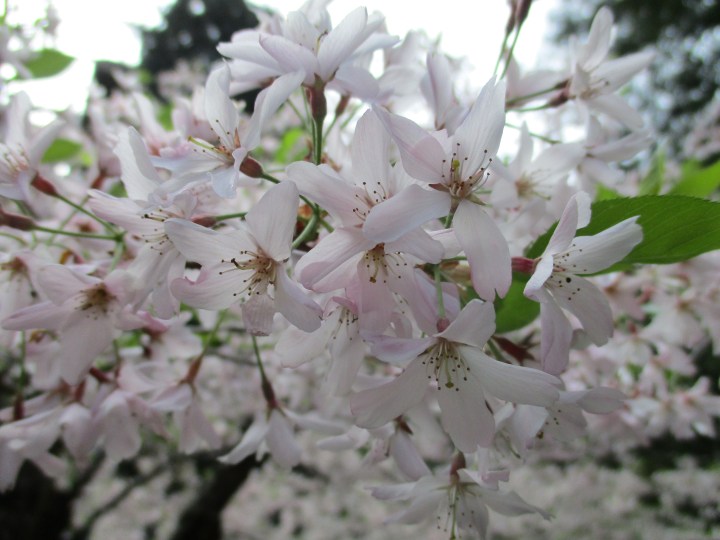
Perhaps this is the time to just appreciate nice autumn foliar color wherever and whenever we get it, even if it is on English ivy in winter. As the flowering cherries try to convince us that it is spring, that would be just fine too. This can be the time for autumn, spring, and maybe even winter if it ever arrives, all at the same time.

Candelabra Aloe

70201As a group, aloes really deserve more respect. Many will naturalize and thrive with only occasional watering through summer. Candelabra aloe, Aloe arborescens, wants a bit more water than most other aloes, but not much. It looks like a sensitive jungle plant, but is surprisingly durable, and very easy to propagate. Any pruning scraps can be plugged wherever new plants are desired.

The foliage alone is striking. Some might say that the loosely arranged foliar rosettes are sloppy. Others might say they are sculptural. The long and curved leaves are outfitted with prominent but soft marginal teeth. Some specimens have narrower leaves that are almost curled. ‘Variegata’ is striped with creamy white. Mature plants may form dense mounds more than six feet high. Hummingbirds and bees really dig the flashy bright reddish orange floral trusses that bloom on tall stems in winter.

Bulbs Are Not Finished Yet

41015thumbIt might seem creepy to think about what spring bulbs are doing right now out in the garden. Like victims of a horror movie, they were buried in shallow graves last autumn. They were not dead though. They were undead but merely dormant. While no one can see what they are up to, they disperse roots and begin to push new foliage up to the surface of the soil. Some might bloom soon.

Now it is getting to be time for summer bulbs. Unlike spring bulbs, summer bulbs do not prefer to hang out in the garden through the cool and rainy weather of winter. If planted too early, they can start to grow prematurely, and could potentially get damaged by frost. If planted much too late after winter rain, they will need to be watered more carefully while young, and are likely to bloom late.

Just like spring bulbs, most summer bulbs are really corms, rhizomes, tubers or tuberous roots. Only a few are actual bulbs. Although they are very different physiologically, they perform the same function. They store resources from a previous season through dormancy in order to sustain growth for the next season. Some summer bulbs bloom more than once annually or with many blooms.

Dahlia, canna, crocosmia, hardy orchid (Bletilla) and the old fashioned big white calla are some of the easier to grow summer bulbs. Dahlia is the most colorful, but blooms late in summer or early autumn, and might only perform well for a single summer. With regular watering, canna can grow like a big weed, but in a nice way. The others can grow well enough to get invasive over the years.

Gladiolus and lily will probably bloom for only one summer, but are so colorful that those who enjoy them do not mind. Tuberous begonia is fussier, so is usually grown in pots. Allium, astilbe and maybe liatris have potential to thrive and multiply in the right conditions, but more often bloom for only a few years. Small colored callas are unpredictable too. They are showy but rarely prolific.

After bloom, deteriorating flowers should be pruned away to conserve resources while lingering foliage recharges bulbs for the next winter. This process is known as ‘deadheading’. Gladiolus, lily and any others bulbs that bloom only once obviously need to be deadheaded only once. Dahlia, canna and others that bloom over an extended season will want to be deadheaded a few times.

RATS!

P80204

Remember the Beverly Hillbillies? That was a really lame sitcom; but it was somehow very popular at the time.

Each episode began with the stupid jingle that explains how and why the formerly impoverished but suddenly wealthy Clampetts left their home in Bugtussle and moved to Beverly . . . Hills that is.

As they drive their decrepit Oldsmobile down Bedford Drive just west of downtown, the palms flanking the roadway are prominently visible to the left and right. This strictly regimented collection of Canary Island date palms alternating with Mexican palms was not very big back then, in the early 1960s. By the 1980s, they were strikingly grand. Sadly, they are now deteriorating from old age. Many of the broad Canary Island date palms have succumbed to pink rot, so are now absent. Some of the Mexican fan palms are also lacking. It is saddening to see them now knowing how grand they were not too long ago. Although they are being replaced, they will never be as formal and uniform as they were as a monoculture (or biculture) that was planted all at the same time back in the late Victorian period. Even if it were possible to remove all of the trees and plant new ones at the same time, such conformity went out of style decades ago.

Arborists see these historic trees differently. They know that just one Canary Island date palm is likely infested with rats. Such a grand collection must be infested with a disturbingly large population of rats. Within a canopy of a Canary Island date palm rats, are safe from most predators, and get quite a bit to eat from the fruit produced by the female trees. (Most Canary Island date palms are female, with only a few taller and less billowy male trees for pollination.)

When a Canary Island date palm gets cut down from the base, it falls with a big SPLAT on the ground, followed by a blast of wind containing every Frisbee, baseball, tennis ball, kite and whatever got stuck in the tree over the previous few years. After a brief pause, but before the the baseballs stop rolling in the gutters, a herd of all surviving rats flees the scene. Most hide in the closest shrubbery they find. Some scurry up other nearby palms. It can really blow your image of the Canary Island date palm.

Sesame Street Was Wrong!

P71231It was probably one of the best television shows for children back then, and probably still is. Everyone of my generation in American remembers Sesame Street. We all identified with it, even if our neighborhood did not look like Sesame Street, or lacked the variety of neighbors. Sesame Street sometimes took us on television field trips to other neighborhoods. Some were more familiar. Those that were more foreign were presented within a compelling and inviting context that got us interested in how other children lived within their respective societies.

Some kids lived in big cities and rode on buses. Others lived in suburban areas with big gardens. Some lived on farms with hens and cows. There were even kids who lived near a forest surrounded by big tall evergreen trees. The trees were probably the firs, spruces and hemlocks of New Hampshire. I do not remember. I just knew I was fascinated with the trees.

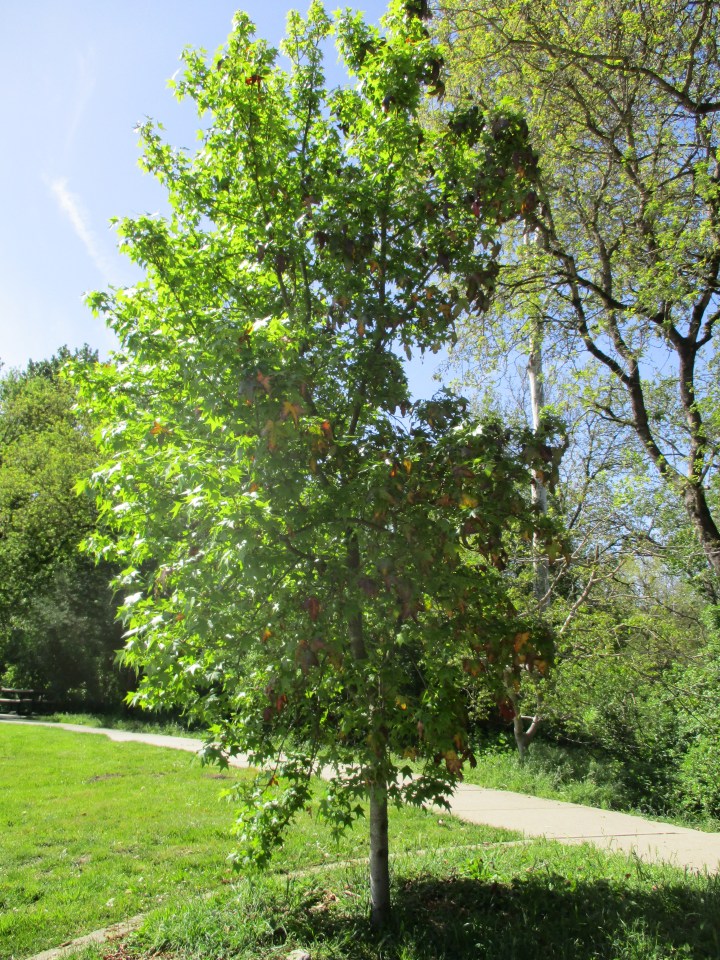
I certainly did not need Sesame Street to show me how excellent my first silver maple was. It was my second tree, after my incense cedar. My mother thought of it as ‘her’ maple tree. Yeah, right. When it defoliated in autumn, I ‘raked’ the leaves by pairing them all up, and then pairing all the pairs into groups of four, and then pairing the groups of four into groups of eight, and so on, until there was only a single pile of leaves. When the tree was very small, it had only about sixty-four leaves, so this technique worked just fine. It was a bit more work by the second autumn. By the third autumn, I had learned how to use my little leaf rake.

During this time, I happened to learn something from Sesame Street that I had not previously known about maple trees. They make maple syrup! The kids who lived near the forest in New Hampshire went with their father out to where their maples were, to collect syrup. It was simple. The father gouged the bark, drilled a hole into the trunk, stuck a hooked device into the hole, and hung a bucket onto the hook to collect they syrup! I do not remember if that was the correct sequence of events; but how difficult could it be? The video was only a few minutes long, so I knew that it did not take long for the bucket to fill will with syrup that the kids poured over their pancakes at the end of the video.

What the video failed to explain adequately is that after the bucket was hung, it was left there overnight, and was retrieved the next day. To me, it looked like the kids got distracted and left, but then came right back a few seconds later. The video also failed to explain how involved the process of concentrating the sugar by boiling off the water from the sap. Again, to me, it looked like a pot of boiling sap was ready for pancakes a few seconds later. Like I said, the video was only a few minutes long.

Getting syrup from the maple tree was just too tempting. I took my little plastic beach pail and a small hatched for kindling and went out to get my own syrup. I smacked the trunk with the hatches and grabbed my pail to catch the sap that was supposed to come pouring out; but nothing happened. I smacked the tree again; but again, nothing happened. I gashed the trunk a few more times, in various spots around the trunk, but never got any syrup. Eventually, I got distracted with something else. I left my pail and the hatchet there next to the tree, believing that Sesame Street was wrong.P71231+