Santa Ana Winds

P71221+They have been a part of life in Southern California longer than anyone can remember. The Santa Ana Winds have been blowing down from the high deserts to coastal plains long before people arrived in the region. They are arid and usually warm before they leave the Great Basin and Mojave Desert, and they get even warmer as they flow downhill through mountain passes. That is what makes them so dangerous during fire season. Wind alone accelerates wildfire. Warming arid wind desiccates fuel, making it more combustible before wildfire arrives.

Santa Ana Winds are so regular that they affect how tall trees grow within the regions of the mountain passes where Santa Ana Winds move the fastest. Tall Mexican fan palms that grew up straight where sheltered from wind near the ground innately lean with the prevailing wind as they grow up and become more exposed. Those closer to the narrow canyons lean the most. It is something that arborists recognize everywhere around the Los Angeles Basin. They can tell how strongly the Santa Ana Winds blow in any particular neighborhood by how Mexican fan palms lean.

Santa Ana Winds can be strong enough to break tree limbs, and blow trees down. In the past few days, they have been making quite a mess in the Los Angeles region; although not as much of a mess as they are making in conjunction with the Thomas Fire in Santa Barbara and Ventura Counties, which may already be the biggest wildfire in the modern history of California.

Overnight, Santa Ana Winds blew this California pepper tree onto a swimming pool in Los Angeles. Tree services, landscapers, gardeners and those who enjoy gardening will be busy cleaning up such problems for the next few days, as Santa Ana Winds continue.

Unseasonable Weather Can Confuse Plants

70920thumbEven without any of the five senses that we are outfitted with, plants are remarkably perceptive of the weather and the changing seasons. They know precisely what time of year it is because they know how long the sun is up. Their calendar is just as accurate as ours is. They also know that the weather has been getting progressively cooler through autumn, and that it rained a bit earlier.

New Zealand tea tree, torch lily, euryops daisy and many other plants from other temperate climates do not seem to care that they should not be blooming at this time of the year, if the weather is telling them otherwise. If the weather is warm enough during the day, even if it gets cool at night, these plants will bloom right up until things get really cold, even if some of their bloom gets frosted.

Saucer magnolia, lilac, apple and the many other plants from climates with cooler winters should know better than to bloom this time of year. Many bloom only once annually, so whatever blooms now will not bloom when it should next spring. Besides, the flowers that try to bloom now will bloom slowly, and probably be ruined by cool or rainy weather before they can develop completely.

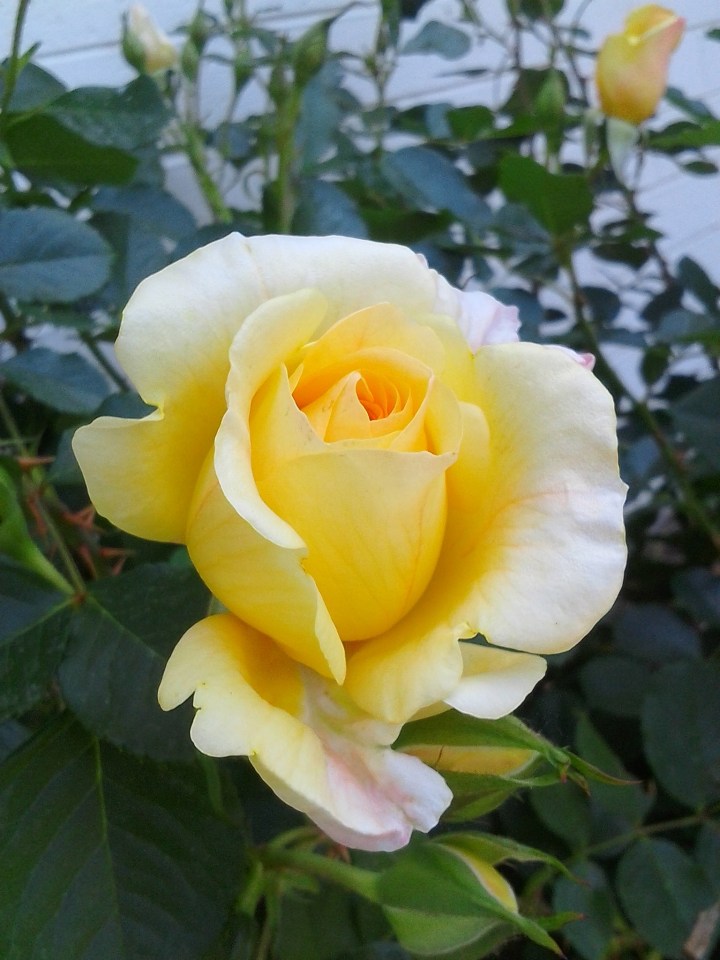
Roses had a particularly weird year. They bloomed well and on schedule last spring, but then idled through much of summer, only to express a new interest in blooming now that they should be going dormant for winter! No one wants to prune them while they have more buds than they did in August. Fortunately for them, they bloom more than once annually, so should recover by spring.

The colorful foliage of sweetgum and Chinese pistache, as well as the observable weather, indicate that everything is more or less in order for this time of year. Autumn might have started out mild, but it had been even warmer in past years. It is impossible to say why some magnolia, lilac and apple are trying to bloom already. They each have such distinct personalities, and respond to so many different variables besides the obvious; daylength, temperature and humidity.

Mistletoe Un-Update

oklahomaThere is still no news about why mistletoe disappeared this last year in our area. No one really noticed it missing until late in summer. The absence of mistletoe became more apparent as deciduous trees that had been infested with it last year defoliated in autumn. What is even more strange is that the dead mistletoe plants deteriorated so quickly and efficiently that they are completely absent, as if something ate all the mistletoe, or took it away. The only evidence of former infestation in some trees are the swollen portions of stems where mistletoe had been attached. An article about this mysterious absence of mistletoe can be found here; https://tonytomeo.wordpress.com/2017/09/24/where-has-all-the-mistletoe-gone/ .

Someone who harvests mistletoe from local trees, both to eradicate it from a few trees, and also to sell it in local markets, made an interesting observation about the absence of mistletoe just within the past few day. He found that some mistletoe survives, but only in the upper extremities of tall trees. Most of the trees are locust trees, perhaps because they happen to be taller than most of the other trees that had been infested. One infested tree is a black walnut. The viable mistletoe plants are somewhat young and small. Larger plants or colonies that were as high as the smaller surviving plants are gone. Specie of mistletoe that infest coast live oak and some conifers have not been observed.

There are several variables that could account for the survival of relatively small mistletoe plants high in the canopies of host trees. Some pathogens that could affect mistletoe might proliferate in congested growth that limits air circulation, but not where air circulates efficiently through sparse and exposed growth higher up. Some pathogens that proliferate in cool and damp situations are inhibited by drier and sunnier situations. Some pathogens are more likely to infect hosts that are closer to the ground. If rodents are taking mistletoe vegetation, they prefer the shelter of more congested lower growth, and avoid the vulnerability of more exposed higher growth.

Tree Monster

P71203Matthew McDermott got this picture, which was actually part of a video, of a tree burning from within during the devastating fires in Sonoma County last October 9. Many of us saw it in the news. It is actually not as uncommon as it would seem to be. Interior wood is more combustible, and sometimes already well aerated from decay, so can burn if exposed to fire through wounds or cavities, while the exterior of the same tree resists combustion. This is why there are so many big and healthy coastal redwoods with burned out hollow trunks. Of course, trees more commonly burn from the outside.

Once burned, charred wood is resistant to decay. Redwoods and cedars are resistant to decay anyway, so once charred and doubly resistant, they can stand for decades.

When my younger brother and I were little tykes, one such charred cedar lived at our maternal Grandparent’s summer house outside of Pioneer. That is, it ‘lived’ there before it got charred by a fire a very long time before the forest that was there in the early 1970s grew up around it. I never actually saw it living. It was VERY dead long before my time.

The problem was that my younger brother and I did not KNOW for certain that it was dead. It was a big charred trunk at the bottom of the clearing downhill from the house. We could see it from almost anywhere, except from inside or uphill of the house. It was ominous. It was creepy. It seemed to watch us. The rest of the pines, firs, cedars and everything else in the forest was so green and lush; but the big black carcass was always there.

We were not totally afraid though. Our Uncle Bill was there too. He was the greatest superhero in the entire universe! He was bigger and stronger than any man. He was tall enough to hang our swing in the big tall black oak tree. He had already protected us from the bats. (We did not know what bats were, but we knew they were scary.) He breathed smoke, and from a white and gold can with a picture of a waterfall and a horseshoe on it, he drank a magical potion that might have given him some of his superpowers. (My brother and I tried it, but it tasted icky.)

Uncle Bill had a chainsaw.

Uncle Bill started to cut the base of the big dead Tree Monster while everyone else watched from a distance. To us kids, it seemed to take a long time. Eventually, the Tree Monster wobbled a bit, and fell forward towards us, landing on the ground with a big dusty thud. The top broke off and slid a bit farther from the rest of the carcass, which only made the secondary death of the Tree Monster seem that much more violent. After a bit of a pause, my brother and I approached in disbelief. It was twice as dead as it was before! Uncle Bill had killed the dead Tree Monster!

We walked on top of the fallen carcass just to be certain, and found no signs of life. We inspected the low and wide dead stump and found only sawdust. When we looked back at where the Tree Monster had always been, we saw only lush green pine, fir and cedar foliage.

Through the following year, Uncle Bill cut and split the Tree Monster into firewood for my Grandmother to cook with. It kept us warm at night. Uncle Bill kept us safe.

Mexican Lime

71227Those who can grow Mexican lime, Citrus aurantifolia, get to brag to their friends who can not, even if they are only a few miles away in slightly cooler spots. It really is marginal here. If it gets too cool in winter, it can defoliate. Frost can damage or kill the stems. Because it stays smaller than other citrus, Mexican lime happens to do well in large pots that can be moved to shelter for winter.

Mature trees can get taller than six feet, but not much higher than first floor eaves. The limber stems have small but sharp thorns. The two inch long evergreen leaves are glossy and nicely aromatic. The small white flowers are actually less fragrant. The round one or two inch wide fruits ripen from rich green to pale greenish yellow. The peel is very thin and tough, which is ideal for squeezing the juice from the very juicy and aromatic, but potentially seedy, greenish yellow pulp within.

Jack Frost Was Sneaky Again

71227thumbTiming is very important in gardening. Even when the weather in autumn still seems like summer, spring blooming bulbs must be planted on time. Bare root fruit trees will become available while they are dormant, and will need to be planted before they wake up. Roses need to be pruned before buds for new canes swell later in winter, even if their old canes are still awake and blooming.

Some procedures are influenced more by environmental factors than timing. Planting bare root fruit trees and pruning roses must be done sooner if the weather gets warm sooner than expected. Irrigation must be increased in summer, but only as warm and dry weather necessitates such increase. It gets decreased in winter, but only as weather gets cooler and rainier. Then there is frost.

Frost arrives differently every year, and is of course worse some years than others. It is only a minimal threat in some regions, but limits what can be grown in others. It happened to be sneaky this year, by hiding in between remarkably pleasant days. While the daytime weather is so mild and even unseasonally warm, a weather forecast may provide the only early warning of overnight frost.

By now, sensitive plants were either protected successfully, or possibly damaged by earlier frosts. Potted plants got moved to shelter under porch roofs, or maybe dense evergreen trees near the home. Those in the ground might have been tented with plastic or sheeting suspended above the foliage by sticks and maybe string. Old fashioned Christmas lights might have softened the chill.

Many perennials and annuals are just left out to succumb to the cold. Any remaining warm season vegetable plants are not worth protecting. They will not produce anything this late anyway. Canna and ginger can likewise be left out in the cold for their foliage to freeze and collapse to the ground. If protected, they can stay green through winter, but will replace their foliage in spring anyway.

Foliage of hosta and dahlia can be removed because the dormant parts of the plants are safe below the surface of the soil. Canna and ginger rhizomes on the surface of the soil might appreciate a bit of mulch if their foliage gets removed. Frost damaged stems of woody plants should not be pruned out too early. Premature pruning stimulates new growth that will be sensitive to later frosts.

What’s In A Name? Sometimes, Not Much.

P71209Newer developments are often named after what was destroyed to procure space for them. Writers and historians have been making that observation for decades.

There are obviously no remnants of a ranch in the McCarthy Ranch Marketplace in Milpitas. Heck, there are no little cornfields left in Milpitas, which is what ‘Milpitas’ means. Cherry Orchard Shopping Center in Sunnyvale? Give me a break! The Pruneyard Shopping Center in Campbell is no better.

I just happen to find the Pruneyard to be less objectionable than the others because it was built about the time I was born. It has been there as long as I can remember. My parents can remember when it was a drying yard for the prunes harvested in the surrounding orchards. I remember the last remnants of prune orchards, but by my time, there were not enough of them to justify the less lucrative use of real estate for drying, which could be done elsewhere.

The Pruneyard Towers are an office complex just to the west of the shopping center. The original Pruneyard Tower might still be the tallest building between San Francisco and Los Angeles. I know it was only a few decades ago. (Downtown San Jose has a ceiling on the heights of their skyscrapers because of the flightpath of the Mineta San Jose Airport.) I can remember as a kid, seeing the big black tower standing proudly off in the distance, beyond the blooming apricot orchards. When our parents were shopping there, and we got close to the Pruneyard Tower, we felt a bit more cosmopolitan, as if we lived in a big world class city. Back then, we had no idea that nearby San Jose was well on the way to becoming exactly that!

The shorter tower was added about 1976. The third and lowest of the three bigger towers was added in the 1990s. The late 1960s architecture of the shopping center is still prominent, but several original buildings have been rebuilt with modern architecture, and a few new buildings were added.

As much as I miss the orchards and the horticultural past of the Santa Clara Valley, I can not totally dislike the Pruneyard Shopping Center and the associated big towers. To my generation, they are also part of our history. They have been here as long as we have.

The one thing that I dislike about the Pruneyard Shopping Center is the name. It is a constant reminder that something that was such an important part of our local culture and history was destroyed so that it could be built. Nothing about the site is associated with the orchards, or drying yards or prunes, or anything of the sort.

Someone Got Payed For This?!

P71216See what happens when the plants in the garden are happy? They do pretty things. It is now halfway through December and this honeysuckle is still blooming nicely. The cool weather has inhibited bloom somewhat, but has not totally prevented it yet. By the end of winter, this honeysuckle will get pruned back so that it can regenerate new growth to bloom through next year.

This honeysuckle happens to be growing on a chain link fence behind a small group of apartments. Someone who lives in one of the apartments enjoys tending a few vegetables and flowers, but really does not put too much effort into the surrounding vines and shrubbery that obscure the view of the parking lot next door. That region of the garden gets only the maintenance that is required to keep it under control. The person who does it is no horticultural professional; merely someone who enjoys a bit of home gardening.

Horticultural professionals should know more about horticulture than someone who just enjoys growing a few vegetables and flowers after coming home from working at another profession. That is what they get payed for. That is why they are professionals. . . because it is their profession.

Right across Highway 9 from the homes with the honeysuckled fence is a pharmacy with a parking lot that is ‘maintained’ by ‘gardeners’. It looks like a parking lot. There are some nice young but shady elms that were recently pruned up for clearance by professional arborists who did a rather impressive job. Below the elms is a mixture of typical ‘low maintenance’ plants that are often found in parking lots, including lily-of-the-Nile, African iris, Oregon grape and Indian hawthorn, with a few dwarf Heavenly bamboo to add a slight bit of Japanese ethnic diversity into an otherwise African-American landscape.

Except for the elms and other young trees, none of the plants are exemplary. They are all tough plants that are resilient to the climate and abuse that they get in a pharmacy parking lot. Their main problem is the ‘maintenance’ performed by the ‘professional gardeners’. I could go on about this, but for now, I just want to describe what was done to the Heavenly bamboo.

It never really looks that good. It does not get a chance to. At least this time of year, this particular cultivar of Heavenly bamboo gets some rather nice color on it. Even if the foliage is mutilated and crowed from a lack of ‘proper’ pruning and an excess of ‘improper’ pruning, the reddish or burgundy color is pretty from a distance. At least, it would have been.

The ‘gardeners’ cut all the foliage off, just as it was beginning to color. Yep. It is all gone. The canes were cut into these tightly shorn but somehow awkwardly asymmetrical cylinders with angular edges around the circular and flat tops. How does one put that much effort into shearing something so tightly, and perfecting the flat top, without getting it symmetrical? Why put that much effort into ruining something just before the performance that it waited all year for, and just prior to the longest time of year before the weather warms enough for it to recover?

Shear abuse – with shears.

Perhaps those are questions that Rhody is pondering in the picture. Perhaps he just wants to leave a ‘message’ for the ‘gardeners’.P71216+

Torch Lily In Fire Season

61214Okay, so this is not really the time of year that they should be blooming. Torch lily, Kniphofia uvaria, should bloom in the middle of summer. However, without watering, naturalized plants bloom when the weather prompts them to. Some wait out the warm and dry summer weather to bloom as soon as they get dampened by the first rains. Others bloom in spring, before things get too dry.

Flower stalks can get almost five feet tall, but are more typically about three feet tall. Small tubular flowers are arranged in dense conical trusses on top of these stalks. From the bottom to the top, red flower buds bloom orange, and then fade to yellow, and fold downward against the stalk. Different varieties bloom with more or less of these three colors, and at different times of the year.

The grassy foliage is not much to look at without bloom. By the end of winter, it can look rather grungy. It fluffs back nicely in spring, sort of like overgrown daylily foliage. Overgrown plants, or maybe just a few rhizomes, can be divided anytime. However, they should probably be divided just before the end of winter so that they can enjoy late rain, just before their spring growing season.

Rodents Eat Just About Anything

61214thumbNot much bothers old fashioned junipers. They tolerate heat and frost, and anything else the weather throws at them. They do not appeal to many troublesome insects. Once established, they do not mind if they do not get much water. So, aside from over-watering and bad pruning, they are pretty indestructible. Yet, once in a while, otherwise healthy junipers die suddenly and mysteriously.

Sometimes, entire plants die. Sometimes, only big pieces of them die. The foliage is intact, but dried to a nice light brown. The roots are firm. In fact, the damage that caused such efficient death might not become apparent until the dead stems get dismantled and removed. It might even get overlooked because it is not the sort of damage that we expect to find in our tame home gardens.

Rats! They sneak in under the dense foliage to chew the bark from the main stems. The thicket of rigid stems protects them from cats and dogs. They can kill both shrubby and ground cover junipers, as well as ivy, ceanothus, cotoneaster, firethorn, . . . and nearly any sort of shrubby plant that they feel safe from predators in. They also eat vegetables and fruits, particularly citrus fruits.

The damage should be rather distinct. Bark is missing. Bare wood is exposed. Squirrels sometimes cause the same sort of damage, but usually on smaller stems in trees. Gophers do their dirty work underground by eating roots. If they kill junipers or other shrubbery, the dead plants can be pulled up from the soil relatively easily, and fresh gopher ‘volcanoes’ should be evident in the area.

Protecting stems and roots from rodents is more difficult than protecting developing fruit. The rodents know that they are concealed by the dense growth that they chew the bark or roots from, so fake owls are not much of a threat. Poisons are very unpleasant for the targeted rodents (duh!), and very dangerous to cats and dogs that might catch the poisoned rodents. Traps are effective and safe (except for the rodents . . . duh!) but take serious dedication to empty and reset!