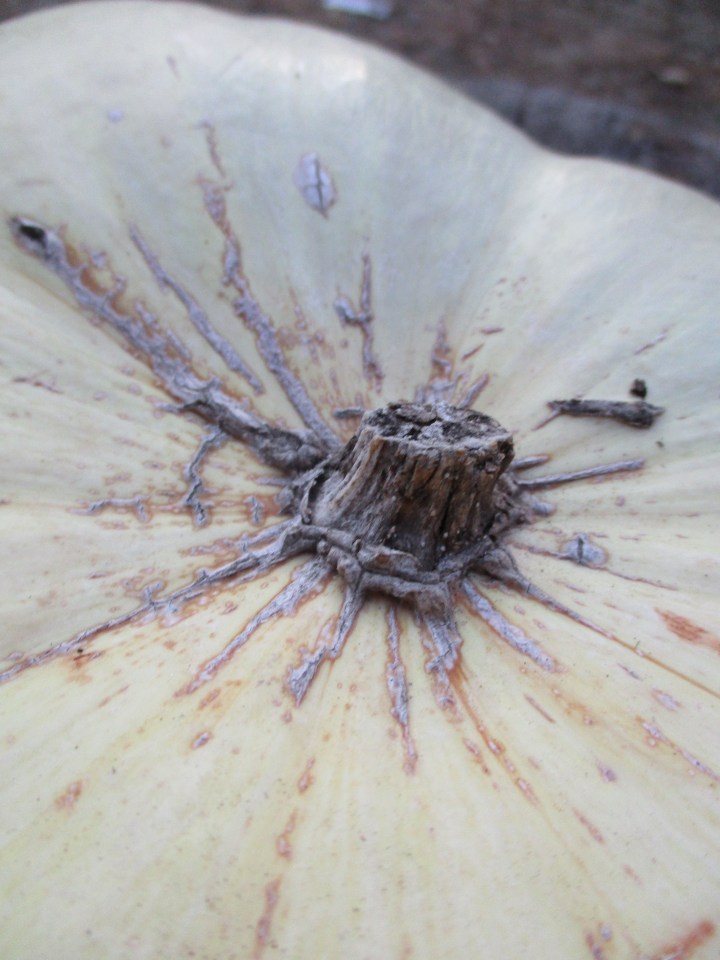
 Things might have gone better for Cinderella if she had taken a Buick to the ball instead of that detrimentally punctual pumpkin coach. It was on such a tight schedule! It might have seemed like a good idea on the way too the ball. It certainly was a unique ride. The problem was that it made no accommodation for Cinderella’s tardiness at midnight. It adhered firmly to its own strict schedule.
Pumpkins and other vegetables are just as punctual in our own gardens. Pumpkin leaves eventually succumb to mildew late in summer. This year, they might be a bit more worn out than they typically are by this time, because of the surprisingly warm weather a while back. They are just finishing up anyway. They only need to sustain fat pumpkin fruit as it ripens for the next month or so.
Some of the oldest leaves might get cut away if they get so dry and crispy that they are obviously no longer viable. The best and most functional leaves will be farthest from the roots. Unfortunately, that is also where the ripening pumpkins are. They need the leaves to sustain them, but they also need sunlight to color well. Leaves that shade fruit should be bent away, or cut away if necessary.
For even ripening, pumpkins should be grown on their sides, and turned or rolled a quarter turn every few days or so. There is no precise formula, but they should not be turned in the same direction too much. Otherwise, they get twisted off their stems. They can be grown standing on their flower ends if they sometimes get turned on their sides to expose their flower end undersides.
Regular turning also promotes symmetry, and should prevent the fruit from sitting in the same position long enough to rot. Just to be safe, in well watered gardens, or where the soil is constantly moist, it might be a good idea to put small boards under pumpkins. Unfortunately, there is no remedy for damage caused by the heat. Damaged pumpkins will just make uglier jack-o’-lanterns.
Big bright orange pumpkins with thin shells work best for jack-o’-lanterns. Smaller brownish orange pumpkins with thick shells are grown for baking and pies. Their external appearance is not as important, although well ripened pumpkins have better flavor. White, pink, green, yellow, red and even blue gray pumpkins are just weird. They look great for Halloween, but do not taste like much.
 This has very little to do with gardening; but like I said in the description of this blog, anything goes when it comes to the ‘Elaborations’ category. Anyway and furthermore, I do not like to write about garden sculpture, garden art, or any of those knick-knack fads that involve putting more than plants and the necessary infrastructure to sustain them into the garden. I do happen to like certain tasteful garden statuary, like Saint Francis, or Saint Fiacre (the rarely seen ‘real’ patron saint of gardening) or any of the saints; but only if I have a suitable space for them. This is nothing like that; but is just excellent enough that I wanted to mention it.
 Brent and I met in college, when we were assigned to the same dorm room in Fremont Hall at Cal Poly in San Luis Obispo. Our similarities were remarkable. He came two hundred miles north from west of Los Angeles. I came two hundred miles south from west of San Jose. We were both the middle of three children, although I had just acquired an extra younger sister the year before. While the other boys we grew up with were playing with Hot Wheels, Brent and I were busy planting miniature trees around the miniature roadways. His childhood dog was Speckles. Mine was Freckles. We were weirdly similar prior to September of 1986, but have been perfecting our differences since then.
 Sir Isaac Newton had something to say about an apple that was a victim of gravity. My high school physics professor was even better. He taught us all about velocity, force, inertia, vectors and much of what he had to teach us about physics with the help of a very ripe persimmon . . . and an insipid green 1976 Datsun B210.
 Many people have a favorite color. I learned how seriously some people can take their preference for a particular color when I was in high school, and taking care of the yardwork for a few homes in the neighborhood. There were three tract homes next to each other. One was grayish blue, with a silvery blue Sedan deVille in the garage, and a garden of blue flowers. The middle house next door was soft amber yellow, with a buttery yellow Oldsmobile 98 in the garage, and a garden of exclusively yellow flowers. The house next door to that was iron oxide red, with an exquisite rich red Electra in the garage, and a garden of, you guessed it, red flowers.
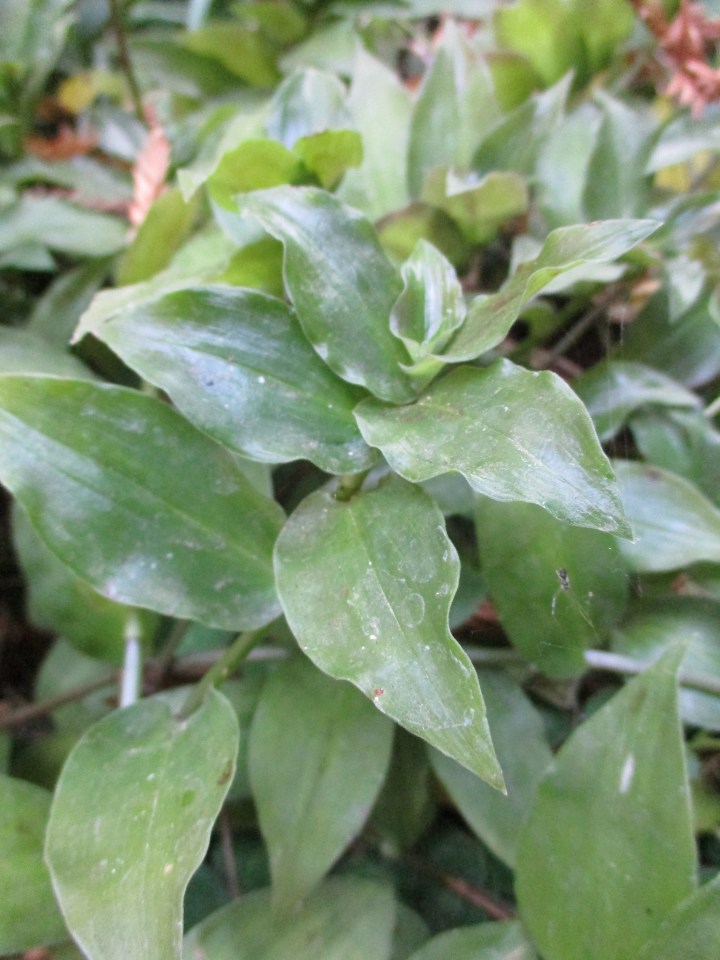 It could not have survived out in the desert for forty years. Wandering Jew, Tradescantia fluminensis, would have desiccated before its first summer. Well watered gardens are a completely different situation. Wandering Jew can become invasive and mix with other more desirable ground covers, only to die back and turn dark brown through winter. It starts over the following spring.
 Philodendrons, dracaenas, ferns, palms or any sort of tropical foliage inside our homes only create an illusion of closeness to nature. Naturally, these plants live in very different climates, mostly thousands of miles away. Not only do they have no business in our homes; they have no business on the North American Continent. Some can live in the garden, but only with unnatural watering.
