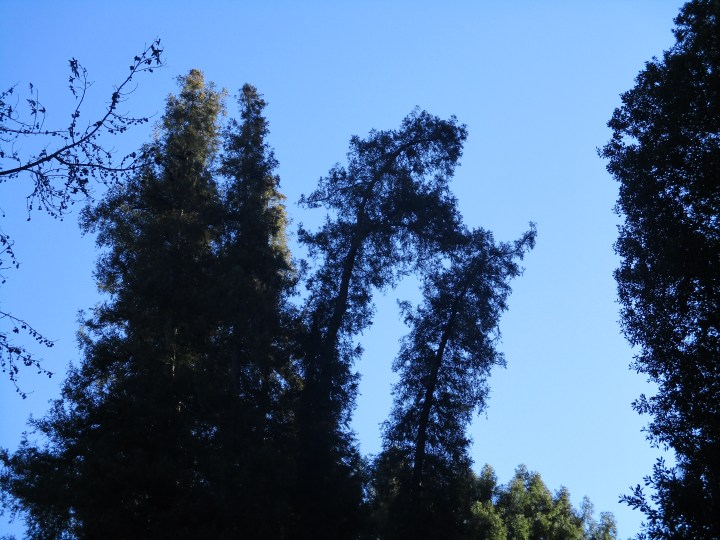
 Coastal redwood, Sequoia sempervirens, are remarkable stable trees. They rarely fall, which is how they get to be thousands of years old. They prefer to live in groups, where they mesh their roots together, and shelter each other from wind. Those that live outside of a group stay shorter than forest trees, and typically develop multiple trunks that function as a group.
However, they are also remarkably weak in regard to their structural integrity. Limbs are easily broken away from their vertical trunks by wind. Snow, which is rare within their natural range, causes significantly more damage than wind, which is probably why their natural range does not extend into snowy climates. Trees with co-dominant leaders (double trunks that divide from single trunks above grade) have potential to split at the union of the double trunks. Such unions are typically at such acute angles, that the trunks press against each other rather than fuse together through impenetrable compressed bark.
Leaning redwoods such as these that were shown earlier this morning, are potentially hazardous, not because they are likely to fall over, but because they might be likely to break. The trunks are designed to support weight vertically. The asymmetrical distribution of weight supported by these two trunks exerts inordinate lateral tension on the trunks. To make matters worse, the trunk to the left is divided into two co-dominant leaders, although the union does not appear to be at a typically acute angle. (The lower trunk is now behaving more as a big limb than as a secondary trunk.)
I would guess that these two trees are genetically identical trunks from the same root system. Such seemingly pliable trunk structure is uncommon, and it is very unlikely that two such similar trees would just coincidentally appear within such minimal proximity to each other. Redwoods often develop multiple trunks from the same root system, particularly as they regenerate after harvest.
The good news is that these two trunks have survived like this long enough to develop ‘reaction’ wood, which is just like it sounds; a bit of extra wood to compensate for compression on the inside of the bend. Also, they are sheltered from wind by the other redwood in the forest around them.
 This landscape is nothing fancy. It is out in front of a fast food establishment on Ocean Street in Santa Cruz. It is low maintenance, and starkly simple. It would be nice if the so-called ‘gardeners’ would cut back the African iris and English lavender a bit better, but they may have left them like this so that they are less likely to get trampled. The colored chips get replenished regularly, and the trash gets harvested quite efficiently. As I said, it is nothing fancy. The only remarkable feature had been this exemplary crape myrtle in the middle.
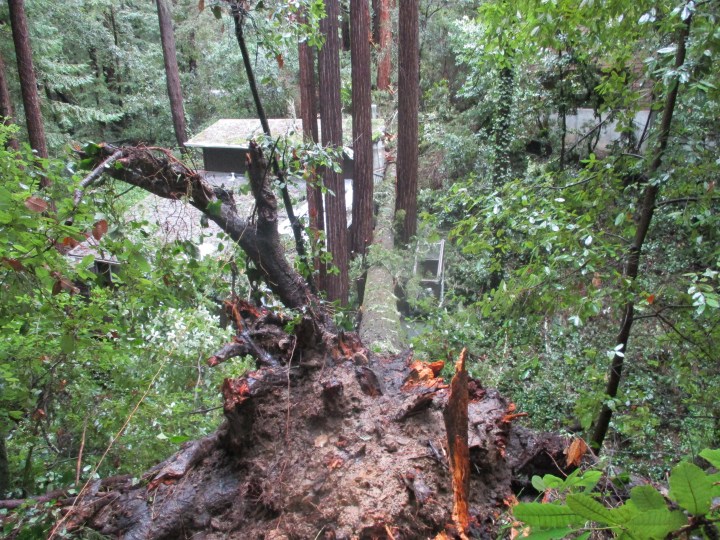 If there were lawns and fences in this neighborhood, the grass would likely seem to be greener on the other side of the fence. In this situation, the greenhouse probably seemed to be more comfortable than being left out in the storm. This tall Douglas fir tree dropped in to find out. It did not go well. What remains can be seen in the middle of the picture above, just to the right of the fallen fir, and in the close up of the picture below.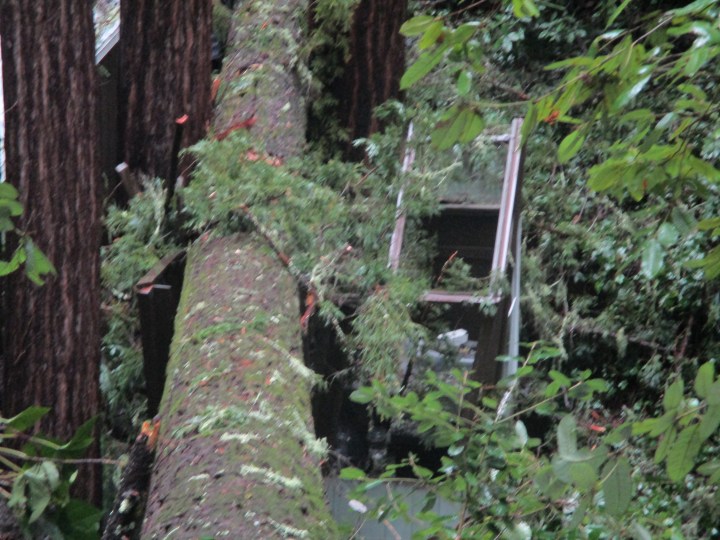

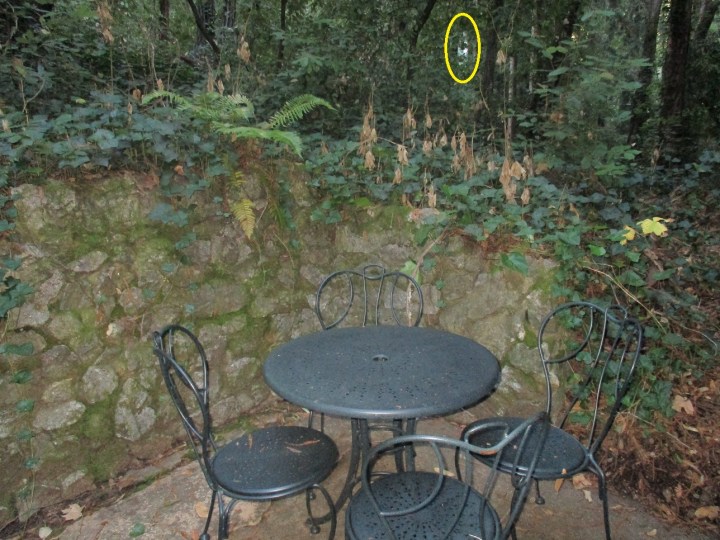
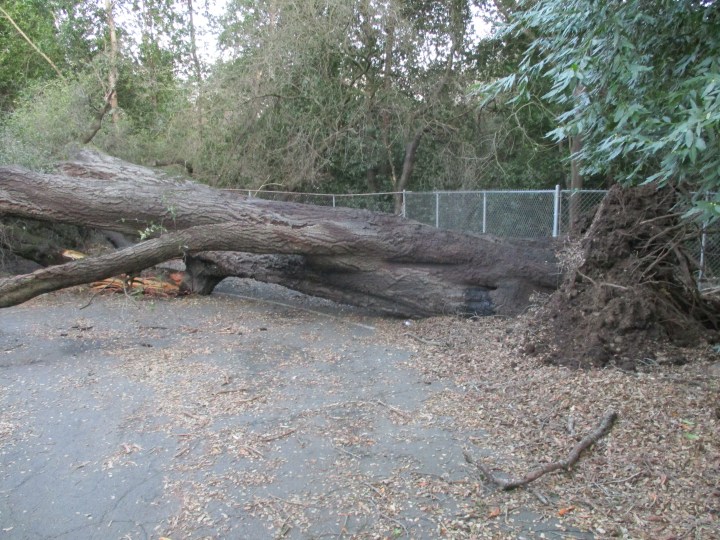
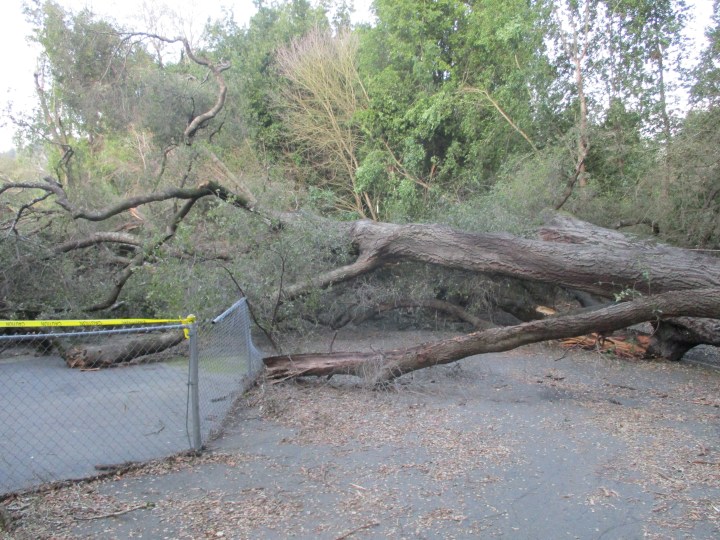
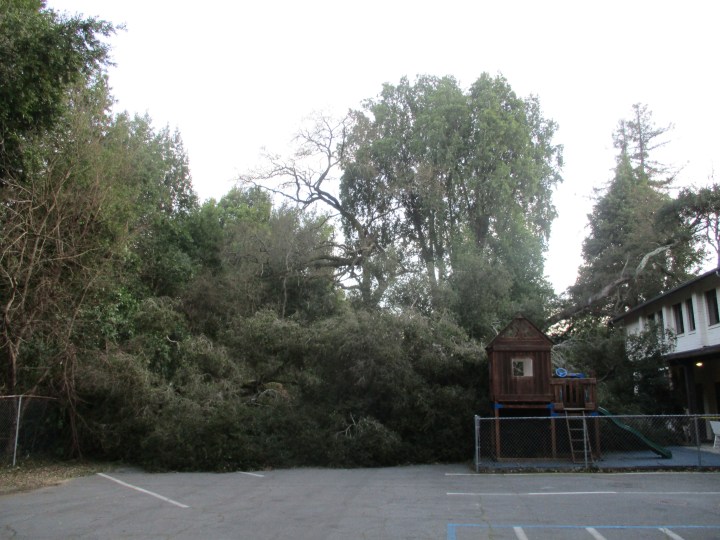
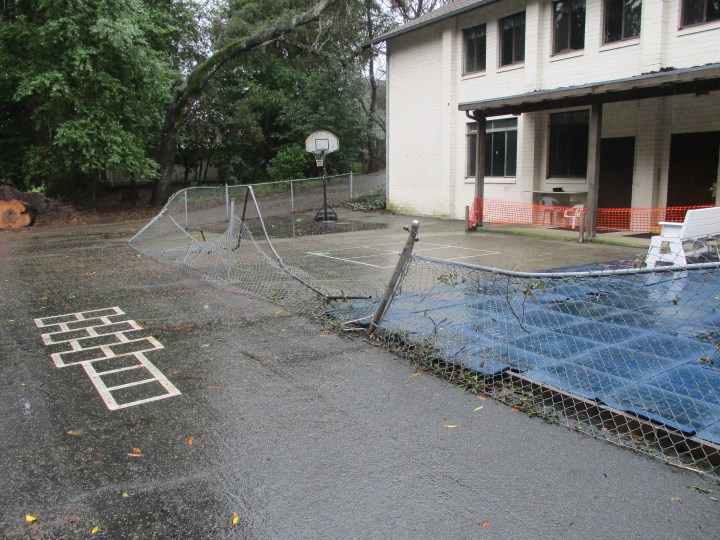
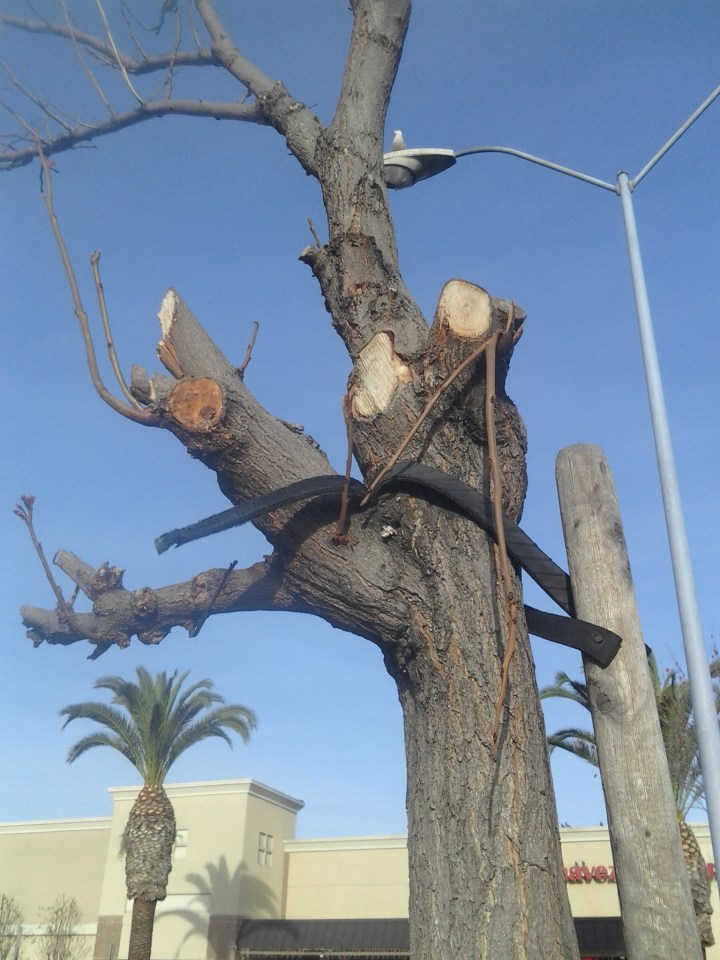 Okay, we get it; someone really hates trees. That’s fine. Trees are not for everyone. Just cut it down. Put it out of it’s misery. Take away the useless lodgepole stake and strap along with it. Maybe those Canary Island date palms that look like the home of SpongeBob SquarePants in the background will recover from their own form of abuse to compensate for the loss of this seemingly unwanted goldenrain tree.
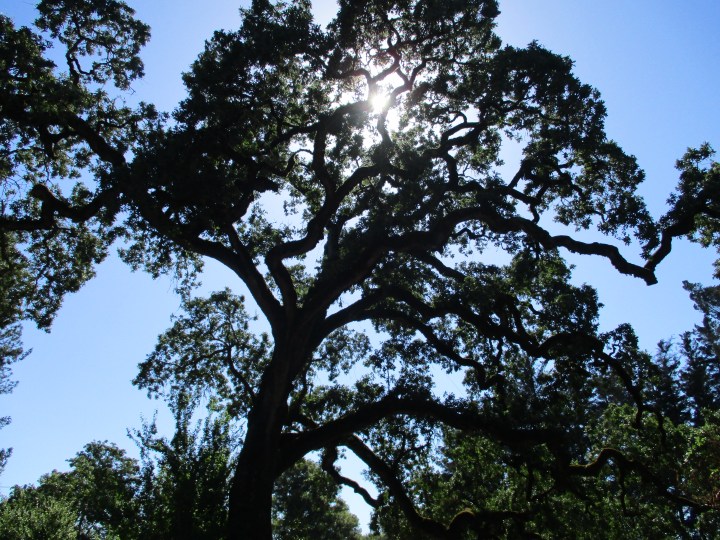 It is no surprise that there are many different types of physicians within the medical industries. Pediatricians, surgeons, cardiologists, dermatologists, and all sorts of ‘doctors’ are all recognized for their particular medical specialty. Yet, almost all horticultural professionals are known simply as gardeners or landscapers, even though many never work directly in gardens or landscapes.
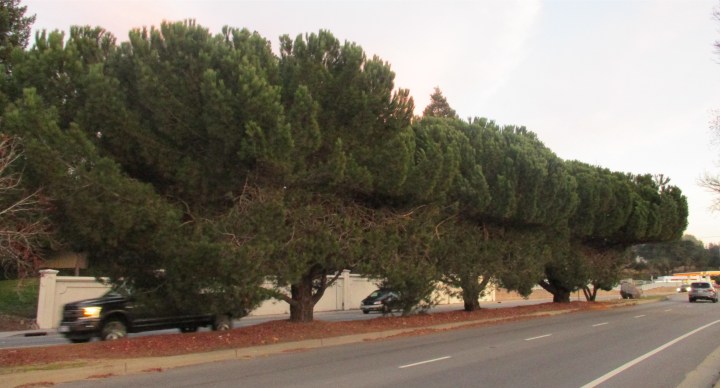 Many arborists mark certain lengths on their pole saws and pole pruners. When stood upright, these marks designate the standard heights for minimal clearance pruning. Not so many need to mark the height of minimal clearance for walkways, since they will prune away anything that is within reasonable reach with hand tools from the ground. The minimal clearance above parking spaces is not so easy to guess at, so is more likely to be marked on poles. So is the minimal clearance over roadways, where the lowest limbs must be high enough to be out of the way of campers and freight trucks.
 Modern fruit trees have been so extensively bred to produce abundant and unnaturally large fruit, that most types are unable to support the weight of the fruit that they can produce each season. Without specialized dormant (winter) pruning to limit production, the weight of excessive fruit breaks and disfigures the limbs of the trees that produce it. Fruit becomes too much of a good thing.


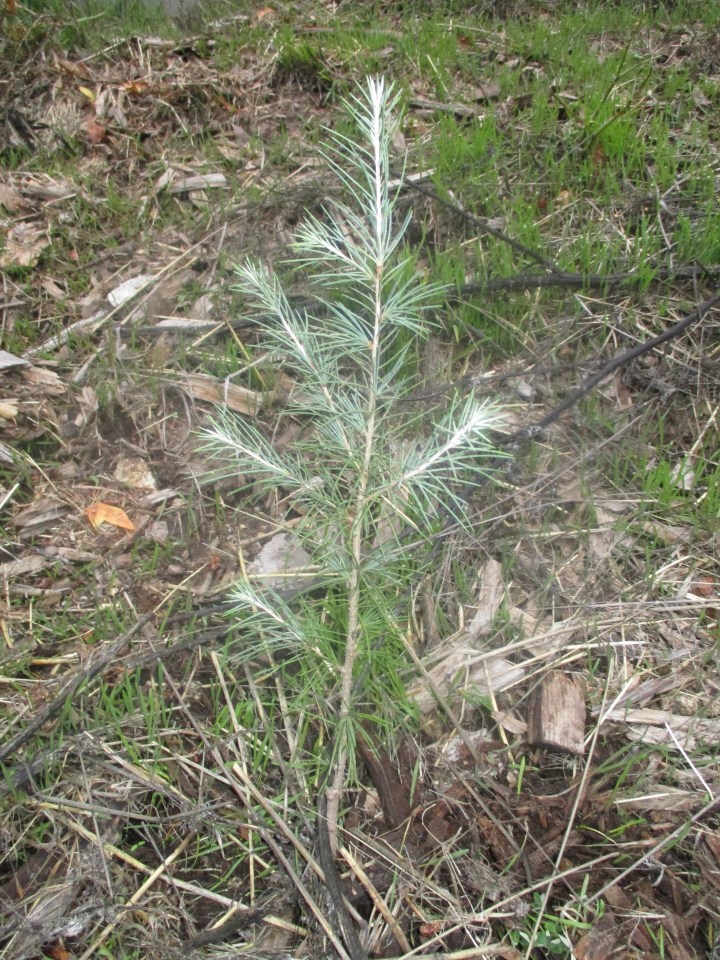
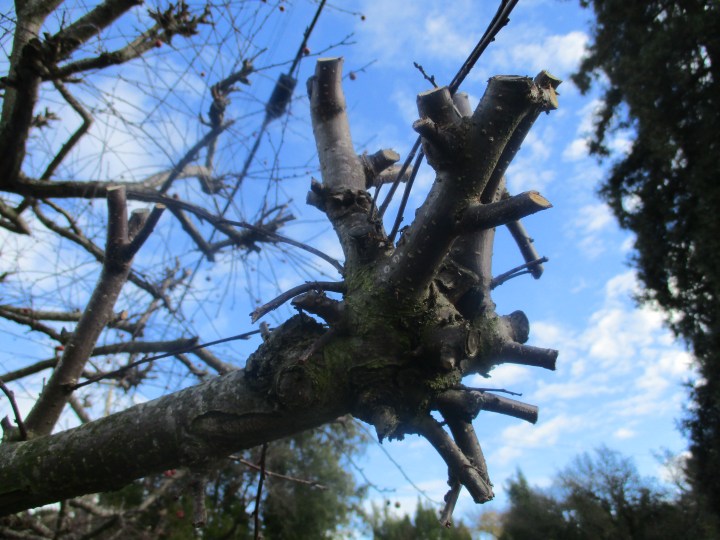 From the same landscape that, last autumn, was so dutifully deprived of its elegantly cascading rosemary and soon to be fiery autumn color of Boston ivy,

 Tony Tomeo