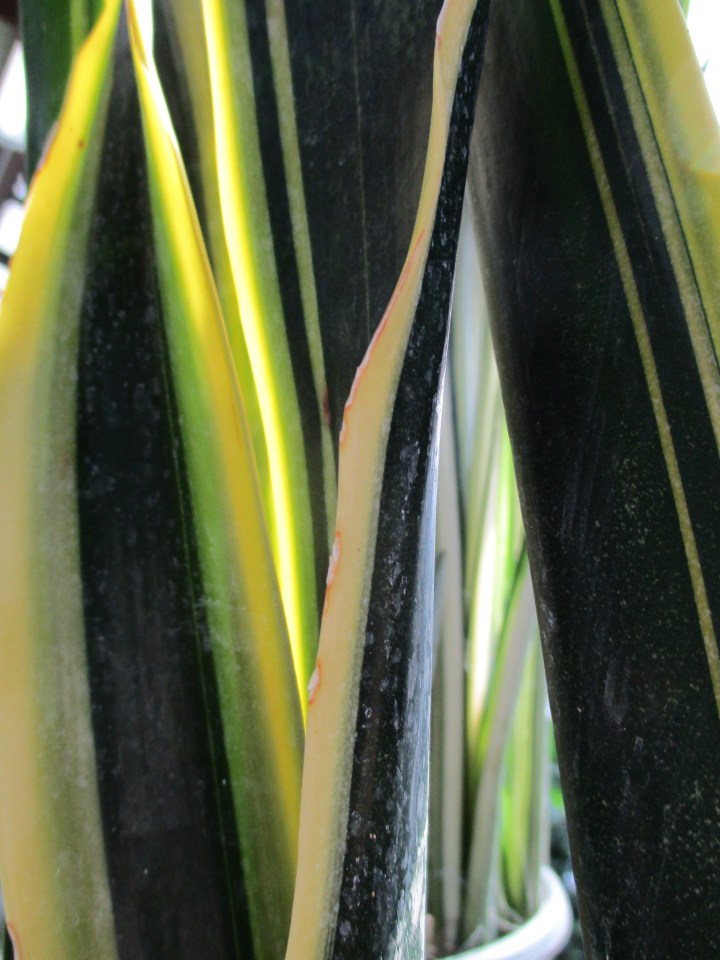
Foliage needs sunlight for photosynthesis. Foliage needs air for respiration. Roots need moisture to sustain foliage. Houseplants can technically get all of what they need from the confinement of their pots within the interiors of homes and other buildings. They only require sufficient moisture to be delivered to them, and sufficient sunlight from windows. The air is the same that we all utilize.
However, there is no substitute for nature. While hydroponics and synthetic light facilitate yet more deprivation of what is natural, the plants involved would appreciate more consideration. Without exception, domesticated plants are descendants of plants that grew wild somewhere. Those that dislike local weather would be pleased with the weather of their respective ancestral homelands.
Most of the popular houseplants that are grown for their lush foliage originated from tropical forests. Many were understory plants that prefer the shade of larger trees. That is how they tolerate the relatively shaded interiors of buildings. Now that they are here as houseplants, they appreciate shelter from frost. They probably miss rain, humidity, sporadic breezes and tropical warmth though.
Rinsing tropical foliage plants in the shower eliminates some of the dust that they accumulate where air stagnates. Rinsing them out in the garden is even better because it does not make such a mess in the shower. What is even better than both of these options is allowing a gentle rain to rinse the foliage. Plants only need to be moved to a windless spot prior to an expected rain shower.
The weather was much too cool earlier in winter. There will be no rain later in summer. This time of year, and again next autumn, the weather is safely mild; and eventually, a few showers are likely. Timing is critical. Plants should be brought out just prior to rain, and brought in before the weather gets sunny. Foliage that has always been sheltered is very sensitive to scald from direct sunlight.
Saucers and pots can be cleaned while outside. Crowded plant can be repotted.


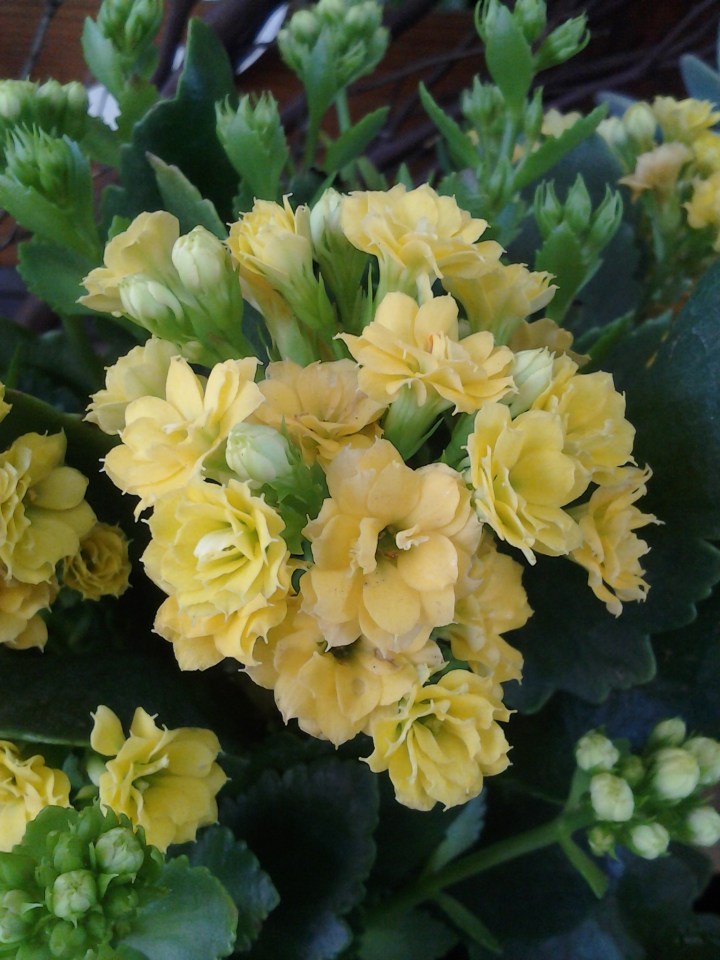 It is unfortunate that, like Easter lilies and poinsettias, most kalanches, Kalanchoe blossfeldiana, are enjoyed while actively blooming, and then discarded as their blooms fade. It is so easy to simply snip out the deteriorating flowers, and grow the small perennials plants for their appealing succulent foliage until they bloom again. They do not get much more than half a foot tall, so can stay in small pots indefinitely. They seem to prefer the porosity of clay pots. Because they can rot, they should be watered when the surface of the soil seems to be getting dry, and their drainage saucers should not be allowed to hold water too long. Kalanchoes like bright but indirect sunlight. They can be acclimated to direct sun exposure, but might seem to be somewhat stunted. If brought in before frost, they can be happy out on a patio. The clustered small flowers can be white, pink, red or bright or pastel shades of orange or yellow.
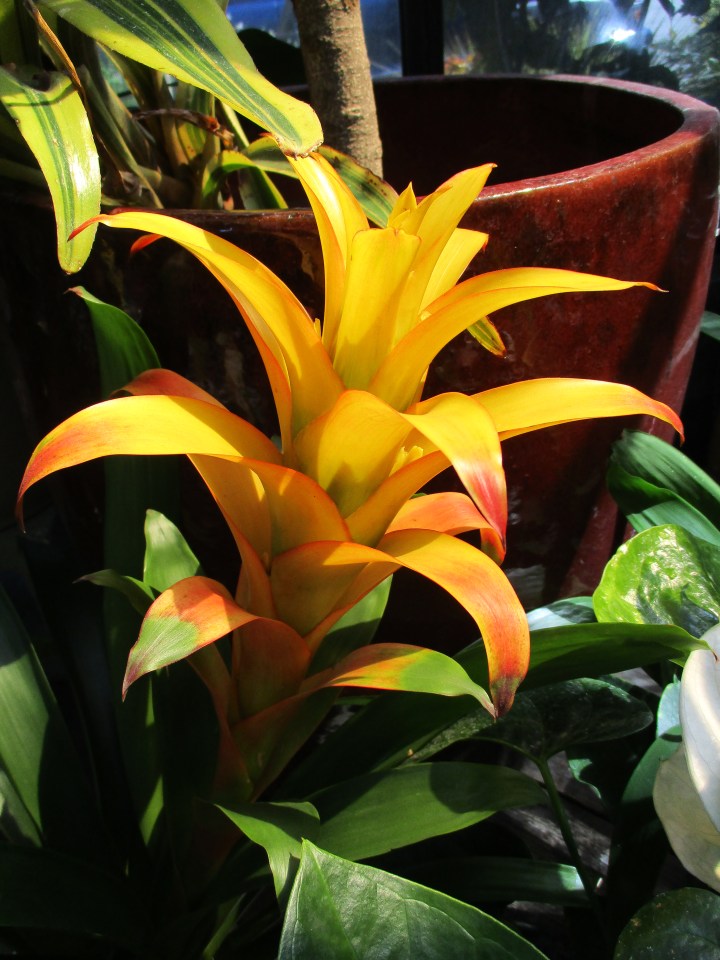 Just like potted chyrsanthemums, azaleas, hydrangeas and poinsettias, potted specimens of Guzmania magnifica are popularly purchased while beginning to bloom, enjoyed as house plants through a long bloom cycle, but then discarded as bloom eventually deteriorates. They are rarely allowed to produce new pups that can be divided and grown into fresh new plants to bloom later.
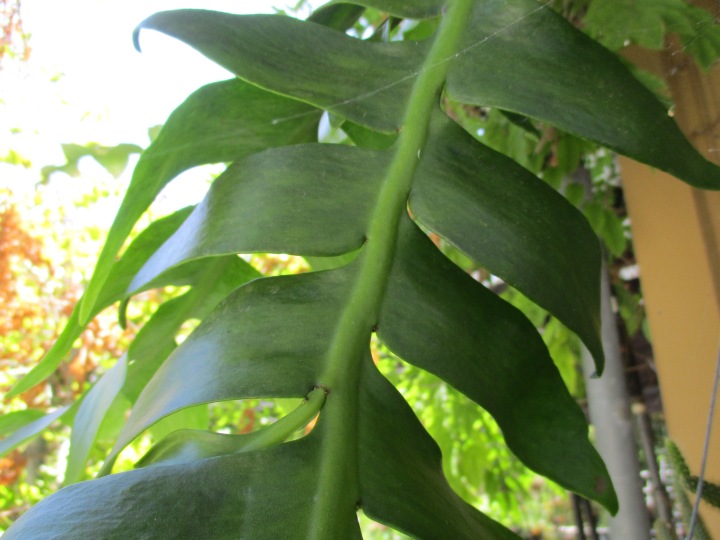 Plants can inhabit nearly every climate on Earth. They live in hot and dry deserts, cold arctic regions, rainforests and just about everywhere in between. Plants seem to have it all figured out. Some even know how to live in our homes as houseplants, although they probably did not plan it that way. Most houseplants are tropical plants that are naturally endemic to tropical ecosystems.
 Pavement serves a purpose in a landscape. So does decking. They are the flooring of the outdoor spaces that are used for outdoor living. Patios and decks are where we barbecue and dine. Walkways and porches are how we get around the exteriors of our homes. Driveways are where we park cars. For what they get used for, they are better than turf grass, ground cover or bare soil.
 Tony Tomeo