Six on Saturday: Urban Flight


The CZU Lightning Complex Fire continues to burn. Consequently, I had been unable to return home until just a few hours ago. My garden survived the abandonment better than expected. I will get pictures for next week. These pictures are from where I was in the Santa Clara Valley. I noticed a few features that I forgot that I disliked about urban situations. Of course, Rhody found something to appreciate about our situation there. He was in no hurry to return home.

1. Breeze in the silver maple should be appreciated on a warm day. While the fires are burning in the Santa Cruz Mountains just several miles away, an absence of breeze would be preferred.

2. Raindrops should likewise be appreciated. Unfortunately, there were no more than a few, and certainly not enough to slow a fire. They only indicated that more dry lightning was possible.P00829-2

3. Smoke was thicker over the Santa Clara Valley than I can ever remember. All those utility cables crowded by too many trees are normal though. I thought this picture was rather artistic.P00829-3

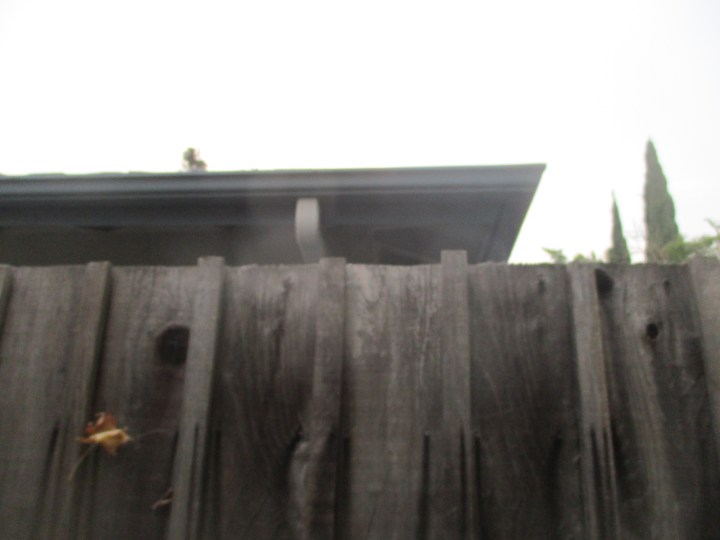
4. Fences are a bother too. This one shades lower branches of a nearby pear tree, that grew up with a shorter slat fence. The neighbor’s garage shows how close the homes are to each other.P00829-4
5. Soil is fortunately as awesome as it has always been in the Santa Clara Valley. It is unfortunate that so few of the more than a million who live here now will never bother to experience it.P00829-5

6. Rhody expressed his opinion of my request that he stay off of the sofa while here. Does the floral pattern of the upholstery qualify this as a horticultural subject? We all want to see Rhody! P00829-6

This is the link for Six on Saturday, for anyone else who would like to participate:

https://thepropagatorblog.wordpress.com/2017/09/18/six-on-saturday-a-participant-guide/
 

Six on Saturday: Do You Know The Way To San Jose?


These six are not from my garden or landscapes, since I am away from home for now.

Before the evacuations, and before I was even aware of the local wildfires, I came to the Santa Clara Valley for unrelated obligations. Evacuations started in a neighboring town the following Wednesday morning. By Thursday morning, my region was evacuating. I have been here for several days and may be here longer than I need to be if I am unable to return home afterward.

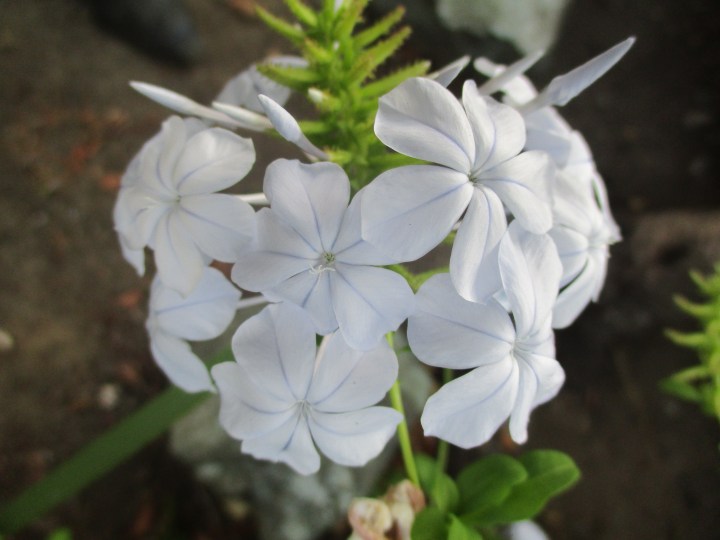
1. Plumbago auriculata – looked pretty when I planted it here, and before I knew how rampant it can get. It really wants more space. The blue is almost too bland. The foliage is rather pale.P00822-1

2. Pelargonium peltatum – is the only one of these six that I did not plant here. I have no idea where it came from. I know this species is nothing special, but this color is too pretty to ignore.P00822-2

3. Chamaecyparis lawsoniana ‘nidiformis’ – is rare here, perhaps because it dislikes a chaparral climate. This specimen is not much bigger than it was when I installed it three decades ago.P00822-3

4. Juniperus chinensis ‘Shimpaku’ – sound as if it is related to Pikachu. Bonsai artists appreciate it more than I do. It is sculptural like a diminutive Hollywood juniper, but grows very slowly.P00822-4

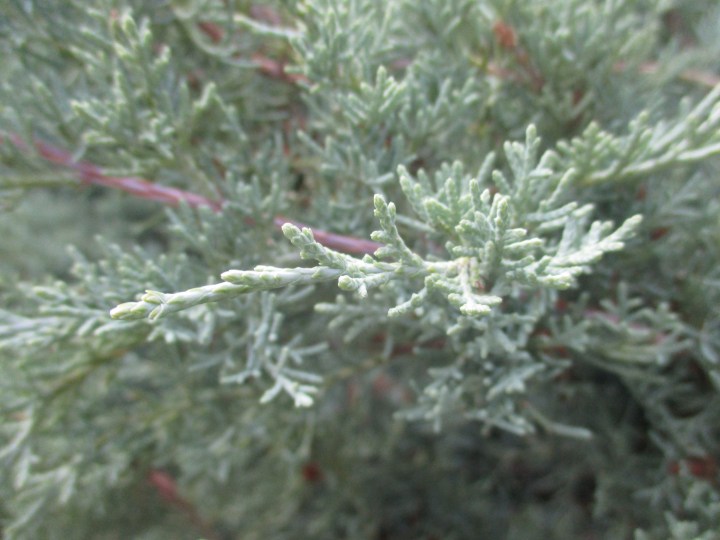
5. Juniperus chinensis ‘Hetzii (Glauca)’ – is known by a few species or hybrid species names, including X media, X pfitzeriana and virginiana, rather than chinensis, most without ‘Glauca’.P00822-5

6. Acer saccharinum – is not one of the favorite maples within its native range; but it happens to be one of my favorites. I grew this one out front by layering a stem from its parent out back.P00822-6

This is the link for Six on Saturday, for anyone else who would like to participate:

https://thepropagatorblog.wordpress.com/2017/09/18/six-on-saturday-a-participant-guide/

Six on Saturday: Feast Of The Assumption


August 15 is the Feast of the Assumption, which celebrates when the Blessed Virgin Mary, at the end of her life, was assumed into Heaven, body and soul. In some cultures, it is known more simply as the Assumption, so is not considered a Feast Day. That would be fine with me. The vegetable garden is rather pathetic for the middle of August. There are plenty of cucumber, and more summer squash than we know what to do with, but the rest of the produce is slim pickings.

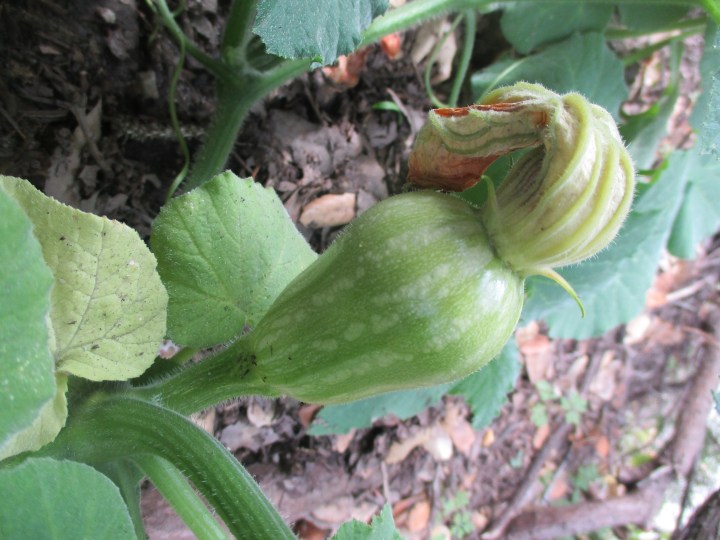
1. Squash – of this sort will not be ready until after the first frost next winter. Nonetheless, it seems to be maturing slowly. It should probably be substantially larger for this late in summer.P00815-1

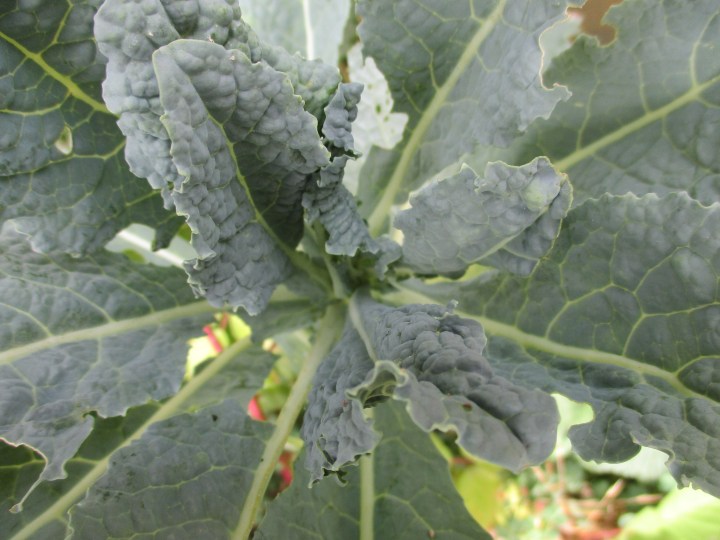
2. Kale – could be either late or early. It is a spring or autumn vegetable here. Seed was sown late, but should have been later to be ready for autumn. It should survive, and start over later.P00815-2

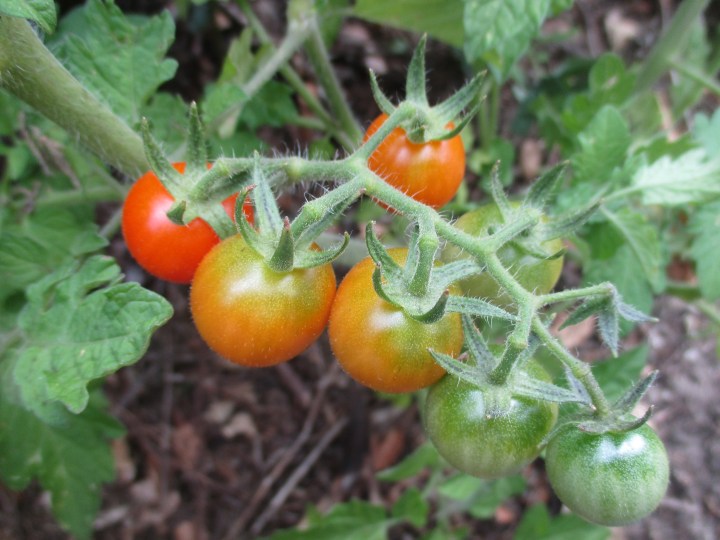
3. Tomato – are better than they look here. The cherry tomatoes do not ripen in clusters though. I just pluck the ripe fruits off individually. None of the bigger tomatoes have ripened yet.P00815-3

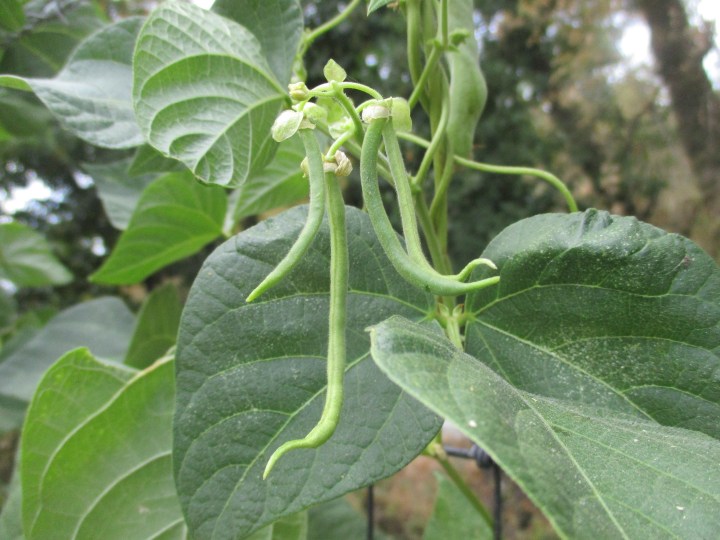
4. Bean – vines have grown like weeds, but are just beginning to produce. I have never grown this variety before. The variety that I had always grown starts producing earlier, while young.P00815-4

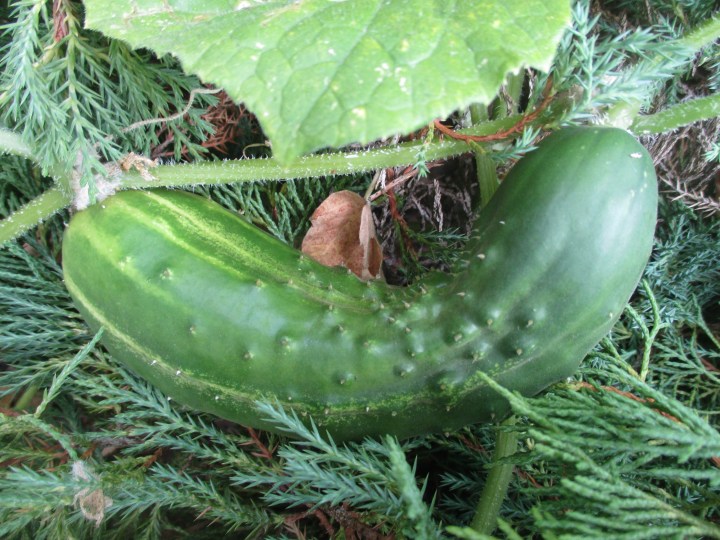
5. Cucumber – production has been adequate. However, because I have not been watering regularly enough, the cucumber are rather bitter. I like how the vines climb up over the junipers.P00815-5

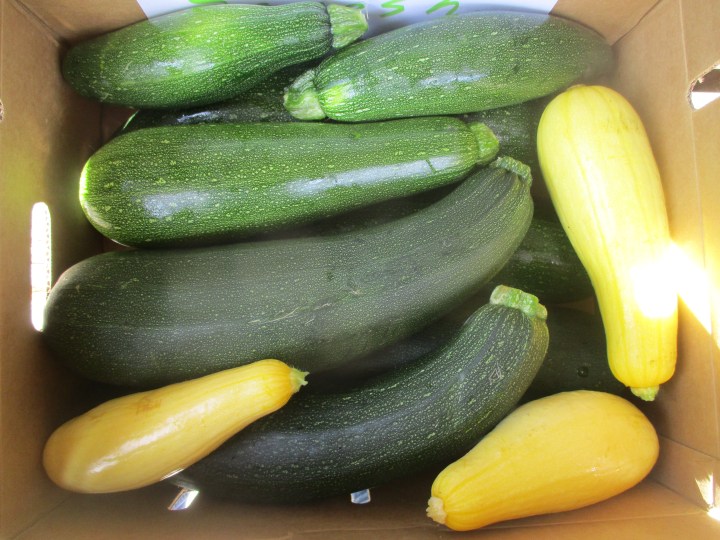
6. Squash – has been too productive! These are the summer squash, mostly zucchini, for the neighbors. However, there is nothing ‘ini’ about those that could not get harvested early enough.P00815-6

This is the link for Six on Saturday, for anyone else who would like to participate:

https://thepropagatorblog.wordpress.com/2017/09/18/six-on-saturday-a-participant-guide/

Six on Saturday: Suburbia II

As I said last week, the Santa Clara Valley is the best place in the entire Universe for horticulture. That is where these pictures came from. Although I planted only the Ilex aquifolium of the second picture, I collected all six of these plants from various sources over the years. They have been quite happy here. I will now be taking more copies or originals of all but Ilex aquifolium.

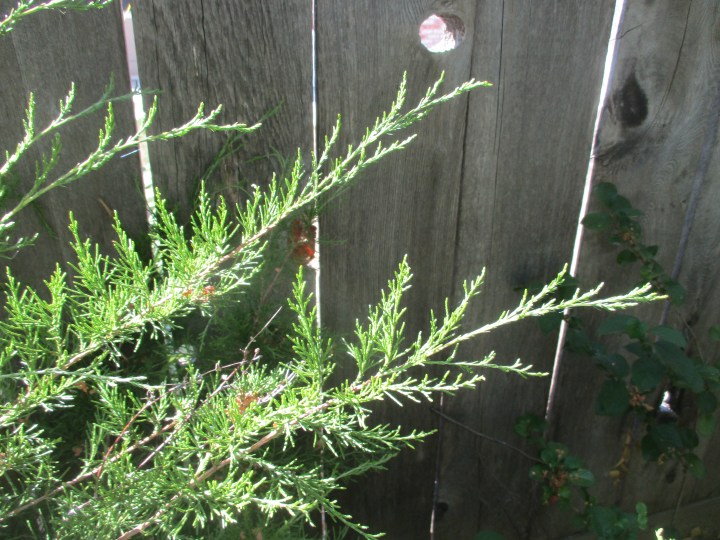
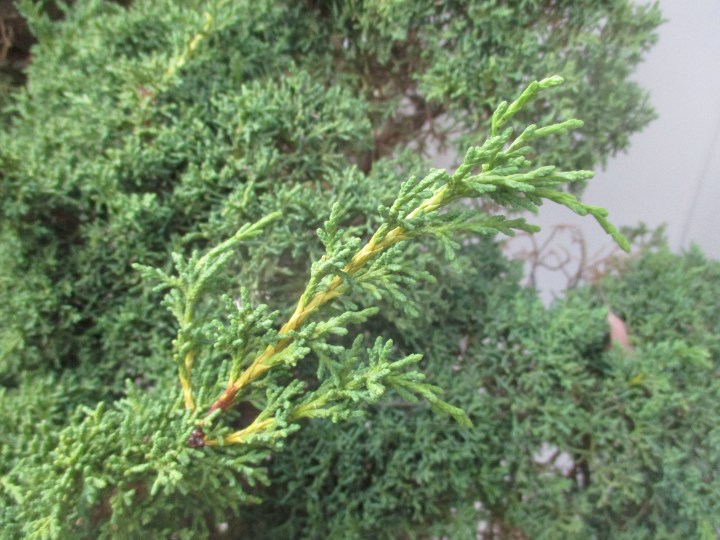
1. Juniperus virginiana – is my favorite this week. I know it is uninteresting to those who are familiar with it, but it happens to be one of only a few that I brought from Newalla in Oklahoma.P00808-1

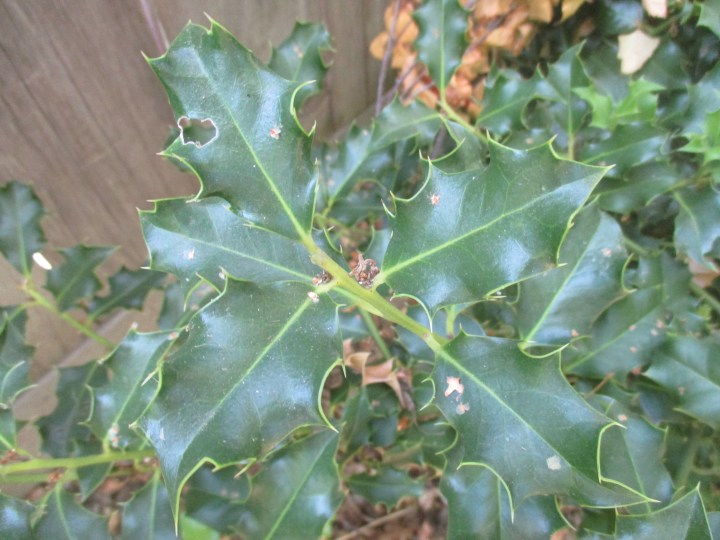
2. Ilex aquifolium – is the only one this week that I actually purchased from a nursery, while in school in San Luis Obispo in the late 1980s. It is uncommon (and unpopular) here. I still dig it.P00808-2

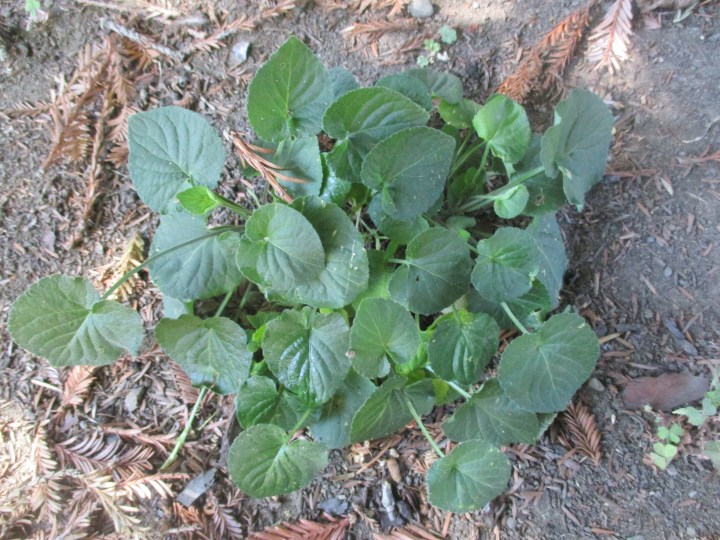
3. Viola odorata – came from Santa Clara while I was in high school. (I thought) I wanted it because it blooms white. It is not very pretty, but I can not get rid of it. Violets should be ‘violet’.P00808-3

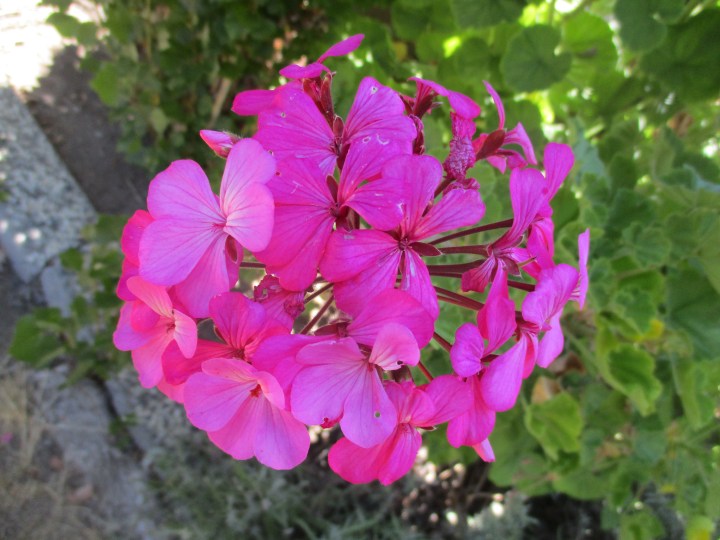
4. Pelargonium hortorum – is not the original that I found in a compost pile in Montara in about 1980, but is very likely the same ‘unimproved’ species or whatever it is. I found it downtown.P00808-4

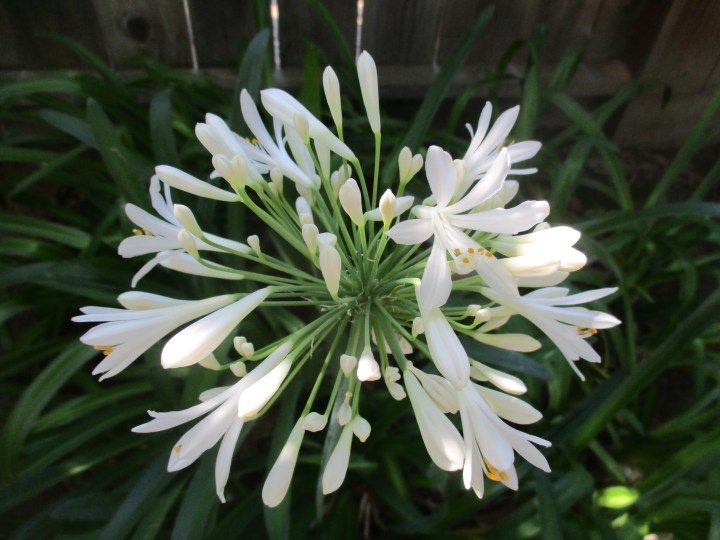
5. Agapanthus orientalis – from Watsonville in 1992, is one of my two favorite agapanthus; because it is white, but is otherwise identical to my original blue agapanthus from the late 1970s.P00808-5

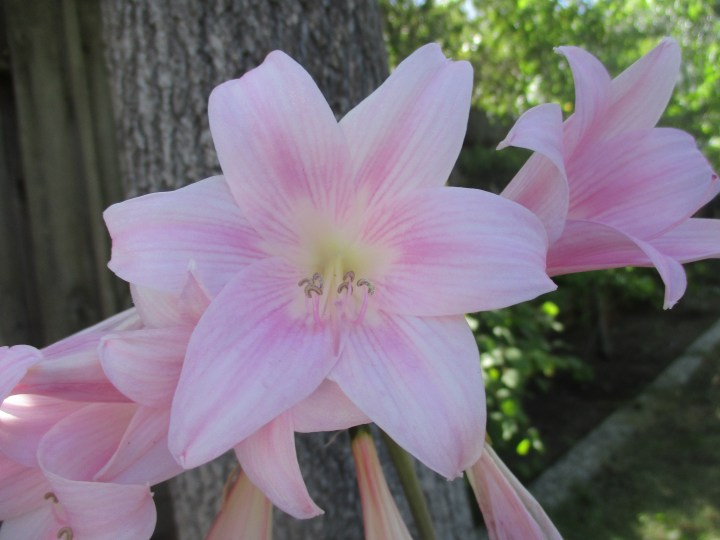
6. Amaryllis belladonna – came from Hoot Owl Creek in Oklahoma. It lived in the same garden with my Iris pallida! I know it is no more interesting that these others here, but it has history!P00808-6

This is the link for Six on Saturday, for anyone else who would like to participate:

https://thepropagatorblog.wordpress.com/2017/09/18/six-on-saturday-a-participant-guide/
Six on Saturday: Suburbia

The Santa Clara Valley is the best place in the entire Universe for horticulture. Yet, few of the nearly two million people who live there now appreciate it, or realize that some of the area was still occupied by orchards only half a century ago. These pictures are from the garden where I lived before graduating from high school, and subsequently planting the peach tree #5 in 1985. Apricots and cherries were finishes quite a while ago. Peaches will be ready soon. These are not orchard trees, but they are happy to be here.

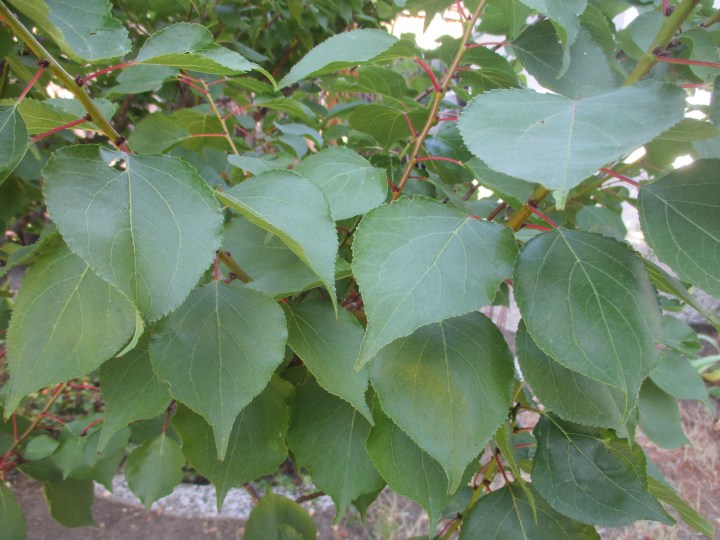
1. Garden Annie apricot – is, as the name implies, a garden variety rather than an orchard variety. With surprisingly minimal pruning, it stays compact and proportionate to a home garden.P00801-1

2. Stella cherry – is likewise a garden variety. It was selected because it is self fruitful, so does not need a pollinator. It also has stayed relatively compact and proportionate to limited space.P00801-2

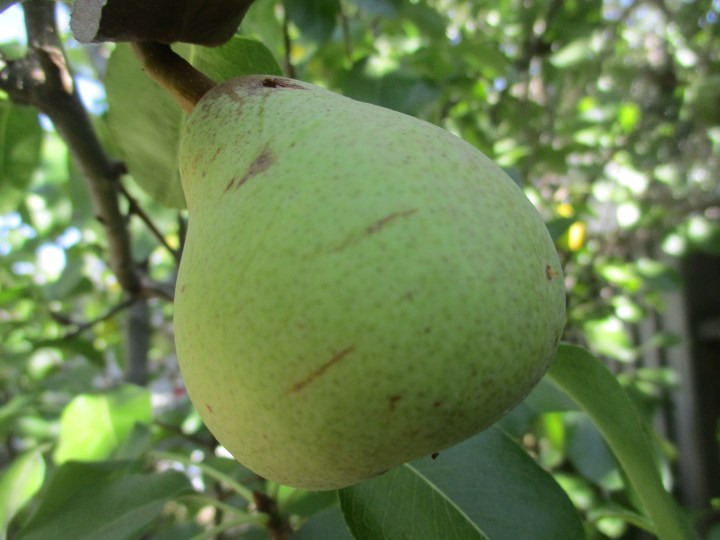
3. Anjou pear – is also known as D’Anjou or Beurre D’Anjou pear. Pears and apples were not common in the orchards of the Santa Clara Valley, but were grown in the Santa Cruz Mountains.P00801-3

4. Golden Delicious apple – is more commonly and more appropriately known as Yellow Delicious apple. It was selected as an all purpose ‘only child’ apple for baking, cooking or eating fresh.P00801-4

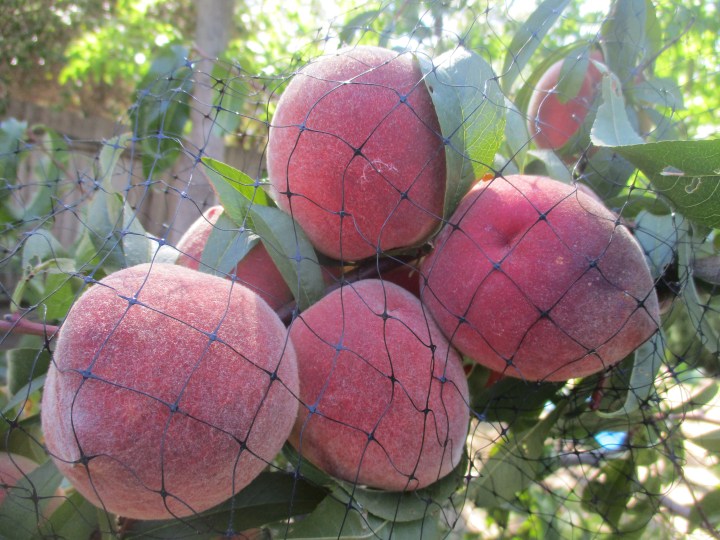
5. seed grown peach – came here from a compost pile in Santa Clara in about December of 1985. The fruit is excellent. However, after all these years, I have never been able to propagate it.P00801-5

6. Rhody – performs pre-emergent weed abatement by collecting large quantities of burclover seed. He does not enjoy getting them removed from his finely textured fur afterward though.P00801-6

This is the link for Six on Saturday, for anyone else who would like to participate:

https://thepropagatorblog.wordpress.com/2017/09/18/six-on-saturday-a-participant-guide/
Six on Saturday: Nursery Schooled

Horticulture can be such a bad habit. (Where have I heard that before?) Once one learns how to grow horticultural commodities, it is difficult to stop. Pruning scraps get processed into more cuttings. Self sown seedlings get relocated instead of discarded. Extra pups (divisions) get salvaged as if the garden can accommodate more. There are several acres of landscapes here, but it is not enough for what we could grow.

1. While dividing a bunch of Morea bicolor, I found a single shoot of Morea iridioides. How did that get in there? I should have discarded it. Perhaps it will grow to become something useful.P00725-1

2. Pruning scraps of zonal geraniums got plugged as cuttings, but then did not get separated as they grew. There may be a dozen in there. They are nice, but we really do not need any more.P00725-2

3. When composting just is not good enough, plug cuttings instead. There may be a dozen Ponderosa lemon cuttings here. One is too many. They are not grafted, so will be on their own roots.P00725-3

4. Boston ivy is fortunately not as abundant as I thought it would be. We wanted four, so I plugged a hundred cuttings. It seemed to make sense at the time. Most did not survive. Plenty did.P00725-4

5. This self sown bigleaf maple is not in the nursery, but I want it to be. It should not remain where it is. I may dig and can it this autumn, as if there is a situation into which to install it later. P00725-5

6. These summer squash are not from the nursery, but from right downstairs. They are happy with all the runoff they get from above. Neighbors have been getting many pounds of squash.P00725-6

This is the link for Six on Saturday, for anyone else who would like to participate:

https://thepropagatorblog.wordpress.com/2017/09/18/six-on-saturday-a-participant-guide/