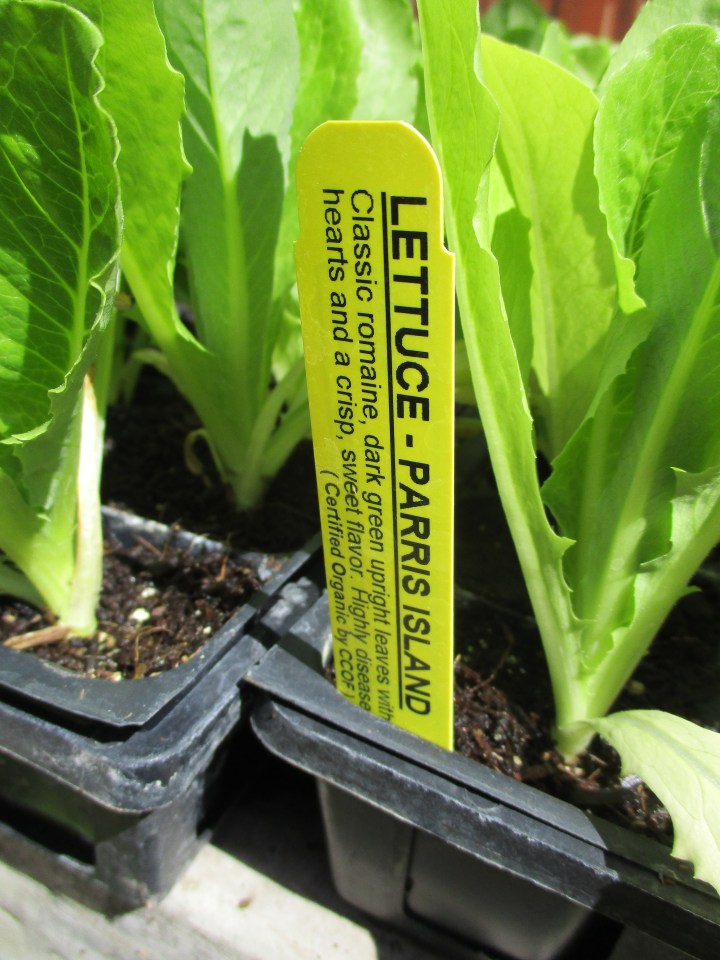
 Right smack in the middle of the warm part of summer, it is already time to be getting ready for autumn gardening. This involves more than just ordering our autumn planted spring bulbs while the selection is still optimal. Most of us purchase bulbs from what is available in nurseries when they are in season anyway. Seed that gets sown in the next few weeks is a more immediate concern.
The majority of cool season vegetables will get planted later, when the seasons actually start to change to become . . . well, cool. Seed for beets and carrots gets sown directly in about a month, followed by pea seed even a bit later. At about that same time, many of us will plant small seedlings of other cool season vegetables, like broccoli, cauliflower, cabbage, lettuce, spinach and kale.
For many of us though, it is not that simple. If we want varieties of these cool season vegetables that are not likely to be available as seedlings in nurseries later, we must grow our own from seed. Whether they get sown directly into the garden, or into flats to be grown as seedlings to be planted later, broccoli seed should be sown about now. By the time it gets to growing, it will be autumn.
Seed purchased online or from mail order catalog should be ordered by now. It is not too late for broccoli if the seed arrives and gets sown soon. Cauliflower and cabbage seed gets sown within a month or so, as late August becomes early September. Lettuce and spinach seed should wait half way through September, like beet and carrot seed. Kale seed can wait until after September.
Seed for secondary phases of most of these cool season vegetables can be sown early next year.
In the meantime, warm season vegetables must continue to be harvested very regularly. If they stay in the garden long enough to get tough and bland, they also interfere with continued production. Foliar herbs can be harvested for drying just about any time they are fresh and not blooming. Regular harvesting inhibits bloom, and therefore promotes more of the desirable foliar herbal growth.
 Flowers do not last forever. Whether they last for only a day, or weeks, they all eventually finish what they were designed to do, and then whither and deteriorate. They only need to stay fresh and appealing to pollinators long enough to get pollinated. After all, that is their only job. The next priority is the development of seed and any associated fruit structures that contain the maturing seed.
 Generally, that is how they are. Almost all perennial pea flowers bloom with the same bright purplish pink color of the bloom in the picture below. That is, of course, before their pods develop, but you get the point. We sort of know what to expect from them.
 There are thousands of them, these weird motionless caterpillar like ‘things’, in big herds under all the cottonwood trees. They make a squishy mess in the rain, and stain concrete. They may not look like much from a distance, and are merely ignored as a minor nuisance that must be swept from pavement, but on closer inspection, they really look unworldly, like something from another planet, or a bad Japanese science fiction movie.
 This salvia would probably look badder without it. Yes, that’s badder and not better. I mean, if all these slightly unsightly seeded stems were cut back, then the even more unsightly deteriorating foliage below would be more prominent. When one looks at it that way, the bad seed suspended above does not seem all that bad.
 The gardens with the most flowers need the most deadheading. This involves the removal of deteriorating flowers and any developing fruiting structures and seed associated with them so that they do not divert resources from subsequent bloom or vegetative growth. Old flowers that do not produce seed because they are sterile or lack pollinators might get deadheaded too if unsightly.
 This one is different though. It is not the characteristic homogeneous bright orange that California poppies should be. The orange in the middle is what the entire flower should look like. The outer yellow hallow is not typical.
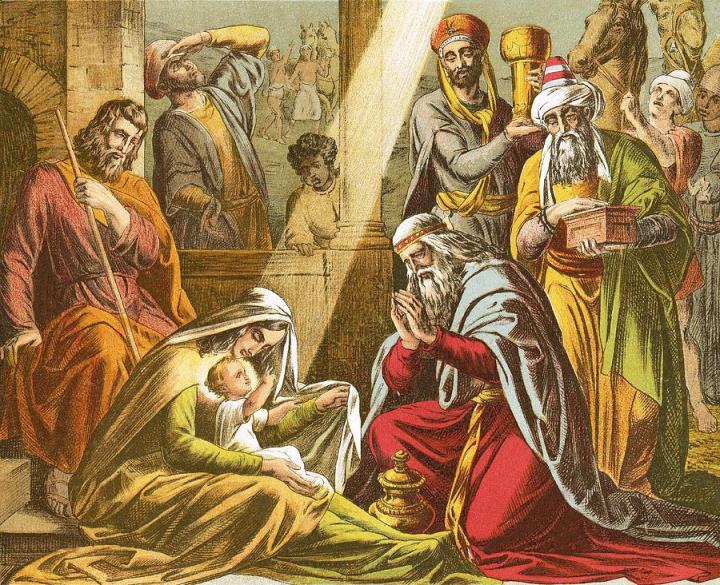 Does anyone else think that it is odd that Baby Jesus got only some frankincense, myrrh and gold for His first Christmas? I mean, it was the first Christmas ever, and that was the best that anyone could do? Well, maybe those gifts were something important back then. Maybe it was a good heap of gold. It just seems to me that three ‘wise’ men could have procured better gifts. More than two thousand years later, some of us are disappointed if we do not get a new Lexus on Jesus’ birthday, after He got only frankincense, myrrh and gold. (Get your own birthday!)
 Tony Tomeo