Brent left for vacation in Hawaii at about the same time that I returned from vacation in Oregon and Washington. Since I told him to stop sending me so many pointless pictures prior to my vacation, he is now sending even more. I might have gotten more pictures of his vacation than I got of mine. Although I would like to see Hawaii for the horticultural aspects, I am not otherwise impressed by what little I know about it. Perhaps I would get a better impression of it without so many of Brent’s pointless pictures. These are a few of the lesser pointless pictures, without the selfies.
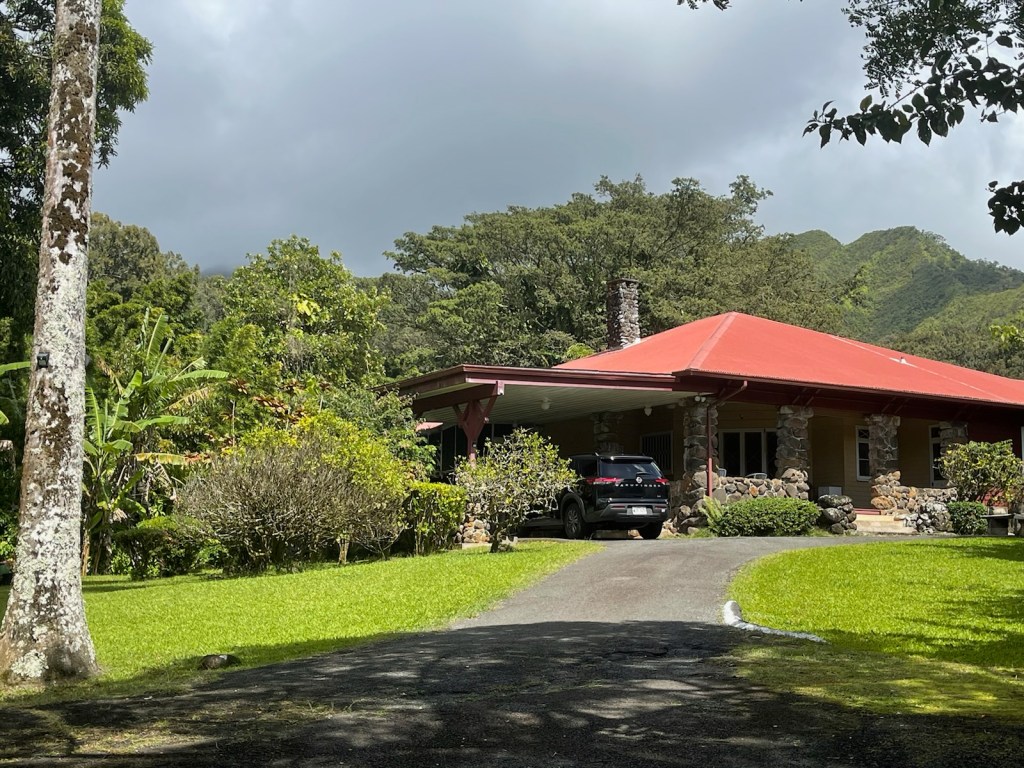
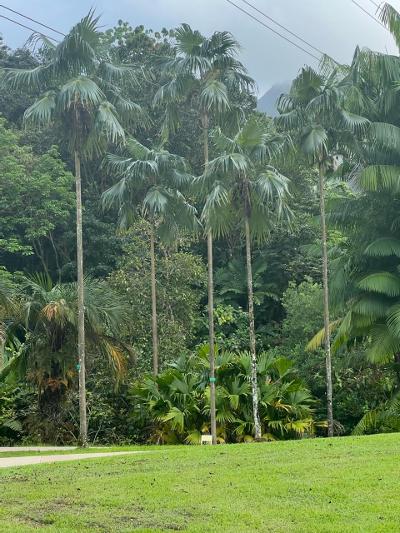
1. Accommodations were quite comfortable. Brent enjoyed the forests around this guest house, which was only a few miles from the Penthouse in Waikiki that he also stayed at.2. Palms of all sort are common in Hawaii. I have no idea what the palms to the left are. Nor can I know if this is a picture of those palms, a rainbow, or a utility pole with cables.3. What is this? It must be in the Araceae Family. It looks like some sort of Philodendron that does not develop a vining stem. Some familiar species are not so familiar in Hawaii.4. Doum palm is a weird palm that branches. There are actually a few species within the same genus. No one seems to know why it was never popularized in Southern California.5. Is this Kentia palm? There are so many unfamiliar palms in Hawaii that identification is baffling. This group certainly is pretty. The palms to the left looks a bit more familiar.
6. Brent labeled these as windmill palms. If they are, why are their trunks bald? Perhaps they are one of those few shedding species of Trachycarpus that is not yet available here.
Carson is Rhody’s Roady. Like most of the vehicles here, he is named after a place. Beau is named after ‘Beau’lder Creek (Boulder Creek) (although his name was actually derived from Hobo). Lee the Chrysler was named after Bever’Lee’ Hills (Beverly Hills). Roy was named after Gil’Roy’ (Gilroy). So, Carson is named after Carson City in Nevada. He took Rhody and I to the Pacific Northwest on vacation. We returned two and a half weeks ago with only a few pictures. These six are some of the last, which were taken during the last two days, as we drove back. The drive was totally excellent!
1. Douglas fir grows wild everywhere we went. Red maple is not native, but is very happy in a neighbor’s yard. This could have been a good picture if not photobombed by Carson.
2. Oregon white oak is likewise native to almost all the regions that we traveled through. However, we did not see many. Although uncertain, I think that these are some of them.
3. Mount McLoughlin is visible from only several miles of Highway 5. It seems to be too visible though. Scenery is obscured by dense forests elsewhere in the Pacific Northwest.
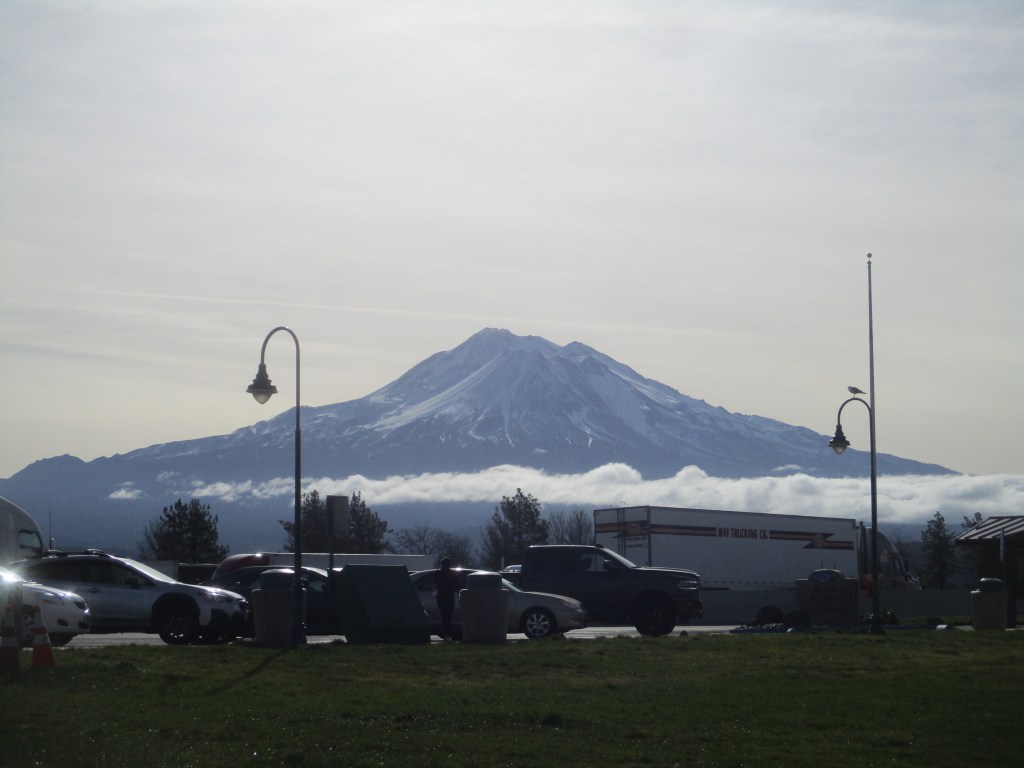
4. Mount Shasta is even more visible for many miles of Highway 5, not only because of a lack of dense forest, but also because highway 5 gets nearer to it. This was at a rest stop.
5. Apple trees were still being pruned where we stopped for the night on the return trip. The trees to the left are finished. The vigorous trees to the right are about to get pruned.
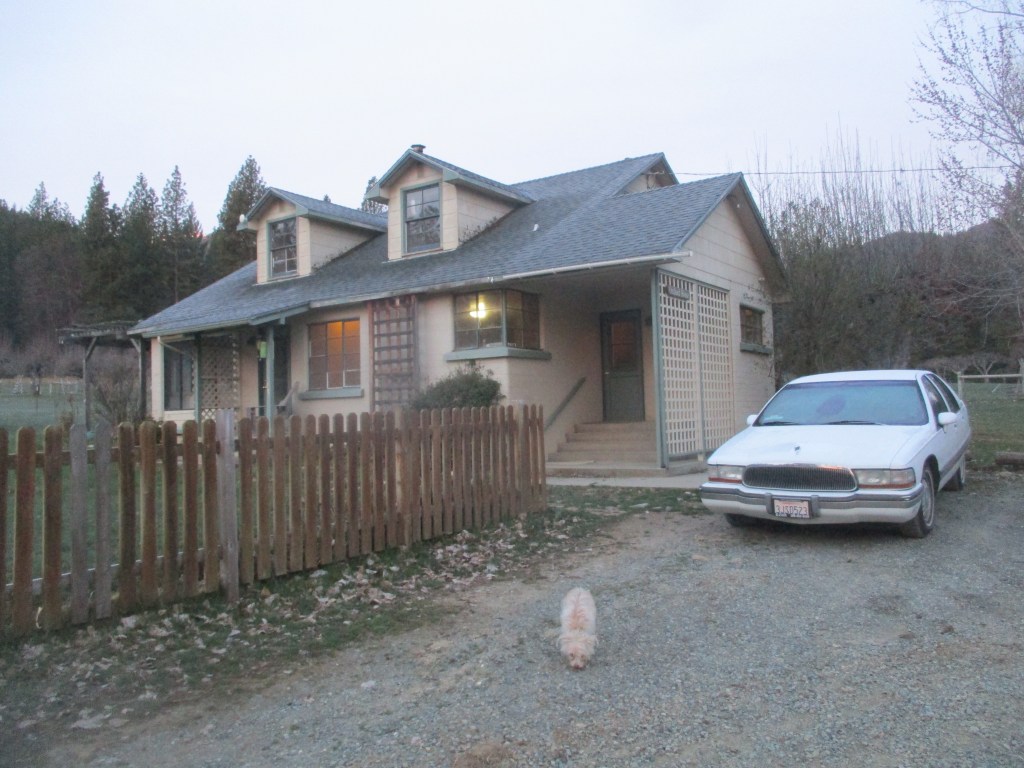
6. Orchard House was our lodging for the night. It was as grand as Cedar Lodge! Rhody, of course, is near the lower center of this picture. Carson, Rhody’s Roady, is to the right.
Oregon, which is one of the most excellent states in America, was merely a drive through state with this trip. We spent our first night just south of the Southern Border of Oregon, and then spent our second night on the North Shore of the Columbia River, which is the Northern Border of Oregon. I really should have planned to spend more time in Oregon, particularly between Portland and Astoria. Well, I also should have stayed longer within the regions of Ilwaco. Anyway, our return trip was just as efficient, within only two days. We stopped at many of the rest stops on Highway 5 though.
1. What is this? I saw it at various places north of California. I do not remember where I first encountered it. It may have been just across the border, in the Siskiyou Mountains.
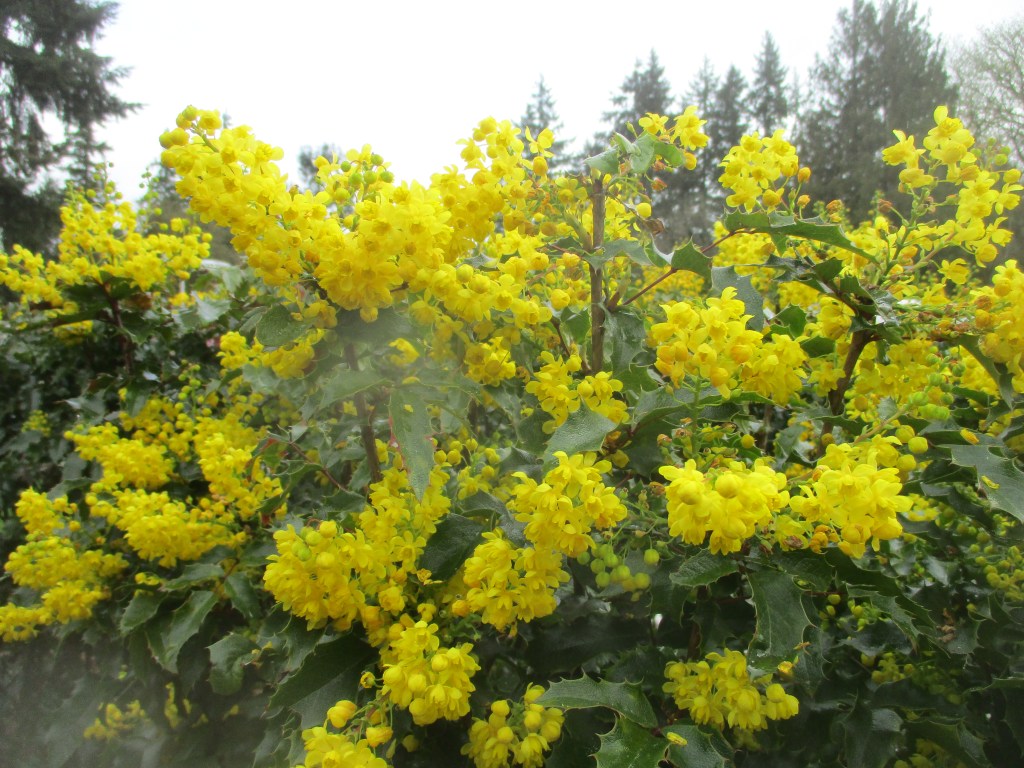
2. Oregon grape is nothing special at home. It gets shabby and only blooms sporadically. I wondered why that grumpy wannabe nandina is the Oregon State Flower. This is why.
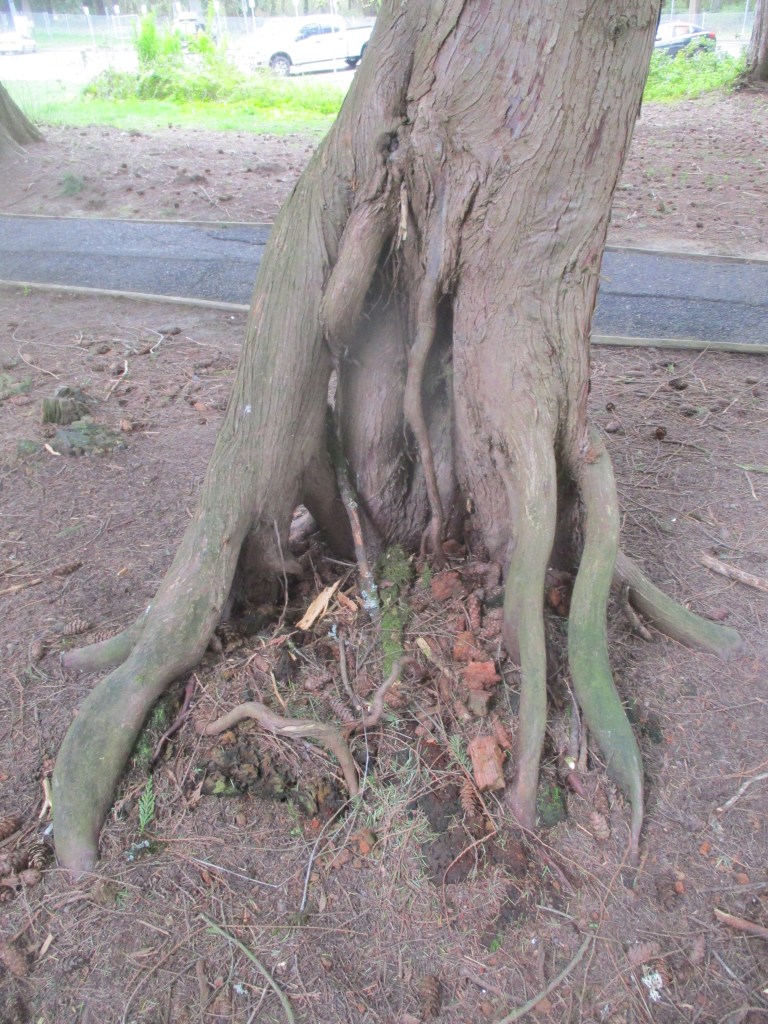
3. Western red cedar grew on top of a tree stump and dispersed its roots mostly between the decaying wood and bark, so now stands on its roots above decayed bits of the stump.
4. Grove of the States; what a splendid idea! However, a few State Trees do not live here, so required substitution. Furthermore, many were replaced with random or wrong trees.
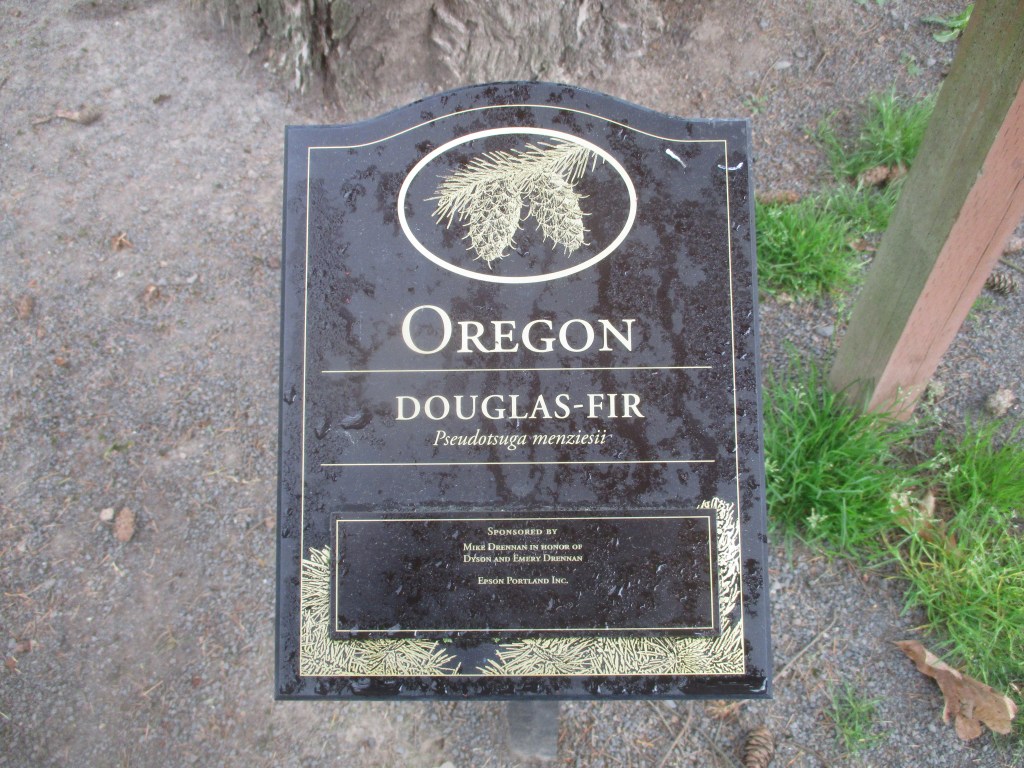
5. Douglas fir, which is the Oregon State Tree, grows wild locally, so the specimen within the Grove of the States is exemplary. It is not visible in this picture of its plaque though.
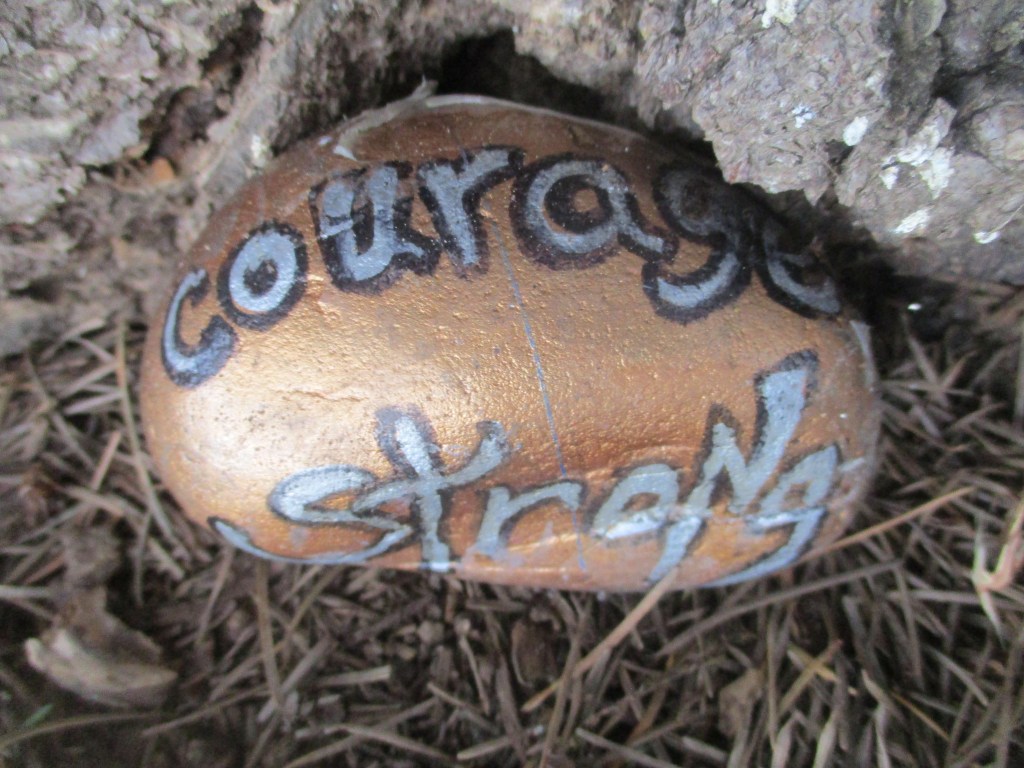
6. Rocks are still a ‘thing’. This one was at the base of a tree that I believe to be a mature Oregon white oak. Goodness; we stopped so much that I do not remember where this is.
Our vacation continued from Ilwaco, where I took both pictures #1 and #2, to Silverdale and Poulsbo, all within Washington. The Tomeo Residence, where I got pictures #5 and #6, is in Silverdale. The farm, where I got pictures #3 and #4, is near Poulsbo. For most of my vacation, I did exactly what I wanted to do. I pruned a few apple trees that were in need of major structure pruning. I wanted to do more, but got distracted. (That is a long story.) Apples were about to bloom.
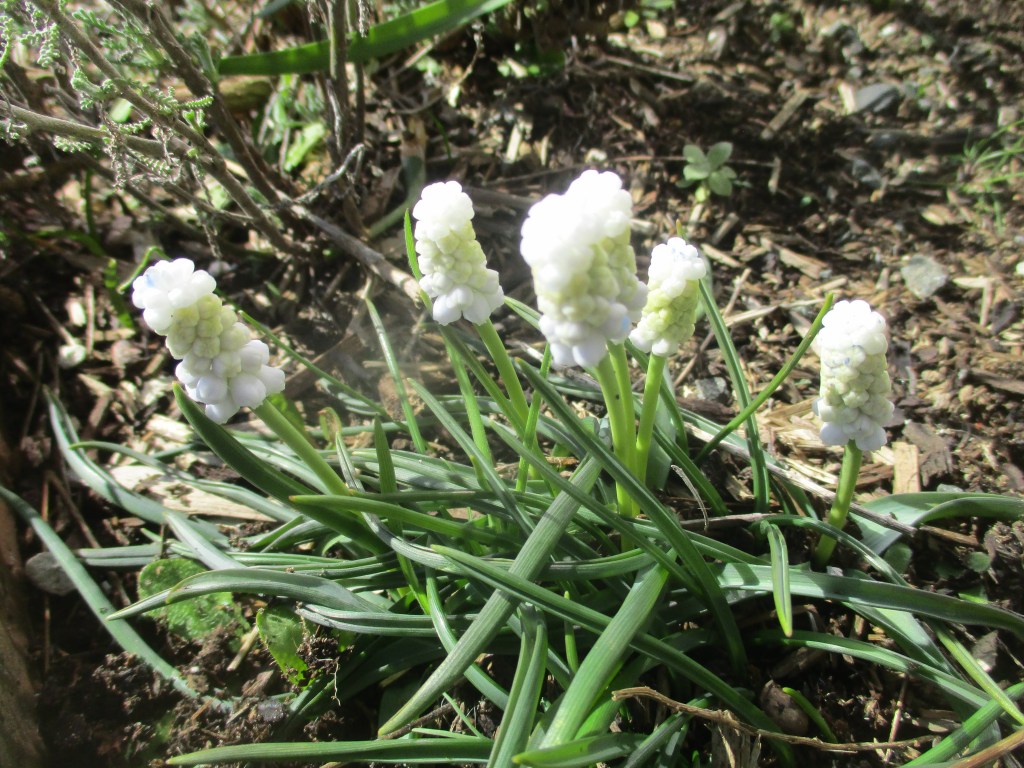
1. White grape hyacinth could be my favorite of the many goodies I received from Tangly Cottage Gardening. I try not to choose favorites, but I wanted this for a long time, and it came directly from the planter beds at the Port of Ilwaco! They are approved by Skooter!
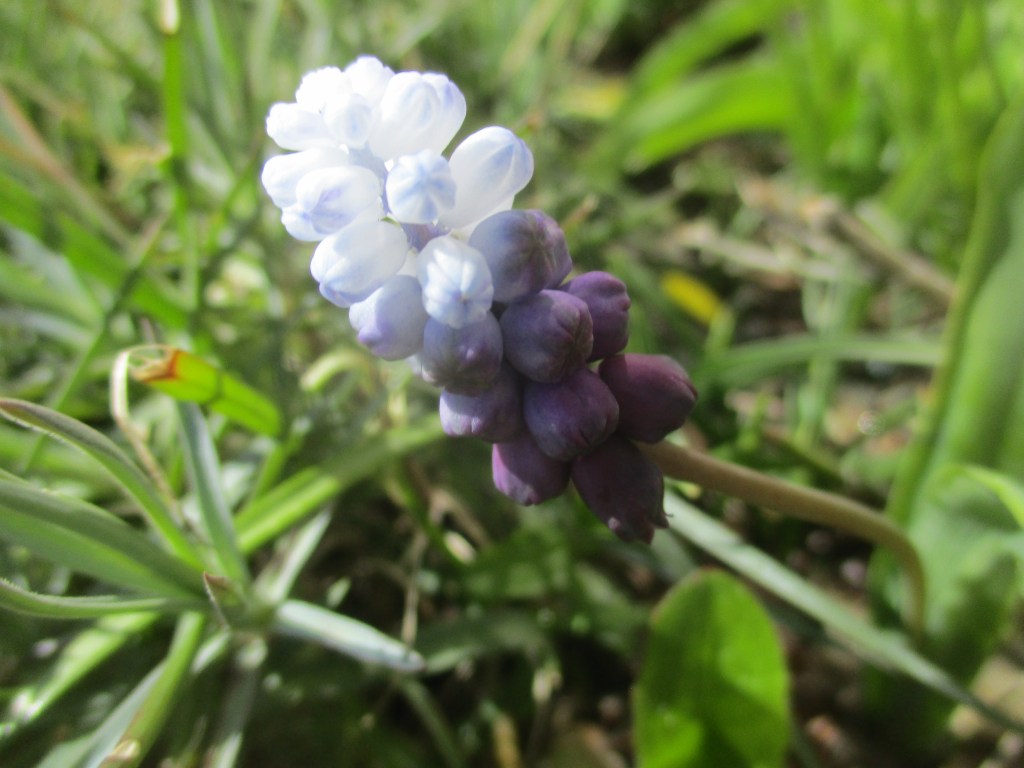
2. ‘Golden Fragrance’ grape hyacinth was blooming in the same bed with the white grape hyacinth. I thought I got a picture. This could be Muscari paradoxum, but I do not know.
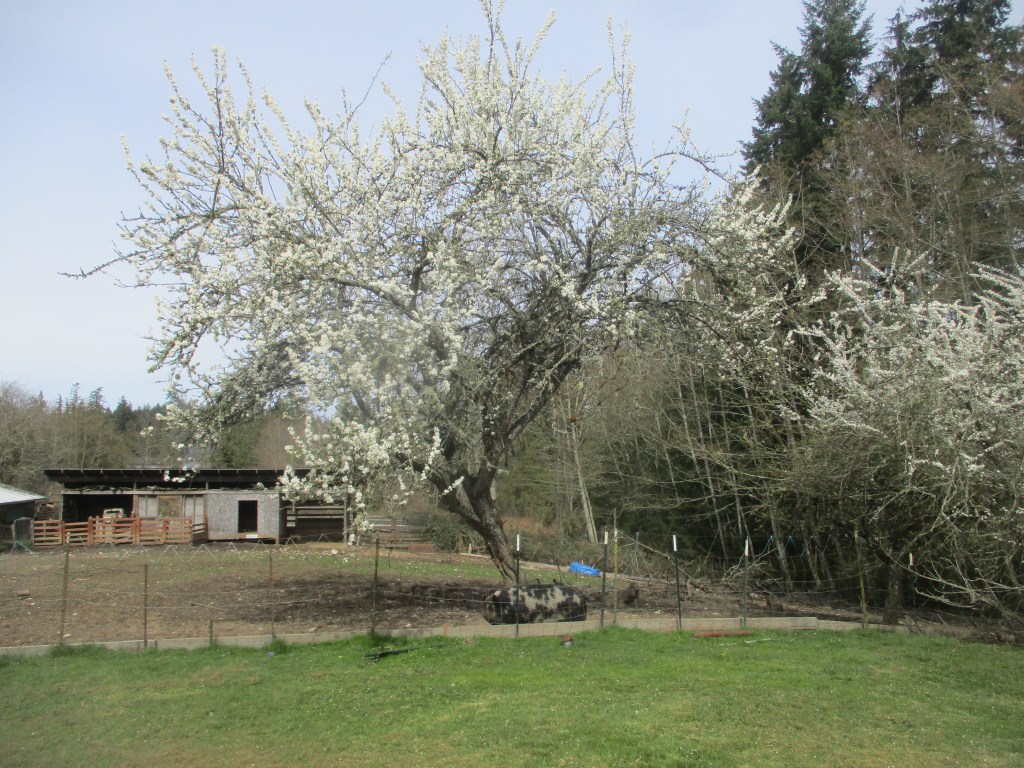
3. Pluot was still in early bloom when we arrived in Kitsap County. I dislike pluots, but it might substitute for apricot, which is unreliable in the local climate. Peach is absent too.
4. Apple trees were barely beginning to bloom. It was technically too late to prune them, but I did anyway. They have been neglected for too long. I finished less than half though.
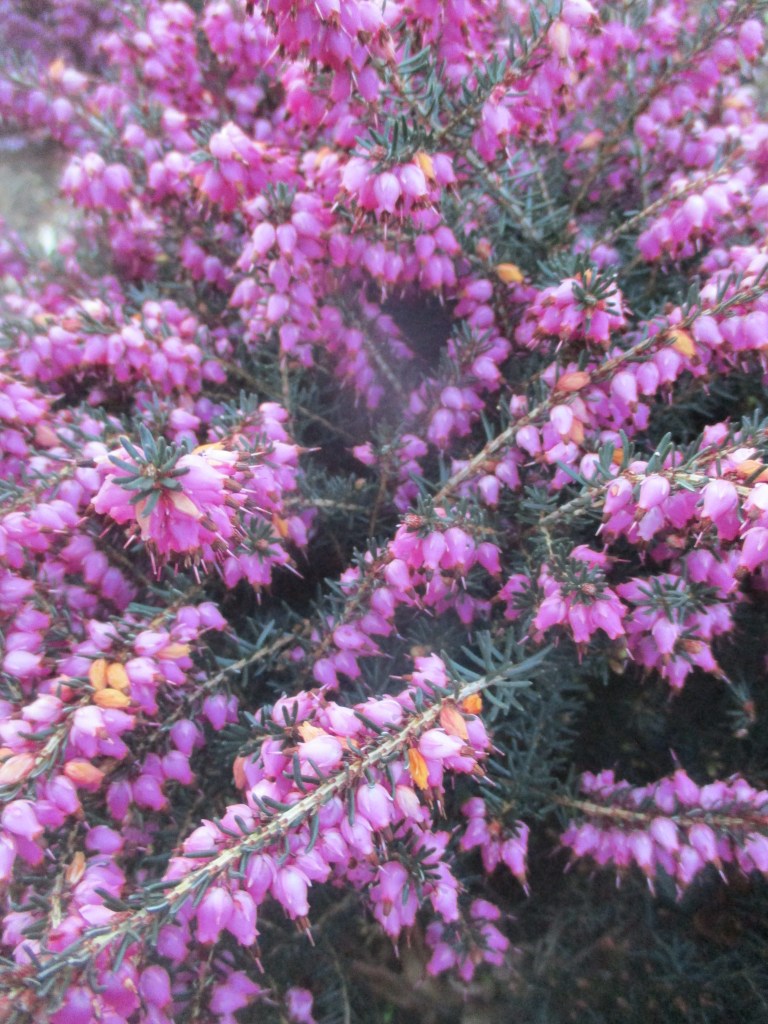
5. Heather was blooming quite colorfully. It seems to be about as popular there as lily of the Nile is here, likely because it performs so reliably. It was strange to see so much of it.
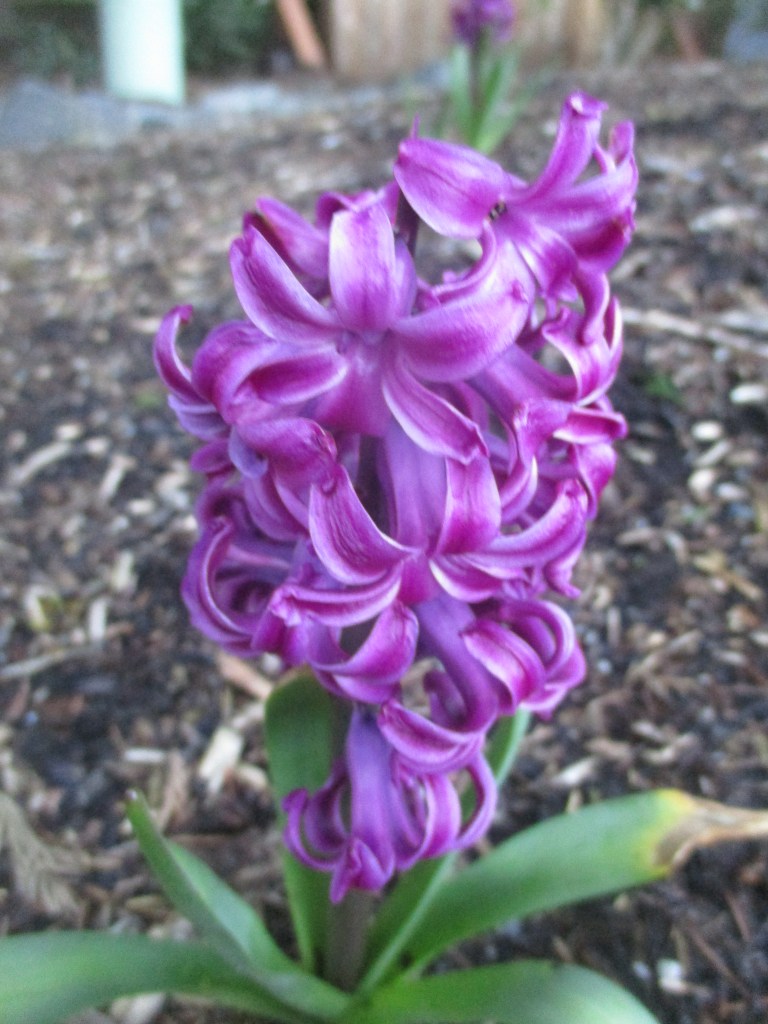
6. Hyacinth and many other early spring flowers were still blooming splendidly. I should have gotten a better picture of a colony of hyacinth, but wanted to get a close up picture.
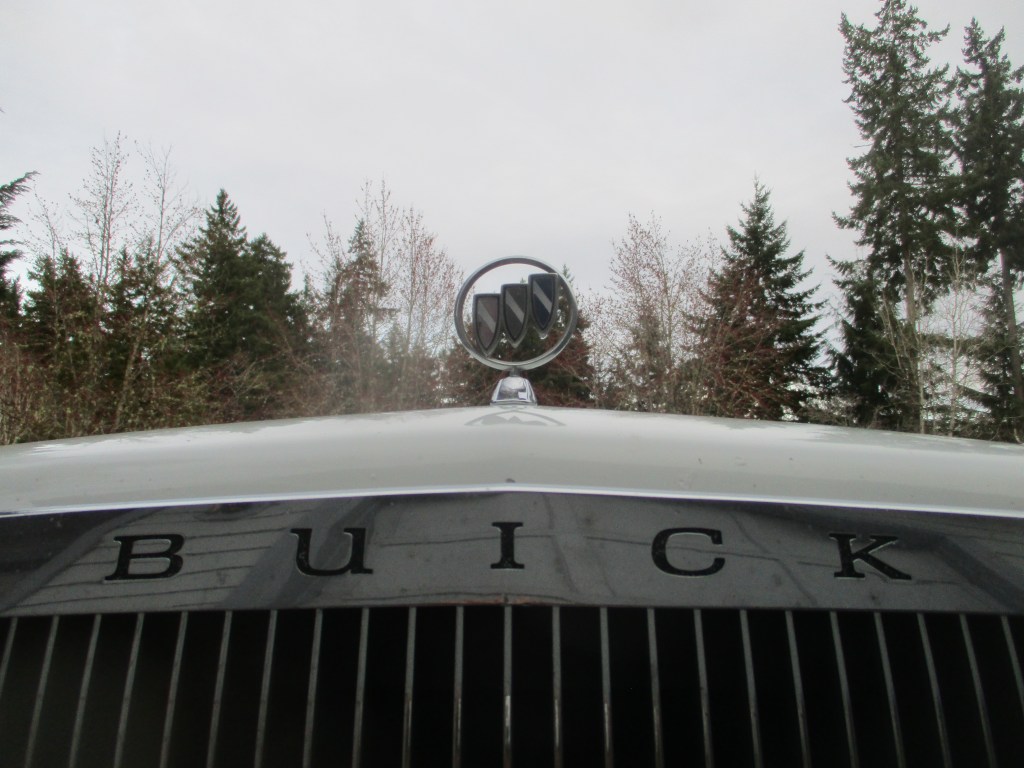
Rhody’s Roady is a topic that I wanted to brag about a while ago, but postponed because of Brent’s pointless pictures. Now, there are other more interesting subjects. Well, it was not exactly a horticultural topic anyway. Rhody’s Roady is merely his Buick Roadmaster. It is not actually described within the context of this Six on Saturday, and is only slightly visible in the first picture. However, it did take us on a road trip to the Pacific Northwest where we finally got to Tangly Cottage Gardening. I was supposed to deliver some canna there months ago! Half of these pictures show gifts that I received while there, including two very important items taken directly from their landscapes in town!
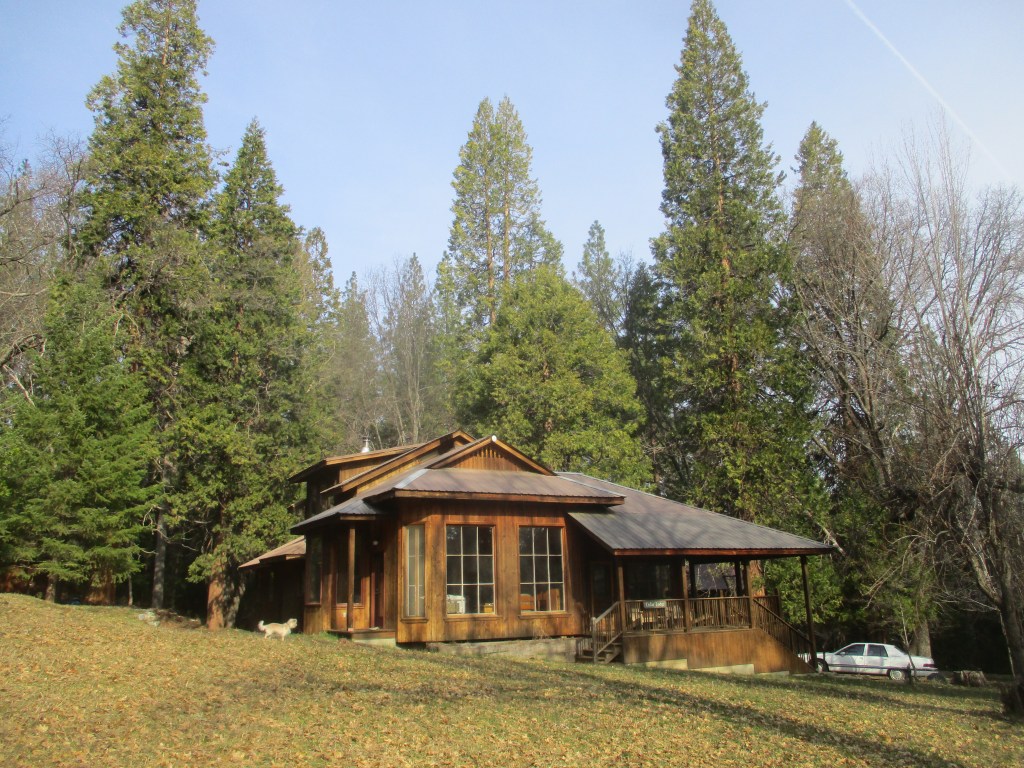
1. Cedar Lodge, surrounded by various cedars, pines, firs and oaks, is where Rhody and I stayed initially. Rhody is to the lower left of this picture. His Roady is to the lower right.
2. Western white pine and incense cedar seedlings were too compelling to ignore. These eventually would have needed to be grubbed out from a roadside berm, so came with us.
3. Ilwaco, in Washington, was our next destination. Tangly Cottage Gardening presented me with this potted ‘Coral and Hardy’ Watsonia, and the bagged red and orange cultivar.
4. Allium christophii and schubertii, which were grown for plant sales, were gifts as well! These are my first Alliums! I had postponed trying any for too long, so this is fortuitous!
5. White grape hyacinth may look like the dinkiest component of these gifts from Tangly Cottage Gardening, but happen to be something that I had been wanting for a long time!
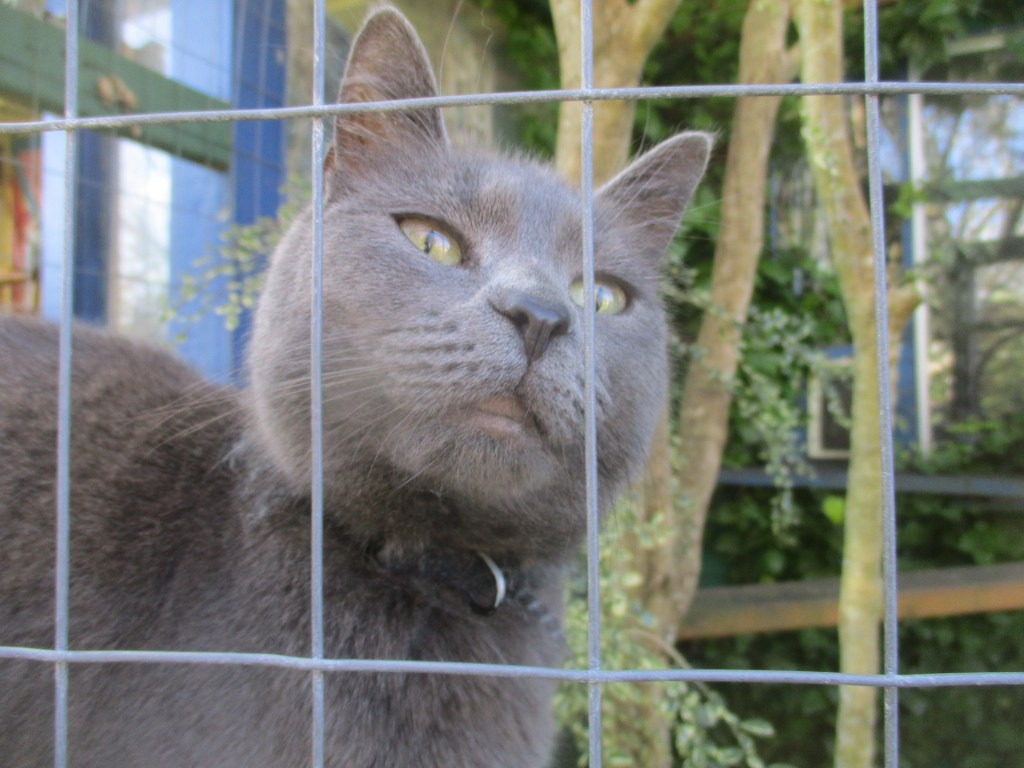
6. Nickel the kitty reminded me that I should have taken more pictures. I met both Fairy and Skooter but somehow neglected to get pictures! More can be seen at Tangly Cottage.
Goodness! For the first time in a very long time, I neglected to collect six pictures for Six on Saturday. Furthermore, after frantically assembling these random pictures that I had no use for otherwise, I posted them later than typical. I have a good excuse though. I am on vacation. Actually, I happen to be in Ilwaco in Washington. I will be meeting with the blogger of Tangly Cottage Garden later in the morning, so should have more interesting pictures for next week. I realize that I said that last week in regard to Rhody’s Roady, but as I mentioned, I presently have other very important priorities. By the way, I do intend to explain Rhody’s Roady!
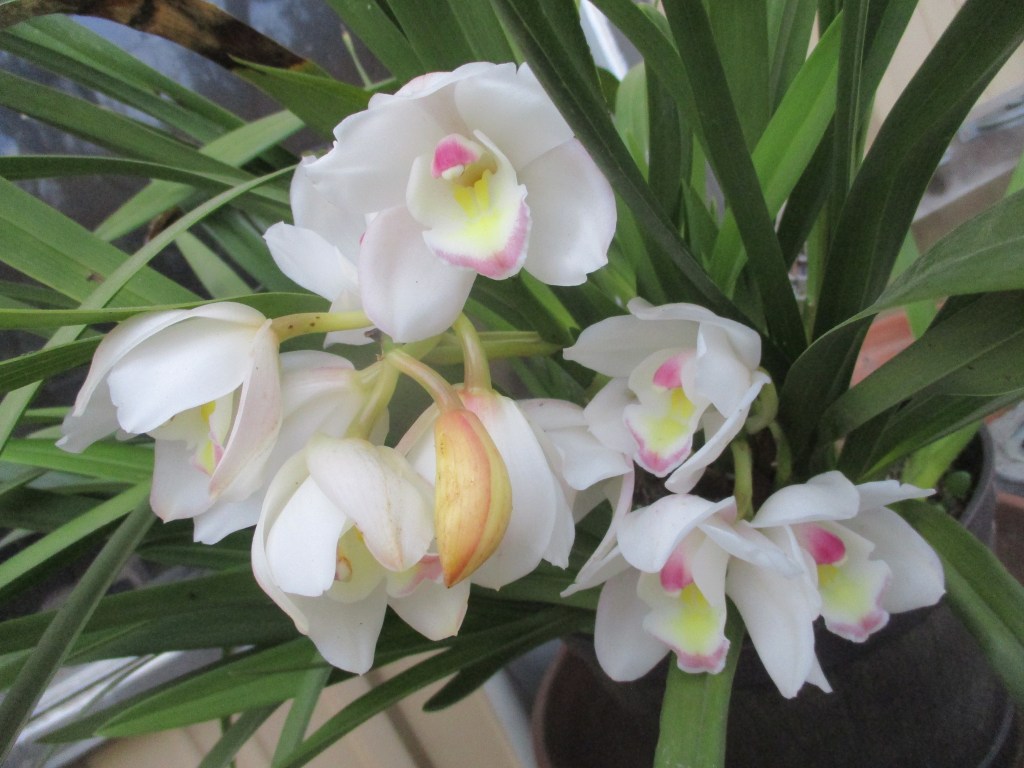
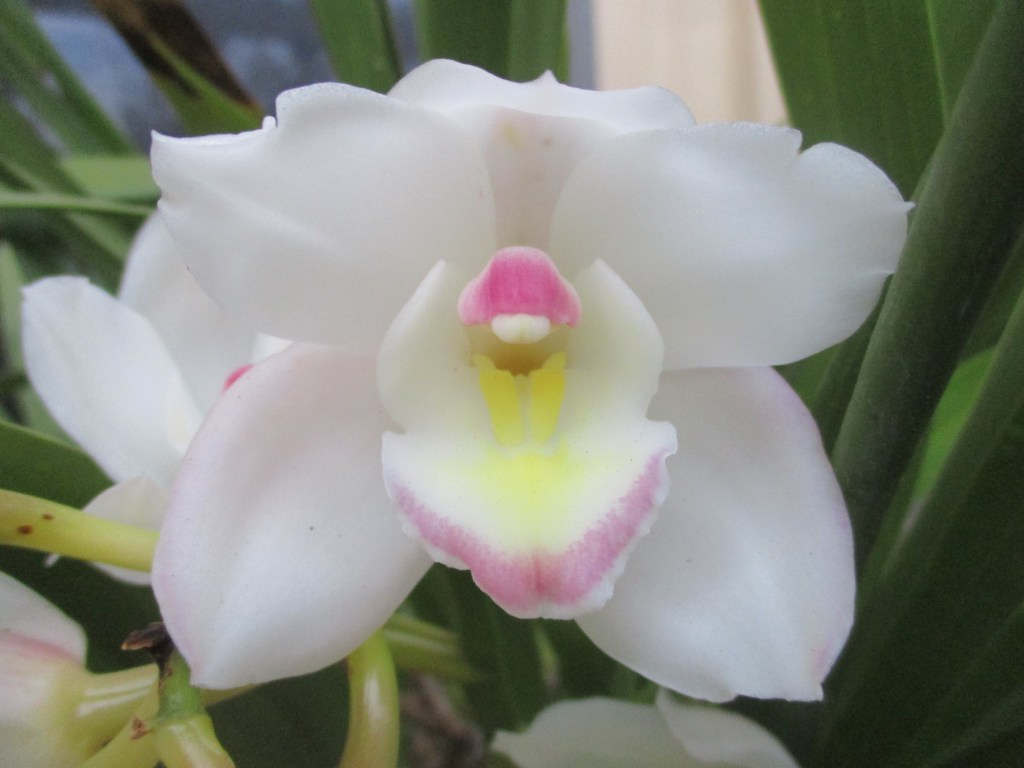
1. After clearing away thickets of Himalayan blackberry and cattail, this drainage pond is allowed to fill for the first time in years. We might add lily pads and other aquatic plants.2. Conical conifers that were available for live Christmas trees from nurseries go on sale after Christmas. This happy blue spruce, although expensive, was discounted by a third.3. Flowering cherry continue to bloom. This picture was taken quite a while ago, but the particular tree and others like it were still in bloom on Wednesday. One was still in bud.4. Camellia continue to bloom as well. Of course, many or perhaps most finished a while ago. Nonetheless, several often bloom rather late, or at different times from year to year.5. Cymbidium orchid bloomed right on schedule, but its flowers last for such a long time that it seems to be right in the middle of the process. There are four spikes on this plant.6. Collective bloom is spectacular, and individual flowers are compelling. It is pleased to bloom like this for minimal attention. I merely water it, then display it proudly in bloom.
It was a mistake to tell Brent to not send so many pointless pictures to my telephone. He now sends more than ever. My telephone gets too clogged with them to take ‘important’ messages, as if any are important. Brent gets annoyed if my telephone us unable to take more, or if I delete messages without opening them. Really though, I do not have time to see all of his pointless pictures and videos, and I should be able to accept messages from others also. If and when Brent actually sends something important, it is typically of such inferior quality that is is useless to me. #5 is an example of that. I should get some of my own pictures to share next week. I want to show off Rhody’s Roadie. Also, we ‘should’ be leaving for Washington on Wednesday.
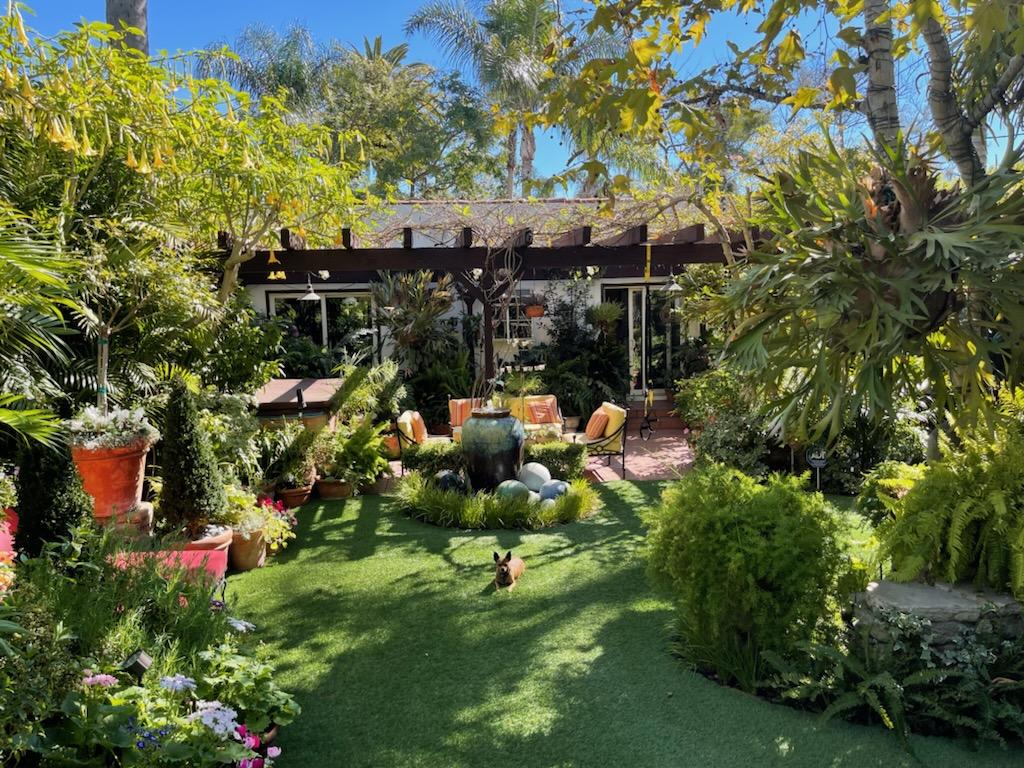
1. This is nothing new, although it is a more recent picture of Brent’s back garden. Brent does like to show it off. It looks like a garage sale with a tiny kangaroo in the middle of it.
2. Less clutter in this direction reveals the office with the roof deck above. That is where I camp out when I go to Southern California. That is some lush scenery to wake up with.
3. Three of seven queen palms live across the garden from my campsite on the roof. The famous ‘Hollywood’ sign is in the distance behind them. Four more queens are out front.
4. This is not the four queens out front. It is four canopies on two trees, elsewhere in the neighborhood. Branched palms are very rare. (Doum palm is not evident in the region.)
5. Goodness! This is the most significant of these Six, but is of such bad quality. Brent is an idiot! It is one of only a few surviving Olympic Oaks of the 1936 Olympics in Berlin. It was awarded to Cornelius Johnson, in conjunction with a Gold Medal, by Adolph Hitler, who would not acknowledge victory by anyone of African Descent. Brent was protecting the tree from developers who want it removed, but now wants to designate it as historic.
6. See if you can make sense of this one. It is no music video. The original was even a bit weirder. The Mexican fan palm is a Memorial Tree of Brent’s older brother Brian Green.
Esperanza and poinciana seed sent to me by Crazy Green Thumbs at the end of last year were finally sown! Actually, they were sown two weeks ago, but I somehow deleted their pictures before sharing them here. Consequently, there is not much to see now. After the failure with the esperanza seed that The Shrub Queen sent to me previously, I am intent on growing these properly. Esperanza is more popularly known as yellow bells, and may alternatively be known as yellow elder, yellow trumpetbush or Ginger Thomas. I have no idea who Ginger Thomas is, or why she is relevant. Poinciana is more correctly known as pride of Barbados, and may alternatively be known as Mexican bird of Paradise, red bird of Paradise, peacock flower, dwarf poinciana, flos pavonis, flamboyant de jardin or ‘ohai ali’i. I know it as poinciana only because I have never encountered real poinciana here.
1. Tecoma stans and Caesalpinia pulcherrima seed were sent from Texas during the last few days of last year by Crazy Green Thumbs. I finally put them out only two weeks ago.
2. Tecoma stans seed are not much to look at while under a thin layer of damp media. Of course, they look totally awesome to me. There were too many seed for separate cells.
3. Caesalpinia pulcherrima seed are about as fascinating after getting sown. Since there are not as many seed, they got separate cells, which are almost discernible in the picture.
4. Darla the kitty has mistaken seeded flats for litter boxes in the past. Boundless forests are apparently inadequate. Upside down flats should protect the freshly sown seed flats.
6. Darla hates me. I can not get close enough to get a good picture of her. This picture is zoomed in from a safe distance. She needs to keep her distance from the seeded flats.
This Six on Saturday did not go as planned. I intended to finally share six pictures of the esperanza and poinciana (pride of Barbados) seed from Crazy Green Thumbs, since they were sown shortly before I shared more of Brent’s pointless pictures last week. However, the file of those pictures was somehow deleted! It is too dark to get a picture now. When I get a picture later, it will show only flats of unseen seed! Since reminding Brent to NOT send more pointless pictures, he responded by sending a profusion of pointless pictures! However, if I can not share the six pictures that I very much wanted to share this week, I will most certainly not share six more pointless pictures that I do not want to share. So, I ultimately decided to share six pictures of an exemplary Mediterranean or European fan palm, Chamaerops humilis, that we relocated more than two weeks ago. However, since I had not planned to share these pictures just yet, I had neither procured a picture of the palm at its new home, nor copied a picture of it prior to departure from its former home.
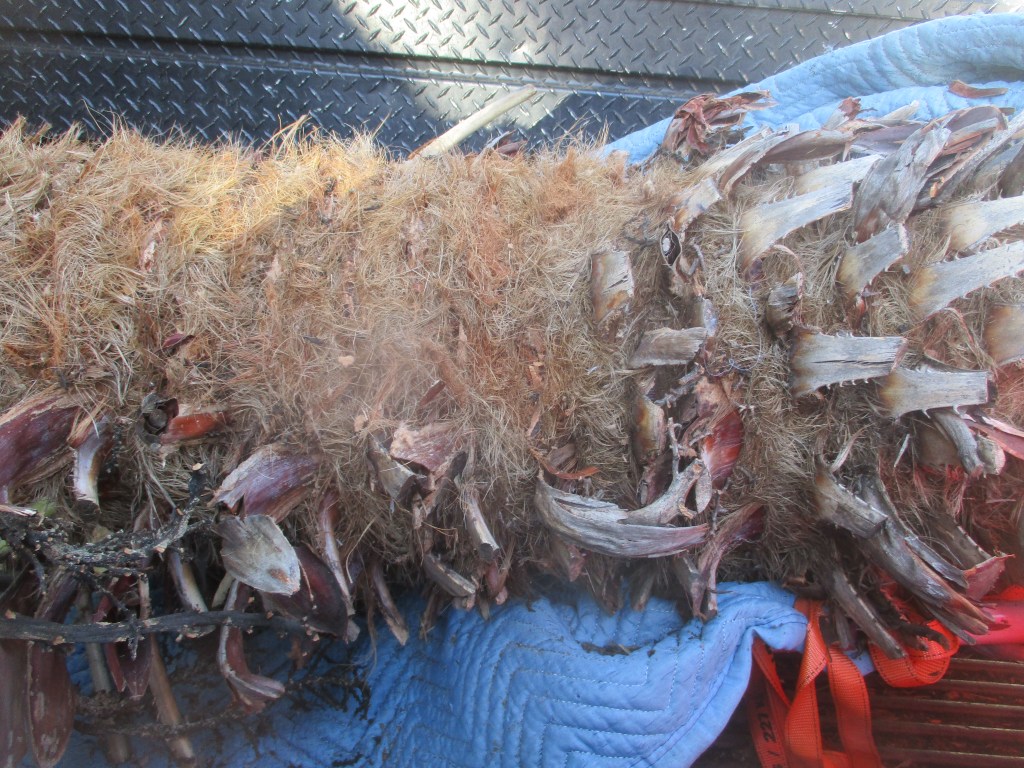
1. From beginning to end, and even after the intensive grooming of the trunk, only three of these many healthy fronds got pruned away, and only because they hung too low. For most palms, I prefer to remove most foliage for transplant. So far, this one sustains it all. This is the view of the top of the canopy as the dug tree was laying in back of the pickup.
2. Female specimens have fewer and more pliable teeth on their petioles than the males. This was one of the most tame of females I have ever engaged. I had expected far worse.
3. Only a few aborted berries were observed. Since this species in unpopular here, it may lack a male pollinator. However, it has potential to sneakily provide its own male bloom.
4. Gads! I almost never see this palm pruned and groomed properly. Petioles should get cut below the thorns and as closely to the trunk as possible. These long stubs are thorny.
5. The upper left quadrant of this picture demonstrates what this trunk should look like, after the thorny petiole stubs were cut away. It looks like Lumpy, the son of Chewbacca.
6. Here, it looks like Doctor Lecter of ‘Silence of the Lambs’, strapped into a dolly. It was much easier to handle after grooming, but still weighs about a hundred and fifty pounds. This species typically develops a few curving trunks. Such a straight single trunk is rare.
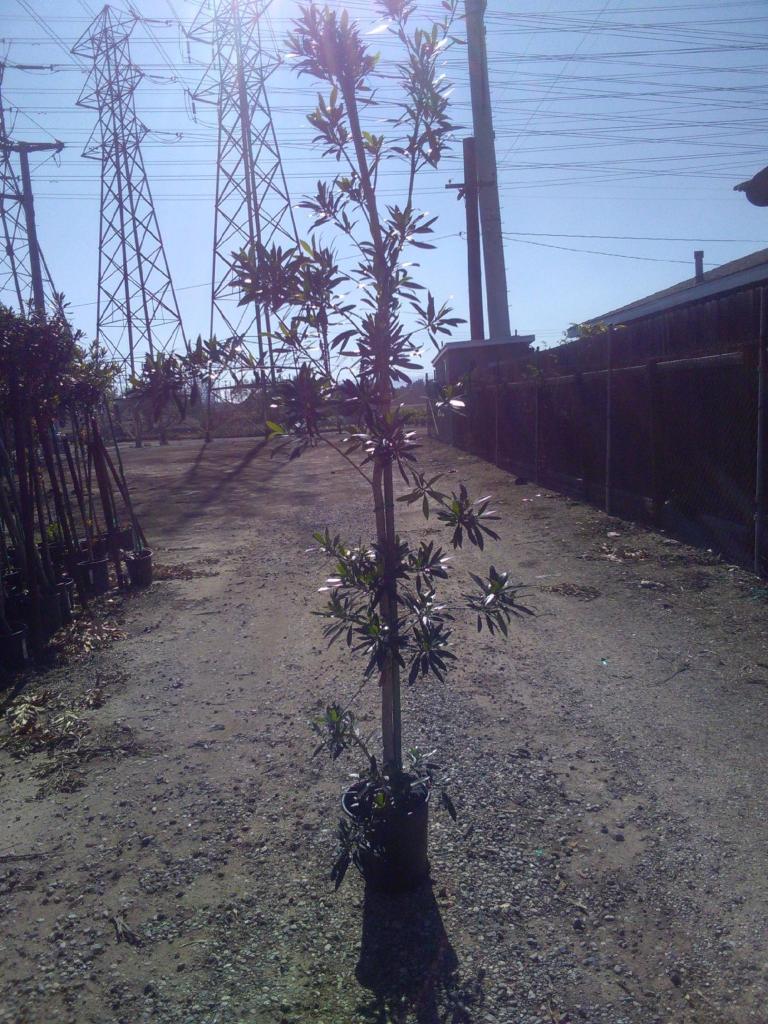
Only two or perhaps three of these six pictures were taken in Watts. Furthermore, those towers in the backgrounds of pictures #3 and #4, although only a few blocks west of the Watts Towers, and supporting massive volumes of wattage, are merely electricity pylons. It is unimportant. Actually, these five images and one video are assembled together here only so that I need not discard them unused. Brent will not stop sending them. Now that these are the last for the moment, I can post more interesting or at least relevant images next week. I must share pictures of the esperanza and poinciana seed getting sown. Also, we moved a Mediterranean fan palm.
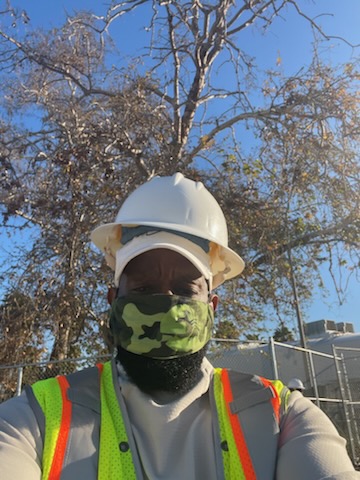
1. Brent can not stop taking selfies. Carly Simon sang about this sort of behavior in 1972; ‘You’re so vain.’ Here, he wants to be seen in a hard hat like my arborist colleagues wear.
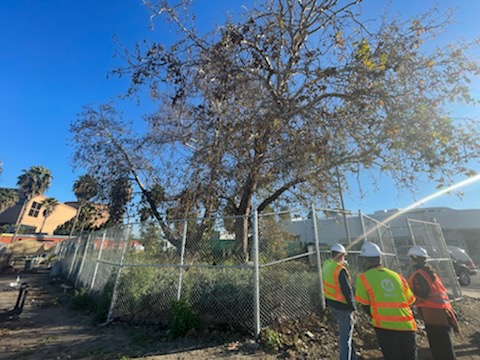
2. Old sycamores that Brent saved from certain doom are a much more important topic. Developers who want them out of their way said that the bare deciduous trees had died.
3. Tristania laurina is an exemplary small street tree for many of the narrow streets that Brent installs street trees on. This matured crop are exemplary #5 (5 gallon) specimens.
4. Minor lower growth that got pruned away promoted caliper growth. Those are not the Watts Towers, although they are only a few blocks to the west, and support many watts.
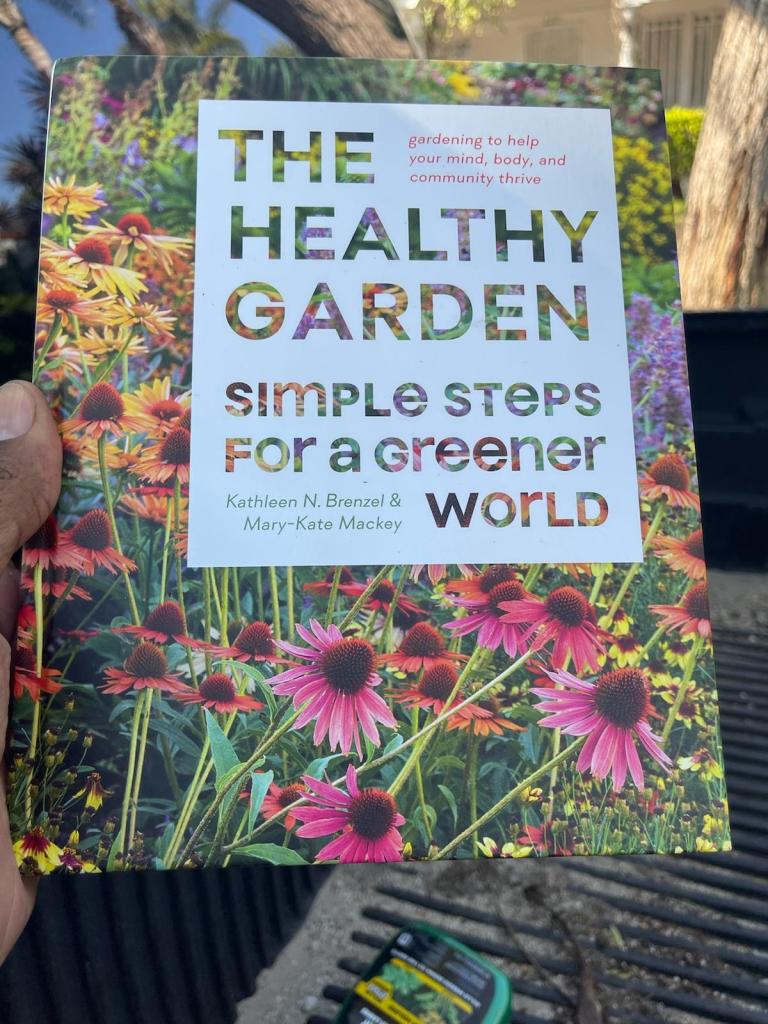
5. Brent wants to show off a new publication that features his home garden, or his work, or some such nonsense. I did not write the particular article, so it must not be very good.
6. Brent’s home garden is SO crowded with SO much vegetation and other ‘stuff’. What a mess! It could be a hazardous situation during an earthquake. This one was very minor.


















 Tony Tomeo