 Roots hold up trees. That is part of their job. They grow along with the trees they support, and disperse as necessary to maintain stability. Trees grown within the confinement of cans (pots) or boxes, and then installed into a landscape, are typically staked temporarily until their roots adequately disperse and stabilize. Once unnecessary, stakes and bindings must be removed.
Mature palms that get relocated are supported temporarily by guy wires. They are just too big to be supported by stakes. Because palm trunks to not grow any wider as at they grow taller, they are not damaged by the sorts of bindings that would damage the fattening trunks of other trees. Like stakes on other trees, guy wires must be removed as they become unnecessary.
Although they can be appropriate in unusual circumstances in which stakes would not be practical, guy wires are rarely used on trees that are not palms. Mature trees that get relocated can be guyed if too big to be supported by stakes. Because trunks and limbs of such trees expand (circumference), it is more important for guy wires to be remove when they become obsolete.
As useful as guy wires can be, they are more often used improperly or inappropriately. Firstly, those who install them rarely do so correctly, with the wires or cables as straight as possible between each end. Cabled anchors are usually pounded into the ground perpendicularly to the direction of the cable, so that the cable merely slices through the soil when tension is applied.
Once installed, cables are very often left in place long enough to constrict the growing trunks or limbs that they are attached to. Cables that apply too much tension or limit the motion of the trees they support (in the breeze) for too long will actually inhibit root dispersion. Trees will only become as stable as they need to be. Besides all this, lingering cables are just plain unsightly.
The cabled trees in these pictures demonstrate another set of problems that should be corrected by simple and necessary pruning, and comparably necessary adjustment of the automated irrigation. Guy wires should most certainly not be necessary for such mature trees of this species, and will interfere with necessary root dispersion without remedying the primary problems.
Firstly, the trees are too low and dense. Even if stability were not a concern, they should be pruned for a bit more clearance above the patio to the right of the picture, and perhaps allow a bit more sunlight to the plants below, even if only temporarily. More importantly, pruning would temporarily decrease weight and wind resistance of the canopies while roots adapt accordingly.
Secondly, the landscape is getting irrigated too much, even for the ferns in the background. This maintains soil saturation so that stabilizing roots can not disperse into deeper strata. Roots that might have extended deeper earlier will drown and rot. Until this happens, excessive irrigation promotes heavy superfluous growth that the compromised root system can not support.
Automated irrigation should be disabled for winter, and operated only manually and minimally if the weather stays dry long enough for the ferns to get drier than they are comfortable with. It can be adjusted accordingly when reactivated in spring. Even before that happens, and roots disperse, the guy wires can be removed as soon as these trees get pruned as they should be.
 Climate is why the European larch, Larix decidua, is so rare here. It prefers cooler weather in both winter and summer, and more humidity. Foliage can roast if too exposed through summer. Small trees that are partly sheltered or partly shaded by larger trees have the best color and foliar density. Larch are innately reliant on somewhat regular watering, so are not drought tolerant. The mildly cool weather of autumn is enough to brown the formerly bluish foliage, which falls shortly afterward.
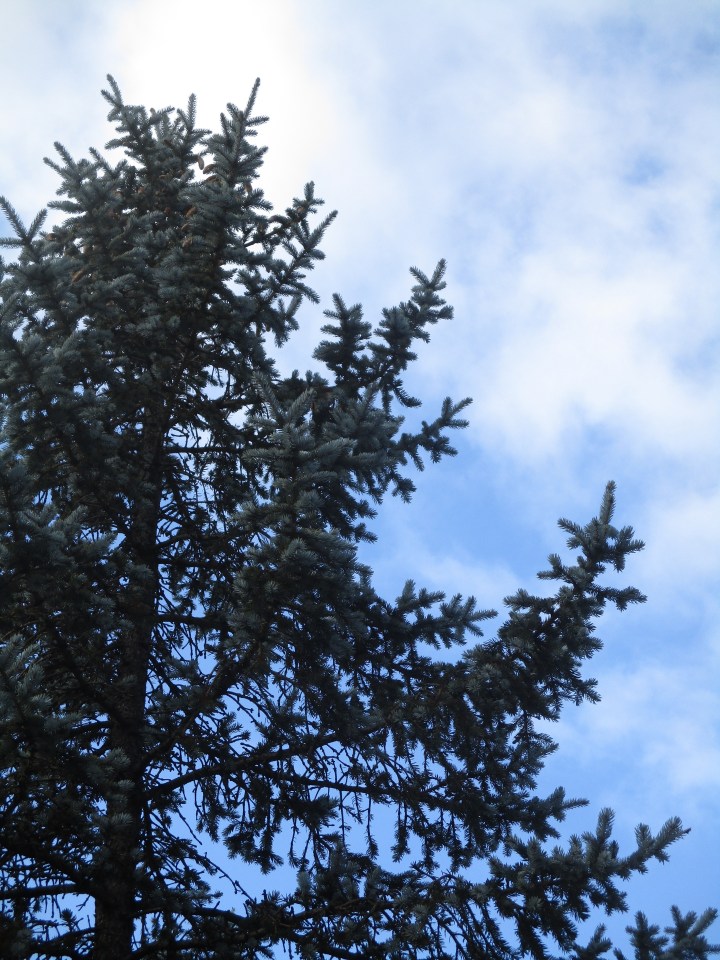 For a tree that is native to the upper elevations of the Rocky Mountains, blue spruce, Picea pungens, does surprisingly well here. It only wants to be watered a bit through summer to compensate for the lack of rain and humidity in chaparral climates. It does not seem to miss a more pronounced chill through winter. Disease and insect infestation are uncommonly noticeable or damaging.
 Spruce happen to very compatible with the landscape style here. They fit in nicely with surrounding redwoods, but are more proportionate to sunny spots of some of the refined landscapes. We intend to add a few into some of the landscapes as they get renovated. They will stay branched to the ground, like big dense shrubbery, with the personality of distinguished forest trees.
 One might surmise that a tree that is resilient enough to be the state tree of Texas is not too discriminating. If it can take the heat and humidity of the Lone Star State, it can make it anywhere! However, pecan, Carya illinoinensis, actually prefers heat and humidity, and is bored with the mild local climate. The nuts and the mess that comes with them are actually less abundant than they would be in the Gulf Coast States. The deciduous foliage is not quite so colorful in autumn.
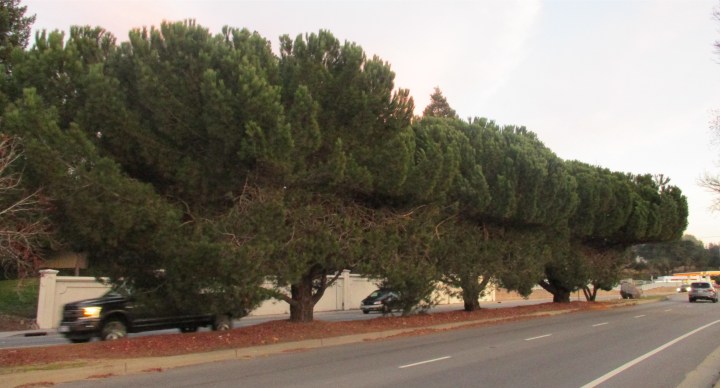 Even though it can get about fifty feet tall and wide, Italian stone pine, Pinus pinea, often gets planted as a small living Christmas tree into confined urban gardens. It gets so big so fast that it can get to be a serious problem, as well as expensive to remove, before anyone notices. It is really only proportionate to large public spaces such as parks or medians for big boulevards. The bulky trunks typically lean one way or another. The long limbs spread laterally to form an unusually broad and flat-topped canopy.
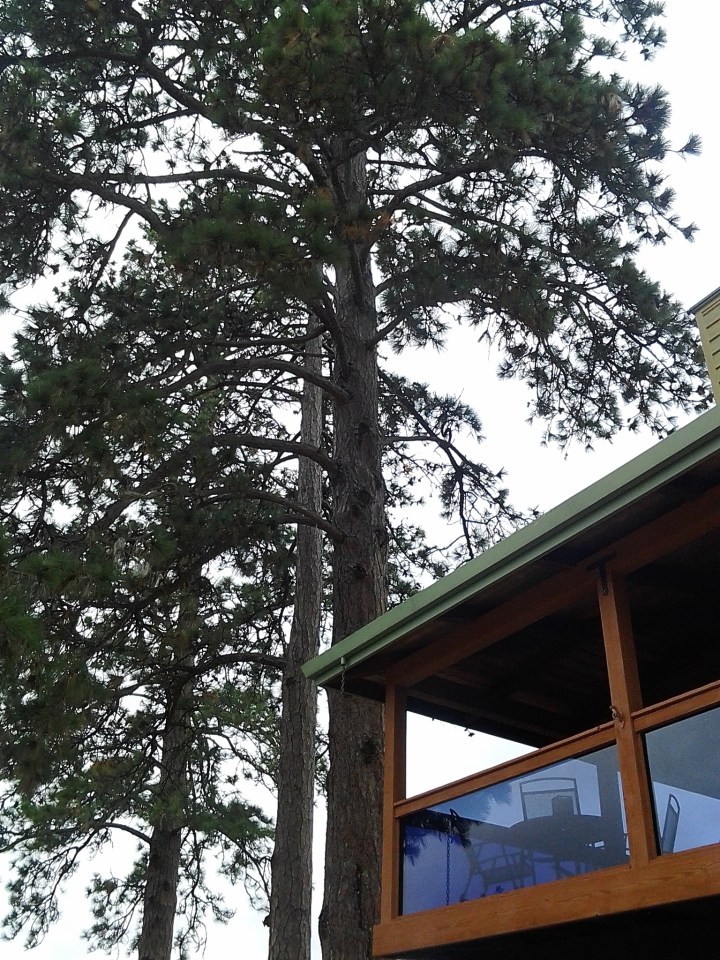 Christmas trees are like vegetables. Really, they are like big vegetables that do not get eaten. They are grown on farms, and then harvested and sent off to consumers. Although they smell like a forest, and they are descendents of trees that naturally grow in the wild somewhere, there is nothing natural about their cultivation. In fact, most are grown a very long way from where their kind are from. Therefore, bringing a cut Christmas tree into the home takes nothing from the wild, and does not interfere with nature any more than eating vegetables does.
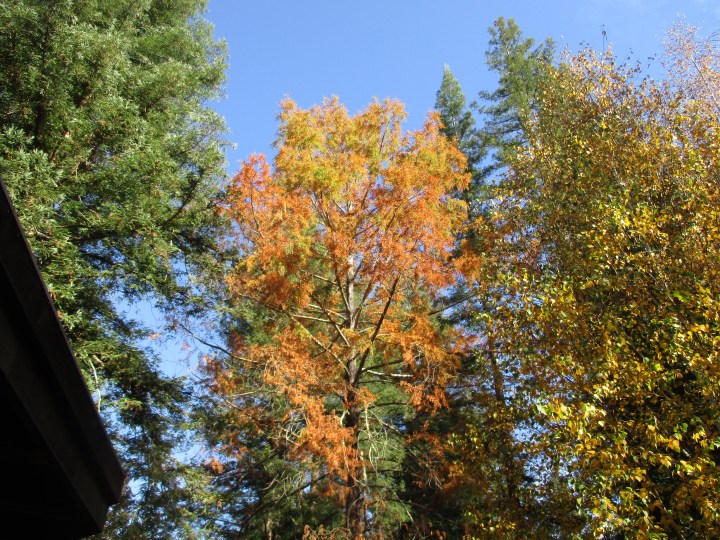 Well, that is certainly a contradiction of terms. One might say it is an oxymoron. Decades ago, it really was how we classified what we now know more simply as ‘deciduous conifers’. There are not many of them. Ginkgo is a gymnosperm like conifers are, but is not really a conifer. Otherwise, there are only five other types of deciduous conifers, which defoliate through winter.
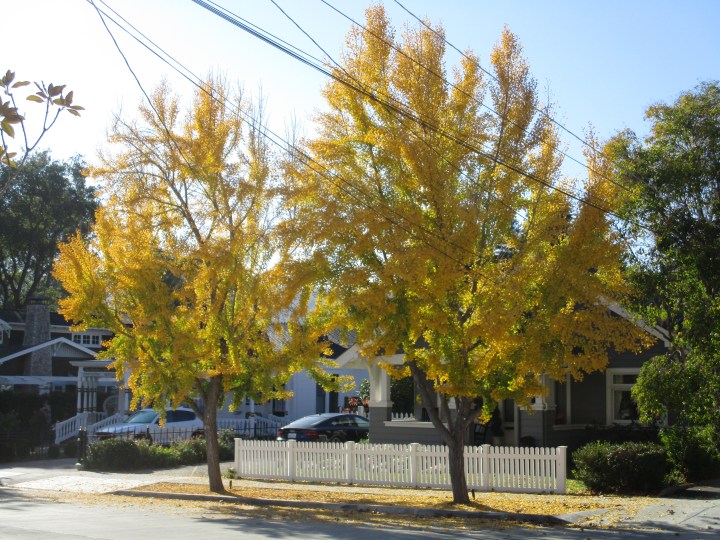 Much of my work involves street trees. They need more of my kind of attention than most other trees. They must conform to more restrictive limitations. They endure more abuse. They are the most prominent trees on urban properties. Because some are assets of their respective municipalities, they are more stringently protected by local ordinances than other trees are.




 Tony Tomeo