Six on Saturday: Blank Slate (& Asphalt)


While unable to work at my second most time consuming job, I developed a bit of unused space into a vegetable garden. I would not have done so if I had known how much work it would be, or how much of what seemed to be usable space was just trash, brambles and a shallow bit of soil on top of pavement. Alternatively, I should have had the main unpaved area bulldozed first.

Now that it is halfway through spring, this new vegetable garden is finally started!

1. Four decades of junk mixed with wicked brambles was removed to expose less than four hundred square feet of cruddy slope. Rain draining from the deck eroded a gully in the middle.P00425-1

2. To the right, disfigured juniper should be temporarily obscured by cucumber vines expected to grow from seed sown just above a ditch. Indeterminate tomato vines will be added soon.P00425-2

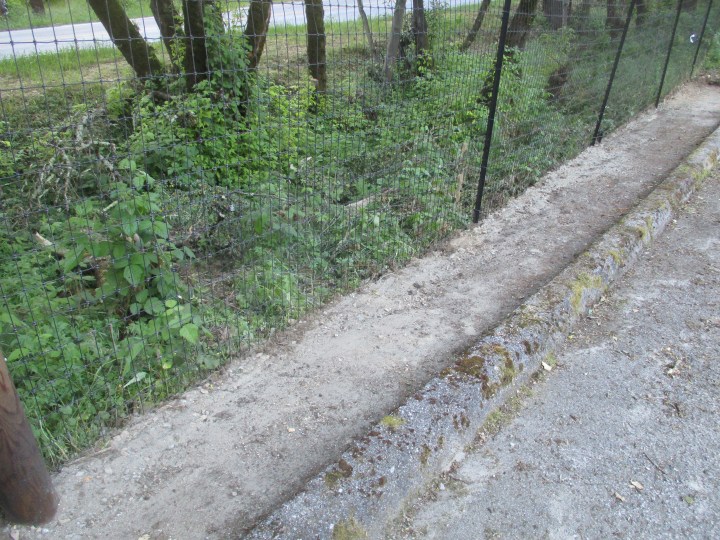
3. Across the road, more junk, weeds and brambles were removed from between a curb and fence, only to find that the area is paved to the fence! Pole beans will be pleased with the fence.P00425-3
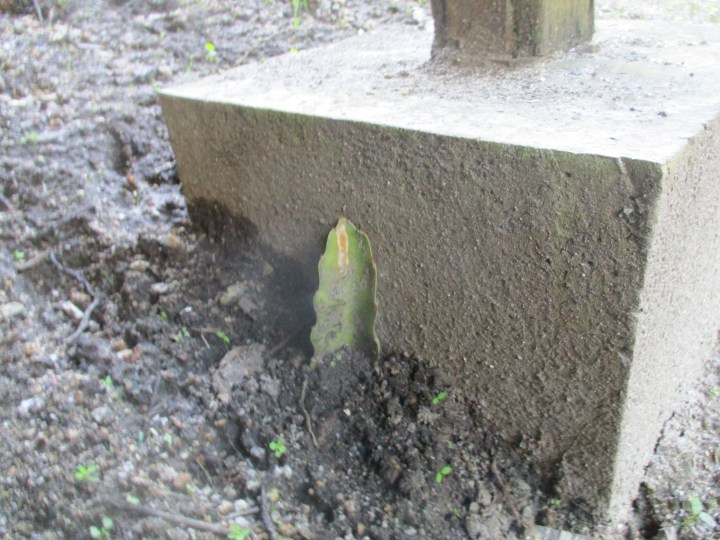
4. Posts supporting the deck had too much potential to ignore. Dragon fruit plants can climb them to the top and cascade downward. The posts are pressure treated, so will be painted first.P00425-4
5. ‘Kadota’ fig can grow as a hedge where the outer surface gets sunlight under the downhill edge of the deck. The area behind it is too shaded to be useful. The area in front is for vegetables.P00425-5

6. There are plenty of radish greens growing wild outside of the garden; but a few radish roots would be nice too. These are developing splendidly, and should be ready before anything else.P00425-6

This is the link for Six on Saturday, for anyone else who would like to participate:

https://thepropagatorblog.wordpress.com/2017/09/18/six-on-saturday-a-participant-guide/

When It Rains, It Pours

P00418K-1
Mudslide!

The only reason we developed a small vegetable garden here this year is that we have been unable to go to work for about a month. Without my second most time consuming employment, I had time to clear a small unused space (which was not nearly as simple as that sounds) and sow seed for vegetables. It was a late start a month ago, but not too late.

In fact, there was still time to do it before the last storm to go through. I know that sounds trivial, but as a Californian who is accustomed to gardening in a chaparral climate, and sometimes where there is no water available, planting prior to a storm ‘seems’ to be rather important. I know it is not. Water is available here. Otherwise, I would not grow vegetables.

Not only was there a storm, but there was a second storm later! Of course, it is not really that simple. The first light duty storm was nice, and soaked things sufficiently. Then the weather stayed strangely cool for this time of year. Nothing germinated. Then the second storm was brief but torrential enough to erode all of the recently sown seed right out of the new garden!

It was too comical for me to be too annoyed by it. I only needed to see what survived the erosion so that I could replace what did not. I almost replaced everything anyway, just because I was that certain that nothing survived.

Well, as it turned out, not much was missing! The garden got a slow start, and was delayed again by cool weather, but somehow seems to be recovering nicely. Even some of the very old seed that I did not expect to be viable has germinated.

P00418K-2
A late batch of radish somehow survived.

Now, I must go work in the garden.

P00418K-3

P00418K-4
Late but ready to go.

Poppy And Periwinkle

P00321-1
Even though I know they are slightly purplish, periwinkle look blue to me.

Clearing space for a new small vegetable garden is more work than it will be worth. It took more than a day to remove the thicket of bramble from a triangular area that is only about forty feet from front to back, and not much more than twenty feet wide. After so many years of getting trash dumped on top of them, the brambles were unusually prolific with gnarly root burls.

There is still significant work to do. I still need to condition the soil and groom the adjacent junipers before sowing seed for the warm season vegetables for this summer. Now that I can see that the junipers that were formerly concealed by brambles are worthy of salvage and grooming, I will need to clear a bit more garden space across the road, and cut back a few trees above.

When finished and producing, the garden will not produce enough. The four hundred or so square feet in the main part of the garden should supply enough for two people; but realistically, it would more likely produce enough for me alone, with a bit extra to can for when it is not producing much. There are about a dozen on our crew. They all have families. I need a quarter acre!

The math of it all is frustrating. So is all the work to get it started. It all seems so futile. I know we will appreciate the little bit that we get. I will still get plenty from the weeds that grow wild around the baseball field, so will not take much from the garden.

P00321-2
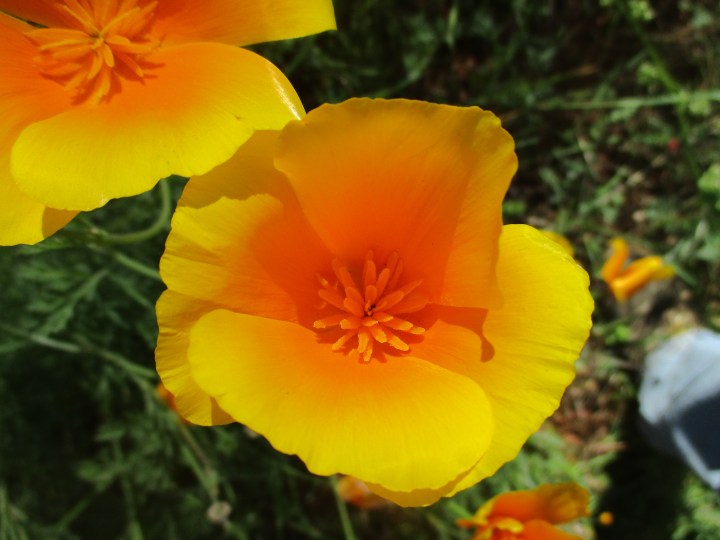
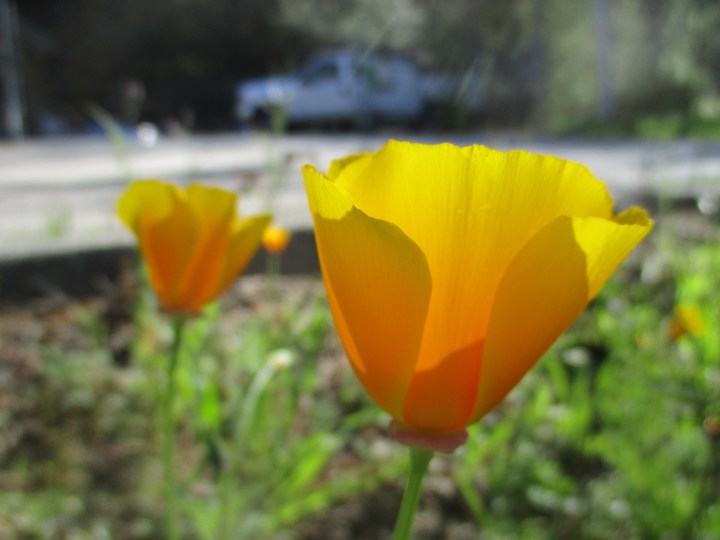
As simple as they are, poppies are still my favorite native wildflower.

For now, I try to visualize what the small vegetable garden will look like in production this summer, even if all that I see blooming are the poppies and periwinkle on the outskirts.

P00321-3
My illustrations are more technical than artistic. It looks like someone else took this one. Ignore the pickup in the background.

Six on Saturday: New Vegetable Garden


There is more time for a late start on a new vegetable garden now. I had planed to take this and next week off from most of my work, to tend to other neglected obligations. However, under the circumstances, I am still unable to tend to many of those obligations! Well, the crew wants a new vegetable garden.

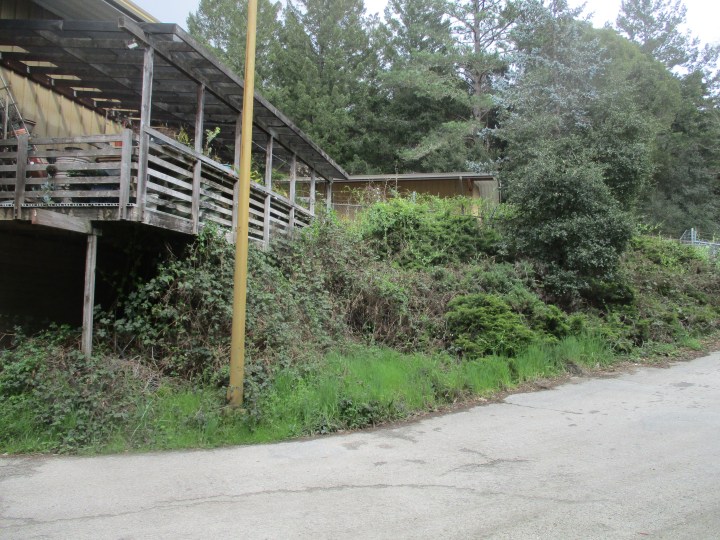
1. Before, the area was overwhelmed with a dense thicket of Himalayan blackberry brambles, that had grown up into the joists of the deck above, and over the adjacent junipers to the right.P00321-1

2. After, it is not much better. This initial phase took me half a day!! I intended to remove most or all of the junipers, but as they become exposed, it is evident that they are worth salvaging.P00321-2

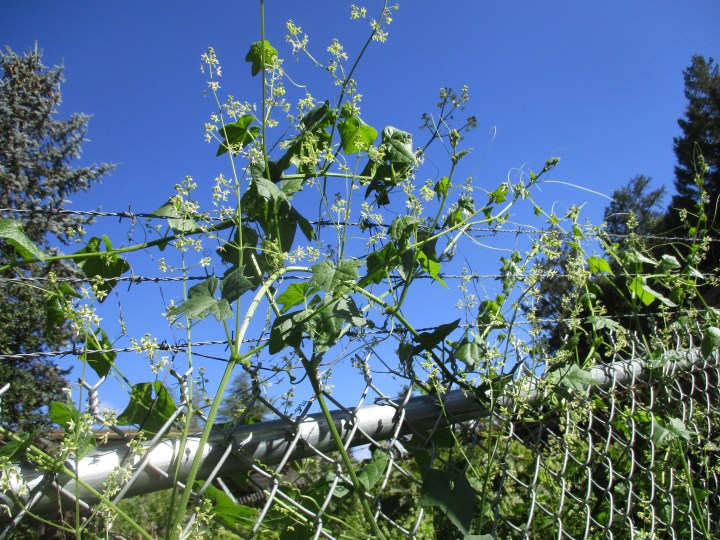
3. I already know I will be sowing seed for the warm season vegetables a bit late; but this wild cucumber feels compelled to remind me. It is already past the top of this seven foot high fence.P00321-3

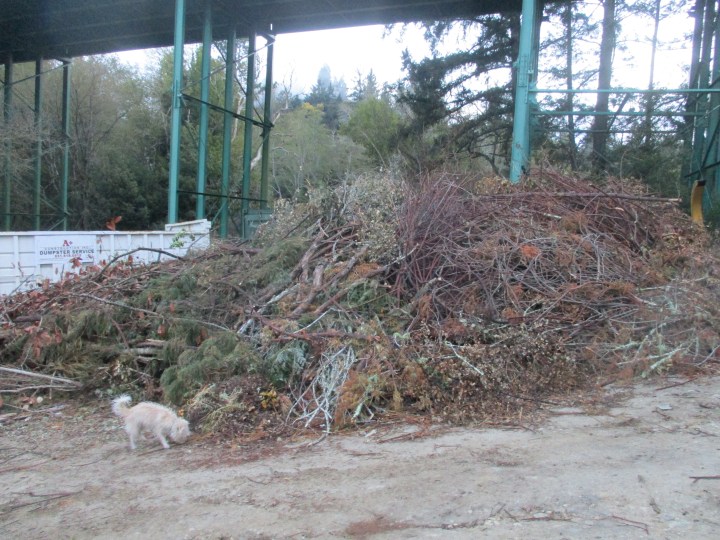
4. This is just some of the debris that I removed. For comparison, the animal to the lower left is a buffalo. Okay, it is really just Rhody. The dumpster is as high as the cargo container though.P00321-4

5. Okay, so that was a bit of an exaggeration. The pile really is this big, but only the small portion outlined in yellow to the upper right is from the new garden, and is only about two feet high.P00321-5

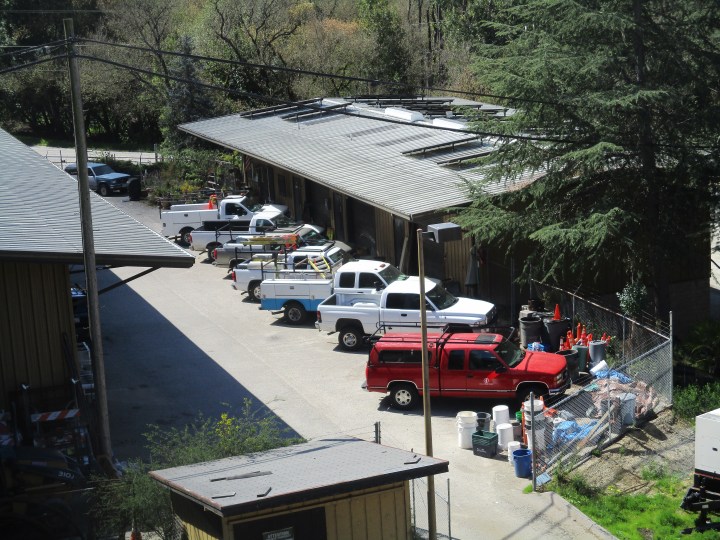
6. While up on the bridge over the debris pile, I got this picture of most of the work trucks that are not at work where they belong. Everyone else writes about it; but I have not mentioned it.P00321-6

This is the link for Six on Saturday, for anyone else who would like to participate:

https://thepropagatorblog.wordpress.com/2017/09/18/six-on-saturday-a-participant-guide/

Onion

00325
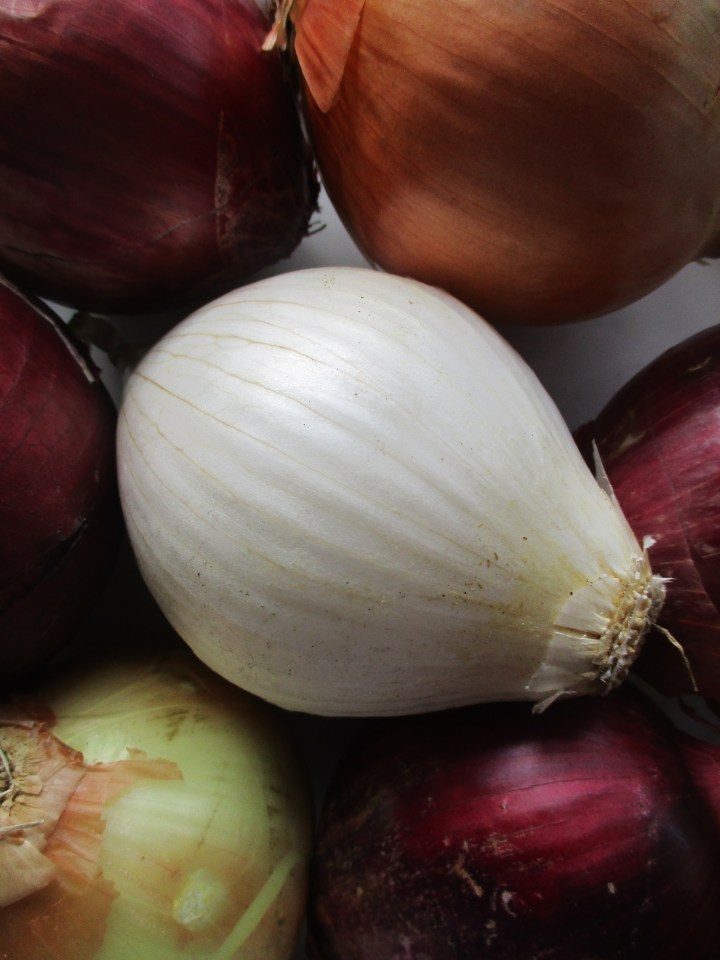
Onions are weirdly bulbous foliar vegetables.

Although it is the most cultivated species of its genus, no one knows the origins of domestic onion, Allium cepa. Leek, shallot, garlic, chive, and a few other species are also popular vegetables. Most common bulbing onions produce familiar distended bulbs that are ready for harvest after defoliating and initiating dormancy in autumn. Green onions are leaves and attached juvenile bulbs.

Onions are probably easiest to grow locally from small juvenile onions known as ‘sets’, that grew from seed during the previous summer. Alternatively, seed sown during summer grows into small plants that go dormant to overwinter, and then resume growth the following spring. Mature onions should go completely dormant in autumn before storage, but are usable directly from the garden.

Yellow or brown onions are the most popular for cooking. Red or purple onions are milder and more colorful for fresh use, and are also popular for stir fry. White onions, whether fresh or cooked, are even milder, and are the traditional onions for salsa. All onions produce distinctively bluish foliage that stands about a foot high. The hollow leaves flop over and shrivel for dormancy in autumn.

Crop Rotation For Home Gardens

00325thumb
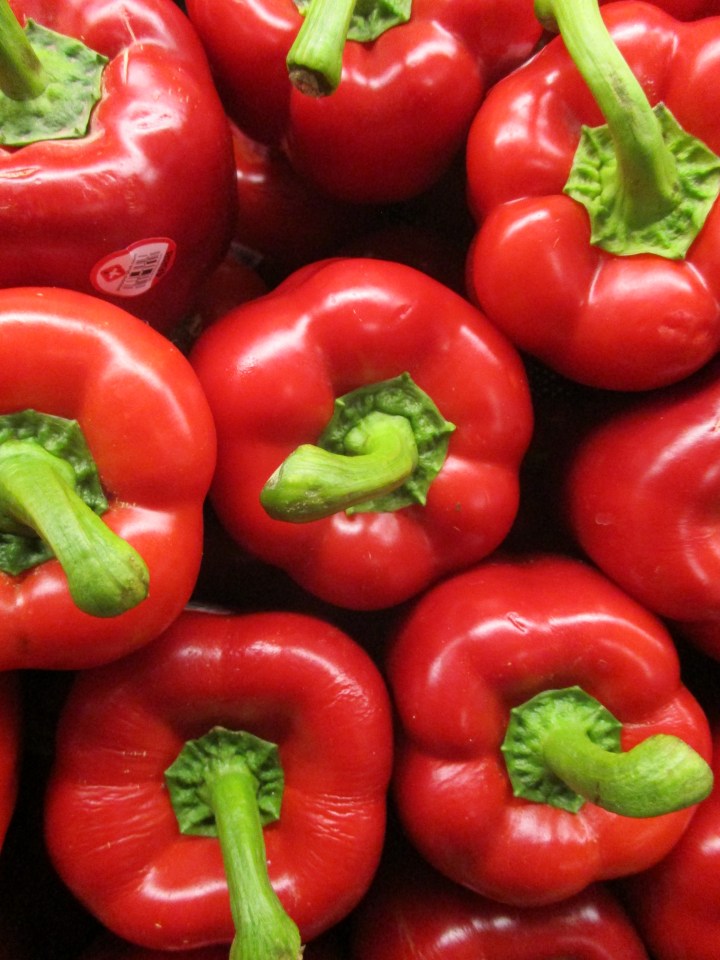
Pepper plants should get relocated annually.

Vegetable gardening is not permanent landscaping. With few exceptions, vegetable plants are annuals, like bedding plants. They do their respective jobs within only a few months. When finished, they relinquish their space to different vegetable plants of a different season. More of the same will be in season again in a few months. Crop rotation is something to consider when that happens.

Crop rotation is standard procedure for field crops involving several acres of the same variety of vegetable. Some crops grow on the same land for a few years. Some change annually. With few exceptions of big perennial vegetable plants, none stay in the same location for too long. Some fields go fallow for a season without production. Most simply produce a different type of vegetable.

Vegetables that grow for too long in the same soil eventually deplete some of the nutrients that they use most. Different types of vegetables deplete different types of nutrients. Crop rotation allows soil that was depleted by one type of vegetable to be used by another type that does not mind the depletion. While slowly depleted of a new set of nutrients, soil recovers from previous depletion.

For example, a sunny side of a fence is an ideal spot to grow pole beans. It is tempting to grow them there annually. However, they do not perform as well for a second season, and are likely to be scant for a third year. However, tomatoes appreciate what beans do to the soil, and do not miss what they took from it. After tomatoes take what they want for a season, beans are ready to return.

Crop rotation also helps to disrupt the proliferation of host-specific pathogens that overwinter in the soil and decomposing plant parts.

Generally, new vegetable plants should not be of the same family as vegetable plants that they replace in a particular location. Beans, squash, okra or corn should be happy where tomatoes grew last year. Peppers and eggplants are of the same plant family as tomatoes, so are likely to crave what the tomatoes already depleted. They are also susceptible to some of the same pathogens.

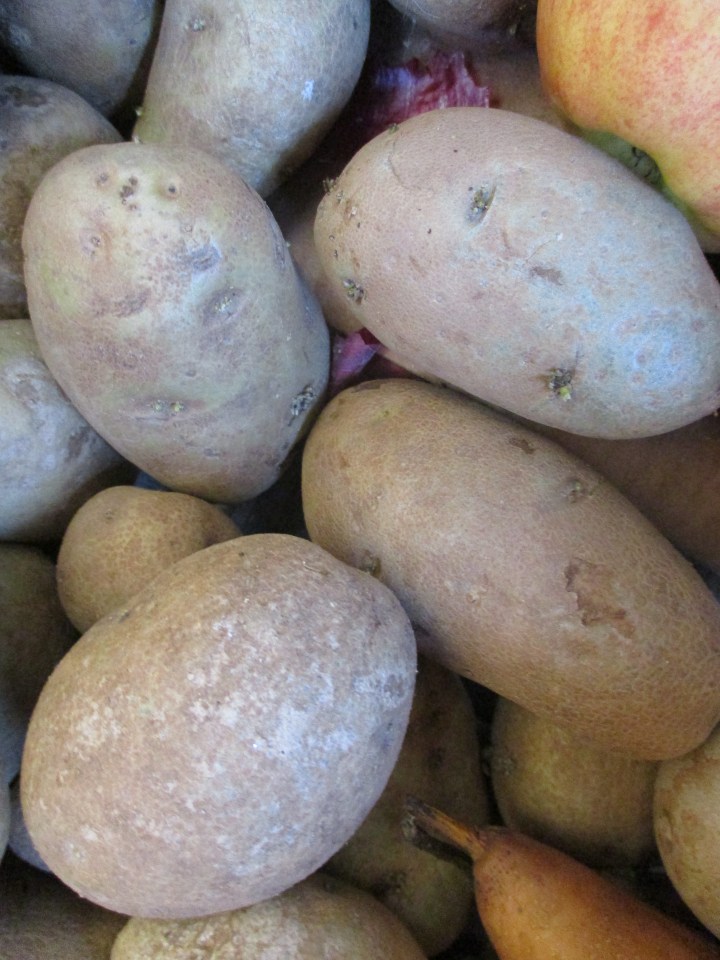
Potato

00318
Grow potatoes now to dig later.

First thing first. Potatoes are not roots. They are only classified as a root vegetable because they grow underground. They are actually a sort of specialized subterranean stem known as a ‘stolon’. Because they are so distended, a more accurate distinction might be ‘tuberous stolon’ or ‘stoloniferous tuber’. Their eyes are buds, which roots lack. Their roots extend from eyes and other roots.

Most cultivated potatoes are of the species Solanum tuberosum. Some of the thousands of cultivars that were developed during the thousands of years that potatoes have been in cultivation are distantly related to other species. Hybridization was a means with which to incorporate desirable characteristics of other species. Potatoes are presently one of the main food crops in the World.

Small potatoes or pieces of potatoes, which are known as ‘seed potatoes’, start to grow in home gardens after the last frost. Potatoes are not grown from actual seed because of the potential for genetic variation. After bloom later in summer, their coarse foliage dies to the ground. Potatoes that grew during the previous season are then ready to get dug. Fruit and all green parts are toxic.

Pumpkins Exemplify Ripening Winter Squash

41001thumbZucchini is probably the most reliable of warm season vegetable through summer, even when tomatoes are having a bad year. A single zucchini plant produces enough for a household. Two plants produce enough to share with neighbors. Pattypan, crookneck and other varieties of summer squash may not be quite as reliably productive individually, but can be assembled as a delightfully variable team that produces early in summer, and is just now finishing.

The fruit of summer squash is best when immature and tender. It gets tougher and loses flavor as it matures. Because development of seed within maturing fruit exhausts resources, plants are actually more productive if the fruit gets harvested while immature. In other words, they can either make many small fruits, or a few large fruits. The plants have coarse foliage on big but relatively confined annual plants.

Winter squash is very closely related to summer squash. The shabby annual vines sprawl over much larger areas, and can even climb fences and shrubbery. The main difference though, is that each plant produces only a single fruit or only a few individual fruits that are allowed to mature completely through summer. Their ripening fruit is just now becoming available as summer squash are running out. The fruit is supposed to be best after frost has killed the foliage, which could take a while here.

Hubbard, acorn, turban, spaghetti, kabocha and butternut squash, as well as the many varieties of pumpkin, are the more popular types of winter squash. Unlike summer squash, winter squash can be stored for quite a while, and need to be cooked to be eaten. While winter squash do not produce as many fruiting female flowers as summer squash produce, they seem to make at least as many male flowers that can be harvested while still fresh.

Male flowers can be stuffed, battered and fried, or simply fried. After they have been pollinated and set fruit, female flowers are typically too wilted to be eaten. All squash produce more male flowers than female flowers. Even the most fruitful of summer squash produce about three times as many male flowers as female flowers.

Cool Season Vegetables Are Coming

40910thumbWhat happened with the tomatoes?! In past years, they were inhibited by mild summer weather. This year, they had plenty of warmth, but did not seem to perform much better. Perhaps they wanted more humidity. Now that those that started slowly are starting to produce better, they do not have much time left before warm summer weather gets cooler towards autumn.

Eventually, cool season vegetables will move into the garden. Seed for the earliest beets and chard may have already been sown directly into the garden. Subsequent phases of beet seed can be sown every three weeks or so until about a month prior to the return of warm season vegetables at the end of winter. Each subsequent phase should begin to produce at about the time that the previous phase gets depleted.

Unlike beet roots that get pulled up completely when harvested, chard produces foliage for quite a while, so is often planted only once. A second phase added sometime in winter may prolong production into late spring. However, by the time the first phase actually finishes, there will be plenty of warm season greens to grow. Because only a few chard plants are enough, they do not need to be grown from directly sown seed, but can alternatively be grown from cell-pack seedlings purchased from a nursery.

Cell-pack seedlings are actually often more practical than seed is for broccoli, cauliflower, cabbage and some heading lettuces. Seedlings get growing faster, so are less likely to get eaten by pests as they germinate. A cell-pack of seedlings does not cost much more than an envelop of seed, but contains about as many plants as one garden needs.

Carrots, radishes, peas, spinach and leafy lettuces should be grown from directly sown seed because so many individual plants of each variety are needed for adequate production. Besides, carrots and radishes are roots that get disfigured if initially confined to cell-packs; and peas have very sensitive roots that do not like to be transplanted. Seed for leafy lettuces grown for ‘baby greens’ can be sown densely because leaves get plucked through the season, without getting very large.

There are three options for growing onions. Seed is practical, but takes a while, and can be the riskiest option for large bulbing onions. Onion sets are tiny onions that grew from seed last year, and only need to be grown another year for plump mature bulbs. They will grow as green onions if planted deeply and harvested early. Crowded cell-pack seedlings grow into tight clumps of disfigured onions, but can be separated and grown into well formed individual onions.

Bell Peppers

90320The weather here is excellent for growing all sorts of fruits and vegetables, but is not exactly ideal for bell peppers. Cool nights between warm days are comfortable for us, but limit production of even the healthiest and most robust of plants. Although they like warm nights, the fruit can be sensitive to hot days, and can even get scalded. Bell pepper plants like rich soil and regular watering.

Bell peppers lack capsaicin, which causes other peppers (‘chiles’) to be distinctively ‘hot.’ The fruits of the more popular varieties of green bell pepper are generally harvested while immature, but would otherwise ripen to red. However, most popular red bell peppers are different varieties that produce somewhat elongated fruits with milder flavor. Other varieties produce orange or yellow fruits. Uncommon purple, lavender, brown and white bell peppers are just . . . weird.90320thumb