Winter Vegetables Start In Summer

00902thumb
There are vegetables for every season.

It seems to be much too early for cool season vegetables while the weather is still so warm. Summer vegetables, which are also known as warm season vegetables, are still at their best. Most will continue perhaps until frost. Yet, months ago, they also started prior to their growing season. At that time, cool season vegetables, which are also known as winter vegetables, were still producing.

Although it really is too early for winter vegetables to grow in the garden, it is time to plan for them. Those of us who prefer to grow varieties of winter vegetables that are not likely to be available in nurseries should get their seed now. In only a few weeks, it will be time to sow the first phase of seed for carrots and beets directly into the garden. By October, it will be time to sow seed for peas.

Broccoli grows slowly from seed. Whether it goes directly into the garden, or into flats for later transplant, broccoli seed should get sown by about now. If the preferred gardening style allows for it, seed for winter vegetables can be sown below old summer vegetable plants. The seed for winter vegetables can germinate and start to grow as summer vegetables finish and vacate the garden.

Cauliflower and cabbage seed want to germinate and start growing shortly after broccoli, within the next few weeks. However, seedlings of the more popular varieties of cauliflower and cabbage, as well as broccoli, will be available in nurseries for later planting. Lettuce, spinach and kale do well from late seedlings, or seed sown after cauliflower and cabbage, along with carrots and beets.

Root vegetables, like carrot, beet, radish, turnip, rutabaga and parsnip, grow from seed, sown directly.

Eventually, some of the warm season or summer vegetables will need to relinquish their space to winter vegetables. Most will finish by that time anyway. Those that stay long enough will succumb to frost. Summer vegetables can stay latest where subsequent phases of winter vegetables will later (not yet) replace an early phase. Subsequent phases begin production as early phases finish.
Six on Saturday: Feast Of The Assumption


August 15 is the Feast of the Assumption, which celebrates when the Blessed Virgin Mary, at the end of her life, was assumed into Heaven, body and soul. In some cultures, it is known more simply as the Assumption, so is not considered a Feast Day. That would be fine with me. The vegetable garden is rather pathetic for the middle of August. There are plenty of cucumber, and more summer squash than we know what to do with, but the rest of the produce is slim pickings.

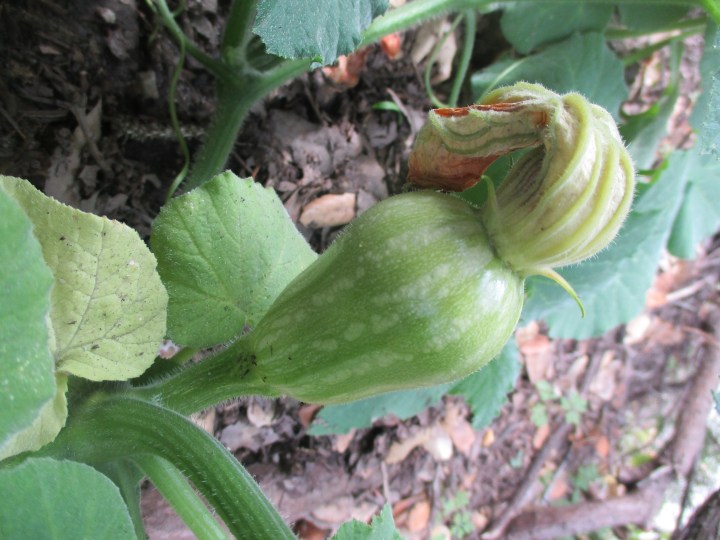
1. Squash – of this sort will not be ready until after the first frost next winter. Nonetheless, it seems to be maturing slowly. It should probably be substantially larger for this late in summer.P00815-1

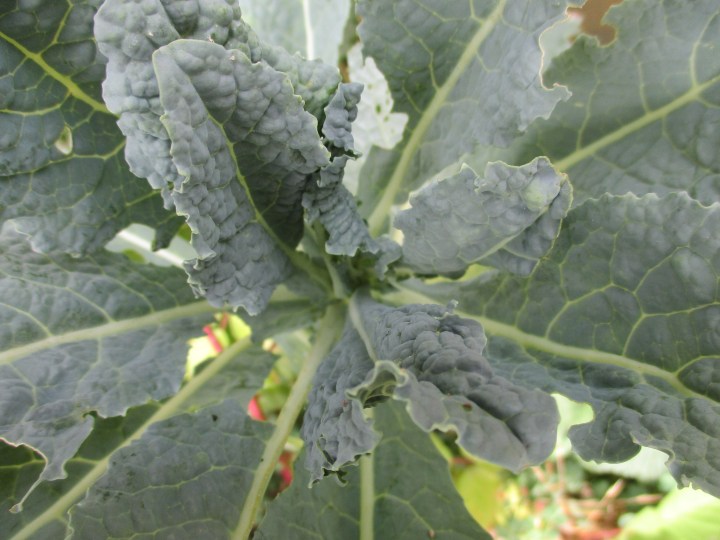
2. Kale – could be either late or early. It is a spring or autumn vegetable here. Seed was sown late, but should have been later to be ready for autumn. It should survive, and start over later.P00815-2

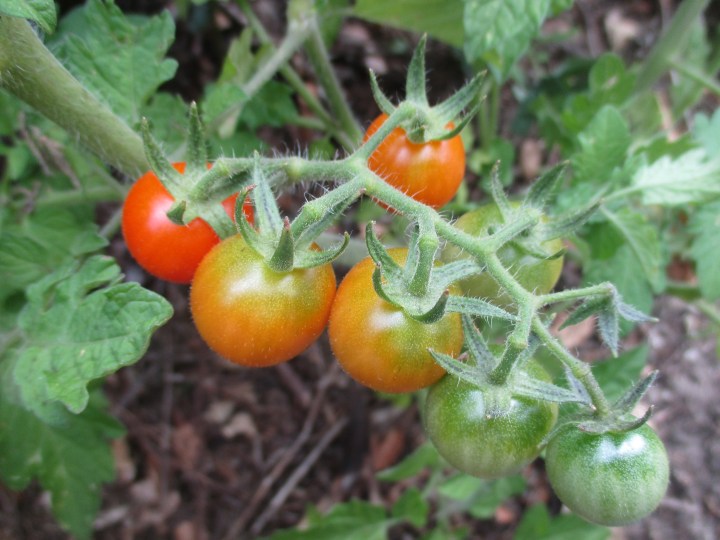
3. Tomato – are better than they look here. The cherry tomatoes do not ripen in clusters though. I just pluck the ripe fruits off individually. None of the bigger tomatoes have ripened yet.P00815-3

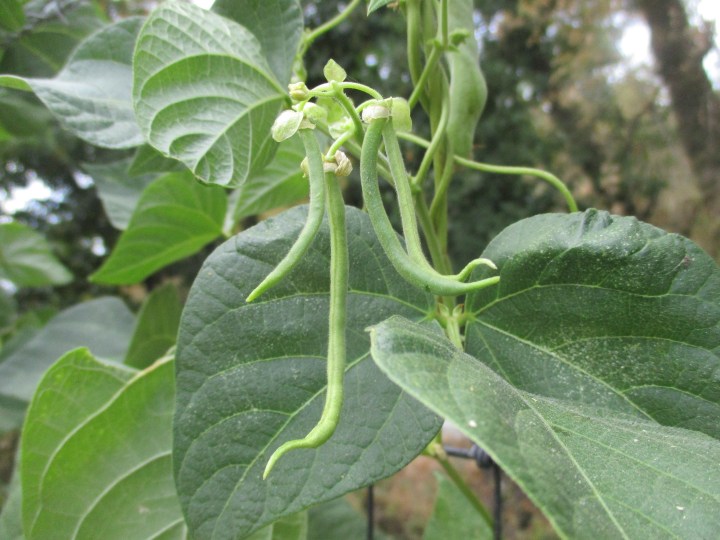
4. Bean – vines have grown like weeds, but are just beginning to produce. I have never grown this variety before. The variety that I had always grown starts producing earlier, while young.P00815-4

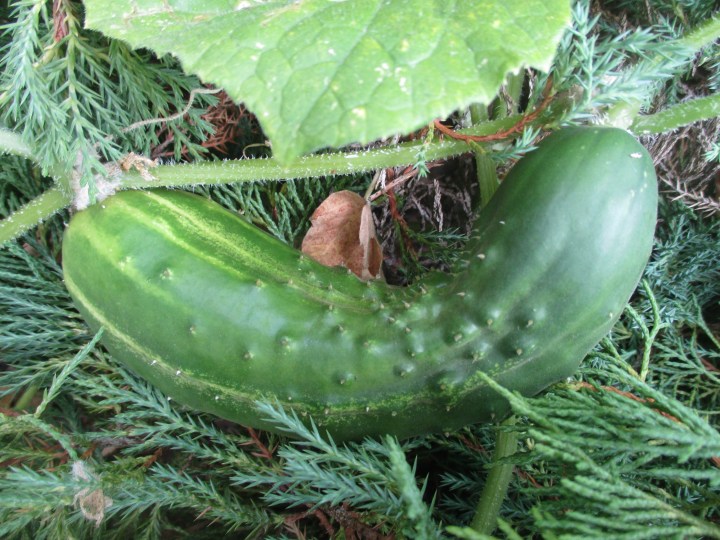
5. Cucumber – production has been adequate. However, because I have not been watering regularly enough, the cucumber are rather bitter. I like how the vines climb up over the junipers.P00815-5

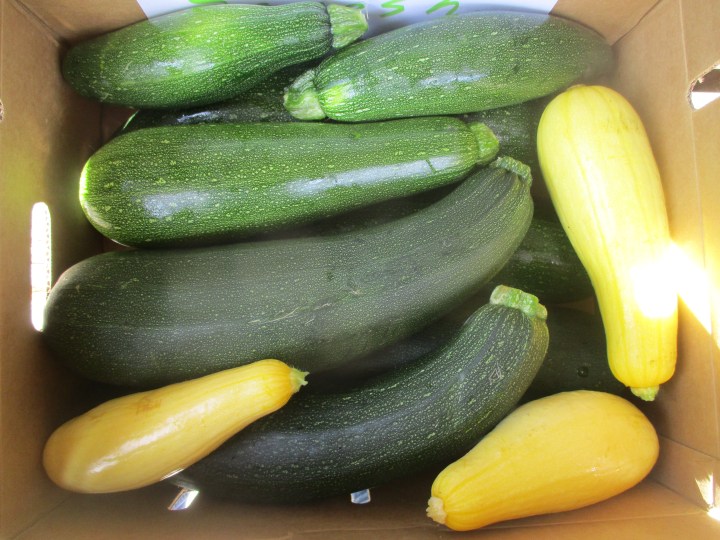
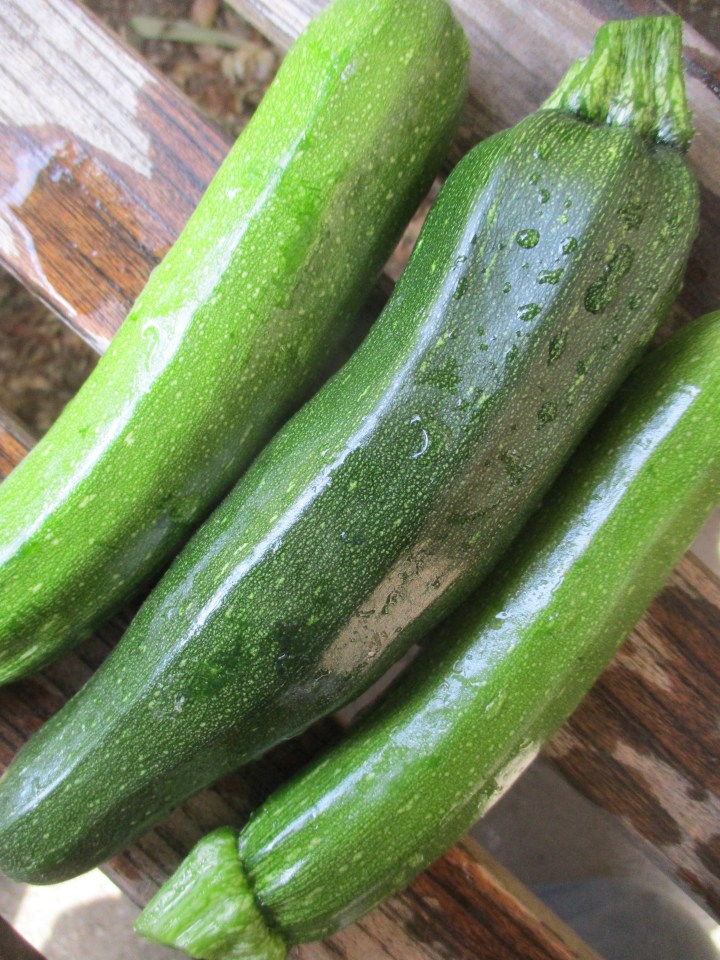
6. Squash – has been too productive! These are the summer squash, mostly zucchini, for the neighbors. However, there is nothing ‘ini’ about those that could not get harvested early enough.P00815-6

This is the link for Six on Saturday, for anyone else who would like to participate:

https://thepropagatorblog.wordpress.com/2017/09/18/six-on-saturday-a-participant-guide/

Zucchini

00701
Zucchini is the exemplary summer squash.

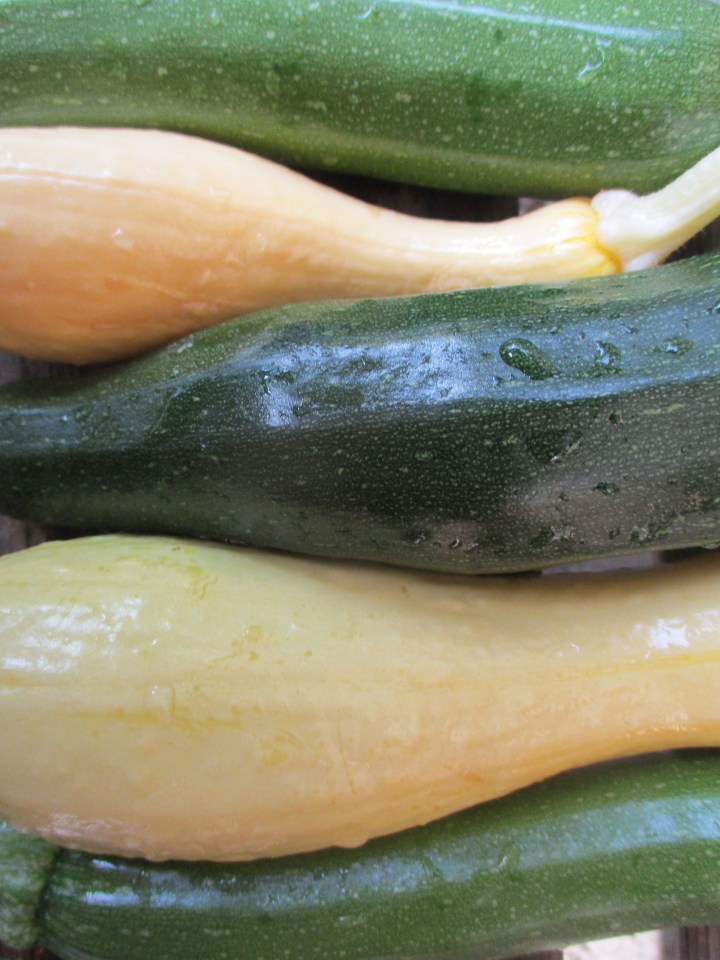
Zucchini, Cucurbita pepo, is the epitome of summer squash. Because it is so easy to grow, it is the primary choice for gardens that can accommodate only one set of summer squash plants. The fruits can be yellow, dark green or dark green with a lacy gray pattern, Yet, the common medium green variety is still the most popular. It is likely the most vigorous and most productive of them all.

Like all summer squash, zucchini wants good warm exposure, rich soil and regular watering. Powdery mildew can be a problem if the foliage gets wet from watering late in the day. Foliage that is ruined by powdery mildew should be removed. Plants are easiest to grow from seed sown directly where they are desired, after the last frost. Two or three plants should grow together in each set.

Fruits are best before they get longer than eight inches or so, although they are edible at any stage. They can eventually grow as big as baseball bats. However, plants that produce such big fruits produce almost nothing else. Regular harvest promotes prolific production. Male flowers are more abundant than females flowers that produce the fruits. All flowers are edible before they shrivel.

Summer Squash Excel All Summer

00701thumb
Tender young summer squash are best.

Summer is for warm season vegetables like tomatoes, beans, corn, okra, and of course, summer squash. The name says it all. Summer squash are the sort of squash that develop and are ready for harvest through summertime. The season continues until the plants succumb to cooling autumn weather. The abundant squash fruits are best while young and tender, before they actually ripen.

Related winter squash grow through summer too. However, they ripen completely through the growing season before harvest in autumn. By the time they are ripe, their foliage will be succumbing to frost. They are much less perishable than summer squash are, so last for months if stored properly. Instead of producing abundant small fruits, winter squash plants produce only a few big fruits.

Summer squash plants can produce big fruits too, but at the expense of preferred tender juvenile fruits. They simply will not divert resources to new small fruits while concentrating their effort into a big fruit full of viable seed. After all, seed production is their priority. Regular harvest of juvenile fruits actually stimulates the production of more fruits. It forces the plants to redirect their resources.

There is certainly nothing wrong with summer squash fruits that have matured a bit more than they should. Stuffed zucchini is merely medium sized zucchini sliced in half lengthwise, hollowed out, stuffed and baked. Some people actually prefer to leave the last summer squash fruits of the season out in the garden to get as big as they can before frost. Such fruits are tough, but not too bad.

Common zucchini and its varieties are the most poplar of the summer squash. They are generally the most reliable and most productive. Crookneck squash are likely the second most popular of summer squash locally. They are slightly less productive, but provide variation of flavor. Pattypan squash have good flavor, and a slightly firmer texture that is an advantage for soups and freezing.

Other interesting varieties of summer squash are too numerous to list. Each exhibits its own distinct characteristics.

Six on Saturday: Kitchen Scraps


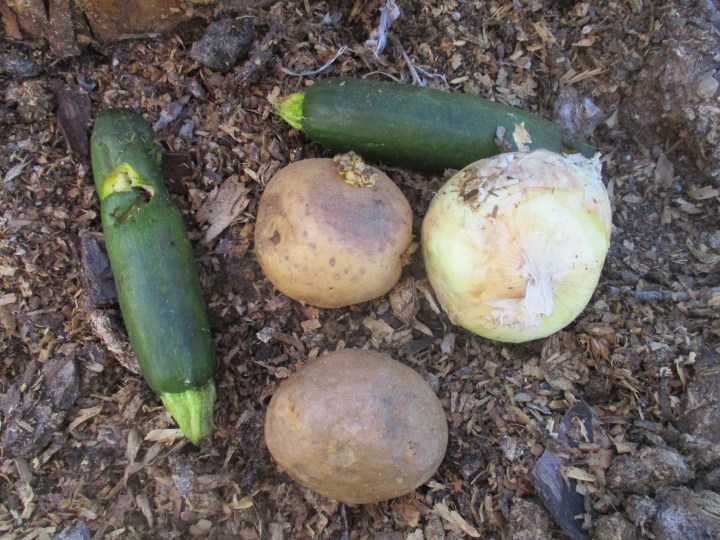
The first of our compost piles will not die. Some of the scraps of vegetables from the kitchens grow to produce more of the same. As this first pile of pre-compost gets turned over to the next pile, we commonly find potatoes and onions. Tomatoes, squash and sometimes cucumbers grow around and on top of the pile. Without watering, their season is limited, but just long enough.

It is actually frustrating that some of the vegetables that are not so productive where tended in the vegetable garden perform better, although likely briefly, on the random compost pile.

1. Vegetable scraps and rotten vegetables are common in the compost pile, even while the kitchens here are not presently operating. These do not seem to have been rotten when discarded.P00620-1

2. Summer squash is common here, even though scrap from the kitchens should be from juvenile squash, which should contain no viable seed. This might produce yellow crookneck squash.P00620-2

3. Cucumber is not so common, and will not likely last as long as other vegetable plants. The area is warm and dry. Cucumber prefers sunny but not so warm exposure, and regular watering.P00620-3

4. Determinate tomato looks just like what grew here last year. If so, it makes small cherry tomatoes that are shaped like ‘Roma’ tomatoes; and all the fruit will ripen at about the same time.P00620-4

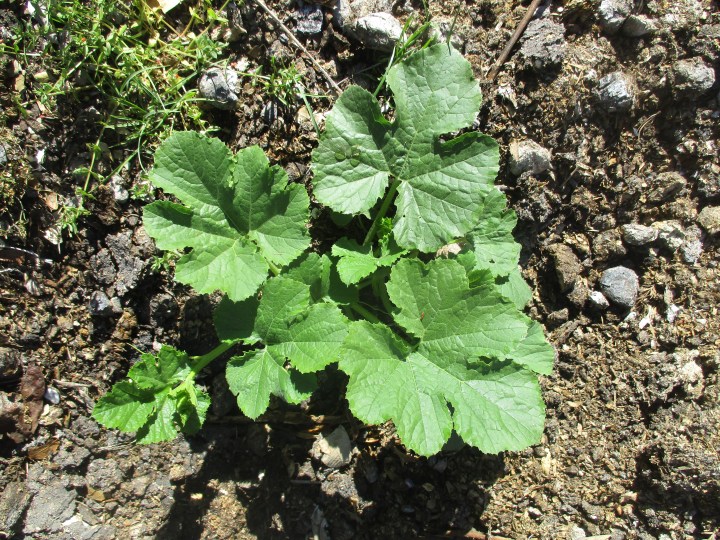
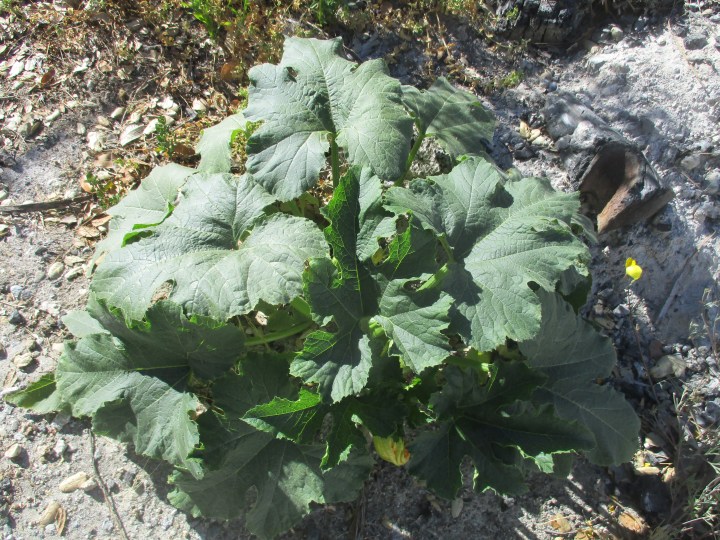
5. Pumpkin vine should be sprawling more than this. It could be just another type of squash. The round fruits with stout stems resemble baby pumpkins. However, the leaves are not right.P00620-5

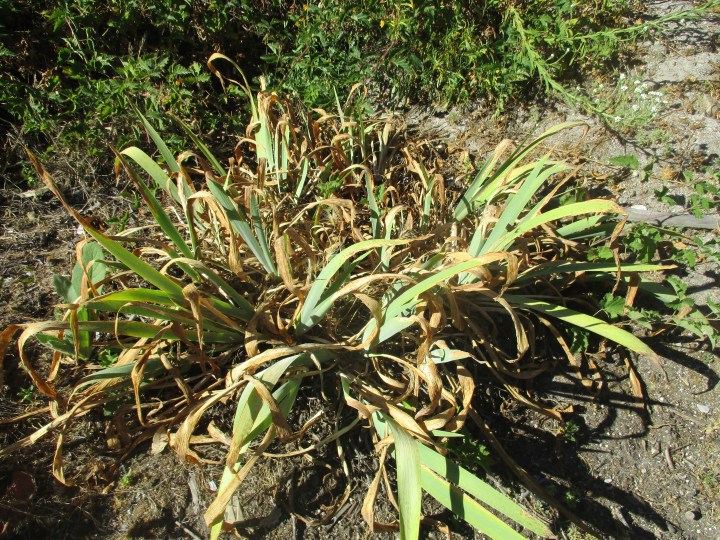
6. Bearded iris is no vegetable, but naturalized similarly next to the compost piles. It is perennial rather than annual. Although shabby here, it can be recycled into landscapes. Bloom is gold.P00620-6

This is the link for Six on Saturday, for anyone else who would like to participate:

https://thepropagatorblog.wordpress.com/2017/09/18/six-on-saturday-a-participant-guide/

Horridculture – Bucket of Bolts

P00425-6
They started out nicely.

Radishes seemed like a good idea back when I sowed the seed in the garden. I had not grown any in many years. I thought that the particular location would be cool enough to inhibit bolting, even though it was starting to get close to the end of their season here. They are definitely a cool season vegetable here, with brief seasons in spring and autumn. Some linger through winter.

The seed germinated efficiently. The seedlings started out well. Radishes are small roots that mature in only about three weeks. Technically, they were right on schedule. I happened to get a few tiny radishes from the batch. However, after the seed were sown, but before the radish roots developed, the formerly cool spring weather warmed suddenly enough to stimulate bolting.

The elongation of floral stalks was visible within the foliar rosettes of most of the individual radishes while they were still quite dinky. Initially, I thought it would be no problem. There were a few good radish roots, which was all I needed to brag to my colleague down South about. Those that bolted would sort of be palatable as radish greens. Bitterness does not bother me much.

Now, because so few of the radishes were pulled for their roots, too many are growing as greens, and they evolved from merely bolting to blooming. The flavor evolved from normal bitter to almost icky bitter. I will not be sharing these with anyone. I can not leave them in the garden to get shabby either. Besides, I want the space for something else. I suppose I will freeze some.

After all the effort, I got only a few small radishes, some decent greens, and mostly bitter greens. Perhaps I will try radishes again in autumn. This radish trial was a ‘FAIL’.

P00617
Yes, we have no radishes.

Summer Vegetables Like Warming Weather

00325thumb
Summer Vegetables Like Warming Weather

Tomato, pepper and eggplant plants should be out in the garden by now. They typically get planted only a few weeks after the last threat of frost, so that they can start to disperse their roots early. Growth above ground accelerates as the weather gets warmer. Fruit develops and ripens through summer.

These three types of vegetable plants get planted as seedlings for two main reasons. First, when they go into the garden, seedlings are bigger and more established than seeds that need to take time to grow are. Secondly, the cost of the few plants needed for an average garden is not much more than the cost of seeds.

Now, zucchini, melon and summer squash can be done either way. Not many plants are needed, so the expense of seedlings is minimal. However, seedlings are a bit more fragile than those of tomato, pepper and eggplant. Seeds grow so efficiently that they get established almost as readily as seedlings do, so are just as practical.

Regardless of how they get planted, the weather has been so odd this year that there has been only minimal advantage to planting seedlings and sowing seed on time. Tomato, pepper and eggplant plants that were planted early may not be much more mature than what could be planted now. Harvest will be delayed either way.

Bean, cucumber and corn all grow best from seed. Seedlings take more time to recover from transplant than seed take to germinate and grow. Besides, so many plants of each type are needed that seedlings would be expensive. A single package of seed is cheap and goes a long way, so is probably sufficient for an average garden.

Corn is one of those vegetables that produces on a rather tight schedule. Seed that gets sown at any particular time matures at the same rate, so that all the fruit finishes at about the same time. This is why corn gets sown in phases. If timed properly, a subsequent phase begins to produce as the preceding phase gets depleted.

Winter squash, including pumpkin, are similar to summer squash, although they are more tolerant of unusually cool spring weather. They too can either get planted as seedlings or sown as seed. They take their time to produce fruit that ripens by autumn, so have more time to catch up.

When It Rains, It Pours

P00418K-1
Mudslide!

The only reason we developed a small vegetable garden here this year is that we have been unable to go to work for about a month. Without my second most time consuming employment, I had time to clear a small unused space (which was not nearly as simple as that sounds) and sow seed for vegetables. It was a late start a month ago, but not too late.

In fact, there was still time to do it before the last storm to go through. I know that sounds trivial, but as a Californian who is accustomed to gardening in a chaparral climate, and sometimes where there is no water available, planting prior to a storm ‘seems’ to be rather important. I know it is not. Water is available here. Otherwise, I would not grow vegetables.

Not only was there a storm, but there was a second storm later! Of course, it is not really that simple. The first light duty storm was nice, and soaked things sufficiently. Then the weather stayed strangely cool for this time of year. Nothing germinated. Then the second storm was brief but torrential enough to erode all of the recently sown seed right out of the new garden!

It was too comical for me to be too annoyed by it. I only needed to see what survived the erosion so that I could replace what did not. I almost replaced everything anyway, just because I was that certain that nothing survived.

Well, as it turned out, not much was missing! The garden got a slow start, and was delayed again by cool weather, but somehow seems to be recovering nicely. Even some of the very old seed that I did not expect to be viable has germinated.

P00418K-2
A late batch of radish somehow survived.

Now, I must go work in the garden.

P00418K-3

P00418K-4
Late but ready to go.

Six on Saturday: Greens


There are no vegetables in the garden yet. It is so shameful. Work had been so overwhelming that I am only now renovating a small vacant space into a new vegetable garden, and only because I am unable to go to work at my most time consuming job. I needed to remove our berry canes to do it!

Until the garden becomes productive, and perhaps to avoid the supermarket, I have been getting much of my produce from the surrounding forest and landscapes.

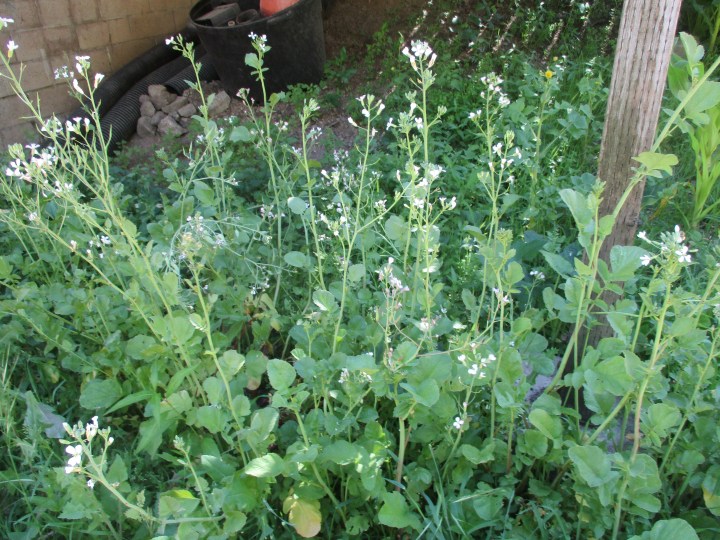
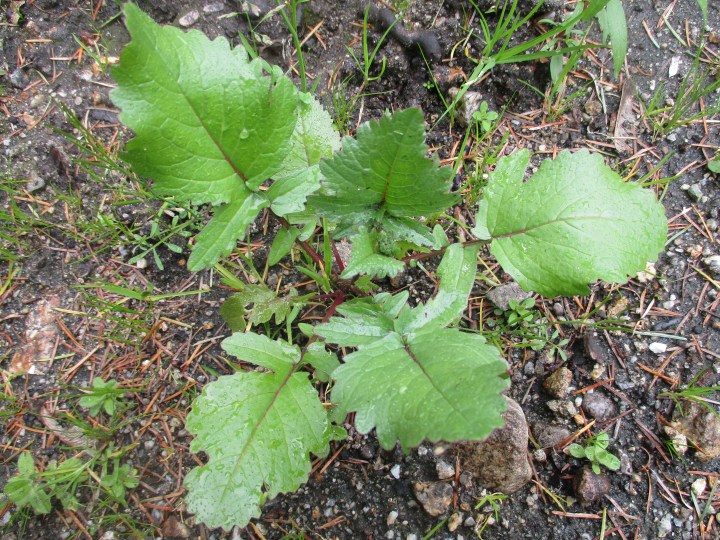
1. mustard greens – are the most abundant of the greens growing wild around the perimeter of the abandoned baseball field. Similar wild radish and turnip greens are even better, but not abundant.P00328-1

2. dandelion – grows in the outfield of the same abandoned baseball field, mostly past third base. They are not my favorite, but are an alternative to the other greens. These are dirty from heavy rain.P00328-2

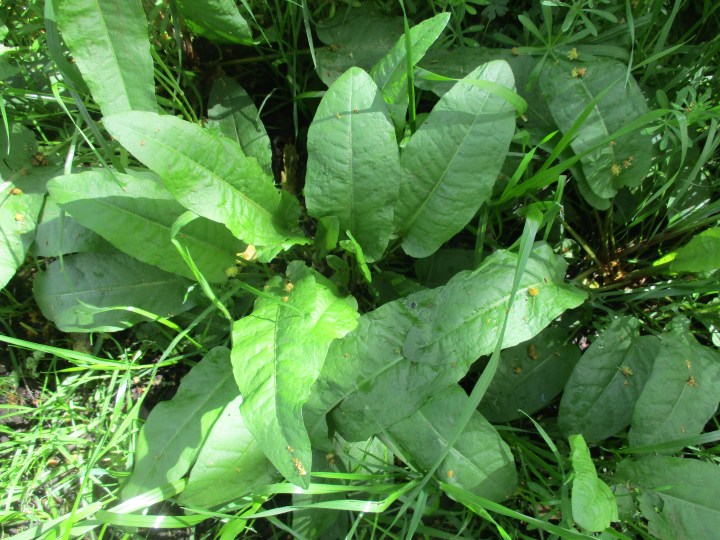
3. dock – is more randomly sporadic. It grows amongst the other greens and elsewhere, although not in significant colonies. The tough midribs are supposed to be removed. I just chop them up fine.P00328-3

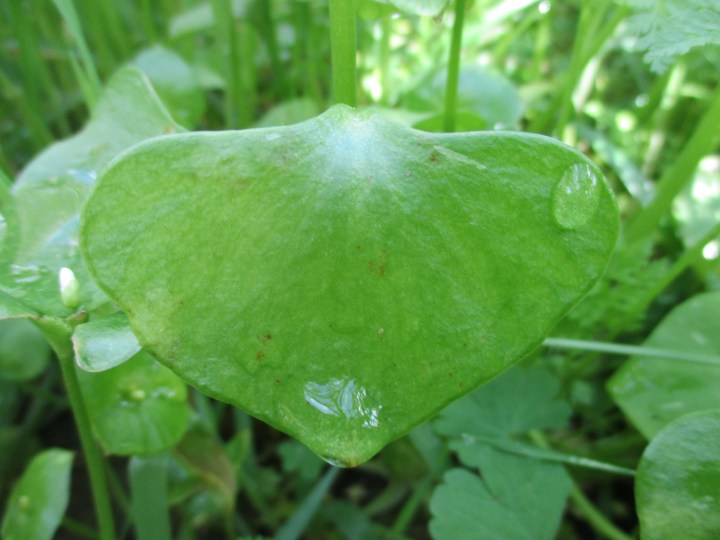
4. miners’ lettuce – is the only native of these greens. Most leaves are circular with tiny white flowers in the center. These vegetative leaves are supposedly better. Like lettuce, they do not get cooked.P00328-4

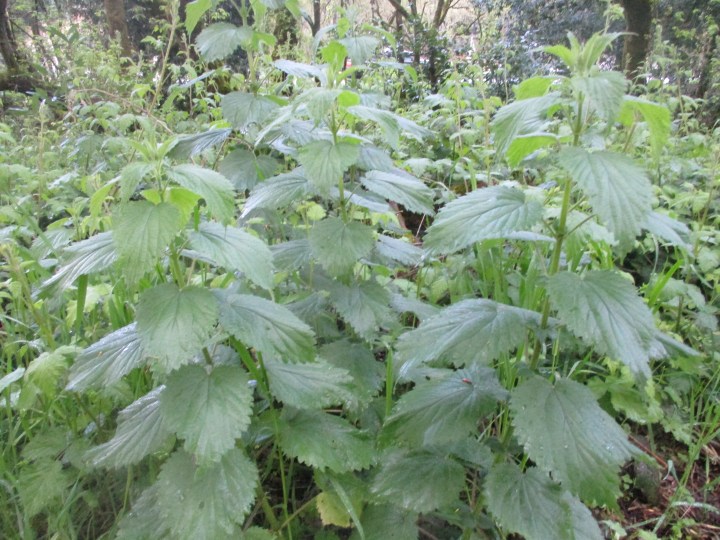
5. stinging nettle – must be cooked to stop stinging. This is my favorite of the greens. It is like spinach that I do not need to tend to. I get it from along the trails where it should be eradicated anyway.P00328-5

6. Rhody – is not even remotely relevant to greens; but everyone wants to see him. Someone suggested that I write exclusively about Rhody, as if my horticultural topics are insufficiently interesting.P00328-6

This is the link for Six on Saturday, for anyone else who would like to participate:

https://thepropagatorblog.wordpress.com/2017/09/18/six-on-saturday-a-participant-guide/

Poppy And Periwinkle

P00321-1
Even though I know they are slightly purplish, periwinkle look blue to me.

Clearing space for a new small vegetable garden is more work than it will be worth. It took more than a day to remove the thicket of bramble from a triangular area that is only about forty feet from front to back, and not much more than twenty feet wide. After so many years of getting trash dumped on top of them, the brambles were unusually prolific with gnarly root burls.

There is still significant work to do. I still need to condition the soil and groom the adjacent junipers before sowing seed for the warm season vegetables for this summer. Now that I can see that the junipers that were formerly concealed by brambles are worthy of salvage and grooming, I will need to clear a bit more garden space across the road, and cut back a few trees above.

When finished and producing, the garden will not produce enough. The four hundred or so square feet in the main part of the garden should supply enough for two people; but realistically, it would more likely produce enough for me alone, with a bit extra to can for when it is not producing much. There are about a dozen on our crew. They all have families. I need a quarter acre!

The math of it all is frustrating. So is all the work to get it started. It all seems so futile. I know we will appreciate the little bit that we get. I will still get plenty from the weeds that grow wild around the baseball field, so will not take much from the garden.

P00321-2
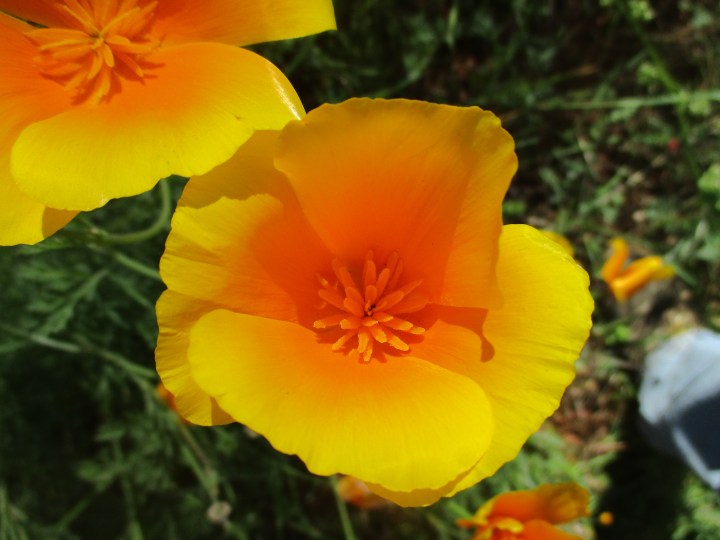
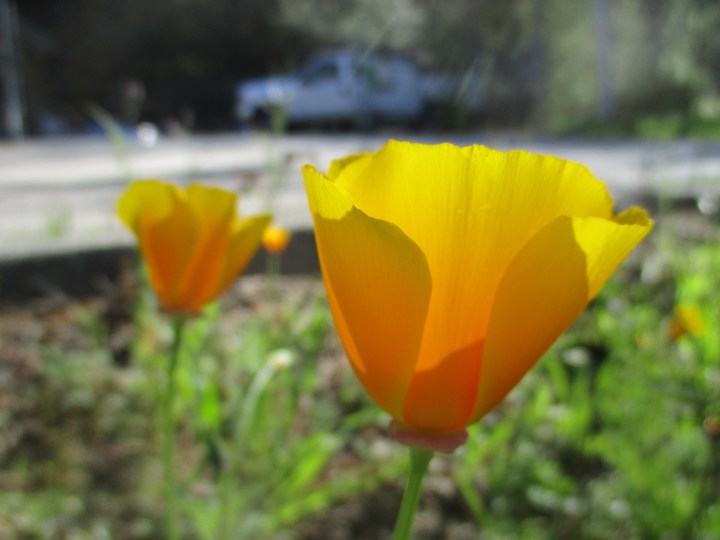
As simple as they are, poppies are still my favorite native wildflower.

For now, I try to visualize what the small vegetable garden will look like in production this summer, even if all that I see blooming are the poppies and periwinkle on the outskirts.

P00321-3
My illustrations are more technical than artistic. It looks like someone else took this one. Ignore the pickup in the background.