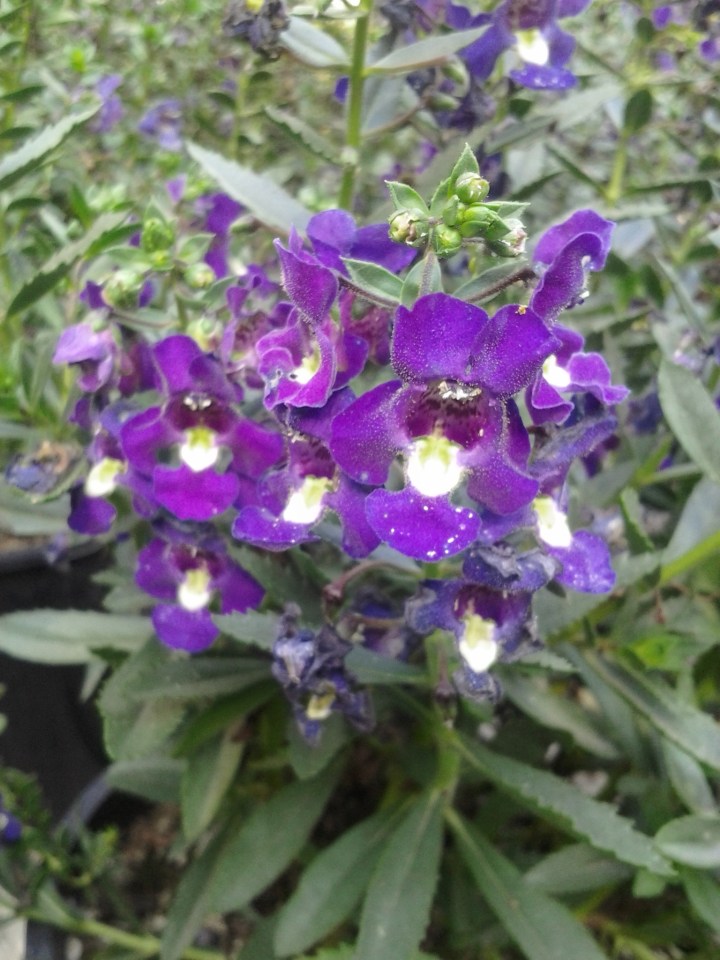
 Angelonia is one of those warm season annuals that can actually survive through winter as a pernnial to bloom again next spring. It may even want to continue to bloom untill frost. The flowers can be blue, purple, red, pink or white, and look something like small snapdragon flowers. Most have spots or stripes of an alternate color or two in their throats. Some modern varieties have fragrant flowers. Plants can get a foot or two tall, and almost as wide. In sheltered spots, angelonia can be cut back as soon as it starts to look tired in autumn. Exposed plants might be happier if cut back significantly later, as winter ends. Old growth may be unsightly for a while, but can protect interior stems and roots from frost. Besides, pruning stimulates new growth that will be more susceptible to subsequent frost.
October Brings Cool Season Annuals
 As the name implies, ‘annuals’ need to be replaced ‘annually’. What is worse is that they do not even function for an entire year, but only for a specific season. Cool season annuals mostly work from autumn to spring. Warm season annuals mostly work from spring to autumn. Calendula is a popular cool season annual that may not last even that long, since it can mildew half way through winter.
Now that it is time for cool season annuals, it can be unpleasant to remove warm season annuals that are still performing well. In mixed plantings, new annuals can be phased in through autumn as older annuals deteriorate. Busy Lizzie (impatiens), wax begonia and other warm season annuals that are actually perennials can get cut back and overplanted with cool season annuals. The cool season annuals that temporarily overwhelm them can provide shelter from frost. As the cool season annuals finish next spring, the warm season ‘annuals’ can regenerate
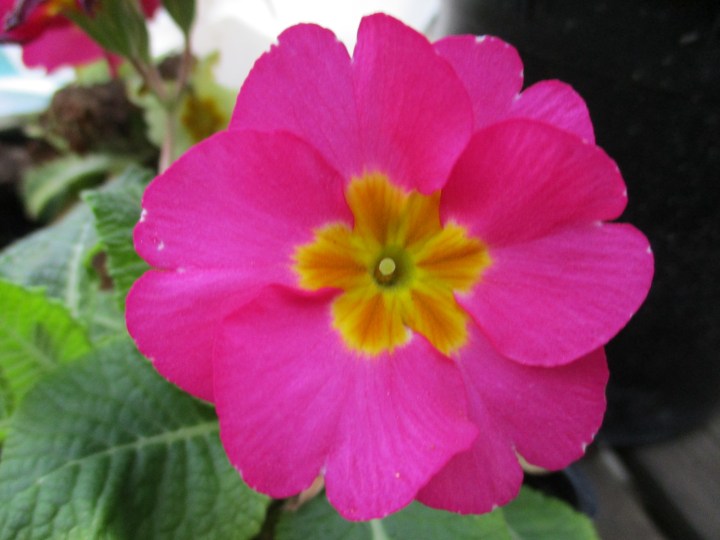
However, not all cool season annuals need to finish next spring. Sweet William, cyclamen, chrysanthemum and the various primroses are popular cool season annals that are actually perennials. When the time comes, they can be overplanted with warm season annuals, so that they can regenerate the following autumn. In cool spots, sweet William and some primroses can actually perform all year. (Some people are allergic to primroses like poison oak.)
Alyssum and nasturtium really are annuals, but can function both as warm season and cool season annuals. They sow their own seeds so that new plants can reliably replace old plants without being noticed. The old plants only need to be pulled as they deteriorate. Alyssum is white, or pastel hues of pink or purple. Nasturtium is just the opposite, with bright hues of yellow, orange and red, with only a few pastel options.
Pansies and smaller violas are the two most popular of cool season annuals, since they function like petunias for cool weather. They lack few colors. Most have two or three colors. Ornamental cabbage and kale produce big and bold rosettes of pink, white or pink and white foliage. Kale has weirdly distinctive foliar texture. White, lavender, pink, purple and rose stock is the most fragrant of cool season annuals, and taller varieties are great for cutting. Iceland poppy has delicately nodding flowers on wiry stems. They can be pastel hues of white, pink, yellow, orange or soft red.
French Marigold
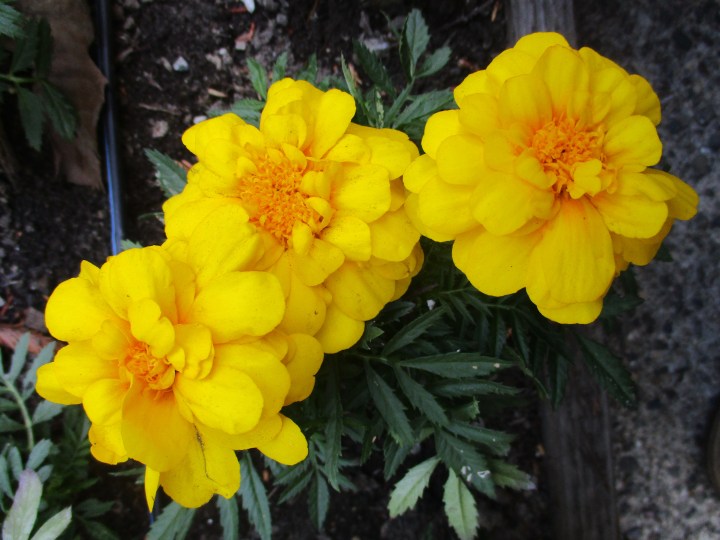 Actually, French marigold, Tagetes patula, is no more French than African marigold is African. All are from Mexico and Guatemala. They were merely popularized and bred respectively in France and Africa. There are now hundreds of varieties. Yet, their color range is surprisingly limited to hues and shades of yellow, orange and ruddy brown. White marigolds are really just very pale yellow.
While African marigold is only occasionally grown for bigger cutting flowers on taller stems, French marigold is much more popularly grown for late warm season annual color. Because it blooms late in summer and early in autumn, and continues only until frost or sustained rain, it is often planted if earlier warm season annuals deteriorate while it is still too warm for cool season annuals.
French marigold can get more than a foot tall, and almost a foot wide, but typically stays closer to the ground. The delightfully aromatic and intricately textured foliage is rich dark green. Removal of deteriorating flowers (deadheading) promotes continued bloom, although a few spent flowers might be left to produce seed. Mildew can be a problem if watering is excessive or late in the day.
Madagascar Periwinkle
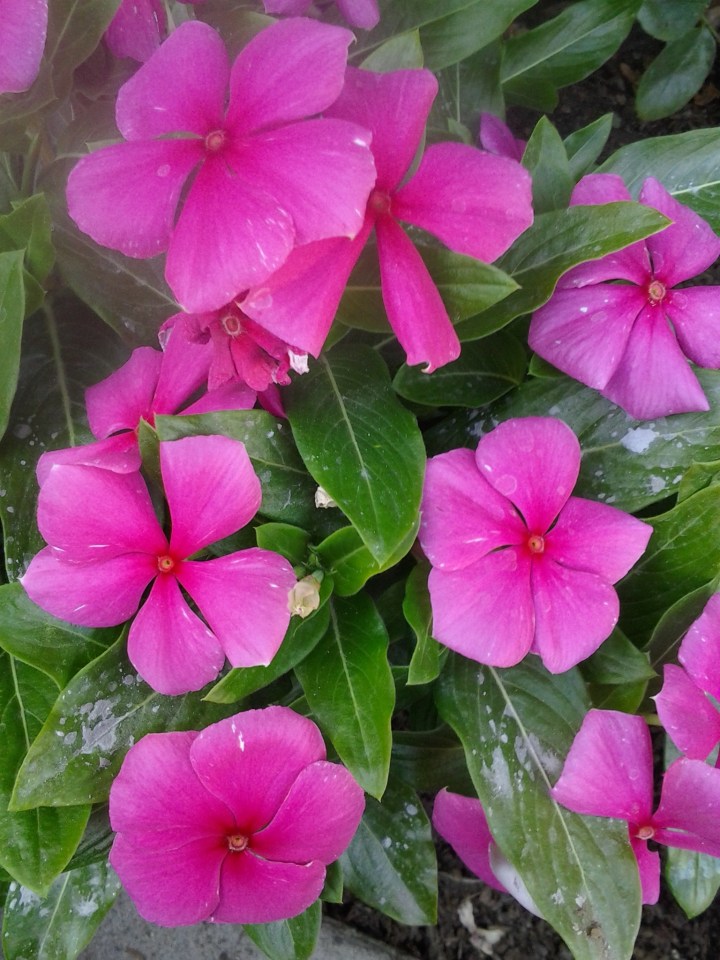 Like gardenia, dogwood and snapdragon, the potentially finicky Madagascar periwinkle, Catharanthus roseus, is often challenging to grow. It enjoys, but seems to prefer more humidity than it gets here. The happiest plants can get nearly two feet tall and wide in sheltered and humid spots. (They can get even larger in exposed spots in humid climates.) Yet, most of us are satisfied with relatively scrawny plants less than half a foot tall.
Madagascar periwinkle is popularly grown as a warm season annual until the weather gets too cool in late autumn, but it can tolerate a bit of cool weather, and can even survive as a perennial through winter if sheltered. The one or two inch wide flowers have five petals and small red centers, and can be white or various shades of pink, pinkish red, lavender or pastel orange. All parts of Madagascar periwinkle are incidentally toxic.
Garden Verbena
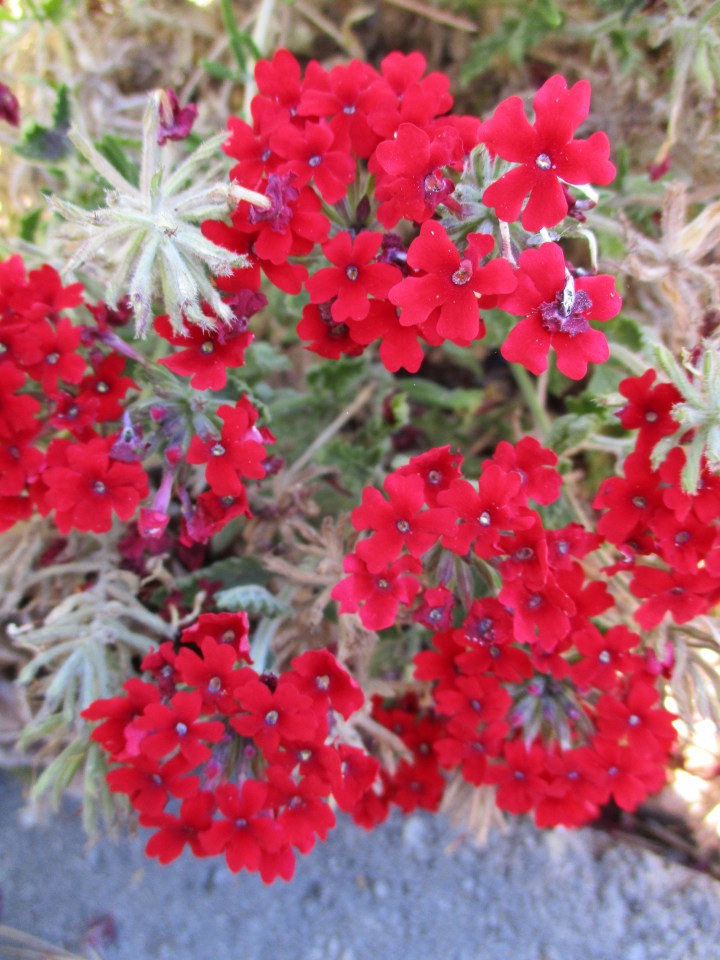 It is fair to say that garden verbena, Verbena X hybrida, is a reliable warm season annual. It gets planted in spring to spread out and bloom through summer with bright pink, red, purple or almost blue, or softer pastel pink or pale white. It is commonly replaced with cool season annuals by late autumn. However, garden verbena is actually a short term perennial that can survive winter to bloom for a few years.
Perhaps individual plants do not last long enough to be practical as permanent ground cover. Yet, if mulched just so, the thin branches can root where they touch the ground, and then grow into new plants to replace the original plants before they die out. Stems do not spread or cascade much more than a foot from where they are rooted. Nor do they stand more than six inches deep.
Wax Begonia
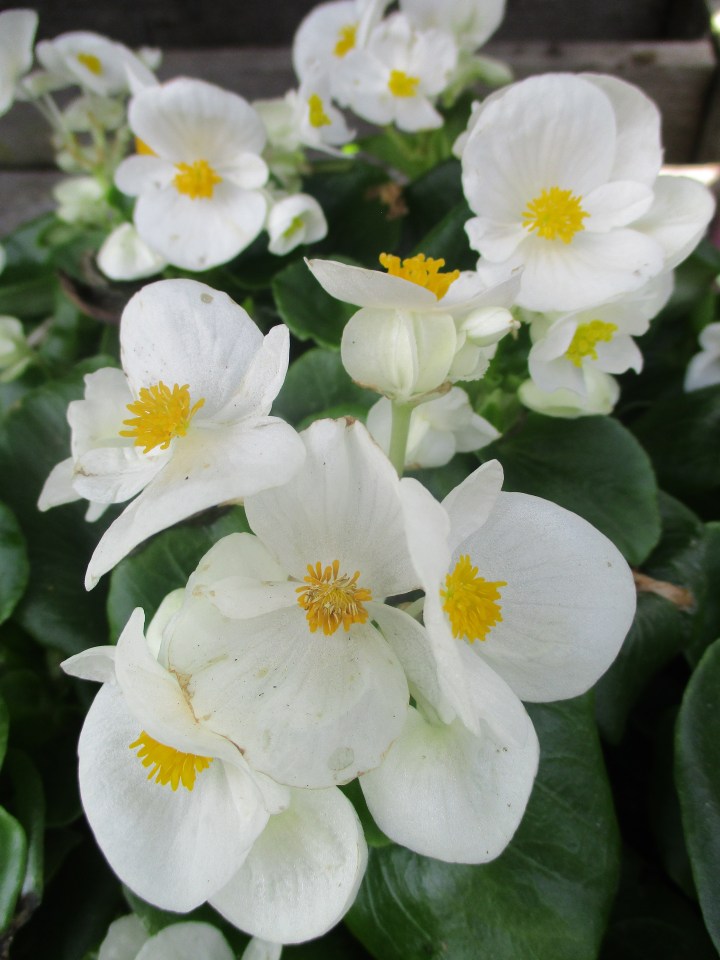 Oh, how breeding complicates things. Many years ago, there were only six basic types of wax begonia, Begonia semperflorens-cultorum, with three choices for floral color, and two choices for foliar color. Bloom was white, pink or red. Foliage was either green or dark bronze. Although these choices have not changed, some modern hybrids are difficult to distinguish from other species.
Wax begonia can be either a cool season annual or a warm season annual, depending on when it gets planted. It can be grown as a short term perennial if pruned back in both early spring and early autumn. By spring, winter growth is tired of the cold. By autumn, summer growth is worn out from warmth. Exposed plants can get lethally frosted in winter or roasted by sunlight in summer.
Therefore, wax begonia prefers to be somewhat sheltered. It is more tolerant of full sun exposure in summer if mixed with other annuals or perennials. Too much shade compromises bloom. Wax begonia expects richly amended soil and regular watering, and is just as happy in pots as other annuals are. Potted plants can be moved to sheltered spots when the weather gets too hot or cold.
Cosmos
 The flowers may not last very long once cut, but cosmos, Cosmos bipinnatus, blooms so abundantly, that there might not be any shortage of new flower to cut and bring in to replace those cut a day or two before. Their pastel pinks and lavenders, as well as white, suit the Easter season perfectly. Their soft light green foliage is remarkably lacy. Mature plants are about two to four feet tall.
‘Seashells’ has distinctively tubular petals (which are actually ray florets around the perimeter of each composite flower). ‘Daydream’ flowers each have a typical yellow center surrounded by a pink inner ring, which is surrounded by a lighter outer ring. ‘Sensation’ is a mix of tall varieties. ‘Versailles stays less than three feet tall. The popular ‘Sonata’ series stays less than two feet tall.
Cosmos likes full sun, somewhat rich soil, and regular watering. If it is happy enough, it can self sow.
Annuals Should Match The Weather
 Pulling out cool season annuals that are still somewhat colorful is never easy, even if they are already deteriorating. There is always the desire to stretch their season as late as possible until they succumb to warmer weather. Only a few can perform all year, or get cut back to hide below other taller plants until the weather gets cool enough in autumn for them to regenerate and bloom again.
Regardless of all the resistance, removing the annuals of a previous season relinquishes space for annuals that are appropriate to the next season, whether cool to warm season, or warm to cool season. Even if new annuals are initially wimpy relative to the older annuals that were removed, they should proliferate and bloom better than lingering unseasonable annuals would if not removed.
Timing is somewhat important. There is no point in removing cool season annuals too early if the weather is still too cool for warm season annuals. However, there is no point in planting too late either. Delayed planting only delays growth and bloom. Some warm season annuals, especially those grown from seed sown late in winter, prefer to get established while the weather is still cool.
French marigold is probably the most traditional warm season annual for bright yellow, orange and bronze. Lobelia contrasts excellently with rich blue and purple, and can also be purplish rose or white. Petunia can do even more with brighter and more variable colors. Cosmos provides pastel pinks and white on taller plants. Cockscomb colors rival those of marigold, and can also be red.
Pincushion flower, annual statice and zinnia are popularly enjoyed as bedding plants, and also work well individually, behind lower bedding plants, or in planters of mixed annuals or perennials. Verbena and moss rose cascade nicely from such mixed planters. Sadly, brightly colored and formerly popular busy Lizzie (impatiens) are either rare or unavailable because of a mold disease.
Nasturtium and alyssum are warm season annuals that are often grown through winter as well. Where they are allowed to naturalize and bloom throughout the year, deteriorating old plants might need to be groomed out as they get replaced by self sown plants. New nasturtium should be sown as seed, instead of planted as seedlings from cell packs. Alyssum grows well by either means.
Zinnia
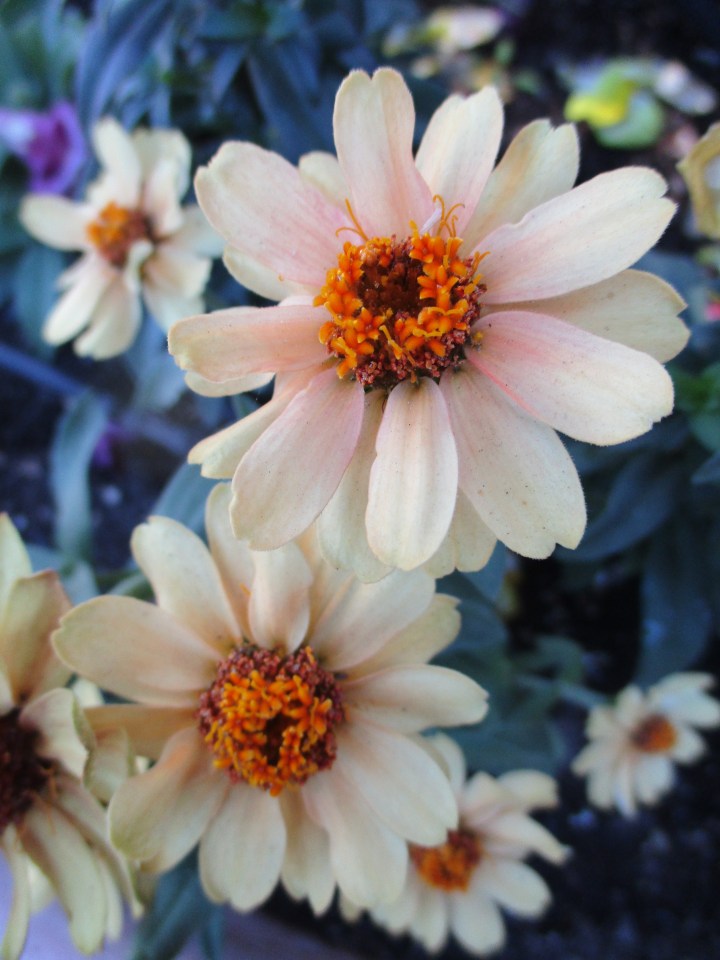 The same cooling weather that is initiating fall color is what finishes the zinnias that bloomed so colorfully through summer. Like tomatoes, they can stay out in the garden until they succumb frost if they continue to perform, and if the space they occupy is not needed for something else. There should be no guilt with replacing them sooner. After all, they are technically warm season annuals.
Some of the more popular types of zinnias are identified as Zinnia elegans or Zinnia violacea. Most are known merely by their variety name. They have been bred so extensively than it is difficult to assign any of them to particular species. Most are susceptible to mildew if crowded or watered from above. They want full sun exposure and rich soil. Seed can be sown immediately after frost.
Zinnias are crazily variable. Some get more than three feet tall. Others are less than a foot tall. They can bloom in every color except blue. Some resemble other types of daisies, with distended centers. Others are as fluffy as African marigolds. Some bloom with small but profuse flowers. Others have fewer but bigger flowers that are wider than three inches. Most are excellent cut flowers.
African Marigold
 French Marigold might have been a more appropriate choice. It is the official flower of Dia de los Muertos on November 2. Some might say that the bigger and bolder African marigold, Tagetes erecta, is just as official. Both are Mexican, but as the names imply, most varieties of French marigold were developed in France, and most varieties of African marigold were developed in Africa.
Both African and French marigolds are warm season or autumn annuals that exhibit a similar range of floral colors that contrast nicely against their rich green aromatic foliage, but they are not much more similar than that. African marigold can get almost three feet high and two feet wide. Its bigger pom pom flowers tend to be solid colors rather than mixed; and vanilla white, although unpopular, is not rare. Bright yellow and bright orange are the most familiar. Rusty red is the third most popular color.
African marigold wants rich and well drained soil in sunny exposures. It gets lanky, blooms less, and is more likely to mildew where partly shaded. It should be watered regularly and early in the day. Flowers can mold if they stay damp for too long. Deadheading, which is the removal of deteriorating flowers, promotes continued bloom. Occasional application of fertilizer might also help.
 Tony Tomeo