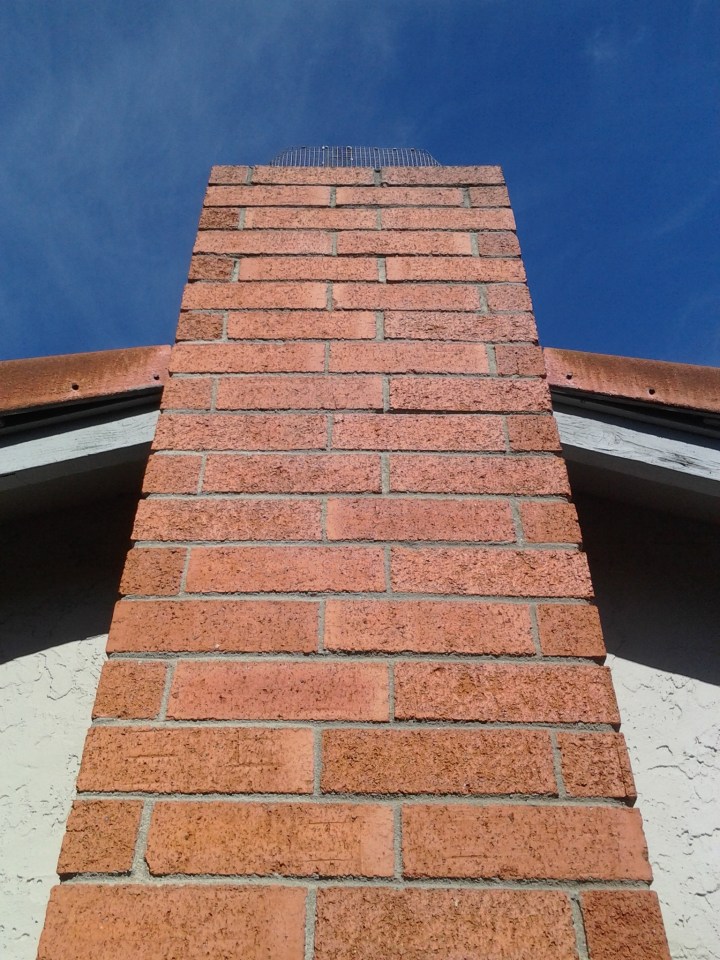
 Fireplaces simply are not what they used to be. Building regulations in many municipalities do not allow for the construction of new fireplaces, except only for pellet stoves. Fireplaces that get damaged by earthquakes are commonly removed instead of repaired. Now that urban sprawl has replaced so many of the rural areas and defunct orchards, firewood is more expensive, even if purchased from a tree service. When a tree needs to be cut down, no one seems to have the time to cut and split the wood.
Modern heating systems are so much more reliable, efficient and just plain easy. Their fuel can actually be less expensive than firewood, and is not nearly as polluting. There is no smoke to offend the neighbors. There are no potentially dangerous sparks. There is no dirty chimney that needs to be cleaned. There is no need for firewood occupying space in the garden. Yet, with all the advantages of other heating systems, many of who still have fireplaces like to use them now that the weather is getting cool.
Because so much heat and a few sparks go out through the chimney, it is extremely important to keep trees and vines away from the top of the chimney. Cypress, pines, cedars, large junipers, eucalypti and fan palms that are not groomed of their dried old leaves are very combustible. Vines like wisteria, bougainvillea, creeping fig and Boston ivy are not unusually combustible, but have a sneaky way of overwhelming chimneys and accumulating debris (and sometimes rat or bird nests!). Any vegetation will be combustible if it gets hot enough. Sparks from burning foliage above can easily ignite old fashioned cedar shingles.
Trees should also be pruned away from roofs, gutters, fences and anything else that can be damaged by the abrasive motion of the stems and foliage in the wind. Stems of deciduous trees lose weight as they defoliate, and may even lift off of roofs that they had been leaning onto just a few weeks ago, but should be pruned accordingly anyway. Branches that have been leaning on a roof for quite a while may have accumulated a bit more debris than would be expected. Gutters and downspouts should be cleared of debris before the rain starts, and may need to be cleared again later where deciduous trees fill them up through autumn and winter.


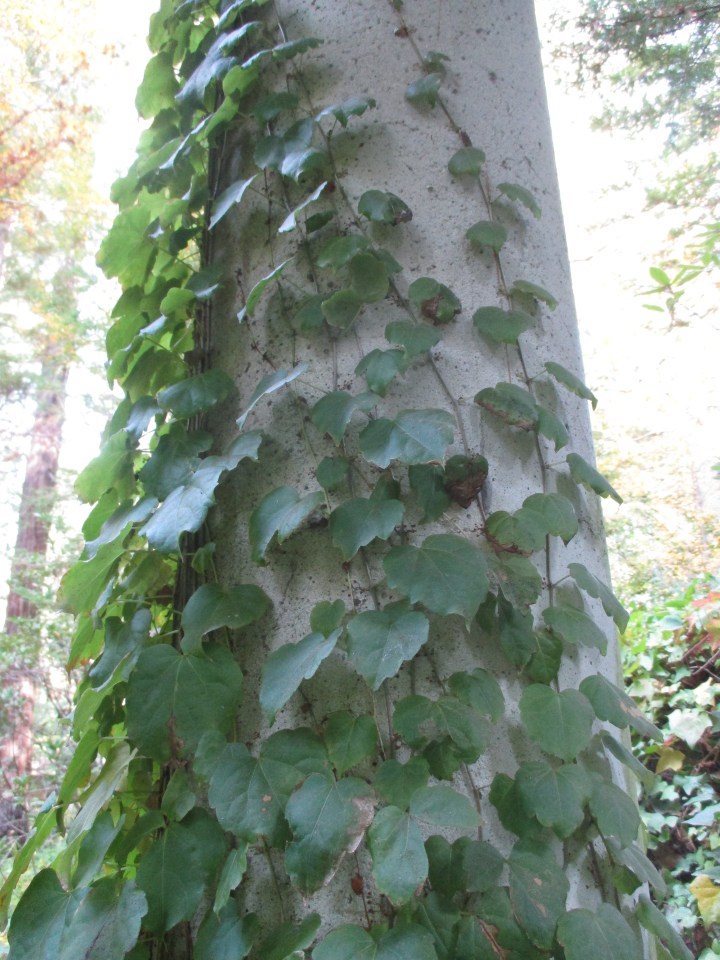
 Ah, something vintage! Remember Hollywood juniper, Juniperus chinensis ‘Kaizuka’ (or ‘Torulosa’) flanking big two-car garage doors of mid century modern homes? Those that are still around after half a century are big and strikingly sculptural, like miniature Monterey cypress for home gardens. They get about fifteen feet tall and ten feet wide, but have potential to get significantly larger.
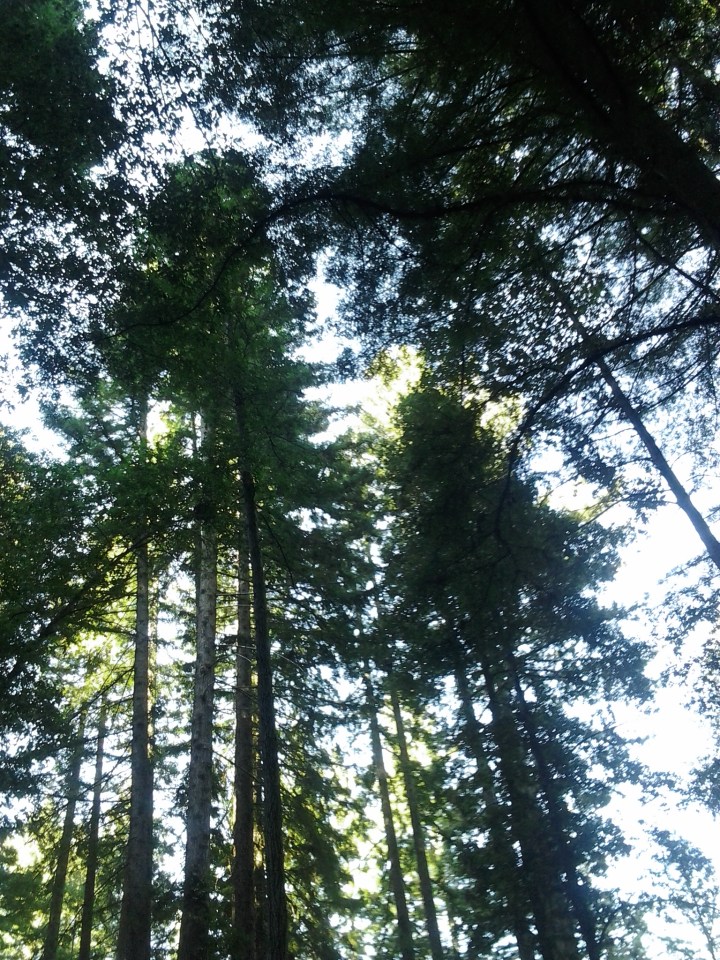 As the deciduous trees that will soon be coloring for autumn defoliate for winter, the evergreen trees will become more prominent. Some evergreen trees will drop some of their foliage along with deciduous trees through autumn and winter. Many drop some of their old foliage as new foliage develops in spring, or later in summer. All are on distinct schedules, but are never completely bare.
 Autumn is not much to brag about here. It supposedly got just cool enough at night for the minimal requirement of frost, at 32 degrees, but no one noticed. It has been getting to the low 80s during the day. There has been no rain yet, and none is in the forecast. As bland as such weather seems, it is not at all out of the ordinary. Autumn often arrives later than it does elsewhere.
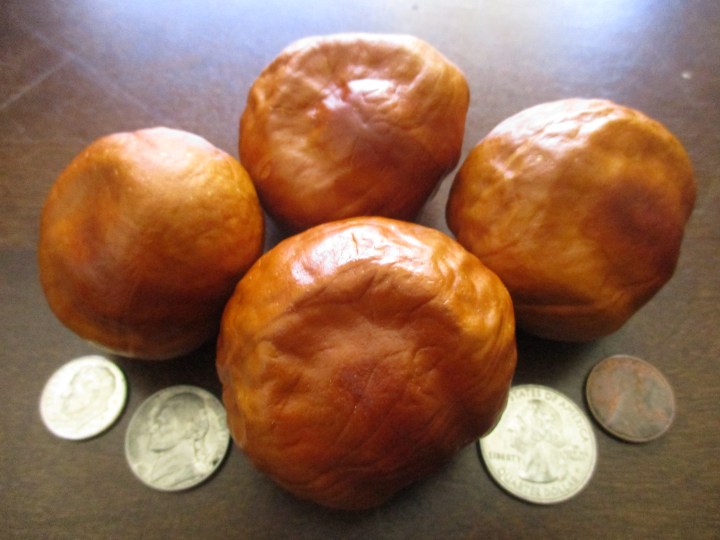 California flora is remarkable. It all does what it must to live comfortably in every ecosystem, climate and geographical region here.
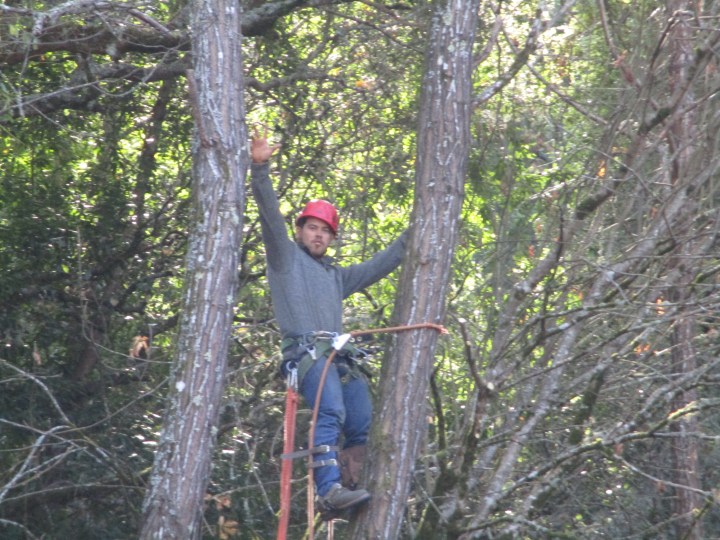
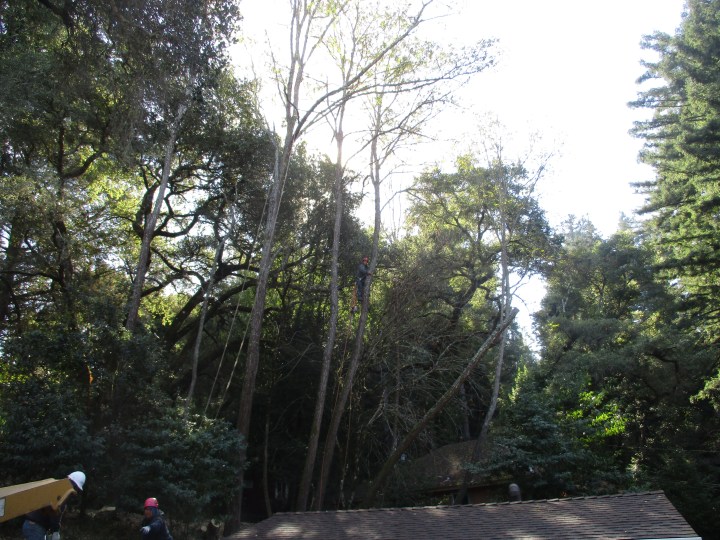
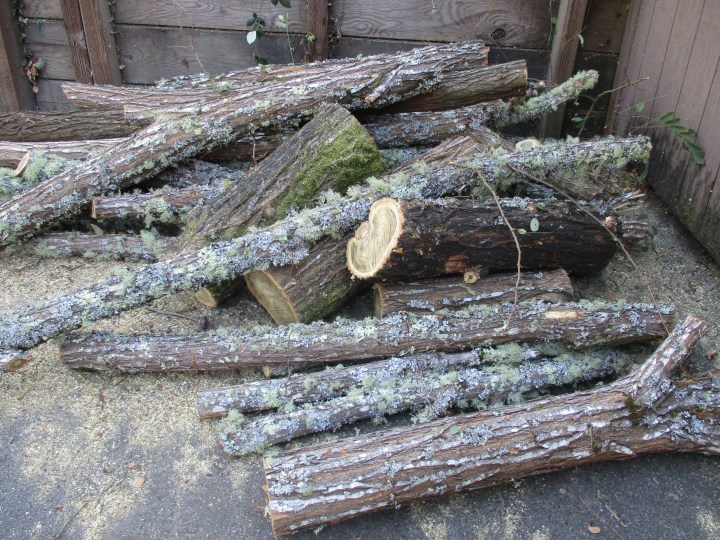
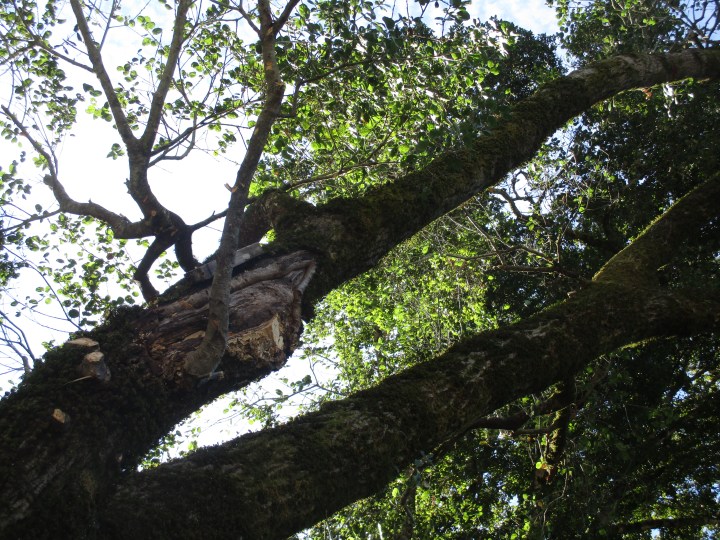

 It is almost never planted in home gardens, but the native red willow, Salix laevigata, has a sneaky way of getting where it wants to be. The minute seeds go wherever the wind blows them. Because it is a riparian tree, red willow prefers well watered spots. If not detected and pulled up in the first year, it can grow rather aggressively, and overwhelm more desirable plants, although the somewhat sparse canopy makes only moderate shade.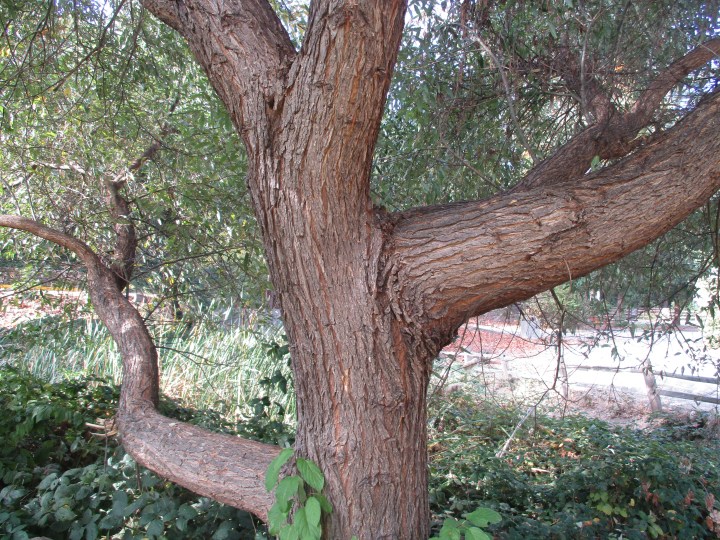
 Now that leaves are falling, they need to be raked. Large leaves, like those of sycamore and fruitless mulberry, can shade out lawn, shallow ground cover or dense shrubbery. If shade is not a problem right away, mildew can be after only a bit of rain. If abundant enough, finely textured silk tree or jacaranda foliage that typically sifts harmlessly through shrubbery and most ground cover, can accumulate and damage lawn, dichondra and the densest of ground cover. Walnut foliage has an herbicidal effect on sensitive annuals and some perennials.
 Grafting compound is a thick sealant applied to a fresh graft union to limit desiccation while the graft knits. A bit more typically gets applied to the cut distal end of the scion. There are various formulations of grafting compound, ranging from something resembling roof patch to a something with the consistency of thick paint.
