What was worse is that after severing poison oak that was climbing a nearby but more visually prominent redwood tree, the poison oak needed to be removed. ICK!

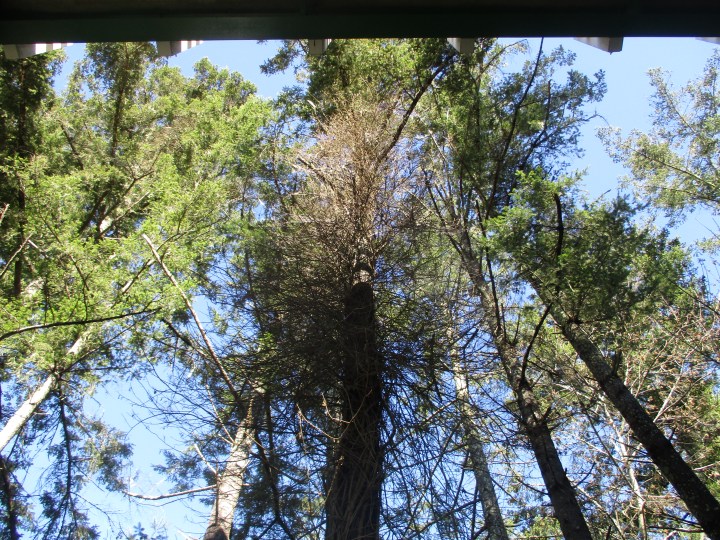 From below, this looks like a shrubby deciduous tree. It is really just a Douglas fir, like those around it. All the defoliated thicket growth is overgrown poison oak. It has likely been climbing the fir tree since it was quite young. Poison oak is not very proficient at climbing bare trunks. It typically climbs into lower limbs, and then into higher limbs before the lower limbs are shed.
No one has bothered to cut this poison oak out of the fir tree because it is not within a landscapes area. That dark margin at the top of the picture is the underside of a bridge, from which, not much of the thicket growth below is visible. The area from which this picture was taken is used for piling greenwaste and parking, where no one is concerned about wild vegetation beyond.
However, now that I sometimes park in that…
View original post 200 more words
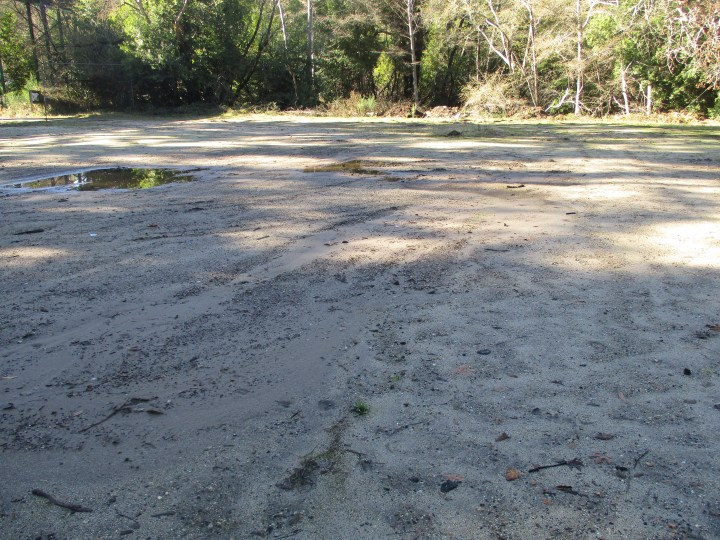 This . . . was a ball field. It might eventually be one again. The old backstop at the upper left corner of the picture is almost completely obscured under a thicket of blackberry brambles and a fallen boxelder. It would need to be replaced. So would the decommissioned irrigation system, all the bases, the basepath, the turf . . . and everything else that goes into a functional ball field.
 Padding should protect these London plane street trees from minor altercations with machinery that will be used to demolish the associated buildings and construct new buildings.
  Hollywood is famous as the Cinema Capital of the World. Niles was its predecessor. Both are within regions of remarkably diverse scenery that is so important to cinema. Mountains, deserts, chaparrals, forests, lakes and big cities are conveniently nearby. There are not many places in the World with such a thorough mix of geography and climate. California really does have it all.
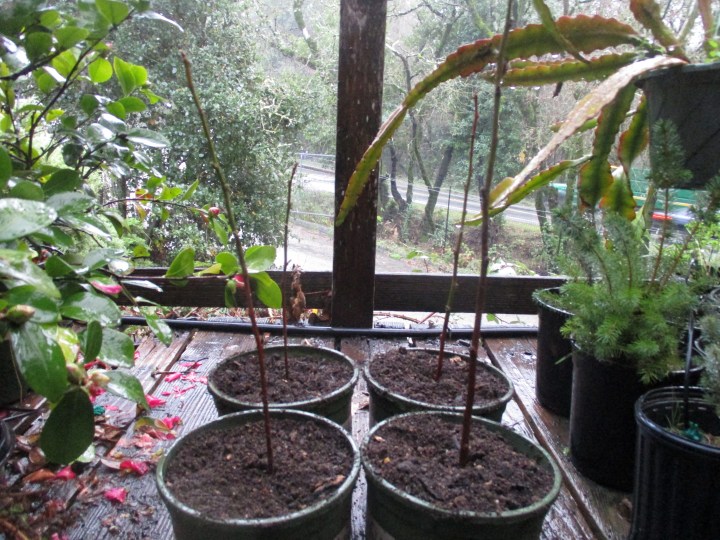 Recycling plant material is practical and gratifying. We do quite a bit of it here. Back in September, I
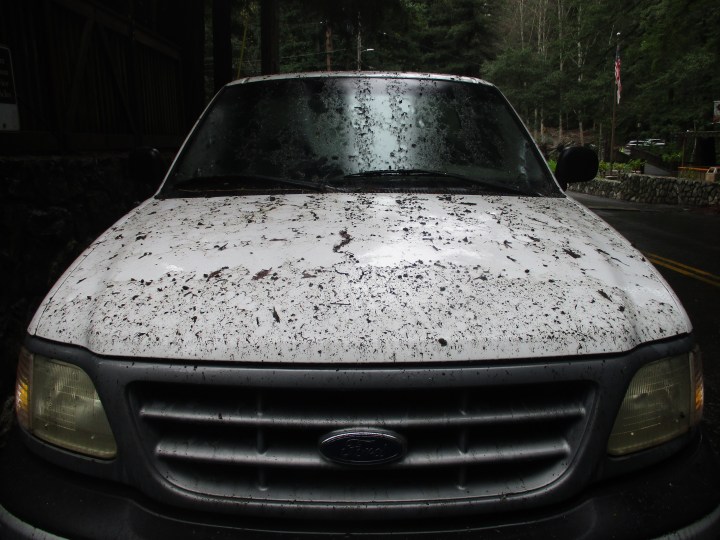 Blowers put the ‘blow’ in ‘mow, blow and go’. They really blow! The only power tool used by so-called ‘gardeners’ that is more detestable to the rest of us is the power hedge shears, and that claim is contestable. Some consider blowers to be worse because they are so obnoxiously noisy, and generate so much dust. Some municipalities have outlawed the use of the noisiest sorts.
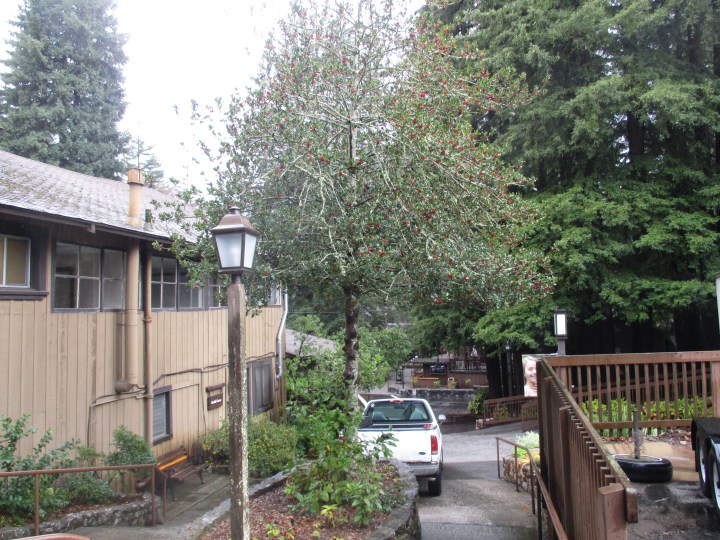 English holly is politely naturalized here. This means that, although naturalized, it is not aggressively invasive, and does not seem to be too detrimental to the ecosystem. It is only annoying to see out in forests, far from the landscapes that the seed escaped from, and wonder if it has potential to significantly compete with native vegetation. It would be better if it were not there.
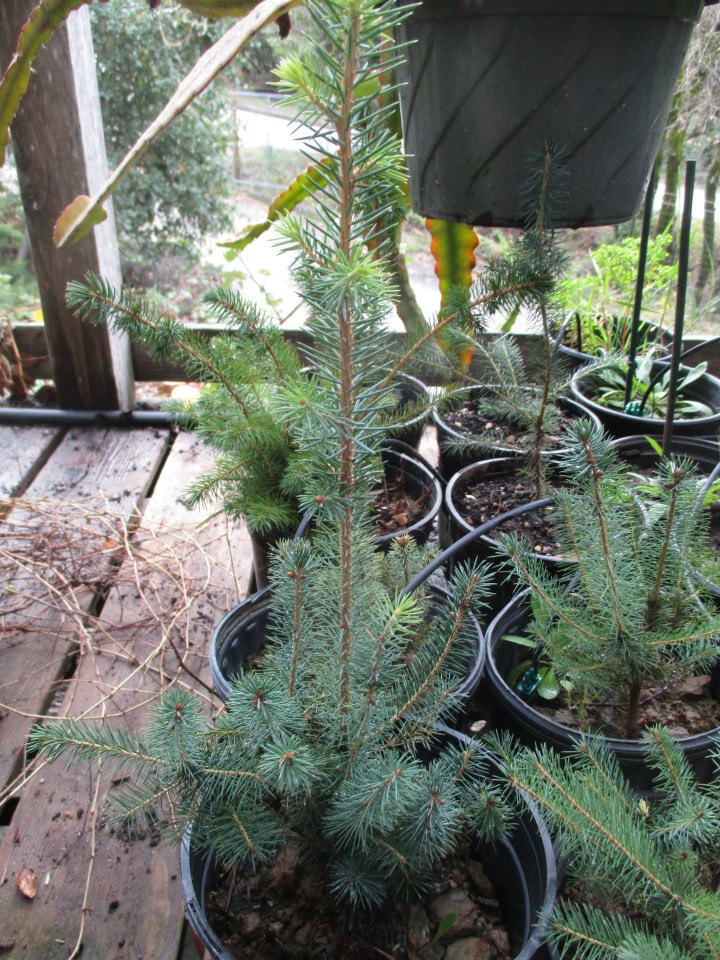 Spruce happen to very compatible with the landscape style here. They fit in nicely with surrounding redwoods, but are more proportionate to sunny spots of some of the refined landscapes. We intend to add a few into some of the landscapes as they get renovated. They will stay branched to the ground, like big dense shrubbery, with the personality of distinguished forest trees.
 Roots hold up trees. That is part of their job. They grow along with the trees they support, and disperse as necessary to maintain stability. Trees grown within the confinement of cans (pots) or boxes, and then installed into a landscape, are typically staked temporarily until their roots adequately disperse and stabilize. Once unnecessary,
 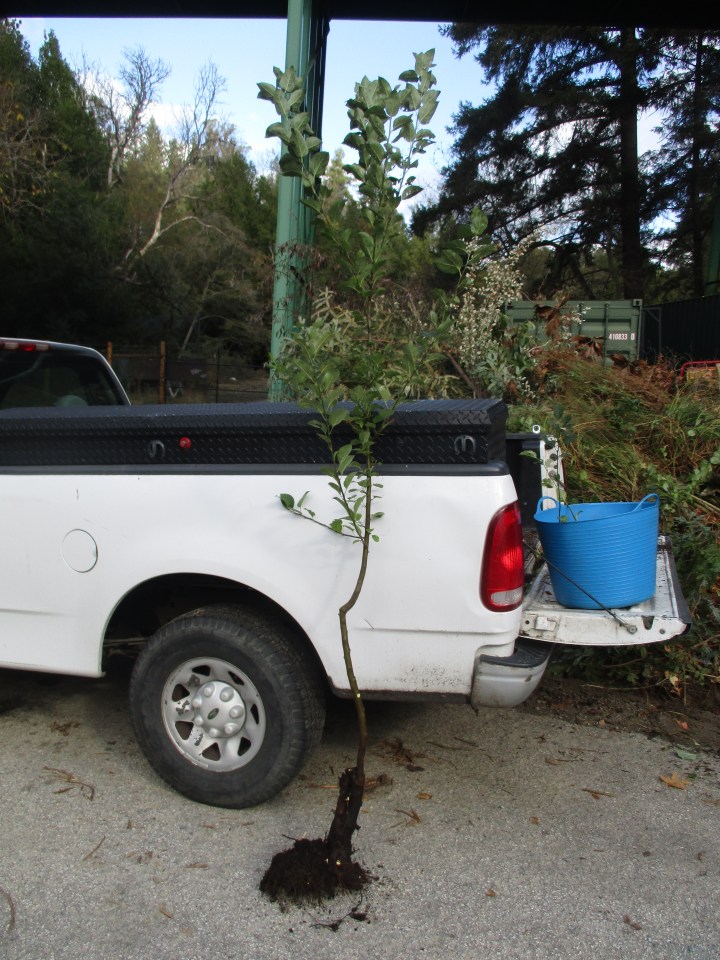 Fruit trees, with few exceptions, have been extensively bred to produce the quality of fruit that we expect from them. Some are consequently genetically unstable, or at least less genetically stable than their wild ancestors were. Even if they never mutate or try to revert to a more stable state, they are very unlikely to produce seed that can develop into genetically similar trees.
 Tony Tomeo