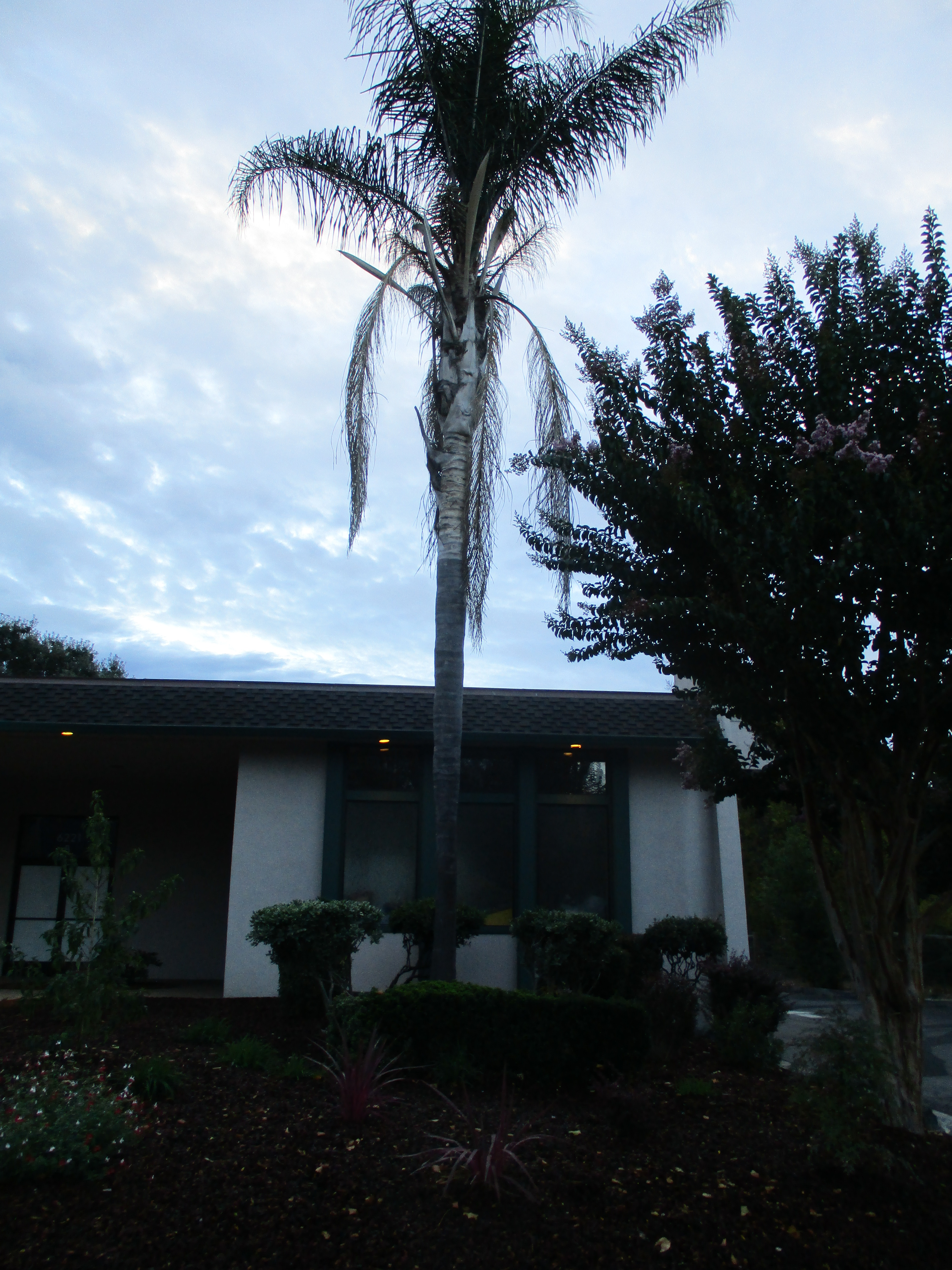
Humidity And Wind Affect Heat

Heat is more than mere temperature.

Gardening is not so much fun when the weather gets as warm as it has been recently. It is more comfortable to stay inside with air conditioning, or at least where it is shadier. The plants out in the garden are on their own. Except only for those that are potted, they do not have the option of coming in out of the heat.

Most plants actually do not mind the sort of heat that is uncomfortable for us. Some actually enjoy it. The problem is that heat often occurs in conjunction with other weather conditions that can collectively become really unpleasant for plants.

Minimal humidity makes otherwise unpleasantly warm weather more comfortable for us, but can desiccate foliage that prefers more humidity. Japanese aralia, fuchsia, rhododendron, split-leaf philodendron and many other plants that should not mind warmth can get roasted if warm weather is also too dry. Because sunlight enhances the process, exposed foliage is much more susceptible to damage. To make matters worse, sunlight is more penetrating through clear dry air.

Wind that makes us feel a bit cooler in warm temperatures can likewise cause desiccation as it draws more moisture from foliage. Finely textured plants like Japanese maple, many ferns and some grasses, are particularly susceptible. Offshore wind, like the famous Santa Anna Winds of Southern California, are the worst, because they come in both hot and dry from more arid inland areas, combining all three factors of minimal humidity, heat and wind.

Many of the plants that are susceptible to damage from heat happen to be tropical or subtropical plants that typically enjoy heat as long as the air is humid and still. Others are ‘understory’ plants that naturally live in the shelter of higher trees, so do not like direct sun exposure or wind. Yet, even substantial trees, like fern pine (Podocarpus spp.) and even redwood, can get a bit roasted if the weather gets hot, dry and windy enough.

Conservation of water makes warm weather even more uncomfortable for sensitive plants. They really want more water to keep their foliage and stems well hydrated. Hosing ferns and grasses when things get really hot helps to cool the foliage, and briefly increase the ambient humidity. Because thin young bark is more susceptible to sun-scald in hot weather, pruning that would expose more bark should be delayed until the weather turns cool again.

Horridculture – Satellite Dish

After a scarcity of recycled articles that conformed to the Horridculture meme for Wednesdays, there now seems to be a surplus!

tonytomeo's avatarTony Tomeo

P80613

Satellite dishes, tater tots, fish sticks, soldiers, flat tops, gobstoppers, corks, oil tanks and trip hazards are just some of the many but less objectionable names that my colleague down south and I have developed for what should be good shrubbery, trees, vines or whatever that so-called gardeners got to with their hedge shears. Tater tots are usually Heavenly bamboo shorn into stout cylinders. Fish sticks are the same, but taller, narrower, and often composed of Podocarpus macrophyllus. Corks are commonly breath of Heaven, but could be just about anything shorn to be somewhat cylindrical, but narrower down low, and wider on top. Trip hazards are ground cover plants like creeping California lilac or creeping cotoneaster, shorn into absurd low hedges next to sidewalks. Gobstoppers could be just about anything, but tend to hang over the curbs in parking lots, ready to impale a radiator grill with a gnarly stub…

View original post 540 more words

Nasturtium

Nasturtium bloom is sensitive to aridity.

Whether feral or planted intentionally, nasturtium, Trapaeolum majus (which is actually a hybrid with two other species) is a delightful flower that just about everyone appreciates. Its eagerness to self sow and possibly naturalize in riparian situations attest to how easy it is to grow. Seed for many varieties is readily available. Feral plants provide feral seed.

Bloom of domestic nasturtium can be various shades, tints and hues of yellow, orange or red. Flowers can be striped or blotched with colors of the same range. Some are double. The palest yellow is almost creamy white. The darkest red is almost brown. Feral plants, after a few generations, generally revert to blooming with simple bright orange or yellow.

Plants are more or less annual, but can replace themselves almost as readily as they die out. Those that perform through spring and summer succumb to cooling autumn weather, as their (feral) seedlings begin to replace them for autumn and winter. Those that perform through winter may succumb to frost where winters get cool, but also self sow feral seed for next spring.

Humidity Is The Other Weather

Some delicate foliage prefers more humidity.

It is difficult to always ignore the weather. Regardless of how pleasant it typically is here, it sometimes gets warm or cool. It occasionally gets hot or cold. Rain is wet and perhaps messy. A breeze is comforting while the weather is warm. Strong wind can be damaging. However, humidity is one major component of local weather that gets little consideration. 

Humidity gets more consideration in climates that are either uncomfortably humid or arid. Some parts of Florida get famously humid and hot simultaneously during summer. Some flora and insects enjoy such weather. Unfortunately for the rest of us, humidity enhances the already unpleasant heat. Locally, hot or warm weather is rarely bothersomely humid.

Similarly, local weather is rarely unpleasantly arid (lacking humidity). This is a chaparral climate, which is ‘semiarid’. Relatively minimal humidity makes heat a bit more tolerable than it would be with more humidity. Yet, humidity is generally sufficient to sustain foliage that would desiccate in a more arid desert situation. Actually, this is an excellent climate.

Although, it is not perfect. Flora and fauna have different standards for exemplary climate and weather. The relatively minimal humidity that makes uncomfortably warm weather a bit more tolerable for people and animals is much less appealing to some plants. Except for those that are native to desert or chaparral climates, most plants prefer more humidity.  

Many popular plants are understory plants, that naturally live in the partial shade of taller vegetation. With shelter from desiccating arid wind and harsh sunlight (to enhance heat), most do not mind heat. Otherwise, foliage might roast. Those with finely textured foliage, such as astilbe, ferns, grasses and some Japanese maples, are particularly susceptible.

Some tropical and subtropical plants, such as split leaf philodendron and fuchsia, prefer to be understory plants here, even if they would prefer more exposure within their natural ecosystems. The shelter provided by more resilient vegetation compensates for deficient humidity. Furthermore, adequate irrigation promotes healthy hydration of delicate foliage. 

Oasis

California fan palm, which is also known as desert fan palm, happens to be my favorite palm, and coincidentally, happens to be the only palm that is native to California. I have written a bit of trivia about it since this recycled article posted three years ago.

tonytomeo's avatarTony Tomeo

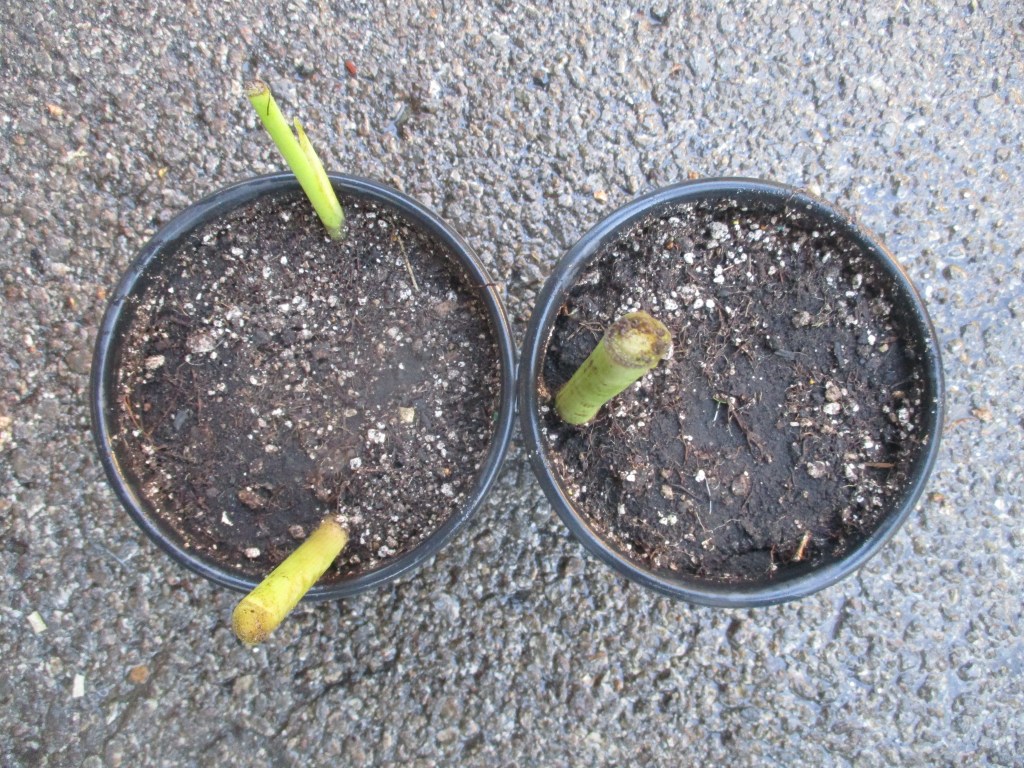
P80630KWhat are they doing out there, in those two pots in the island of such a vast parking lot? It is hard to say from this distance. They are so isolated. They might be happy and healthy summer blooming annuals. They might just be weeds. They could be plotting World domination. Plants can do some weird things in isolation.

Mexican fan palm is the most familiar palm in Los Angeles. Some know them as skydusters because they are so tall and lanky, and do not seem to have anything better to do than lazily brush against the undersides of clouds as they float by. In Los Angeles, there are not many clouds to keep them busy, and there is not even much smog anymore. Mexican fan palms certainly do not make much shade, and because they are so tall, their little shadows land in neighbors’ yards. They are so tall…

View original post 448 more words

Spontaneous Limb Failure

This is just as relevant now as it was when this article posted three years ago, but happened to be relevant a bit earlier this season than it was then.

tonytomeo's avatarTony Tomeo

P80701It is as scary as it sounds. Well foliated limbs or entire trees really do fall spontaneously during the calmest of warm weather. It never fails to frighten anyone who witnesses it. Those who witness it always express the same difficulty with trying to explain it to those who did not witness it, as if they know that no one will believe them.

Several people heard this cottonwood limb fall onto a bridle path in Felton Covered Bridge Park. It is not a particularly large limb. The diameter about a foot above the flared union is only about seven inches.P80701+

Yet, even this relatively small limb is seriously dangerous when it falls from above, and from such a height.P80701++

A much larger sycamore limb that was almost two feet in diameter fell nearby a few years ago. It was like a full sized tree falling from the sky!

What makes…

View original post 147 more words

Six on Saturday: Oops!


These Six for this Saturday are a minor collection of embarrassing but otherwise useless images that are perhaps too amusing to merely delete. Some had been accumulating for quite a while. The first may not seem like the worst, but is associated with a more embarrassing picture from another ‘Six on Saturday’ of last April. That entire procedure was just too dysfunctional to write about. The fifth picture was actually planned, and should actually work, regardless of how silly it looks here now.

1. Black cherry is so rare here that I met only one in my entire career; and sadly, it needed to be removed. What I did not show at the time was how close this bit got to an adjacent parked car.

2. Arborists who cut down bigger trees for us are remarkably proficient. However, after removing this canyon live oak without any damage, they piled the firewood onto one of my hydrangeas.

3. It made sense at the time. There are two rows of canned plants on top of this retaining wall. Roses are in the sunnier outer row. Now, they need to be deadheaded; but I can not reach them.

4. Land is famously expensive here. Nonetheless, we get it delivered for free whenever we want it. The quality is good, and on rare occasion, it comes with surprises such as callas or narcissus.

5. This ungrafted flowering cherry tree would not stop suckering. Now that it is succumbing to scald, one of its own suckers is groomed and staked to replace it. This stake is nailed to the tree.

6. While unused during the past year, the buildings at work were neglected more than the landscapes were. No one was here to tell us what this Boston ivy was doing on this exterior stairwell.

This is the link for Six on Saturday, for anyone else who would like to participate:

https://thepropagatorblog.wordpress.com/2017/09/18/six-on-saturday-a-participant-guide/

Chinese Elm

Intricately blotched bark distinguishes Chinese elm.

Since the Dutch Elm Disease (DED) epidemic that killed so many old and stately American elm trees so many years ago, the old fashioned Chinese elm, Ulmus parvifolia, has been unavailable in nurseries. That is why there are only old and middle aged trees, and maybe a few feral seed grown trees. Chinese elm is not bothered much by the disease, but is a vector. ‘Drake’ is a modern DED resistant cultivar, but it has a very different personality, with a more upright and symmetrical structure.

The elegantly lanky trunk and main limbs can be quite curvacious, with distinctively blotched gray and tan bark. The deciduous foliage can be messy in autumn as it falls slowly and may linger through December. The neatly serrate leaves are only about an inch or two long, and half as wide. Mature trees can be more than fifty feet tall.

Too Much Of A Good Thing

Healthy growth can overburden tree limbs.

It was probably the extra chill this last winter that made some deciduous fruit trees bloom more profusely early in spring than they typically do. Unusually busy bees in some regions improved pollination and subsequent fruit set, although some was dislodged by late rain. The sudden warmth this last spring not only improved the flavor of fruit, but also made some grow larger than typical.

More and better fruit is usually what those who grow fruit strive for. The problem with some trees now is excess. After pruning our fruit trees every winter for a few years, we get to know how much to prune them to maximize productions without overloading the trees. When the trees produce more than expected, they may not be able to support the weight of their own fruit.

Many plum and peach trees have already dropped limbs that were overburdened with the weight of fruit. Nectarine, apricot, pluot (and aprium, plumcot and all those weird hybrids), and prune trees can potentially drop limbs as well. Even without breaking, heavy limbs can get disfigured simply by sagging downward. Broken or sagging limbs expose inner bark to sun scald.

Broken limbs obviously can not be salvaged, so can only be removed. They should be cut cleanly away without leaving stubs. Sagging limbs can be propped with notched stakes tucked under side branches that will keep them from sliding upward. The notches keep such stakes from sliding off to either side. Much of the excessive fruit can be removed from severely sagging limbs. However, if the fruit is so ripe that it will not be getting any heavier, there is no advantage to removal.

Formerly shaded bark that suddenly becomes exposed to direct sunlight should be shaded. If partly shaded though much of the day, it should be safe. If expected to be shaded next year by new growth, bark can be protected temporarily with duct tape or stapled cardboard, or even foliated bits of the limb that broke, tied over the bark. Light colored paint is unsightly, but can be applied to reflect sunlight from bark that is expected to remain exposed permanently.

Excessive weight is not only a problem for fruit trees. Some sweetgum, fruitless mulberry and old fashioned Chinese elm trees can produce so much healthy foliage that limbs hang lower than they should. Some shade trees can even drop limbs ‘very’ unexpectedly, when the weather is warm and humid, but without wind.

Horridculture – Fat Hedges

Just last Wednesday, I mentioned that the recycled article of the day originally posted prior to the invention of the Horridculture meme for Wednesdays. It must have been the last to lack that designation, since this one, which posted a week later, is the first to be designated as such.

tonytomeo's avatarTony Tomeo

P80606

This is the first article within the designated ‘rant’ format, that will continue each Wednesday. Articles for the other six days of the week will be more cheerful, or at least less objectionable. These articles may not always be rants, so might alternatively include discussions of particular fad, trends, gimmicks and so on. Perhaps some topics will remain just that; discussions in which the advantages and disadvantages of a particular subject are compared. Categories may develop, so besides ‘Horriduclture’, there could be a category for discussions of fads, for example. This is a new format for me, so I will keep it open to modification, and see how it goes.

Fat hedges are one of my serious peeves!

Hedges done properly are very useful landscape features, that provide privacy, obscure undesirable views, muffle outside sound or simply divide a large garden space into smaller garden rooms. Landscape designers know how…

View original post 440 more words