 A five pound kumquat is a problem! It means something went seriously wrong. Anyone who grew one would concur. They are huge, lumpy, and very insipid, with ridiculously thick pale yellow rind around a small handful of uselessly fibrous pulp. They are protected by dangerously sharp and rigid thorns that can get longer than three inches. Even their irregularly wavy foliage is unappealing.
In reality though, there is no such thing as a five pound kumquat. These huge but useless fruits, as well as the associated thorns and foliage, are those of ‘shaddock’, which is the most common ‘understock’ for almost all grafted dwarf citrus trees. It is what keeps such trees compact, so that they do not get as big as orchard trees. It was there all along, whether we were aware of it or not.
Most citrus trees are composed of two genetically different parts. The understock are the lower parts that develop roots that are unseen underground. The desirable upper parts that produce the familiar citrus fruits grow from ‘scions’ that are grafted onto the understock. Graft unions are just above grade, where the texture of the bark above is slightly different from that of the bark below.
‘Suckers’ are stems that grow from the understock below the graft unions. Because they are genetically identical to the understock rather than the scions, they produce the same fruit and exhibit the same physical characteristics as the understock would if it were growing wild. Suckers can overwhelm desirable scion growth, which is how kumquat trees can produce huge five pound fruits.
Other grafted trees and shrubs, particularly fruit trees, get suckers too. New suckers appear as new spring growth develops. They should be peeled off of the main trunks rather than pruned off. As brutal as this seems, it is more efficient than pruning. Soft young shoots should snap off quite readily. This technique removes more of the callus growth at the bases of the suckers, which could develop more suckers later. Big older suckers should be pruned off as closely and neatly as possible.
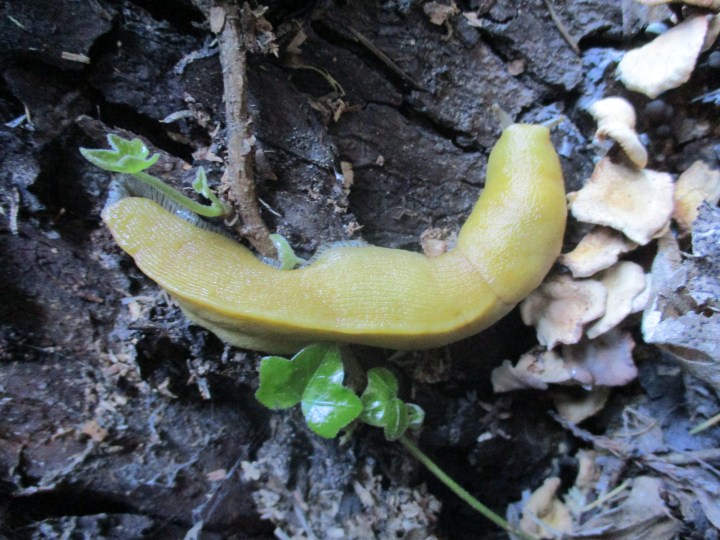 They are not as dangerous as they look. Really. If they were, just one could do more damage than an entire herd of average slugs. The fortunate truth is that banana slugs consume only decaying plant parts and fungus. Yes, they literally cruise about the garden eating bits of decomposing debris that we may not want there anyway, and converting it into a very nutritious and nitrogen rich ‘fertilizer’. They are actually beneficial to home gardening.
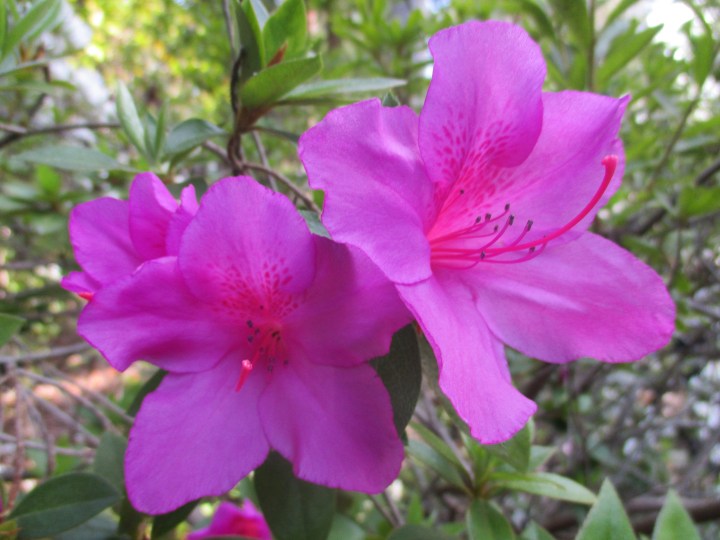
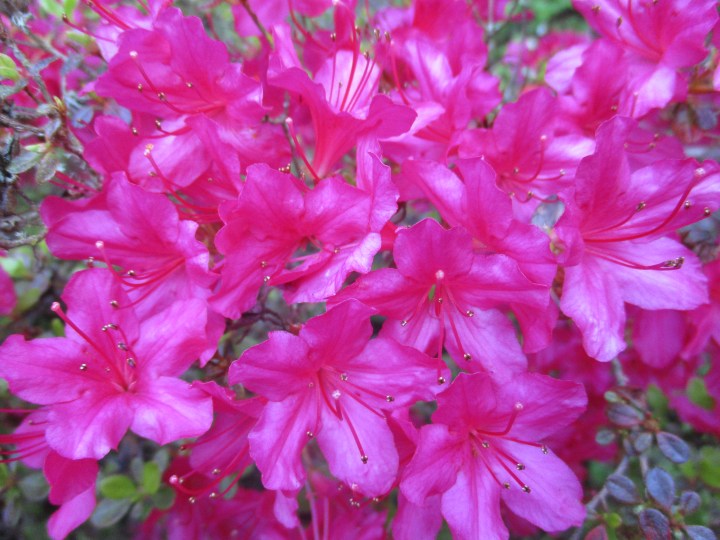

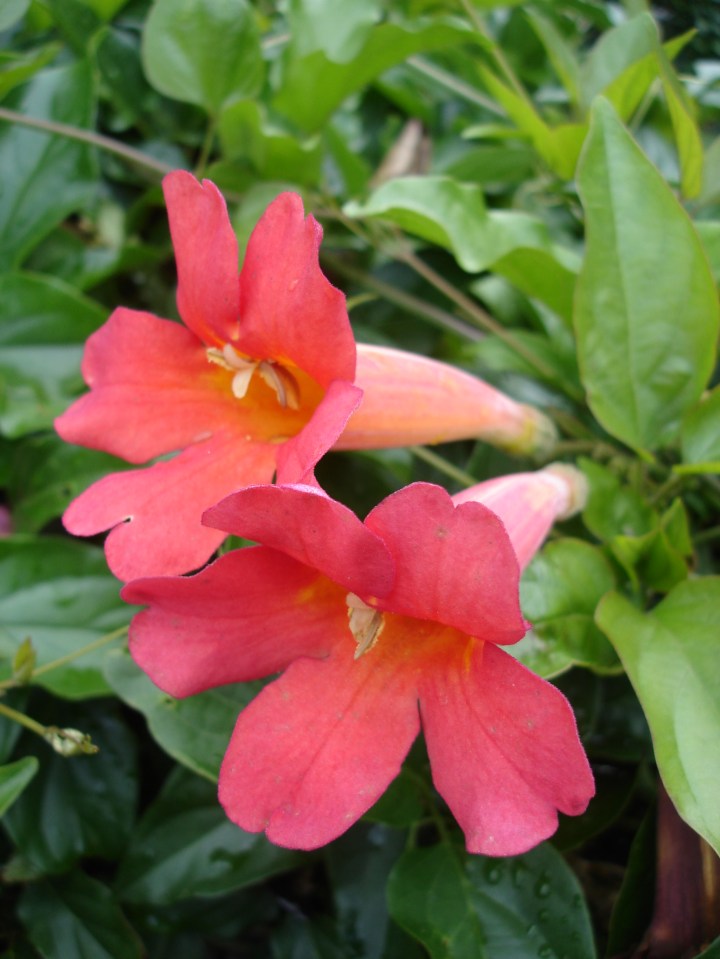 Red trumpet vine, Distictis buccinatoria, is more green than red. The tubular orangish red flowers with yellow throats are pretty while weather is warm, but not too abundant. Slightly distressed plants tend to bloom more abundantly. Each evergreen compound leaf is a pair of leaflets with a sneaky central tendril that will grab onto anything while holdfast discs get a more permanent grip.
 If more of us knew how vines compete in the wild, fewer of us would grow them in our home gardens. Understory plants that are satisfied with the sunlight that reaches them through a higher forest canopy are the most passive. Taller trees compete for sunnier exposure above. Vines are the most aggressive as they climb and overwhelm trees to get the best exposure on top of everything.
 Back in the good old days, Kaffir lily, Clivia miniata, which is probably most popularly known simply as ‘clivia’, bloomed with big round trusses of exclusively bright reddish orange flowers. It was such an excellent color that no one thought to change it. Flowers of feral plants that sometimes grew from seed were potentially more orange and less red, but were flashy nonetheless. There was no need, and minimal potential, for ‘improvement’.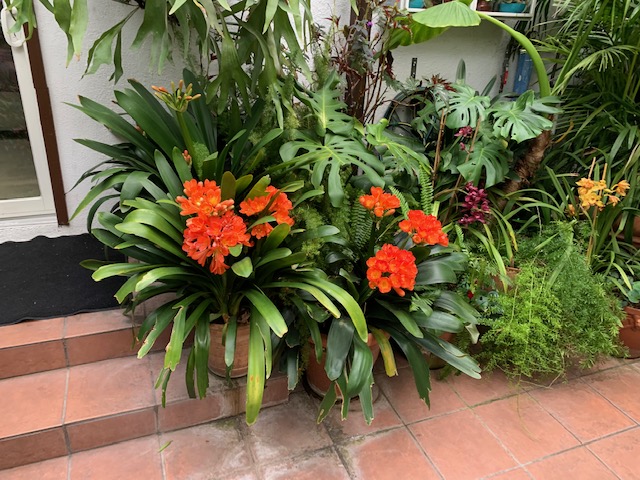
 Long before hydrangea blooms with its distinctively round floral trusses of abundant small flowers, the snowball bush, Viburunum opulus ‘Roseum’, shares its own unique version of similar bloom. Although the cultivar name suggests that the bloom would be pink or red, it is exclusively white. Hydrangea will bloom later, mostly in pink or red, with some in blue or lavender, and a few in white.
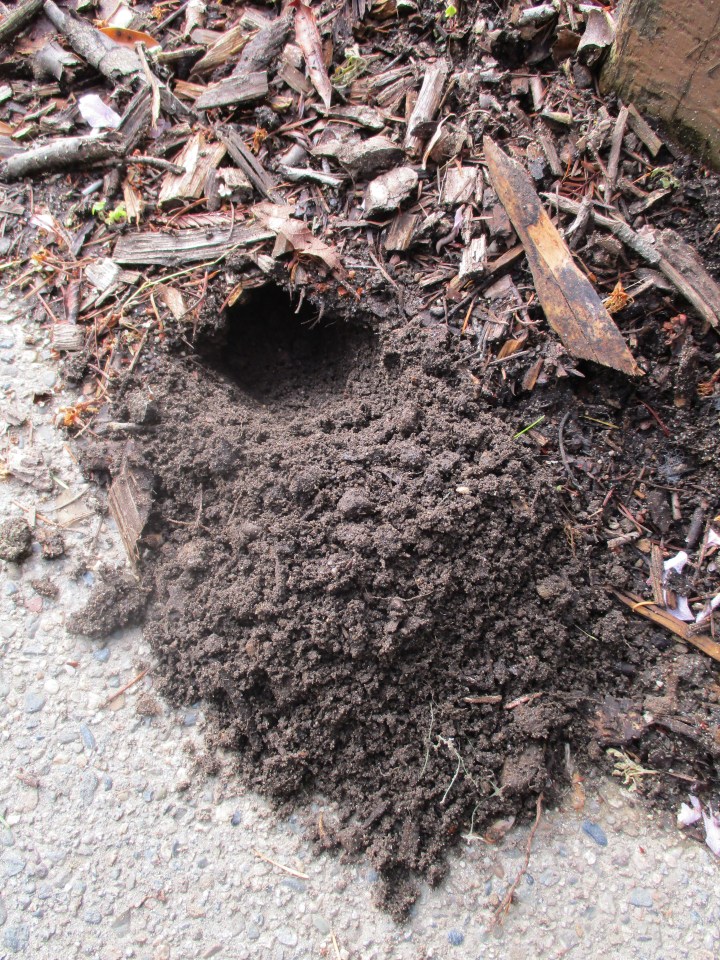 Hibernation is a luxury enjoyed by different animals in different climates, where much colder weather inhibits activity through winter. Gophers take no such extended time off here. They merely work less diligently through the cooler and rainier times, and maybe get out of the way if the soil they live in gets too saturated. Their minimal damage had probably been easier to miss or ignore.
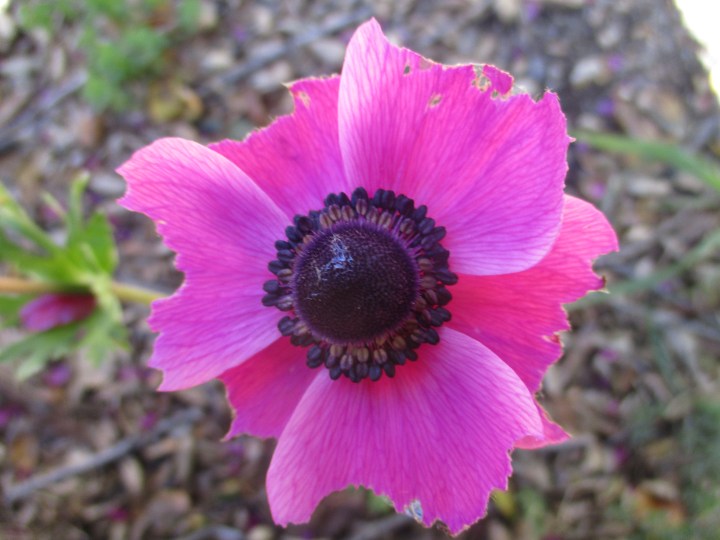 This really is something that I did not expect to see. It may not look like much. It is just a raspy anemone with bites taken out of it, blooming later than it should. What is so impressive about it is that it was not planted here last year. It was planted during the previous year, then bloomed on time last year, and then died back like anemones normally do. I did not plant it, of course. It is in a planter where volunteers contribute whatever they like.
