Dwarf Carnation

81017The three most popular specie of Dianthus are sweet William, garden pink and carnation. Sweet William and garden pink are light duty perennial bedding plants that are often grown as annuals. Carnation blooms are more familiar as fragrant cut flowers than as home garden flowers. Then there is dwarf carnation, Dianthus caryophyllus, that combines the best characteristics of all three.

Unlike the varieties of carnation that are grown for cut flowers on long stems, dwarf carnations do not need to be staked. Their compact growth gets only about five or six inches tall, and not much wider; so they are delightful summer and autumn annuals, or short term perennials like sweet William and pink. Yet, the two inch wide flowers are fragrant and as colorful as cut flower carnations.

The double or semi-double flowers can be white, pale yellow, pale orange, maroon, scarlet, red, peach, rose, or most popularly, various hues of pink. Bloom begins late in spring and continues through autumn and almost until winter. Stray flowers can bloom anytime. The narrow leaves are slightly bluish green, with an almost rubbery texture. Deadheading keeps well blooming plants tidy.

Six on Saturday: Zoning Out


Zonal geraniums, Pelargonium hortorum, can bloom anytime it wants to here, but really does tend to slow down somewhat through autumn and winter. As growth slows, older foliage will deteriorate and become more susceptible to rust and decay. Where exposed, older grown might succumb to frost over winter. Zonal geraniums will soon be zoning out.

Such deterioration and winter frost damage is not as bad as it looks, unless of course, frost is severe enough to kill the entire affected plants. By the time old growth looks shabby enough to be removed, new growth is probably already starting to develop down near the roots. After the last frost date (when no more frost is likely), old growth can be cut back to expose new growth that will soon replace it. Even if new growth is very minimal, growth will accelerate once exposed by the removal of old foliage, and as weather warms into spring.

That is still a few months away. For now, zonal geraniums are just beginning the process of zoning out, which is why their floral trusses are neither as big nor as abundant as they had been through summer. While they are busy with that, autumn flowers are beginning to bloom, and some of the winter flowers are getting ready for their season. Winter flowers get started in autumn because growth is slower in cooler weather, even for plants that prefer cool weather.

1. Chrysanthemum is ‘the’ classic autumn flower. These are blooming well enough in the infirmary that they will soon be relocated out into prominent spots or pots out in landscaped areas.P81006

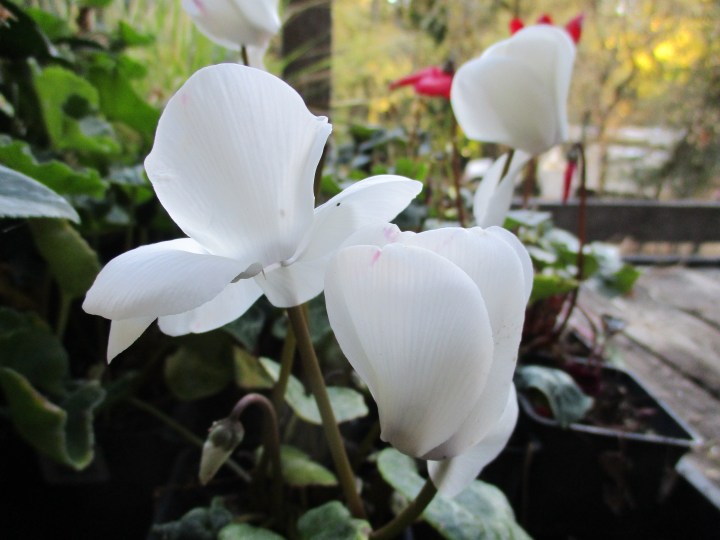
2. Cyclamen is a winter flower that is just now starting to grow after its long summer dormancy. These rudimentary first blooms are not much to brag about, but will likely be followed by enough for these plants to also be recycled back into the landscape from which they came last spring. These white flowers really are the best of the cyclamen for now. (I did not take this picture just because white is my favorite color.)P81006+
3. Reddish orange zonal geranium, and the magenta zonal geranium below, exhibit two more of those colors that I can not identify. I will just say that it is reddish orange. I happen to like it because the color resembles that of one of my two first zonal geraniums. Mine is not so well bred, so exhibits weedier growth and less prominent bloom. Nonetheless, I like mine because it is so resilient and predictable. I cut it to the ground at the end of winter, before new growth develops, and it grows right back. This prettier garden variety would probably prefer a gentler process.P81006++

4. Red zonal geranium seems to me to be the most elegant of those blooming here presently. Of course, I do not know for certain if it is. I do not know much about color. It just seems to me that this color is not as garish as the magenta sort of color below, or as unrefined as the common reddish orange above.P81006+++

5. Magenta zonal geranium, like the reddish orange zonal geranium above, is another color that I can not identify. It is a bit too flashy for my taste. However, the other one of my two first zonal geraniums blooms with a softer hue of a similar color. As much as I prefer to not admit it, my two first zonal geraniums are still my favorites, even though they bloom in colors that I am none too keen on.P81006++++

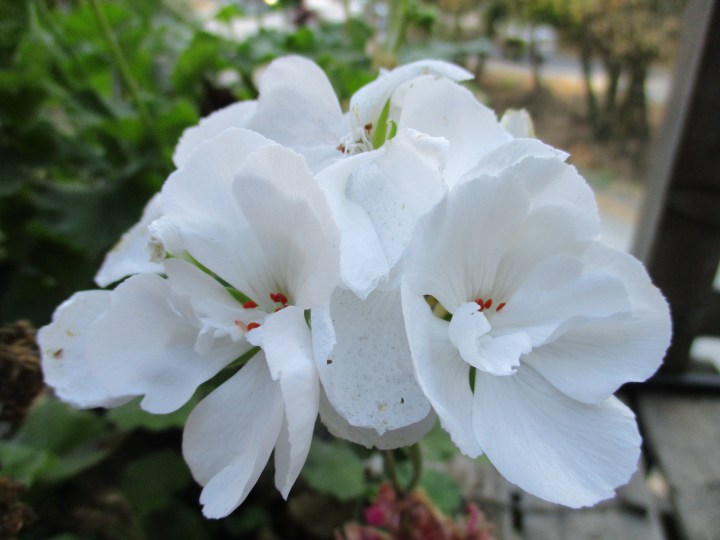
6. White zonal geranium happens to contrast well with the dark greens of landscapes in the redwood forests. Although it is my favorite of the four zonal geraniums that are blooming here now, my first two weedy zonal geraniums that bloom with unrefined reddish orange and garish magenta are still my two favorites.P81006+++++
This is the link for Six on Saturday, for anyone else who would like to participate:

https://thepropagatorblog.wordpress.com/2017/09/18/six-on-saturday-a-participant-guide/

Mulla Mulla

81010The common name sounds funny, but it is easier to pronounce then than the Latin name. Mulla mulla, Ptilotus exaltus, is an Australian species that has been locally available longer than its limited popularity suggests. It may seem to be more peculiar than it is because it is grown primarily by specialty growers, who happen to grow many cool plants that should be more popular than they are.
Like many species that are grown as annuals, the mulla mulla is really a short term perennial that can perform for a few years, but is unfortunately more often grown as a warm season annual. It will finish blooming soon, but if left in the garden through winter dormancy, young plants should resume in about April or May. It can succumb to frost if the weather gets cold enough through winter.

Although it can survive with less, mulla mulla prefers somewhat regular watering, and good sun exposure. New spring growth develops rather vigorously without getting much more than half a foot high and wide. Fuzzy cylindrical blooms that stand above the foliage are about three inches long. Floral color is pinkish mauve, with a silvery sheen. Deadheading promotes subsequent bloom.

Annual Dahlia

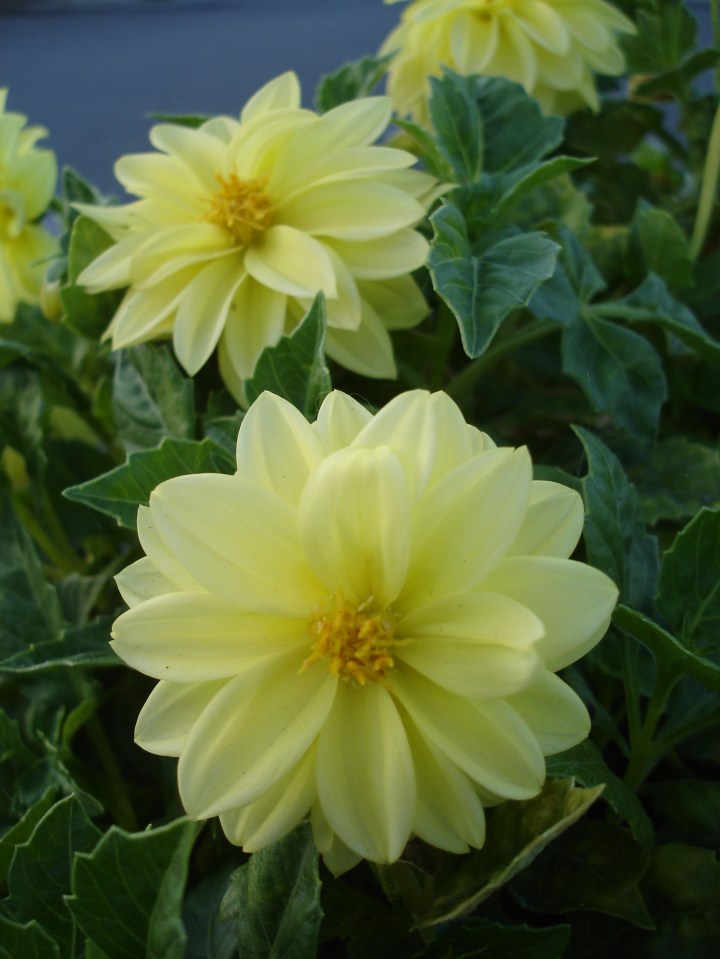
50930They are really just smaller versions of the larger perennial dahlias that are grown for their big bold flowers and flashy colors. Technically, annual dahlias produce smaller versions of the same perennial roots that can survive through winter to regenerate the following spring. Yet to most of us, it is easier to purchase new plants in spring than to grow new plants from stored roots.

Relative to larger dahlias, everything about annual dahlias is subdued. The flowers are neither as big, nor as variable. They can bloom any color except blue or green, but are usually simple shades of red, orange, yellow, pink or white. Their main advantage is that they do not get much more than a foot tall, so they fit into more situations and do not need to be staked.

Bloom starts rather late in spring and continues until about now. Some varieties have bronzed foliage. Fertilizer promotes bloom and healthy foliar color; but too much nitrogen can inhibit bloom. Dahlias can be happy in pots, but only with good drainage and regular watering.

Annuals Change With The Seasons

50930thumbLike it or not, the warm season annuals that were so flashy all through spring and summer will eventually need to be replaced with cool season annuals to provide color through winter. It is always unpleasant to pull up the annuals of a previous season while they are still blooming, even if they are already getting scruffy and discolored. It is actually easier if they got roasted by recent warmth.
Some warm season annuals last longer than others. Many are actually perennials that can be overplanted with new cool season annuals as they get cut back or go dormant through their ‘off’ season. Some cur back perennials may not survive through winter; but those that do can regenerate next spring, just as the cool season annuals that obscured them all winter are finishing.

Wax begonias, for example, are warm season annuals that can continue to bloom until they get frosted. Where sheltered from frost, they only need to be cut back because partial defoliation exposes knobby bare stems. If they can be hidden by pansies or violas through their bare phase, they never need to be removed, and some will be happy to regenerate in spring.

Conversely, cyclamen, sweet William, chrysanthemum and some primroses are cool season annuals that have the potential to survive under the lush growth of warm season annuals next summer; but that is a topic for later. (Some people are allergic to primroses like poison oak.) Iceland poppy and ornamental cabbage and kale are not so perennial, but are quite colorful through winter.

Alyssum and nasturtium really are annuals that do not survive much more than one year. However, they can perform through summer where sheltered from heat, or through winter where sheltered from cold. In ideal situations, their self sown seedling replace deteriorating older plants, so that they can perform throughout the year. Nasturtium should be planted as seed, not from cell packs.

Calendula is a popular cool season annual early in the season, but may not last through the end of winter. Yet it is popular because it is so excellent through autumn. Chrysanthemums are even flashier, although they are often replaced as soon their first bloom phase finishes.

Six on Saturday: Gazania


Gazanias were not planned. The English daisies that were planted last spring as warm season annuals that might hopefully continue as perennials succumbed to rust. Seriously! This rust was nasty! I had no idea that English daisy was so susceptible to rust! They were so ugly that they needed to be removed. They were replaced with the gazanias a bit more than half way through.

Gazanias are not the flashiest of choices for the prominent planters that they went into, but they work. If they continue to bloom through winter, they can stay as long as they like. If they stay long enough to get bald spots, we can trim around the edges and plug the scraps back into the bald spots. I would rather put a bit of effort into maintaining them than replace them as the seasons change.

These pictures were taken about two weeks ago, along with the picture of the gazania that was posted last week. For some unknown reason, the gazanias are presently taking a break from blooming.

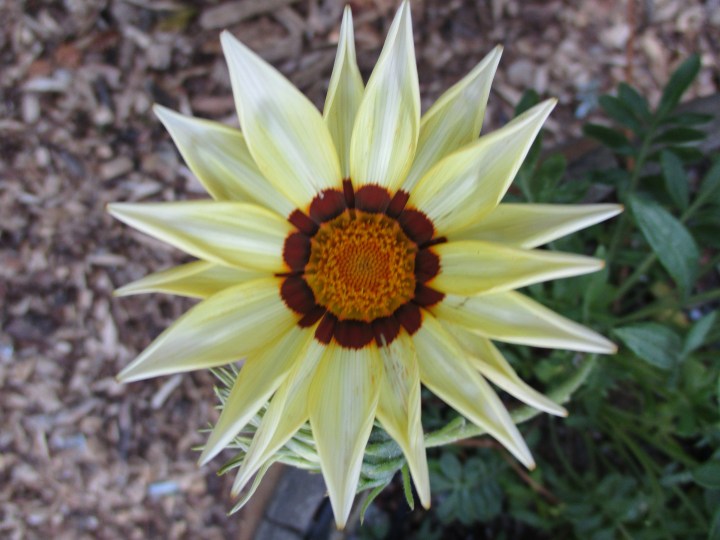
1. White is actually not my favorite color for gazanias. Yes, white is my favorite color. I just think that gazanias are at their best in brighter colors like yellow and orange. This white is not the best anyway. It looks like very pale yellow to me.P80922

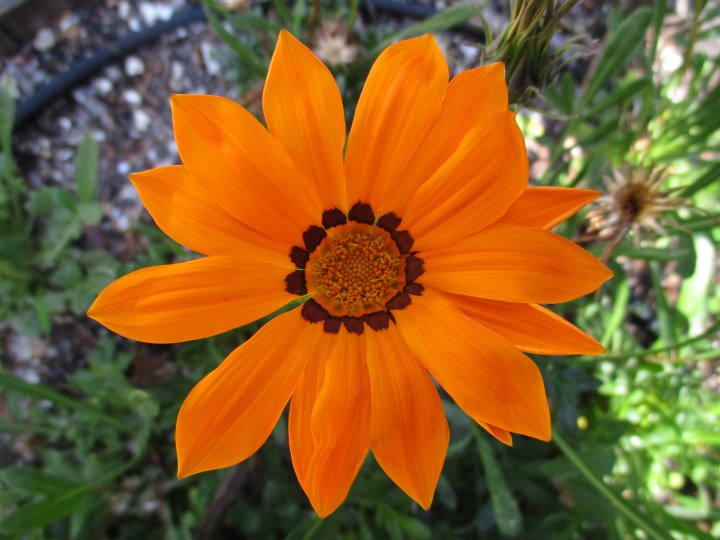
2. Yellow, in conjunction with orange, is one of the two classic colors for gazanias, and is one of my two favorites . . . in conjunction with orange.P80922+

3. Orange is the other half of the caption to the picture above. (Just read the same caption, and switch ‘yellow’ for ‘orange’, and ‘orange’ for ‘yellow’.)P80922++

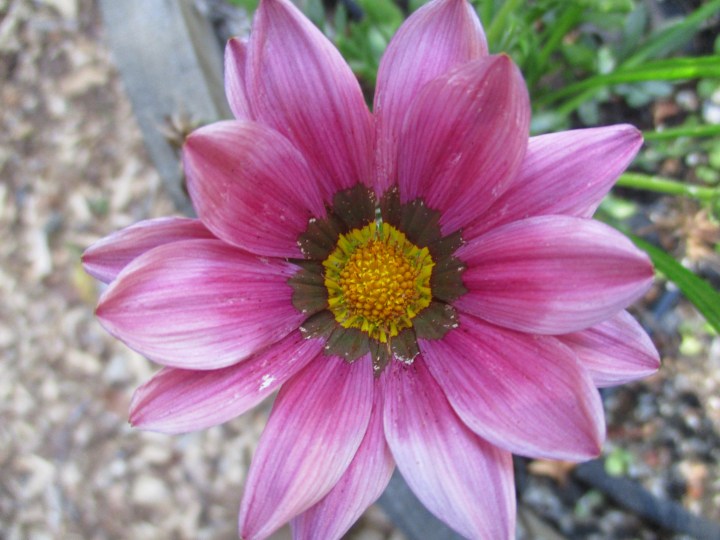
4. Pink might really be light burgundy. It was a bit darker when it first bloomed. This might be one of those colors that only girls can identify.P80922+++

5. Yellow with red stripes looks like something that blooms in the garden of Ronald McDonald.P80922++++

6. Cream with burgundy stripes looks like something that blooms in the garden of a clown with slightly more discriminating taste.P80922+++++

This is the link for Six on Saturday, for anyone else who would like to participate:

https://thepropagatorblog.wordpress.com/2017/09/18/six-on-saturday-a-participant-guide/

Start Cool Season Annuals Early

30925Twice a year, it becomes necessary to discuss the unpleasantries of pulling up the flowering annuals (as well as vegetable plants) of one season, to relinquish space for those of the next season. Just a few months ago, cool season annuals got replaced with warm season annuals. Now, those same warm season annuals will get replaced with cool season annuals for the next few months.
It is unpleasant because the outgoing annuals are probably still blooming when it is time for them to go. It might be easier to wait for cool season annuals to get roasted by hot weather, or for warm season annuals to get frosted. Unfortunately, by that time, the incoming annuals would be at a disadvantage. Hot or cold weather is also uncomfortable for plants that are not yet established.

Sure, warm season annuals like warmth, but only after they have sufficiently dispersed their roots to sustain their growth during warm weather. This is most efficiently accomplished while the weather is still mild earlier within their season. Cool season annuals likewise do not mind cool weather, but do not grow as well as they do during the warmer weather earlier within their season.

This is why it is better to plant pansy, viola, sweet William, Iceland poppy, stock, calendula and the various primroses earlier rather than later if possible. There is no exact science here. A forecast for warm weather certainly justifies delay. Cyclamen and ornamental cabbage and kale are a bit more sensitive to warmth, so could wait a bit longer. They grow well through cold weather anyway.

Chrysanthemum, alyssum and nasturtium are odd ones. Chrysanthemum, although perennial, is most often planted as a short term autumn annual while it is already blooming or is just about to bloom. It rarely gets a second chance if it finishes bloom before winter. Alyssum and nasturtium can be both warm and cool season annuals. They only gets replanted this time of year because individual plants perform through one season or the other, but probably not both. Nasturtium should be grown from seed.

Six on Saturday: Again – Not My Garden


There are just too many cool things blooming in my colleague’s garden to not get some more pictures. Some may seem to be redundant to others that were shared earlier, as well as to some that have not been shared yet. The unknown salvia and lion’s tail are finishing their bloom, as it the know what time of year it is. The weather may not seem like that of late summer, but they know otherwise. I got these pictures while I could. African iris and African daisy are oblivious. They bloom whenever they want to, and African iris can even bloom a little bit through winter if it chooses to. Autumn sage, as the name implies blooms best about now. Of these six, only the four O’clock will deteriorate in autumn and die back through winter. The salvias will get pruned back anyway.

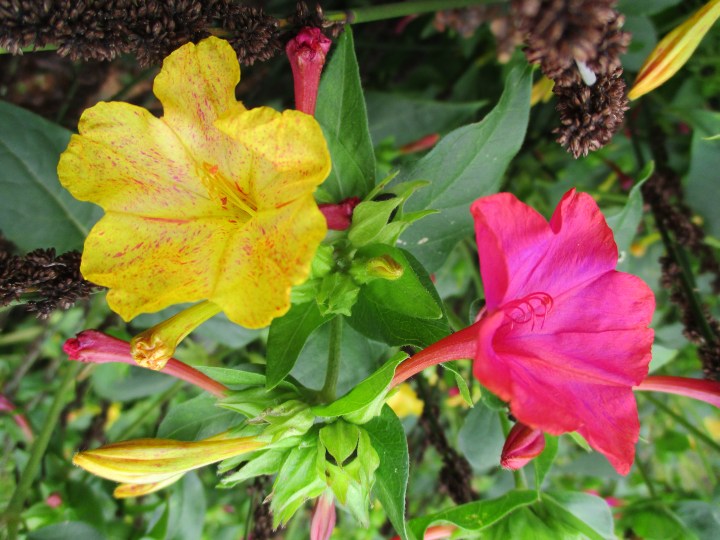
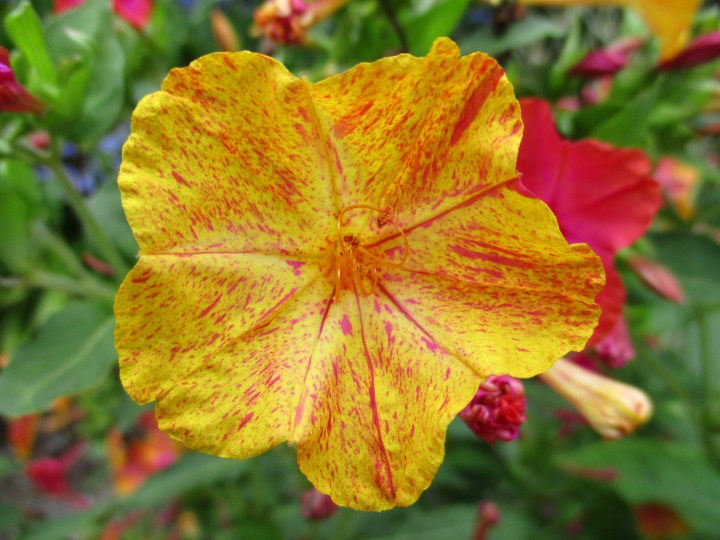
1. Four O’clock, Mirabilis jalapa, are the same as those featured last Saturday in Six on Saturday, and in the following brief article about the individual plants that bloom with flowers of different colors. This one looks like a blob of mustard with a bit of ketchup that squirted out of a hamburger as someone bit into it. The rich red flower in the background that looks more like plain ketchup is on the same stem.P80908

2. Autumn sage, Salvia gregii, is a different cultivar of the same species featured yesterday. The picture that was posted yesterday was from a specimen in the landscape at the library in town. This picture is that of a cultivar of smaller stature but with bigger flowers. The zonal geraniums of questionable (pink, salmon, peach or whatever) color that were featured last week can be seen in the background.P80908+

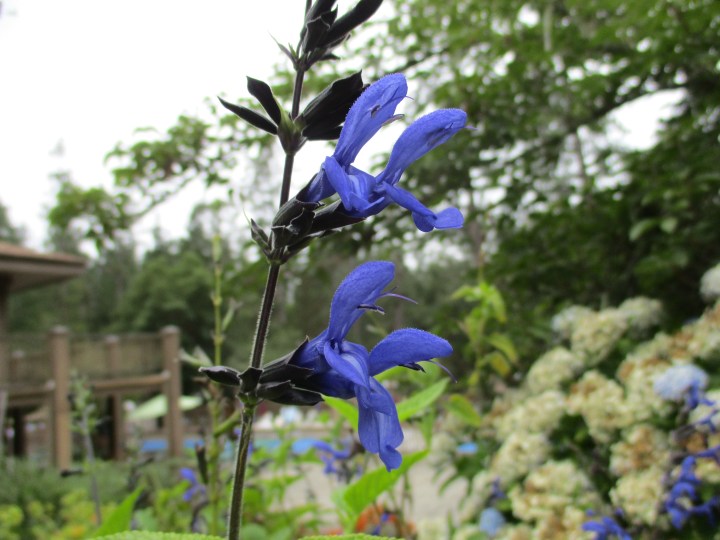
3. Black and blue salvia, Salvia guarantica, looks just like this. . . or this looks just like black and blue salvia. I really do not know what it is. It sure is an exquisite blue though. The base of the plant is rather scrawny, almost as if it intends to grow only as an annual. It will get cut back like other salvias, but not as aggressively. If it regenerates from the base like it should, the old growth can be cut back later.P80908++

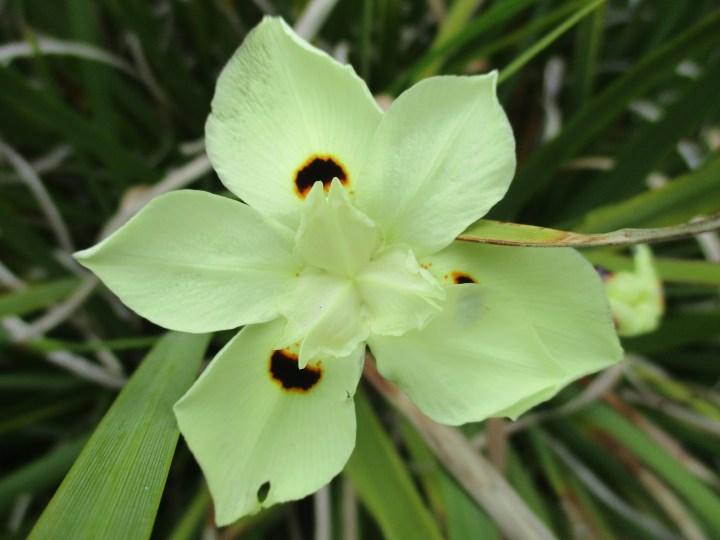
4. Yellow African iris, Morea bicolor, is sort of cliché. However, this is the only one anywhere around. Seriously, with all the many acres of landscape that my colleague maintains out there, this is the only one. The more common white African iris, Dietes iridioides, is lacking completely. (‘Dietes‘ and ‘Morea‘ are synonyms, but ‘Dietes‘ is uses more for the ‘iridiodes, and ‘Morea‘ is used more for the ‘bicolor‘.)P80908+++

5. African daisy, Osteospermum ecklonsis, looks something like gazania. There are plenty pictures of gazania as well, but I will use them for the next two weeks. This species of African daisy is shrubbier and more colorful than the sprawling types that were popular as ground cover back in the 1980s. It blooms more profusely, and with more vivid colors. I probably should have gotten pictures of the other colors too.P80908++++

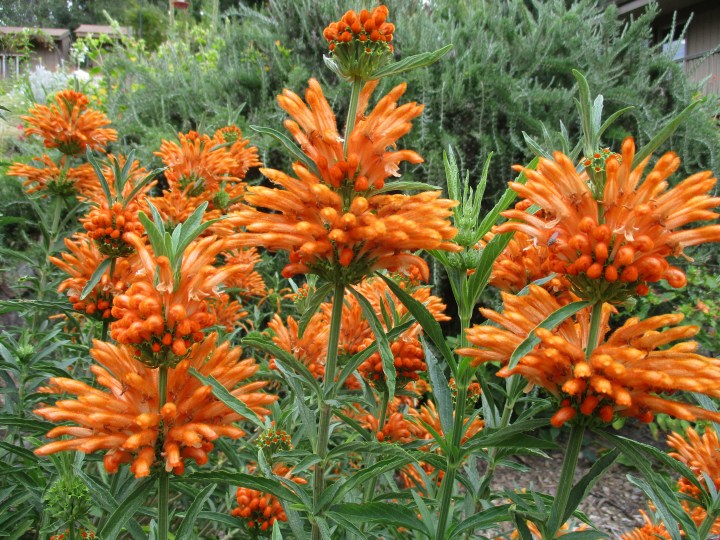
6. Lion’s tail, Leonotis leonurus, will be featured in my weekly gardening column this week, which shows up here on Tuesday. I am no fan of orange, but I can not dislike this bloom. The color is as flashy as that of California poppy. I will never understand why this perennial is not more popular than it it. It has been available longer than some of the less impressive salvias, but salvias are trendy. They are related of course.P80908+++++

This is the link for Six on Saturday, for anyone else who would like to participate:

https://thepropagatorblog.wordpress.com/2017/09/18/six-on-saturday-a-participant-guide/

Different Time Zones

P80901KIf the flower on the left is a four o’clock, is the flower on the right a five o’clock, or perhaps a three o’clock? Is one a.m. and the other p.m.? What about the flower of the same species that I featured twelve hours ago? What about those in another picture that I will share next Saturday?
Of course, only the colors are different; not the name . . . or the time.
What is odd about these two seemingly different flowers is that they are on the same plant. In fact, they are on the same stem, separated only by a few inches.
Four o’clocks can be odd that way. Individual plants typically bloom with exclusively pink, red, white, yellow or orange flowers. The shades and hues of these colors are variable, but are typically homogeneous throughout each entire plant.
Some plants bloom with flowers of one color that are spotted or variably striped with another. Their flowers are not as homogeneous as those that bloom with only one color, so some of their flowers might be uniformly one color or the other, without spots or stripes. Some plants bloom with a few different colors!
Distinctly bright pink (but not light pink) flowers seem to be the most fragrant and the least variable, typically devoid of spotting or striping. They may be more closely related to the wild species, as it would have been found in its natural range in the Andes, prior to breeding for more interesting colors. Perhaps, after enough generations, other four o’clocks would eventually revert to the same characteristically fragrant bright pink flowers, just like many varieties of nasturtium eventually revert to standard bright orange and yellow. It is hard to say now, while naturalized four o’clocks have yet to do so.

Six on Saturday: Not My Garden


My garden really is not much to talk about. Really. It is just a bunch of redwoods with a bit of other native vegetation dominating the few items that I added into the mix. There are fourteen stock fig trees, but they are very small and mostly obscured by the underbrush. The elderberries, currants and huckleberries are the same as what grows wild, so they do not look like much either. Even the cane berries look very similar to the native blackberries. There is a quince tree, some rhubarb, and some small prickly pear, but they are barely visible amongst the other vegetation. Well, that is enough talk about why my garden is not much to talk about.

These pictures are from one of the gardens that one of my colleagues maintains.

1. Hibiscus is probably the flashiest bloom in this garden now. I have no idea what cultivar this hibiscus is; and I am not even certain about the species. It sure is impressive though. This flower is more than six inches wide!P80901

2. Red honeysuckle is something that I really want to grow, but can not justify it. I mean, it does not exactly ‘do’ anything more than look good. It is not fragrant like Japanese honeysuckle is. This one took a while to bloom.P80901+

3. Zonal geranium happens to be one of my favorite perennials, even if others consider it to be too cheap and common. I do not know if this one is pink, peach, salmon . . . or one of those odd colors that only girls can see.P80901++

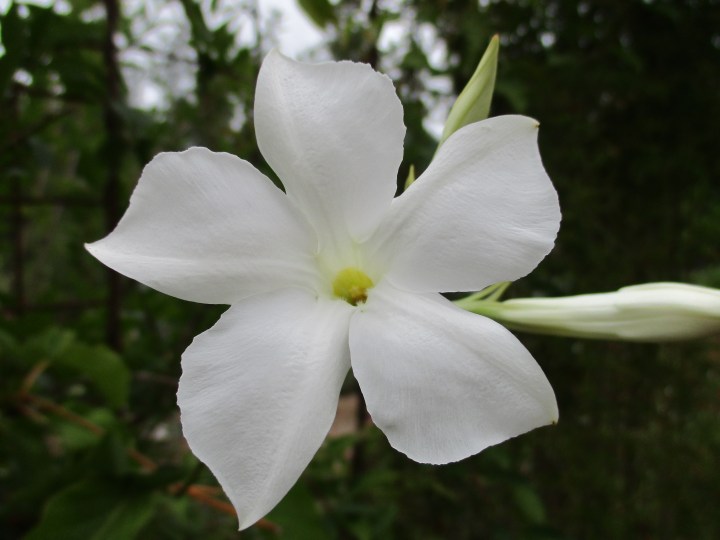
4. Mandevilla is my best guess. Again, I do not know the species. Did I mention that this is not my garden? I do happen to like this one though, because it is so perfectly white. Otherwise, I am none too keen on mandevilla.P80901+++

5. Morning glory is quite happy here. This one is annual of course. There was a perennial white morning glory known as a moonflower nearby, but it succumbed to frost last winter. Hope for its recovery ran out months ago.P80901++++

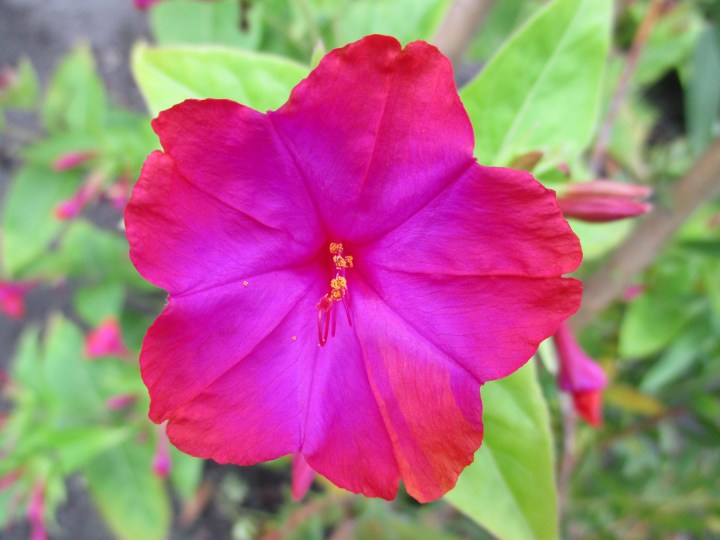
6. 4:00 (four o’clock) is a prolific naturalized exotic species. I would not say that it is invasive, but merely prolific. I do not know if this one is 4:00 a.m. or 4:00 p.m., but I do know it will not be the last. More on that later.P80901+++++

This is the link for Six on Saturday, for anyone else who would like to participate:

https://thepropagatorblog.wordpress.com/2017/09/18/six-on-saturday-a-participant-guide/