Red Alert

Acer platanoides

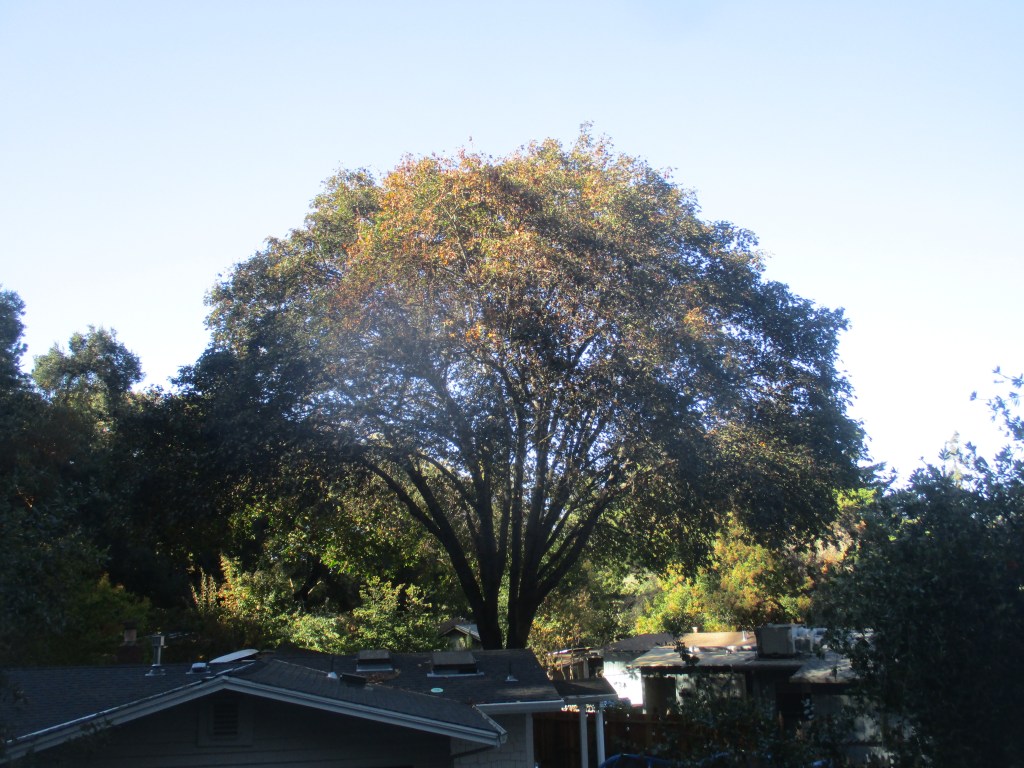
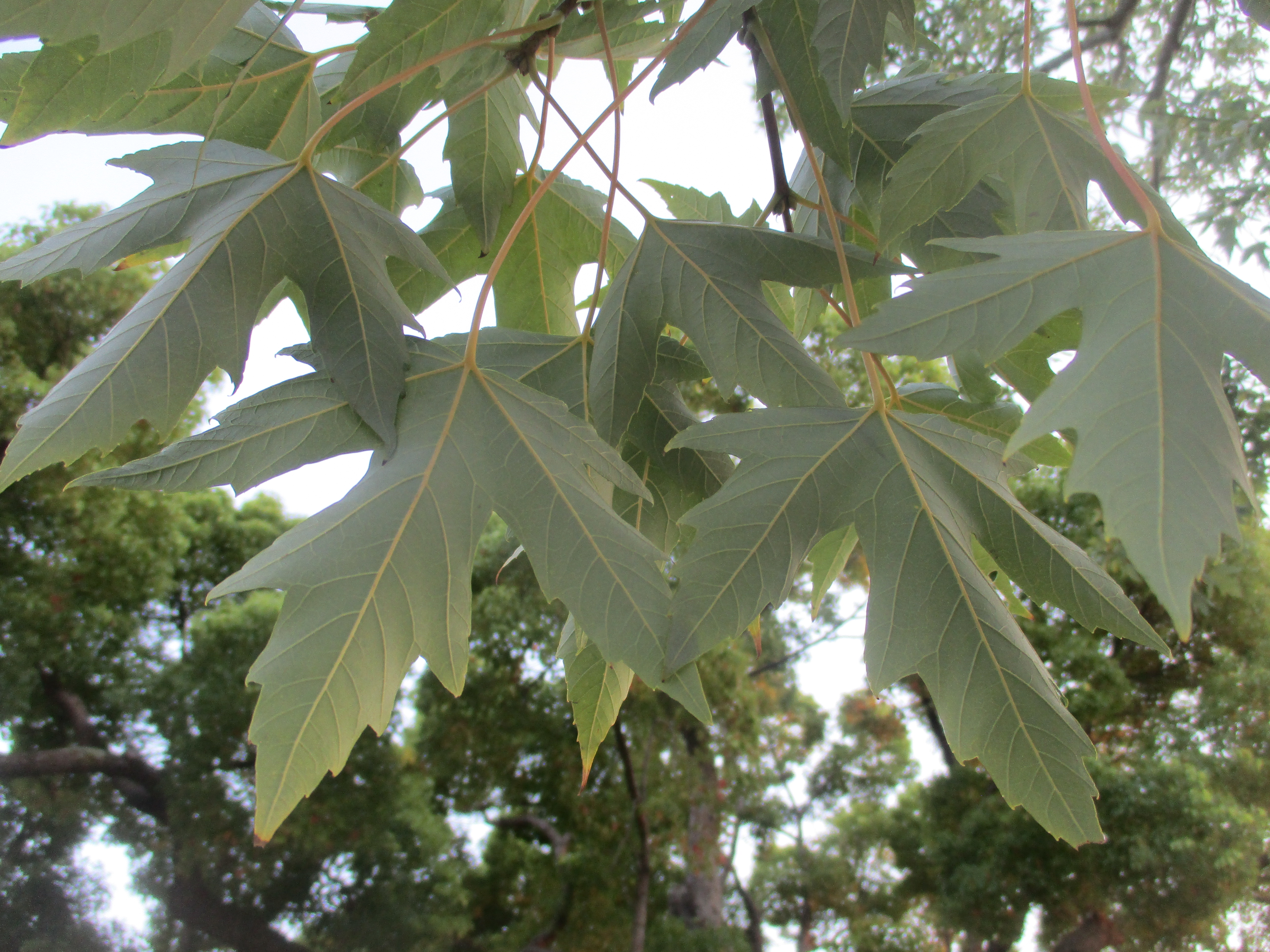
Acer platanoides ‘Schwedleri’, is Schwedler’s maple, which is an old fashioned cultivar of Norway maple. It is not a red maple. However, because its new foliage initially emerges with deep burgundy red color, it is often mistaken for red maple, particularly where red maple is uncommon. Its deep burgundy red foliar color does not last long before developing deeper purplish bronze color, with tiny contrastingly greenish yellow flowers. For autumn, the foliage turns yellow. Schwedler’s maple was a common street tree for the many large tracts of suburban homes that were built within the Santa Clara Valley during the late 1950s. Although it has not been available from nurseries for the past few decades, at least two similar but more modern and darker bronze cultivars of Norway maple are becoming more available. Modern cultivars are generally sterile, so are not invasive like the simple species has been within some ecosystems that are more favorable to naturalization than that of the Santa Clara Valley. The Norway maple in the picture above is not ‘Schwedleri’ but looks very much like it.

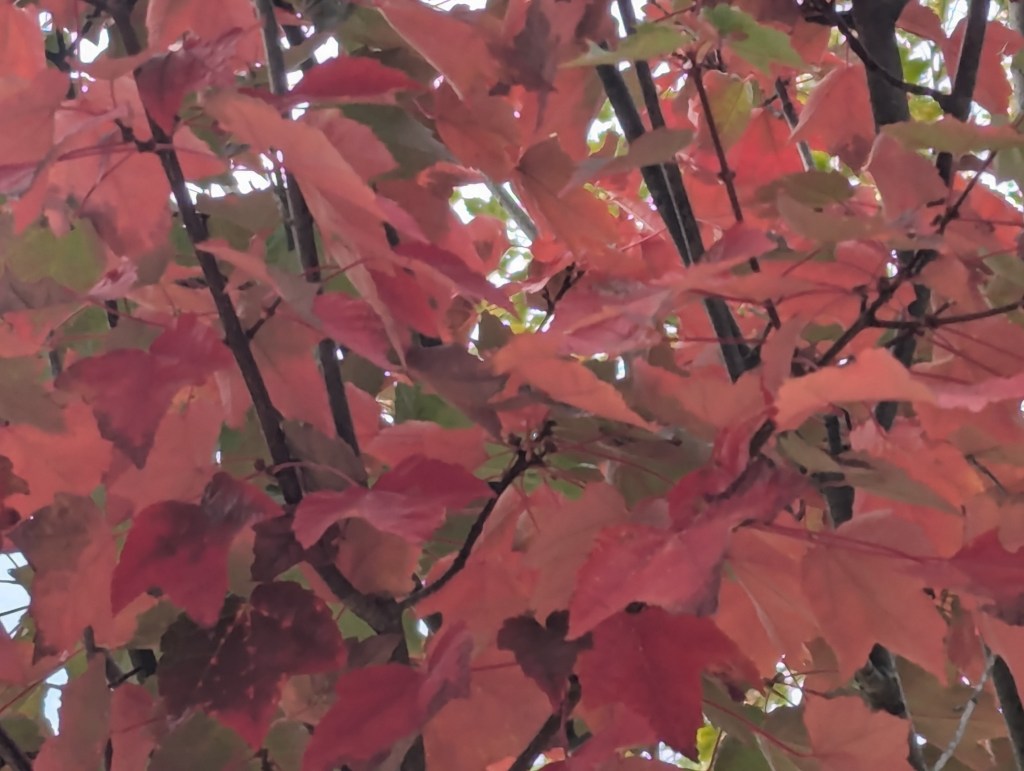
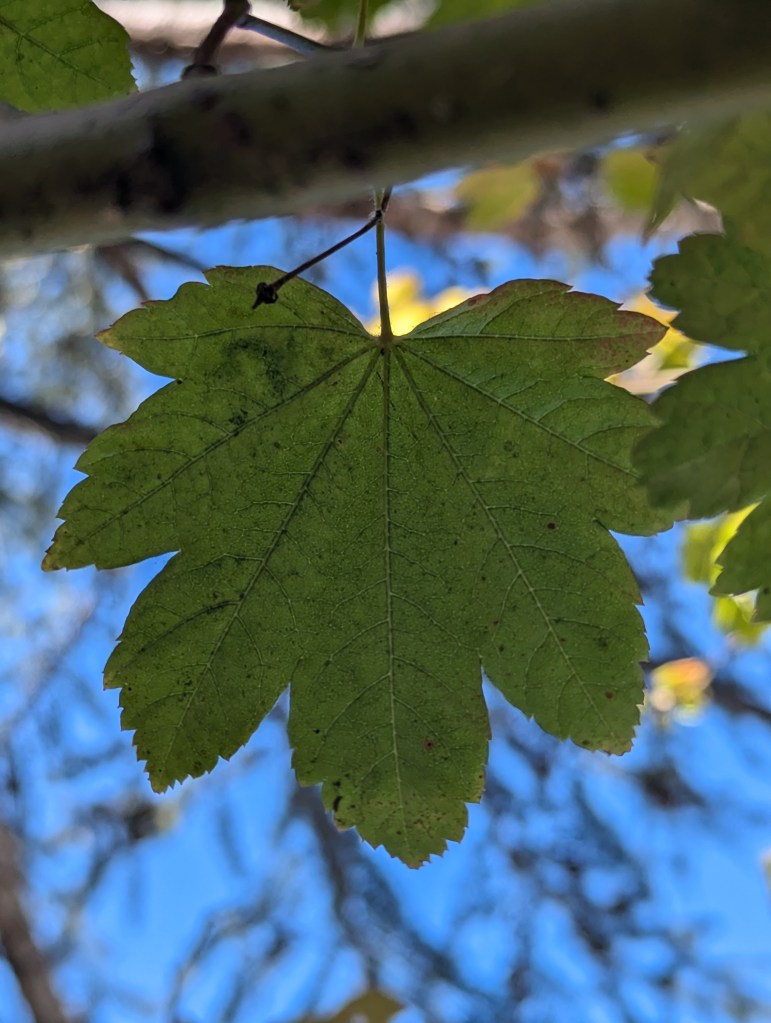
Acer rubrum is the real red maple, not just because of its often bright red autumn foliar color, but primarily because of its red floral buds that emerge immediately prior to foliation in spring. However, prior to autumn, its foliage is simple green. Red maple was rare here prior to 1990, and by the turn of the Century was still only mildly popular in the Santa Clara Valley. It could be more popular than it is, and realistically, performs better as a street tree than cultivars of Norway maple. Although not as colorful as bronzed cultivars of Norway maple are through summer, its vibrant yellow, orange and typifying red autumn foliar color is superior, even in response to only mild chill.
Acer rubrum

Vine Maple

Vine maple works like Japanese maple.

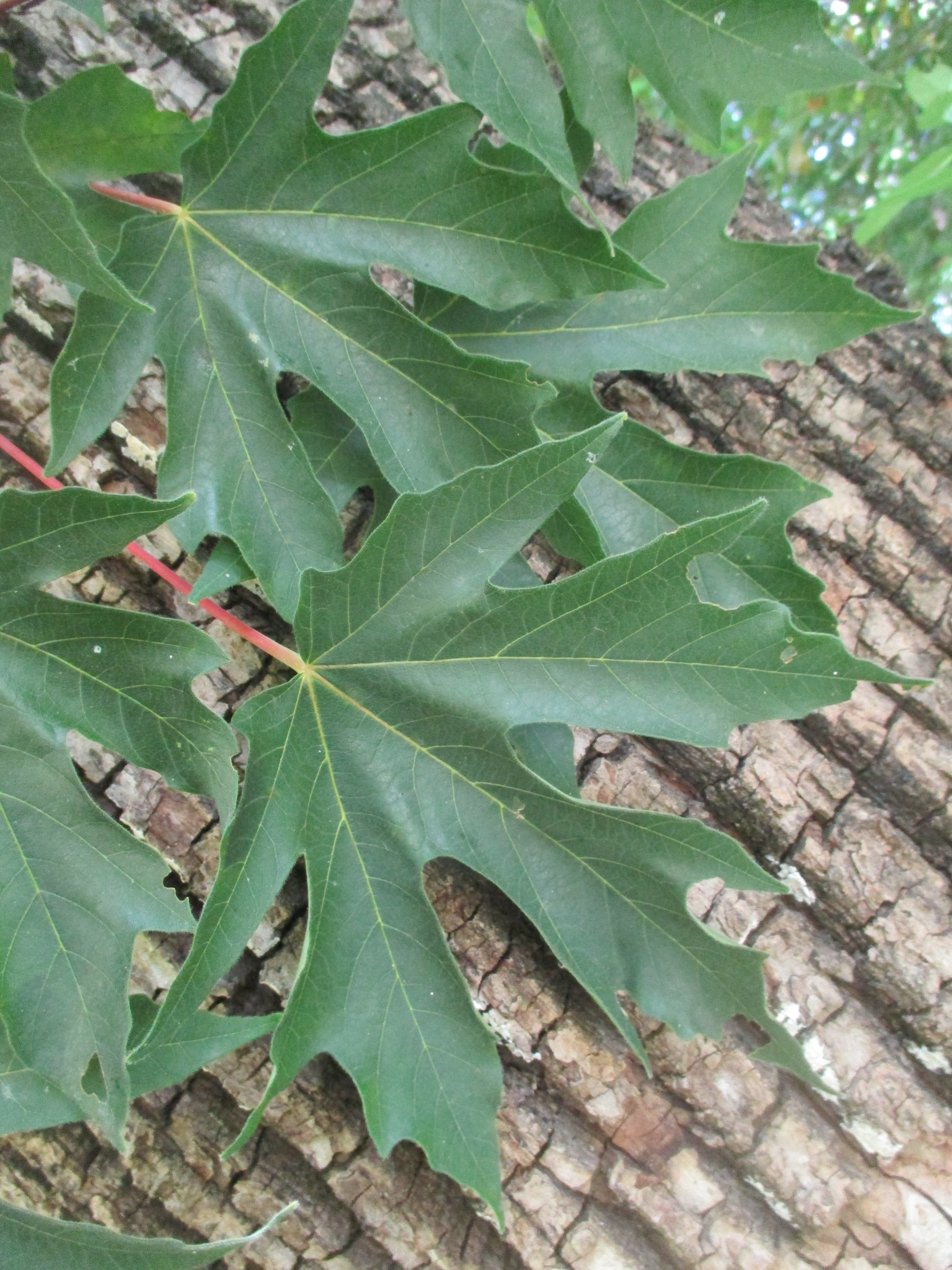
Japanese maples became so popular for their novelty that they are no longer novel. The diversity of their many cultivars is their primary appeal now. Vine maple, Acer circinatum, lacks such diversity, but is actually more novel. It is native from Mendocino County to the southwestern corner of British Columbia. Yet, it is very rarely available at nurseries here.

Vine maple has not been in cultivation for nearly as long as Japanese maple has. This is why its diversity is limited to not much more than a dozen cultivars. Its cultivars are even rarer than the simple species. Only a few ever become available, and almost exclusively by online purchase. Consequently, with very few exceptions, they are initially very small.

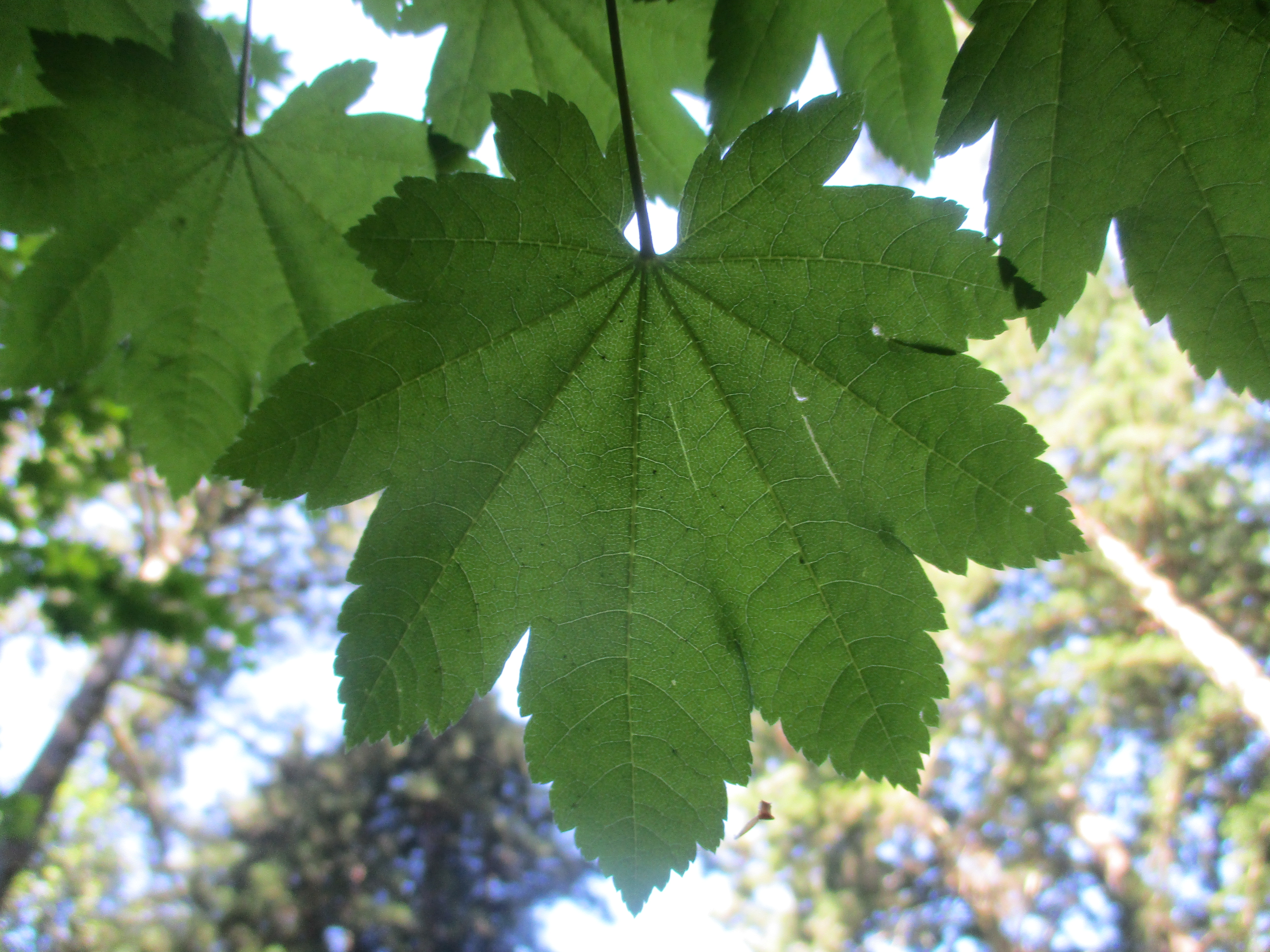
Vine maple grows somewhat like Japanese maple, typically with a few sculptural trunks. With regular pruning, it can stay as short as ten feet. It rarely grows more than twenty feet tall. The lobes of its palmate leaves are wider than those of Japanese maple. Leaves are only about three inches long and wide. Foliage develops bright orange color for autumn.

Six on Saturday: Again – No Signal

Since the camera died, all my pictures are taken by telephone and then sent to my email. The primary problem with this procedure is that the telephone signal here is unreliable. I actually had six timely pictures to post today, but could not get them here. Instead and again, these six are merely five random pictures that I had no other use for, as well as an illustration that I copied from a magazine. Incidentally, the illustration from a magazine is not of particularly good quality. Actually, most of what is shared on Six on Saturday is of superior quality, and more interesting.

1. My Los Angeles homeless camp made the New York Times! This is it in an illustration for an article about hedges. It is why I have never stayed at the famously eccentric Hotel del Flores, which incidentally, has less Flores. It is in the back yard of Brent’s Jungalow.

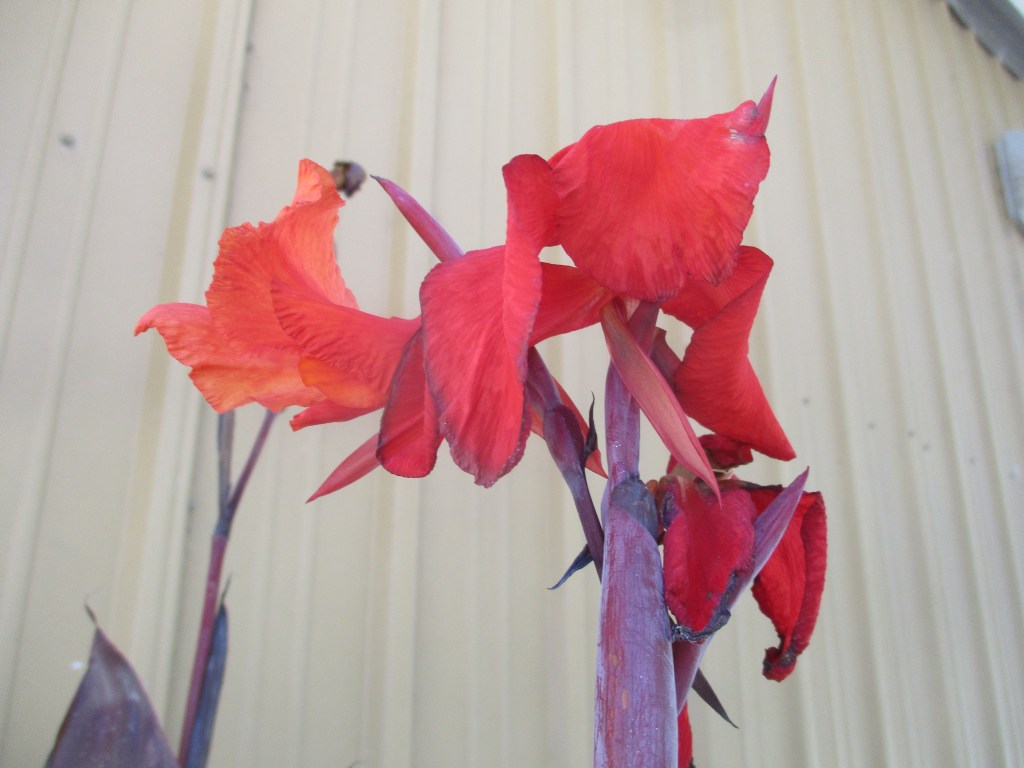
2. ‘Tropicanna Black’ Canna was ‘borrowed’ from my Los Angeles homeless camp during a previous trip late last summer. It now lives happily with five other fancy cultivars here.

3. Morea iridioides, African iris is nothing special. This and three others were split from an overgrown specimen that I planted at my mother’s garden in the early 1990s though.

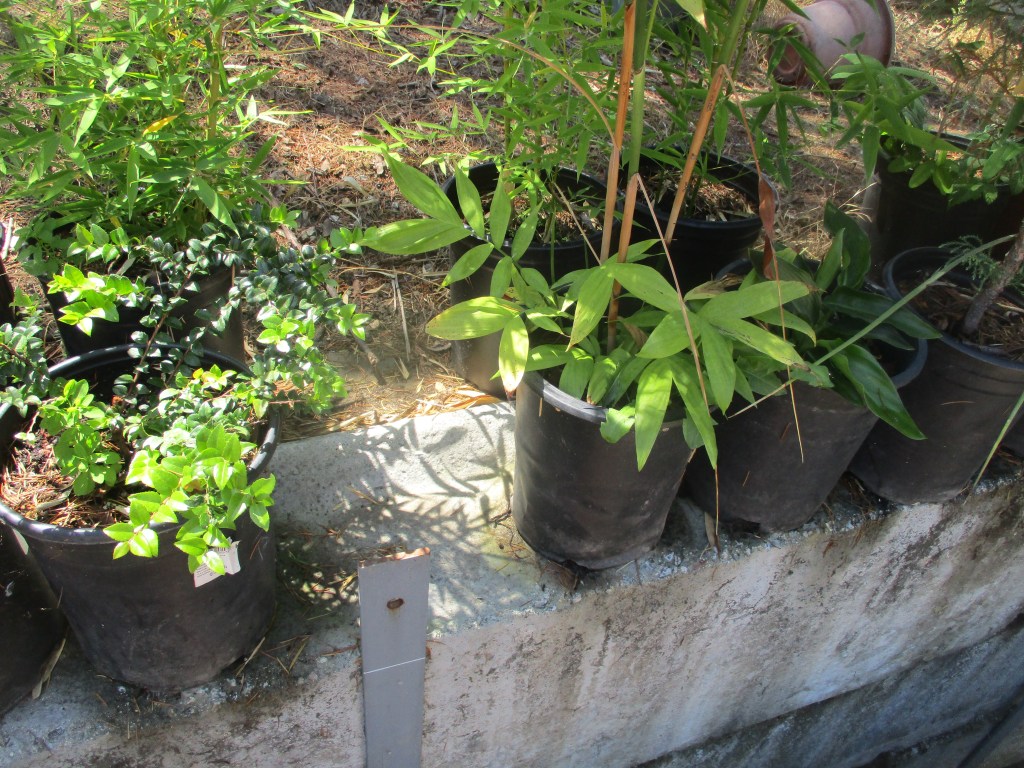
4. This is where they live now. They will not look so silly as the Dodonaea viscosa grows. I should pluck bits from the biggest specimens to add to the small specimen this winter.

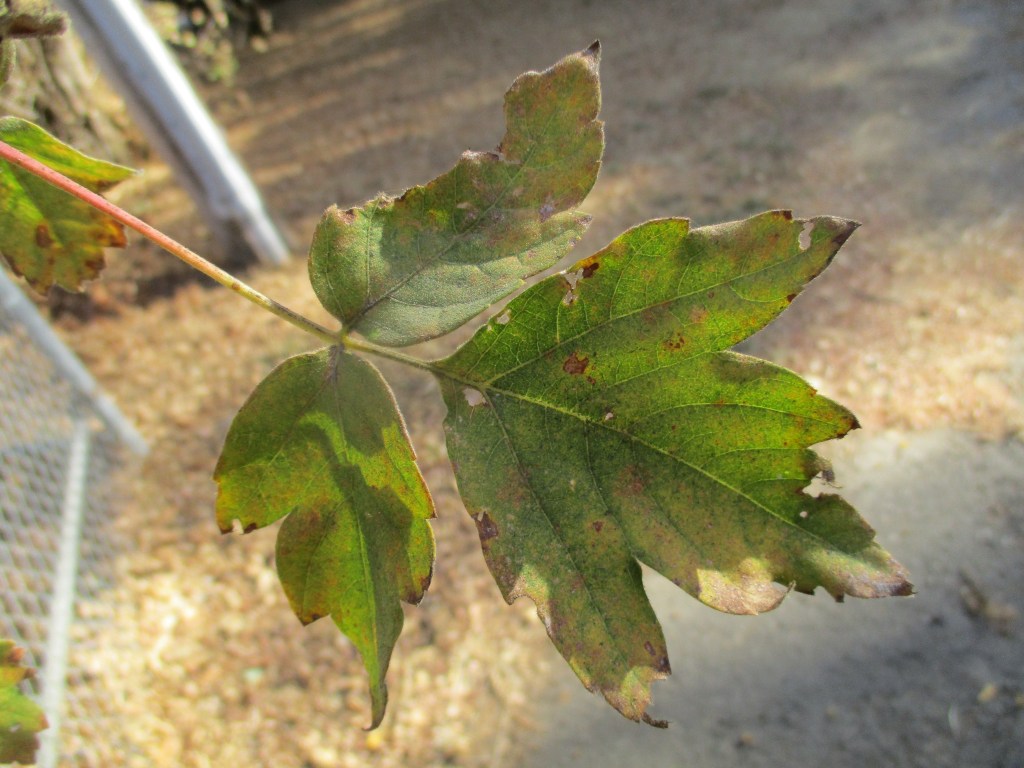
5. Acer platanoides, Norway maple resembles ‘Schwedleri’ Norway maple that I grew up with. I can not remember the name of this modern cultivar. I prefer the original though.

6. Rhody approves of these unplanned Six on Saturday, although this sixth older picture may have been featured earlier. He and I both know how popular any of his pictures are.

This is the link for Six on Saturday, for anyone else who would like to participate: https://thepropagatorblog.wordpress.com/2017/09/18/six-on-saturday-a-participant-guide/

Six on Saturday: Maples

Maples are annoyingly misrepresented here. Japanese maples are so much more popular than they should be, and imposed by just about every so-called ‘landscaper’ with something to prove, although few of them know or care how to take proper care of them. However, maples that actually develop as shade trees are still uncommon or even rare. Only two species are native locally. Of these, box elder (#5) is rather unimpressive, and bigleaf maple (#6) is potentially too big and too messy for refined home gardens. Norway maple has a bad reputation, but ‘Schwedler’ was a good street tree.

1. Acer platanoides – Norway maple is invasive elsewhere. I do not trust it here. I grafted noninvasive ‘Schwedler’ Norway maple on five naturalized saplings. None took. Ugly saplings survive.

2. Acer platanoides – Norway maple should look like this. I do not remember the name of this cultivar. It supposedly has better bronzed color than ‘Schwedler’. I still prefer classic ‘Schwedler’.

3. Acer rubrum – red maple performs quite well in mild climates, and works well as a street tree with symmetrical and rather compact form. I do not remember the name of this cultivar either.

4. Acer circinatum – vine maple should be more popular here. It is a sculptural understory tree like the countless cultivars of Japanese maple, but is not a Japanese maple. That is why I like it.

5. Acer negundo – box elder should probably be less popular than it is. It is the most common maple of North America, and is native to every state except for Alaska and Hawaii. It is wild here.

6. Acer macrophyllum – bigleaf maple is also native, but only to the West Coast. It is the sugaring maple of the West. This specimen is exemplary, but drops a lot of leaves into a few backyards.

This is the link for Six on Saturday, for anyone else who would like to participate:

Six on Saturday: Cat Burglar

Is a cat burglar a kitty who steals things, or someone who steals from kitties? There are a few kitties here, and, apparently, a burglar. I determined that two of the kitties are appropriate for Six on Saturday because they have horticultural names. The burglar is less appropriate, and is gone anyway. I am quite annoyed that someone came here, likely during the day, and stole from us. A small hesper palm that I grew from a seedling, two specimens of golden bamboo, and a larger Mexican fan palm got taken.

1. Cat – Black Jack, like the oak, Quercus marilandica, has a good horticultural or arboricultural name. He is a solid black Maine coon cat, and is no more cooperative for a picture than Rhody.

2. Burglar – Hesper palm, Brahea armata, lived here, in the blank spot on top of the wall. Golden bamboo, Phyllostachys aurea, lived right behind it and in the blank spot four cans to the right.

3. Cat – Pepper, like a species of Caspicum, has a good horticultural name too. She looks something like a penguin with a bit of brown, but is no more cooperative for a picture than Black Jack.

4. Burglar – I know I brought back more shoots of this unidentified species of Aloe from my downtown planter box. At least these four remain. They will get groomed and return to the planter.

5. Canna – This also came from the downtown planter box. It needed to be removed to facilitate the repair of a few broken tiles. It will eventually return with the Aloe. This bloom is a surprise.

6. Vine maple – Acer circinatum is still healthy and reasonably happy after getting yanked from its landscape by a backhoe during the warmth of summer. I did not expect it to survive so well.

This is the link for Six on Saturday, for anyone else who would like to participate:

Six on Saturday: Do You Know The Way To San Jose?


These six are not from my garden or landscapes, since I am away from home for now.

Before the evacuations, and before I was even aware of the local wildfires, I came to the Santa Clara Valley for unrelated obligations. Evacuations started in a neighboring town the following Wednesday morning. By Thursday morning, my region was evacuating. I have been here for several days and may be here longer than I need to be if I am unable to return home afterward.

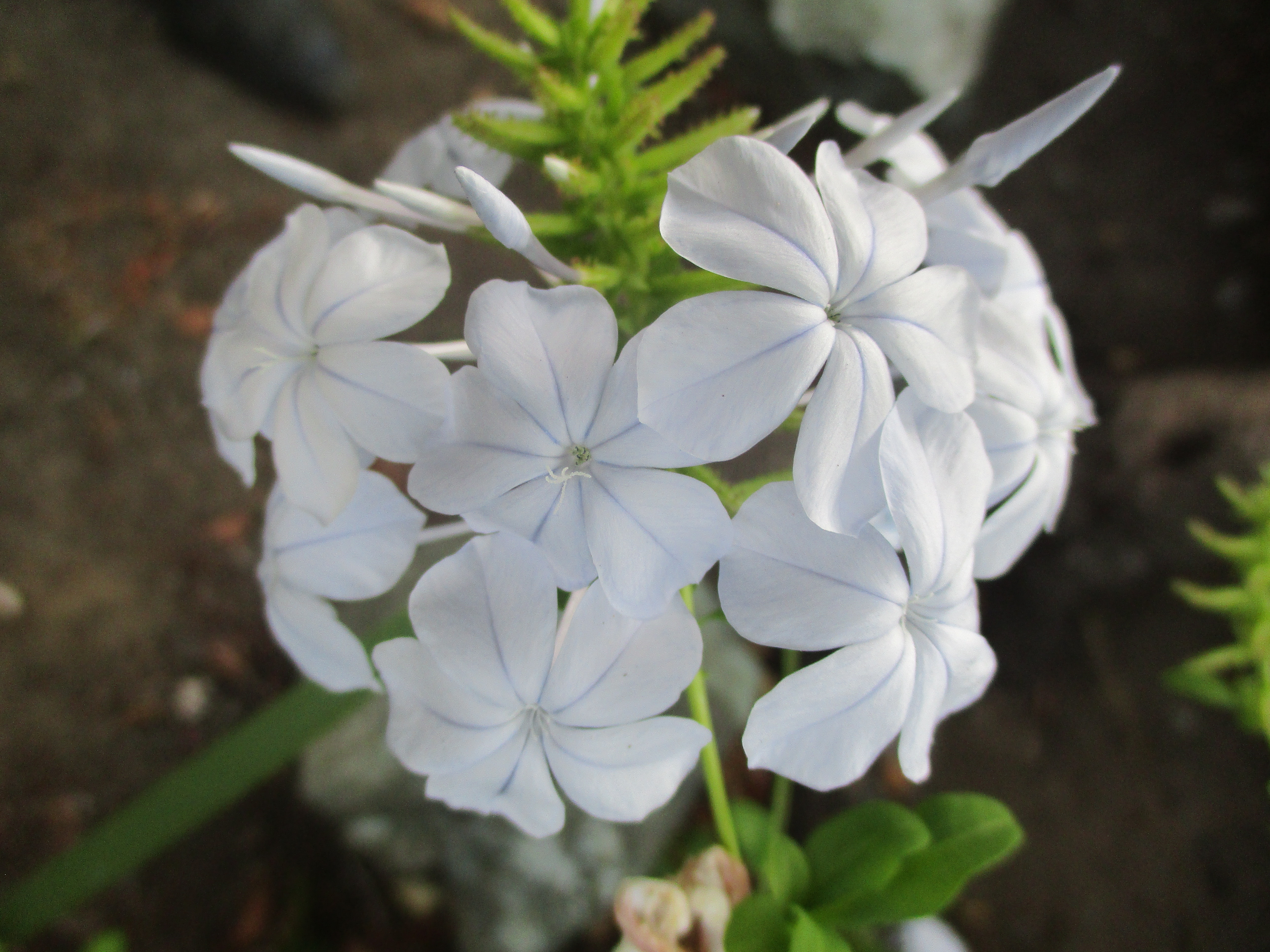
1. Plumbago auriculata – looked pretty when I planted it here, and before I knew how rampant it can get. It really wants more space. The blue is almost too bland. The foliage is rather pale.P00822-1

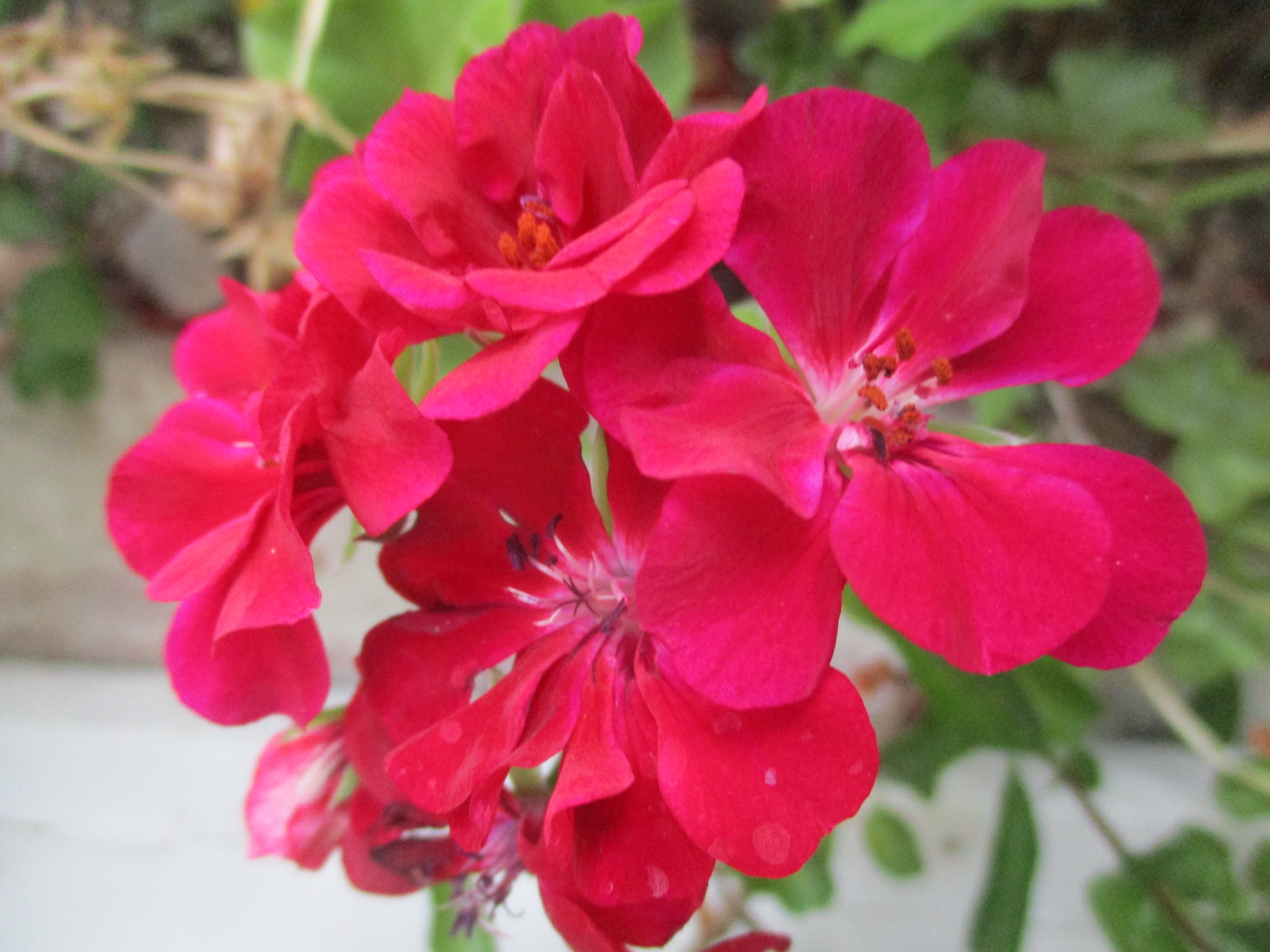
2. Pelargonium peltatum – is the only one of these six that I did not plant here. I have no idea where it came from. I know this species is nothing special, but this color is too pretty to ignore.P00822-2

3. Chamaecyparis lawsoniana ‘nidiformis’ – is rare here, perhaps because it dislikes a chaparral climate. This specimen is not much bigger than it was when I installed it three decades ago.P00822-3

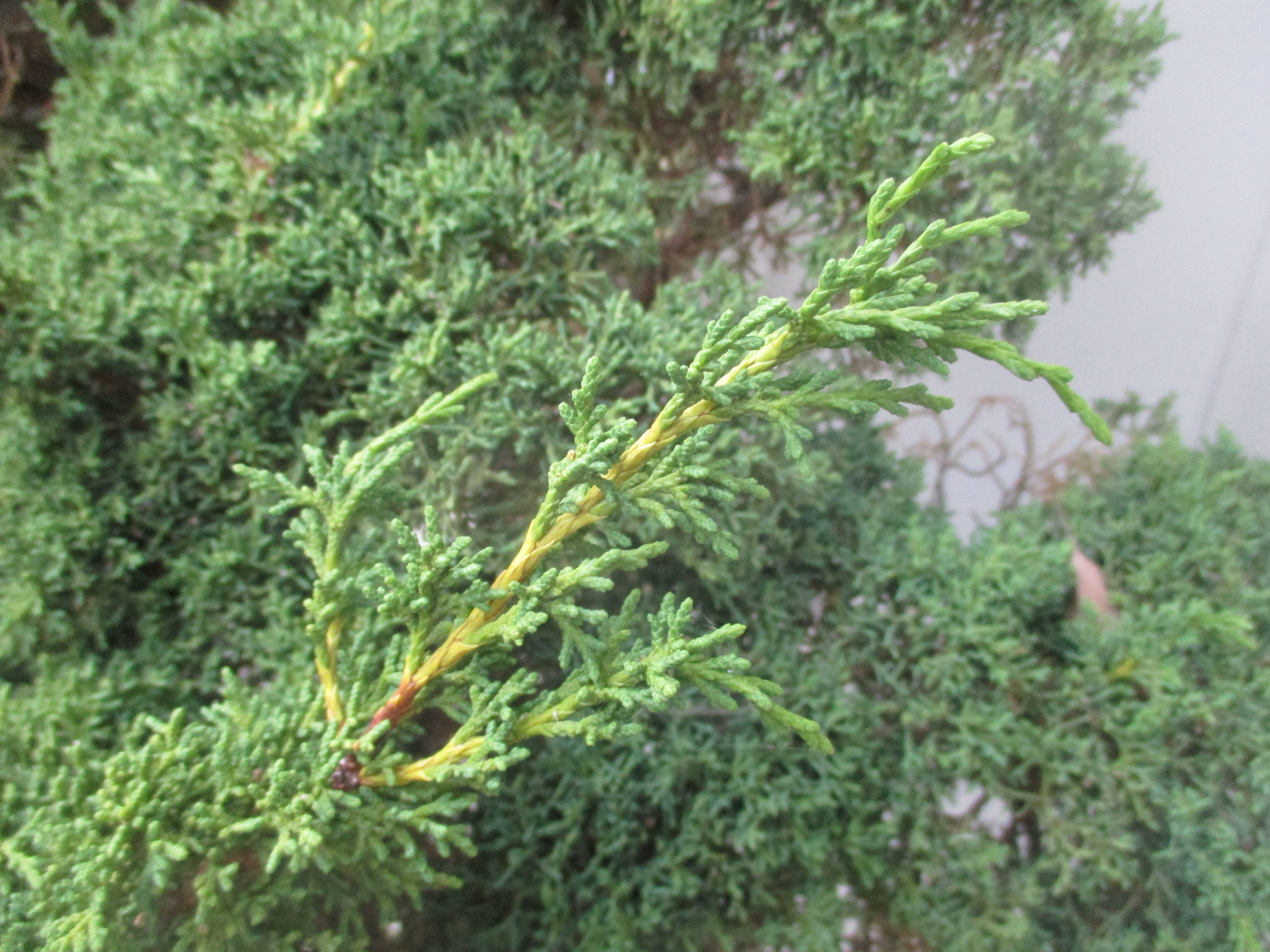
4. Juniperus chinensis ‘Shimpaku’ – sound as if it is related to Pikachu. Bonsai artists appreciate it more than I do. It is sculptural like a diminutive Hollywood juniper, but grows very slowly.P00822-4

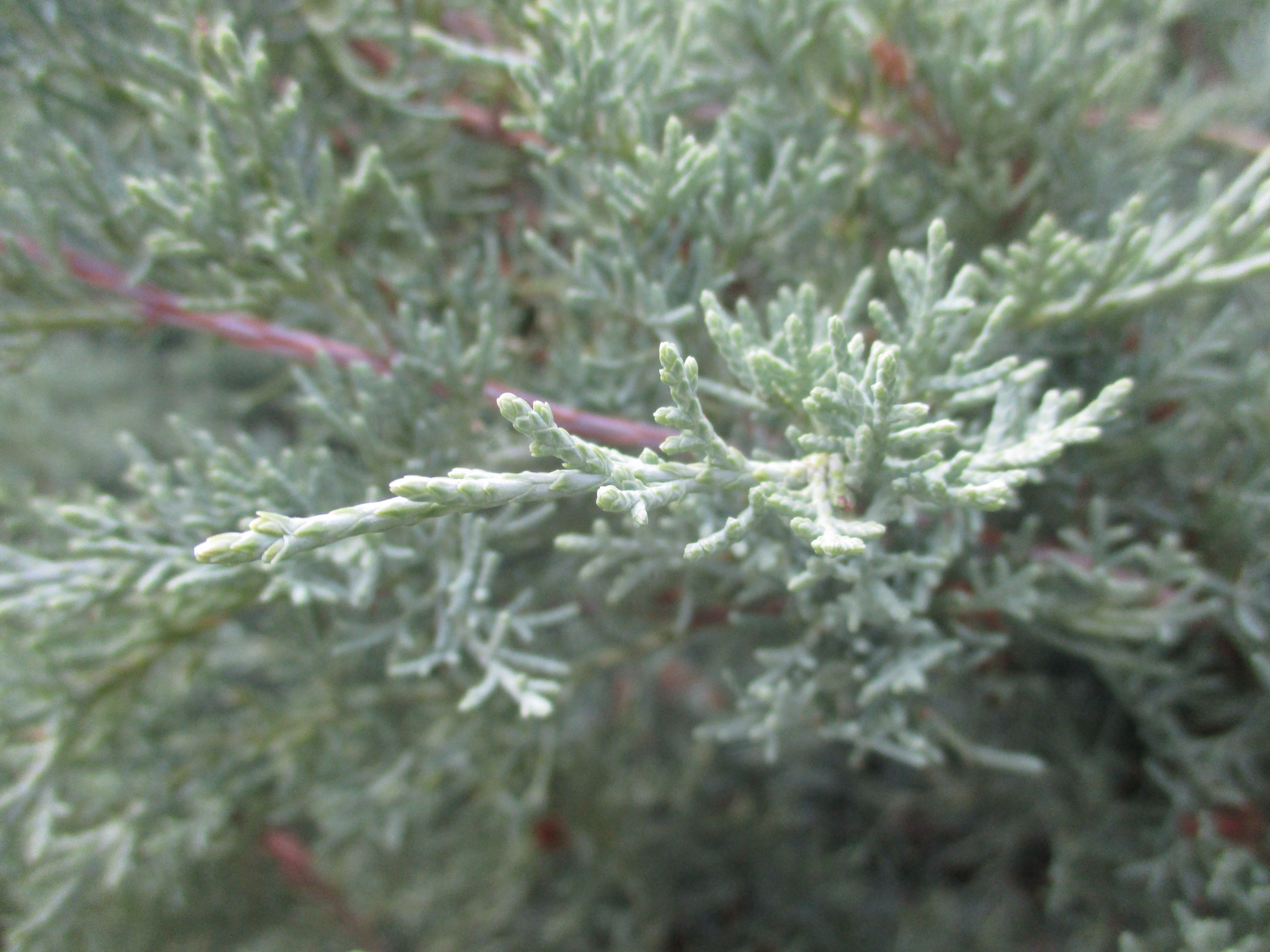
5. Juniperus chinensis ‘Hetzii (Glauca)’ – is known by a few species or hybrid species names, including X media, X pfitzeriana and virginiana, rather than chinensis, most without ‘Glauca’.P00822-5

6. Acer saccharinum – is not one of the favorite maples within its native range; but it happens to be one of my favorites. I grew this one out front by layering a stem from its parent out back.P00822-6

This is the link for Six on Saturday, for anyone else who would like to participate:

https://thepropagatorblog.wordpress.com/2017/09/18/six-on-saturday-a-participant-guide/

Bigleaf Maple

00729
A maple with unusually big leaves.

Its natural coastal range extends from the extreme southern corner of Alaska to the southwestern corner of California. Another inland range occupies foothills of the Sierra Nevada. Bigleaf maple, Acer macrophyllum, is the most common and prominent native maple here. However, it prefers the seclusion of forested riparian situations at higher elevations locally. It is rare in urban gardens.

Bigleaf maple is best in the wild anyway. It dislikes the aridity of most of the urban and suburban areas of California. (San Jose is in a chaparral climate. Los Angeles is in a desert climate.) Roots of bigleaf maple are potentially aggressive, especially if irrigated generously. They easily displace pavement. Nonetheless, where climate and circumstances allow, bigleaf maple is a grand tree.

Wild trees grow as tall as a hundred fifty feet within forests where they compete for sunlight. Well exposed suburban trees should stay lower than forty feet, while extending their canopies broader than tall. The big and palmately lobed leaves are mostly more than six inches wide. Foliage turns yellow in autumn, and is abundant as it falls. Self sown seedlings often grow under mature trees.

Fung Lum

P00530K
Acer robustum, Chinese maple?

Fung Lum was an architecturally imposing Chinese restaurant in Campbell years ago. It was more famous for the facade of the building than for the food. Although the food was purportedly excellent, not everyone ate there. Everyone in town knew the building though. It was prominently situated right on Bascom Avenue, at a time when the region was still somewhat suburban.

The meticulously pruned and groomed landscape in the minimal space between the ornate facade and sidewalk was mostly rather low so that it did not obscure the architecture. The tallest features were strategically situated to be unobtrusive. Except for only a few of what seemed to be big, sprawling but low profile Japanese maples, there were no other significant maple trees.

‘Fung Lum’ means ‘maple grove’. Commercials on the radio said so. When I was a kid, I therefore expected to see at least a few maples that grew as trees rather than low sprawling mounds in the associated landscape. I figured that the maple grove must be out back where the parking lot was. I sort of wondered if their maples were Chinese, and what Chinese maples were like.

I probably should have been content in believing that the mix of holly oaks, flowering pears and other common trees in the neighborhood were maples. No one else noticed a discrepancy. For all I know, the name referred to a maple grove in China. Maybe the Japanese maples out in front were the grove. They could have been Chinese. Maybe I put way too much though into this.

Now, I actually work with what is purported to be some sort of Chinese maple, perhaps Acer robustum. It really does resemble a Japanese maple. It produces the foliage that can be seen to the right in the last (sixth) picture that I posted early this morning. If it really is a Chinese maple, I would not be surprised if cultivars of this species were what lived in front of Fung Lum.

P00530-6
This is the sixth picture from this morning.

Springtime On Time

P00405
According to these maples, spring is right on time.

Seasons in the Santa Clara Valley are not very distinct. They are not much more distinct in the Santa Cruz Mountains above. Hot weather in summer does not last for more than a few days, and usually cools off somewhat at night. Winter is never very cold, with light snow rarely falling only on the tops of the highest peaks.

Some believe that summer is our only season, with a few days of ‘not summer’. I would say that it is more like springtime all the time, with a few warm days, a few cool days, and a few rainy days. In many ways, it is great for gardening. However, it can be limiting for species that prefer more warmth in summer, or a good chill in winter. It can also be rather boring.

The vast orchards that formerly occupied the Santa Clara Valley were fortunately satisfied with the mild climate here, and actually enjoyed it. They got just enough chill and just enough warmth, but just as importantly, they appreciated the aridity. Late rain and humidity can ruin the same sorts of fruits in other climates.

Even without much distinction between seasons, springtime in the Santa Clara Valley was spectacular before the orchards were exterminated. A long time ago, tourists came to see it like the fall color of New England. Many or most tourists witnessed it while the weather where they came from was more like late winter. Natives considered the timing to be right on schedule.

However, the schedule did not coincide with what we learned about seasons in kindergarten. We cut out colored leaves from construction paper in autumn, even though there was not much fall color. We cut out snowflakes from white paper in winter, even though most of us had never seen snow. By the time we started cutting out flowers, most spring bloom was already done.

Norway maples always seemed to know what time of year it was. Schwedler maple, which is a darkly bronzed cultivar of Norway maple, was a common street tree in the Santa Clara Valley back then, particularly in tract neighborhoods that were build in the middle of the 1950s. Some disliked how it stayed bare and seemed to be dead after other trees bloomed and foliated.

To some of us, the reddish new growth of the Schwedler maples was what let us know that it really was springtime. Of course, we were done with all our spring planting by then, as allowed by the local climates. Also, the bloomed out orchards were already foliating. The maples just let us know that winter was completely finished and would not be back for several months.

Five young feral Norway maples at work are doing that splendidly right now. They lack the bolder color of the Schwedler maples, but they make the same statement. The bloom of the flowering cherries is exquisite, but not as convincing as the foliation of the maples.

Sugaring Season

P90316KThere is no sugaring season here. Spring comes on too suddenly. By the time sap starts to flow, buds are already swelling.

Bigleaf maple, Acer macrophyllum, happens to be native here, although it is not common. It is the sugaring maple of the Pacific Northwest. A tree next to my driveway gave me enough sap to boil about four ounces of maple syrup a few years ago. That was all I needed to make the point to my colleagues who insisted that it could not be done that it really could be done.

Box elder, Acer negundo, is also native, and in riparian zones, is much more common than bigleaf maples is. I am told that is provides sap for sugaring just like any other maple does. Some say the sap is of inferior quality, or boils to cloudy syrup. Others say that it is comparable to that of any other maple.

Now that I made my point about getting a tiny bit of syrup from a bigleaf maple tree, I have no intention of sugaring again. However, sugaring season is still something that I need to be aware of. It is when I can not prune the maple trees. I can prune them earlier in winter or later in summer, but not while they are most vascularly active during sugaring season. Otherwise, they don’t stop bleeding. Even if the bleeding is harmless, it is unsightly if it stains the trunks and becomes infested with sooty mold as the weather warms.

The same rule applies to birch trees.

I pruned a few of the European white birch, Betula pendula, at work last week, believing that it was still too early for them to be too active. It was not much at all, and involved only a few small upper limbs and two significant lower limbs that had been disfigured by pruning for clearance from adjacent utility cables. I did not notice bleeding from the small stubbed limbs that I pruned from high in the canopy with a pole saw. Yet, the sap started to pour from the pruning wounds before I finished cutting away the two larger lower limbs that happened to be on the same tree. They are still bleeding now. In fact, they are bleeding so much that I feel badly that the tree is losing so much sap. If I had known how much sap would bleed, I could have put a bucket under each of the two wounds to catch the sap to make a small bit of syrup as is done in Alaska.