The Stakes Are High.

Binding nursery stakes should be replaced with less restrictive staking and straps.

            After all the unnatural things that plants must endure to get into gardens and landscapes, it is amazing that they are as happy as they are to perform. Most come from very different climates, only to be grown in artificial nursery conditions while confined to containers, then get shipped to other different climates where they get planted in foreign soil, and are expected to adapt. Nonetheless, they still provide flowers, fruit, vegetables, shade and all that we expect from them!

             Trees must suffer even more. Their lower growth that should enhance trunk growth gets pruned away prematurely. Trunk growth is further inhibited by staking, which is ironically necessary for straight and vertical trunks. Fortunately, most trees recover from these procedures.

            Weaning trees off their original stakes can take a bit of work though. Because of their lanky trunks and disproportionately bulky canopies, most new trees need help to stand up against the wind. Except for palms and a few stout trees that are allowed to keep their lower growth, such as redwoods and some pines, almost all trees need to be staked when planted. However, their trunks should not be bound so tightly that they rely on their stakes for support.

            Stakes that are proportionate to new trees should be installed as the trees get planted. They should ideally be a few inches away from the trees and stand as high as necessary to provide adequate support. A small tree (such as #5 or 5 gallon) may need only a single stake. A larger tree (such as #15 or 15 gallon or larger) typically needs two stakes on opposite sides. The original ‘nursery stakes’ that are bound to the trunks should then be removed as trees then get tied to their new stakes. Trees will need to be supported during this process.

            Trees like red maple or flowering pear that have stronger trunks that do not bend much may only need to be tied at the top, just above their lowest limbs. Most trees have more flexible trunks though, so also need to be tied lower down, generally about halfway between the ground and the top tie. Very flexible trees, like many eucalypti, may need to be tied in even more places. Since there are rarely branches on the trunks to keep the lower ties from sliding downward, the ties may need to be nailed to the stakes.

            Ties should wrap around the trunks and cross over before wrapping around the stakes; in a ‘figure 8’ pattern. This limits abrasion from the stake against the trunks. Ties made from recycled tires with bailing wire at the ends are ideal and easiest. For larger lodgepole stakes, recycled tire ties without wire can be nailed directly to the stakes. Ties should only support trees as they blow away from their stakes or bow from their own weight, but should not bind them firmly to the stakes. This way, trees need to become able to support their own weight.

            As trees mature and no longer need support, stakes and ties should be removed. Stakes and ties that get left too long can actually interfere with trunk development, and cause significant damage and abrasion as trunks expand.

Horridculture – Sniveling

My colleagues are as totally excellent as my career is!

Horridculture is a collection of rants about horrid horticulture. Almost all of such rants are from my own experience and observation within the various horticultural industries. There are more than I can write about. I have been involved with so much more than just production of horticultural commodities on the farm. Horridculture is a bunch of sniveling about the worst of it.

Perhaps I should occasionally say a bit more about the best of it. If I thought it would be more interesting, I could write much more about the best than the worst. Except for the few experiences that I so frequently snivel about, my career has been awesomely RAD!

Therefore, for this week, I will briefly deviate from the typical Horridculture theme.

While we were in school, the professor who taught ‘Orientation to Horticulture’ told us, “If you want to make a lot of money in your career, change your major NOW!”. Of course, we did not. Brent and I both were naturally horticulturists, even if we were not good students. We studied exactly what we wanted to study. We made our careers of what we do naturally. Brent became one of the most renowned landscape designers of the Los Angeles region. I became a nurseryman.

Not only did I work for two legendary nurserymen within my primary career, but I also worked for at least four legendary arborists. I worked with the production of both citrus and rhododendrons with their companion crops. My gardening column was not planned, but has continued for a quarter of a century. Although not as well distributed locally as it had been, it is presently shared with a few publications between San Francisco and Beverly Hills in the Los Angeles region. These few publications sometimes share it with a few others elsewhere.

So, besides all the sniveling, I have been very pleased with my career. The worst of it may not have been as difficult as retirement might be. Fortunately, I do not necessarily need to retire completely, although I should quit sniveling.

Six on Saturday: Brent’s Pointless Pictures III – Watts Towers

Only two or perhaps three of these six pictures were taken in Watts. Furthermore, those towers in the backgrounds of pictures #3 and #4, although only a few blocks west of the Watts Towers, and supporting massive volumes of wattage, are merely electricity pylons. It is unimportant. Actually, these five images and one video are assembled together here only so that I need not discard them unused. Brent will not stop sending them. Now that these are the last for the moment, I can post more interesting or at least relevant images next week. I must share pictures of the esperanza and poinciana seed getting sown. Also, we moved a Mediterranean fan palm.

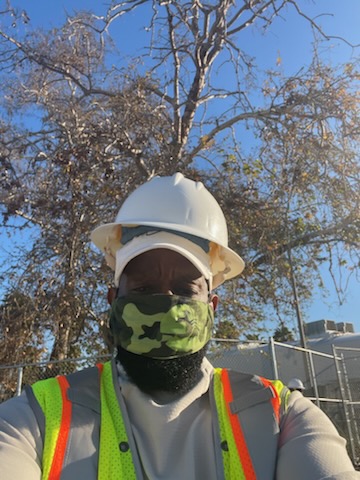
1. Brent can not stop taking selfies. Carly Simon sang about this sort of behavior in 1972; ‘You’re so vain.’ Here, he wants to be seen in a hard hat like my arborist colleagues wear. 

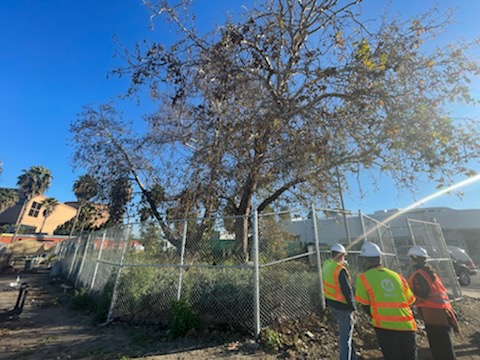
2. Old sycamores that Brent saved from certain doom are a much more important topic. Developers who want them out of their way said that the bare deciduous trees had died.

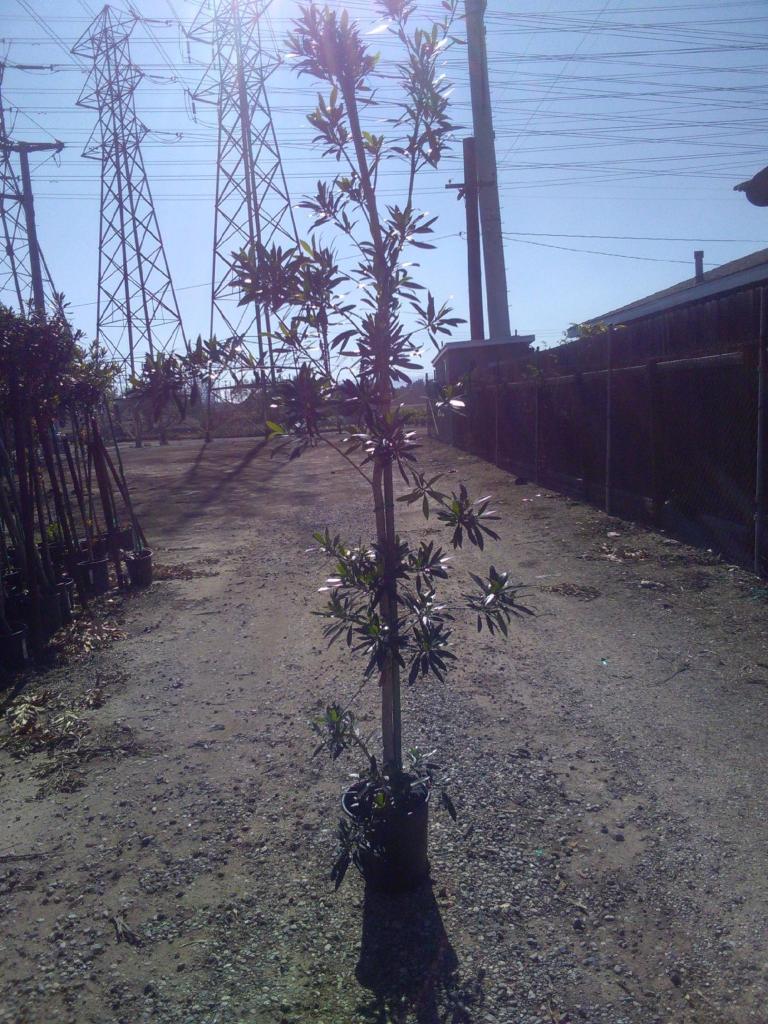
3. Tristania laurina is an exemplary small street tree for many of the narrow streets that Brent installs street trees on. This matured crop are exemplary #5 (5 gallon) specimens.

4. Minor lower growth that got pruned away promoted caliper growth. Those are not the Watts Towers, although they are only a few blocks to the west, and support many watts.

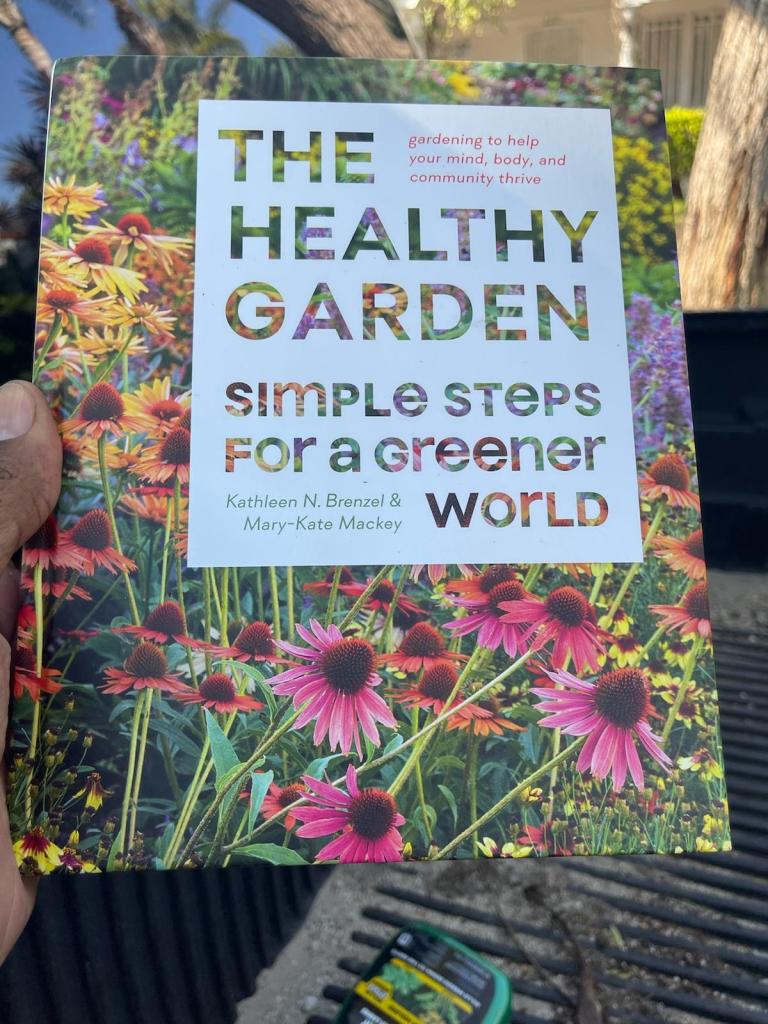
5. Brent wants to show off a new publication that features his home garden, or his work, or some such nonsense. I did not write the particular article, so it must not be very good. 

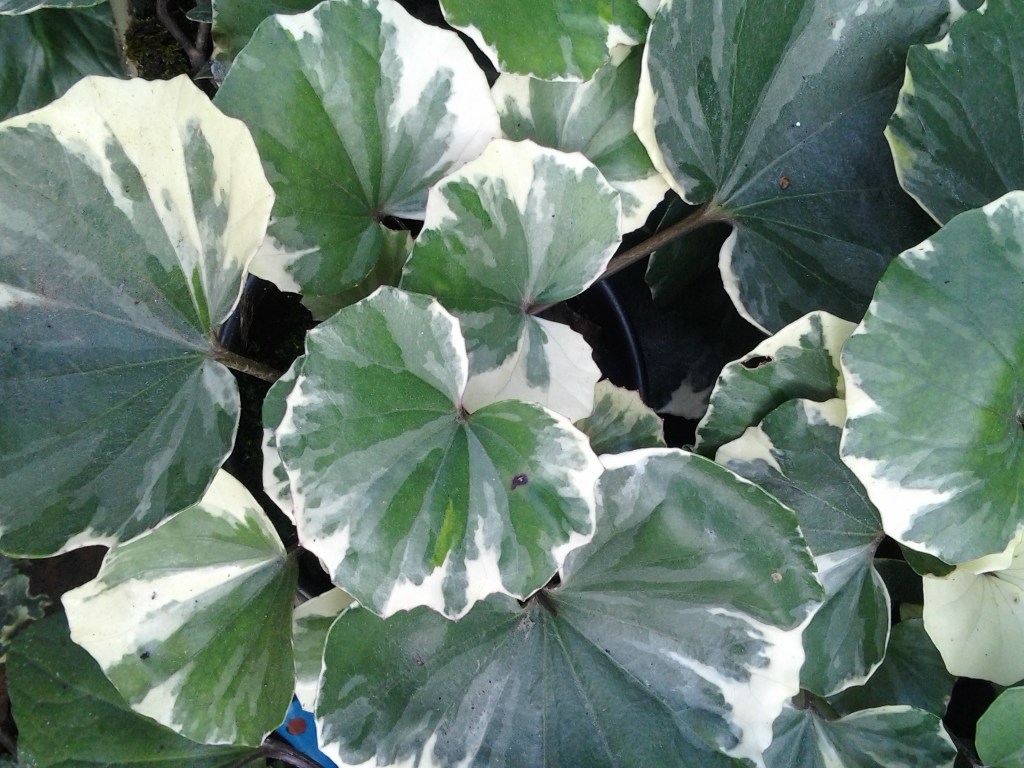
6. Brent’s home garden is SO crowded with SO much vegetation and other ‘stuff’. What a mess! It could be a hazardous situation during an earthquake. This one was very minor.

This is the link for Six on Saturday, for anyone else who would like to participate: https://thepropagatorblog.wordpress.com/2017/09/18/six-on-saturday-a-participant-guide/

Shopping Around For Various Nurseries

Real nurseries have the best plants.

The differences between nurseries and garden centers within big box type home improvement centers should be more obvious. Contrary to all the fancy marketing, a big box garden center really is just another of many departments within a larger home improvement center. A good nursery specializes in plants, and only plants. A sales representative in a big box store might have been selling paint or refrigerators last week. A nurseryman in a real nursery works regularly and more exclusively with horticulture.

It is probably safe and most likely significantly less expensive to obtain common and resilient plants from big box garden centers. Crape myrtles (ick!), oleanders, pittosporums, junipers and photinias seem to be healthy regardless of their respective origins. However, more unusual varieties of more unusual plants, or plants that are likely to be damaged by a bit of neglect, are either unavailable or likely to be of inferior quality in big box garden centers. Only the most common and resilient cultivars (varieties) of rhododendrons, flowering cherries, flowering dogwoods and fuchsias are marketed. If they get damaged, the damage may not be noticed by the possibly undiscriminating staff.

Nurseries are not only able to maintain their stock better, but can maintain a much more extensive selection of different types of plants. The more finicky types of ferns, columbines, azaleas and Japanese maples are no problem. Experienced horticulturists are familiar with the plants that they work with, and can make recommendations for those who might need help with selection. The prices are often more expensive, but are justifiable to those wanting specific plants that can not be found elsewhere.

A few wholesale nurseries that procure nursery stock for the landscape industry are open to the public for retail. Their retail (not wholesale) prices can be comparable to those of big box garden centers. The selection is different, which means that they lack many plants, but have a few others that the big box garden centers lack. They have plenty of horticultural expertise, but not much sales staff.

Six on Saturday: Nursery Schooled

Horticulture can be such a bad habit. (Where have I heard that before?) Once one learns how to grow horticultural commodities, it is difficult to stop. Pruning scraps get processed into more cuttings. Self sown seedlings get relocated instead of discarded. Extra pups (divisions) get salvaged as if the garden can accommodate more. There are several acres of landscapes here, but it is not enough for what we could grow.

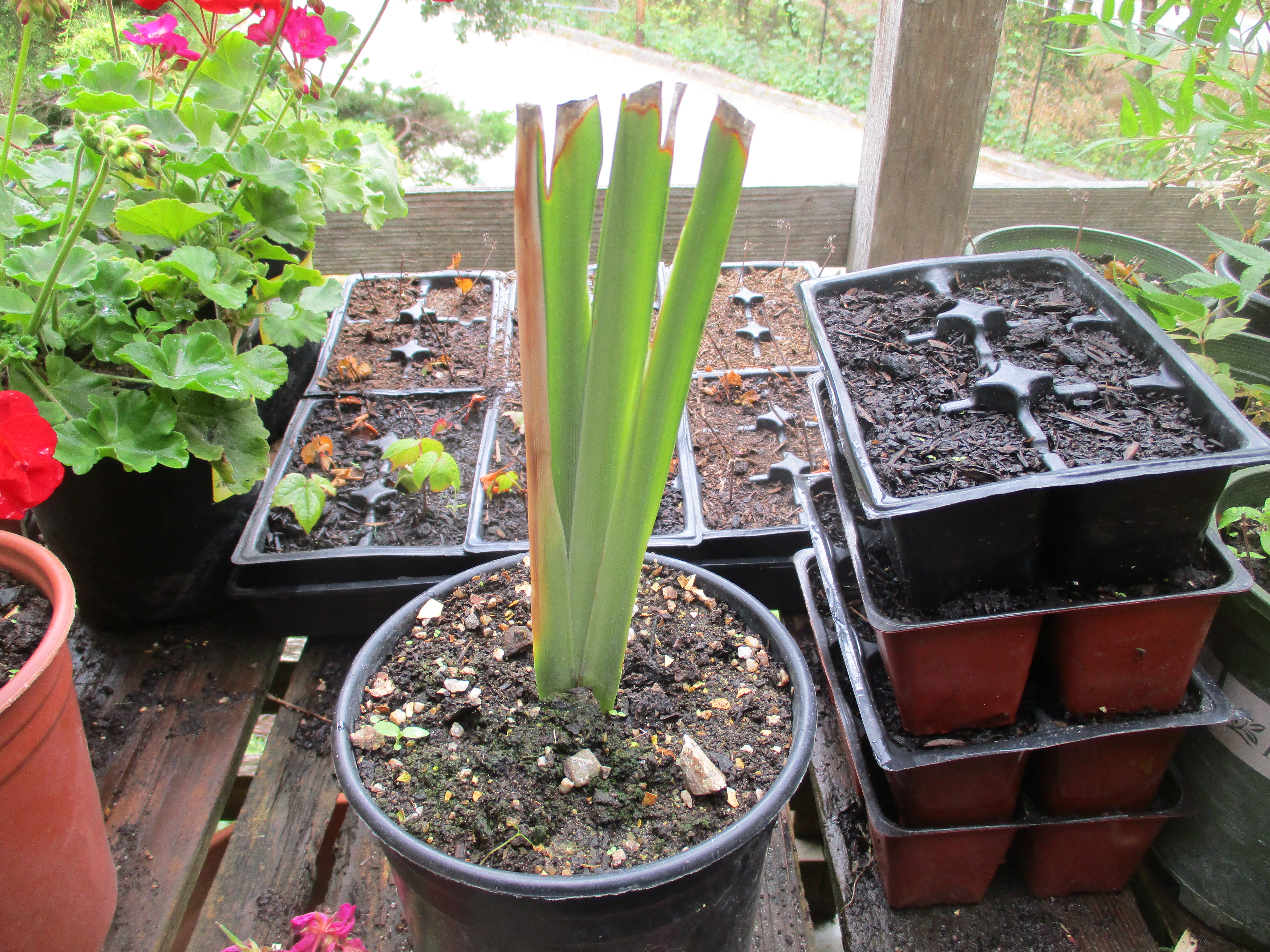
1. While dividing a bunch of Morea bicolor, I found a single shoot of Morea iridioides. How did that get in there? I should have discarded it. Perhaps it will grow to become something useful.P00725-1

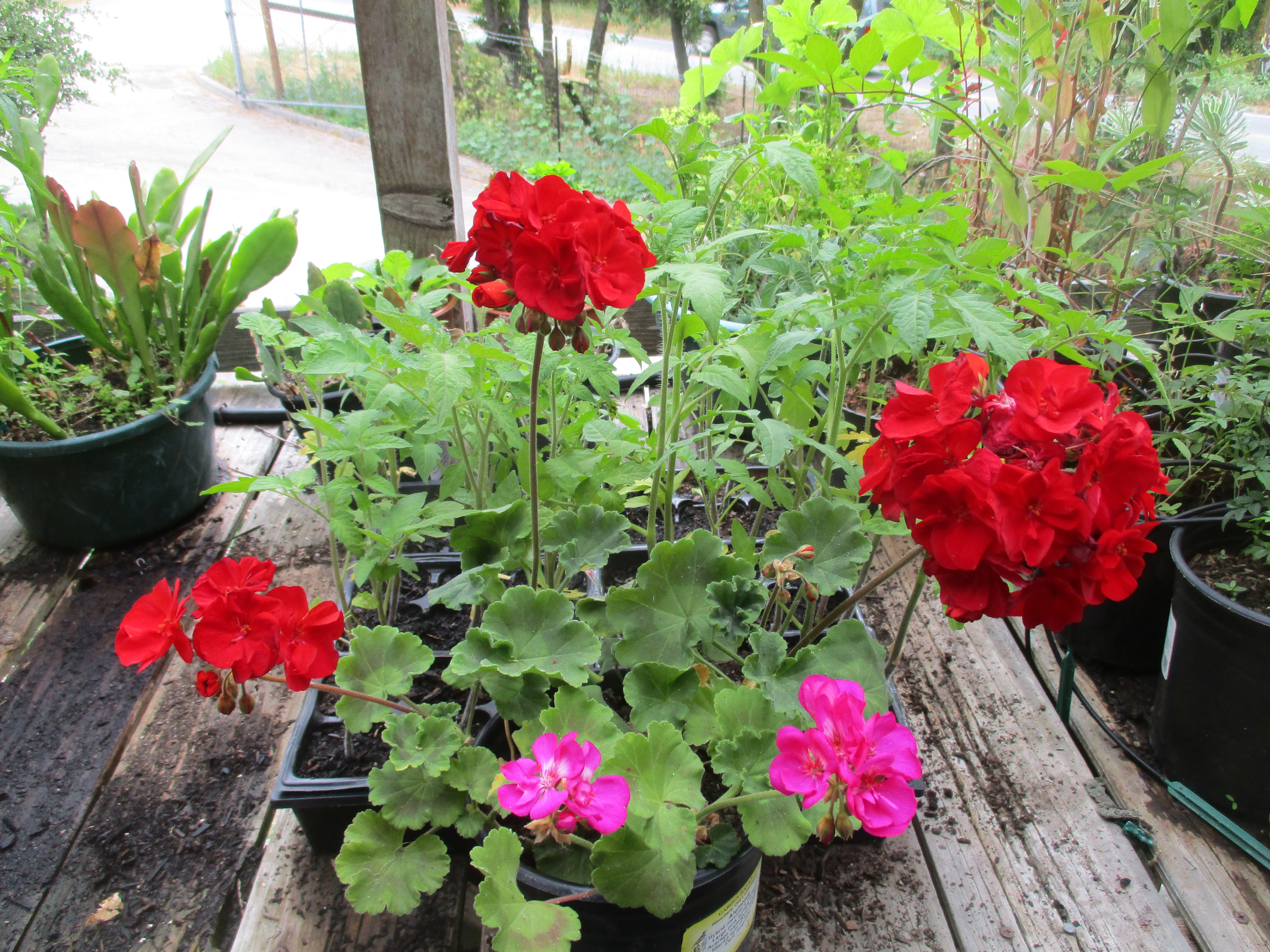
2. Pruning scraps of zonal geraniums got plugged as cuttings, but then did not get separated as they grew. There may be a dozen in there. They are nice, but we really do not need any more.P00725-2

3. When composting just is not good enough, plug cuttings instead. There may be a dozen Ponderosa lemon cuttings here. One is too many. They are not grafted, so will be on their own roots.P00725-3

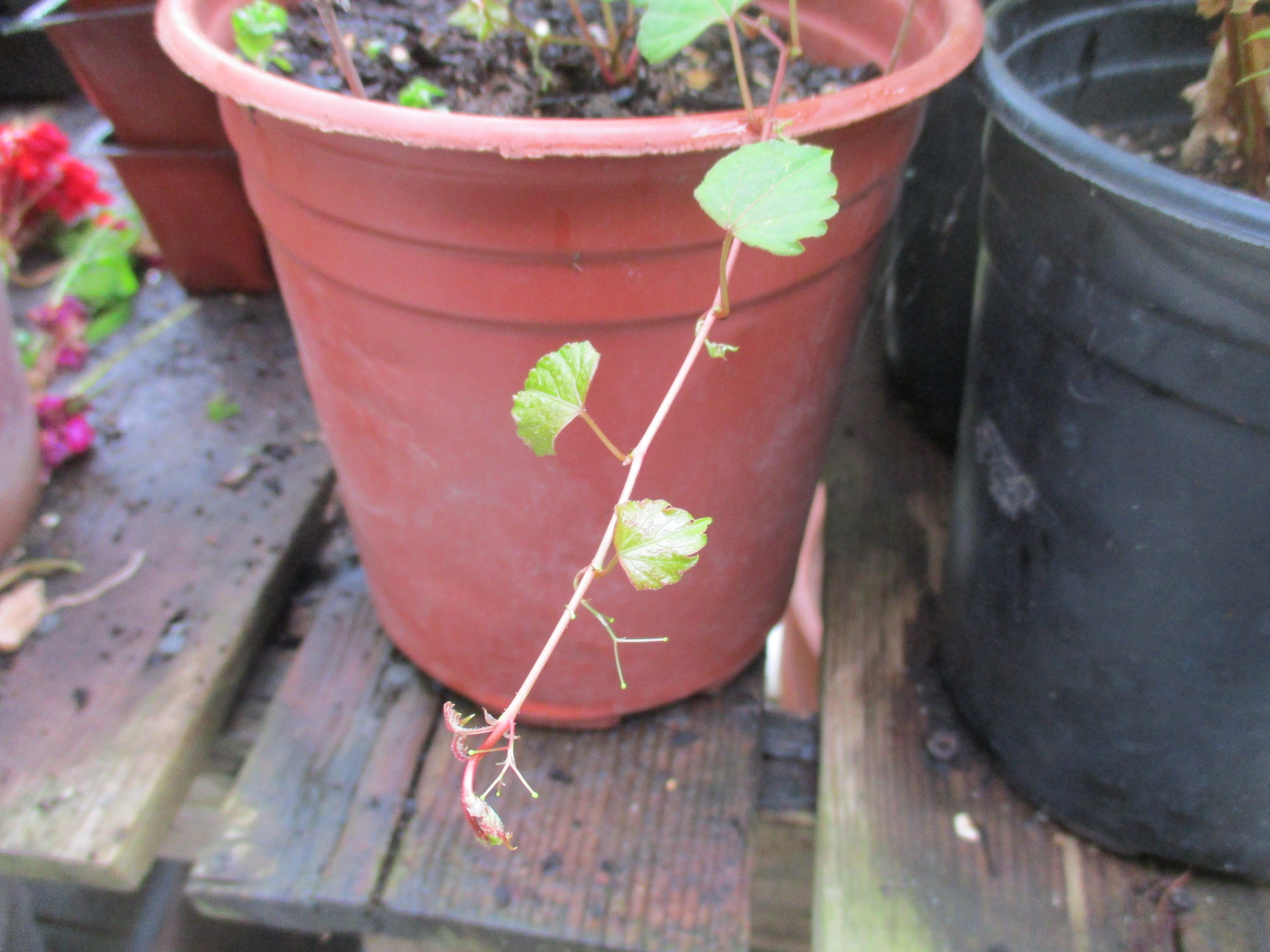
4. Boston ivy is fortunately not as abundant as I thought it would be. We wanted four, so I plugged a hundred cuttings. It seemed to make sense at the time. Most did not survive. Plenty did.P00725-4

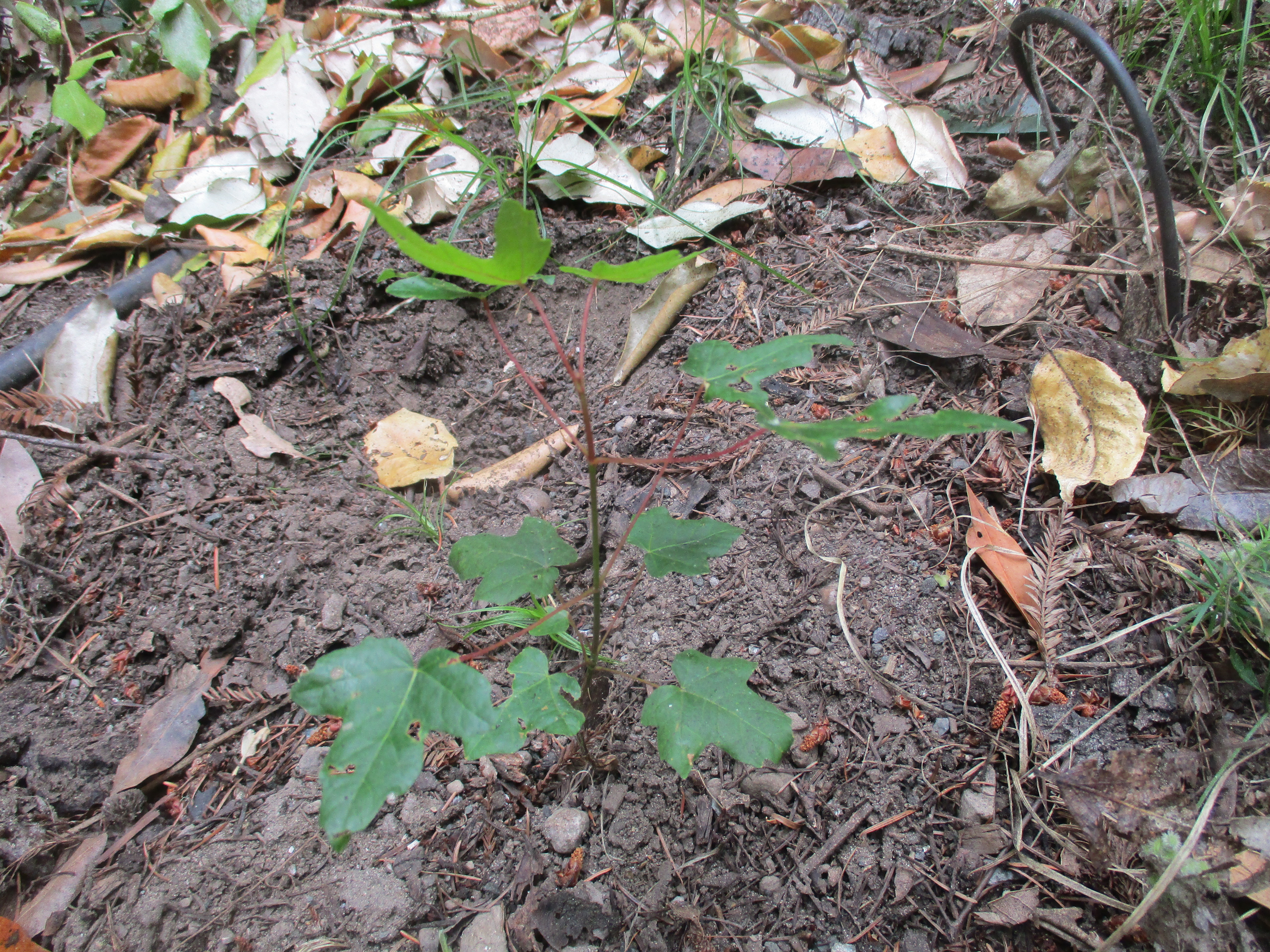
5. This self sown bigleaf maple is not in the nursery, but I want it to be. It should not remain where it is. I may dig and can it this autumn, as if there is a situation into which to install it later. P00725-5

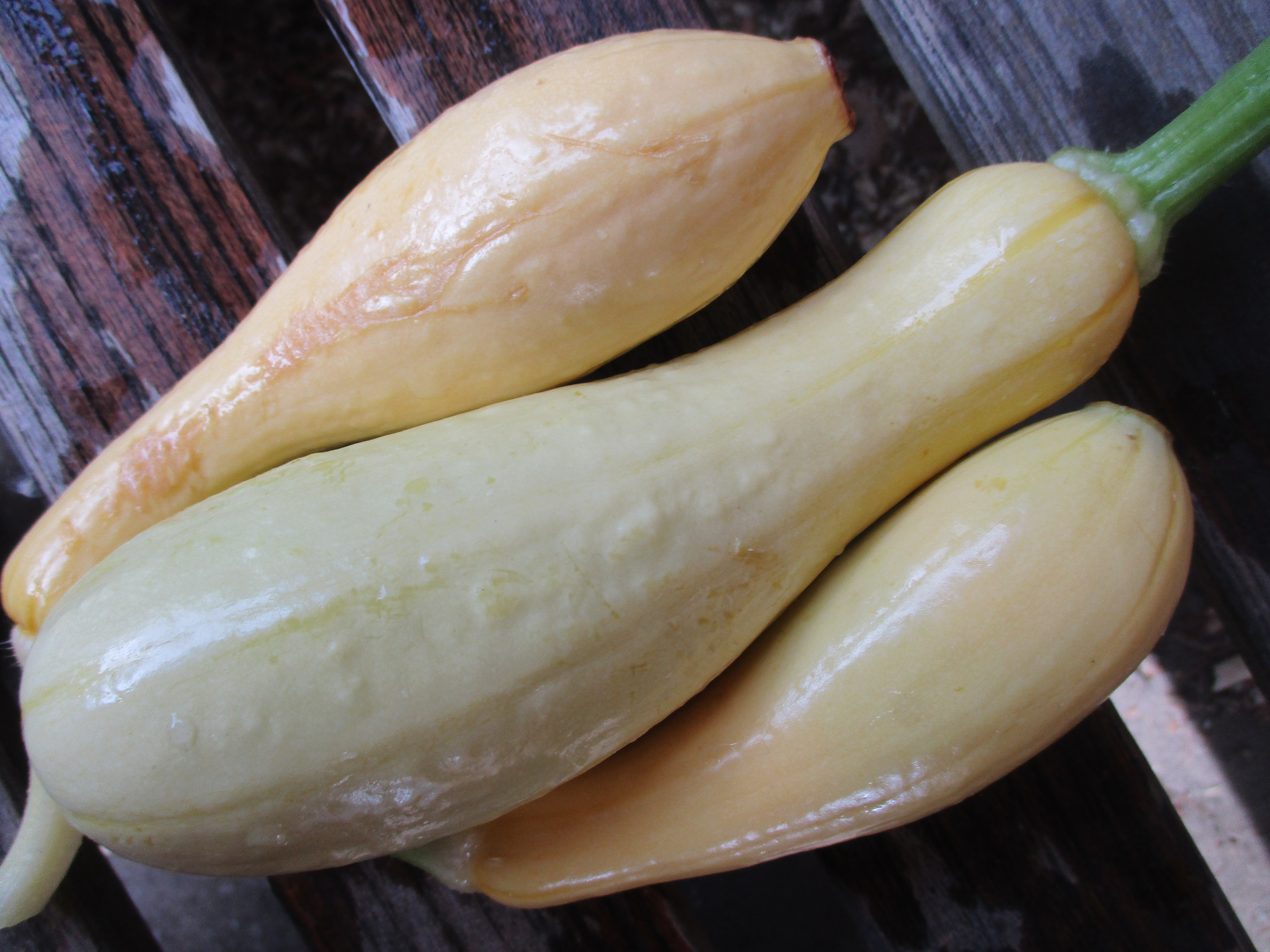
6. These summer squash are not from the nursery, but from right downstairs. They are happy with all the runoff they get from above. Neighbors have been getting many pounds of squash.P00725-6

This is the link for Six on Saturday, for anyone else who would like to participate:

https://thepropagatorblog.wordpress.com/2017/09/18/six-on-saturday-a-participant-guide/

Six on Saturday: Self Isolation


Self isolation was not exactly why I avoided the landscapes. Since there are very few people here, I can get all the pictures I want without getting too close to anyone. Nor did I intentionally avoid the landscapes because, as I mentioned earlier, it is too saddening to see them looking so good without anyone here to enjoy them. I was just too busy to get out. These six pictures are instead from the recovery nursery. These are items that should eventually be out in the landscapes. Some should have bee there a long time ago.

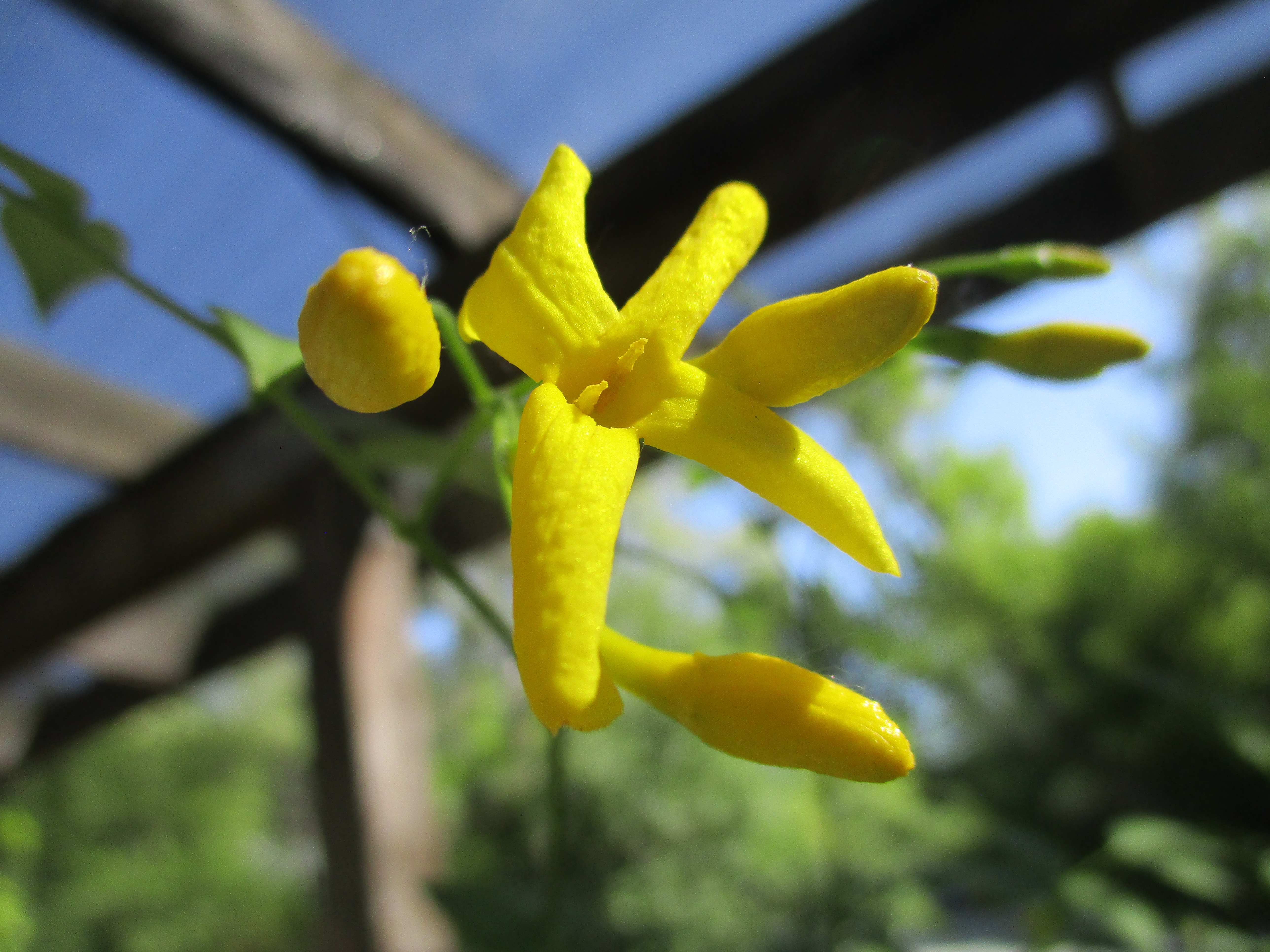
1. Jasminum humile, Italian jasmine was grown from pruning scraps from a big shrubby specimen in Monterey. It does not look like much so far, but is extremely fragrant, like pink jasmine.P00502-1

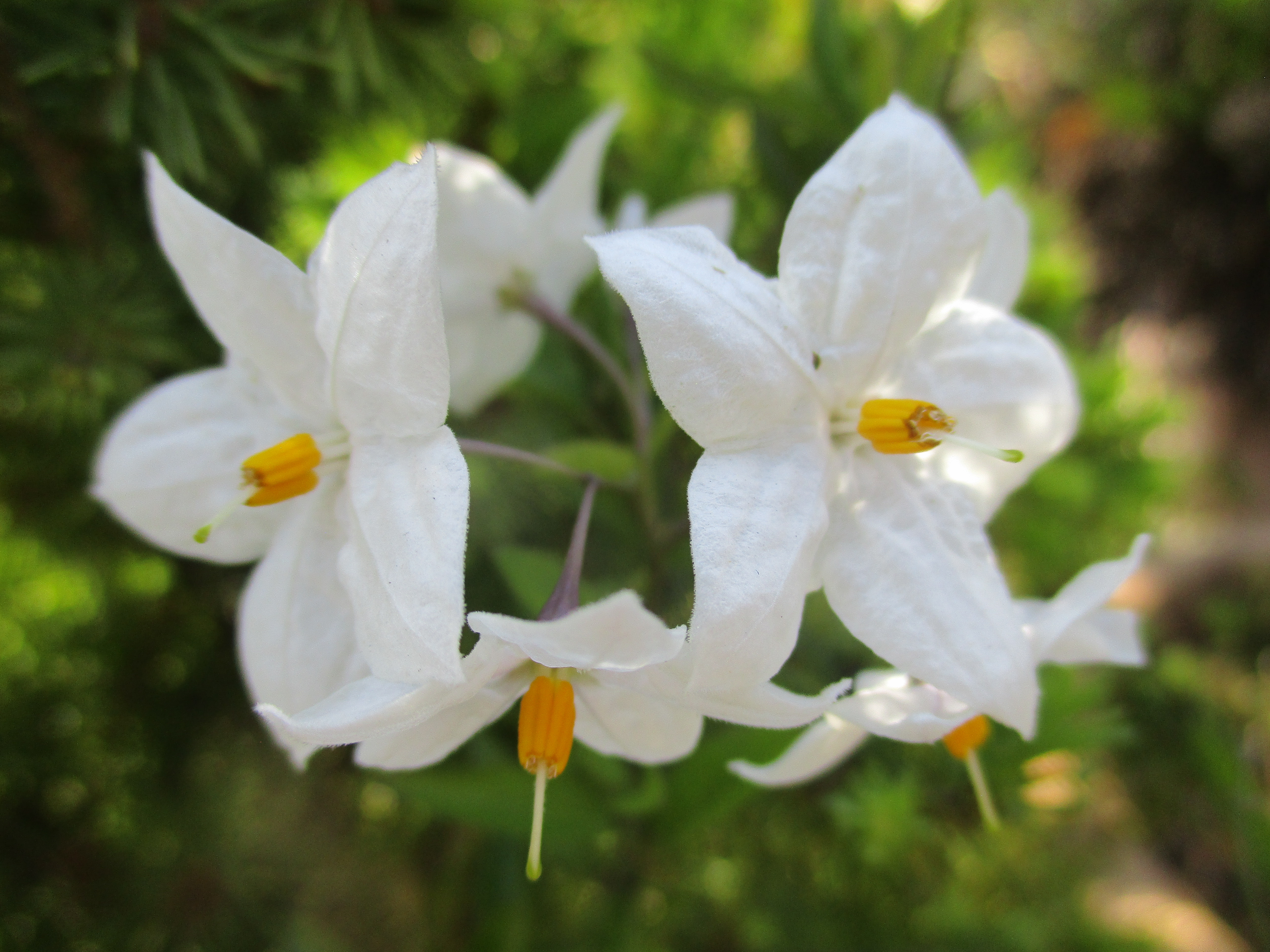
2. Solanum jasminoides, potato vine was left by someone who moved away, but has not yet been planted into a landscape. It is overgrown now, so will need to be pruned back when planted.P00502-2

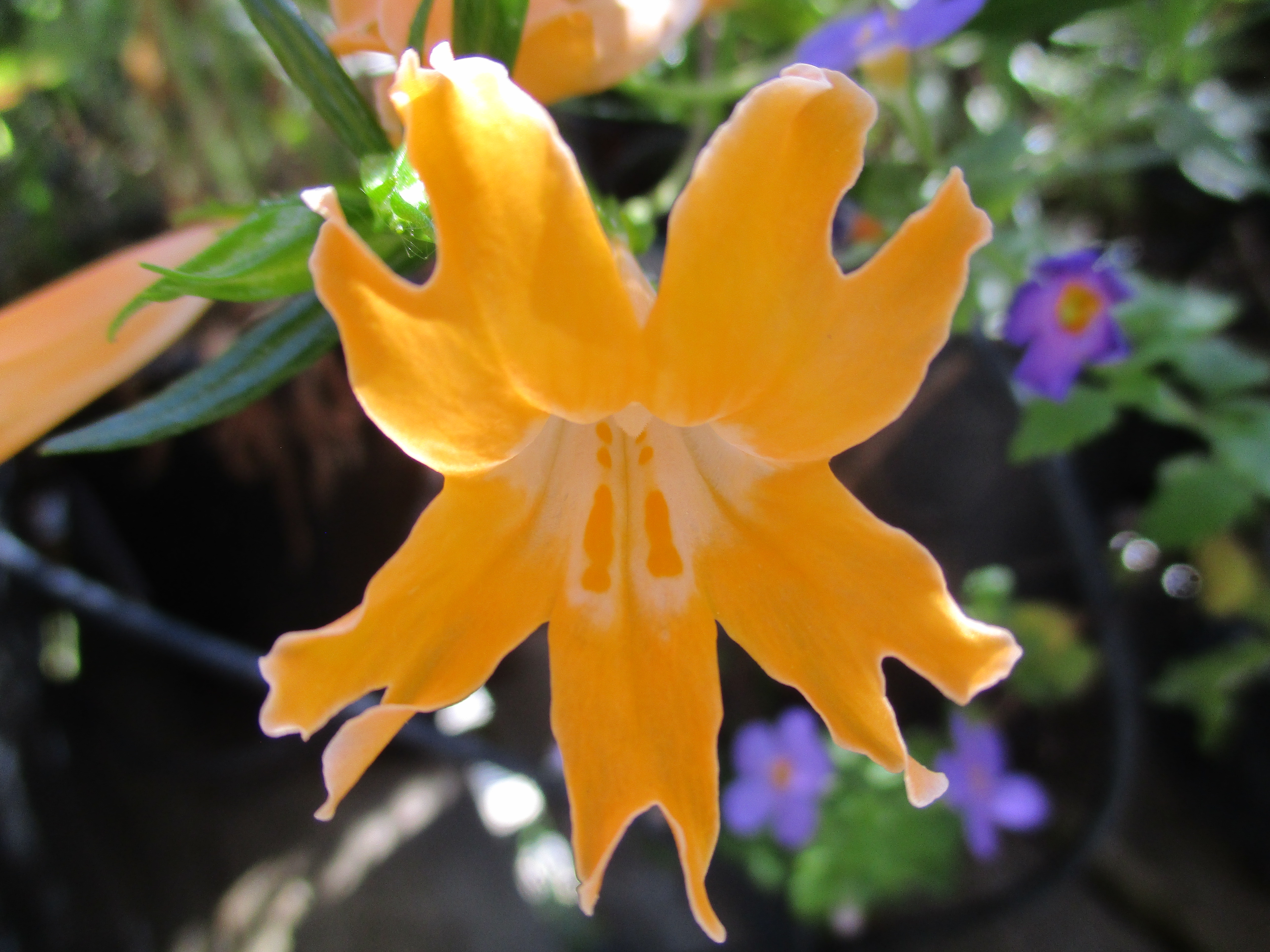
3. Mimulus aurantiacus, sticky monkey flower got removed from where it was in the way of something else, got canned, and now waits to be recycled elsewhere. I should have composted it.P00502-3

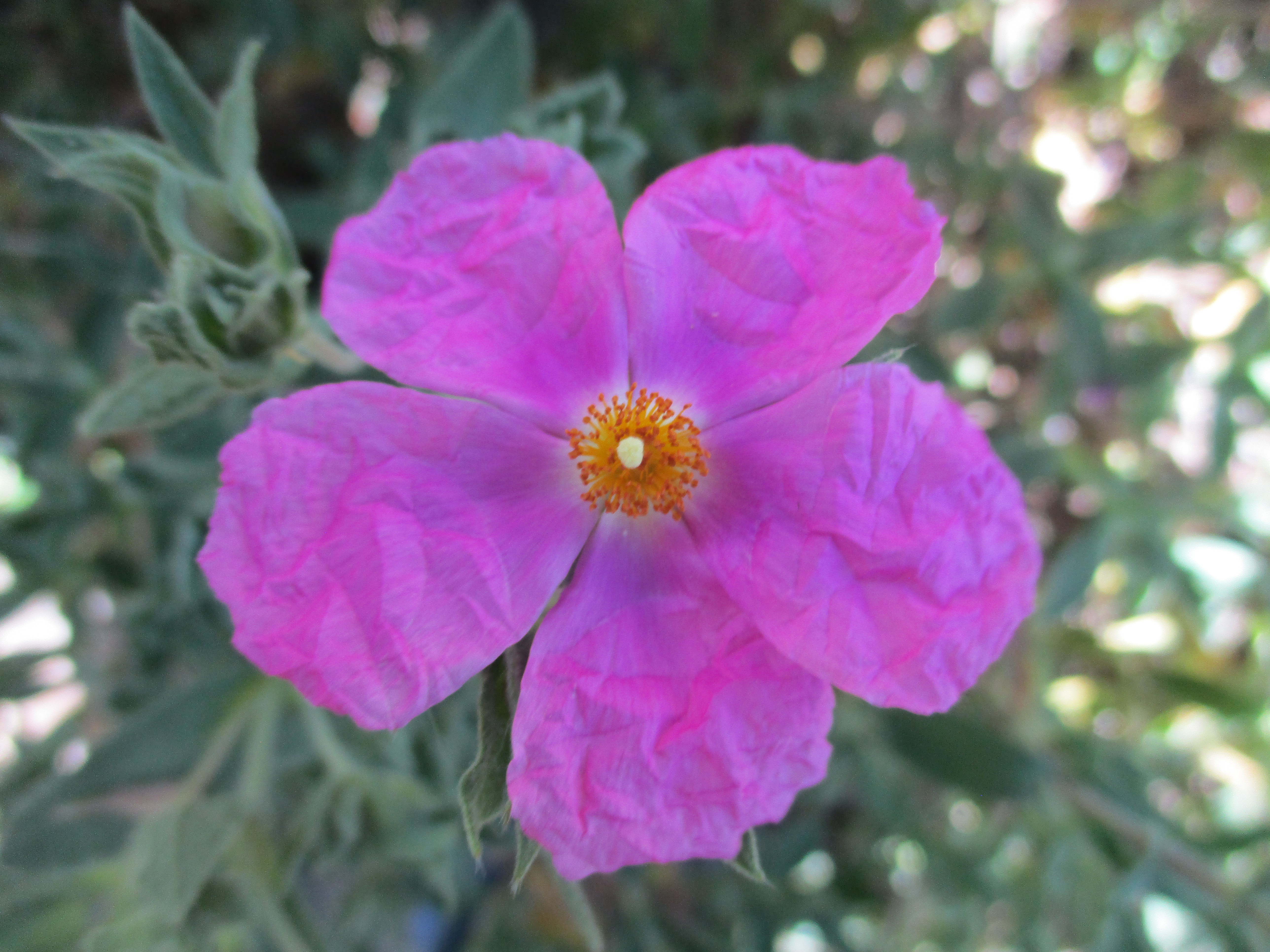
4. Cistus x argenteus, rockrose was actually purchased rather than recycled or grown here. It was for a small new landscape that can not be completed right now. This might be ‘Silver Pink’.P00502-4

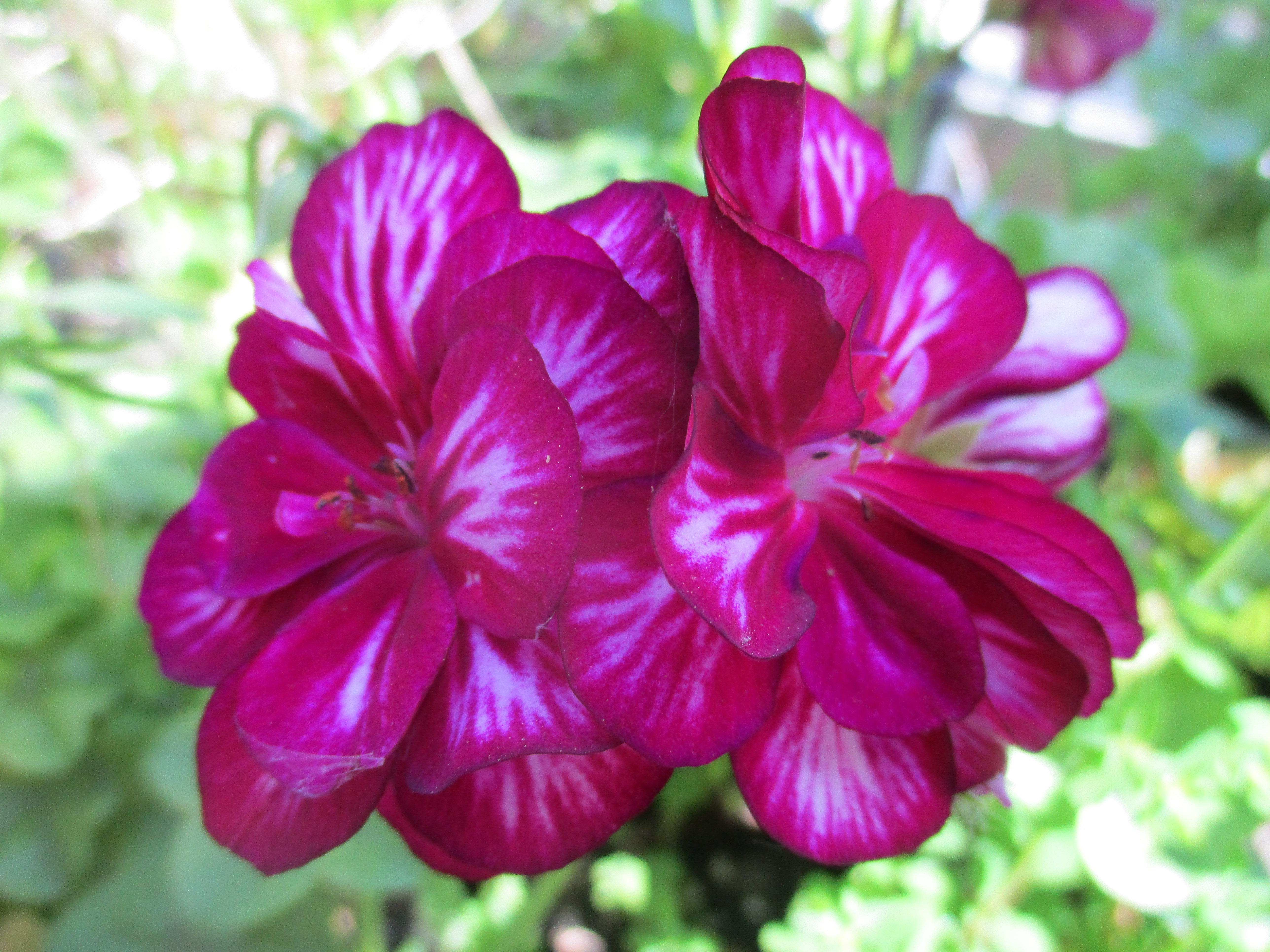
5. Pelargonium peltatum, ivy geranium provided cuttings when pruned a month ago. It might be ‘Royal Candy Cane’. They should have been planted intact, but there is not enough of them.P00502-5

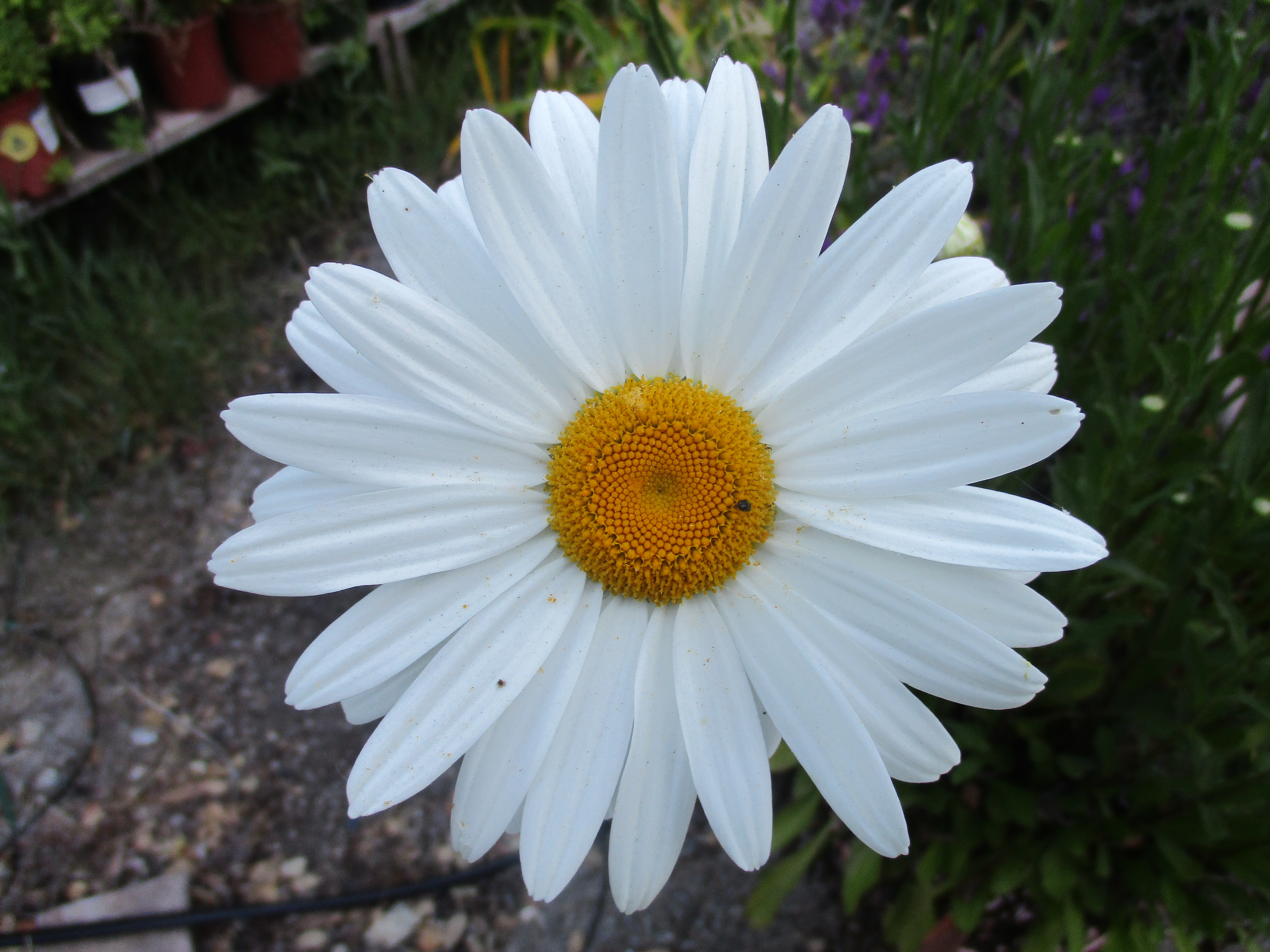
6. Leucanthemum × superbum, Shasta daisy, like sticky monkey flower, was removed from an area that was outfitted with a new landscape, but not yet recycled. I really should just plant it.P00502-6

This is the link for Six on Saturday, for anyone else who would like to participate:

https://thepropagatorblog.wordpress.com/2017/09/18/six-on-saturday-a-participant-guide/

Horridculture – Fake Media

P90911This is no way to get the dirt on someone. There is no dirt involved. If there were, it would be referred to as ‘soil’. ‘Dirt’ is a term used by those who do not know any better.
Anyway, this is about the media that plants are grown in. It might be called growing media, potting media, potting mix or simply potting soil. Some in the horticultural industries might say that, because it is assembled from a variety of components that do not naturally occur together, growing media is synthetic. Because it lacks real soil, most of us refer to it simply as soilless.

Now, I am aware that not all media are created equal. The medium that we grew citrus in was much sandier than what we grew rhododendrons in. It was purchased already mixed specifically for citrus, and ready for use. The medium for the rhododendrons was mixed on site, with more coarsely shredded fir bark (from local mills), less sand and a little bit of perlite.

What I was not aware of, was just how perishable potting media purchased from retail garden centers are. Rather than drive out to the farm for a bin or two of medium, I purchased a bail of common ‘potting soil’ from a garden center about two years ago. I just happened to be there to pick up something else. The cost seemed worth avoiding an extra trip to the farm.

It actually was worth the cost. It did what I needed it to do for a time. The problem I am noticing now is that plants that were not planted or canned up (into larger cans) soon enough are now lacking the volume of medium they need. They need to be stuffed, which involves sliding them out of their cans to add a bit more medium to set them on top of, back in their cans.

The potting soil decomposed too readily. It is as if it rotted into muck that was rinsed through the drainage holes with watering. I suspect that there was more to the medium that the typical simple components. It probably contained significant volumes of compost derived from recycled greenwaste. I certainly have no problem with that. I just would have liked to know about it.

This little American persimmon seedling can stay in this half empty can until winter dormancy. Once dormant, it can be canned into a #5 (5 gallon) can, to resume growth next spring, before it even realizes that it is lacking medium. It will get a happy ending.

The Seventh On Saturday

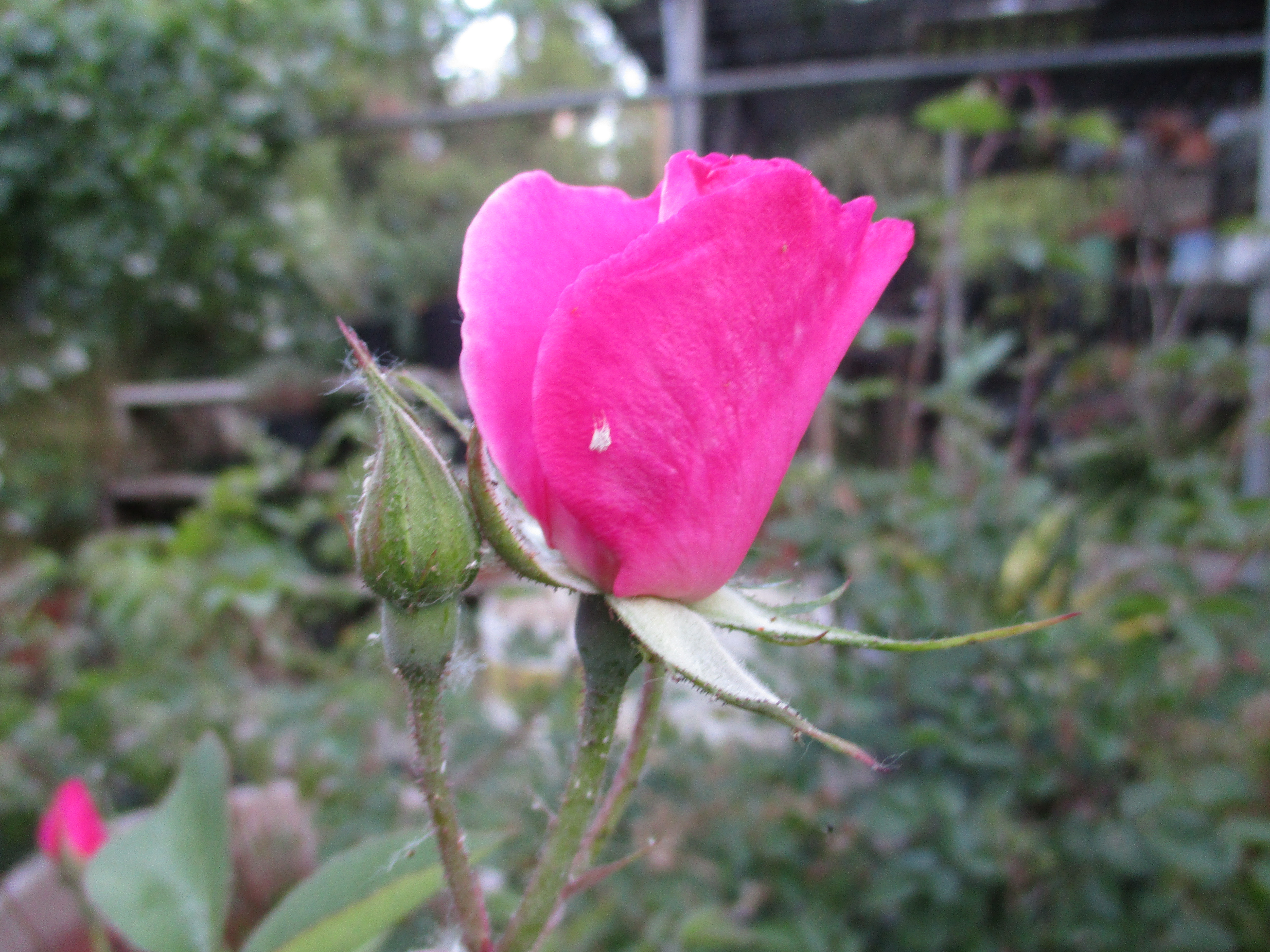
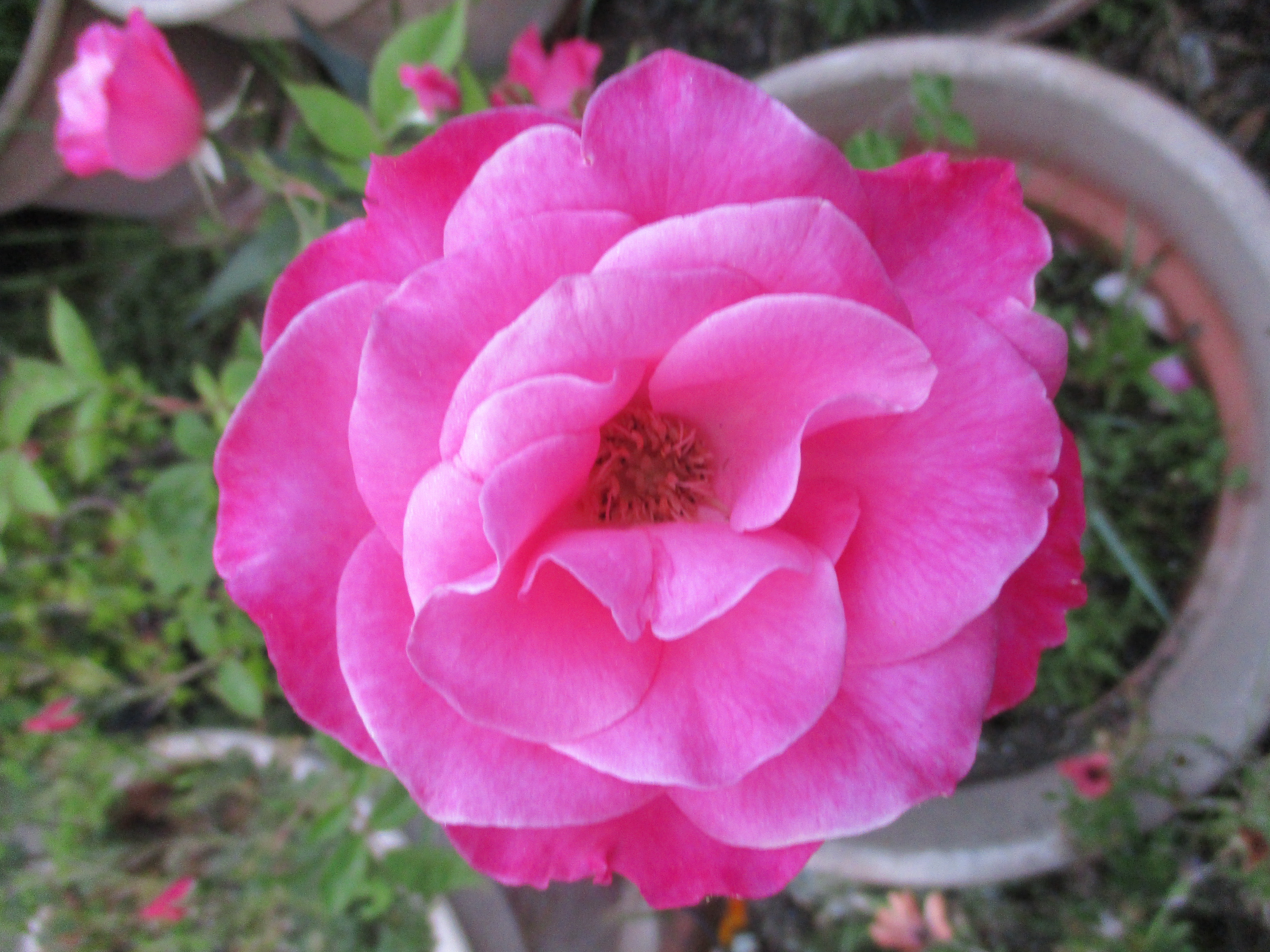
P90511KThis is the one that got away; or actually, the one that was never caught. It bloomed after I got the pictures for the ‘Six on Saturday’ post for this morning. It could be the same unopened bud in picture #3 of the Six on Saturday post, as it is now blooming. If not the same bud, it is on the same plant, and now looks even more like the common ‘Simplicity’ rose. It is not my favorite, but I did not select it.
That is how the recovery nursery works. It is where we bring salvageable plants that need to be removed from their landscapes. Some were in the way of other projects. Some were not the right plants for their particular situations. Some were even donated by neighbors who thought we might be able to utilize them somewhere in the landscapes.
Some of plants brought in are not there long. They might get groomed and then moved directly to a more appropriate situation. That happens more during winter, when we dig up dormant plants and relocate them while the weather is still cool and rainy. We did this with a big overgrown forsythia that was dug and divided into five or so new plants before getting relocated into a new landscape. It helps is we can delay relocation until winter.
There are many potentially salvageable plants that must be moved at a particular time, even if it is not while they are dormant. They get groomed and canned (potted), and can take their time to recover before we put them back into the landscapes. Unfortunately, many do not recover adequately. Some end up staying too long because we can not find homes for them. After several years, the roses will finally be going to a new home soon.

Six on Saturday: The Yard


This is no home garden. It is the yard outside the various shops of the Maintenance Department where I work part time. It contains some of the salvageable plant material that we try to recycle from some of the landscapes from which it must be removed. Over winter, some plants get dug and relocated directly, rather than come to the yard. Otherwise, plants come here to get canned (potted) to recover, and then find a home.

Because no one sees our yard, we need not maintain it like we maintain the rest of the landscapes. Consequently, it collects a few weeds. Also, because there are other shops in the same buildings, there are a few unexpected odds and ends left strewn about by other types of professionals, such as the electrician. Hence, #6.

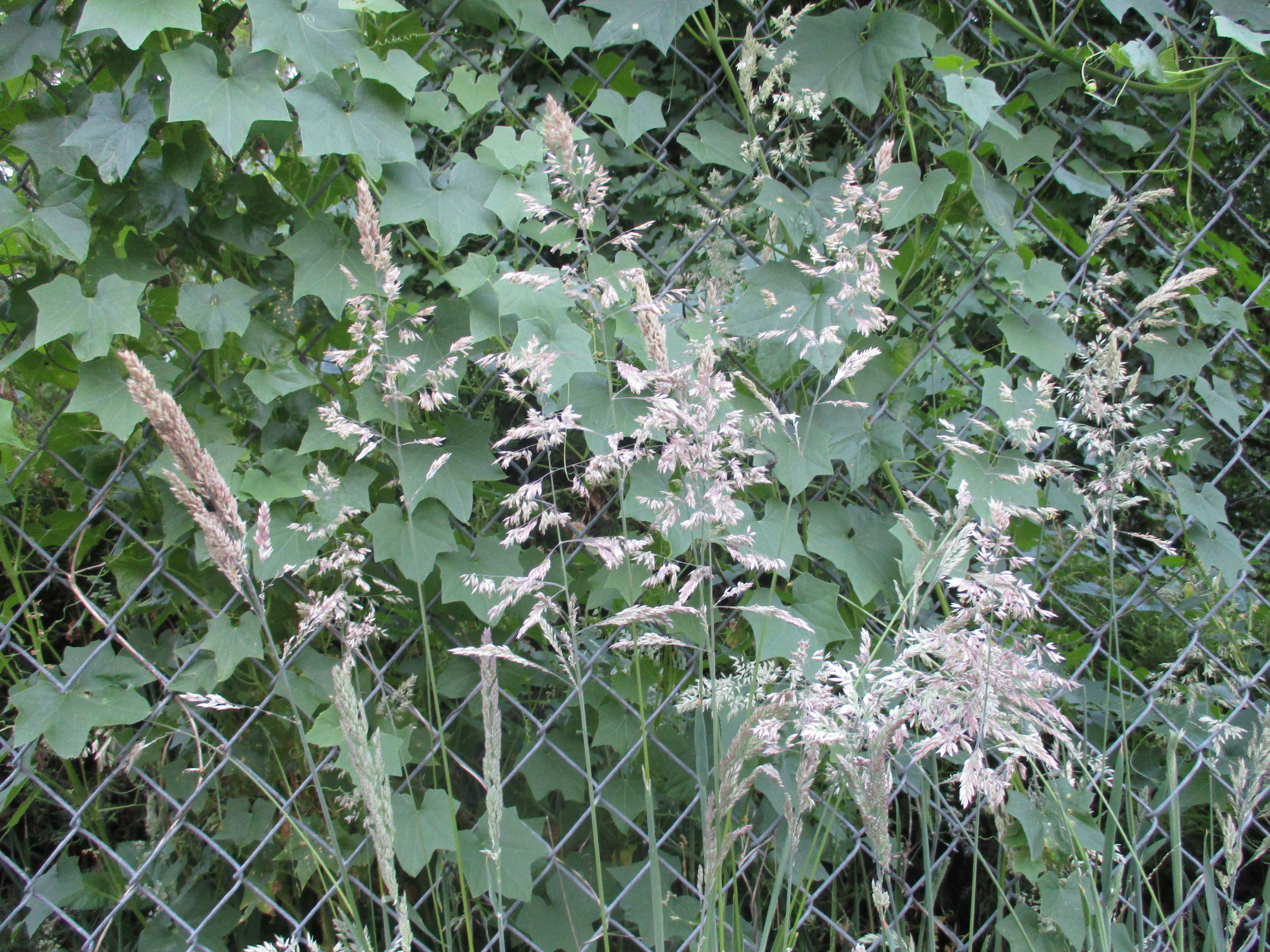
1. You know, when I took this picture, I though that the annual grassy weeds somehow looked pretty in front of the wild cucumber vine on the cyclone fence. I’m not the artsy sort; so will not try to explain it.P90511

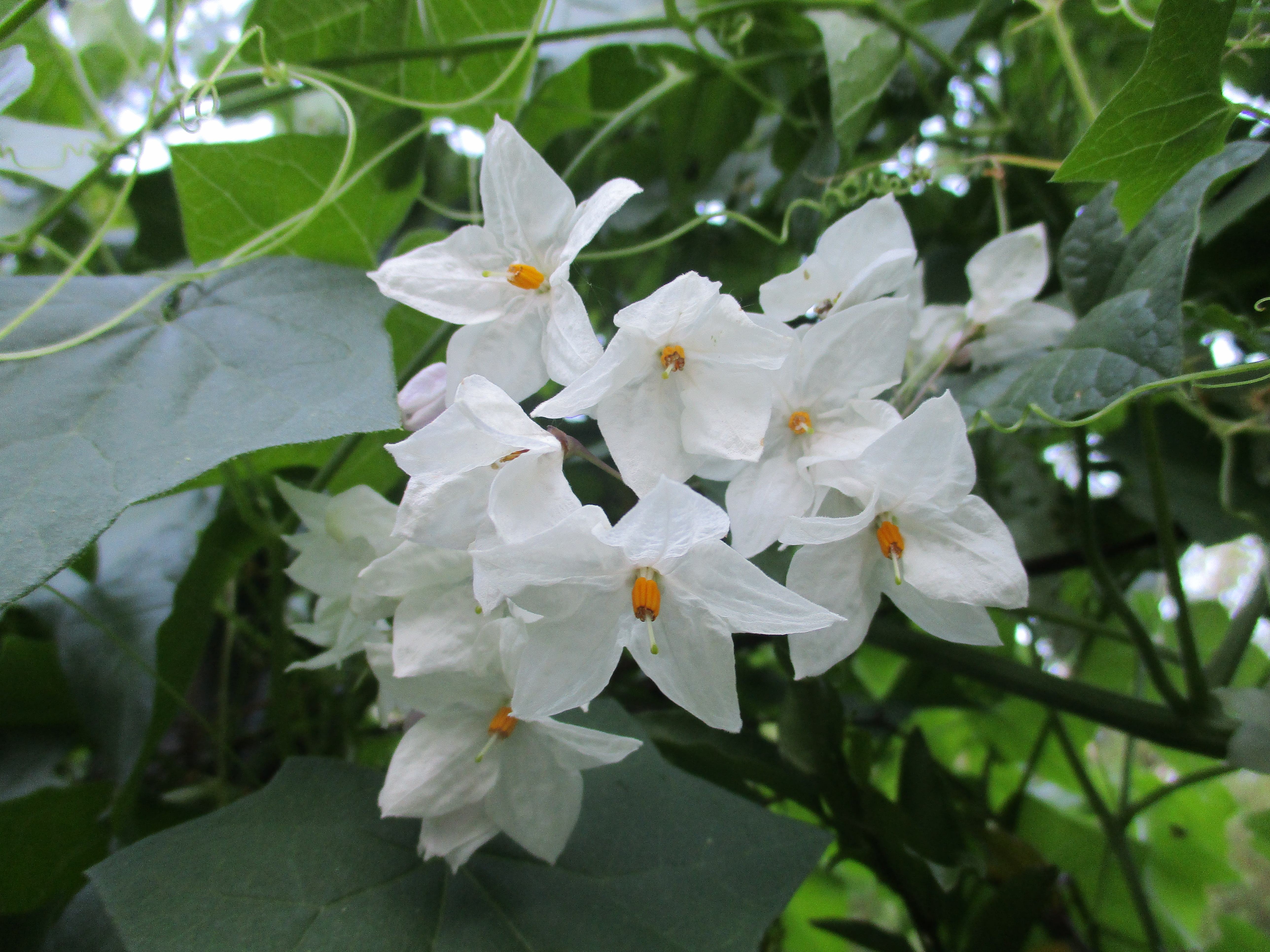
2. Mixed in with the wild cucumber vine, which incidentally makes not edible cucumbers, this potato vine blooms, but incidentally makes not potatoes. Of course, I never dug it up to confirm that claim.P90511+

3. This rose, which might be ‘Simplicity’, has been here for a few years. No one remembers where it came from. It was supposed to get planted into a landscape while it was still dormant. Too late now.P90511++

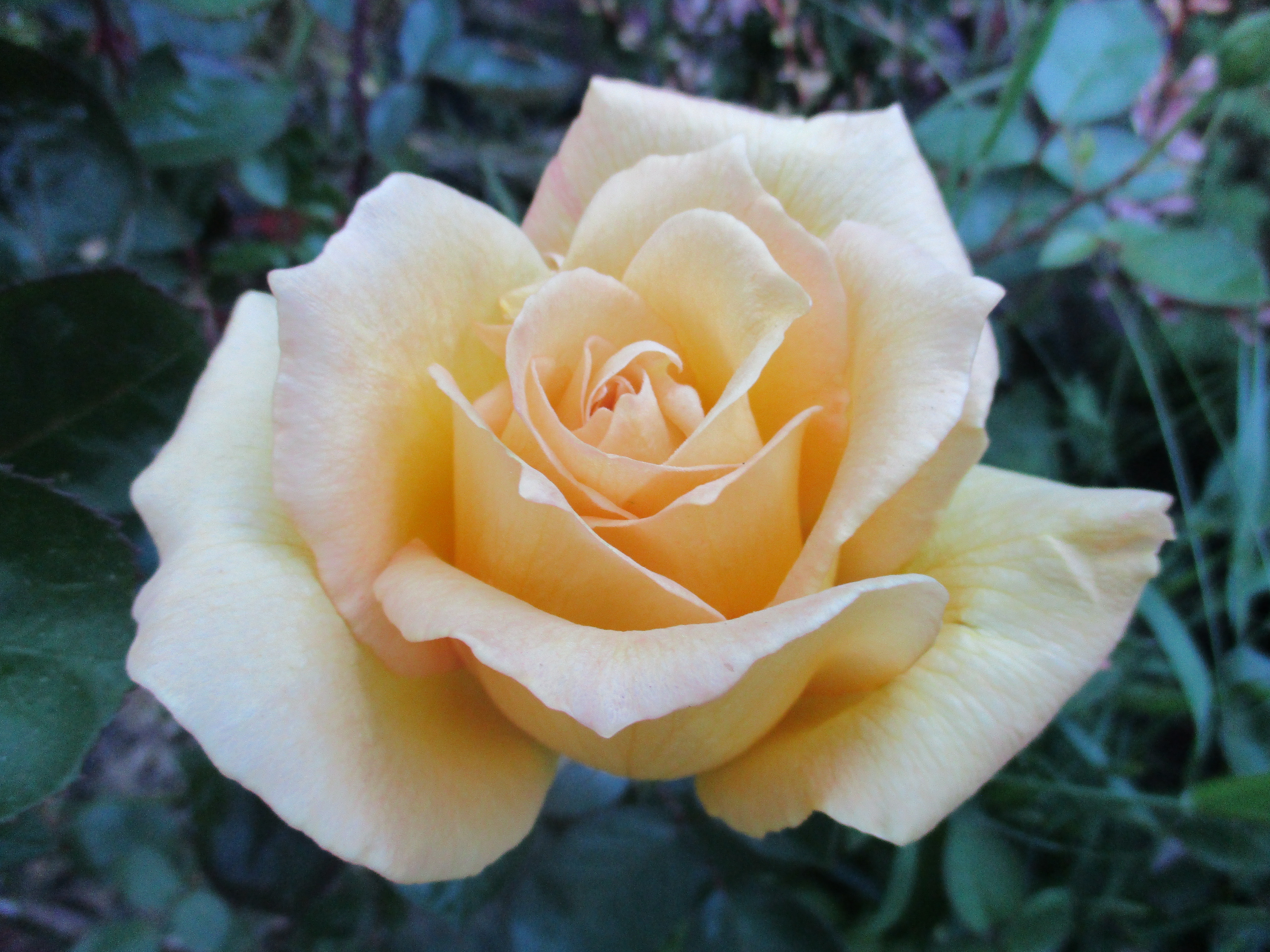
4. This rose might be ‘Medallion’, but it is hard to say for certain. It is not as big as it should be. It was supposed to get planted while dormant too. There actually is a landscape that can use both of them.P90511+++

5. Shasta daisy has been blooming for a while now. You would think that it would be easy to find a home for this one, but it is still in the yard. It is big enough to divide into more plants if still here this winter.P90511++++

6. Spring bulbs are done now.P90511+++++

This is the link for Six on Saturday, for anyone else who would like to participate:

https://thepropagatorblog.wordpress.com/2017/09/18/six-on-saturday-a-participant-guide/

Horridculture – B & B

P90320B & B, formally known as ‘balled and burlapped’ nursery stock, was expected to be the next big ‘thing’ in nursery commodities here in California back in the late 1980s. As those outside of California know, it is field grown plant material that gets dug and marketed with its roots wrapped in burlap. It was more common in other regions, so was expected to become more common here as more nursery stock was to be imported from Oregon.
However, growers in Oregon started growing more of their stock in cans like we do in California, and then did not send as much of their B & B stock to California as predicted. Only certain slow growing commodities and large items are still field grown, and then dug and ‘balled and burlapped’ for export. Of these, arborvitaes, rhododendrons and various deciduous shade trees are the more commonly available locally.
B & B stock from Oregon is typically of exceptional quality. Horticulture is taken more seriously there.
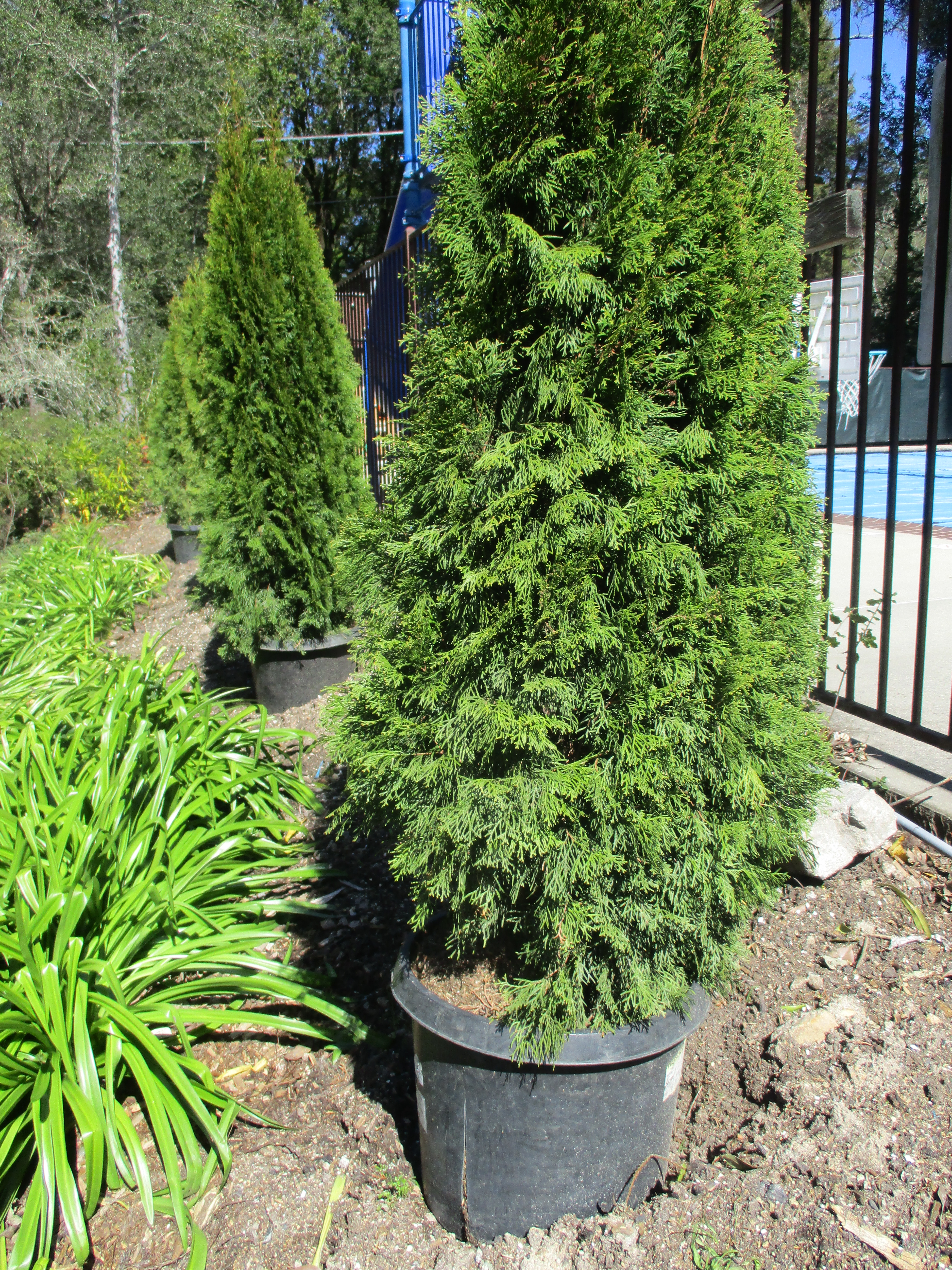
Because B & B is still a foreign concept in California, it is typically canned to be more familiar to local consumers. It does not take long for it to root into the little bit of extra potting medium and fill out the cans. There is no need for the roots to be unwrapped, since the burlap decays as fast as the root disperse and expand. The now canned but formerly B & B arborvitaes in the picture above are exemplary.
Yet, they are not perfect. The problem with B & B stock here is that there are not many horticultural professionals here who know how to work with it, or even care to do so properly.
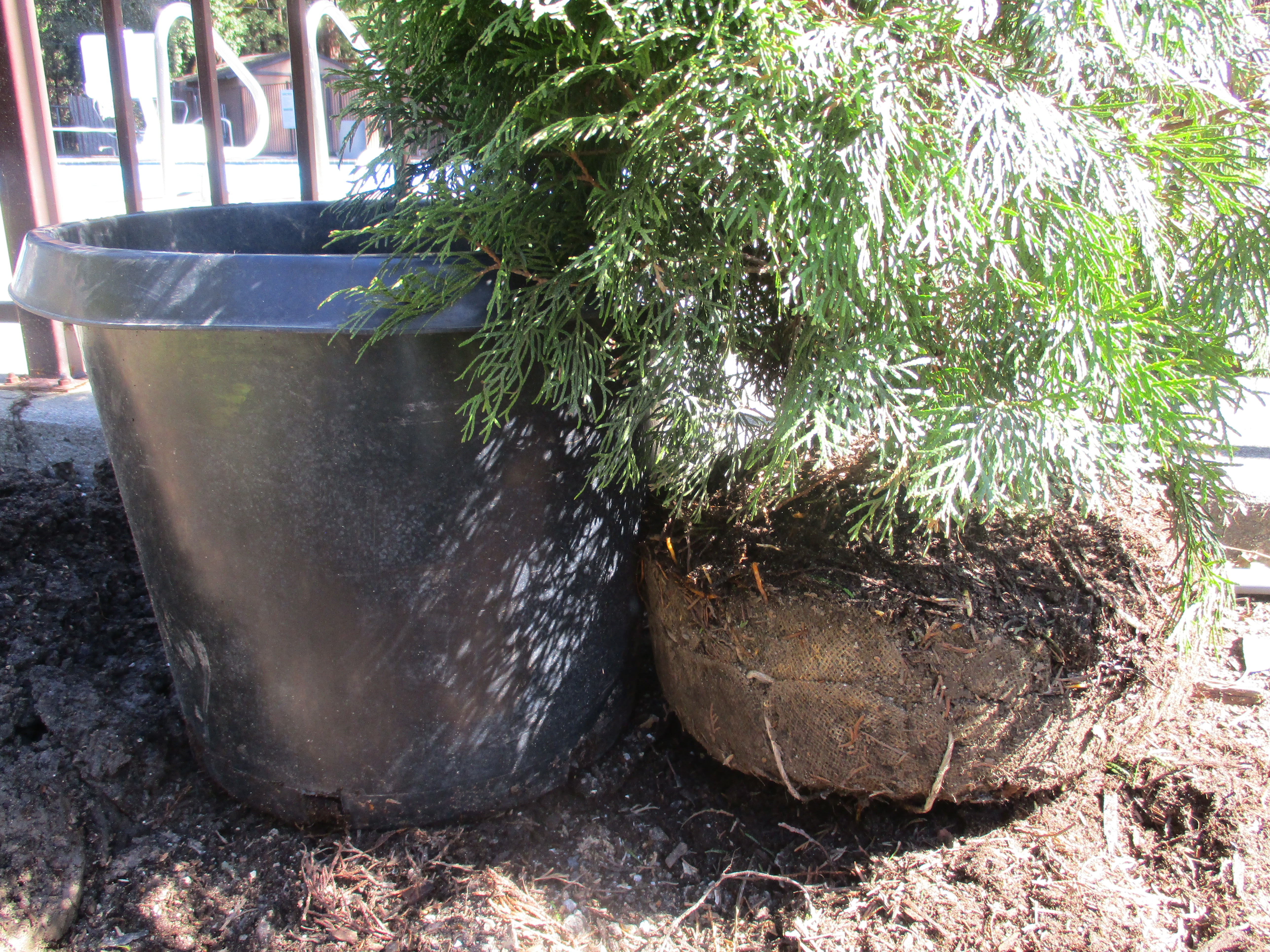
The picture below shows how shallow the B & B root systems of the arborvitaes are relative to the squat #15 (15 gallon) cans that they were purchased in. They obviously did not get enough time to root into their potting medium after they were canned. This is not due to a lack of horticultural expertise. This is either (and hopefully) a mistake in scheduling, or merely a lack of concern. But hey, no bother. They are still excellent specimens.P90320+
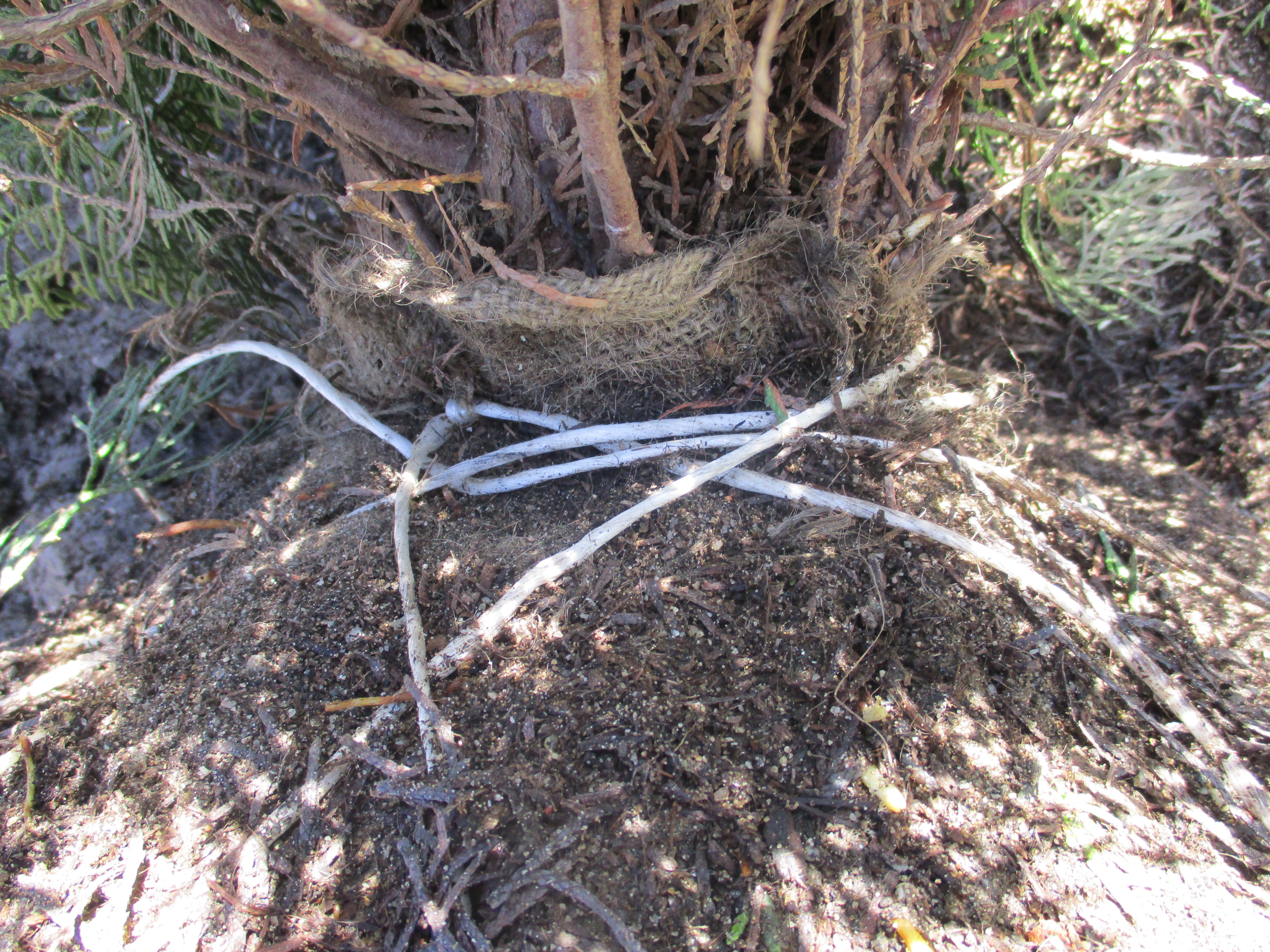
At least they seemed to be. A potentially serious problem was revealed when they were installed and the loose potting medium fell away from the burlap.
Many years ago, the burlap containing the balled root systems of B & B stock was bound with biodegradable jute twine. It rotted away before it could do any damage. Since then, nylon twine became more commonly used. Those who are familiar with B & B know to simply cut and remove the nylon twine before planting.
Whomever processed and canned these arborvitaes are either (and hopefully) not familiar with B & B, or just do not care. The nylon twine was still tightly bound and tied. If these arborvitaes had rooted into their potting medium and held it intact, this twine would not have been visible. Because it is wrapped a few times around the main trunks as well as wadded up burlap, it could have girdled the main trunks as they grew and expanded!
In a way, it was fortuitous that the potting medium fell away to expose the nylon twine, which was cut to allow for expansion of the main trunks. These exemplary B & B arborvitaes from Oregon should live happily ever after.P90320++