Racial profiling was not likely the reason I was asked to prune a big overgrown grapevine at work. I just happen to be more proficient with dormant pruning of dago wisteria than my colleagues are. My proficiency is more cultural than racial. I am from the Santa Clara Valley, and sadly, they are not.
1. Before pruning, the grapevine was a tangled mess on a split rain fence, which is not even visible in this picture. Incidentally, the forsythia that was featured in ‘Six on Saturday’ two seeks ago is located just beyond the upper left margin of the picture.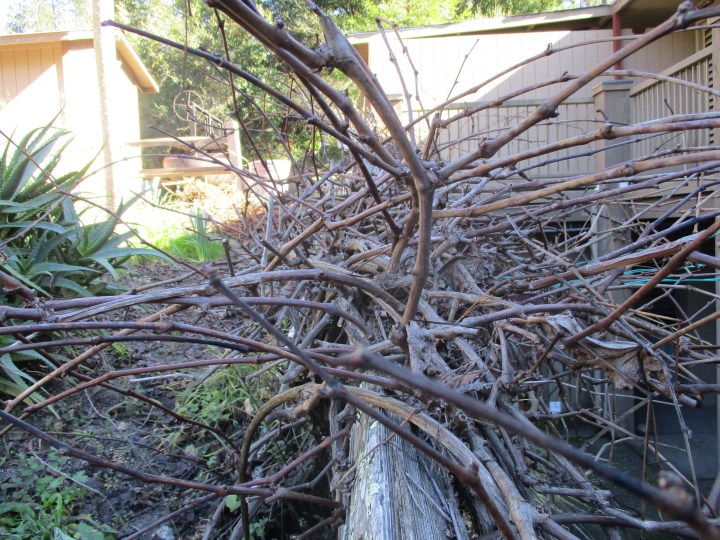
2. After pruning, the top rail of the fence is visible, extending away from where the picture was taken. Some of the debris is still piled to the left in the background. Green wires to the right are there for new vines to climb on. The few remaining unpruned vines are layers (stems that lay on the ground long enough to develop roots of their own) that will be dug and removed. I wanted to prune to just spurs, but there were no new canes on the main trunk. Instead, I left stubs of canes from the previous season, with a few extra buds.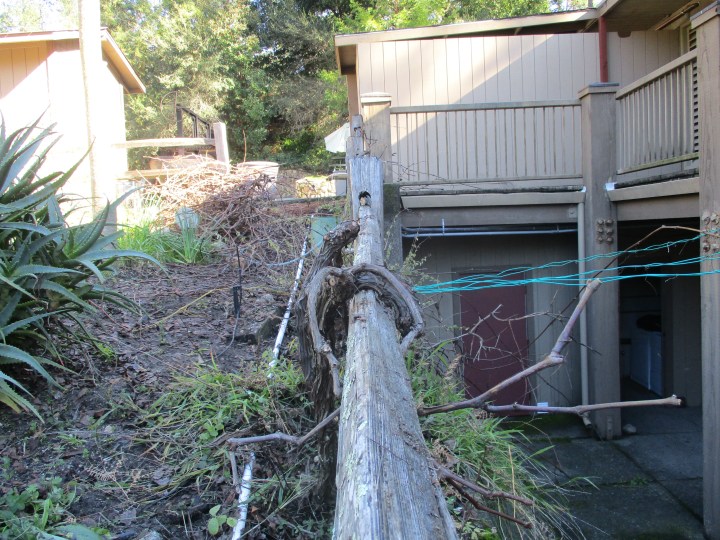
3. This lineup of what seems to be the usual suspects is really seven well rooted layers (the stems that lay on the ground long enough to develop roots of their own that I mentioned earlier) The smallest one on the left is easy to miss.
4. Most of the layers are very well rooted. We really do not know what to do with the original grapevine. We certainly do not need seven more! Friends and neighbors will likely find good homes for them.
5. The weather was so nice for this project, that the ceanothus nearby started to bloom. There are so many other dormant plants to prune before winter ends!
6. Just prior to such nice spring weather, we got eight inches of rain from a series of a few storms. This would have been two thirds of the average annual rainfall of twelve inches in my former neighborhood in town! This bucket of rainwater is nine inches deep because it is flared toward the top, and narrower at the bottom.
This is the link for Six on Saturday, for anyone else who would like to participate:
https://thepropagatorblog.wordpress.com/2017/09/18/six-on-saturday-a-participant-guide/
 The vast orchards of the Sacramento and San Joaquin Valleys might make the impression that production of fruit is easy. The trees naturally bloom in spring, and develop fruit over summer, as if they do most of the work prior to harvest. In reality, those trees have been so extensively bred to maximize production that they need, among other maintenance, very specialized pruning in winter.
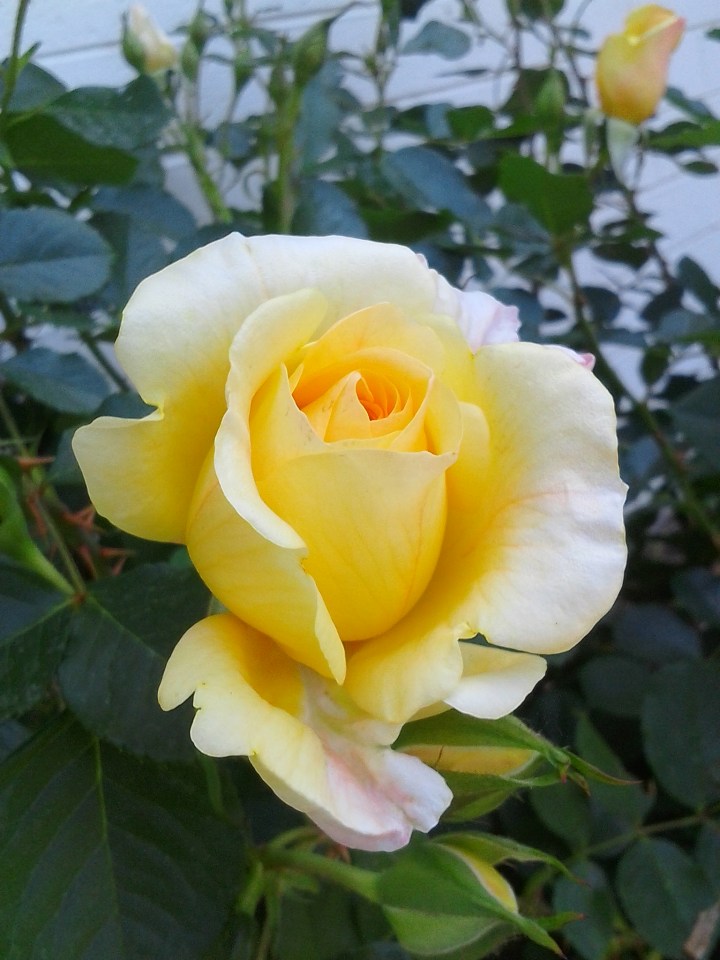 The main problems with roses locally are not related to climate, soil, insects or disease. Warm and semi-arid climates of California happen to be some of the best places in the World for roses. Sure, many roses have problems with insects such as aphid, and diseases such as powdery mildew, but primarily because such pathogens proliferate among roses that are not pruned properly.
 Winter is for pruning. Any good native of the Santa Clara Valley knows that. It starts as soon as the first deciduous fruit trees defoliate and continues to the last minute rush to finish before the buds start to swell at the end of winter. It may seem like there would be no last minute rush now that all the orchards are gone, but there is so much in landscapes to prune that prioritizing and scheduling pruning takes a bit of effort. Just like we know that apples and pears can be pruned slightly later than apricots and prunes, in the landscape, we know that sycamores might be delayed until the birches are done. Naturally, I feel compelled to prune the flowering cherries and fosythias, but am almost content to wait until after they finish blooming in early spring. Of course, I cringe as I write this.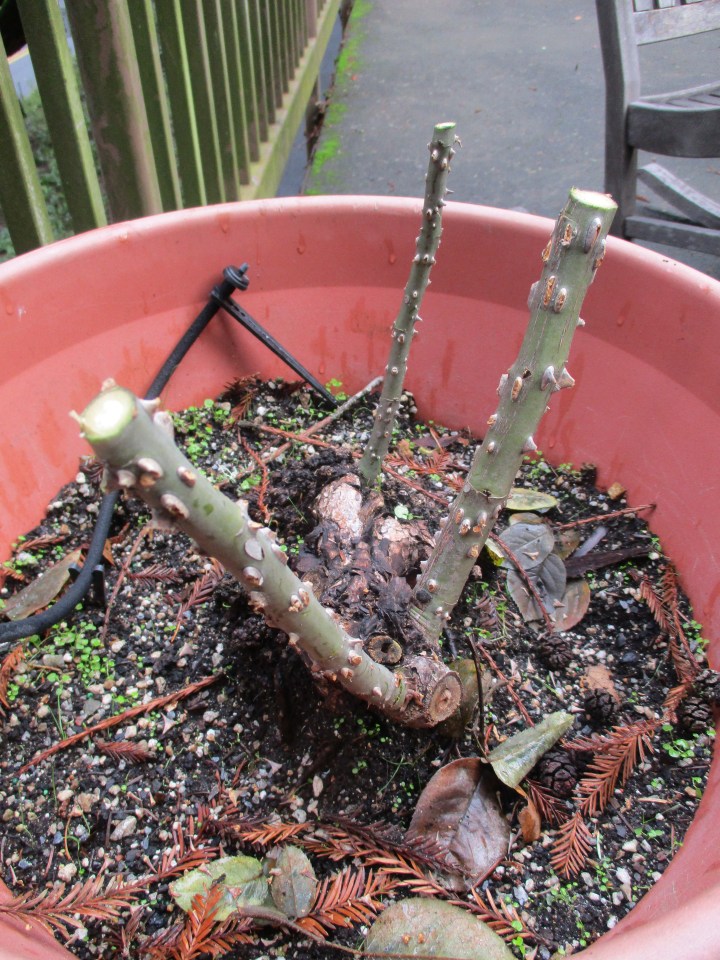
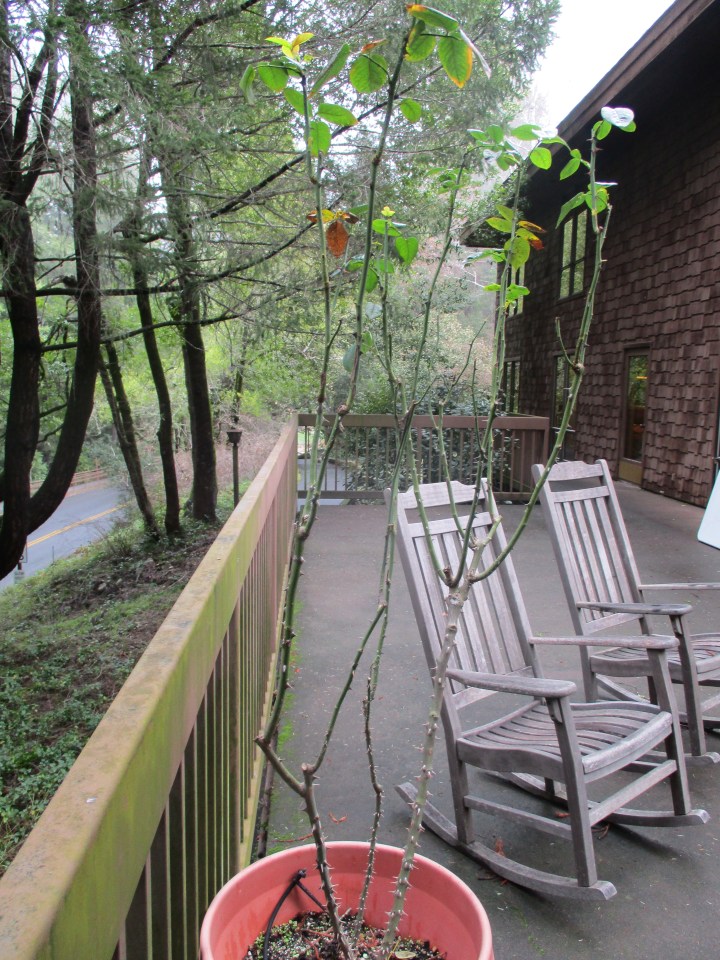
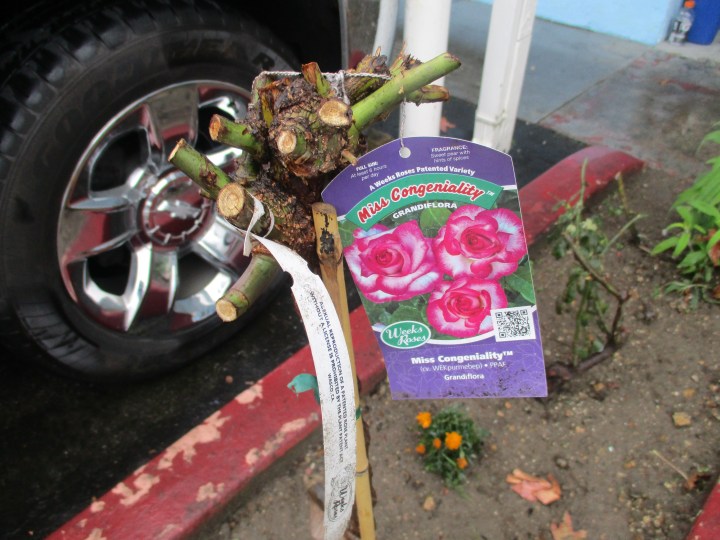 Now, before I commence with my rant and long list of problems with this picture, I should mention that this seemingly abused rose tree does seem to be appreciated. All the roses in this landscape seem to be very healthy, and they bloom constantly between spring and autumn. Their performance suggests that they are regularly fertilized and deadheaded.
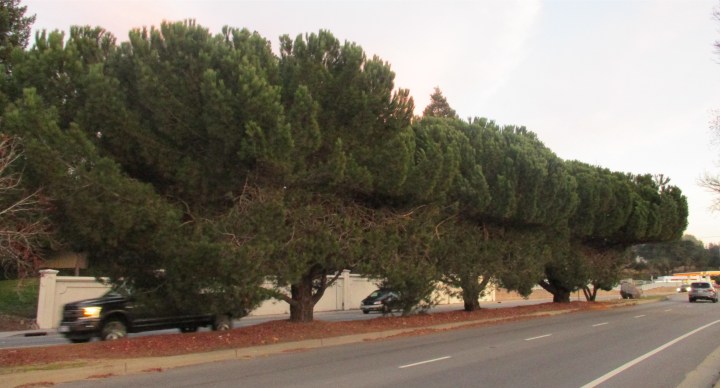 Many arborists mark certain lengths on their pole saws and pole pruners. When stood upright, these marks designate the standard heights for minimal clearance pruning. Not so many need to mark the height of minimal clearance for walkways, since they will prune away anything that is within reasonable reach with hand tools from the ground. The minimal clearance above parking spaces is not so easy to guess at, so is more likely to be marked on poles. So is the minimal clearance over roadways, where the lowest limbs must be high enough to be out of the way of campers and freight trucks.
 Modern fruit trees have been so extensively bred to produce abundant and unnaturally large fruit, that most types are unable to support the weight of the fruit that they can produce each season. Without specialized dormant (winter) pruning to limit production, the weight of excessive fruit breaks and disfigures the limbs of the trees that produce it. Fruit becomes too much of a good thing.
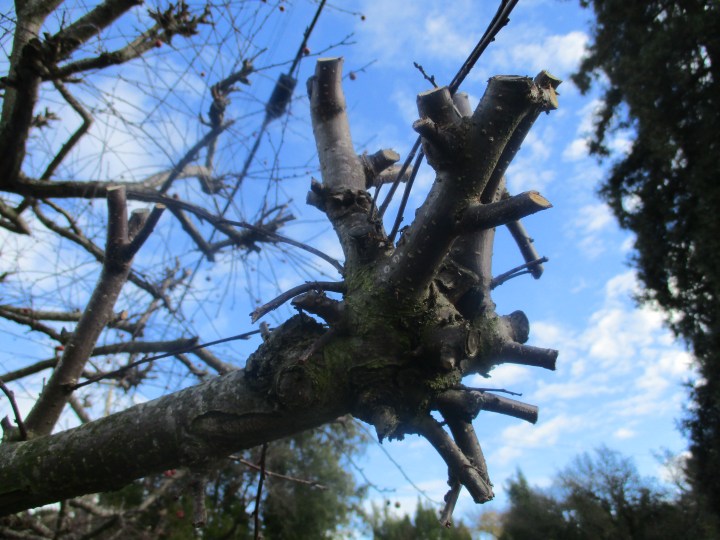 From the same landscape that, last autumn, was so dutifully deprived of its elegantly cascading rosemary and soon to be fiery autumn color of Boston ivy,

 Root pruning is nothing new. It is done more commonly than we think about for many aggressive perennials like lily-of-the-Nile, that like to disperse their roots into areas where we want to grow more docile annual bedding plants or vegetables. We might do it halfway, or more, around a shrubby plant during spring or summer if we plant on digging and moving it the following autumn. For most small and low profile plants, root pruning is sort of tolerable. The plants that we do it to may not like it, but it is sometimes necessary, and better than not doing so.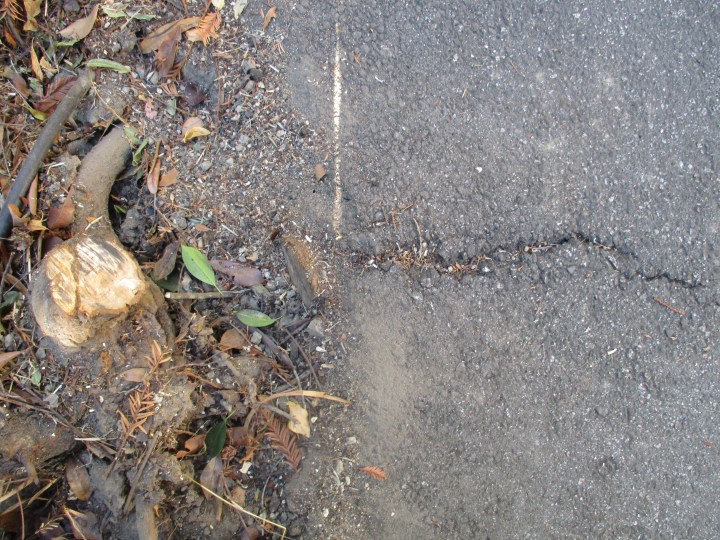

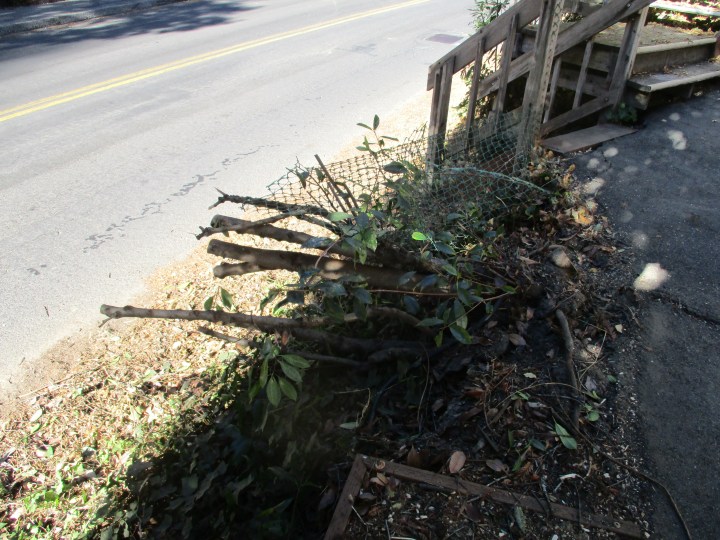
 With indiscriminate pruning, glossy abelia, Abelia X grandiflora, will never develop its natural form, with elegantly long and thin stems that arch gracefully outward. Sadly, almost all get shorn into tight shrubbery or hedges that rarely bloom. If only old stems get selectively pruned out as they get replaced by fresh new stems, mature shrubs can get eight feet tall and twelve feet wide.
 Tony Tomeo