Three years later, Los Gatos still lacks an Official Town Tree and an Official Town Flower.

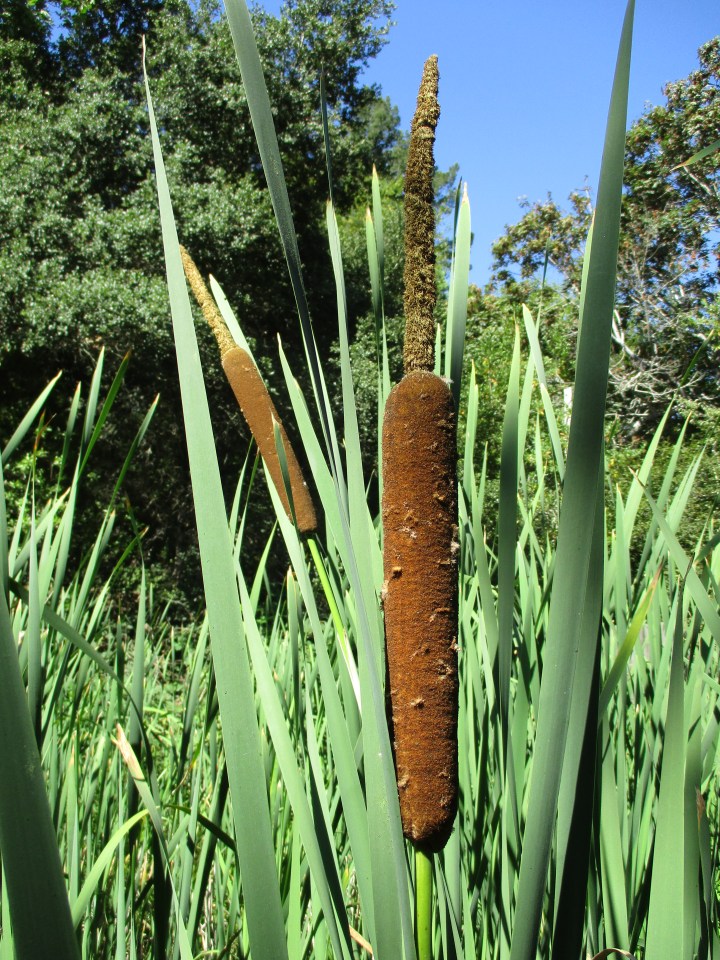 Urban sprawl replaced the formerly vast orchards of the Santa Clara Valley a long time ago. Nowadays, it is difficult to imagine that they were ever here. Apricots, prunes, cherries, almonds, walnuts and all that the region was once famous for are all now rare commodities.
Only a few minor corndog orchards remain. They survive only because they are not actual orchards that are grown on land that is useful for something else, but instead grow wild on otherwise useless marshland and along the few creeks that flow through the region. Some marshland that could not be converted into usable space was developed into parks, and within many such parks, the remaining marshlands are protected as native habitat.
Vasona Lake County Park and the small Vasona Lake within were once a large marshy area that sustained what was probably the biggest corndog orchard within the Santa Clara Valley. It is…
View original post 148 more words
 Coppiced trees and shrubs are just like pollarded trees, but without the trunk and main limbs. Instead of getting cut back to the same distended knuckles at the ends of disproportionately stout limbs, they get cut back to the same stump just above grade over winter. Some get coppiced annually. Others get coppiced only when they get too big. The coppiced California sycamore in this picture may never get coppiced again.
 Mutants are the source of many of our favorite cultivars of otherwise simpler specie. Many cultivars of plants with compact, pendulous or fastigiate (strictly vertical) growth, or variegated, bronzed, golden or otherwise abnormally colored foliage, were derived from ‘sports’, which are mutant stems that appear on otherwise normal plants. Thornless blackberries were sports of thorny cultivars. Fruitless mulberry is a sport of white mulberry. There is no shortage of mutants.
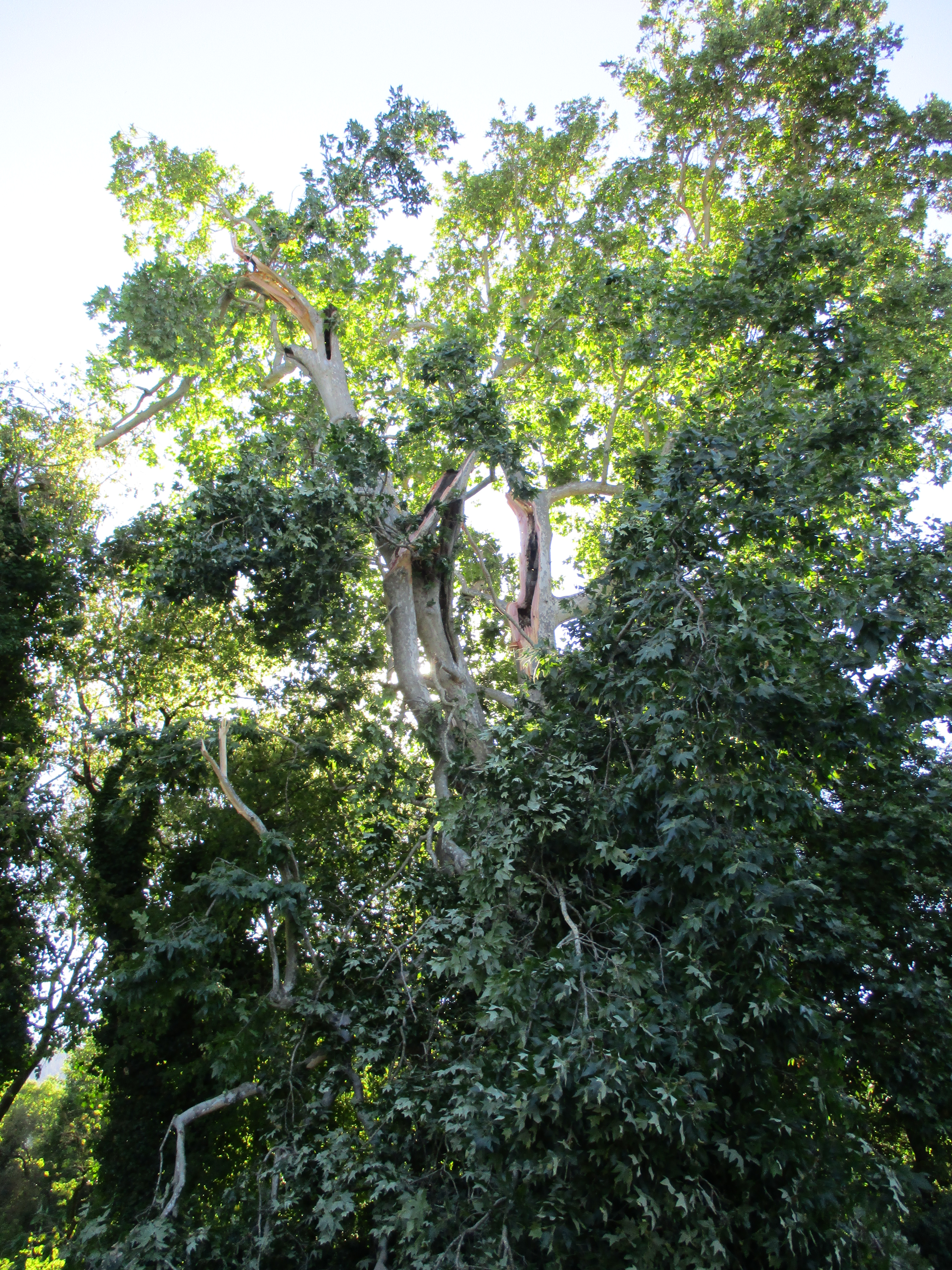
 You would think that those who maintain the County Parks would be prepared for anything. They nearly are. They know how to deal with gophers, moles, voles, weeds, flooding, all sorts of unpleasant weather, and of course, spontaneous limb failure of massive trees. They apparently did not plan for this one.
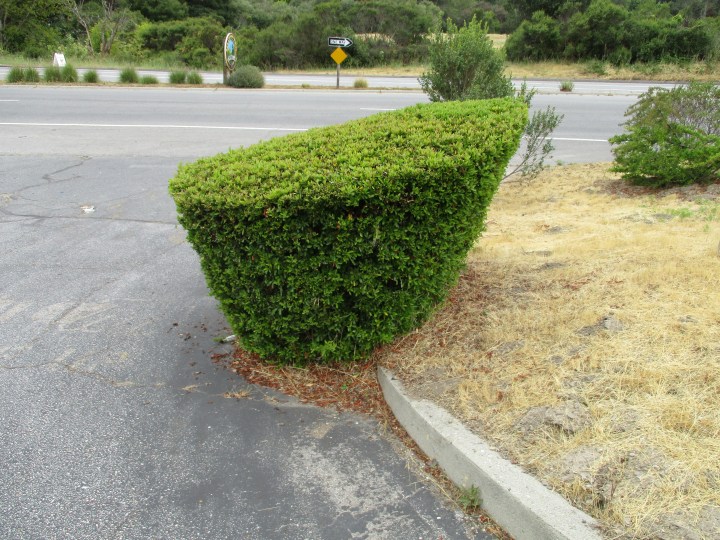 This is the opposite of the ‘right plant in the right place’. It is something that horticultural professionals should neither promote nor tolerate when feral plants appear in landscapes that they are getting payed to maintain. This example looks like it is more relevant to the topic of ‘Fat Hedges’ from
 This really is the best climate here. Winters are just cool enough for many plants that require a bit of a chill, but not unpleasantly cold. Summers are just warm enough for most plants that need warmth, but the weather does not stay too unpleasantly hot for too long. Warm weather here typically lasts no more than a week, and is accompanied by light evening breezes and cooler nights. Minimal humidity typically makes the worst of the heat a bit more tolerable.
 This sort of weather pattern does not happen very often. Late spring is normally pleasantly warm, and the weather gets progressively warmer through summer, which typically includes a few unpleasantly warm days. It rarely gets too hot here, and when it does, it does not last for more than a few days, and tends to cool off at least somewhat at night. The air is normally arid. Humidity is uncommon in a chaparral climate.
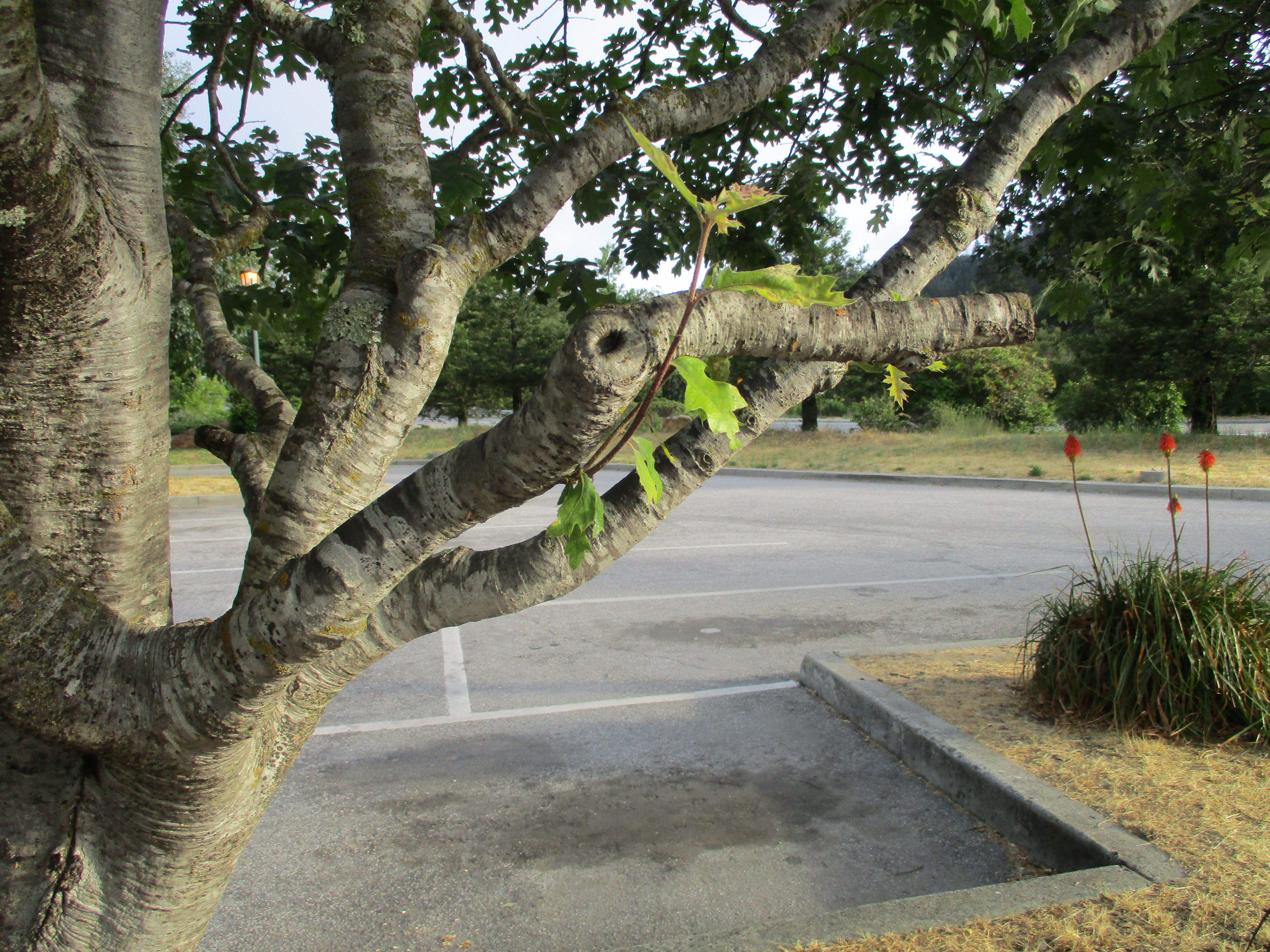 How can a professional ‘gardener’ leave such a stub on the little California black oak in Felton Covered Bridge Park. It is not as if it is high in the canopy of a large tree, and out of reach to an arborist. This one is right at eye level, exactly where someone getting out of a car parked in the adjacent parking space would run into it. The entire tree needs some major corrective pruning, which would include the removal of significant limbs and portions of the canopy, but that is only because of years of neglect, and is another story. Right now, we are focusing on the eye-level stub.
 Tony Tomeo