Deodar cedars that were featured in the gardening column about two weeks ago, https://tonytomeo.com/2018/11/27/deodar-cedar/ , live in a small grove adjacent to a building that I work out of. They need a bit of pruning for clearance from the roof, but are otherwise rather nice and healthy specimens.
They are also prolific. Quite a herd of seedlings is developing on the ground below. None of the individual seedlings are more than just a few years old, which suggests that the area was cleared of seedlings a few years ago. The area needs to be cleared of seedlings again, before they grow big enough to become a messy thicket.
Part of another landscape in another area happened to be in need of a few deodar cedars. There were two established specimens there already. They suit the situation so well that more are desired. However, new trees are expensive, and because there is no irrigation system in that particular site, they would need to be watered very regularly by hose until they get established.
Well, you can guess what happened. We pulled up several of the seedlings that needed to be pulled up anyway, and simply plugged them into the site where more deodar cedars are desired. It was done just prior to rain, so the relocated seedlings did not even need to be soaked in. They were pruned so that they would not desiccate so readily. We planted way more than necessary because there were plenty to spare, and also because we expect that several will not survive the process. We also expect that we will likely need to cut down a few later because, although some will not survive, too many probably will. Because they are just tiny seedlings, they will get established more efficiently than canned nursery stock, and will not be so sensitive to lapses of irrigation.
Although way more than necessary were relocated, they were not even a quarter of what was available in the original herd. More than three quarters of the herd remain available to be planted elsewhere. More will likely be relocated to other parts of other landscapes before the rainy season is half way finished. A few will be canned and put into the nursery. Whatever we do to them should be done in the early part of the rainy season to take advantage of the weather while they get established. We prefer to relocate the larger seedlings first, so that those that remain will be the smaller seedlings that will take longer to get too big to move if they must wait until next year to be relocated.
This is actually old technology, and how tree seedlings were pulled and plugged to enhance the production of woodlots since ancient history. While undesirable seedlings were pulled and discarded, more desirable seedlings that happened to be crowded around the parent trees were pulled up and plugged in more uniformly over a larger area.
1. seedlings in the ground below the parent trees
2. parent trees
3. bundle of seedlings
4. unpruned seedling
5. same seedling pruned
6. seedling in new location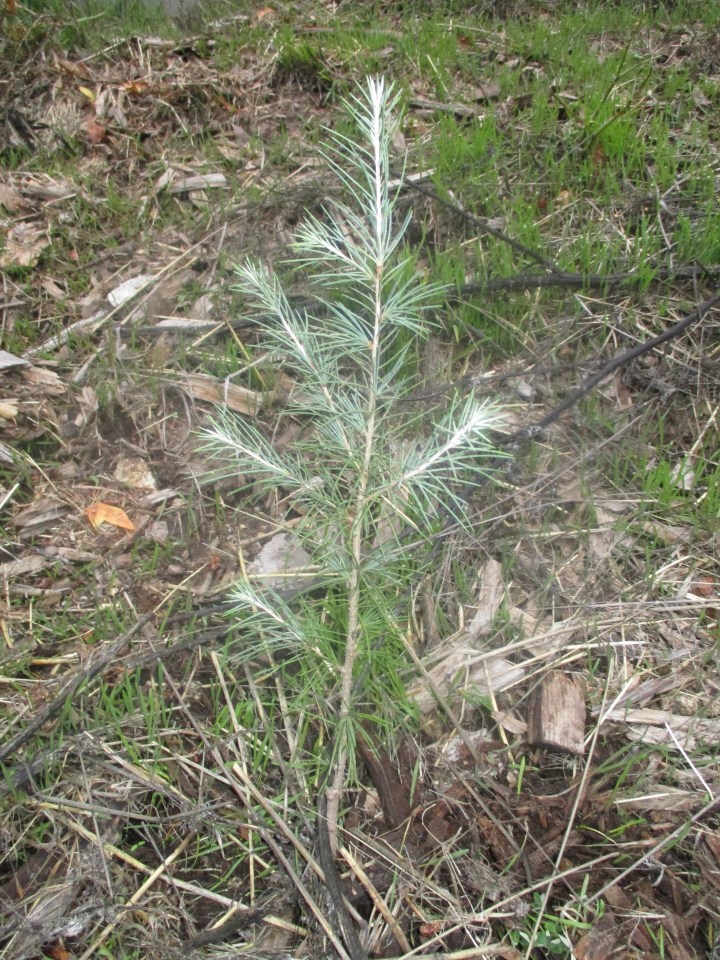
This is the link for Six on Saturday, for anyone else who would like to participate:
https://thepropagatorblog.wordpress.com/2017/09/18/six-on-saturday-a-participant-guide/
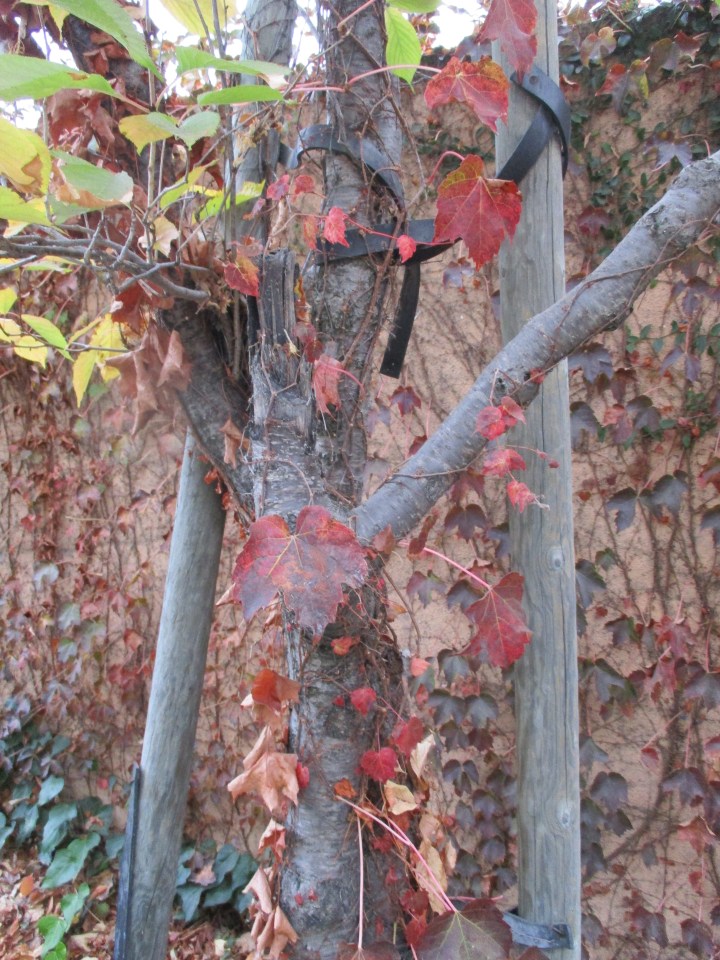
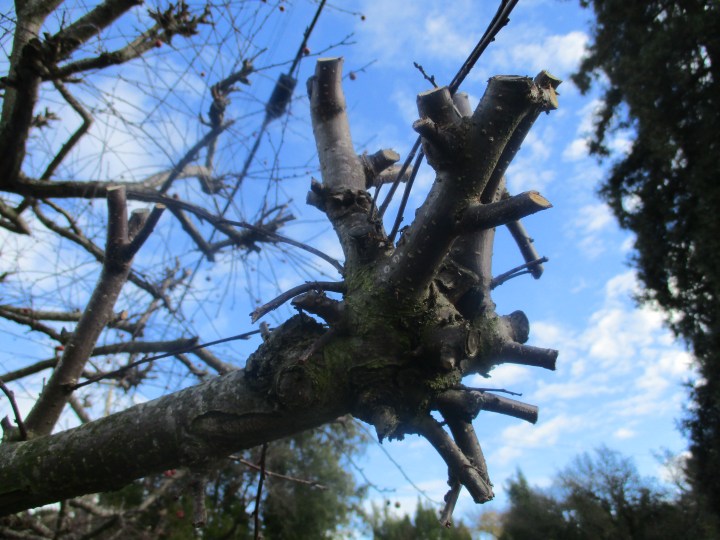 From the same landscape that, last autumn, was so dutifully deprived of its elegantly cascading rosemary and soon to be fiery autumn color of Boston ivy,

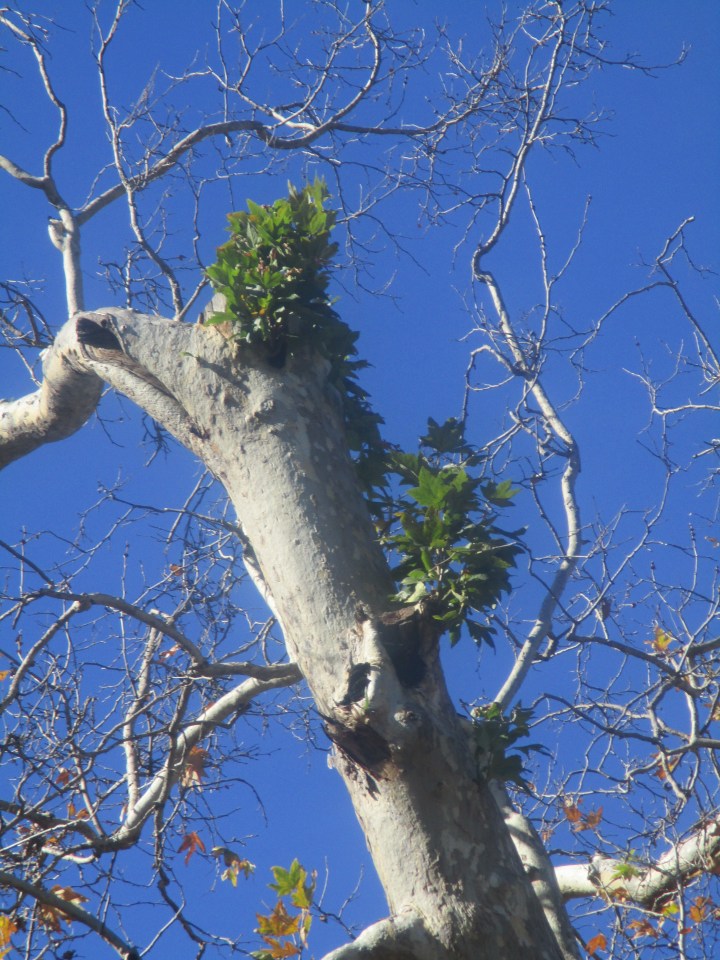 The tufts of small branches that so often develop where limbs were pruned from the trunks of a coast live oaks are sometimes referred to as ‘tumbleweeds’. They are about the same size as an average tumbleweed. By the time the get any larger, most of the smaller stems have subordinated and died out, leaving only a few more defined dominant stems, which will continue the process until even fewer or a single new branch dominates. Such tumbleweeds, as well as stems that originated from such growth, are weakly attached to the main trunks. They often get pruned off for the same reason that the limbs that were there before got pruned off, or because they are expected to be weakly attached. If they remain long enough, they can of course develop into new limbs.
 All around town, there are Italian stone pines, Canary Island pines, Monterey pines and Aleppo pines that are much too big for the home gardens that they live in. Some are too close to pavement or foundations. Others are under utility cables. Many are shading or crowding out other more desirable plants. What most have in common is that they started out as living Christmas trees.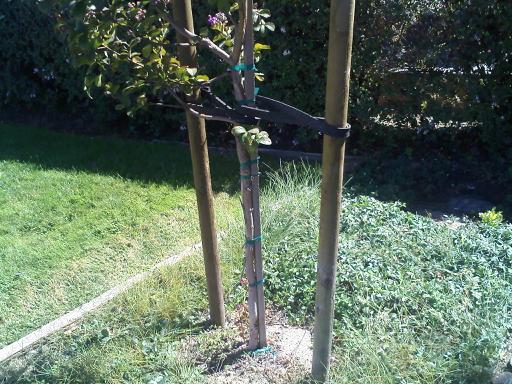

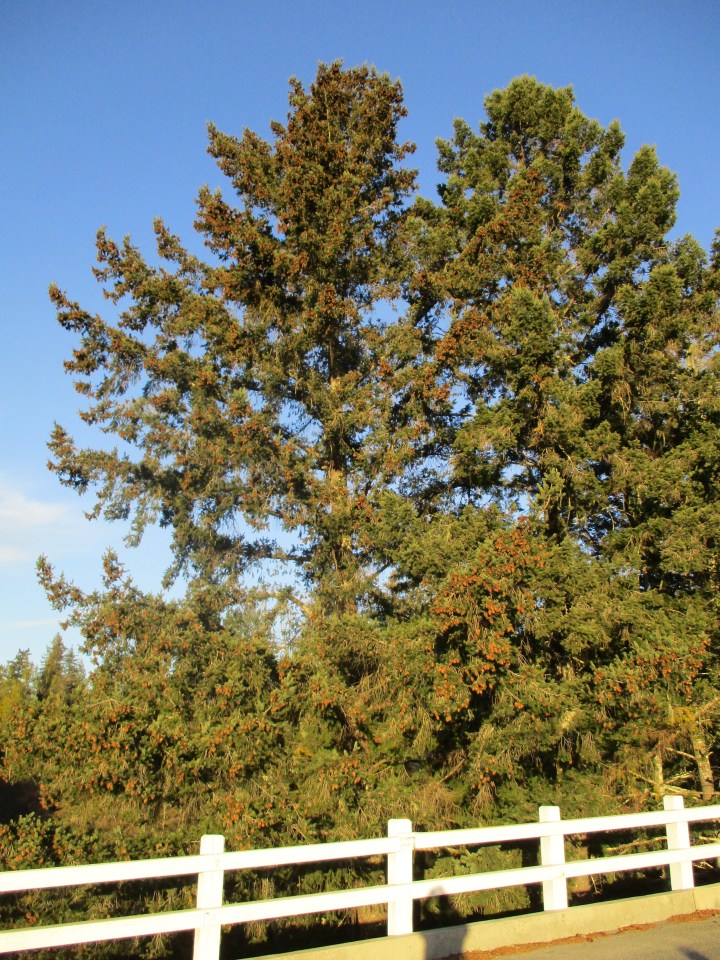
 Some of us may remember deodar cedar, Cedrus deodara, from the opening scene of the Andy Griffith Show. They were in the background as Andy Taylor and his son Opie skipped stones on Myers Lake near Mayberry in North Carolina. Those well established and naturalized trees and the pond are actually in Franklin Canyon Park in the Santa Monica Mountains above Beverly Hills.
 The first storm of the year has a way of reminding us if our trees need attention. Whether then need to be worked on this year or not, we tend to notice how they blow in the wind, or if they are full of dead and deteriorating debris that falls into the garden or onto the roof. As deciduous trees defoliate, they are less likely to be damaged by wind, but their structural deficiencies become visible.
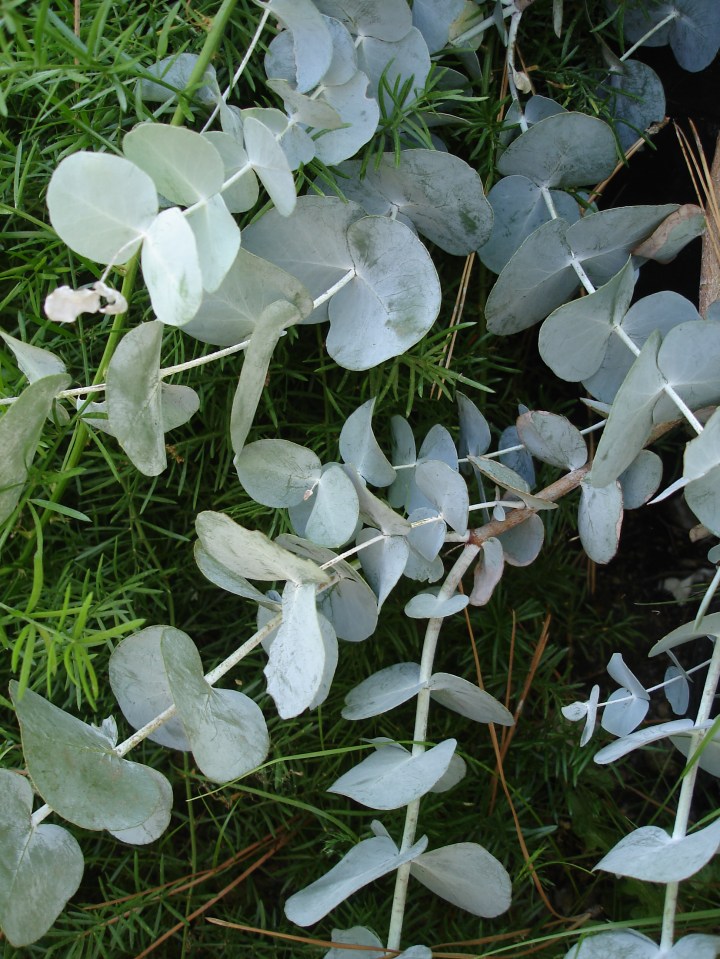 Junipers have a bad name. So do eucalypti. Too many of the wrong types were planted back at a time when they were too trendy. Those that were planted into inappropriate situations grew up to cause problems. The names of all junipers and eucalypti are now synonymous with those problems, even though there are many types of both genera that are quite practical for landscape purposes.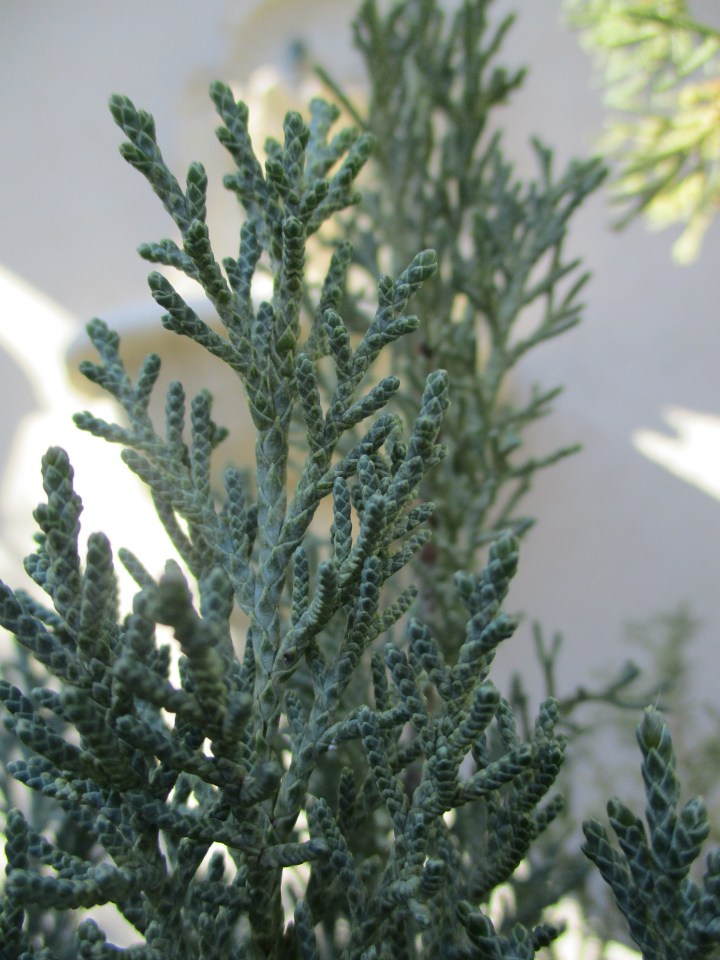
 By ‘big trees’, I don’t mean the various ficus trees that can grow up to the ceiling, and be quite happy inside. I am referring to the shade trees that live out in the yard, or forest trees that live beyond that. They are outside for a reason . . . or actually, several reasons. They are too big to bring inside. They probably would not like the climate inside. No one wants to rake fallen autumn leaves inside. Well, you get the point.
 That is a myth. They do not hate all cars. They just hate particular cars.
 Tony Tomeo