The article that I wanted to recycle was already recycled on my other blog, Felton League. It really did conform to the HorridCulture meme for Wednesday. This article was a predesor to that article, which can be seen at; https://tonytomeo.com/2018/11/07/horridculture-blame/
What a surprise. There was none when I went in to use the computer as the sun came up into a clear blue sky this morning. When I came outside just a few hours later, it was everywhere. It was so thick and so aromatic that it was obviously very close, but it did not smell like it was in the ponderosa pines around Scott’s Valley where I happened to be at the time. Once I got on the road back to Felton, I could see that besides the monochromatic ambient smoke that obscured the surrounding hills, a prominent and much thicker brown cloud of smoke hovered low over the San Lorenzo Valley. The smoke was even thicker in Felton, and obscures the range to the west where Bonny Doon is. As I write this in Felton Covered Bridge Park, ash is falling onto the computer screen. The fire has…
Most red berries that provide color and attract birds through late autumn and winter grow on shrubbery. Berries of English hawthorn, Crataegus laevigata, grow on trees. They are not big trees, but they are distinguished. Mature trees might get no taller than twenty feet, but their furrowed trunks with weathered bark resemble those of older and statelier trees.
Trusses of small white flowers that bloom in spring are comparable to those of pear. Like pear bloom, they emit a potentially objectionable musky fragrance. Modern cultivars that bloom with pink, double pink or double red flowers are less fragrant. English hawthorn is uncommon locally. The few cultivars that produce yellow or orange berries might be rare.
The deciduous leaves of English hawthorn are only about an inch or two long and wide. They are deeply lobed, with a handsomely coarse texture. Foliage can turn rusty orange or brownish yellow for autumn. Defoliation exposes any remaining berries, at least until the birds finish with them too. Thorns are unfortunately unavoidable.
Red berries that ripen through autumn and into winter are becoming prominent. They are too brightly colorful and profuse to hide. Those that do not attract too much attention from wildlife may linger after floral color is finished. Some may last longer than the earliest fall color. Otherwise, if wildlife consumes all of the red berries, that is what they are there for.
Plants are naturally exploitative. Since they are inanimate, they exploit that which is not. Those that do not rely on wind for dispersion of their pollen and seed expect insects and animals to do it instead. Their flowers appeal to preferred pollinators, using color, texture, form, fragrance and flavor. Their fruit, which contains their seed, uses similar techniques.
Red berries mature at this time of year for two primary reasons. Plants that produce them prefer their seed to disperse during autumn or early winter. Also, they know that they can rely on birds or other wildlife to eat the red berries, and subsequently ‘disperse’ the seed within. Overwintering wildlife and migratory birds are particularly hungry as berries ripen.
Red berries are popular in home gardens for two primary reasons. Some people like the birds and squirrels who come to eat the fruit. Most people simply appreciate the red color while floral color is potentially scarce. Unfortunately, it is impossible to predict how birds will behave. They may prematurely consume berries that should provide color for winter.
Although various hollies provide delightfully glossy and densely evergreen foliage, their red berries are scarce or absent without male pollinators. (Hollies are dioecious, so their genders are distinct.) Male cultivars, which had been rare for several decades, have only recently become more available. Yet, even with pollinators, holly berries are not the best.
Firethorn (Pyracantha), toyon and a few cultivars of cotoneaster are more prolific with red berries. Toyon, or California holly, is native, and is the namesake for Hollywood. It is best in wild landscapes where it needs no pruning. Firethorn produces the most berries but is also very thorny. Some cultivars of cotoneaster are both thornless and pleasantly prolific.
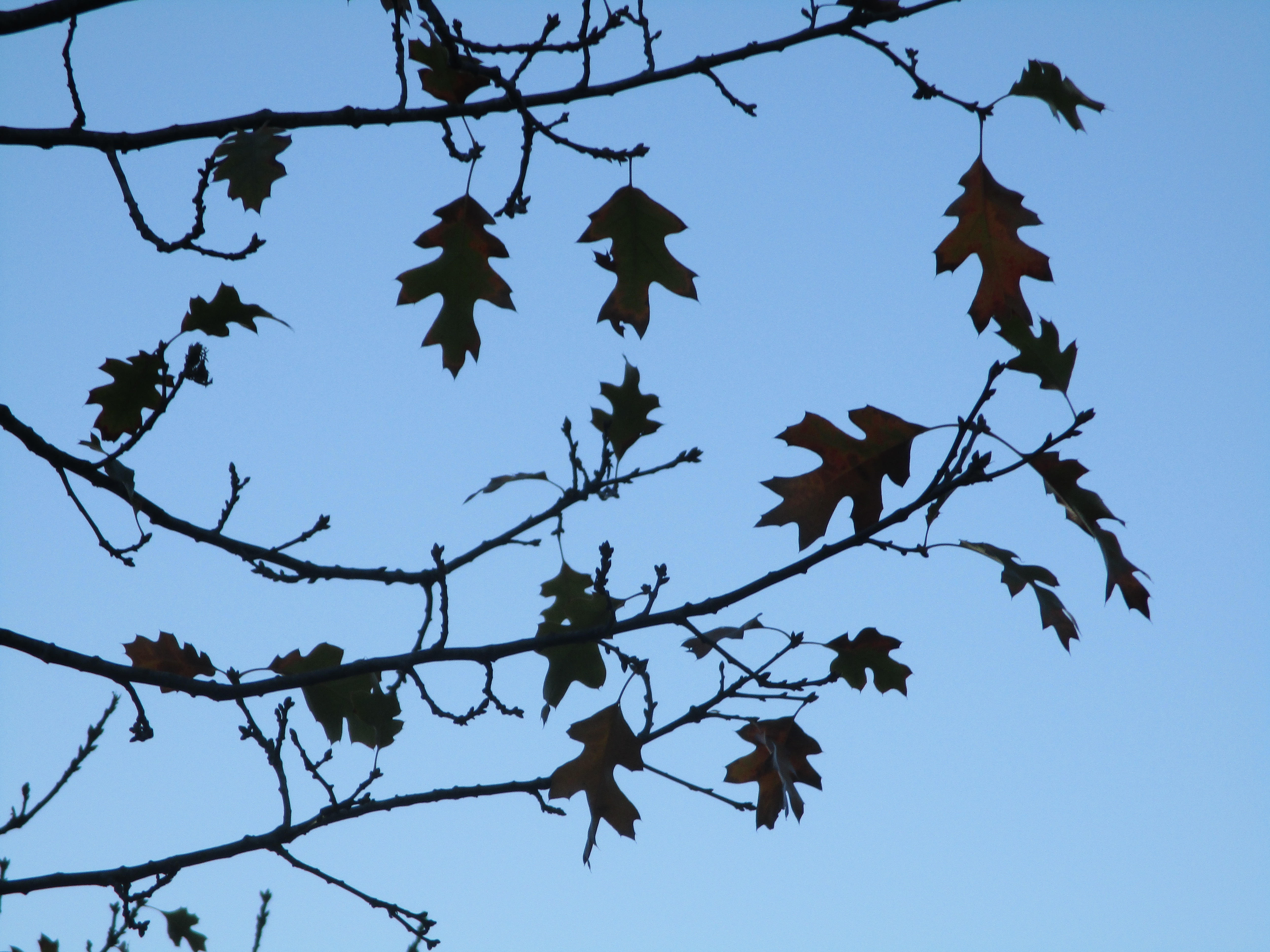
I prefer to call it ‘autumn’. It sounds prettier. Perhaps it even sounds a bit more exotic, like something that happens in far away climates were the seasons are more distinct, and the weather gets a bit cooler this time of year.
‘Fall’ sounds more like a simple verb. It is merely what outdated leaves do when deciduous trees no longer have use for them. Many trees in mild climates do not even bother to indulge their foliage with a bit of color first.
Exotic places like Pennsylvania, Minnesota and Kentucky get autumn. Oklahoma, Oregon and Alaska get it as well, although it is commonly mistaken for fall because the deciduous foliage of most native specie turns brown in Oklahoma, and yellow in Oregon and Alaska, with significantly less of the oranges, reds and other bright colors that are so prominent in other regions. Rather than complain about the minimal…
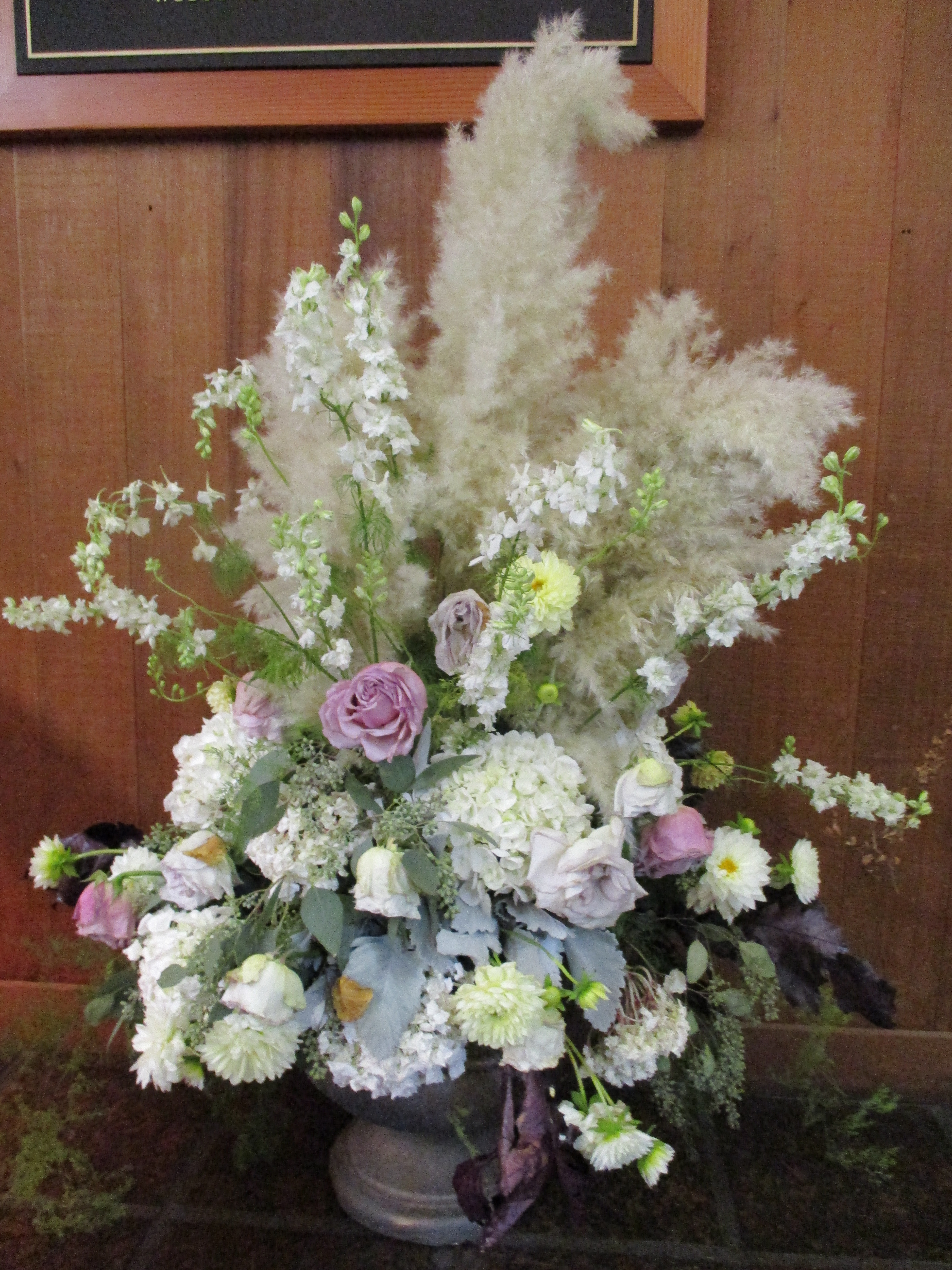
Perhaps, if I ever get around to cutting flowers to bring in, I should try pampas grass bloom. Not only is it a striking cut flower, but cutting it to bring it in inhibits its dispersion of seed.
‘V-A-S-E ‘ is probably how it is spelled, just like that which is pronounced exactly as it looks, or ‘vays’. ‘Vahz’, ‘vawz’ or ‘voz’ just sounds fancier, . . . or bigger.
That is how I learned it. ‘Vays’ is the smaller version that is designed to contain one or only a few flowers and maybe some foliage. ‘Vahz’, ‘vawz’ or ‘voz’ is the much larger version that is designed to contain entire bouquets or ‘floral arrangements’. Those that contain only dried flowers and foliage do not even need to hold water.
I learned this from those who were experts on the subject. My Aunt Betsy and her best friend Cathy were ‘flower children’. They rented an apartment in a hip and trendy neighborhood in western San Jose back in the early 1970s. The neighborhood was so trendy and hip that the neighbors were known as ‘hippies’. Aunt Betsy and…
Maples are annoyingly misrepresented here. Japanese maples are so much more popular than they should be, and imposed by just about every so-called ‘landscaper’ with something to prove, although few of them know or care how to take proper care of them. However, maples that actually develop as shade trees are still uncommon or even rare. Only two species are native locally. Of these, box elder (#5) is rather unimpressive, and bigleaf maple (#6) is potentially too big and too messy for refined home gardens. Norway maple has a bad reputation, but ‘Schwedler’ was a good street tree.
2. Acer platanoides – Norway maple should look like this. I do not remember the name of this cultivar. It supposedly has better bronzed color than ‘Schwedler’. I still prefer classic ‘Schwedler’.
3. Acer rubrum – red maple performs quite well in mild climates, and works well as a street tree with symmetrical and rather compact form. I do not remember the name of this cultivar either.
4. Acer circinatum – vine maple should be more popular here. It is a sculptural understory tree like the countless cultivars of Japanese maple, but is not a Japanese maple. That is why I like it.
5. Acer negundo – box elder should probably be less popular than it is. It is the most common maple of North America, and is native to every state except for Alaska and Hawaii. It is wild here.
There are all sorts of philodendrons with all sorts of fancy names. Yet, the biggest and boldest lacks a common name (at least one that is actually ‘common’), and is most popularly known by a Latin name that is not even correct. The proper name for Philodendron selloum is really Philodendron bipinnatifidum. It is a big awkward plant with big and deeply lobed leaves on long petioles (leaf stalks), and weirdly thick aerial roots. Well exposed plants can stand on wobbly trunks. Partly shaded plants can creep along the ground, and prefer to grab onto and climb tree trunks, fences or anything that they can get a hold of. The aerial roots are harmless to trees, and generally too slow to catch a healthy cat, but will take paint off of walls. All parts of Philodendron selloum are toxic.
Cucumbers fill in between warm and season vegetables and cool season vegetables, so will finish prior to frost.
Tropical plants are clueless. They do not understand that autumn is just prior to winter, when the weather may get uncomfortably cool. Philodendron selloum continues to develop fresh new leaves that mature slowly in cool autumn weather, and may consequently lack resiliency to frost in winter. Vegetable plants and flowering annuals are not so ignorant, which is why so many that were productive through summer are nearly finished, and some are ready to relinquish their space to cool season counterparts.
Like the many warm season vegetables, most of the cool season vegetables should be grown from seed sown directly into the garden. Only those that produce efficiently from fewer but substantial plants, like broccoli, cauliflower, cabbage, Brussels sprout and some of the heading lettuces, can be grown practically from seedlings purchased in cell packs. Because individual plants produce only once, more can be added to the garden in phases every two to four weeks through the season to prolong production.
Chard, kale and collard greens can likewise be grown from cell pack seedlings if only a few plants to harvest as intact heads or large leaf greens are desired. However, a package of seed costs about as much as a single cell pack of only six seedlings, but contains enough seed for many more mature heads, as well as for abundant production of ‘baby’ greens plucked from many juvenile plants through the entire season. Those to be harvested as heads should be planted in phases with enough space to mature. Those that will get plucked through the season can be sown or planted once early in the season, and perhaps followed by a second phase if productions starts to diminish.
Root vegetables, such as beet, carrot, turnip and radish, really do not recover well from transplanting from cell packs. Individual cells are sometimes crowded with too many seedlings that must push away from each other as they mature. Otherwise, if not crowded, each cell contains only a few seedlings that are not nearly as practical as simply sown seed would be.
Although each individual root vegetable plant produces only once, they all mature at different rates, so most types can be sown in only one or two phases instead of several phases every two to four weeks. If the biggest get pulled first, the smaller ones continue to mature. They are less perishable than other vegetables, so any abundance is not likely to be wasted.
There are three practical ways to grow onions. They are most popularly grown from seed or from ‘baby’ onions known as onion sets. The third and sneakier way to grow them is from separated cell pack seedlings. Cell packs typically contain too many onion seedlings that would develop into crowded clumps anyway. There are often as many seedlings as could be grown from a package of seed!
Peas get sown as seed early in autumn to grow and produce before winter gets too cold. Another phase can be sown as winter ends for spring production.
Q: What do I spray on may medicinal marijuana plants to kill mealybug?
A: Roundup.
This solutions takes care of two problems at the same time; the mealybug infestation as well as the weed that it is growing on! Cutting the weed at the base and simply discarding it is just as effective and even more practical because it does not involve a toxic, environmentally controversial, and expensive chemical herbicide. The best option is to simply not grow weed in the first place.
I am a horticulturist. I love what I do. I love plants. However, I do not worship them. When I grew citrus trees back in the early 1990s, I happened to enjoy all sorts of rare and unusual citrus fruit that grew on the trees that we grew. However, there were no citrus themed clothing, jewelry, accessories, home furnishings or tattoos. There was no overly indulgent or…
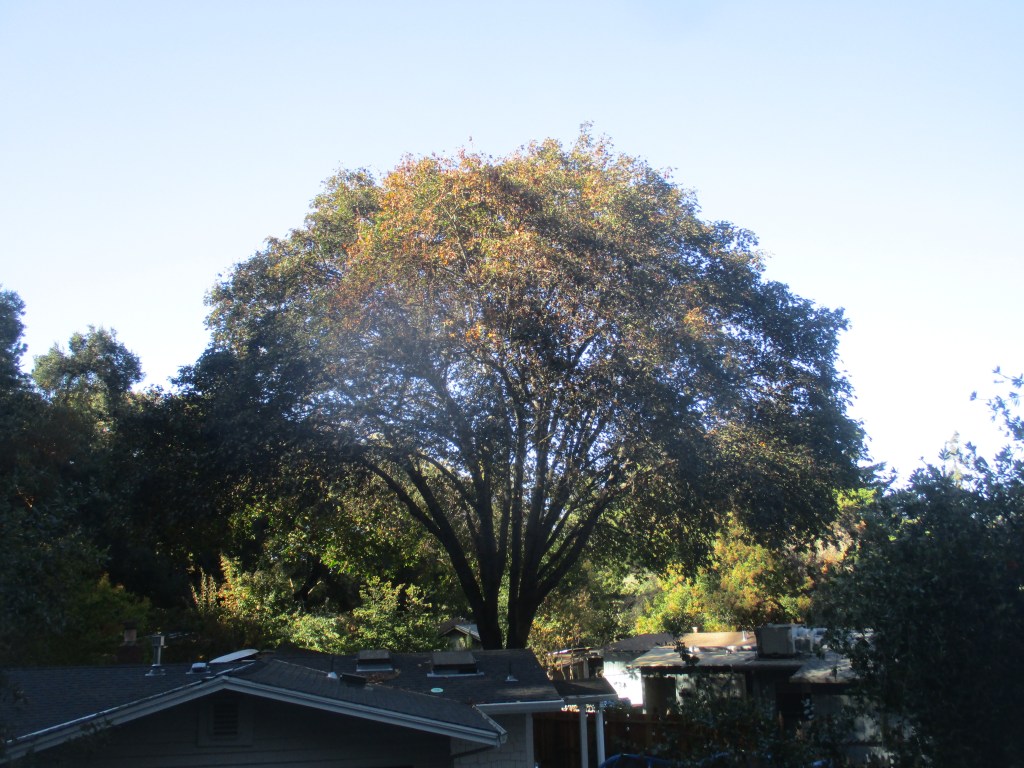
Those who crave fall color in mild climates should appreciate Chinese pistache, Pistacia chinensis. It is happy to provide fiery yellow, orange and red color in response to a slight chill. Actually, it retains its colorful foliage later into the season with mild chill than it does with frosty weather. Rain eventually dislodges all of its deciduous foliage through winter.
Because it is so resilient to harsh situations, Chinese pistache is popular as a street tree. Pruning is necessary to establish adequate clearance of broad limbs over roadways and sidewalks. Since roots can be shallow with regular watering, root barriers should protect nearby pavement. However, established trees do not need regular watering, if any at all.
Old Chinese pistache trees, as well as those that grow wild from seed, are either male or female. Female trees produce tiny but annoyingly abundant fruit. Modern cultivars are all male, and therefore fruitless. They may get more than forty feet tall, with broad canopies. The pinnately compound leaves are just about eight inches long.

 What a surprise. There was none when I went in to use the computer as the sun came up into a clear blue sky this morning. When I came outside just a few hours later, it was everywhere. It was so thick and so aromatic that it was obviously very close, but it did not smell like it was in the ponderosa pines around Scott’s Valley where I happened to be at the time. Once I got on the road back to Felton, I could see that besides the monochromatic ambient smoke that obscured the surrounding hills, a prominent and much thicker brown cloud of smoke hovered low over the San Lorenzo Valley. The smoke was even thicker in Felton, and obscures the range to the west where Bonny Doon is. As I write this in Felton Covered Bridge Park, ash is falling onto the computer screen.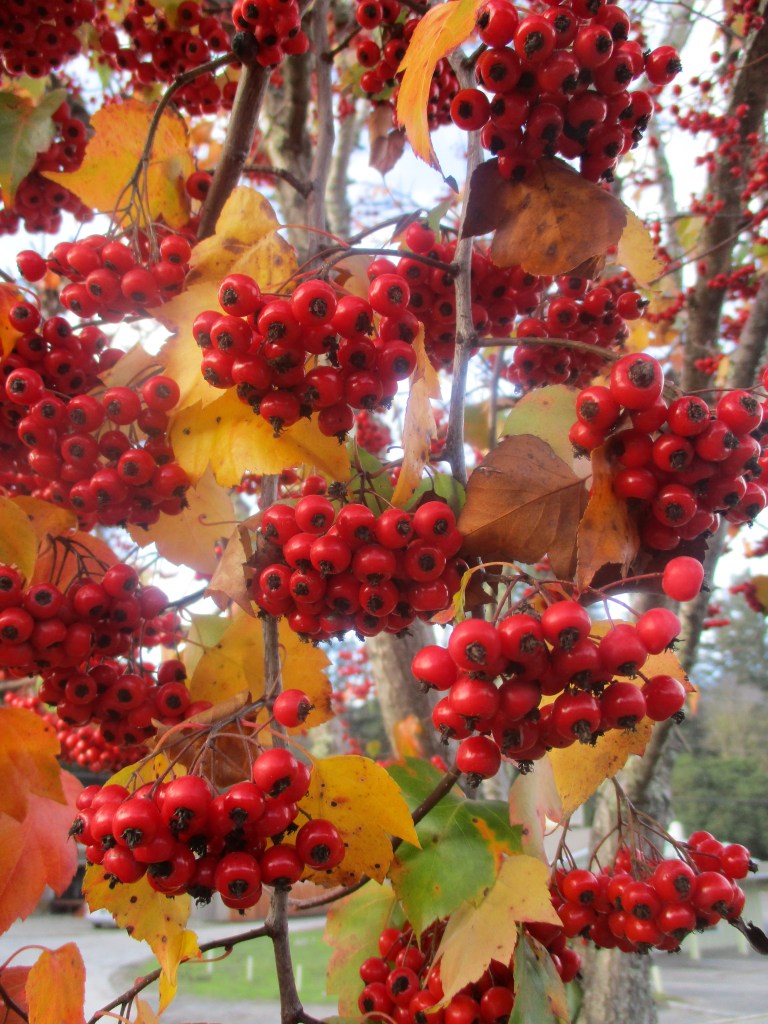

 I prefer to call it ‘autumn’. It sounds prettier. Perhaps it even sounds a bit more exotic, like something that happens in far away climates were the seasons are more distinct, and the weather gets a bit cooler this time of year.
 ‘V-A-S-E ‘ is probably how it is spelled, just like that which is pronounced exactly as it looks, or ‘vays’. ‘Vahz’, ‘vawz’ or ‘voz’ just sounds fancier, . . . or bigger.




 Q: What do I spray on may medicinal marijuana plants to kill mealybug?
 Tony Tomeo