Six on Saturday: No Theme

There was a theme when I assembled these six pictures. I just can not remember what it was now. I am very happy with the three species from Del Norte County, #3, #4 and #5. #6 is my favorite though. It was so unfortunately necessary to remove the venerable old trees. It was necessary to remove their suckers too. I combined the two unpleasant tasks in a rather satisfying manner. There was absolutely no indications that the original trees were grafted. I looked for unions. I was informed that the suckers were visually identical to the original trees. I hope that the suckers that I transplanted within the centers of the decayed trunks will grow into trees that are new copies of the original trees!

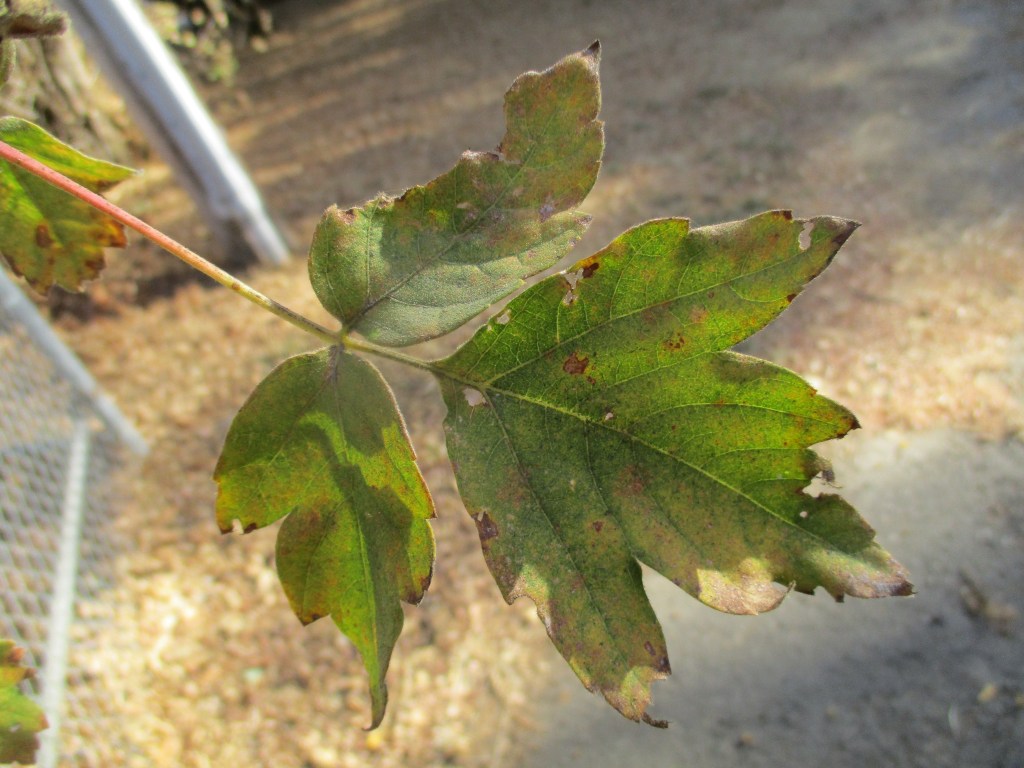
1. Brugmansia X candida ‘Double White’, angel’s trumpet is a copy of the specimen at el Catedral de Santa Clara de Los Gatos. It somehow got frosted! Frost happens even here.

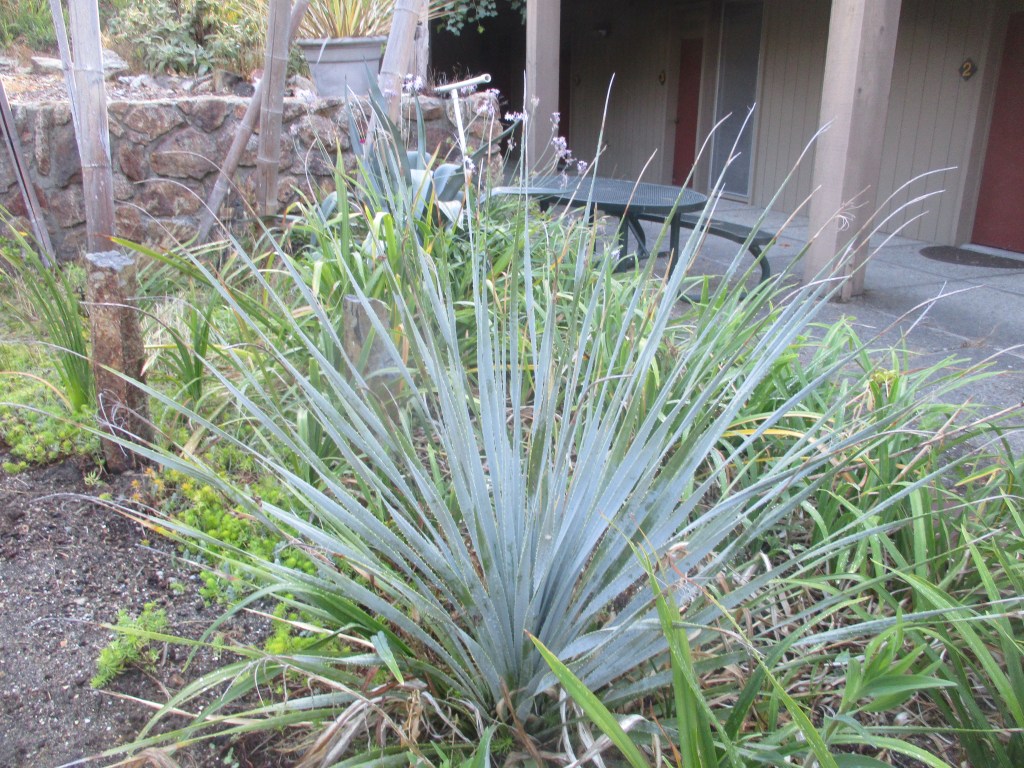
2. Yucca recurvifolia or Yucca gloriosa var.(iety) tristis, pendulous yucca is blooming at an unoccupied residence where only a few neighbors see it. It tastes like iceberg lettuce.

3. Abies grandis, grand fir was brought by another horticulturist here, from the extreme northwest corner of California, literally on the coast, barely south of the Oregon border.
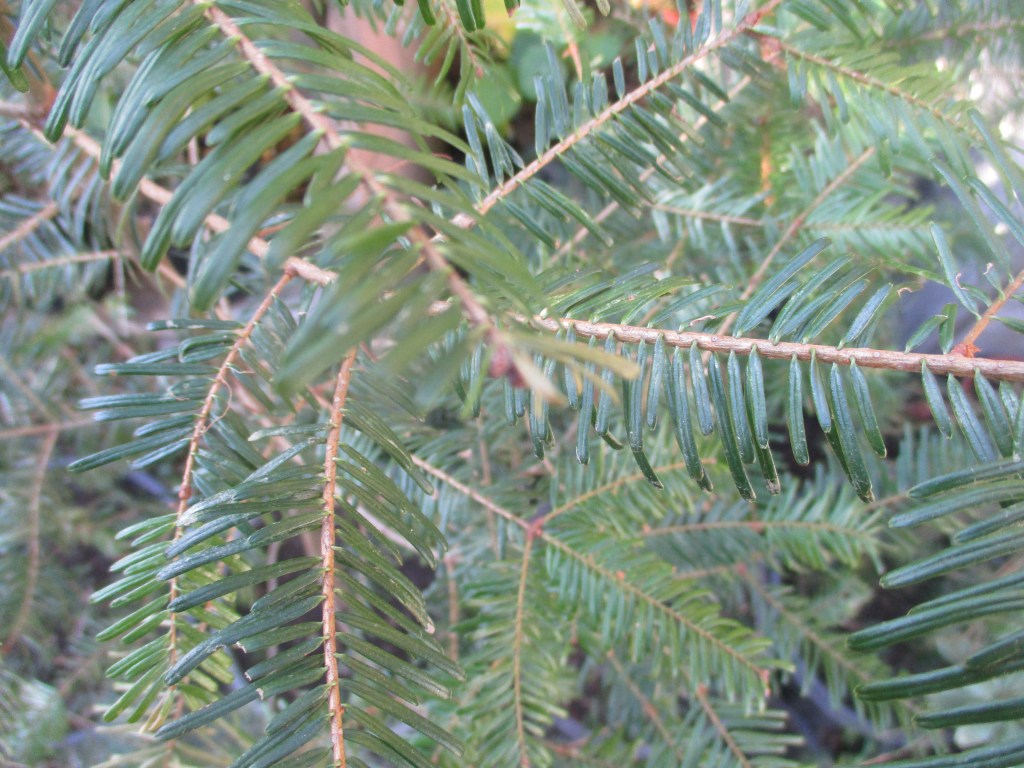
4. Picea sitchensis, Sitka spruce got collected with the grand fir above and the bear grass below. I am very pleased with these species, but do not know where to plant more trees.

5. Xerophyllum tenax, bear grass came with the two tree species above, but will be easily incorporated into landscapes here. I am unfamiliar with it, and intent to get acquainted.
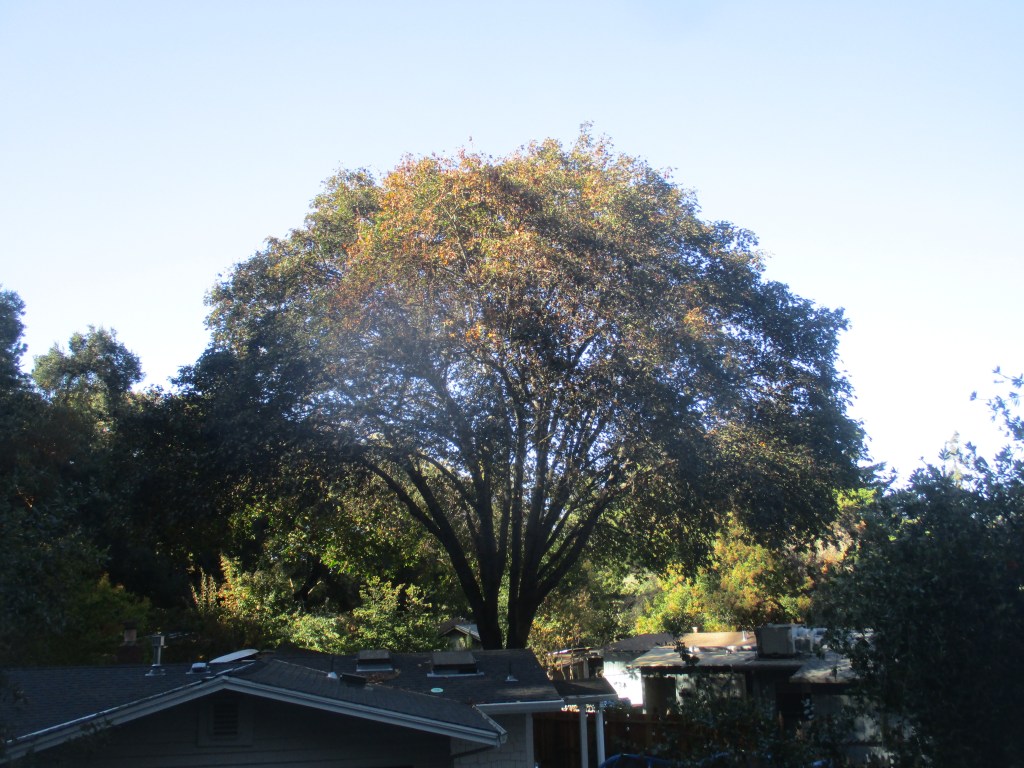
6. Prunus serrulata ‘Beni Hoshi’, flowering cherry was so severely decayed that only the outer shell of its stumped trunk remains. The twig in the center is its own rooted sucker! 

This is the link for Six on Saturday, for anyone else who would like to participate:

Six on Saturday: More Bad Recycling (Even More)

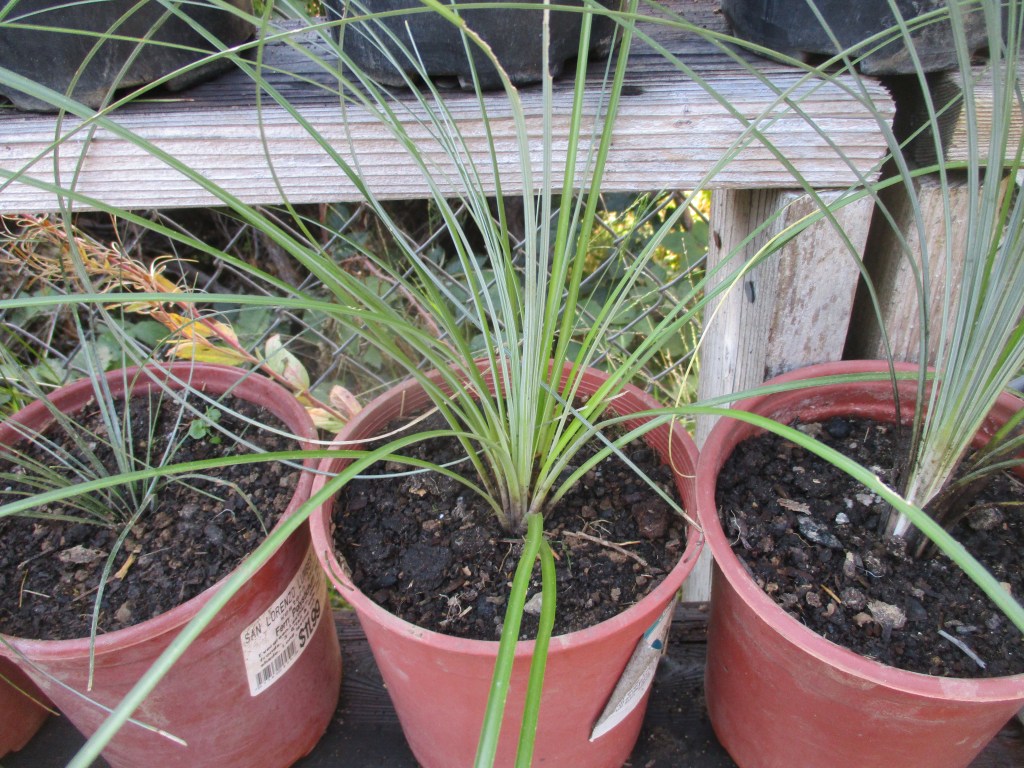
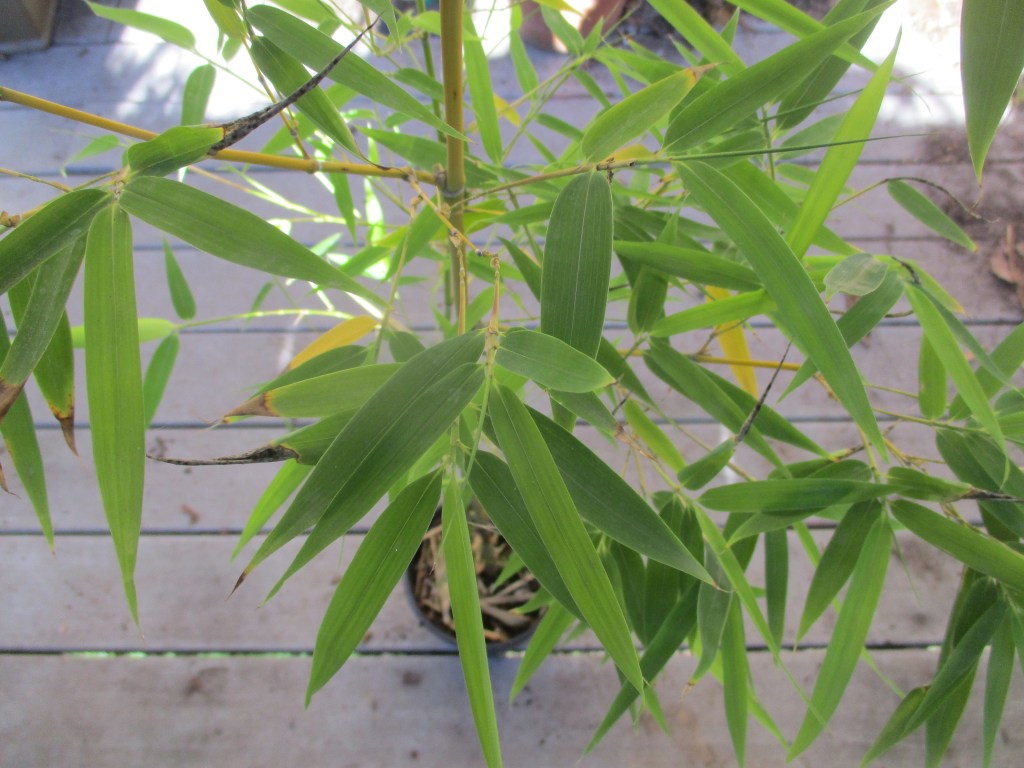
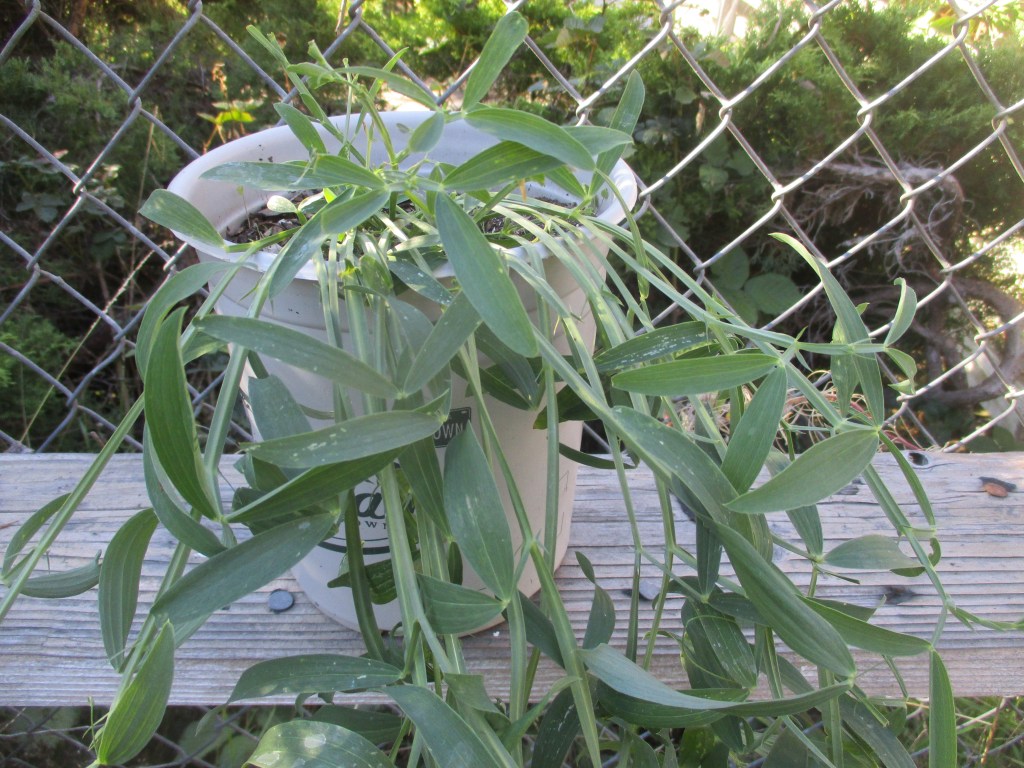
This is the season for digging and relocating crowded or redundant plants. Most of them get recycled directly back into other landscapes, so that there is no need for the extra work of canning and storing them. Most of the daylily (#1) were simply relocated with only a few leftovers for canning. Bamboo (#2) and perennial pea (#4) were actually canned earlier in the year. Ponderosa lemon (#5) is a rooted cutting (which is ungrafted and therefore ‘on its own roots’) that I grew from a pruning scrap. I have no idea of what to do with it. I really should limit all these recycling projects to plant material that is actually useful.

1. Hemerocallis, daylily, migrated too aggressively, so needed to be removed from under benches and other perennials. More of another cultivar got dug where an old sewer pipe was replaced.

2. Phyllostachys aurea, golden bamboo, appeared within an unrefined landscape, and wasted no time migrating. It should have been killed and discarded rather than canned live for recycling.

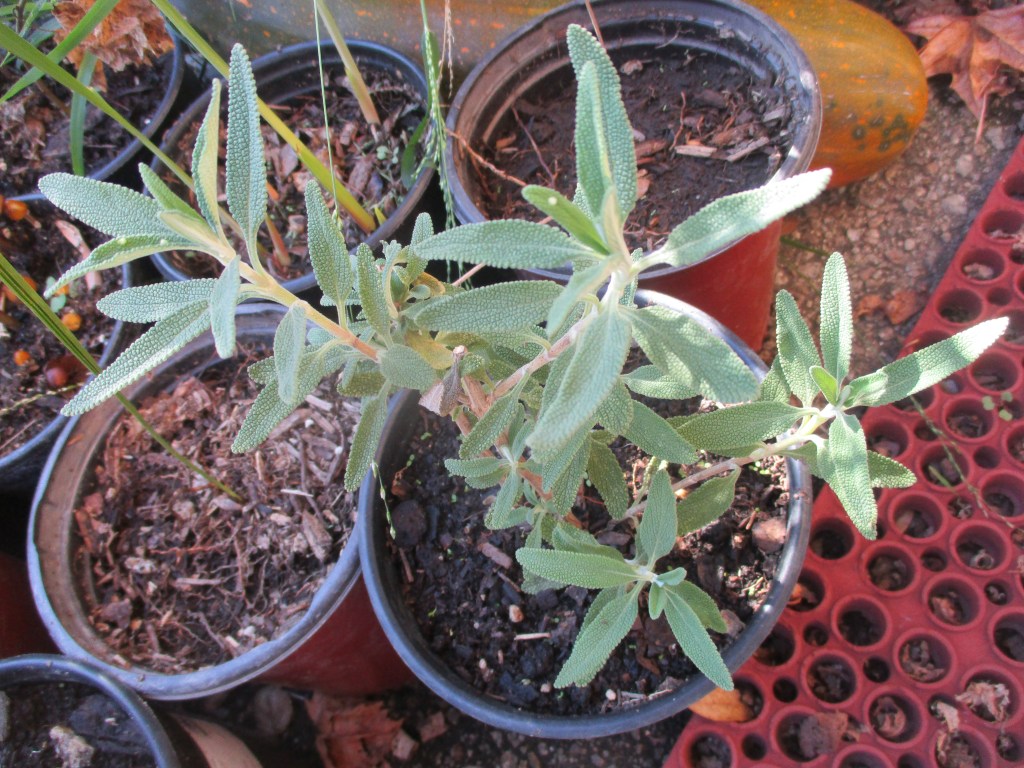
3. Salvia mellifera, black sage, layered a few copies from an original specimen that was planted intentionally. It is native here, but unpopular. Some find the foliar aroma to be a bit too strong.

4. Lathyrus latifolia, perennial pea, is a persistently and invasively naturalized exotic species. In other words, it is a weed. I canned this and three copies of another, because they bloom white.

5. Citrus x pyriformis, ‘Ponderosa’ lemon, is not really a lemon, but is a weird hybrid of pomelo and citron. The fruit might weigh five pounds. What can I do with just one five pound ‘lemon’?!

6. Felis catus, Darla, only allowed me to get this picture by zooming in from a distance. She tolerates Rhody, but hates me. She protects cuttings and seedlings from rodents and perhaps birds.

This is the link for Six on Saturday, for anyone else who would like to participate:
Six on Saturday: More Bad Recycling

Recycling can be a bad habit. We accumulate more material here than we can use back out in the landscapes. Some gets shared with friends and neighbors. Of these six, all but the Agave (#4) grew from seed, so are not cultivars. Although the Agave grows from genetically identical pups, no one know what species it is! Fortunately, around here, we are not too discriminating.

1. Liquidambar styraciflua, after pruning to compensate for severed roots, has only a few twiggy branches, but is more than sixteen feet tall! What a homely sweetgum! Was it worth recycling?

2. Liquidambar styraciflua grew from seed where it could not stay. It is twice as tall as the eight foot bed of the pickup is long. The roots are now contained in a squatty #15 (fifteen gallon) can.

3. Cornus florida, flowering dogwood, was significantly more prolific with seed than the sweetgum. We wanted to recycle just a few seedlings, but got eighty four. Each cell contains a seedling.

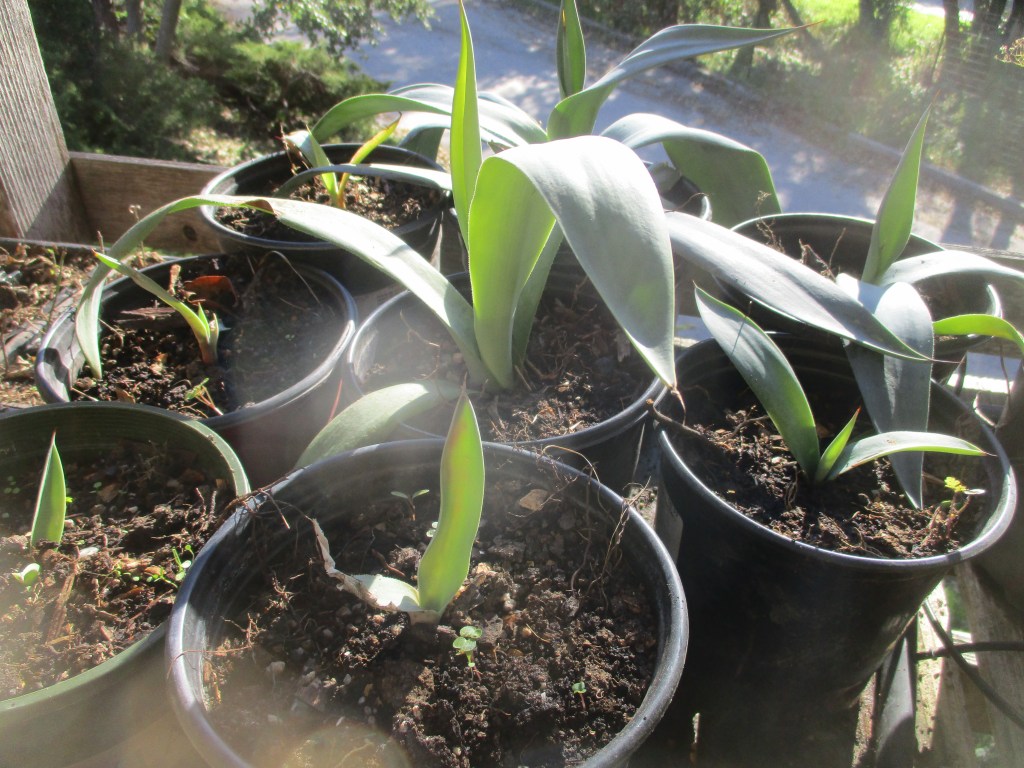
4. Agave of an unknown species was removed from one of the landscapes a few years ago, but has been trying to regenerate since then. We dig and can the pups, but cannot give them all away.

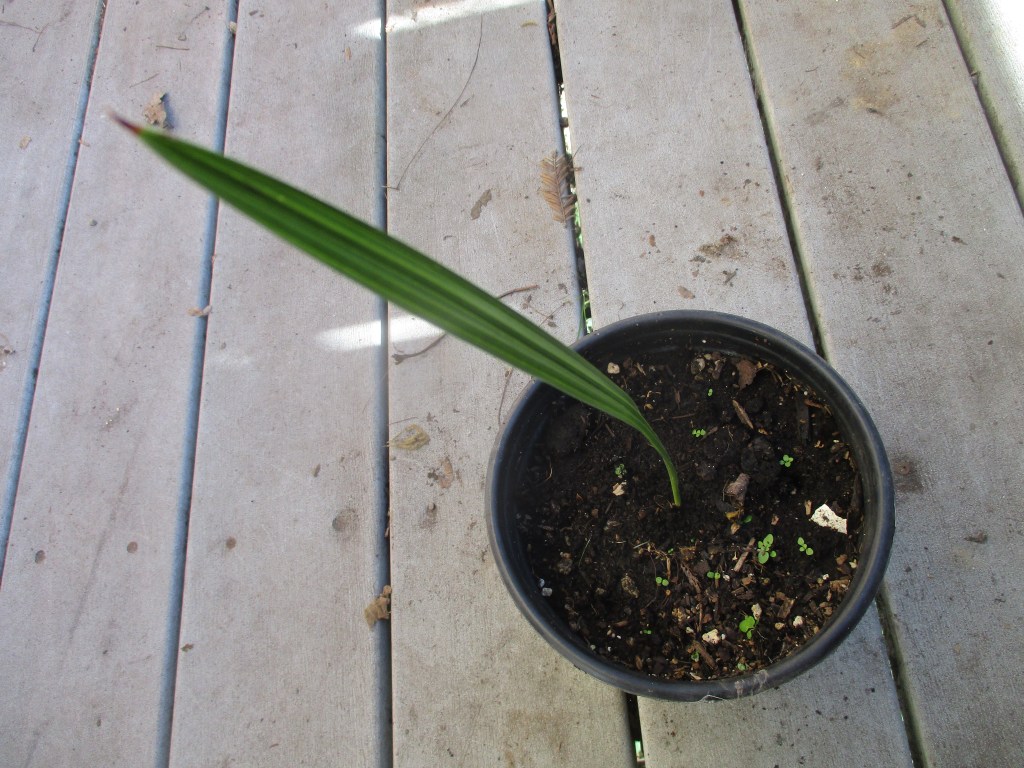
5. Phoenix dactylifera, date palm, grew from seed in a compost pile. There are about seven of them. It is impossible to predict which will be female, or what the quality of their fruit will be like.

6. Acer platanoides, Norway maple, might be invasive, even here. A few that grew from seed in one of the landscapes were therefore removed, but not discarded. I used them as understock for the much more desirable and noninvasive ‘Schwedler’ cultivar last year. The scions, which are above the yellow tie, did not take. I must now try again, or pollard them so they produce no seed.

This is the link for Six on Saturday, for anyone else who would like to participate:
Six on Saturday: WHITE

White is my favorite color! It always has been, long before it became a fad and a trendy coffee table book in the early 1990s. I do not care that it has become politically incorrect since then. Nor am I concerned with what Brent has to say about it. (He has not valued my opinion since 1986 anyway.) I realize that he is the famous landscape designer, and I am not, but I also know what I like in my own garden. I am quite pleased that there are so many white flowers at work, and even an exclusively white garden, at el Catedral de Santa Clara de Los Gatos!

1. Pelargonium X hortorum, the white zonal geranium at el Catedral de Santa Clara de Los Gatos, is blooming with smaller floral trusses because the weather is getting cooer through autumn.

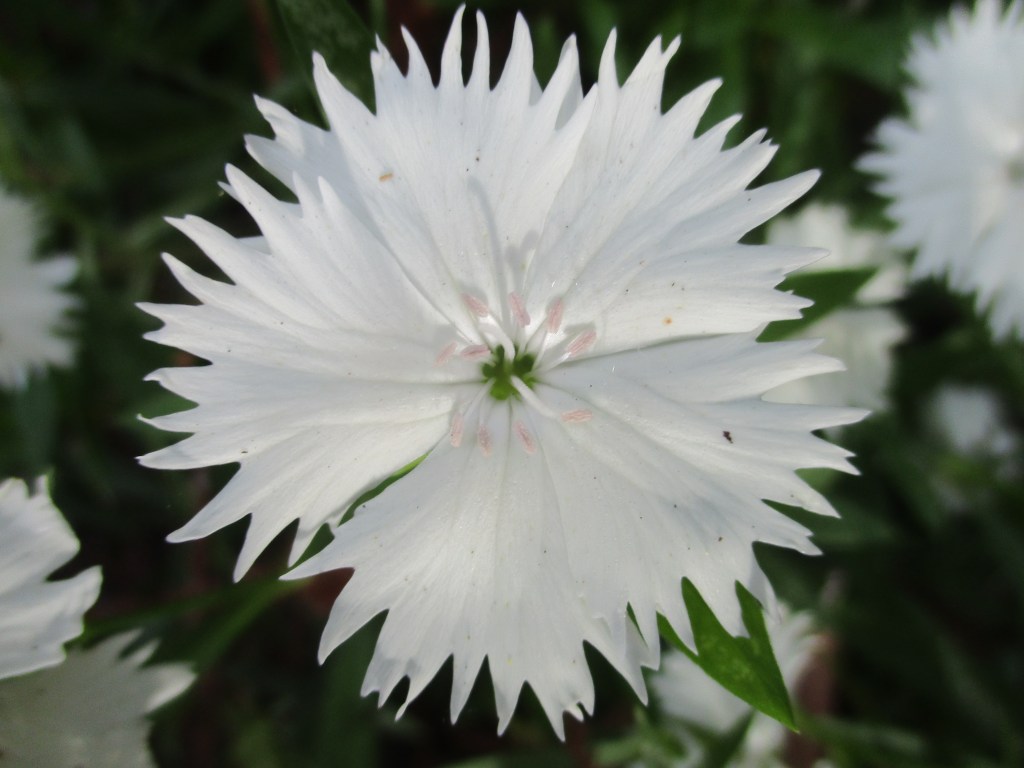
2. Dianthus deltoides has the unappealing common name of ‘pink’, likely because most varieties bloom pink. Some bloom red. This is one of the best because it blooms so perfectly clear white.

3. Hydrangea macrophylla should be at el Catedral de Santa Clara de Los Gatos instead of the other ‘white’ hydrangeas that were relocated there last winter before deciding to bloom lavender.

4. Camellia sasanqua is blooming impressively well for the shade that it lives in. I do not remember the name of this cultivar. It might be a hybrid of Camellia sasanqua and Camellia japonica.

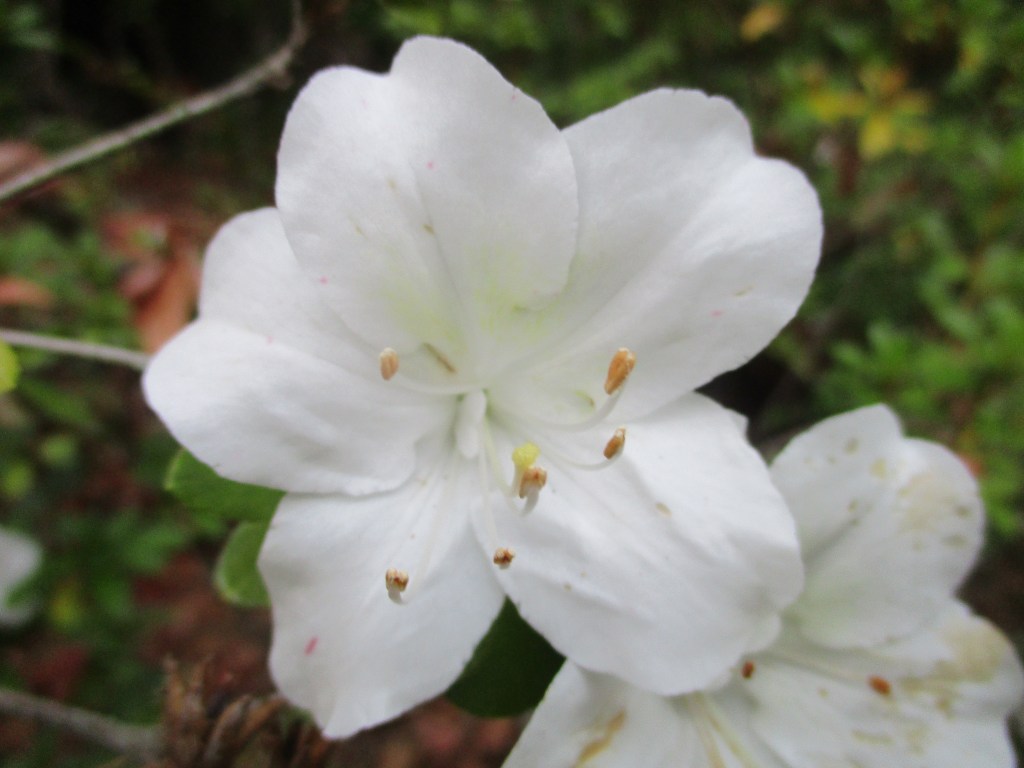
5. Rhododendron such as this are known as ‘azalea’. (There is no picture of Rhody.) This and ‘Coral Bells’ bloom about now, but not while the others bloom so abundantly at the end of winter.

6. Betula pendula is an old fashioned tree that still works well here. White trunks are striking among the dark green redwoods. We dig and can their seedlings to eventually replace aging trees.

This is the link for Six on Saturday, for anyone else who would like to participate:
Six on Saturday: Hesper Palm Reunion

The small hesper palm that was taken from my garden last August has returned. A colleague directed me to it, at the home of one of his neighbors. I appropriated it without inquiring about its presence there. I suspect that it was taken as random ‘greenery’. However, if the neighbor actually wants a palm, I may provide one that is more appropriate to the particular situation. Since I got only a single picture of the recovered hesper palm though, my Six on Saturday for this week are completely random.

1. Hesper palm would not have been happy here in the shade of a redwood forest. It happened to be just across the driveway from where the kitties of ‘Cat Burglar’ live. It is back at home now.

2. Windmill palm is more impressive. It will be dug and canned for a former resident of the now abandoned house to the left. My date palm seedlings came from the compost pile at this home.

3. Dracaena palm (which is not actually a palm) was too big and tall for me to relocate from the now abandoned house, but not too large for gophers to relocate. They put it right onto the eave.

4. Deodar cedar was relocated three years ago, without the assistance of gophers. Most met a most unfortunate fate with a weed eater. This specimen got established slowly, but is happy now.

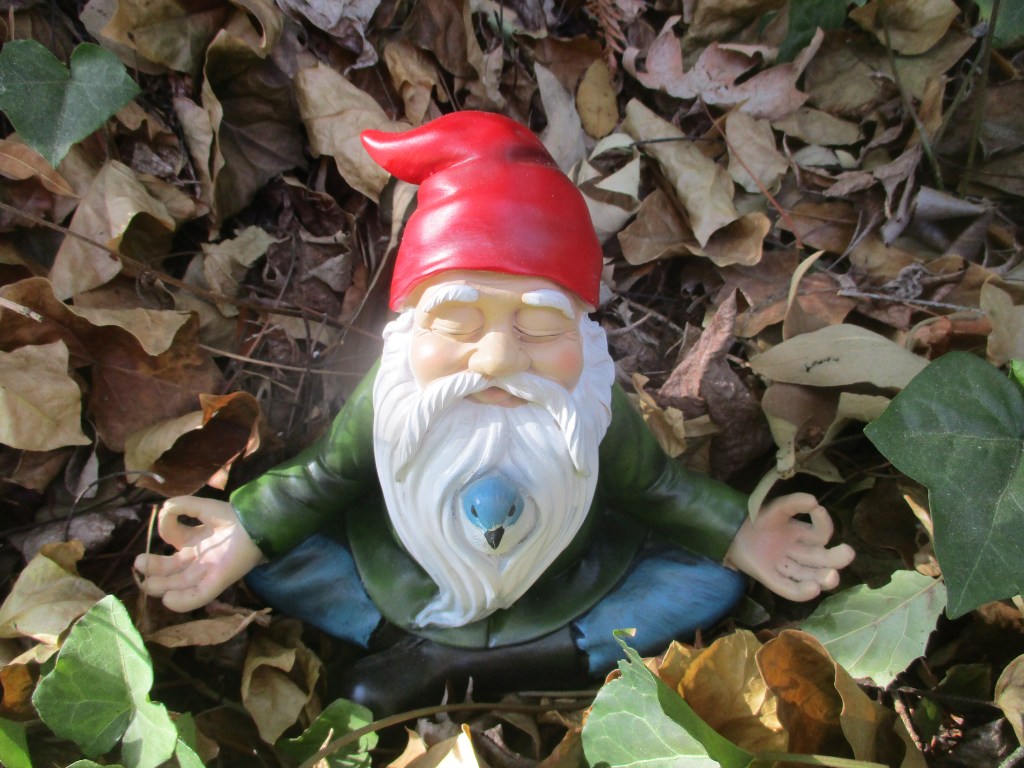
5. Gnomes annoy me! I do not know why this appeared in one of the landscapes, but it will go into the trash if not removed. My statue of Saint Francis, in my own garden, offended a neighbor.

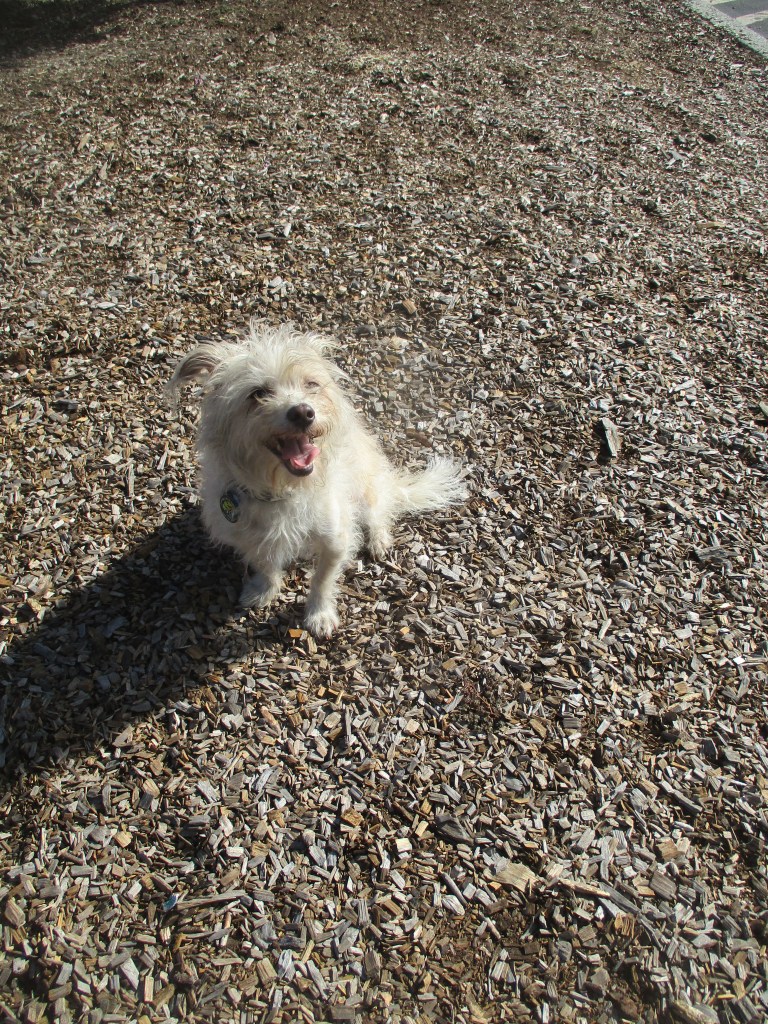
6. Rhody does not allow me to get too annoyed. He is posing with mulch because mulch was the topic of the gardening column when this and a few other formerly unused pictures were taken.

This is the link for Six on Saturday, for anyone else who would like to participate:

Six on Saturday: Recyclery

With only one exception (#6), everything that I added to my downtown planter box was recycled from somewhere else. Almost all of that which I added came from the garden of the mother of a now deceased old friend, so has major history with me. The original cuttings rode around for more than a month on the dashboard of the old station wagon prior to getting plugged. Yet, I do not know many of their names. Only #5 inhabited the planter box before I got there. Nowadays, bits and pieces generated from occasional grooming of the planter box get recycled elsewhere. Many are shared with neighbors.

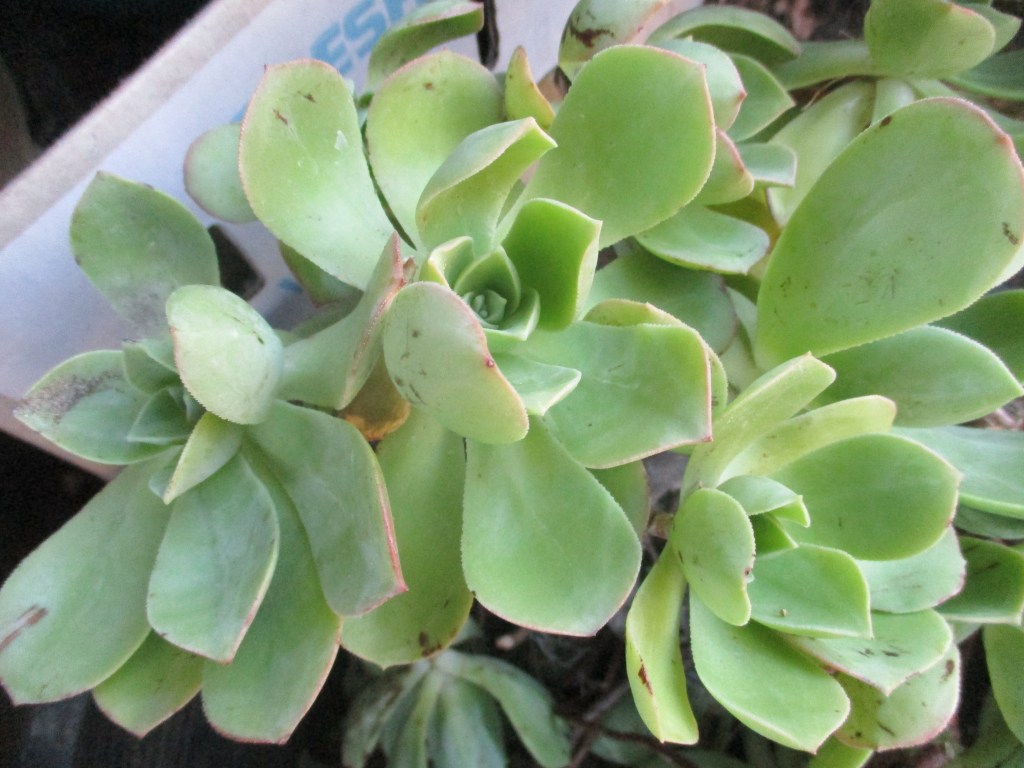
1. Tree houseleek grew almost as big as small tumbleweeds. Except for two Indian hawthorn trees that were installed when the planter boxes were built, they are the most prominent features.

2. Unknown succulent resembles tree houseleek, but stays much lower. A neighbor requested ‘Australia’ canna (#6) because this and tree houseleek produce so much pallid light green foliage.

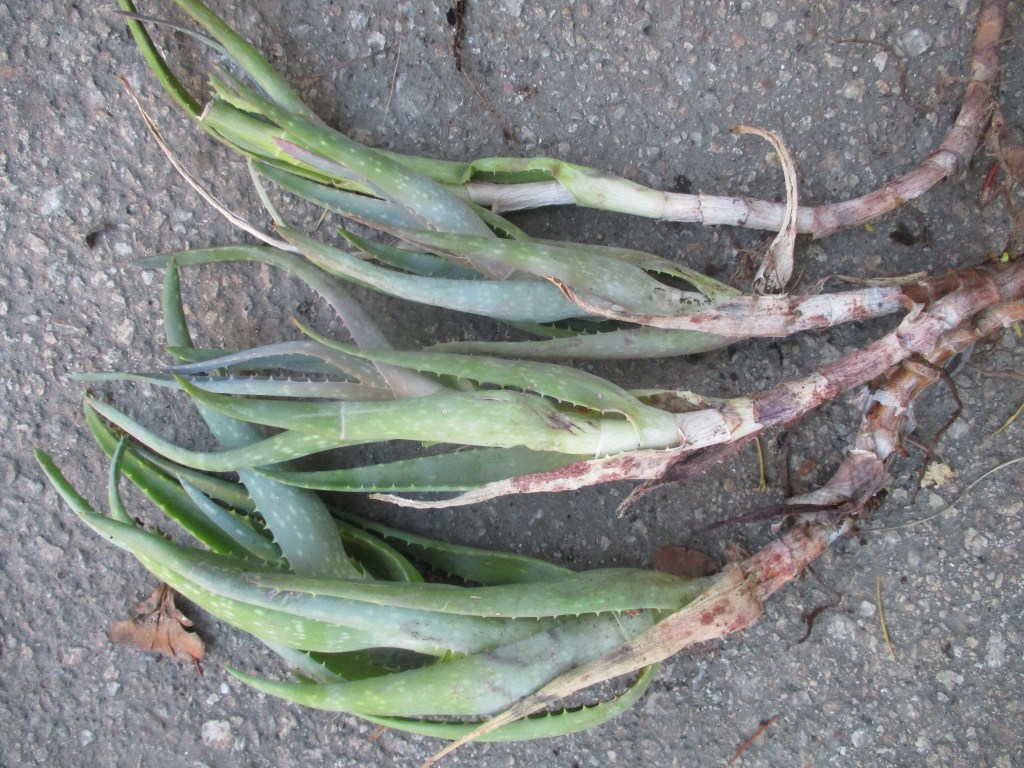
3. Unknown Aloe is more appealing in the planter box than these shriveled cuttings are. I think that it might be more appealing if it bloomed. After a few years, I have not seen a single flower.

4. Unknown bearded is not a good choice for a planter box downtown. It blooms only once annually, and the few flowers get picked. They are slightly grayish white, so are not even very pretty.

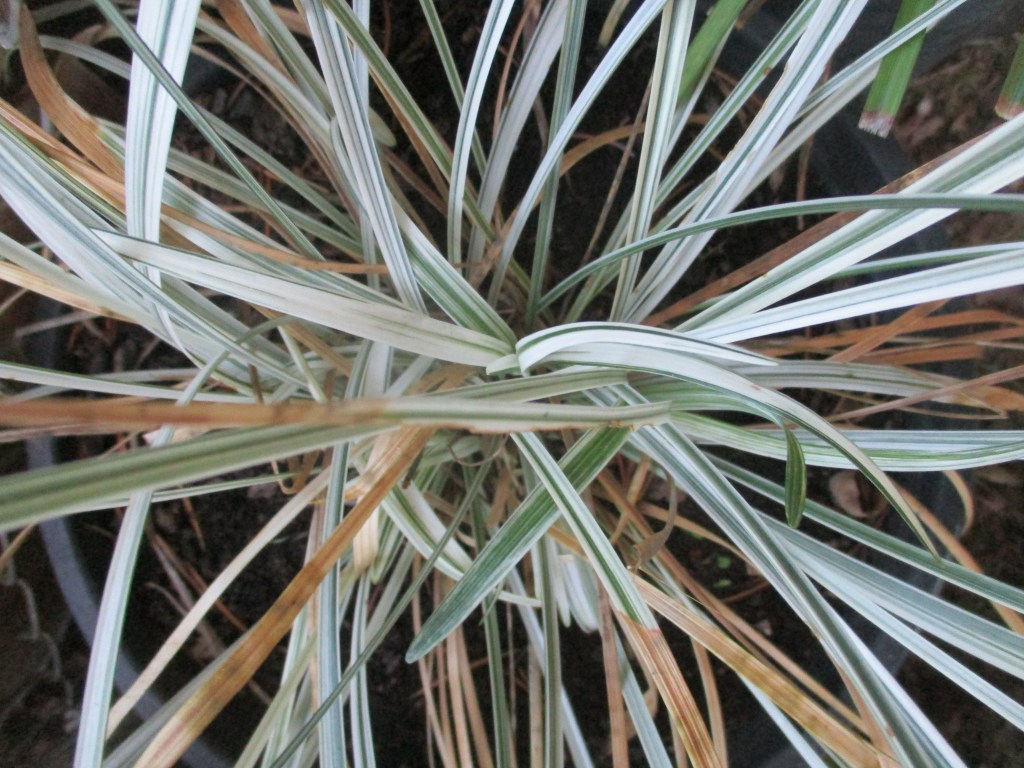
5. Variegated lily turf is one of the few plants that was already in the planter box when I go to it. Some of it reverted to unvariegated, and became even more invasive, and then more abundant.

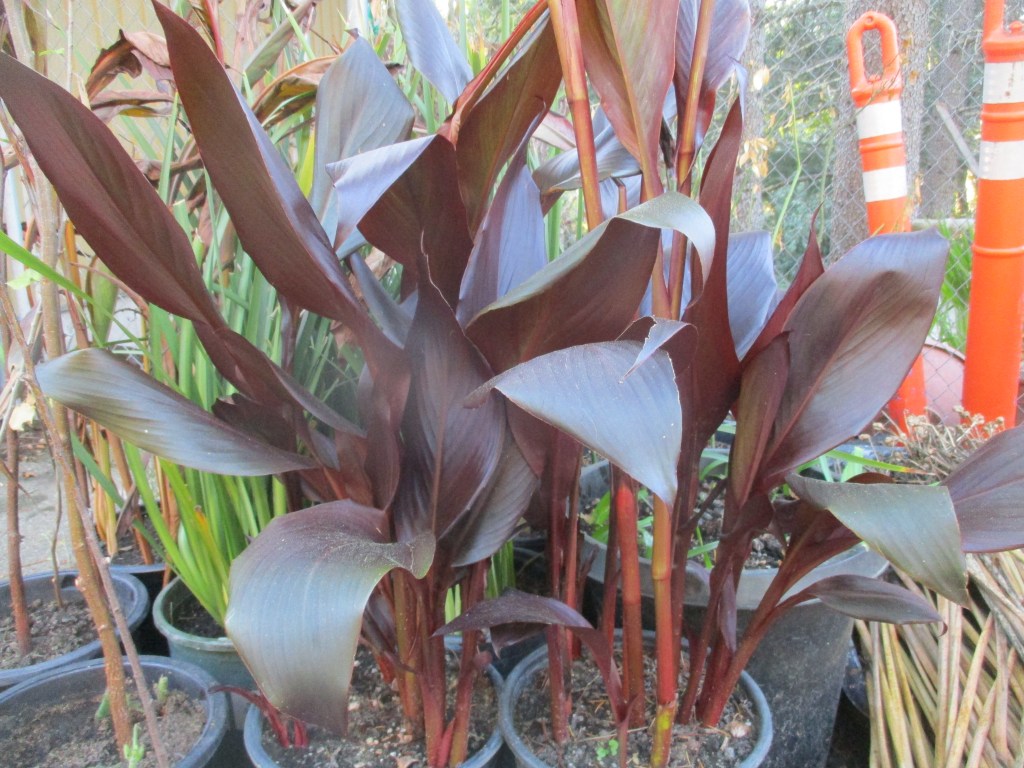
6. ‘Australia’ canna is the only item that I actually purchased for the planter box. I got it because a neighboring merchant expressed an appreciation for bronzed foliage. It does not disappoint!

This is the link for Six on Saturday, for anyone else who would like to participate:

Six on Saturday: Happy Beginning

Vermin, weeds and insects can be major problems. Gophers continue to inflict serious damage within the landscapes here. The predators who help with other vermin would get gophers too, if only they were more accessible. However, it could be significantly worse. Some weeds are actually pretty. The worst insect damage was neither serious nor prominent. Deer just glare at me as if wondering why I glare at them.

1. Gophers are the most destructive of the wildlife here. This was a new and perfect hedge of variegated Pittosporum tobira before the gophers got in. The spacing of its plants was impeccable.

2. Perennial pea should have finished blooming a while ago. It typically gets crispy during the warm and arid weather of summer. It is an annoying albeit pretty weed in some of the landscape.

3. Katydids chewed my roses last summer. Fortunately, the damage was not serious, and only affected my own roses that are not within the landscapes. This one seems to be in the family way.

4. Deer have potential to cause major damage to the landscapes, but never have. Their nibbling is minimal. No one knows why. They are a significant problem within adjacent neighborhoods.

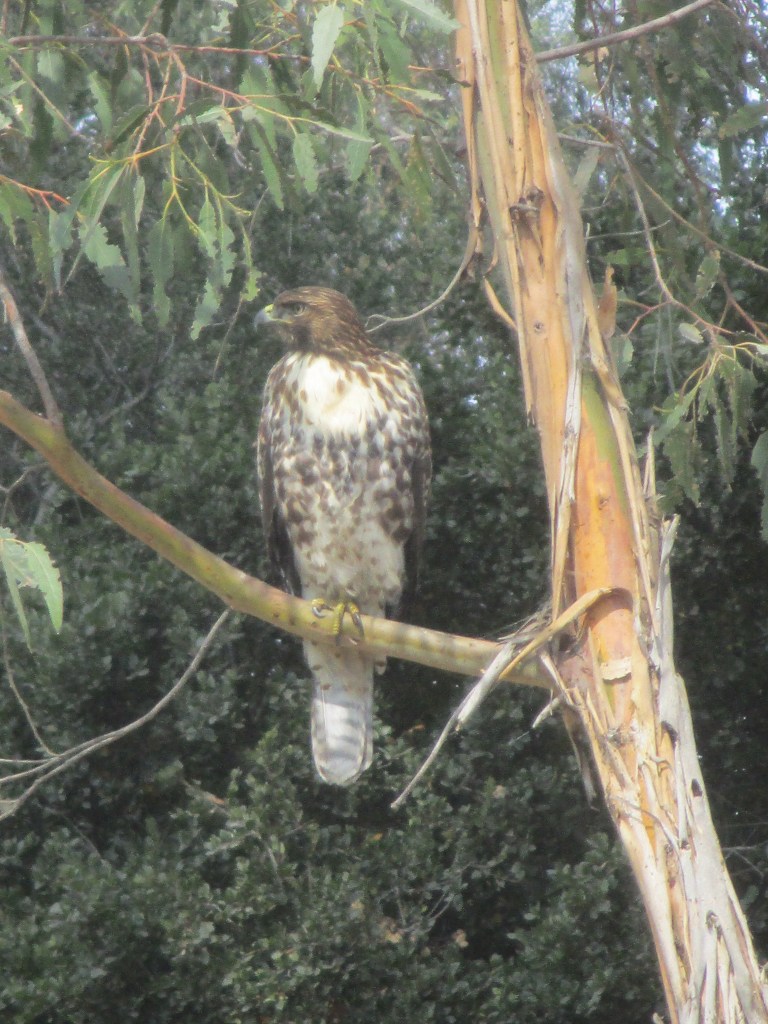
5. Predatory birds ‘control’ some of the rabbits and other vermin, but not gophers. I do not know who this bird is, but would guess that it could take off with Bambi if she nibbles the camellias.

6. RAIN! This is the happy ending of the Fire Season, as well as the happy beginning of the Rainy Season! The first storm of the season is always major news here, but is rarely this significant. The flashing blue light on the windshield of one of the pickups is a motion activated security system that began chirping in response to so much water falling from the perforated gutter above.

This is the link for Six on Saturday, for anyone else who would like to participate:
Six on Saturday: New England?

New England is even farther away than Williamsburg. Although I have never been there, I sometimes think that some of the vegetation here resembles vegetation there, particularly as foliage and berries get colorful during autumn and winter. Autumn is a bit later here, and does not last as long. The associated color is relatively subdued. There are not as many colorfully deciduous trees. I do enjoy showing off what we get though. There is so much more to California than boringly evergreen palm trees and redwoods; and redwoods happen to make an excellent backdrop for New England style fall color! I will brag about various palms later.

1. Rio Grande turkey was intentionally naturalized here a long time ago, but only began to invade local home gardens since about the 1990s. To me, they look like they belong in New England.

2. Lantana camara makes these weird black berries, which the turkeys are not interested in. Just like turkeys, colorful (or just black) berries in autumn remind me of gardens in New England.

3. Moss, which had been rather grungy and brown through late summer, is now rich and vibrant green from rain last Wednesday. I suspect that moss such as this is common in New England.

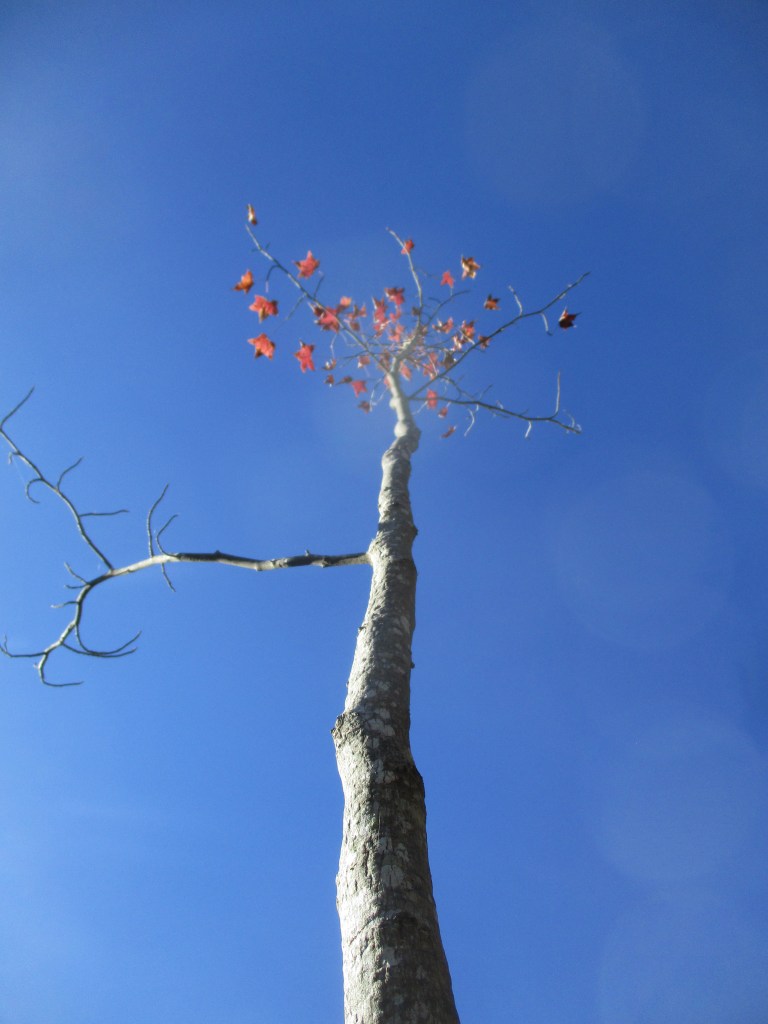
4. Tulip tree, Liriodendron tulipifera, is native to neither Maine nor New Hampshire, and was extirpated from its two native counties in Vermont, but is native to other parts of New England.

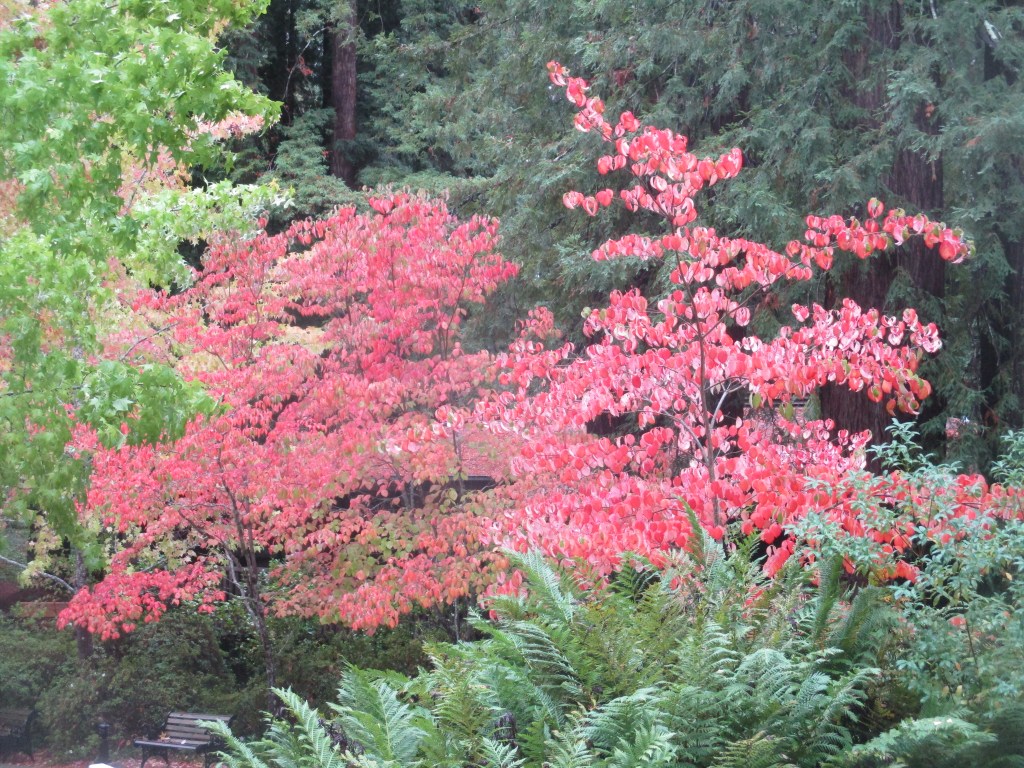
5. Flowering dogwood, Cornus florida, is coincidentally extirpated from the same two counties in Vermont that tulip tree formerly inhabited, and is also native to other parts of New England.

6. English holly, Ilex aquifolium, is from England, which is the original or Old England. It is naturalized here. Just like the other five of these six, to me, it looks like it belongs in New England.

This is the link for Six on Saturday, for anyone else who would like to participate:

Six on Saturday: Maples

Maples are annoyingly misrepresented here. Japanese maples are so much more popular than they should be, and imposed by just about every so-called ‘landscaper’ with something to prove, although few of them know or care how to take proper care of them. However, maples that actually develop as shade trees are still uncommon or even rare. Only two species are native locally. Of these, box elder (#5) is rather unimpressive, and bigleaf maple (#6) is potentially too big and too messy for refined home gardens. Norway maple has a bad reputation, but ‘Schwedler’ was a good street tree.

1. Acer platanoides – Norway maple is invasive elsewhere. I do not trust it here. I grafted noninvasive ‘Schwedler’ Norway maple on five naturalized saplings. None took. Ugly saplings survive.

2. Acer platanoides – Norway maple should look like this. I do not remember the name of this cultivar. It supposedly has better bronzed color than ‘Schwedler’. I still prefer classic ‘Schwedler’.

3. Acer rubrum – red maple performs quite well in mild climates, and works well as a street tree with symmetrical and rather compact form. I do not remember the name of this cultivar either.

4. Acer circinatum – vine maple should be more popular here. It is a sculptural understory tree like the countless cultivars of Japanese maple, but is not a Japanese maple. That is why I like it.

5. Acer negundo – box elder should probably be less popular than it is. It is the most common maple of North America, and is native to every state except for Alaska and Hawaii. It is wild here.

6. Acer macrophyllum – bigleaf maple is also native, but only to the West Coast. It is the sugaring maple of the West. This specimen is exemplary, but drops a lot of leaves into a few backyards.

This is the link for Six on Saturday, for anyone else who would like to participate:
Six on Saturday: One Yucca

Of the fifty or so known species of Yucca, I formerly grew all but one. I still am not certain if the single species that I lacked, Yucca flexilis, is a real species or a synonym for another species. Of course, some species of Yucca might be considered to be subspecies of others. The genus is complicated. So is identification of its species. That is why I am not certain of the identity of the one Yucca that I got a picture of this week. Actually, only one of my Six, which live with the unidentified Yucca, are identified.

1. ‘Sedums, Dahlias and Hayfever’ might have something to say about this unappreciated mess. A neighbor left these for the gardens. I can identify only that ‘Angelina’ sedum. Oh, the shame!

2. Pups such as this could suggest that the associated primary rosette intends to bloom soon. If so, the pup will replace the original. I do not remember what species or cultivar of Agave this is.

3. This young pup appeared about six feet from its associated primary rosette, so is less likely to be an indication of impending bloom. I do not know the species or cultivar of this Agave either.

4. Agave attenuata is easier to identify. It has been here since December, but has not done much. I got a pup from it prior to planting. Later, another rosette was acquired from another source.

5. This might be Dasylirion wheeleri. I am rather certain of the genus, but not so certain of the species. Those little teeth on the foliar margins remind me that I do not want to weed around it.

6. Could this be Yucca whipplei? Its foliage certainly suggests that it is. However, the common sort should not develop such crowded rosettes. It could be a more densely clumping subspecies.

This is the link for Six on Saturday, for anyone else who would like to participate: