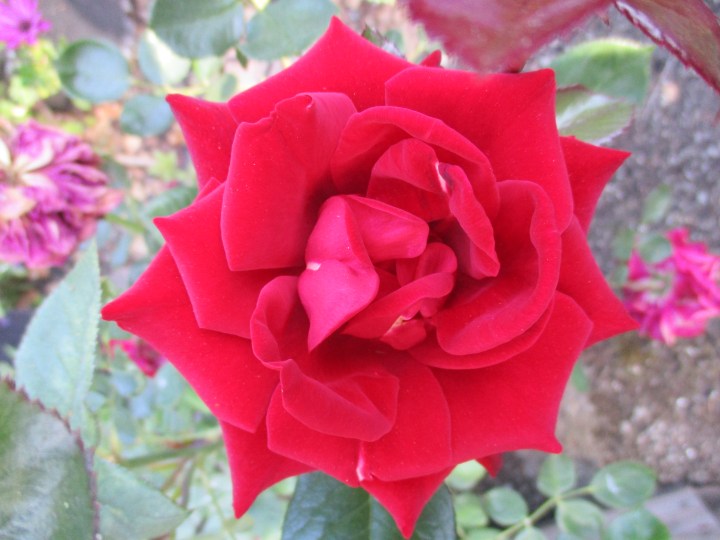
 Roses are not for the meek. They are too demanding, too sensitive, too thorny, and without their flowers, they are not even very attractive. They have no business in a low-maintenance landscape, or in a landscape maintained by mow, blow and go gardeners. Those who want to grow rose plants for their flowers should be ready to give them what they want, and to prune them aggressively.
The most aggressive pruning gets done during winter dormancy. That process alone can be quite intimidating for those who are just getting acquainted with roses. After seeing them grow through the year, it seems counterproductive to prune big plants back to only a few short canes. Yet, by now, those canes should have produced much taller new canes that are already blooming profusely.
Now it is time to prune roses again, or will be time to do so soon. Deteriorating flowers need to be pruned away to promote continued bloom, a process known as ‘deadheading’. Otherwise, the fruiting structures that develop, known as ‘rose hips’, divert resources and inhibit bloom. Of course, blooms taken as cut flowers leave no hips, but they might leave stubs that may need grooming.
The popular technique of pruning back to the fifth leaf below a hip is not necessarily what roses want. It probably originated from the recommendation of pruning back to a low leaf with five leaflets because the buds associated with upper leaves with three or less leaflets are not as likely to develop into productive stems. However, pruning a bit too low is probably better than pruning too high.
When cutting roses to bring in, it is better to cut long stems, and then shorten them later if necessary. Each stem should be cut just above a leaf so that the bud in the leaf axil can develop into a new stem without much of a stub above it. The cut stem left behind on the plant should not be so long that it extends too far above the canes that were pruned over winter, or becomes crowded.
Crowded stems inhibit growth of vigorous blooming canes, and are more susceptible to rust, mildew and blackspot.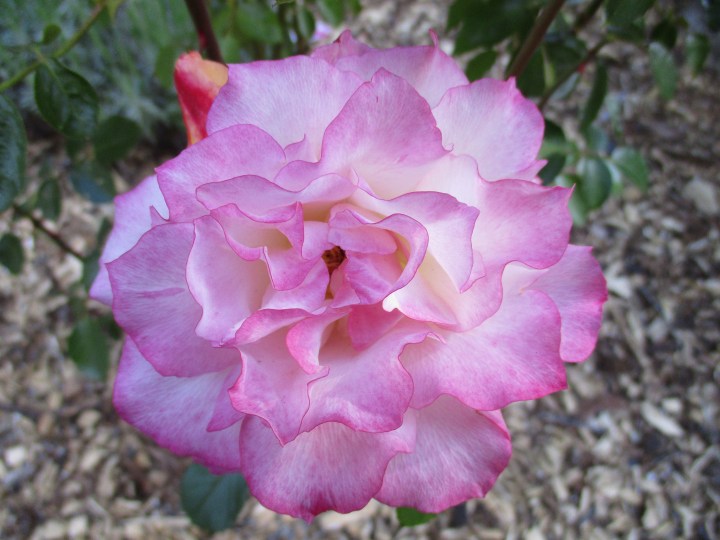
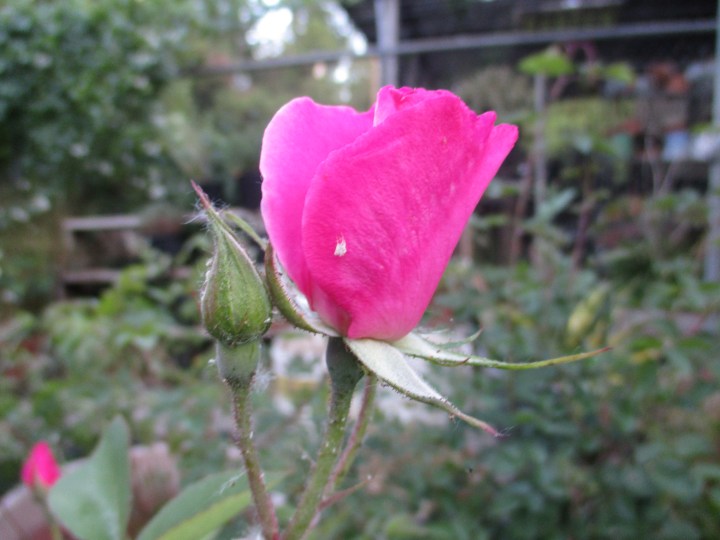
 This is the one that got away; or actually, the one that was never caught. It bloomed after I got the pictures for the ‘Six on Saturday’ post for this morning. It could be the same unopened bud in picture #3 of the Six on Saturday post, as it is now blooming. If not the same bud, it is on the same plant, and now looks even more like the common ‘Simplicity’ rose. It is not my favorite, but I did not select it.
 This theme may be getting a bit redundant about now. There is just so much that needs to be done in the garden through winter for what will bloom in spring and summer. We plant new fruit trees, and prune mature ones. When we finish planting spring bulbs, we can start planting summer bulbs. Berries, rhubarb and grapes all get planted. With all this going on, it is also time to prune roses.
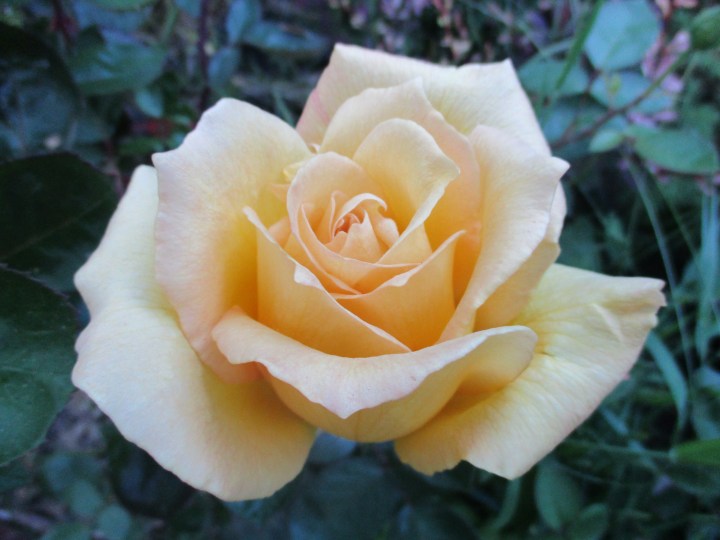
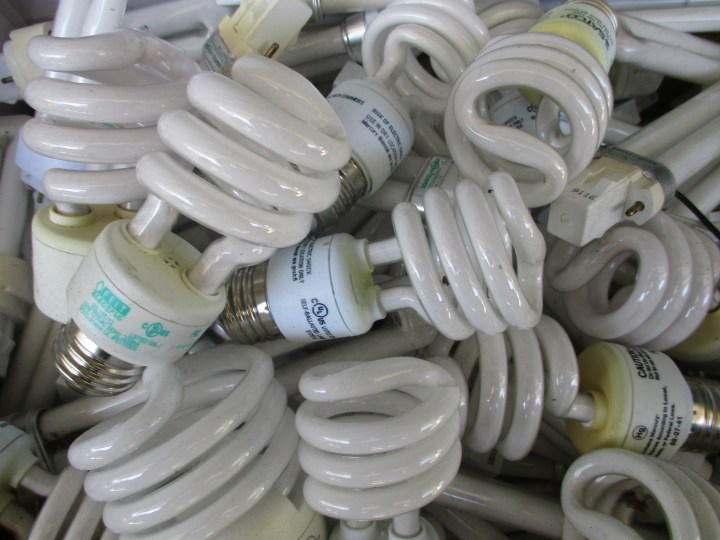
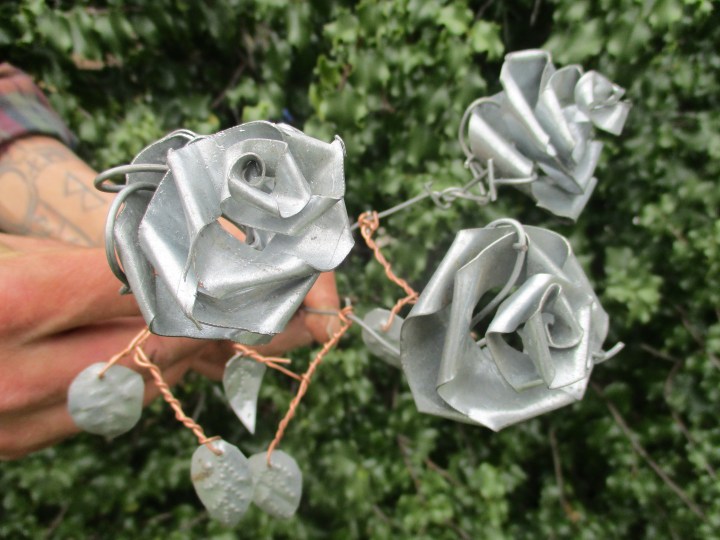 ‘Sterling Silver’ and ‘Stainless Steel’ are two hybrid tea roses that were quite popular decades ago. ‘Copper’ and ‘Aluminum’ are not. However, I did happen to write a bit about the aluminum roses in the picture above on the Facebook page of Felton League on January 28, and included a link to an older article that featured a picture of copper roses. They are not at all relevant to horticulture, but are interesting nonetheless.
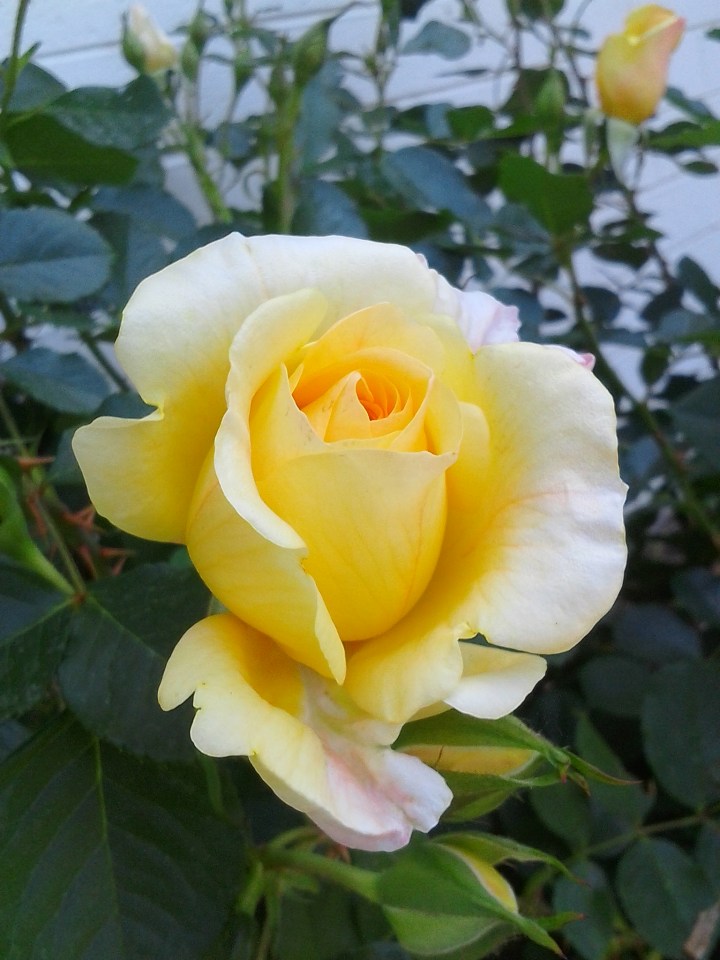 The main problems with roses locally are not related to climate, soil, insects or disease. Warm and semi-arid climates of California happen to be some of the best places in the World for roses. Sure, many roses have problems with insects such as aphid, and diseases such as powdery mildew, but primarily because such pathogens proliferate among roses that are not pruned properly.
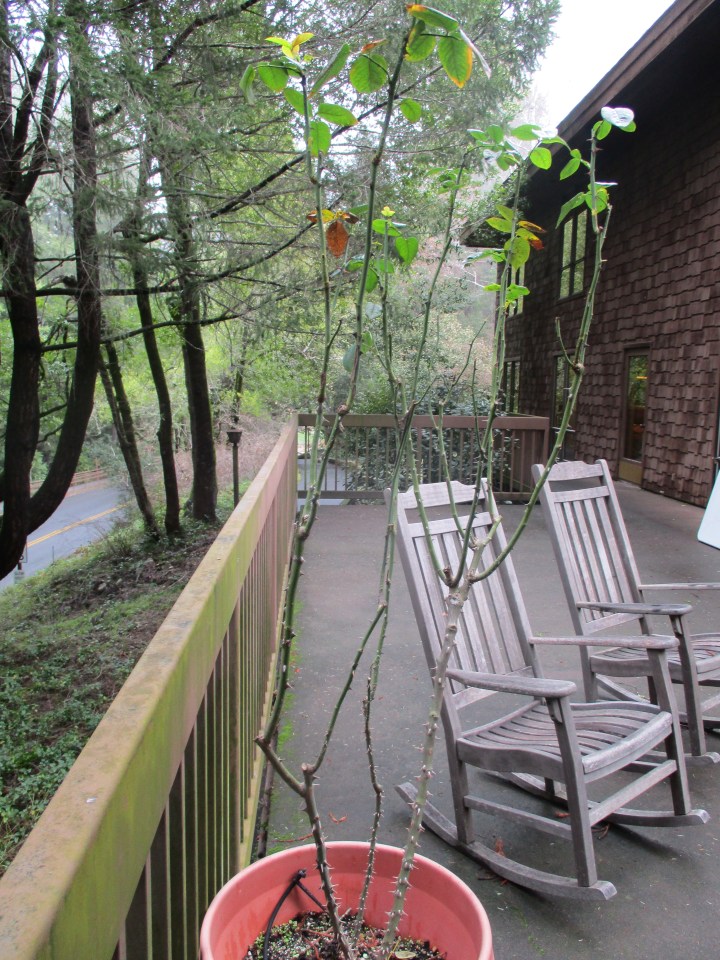 Winter is for pruning. Any good native of the Santa Clara Valley knows that. It starts as soon as the first deciduous fruit trees defoliate and continues to the last minute rush to finish before the buds start to swell at the end of winter. It may seem like there would be no last minute rush now that all the orchards are gone, but there is so much in landscapes to prune that prioritizing and scheduling pruning takes a bit of effort. Just like we know that apples and pears can be pruned slightly later than apricots and prunes, in the landscape, we know that sycamores might be delayed until the birches are done. Naturally, I feel compelled to prune the flowering cherries and fosythias, but am almost content to wait until after they finish blooming in early spring. Of course, I cringe as I write this.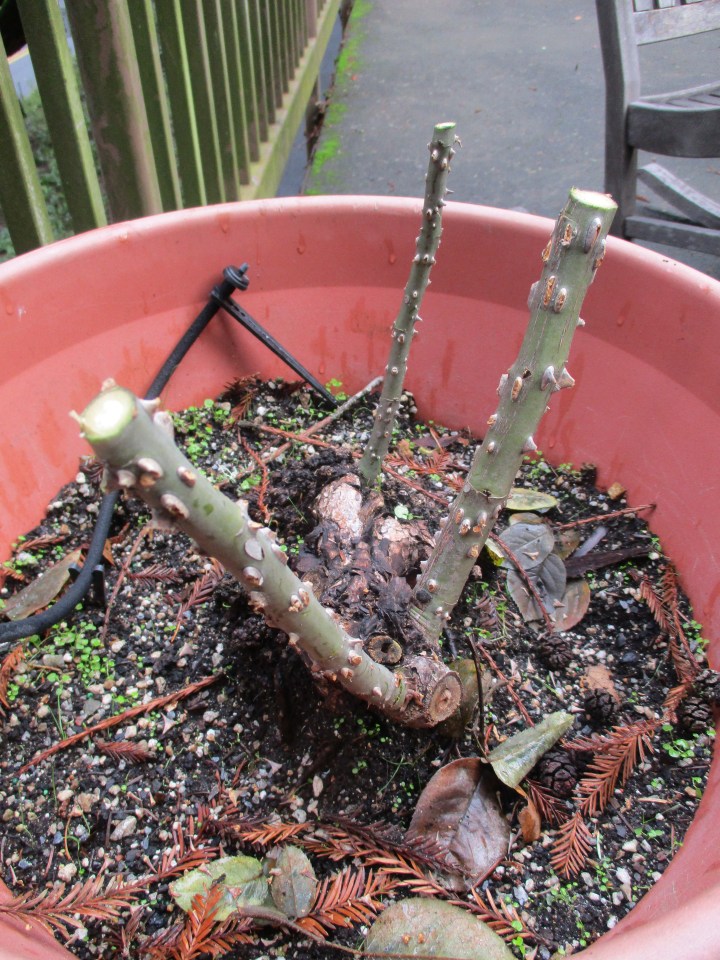
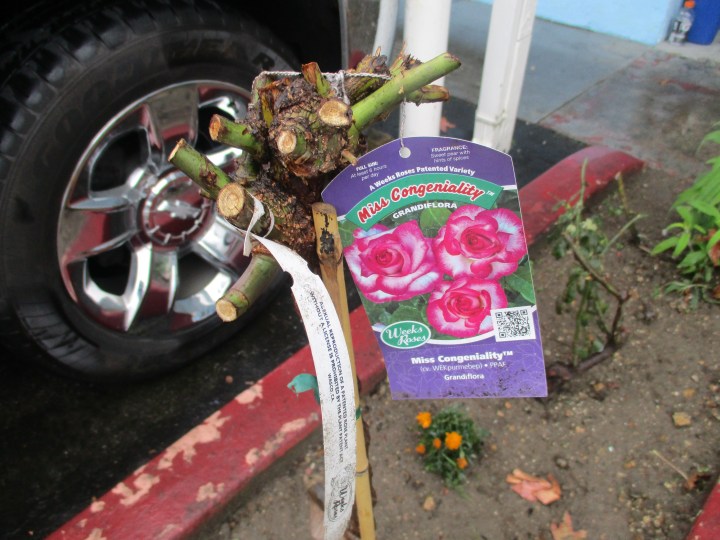 Now, before I commence with my rant and long list of problems with this picture, I should mention that this seemingly abused rose tree does seem to be appreciated. All the roses in this landscape seem to be very healthy, and they bloom constantly between spring and autumn. Their performance suggests that they are regularly fertilized and deadheaded.
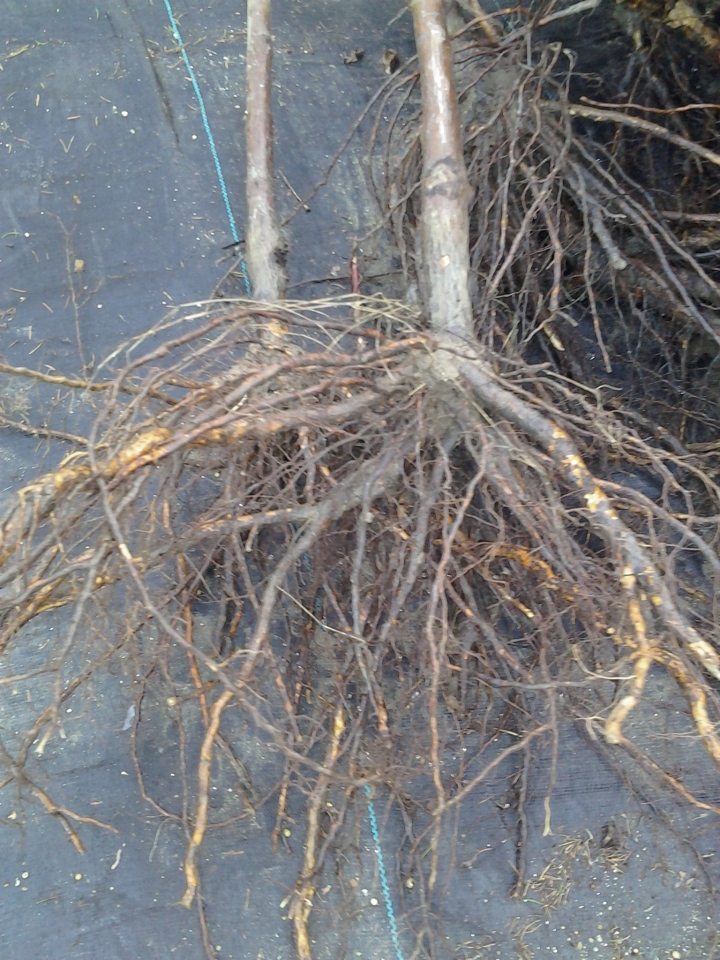 Autumn really is the season for planting. That is the general rule. One generalization about general rules is that they generally do not apply to all of the specifics. In other words, there are likely certain exceptions. In this case, there are some types of plants that should not be planted in autumn. The next best season for planting is probably winter, which happens to be ‘bare root season’.
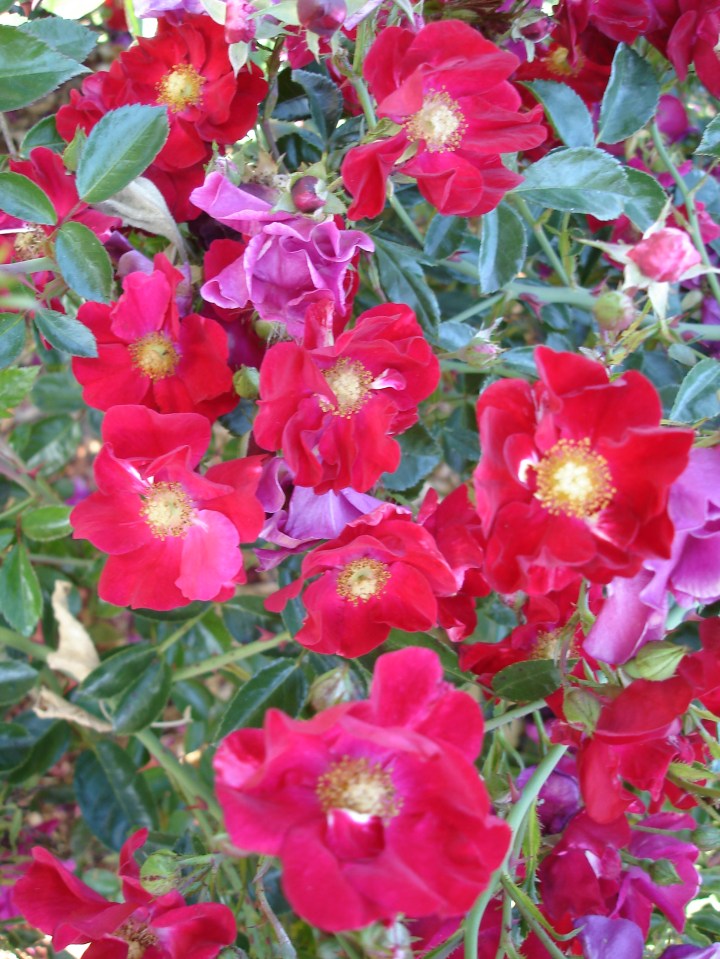 They compare to more traditional roses like instant coffee compares to real coffee. They are too easy and cheesy. However, even instant coffee can be rather good as long it is not expected to taste like the real thing. Likewise, carpet roses do not produce big and fancy flowers on long stems for cutting, but they have other attributes that are advantageous in the landscape.
 Tony Tomeo